


DIRECTOR
Inside the Erotic Underworld of Pillion Director Harry Lighton


All photos courtesy of Harry Lighton.
Ahh, when the new gay movie is actually good—nothing like it! That’s why I had to speak with Harry Lighton, the writer-director of Pillion, which opened in the U.S. this weekend after months of headlines combining typical porn-site keywords like “dom-sub,” “leather” and “Alexander Skarsgård.” Adapted from Adam Mars-Jones’ novel, Box Hill, it pairs the 6’4” Swede with a revelatory Harry Melling in an erotic dramedy about a suburban barbershop singer who enters into a strict BDSM relationship with a brooding biker.
That’s more than enough to get butts in seats (and in the air, should opportunity strike), but Lighton achieves a perfect balance that the characters of his feature debut can only hope for: sexy and sweet, tender but firm, abject and glorious. The glinted-eyed Lighton and I trudged through the Manhattan snow last week to talk kink, community and ethical bondage.
———
JUAN RAMÍREZ: How are you feeling?
HARRY LIGHTON: Tender. We did a screening last night, then there was an afterparty at The Eagle, and it was a good party.
RAMÍREZ: Tender. Today’s Tuesday, right?
LIGHTON: Today is Tuesday.
RAMÍREZ: Because Wednesday is Jockstrap Night, so that’s their big sort of—
LIGHTON: Oh, really? There were a lot of leather guys there and stuff.
RAMÍREZ: That’s kind of the best you could hope for, right?
LIGHTON: [Laughs] It was great. The bartenders are incredible there.
RAMÍREZ: Yeah. Well, it’s 10:00 AM in New York, hopefully not too early to start talking about sucking and fucking.
LIGHTON: Never.
RAMÍREZ: I want to ask about leather. When was the first time you noticed leather?
LIGHTON: Good question. I mean, I don’t recall having a sort of sea-change moment where I was like, “Oh, leather!” But my uncles are all from Scotland, and it’s cold in Scotland. I remember we’d go on fishing holidays as a family and one of them had this kind of retro, massive leather jacket and always seemed quite warm when the rest of us were freezing our balls off. So that’s probably my first time I noticed it—but from a functional perspective. Obviously, I wasn’t getting hot off my uncle.
RAMÍREZ: [Laughs] Right. It’s such an enduring aesthetic theme in gay culture. It has its weird, sort of problematic history with all the leather magazines, how it all started out. I’m curious if investigating any part of that was what drew you to this movie and this story?
LIGHTON: You said it’s got a weird history with what magazines?
RAMÍREZ: The leather magazines that came out after World War II and the associations they have with white supremacist stuff.
LIGHTON: Yeah. You know what? Obviously, when I was doing research into kink more broadly, I read a lot about the fetishization of fascism, and the way in which sometimes—certainly not always, but sometimes—kinks sort of emerge as a reaction to oppression. But with this film, that wasn’t the case. I was just interested in updating the image of a biker. I guess the Tom of Finland biker look sits closer to that World War II officer kind of leather, whereas the leathers in our film were almost functional and sporting, and they have hardware on the knees and go-faster panels on the back. So they’re pretty far away from that.
RAMÍREZ: Is it a scene that you think is receptive to change?
LIGHTON: I think there’s obviously a pride in the history of the scene, and people are protective over the protocols. We were actually at Mid-Atlantic Leather a couple of weeks ago in Washington to show the film and they had the Mr. Leather pageant. Everyone there was wearing stuff that was far more governed by protocols, I think, compared to what the guys were wearing in the film. I wanted it to sit in a fictional space so that the fantasy could exist independent of real-world laws and that kind of thing.
RAMÍREZ: How did the film play there?
LIGHTON: Really well, actually. I was kind of nervous precisely because of that, because I wondered if the audience—people who do come from that community—would find the ways we deviate from it annoying or distracting. But it was a raucous screening.
RAMÍREZ: Good.
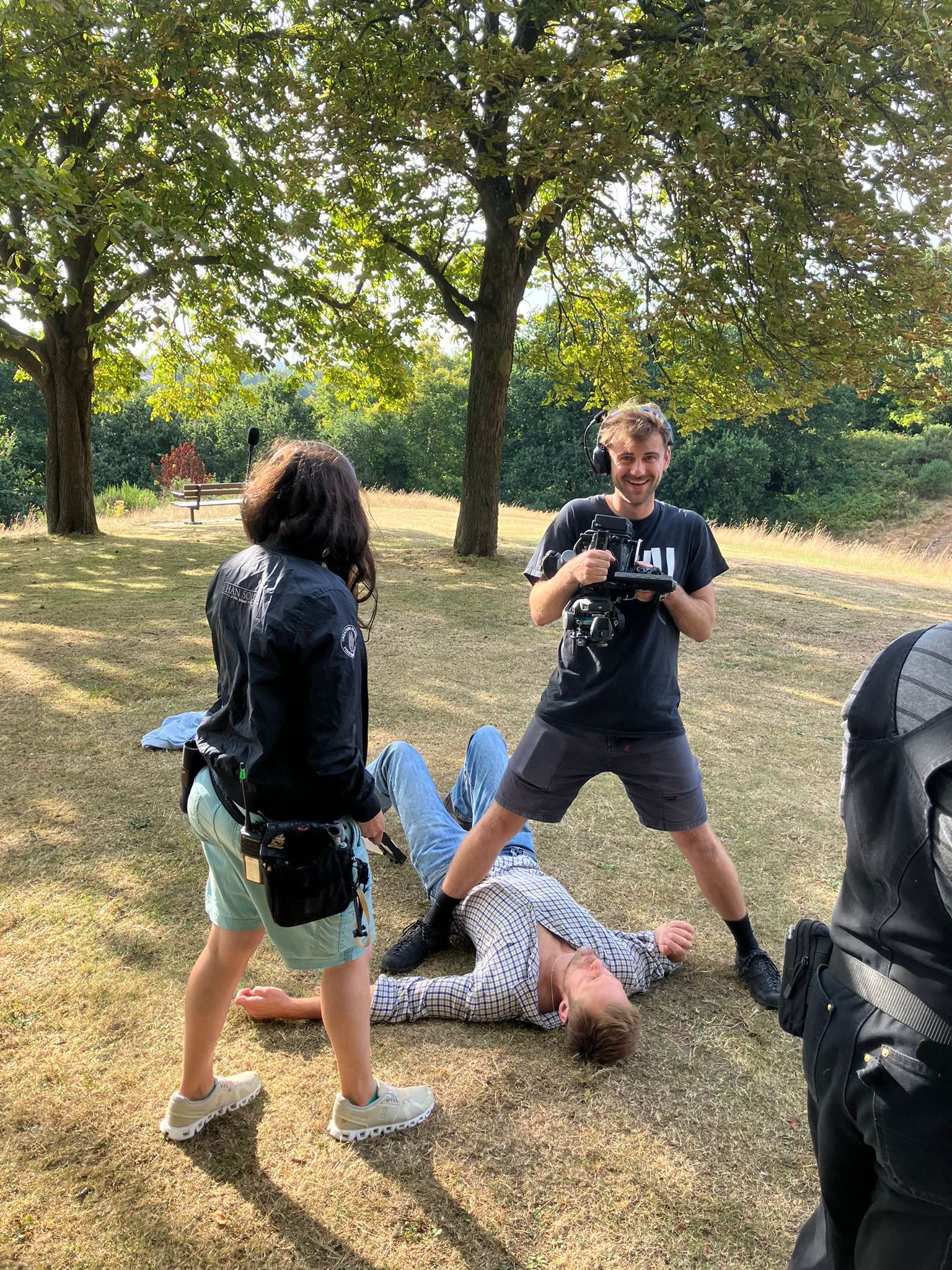
LIGHTON: A bunch of them actually came to the New York screening to watch it a second time last night, so I feel like I’ve gotten to know a couple of them.
RAMÍREZ: That’s so sweet. I mean, I think the movie has so many commendable qualities, but what really, really impressed me is that it pulls off this impossible thing of not letting off the inhumanity that can arise from certain power imbalances. But without spoiling too much this early on into our chat, it also doesn’t take away Colin’s pride in wanting to flourish within that space, even if we do see him struggle. So I’m curious if you were at all wary of offending people in saying that—
LIGHTON: When I speak to people about the film, I’m always quite quick to be like, “Clearly, this isn’t a blueprint for how a dom/sub relationship should work.” Ray, to me, is an irresponsible dom. Certainly in terms of ethical BDSM, he’s not the blueprint people should be modeling. But my interest was in presenting a relationship which very much sits in the gray area in terms of whether it’s a good or bad thing for Colin. There are aspects of the relationship that I think are abusive, and finding self-definition through abuse is a contradiction, in a way. It’s not something that’s easy, but there’s also a truth in it, I think. Often, relationships that have some toxicity in them do teach you how to better define what you want from a relationship going forward. When you’re any kind of filmmaker, if you’re making a film about a community, you have to really do the research into that community. But you also have to not wear silk gloves in your treatment of it, and not really focus on a fear of offending people, because that’ll hamstring the drama.
RAMÍREZ: Yeah, totally. I know from reading interviews that you stayed away from watching biker films while making this, but I’m curious what other relationships stood out to you as sort of—
LIGHTON: You know what? There’s a film called The Triplets of Belleville. Have you seen it? It’s an animated film, a French animated film, about a cyclist in France whose granny is his trainer and also this badass. And it’s like a caper: the kid gets kidnapped, and then she goes and drives a pedalo across the Atlantic to save him. So it’s a pretty odd film for me to go to, but the parent relationship in Pillion, I took some of that from The Triplets of Belleville in terms of fierce mothers kind of dom-ing their children.
RAMÍREZ: Are you a fan of [Rainer Werner] Fassbinder at all? Because I feel like he deals with these sorts of structures.
LIGHTON: I actually have not seen any, which is shameful, but I’m not particularly cine-literate for a filmmaker. I studied English literature, and I still read more than I watch films, actually. I probably started watching films properly in 2012, and so I’m very up-to-date with what films have come out, but less so in terms of film history. Most of my references tend to be quite modern. But Roma, the Alfonso Cuarón film, I remember watching that and thinking that the maid is the kind of peripheral character within the family but she’s also the focus of the film. She’s often just performing domestic tasks, or acting quite passively in the scene, but she has a kind of presence. There’s a propulsion created through following her performing these tasks and being quite withheld with her emotions. I thought that was a useful reference for how Colin needed to take up space for the viewer without taking up space within Ray’s world.
RAMÍREZ: I did think of Roma during this movie, actually—more visually, with the movement of the camera.
LIGHTON: It was a big reference in terms of the slow-developing shots. The orgy scene, for instance, the way we enter that scene is very Roma.
RAMÍREZ: Hearing you talk about where to place the emotional weight of a scene visually, is that something that came innately to you?
LIGHTON: I think it was actually something quite specific to this movie, because I was very conscious when I took on the book. In the book, and more exaggeratedly than the film, Colin is so passive and so lacking in action that he’s what you’re told you should never work with as a protagonist of a film. So a lot of the writing process was me thinking about how to not create something that felt distant or cold or inaccessible, because you have this character who’s often just watching and kind of quietly reacting. Part of the reason I wanted to cast Harry Melling was because I’d seen him, across quite a wide variety of roles, be very magnetic, but also often quite low-status in the parts he was playing. They were often the polar opposite of that alpha-male character you get, but I was totally gripped watching his face. I think there’s a version of Pillion where I could have leaned more into that kind of underacted performance, but I wanted someone who was lively for the viewer to watch.
RAMÍREZ: So much of the movie rests on just tracking his face, which is so expressive. It’s a really powerful performance. It reminds me, and I’ll stop bringing up—
LIGHTON: Fassbinder?
RAMÍREZ: No, even gayer. It reminded me of this one Bette Davis movie called Now, Voyager.
LIGHTON: Now, Voyager. Is it good?
RAMÍREZ: Yeah, she’s like an ugly-duckling type who then finds herself on a cruise.
LIGHTON: That sounds like my cup of tea. I actually did a draft a Pillion set on a cruise ship.
RAMÍREZ: Well, I wanted to ask about the different versions of this you envisioned. I know you tried drafts that were on a cruise, or ancient Rome. What would the biker leather aesthetic have looked like?
LIGHTON: Rome would’ve been a different thing, set in a gladiator school with sandals and those skirts. It would’ve been super-porny, which was the reason I decided it probably wasn’t right. But the cruise ship idea was that Colin would be a passenger and Ray was a security guard. I think it would’ve been much less about the wardrobe—that version of the film, the eroticism—because those security outfits on cruise ships are pretty vile. They’re very nylon-y, and there are people wearing polo shirts.
RAMÍREZ: Right.
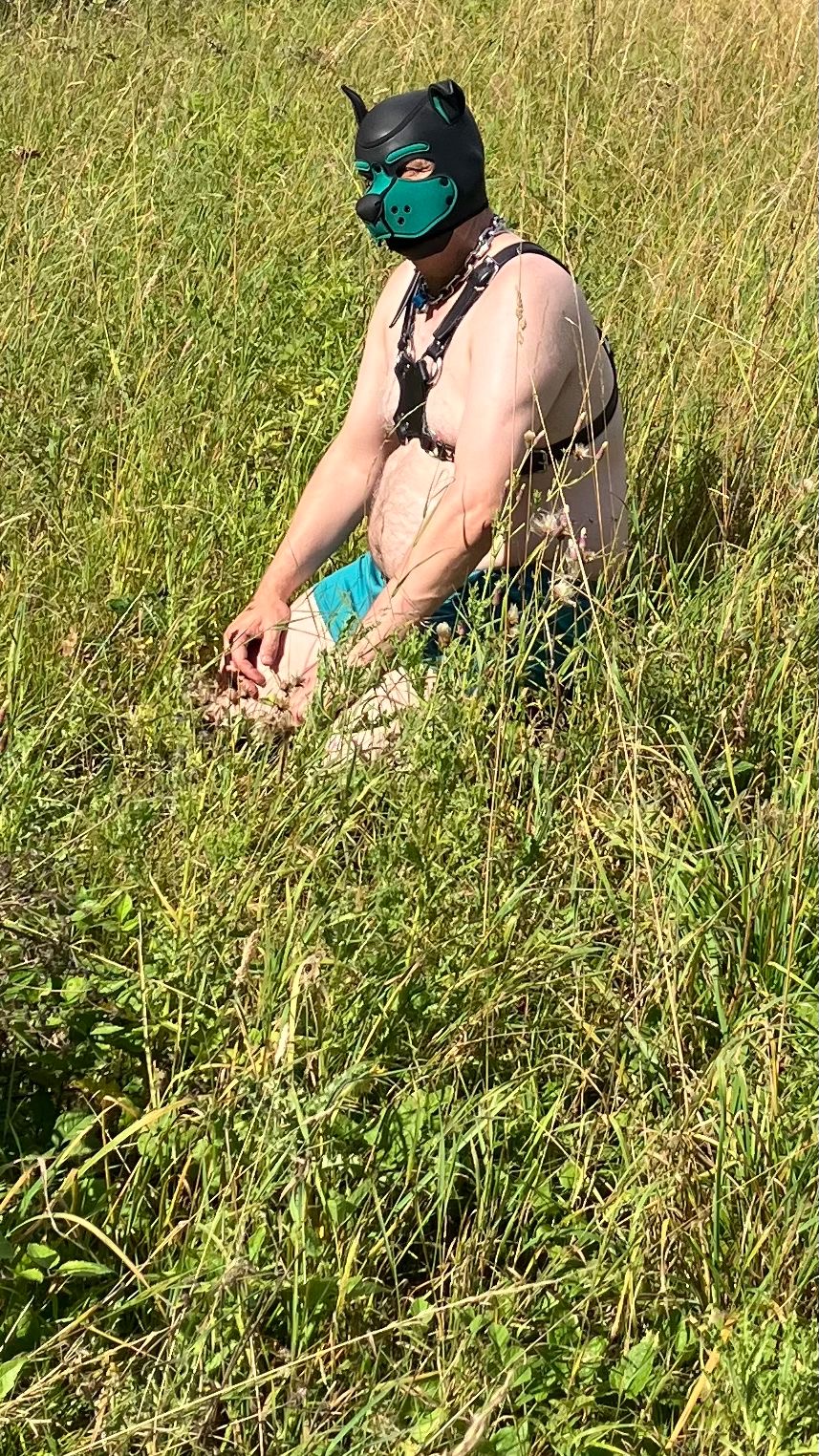
LIGHTON: It’s certainly not the kind of thing you see at Mid-Atlantic Leather. But what I really am glad about, returning to Bromley after having done Rome and a cruise, is that it meant the Britishness of the film could really play—the British humor, the references to Wallace and Gromit and Alan Bennett, all those kinds of touchpoints. I don’t think that that would’ve been successful if it had been on a cruise ship.
RAMÍREZ: Right. Is there anything that surprised you from inhabiting that world of the Gay Bikers Motorcycle Club?
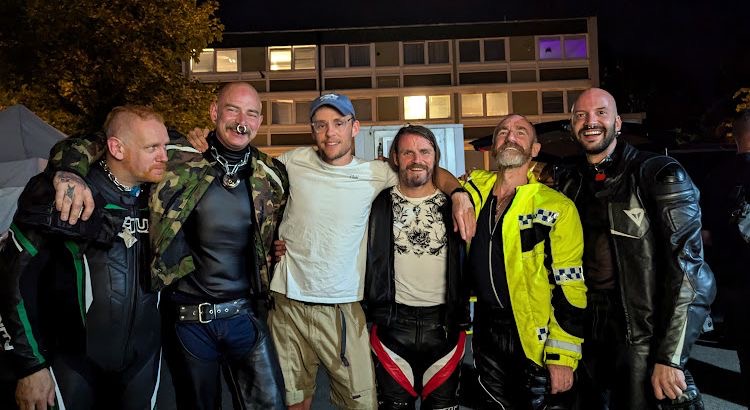
LIGHTON: Well, it now seems very self-evident to me, but there’s sometimes a misconception that all of the GBMCC are all involved in kink. It’s not a club about sex; it’s about biking. But on the kink subject, there’s this misconception that all they do is fuck or talk about fucking. And I remember going on this weekend of them riding their motorbikes, and we stopped off for a coffee, and there was this really banal conversation about the way urban foxes were spreading through London. It was the kind of conversation I’d have with my dad on a weekend. And I was like, “Oh, well, that’s a really good thing to include in the film.” The fact that banality can exist alongside a woodside orgy.
RAMÍREZ: Yeah. Something I was thinking about was how, if you tell me there’s a movie about a dom-sub relationship starring Alexander Skarsgård and Harry Melling, I’ll be like, “Alex is the dom.”
LIGHTON: Yeah, yeah, yeah.
RAMÍREZ: There’s a sort of idea of your lot in life where it’s like, if you are moving through the world as Alexander Skarsgård, you are the top, or the dom.
LIGHTON: I think it’s very coded into the film that Alex, by dint of being 6’4″ and looking like a Viking, has a status within this bike group that’s very elevated. But it’s pretty wrapped up in gay culture. If you go to a gay club and there’s a 6’5″ ripped guy, he often is the one commanding attention. It’s not just in gay culture—it’s society. There’s so much capital placed on beauty. And it’s been interesting to me to think, “Oh, would this work as a film if Harry—Colin—was the dom, and Alex—Ray—was the sub?” And I think that’s a version that would be very interesting. But if you put them out in public—you know, we have these scenes in Bromley, on the High Street—people are kind of turning their heads to look at Alex walking down the High Street in Bromley. So being a sub who commands attention is kind of a contradiction. Does that sort of answer you?
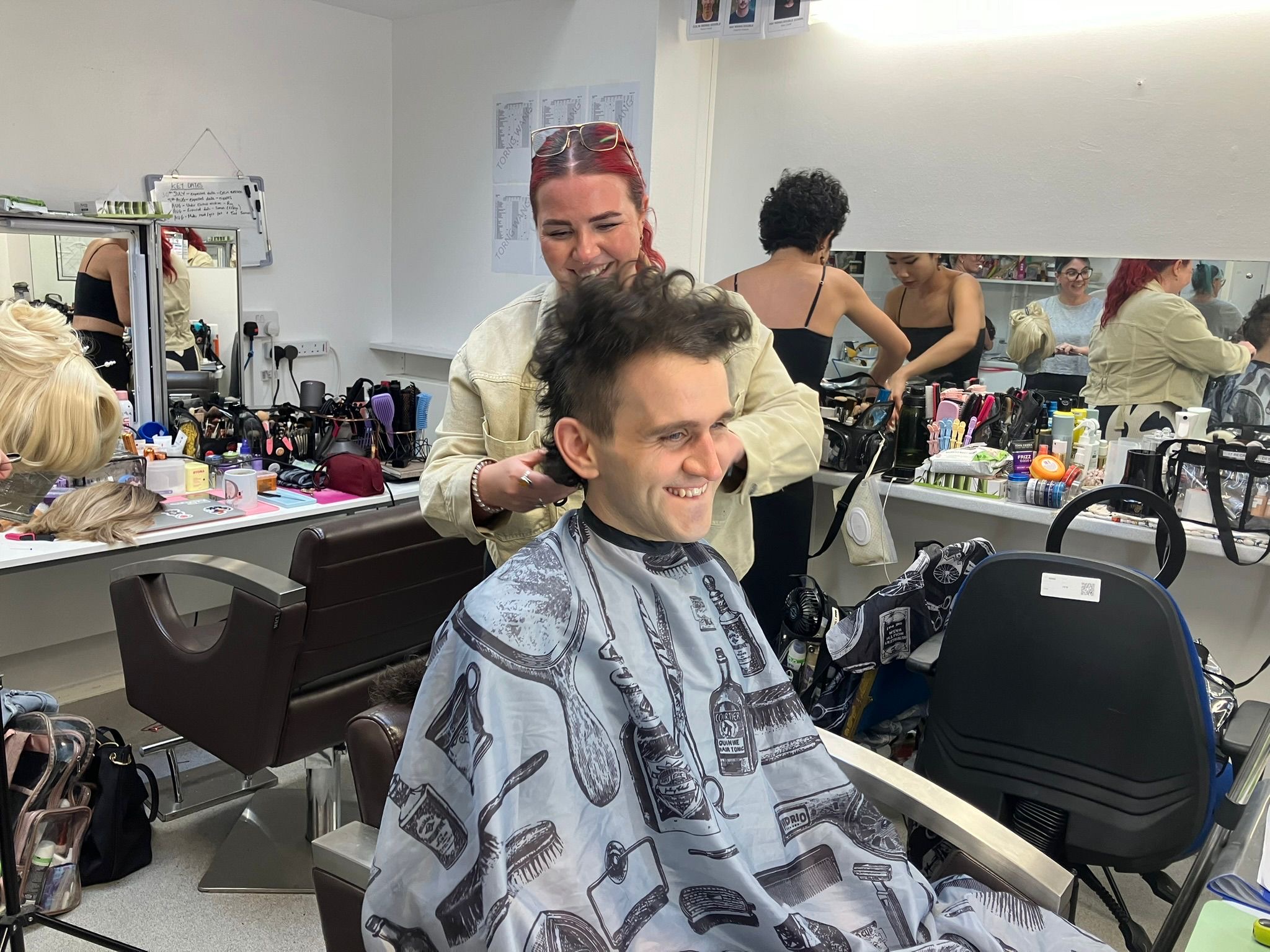
RAMÍREZ: Yeah, I think so. Did you engineer any icebreakers between your actors?
LIGHTON: I mean, the first thing they did was the wrestling rehearsal.
RAMÍREZ: Really?
LIGHTON: Yeah. And I’m not big into rehearsals unless I feel there’s a need for them. Really, what I like doing is discovering a scene in the moment, but I’ll do a rehearsal if there’s anything technical that you need to get to grips with. It was sort of an idea I got from Jane Campion, because I read that she got Benedict Cumberbatch and Kirsten Dunst to do just that. Their only prep before The Power of the Dog was to learn how to waltz together. So I think that letting the actors start by being physical together, rather than having to read lines, is a good way to break the ice, and it’s also fun. It meant that we began with laughter rather than tension.
RAMÍREZ: I know you’re working on an Alexander McQueen script, and then also maybe something about Turkish hair transplants?
LIGHTON: I’ve parked the hair transplants. I just said that because I wanted someone to pay for a hair transplant for me. But the McQueen script is written. I’ve written it for Oliver Hermanus. I don’t know what stage the project’s at at the moment, but I really like the script, so I hope it gets made. He’s a fascinating character.
RAMÍREZ: Well, not to draw too fine a line through these projects, but he was someone who was very drawn to abjection.
LIGHTON: Abjection is a particularly good way to describe Colin in the book, whereas I wanted Colin to push up against his abjection. I think I’m actually an optimist. Or I certainly, in terms of the way I live my life, I think I’m always pushing for optimism even if I’m miserable. So I actually think that I want my films to invigorate an audience and hopefully create something promissory and forward-facing, rather than death-driven.
RAMÍREZ: Well, what a beautiful button to end this on. Harry, thank you so much.