


CHAT
Joel Edgerton Enters the Train Dreams Discourse


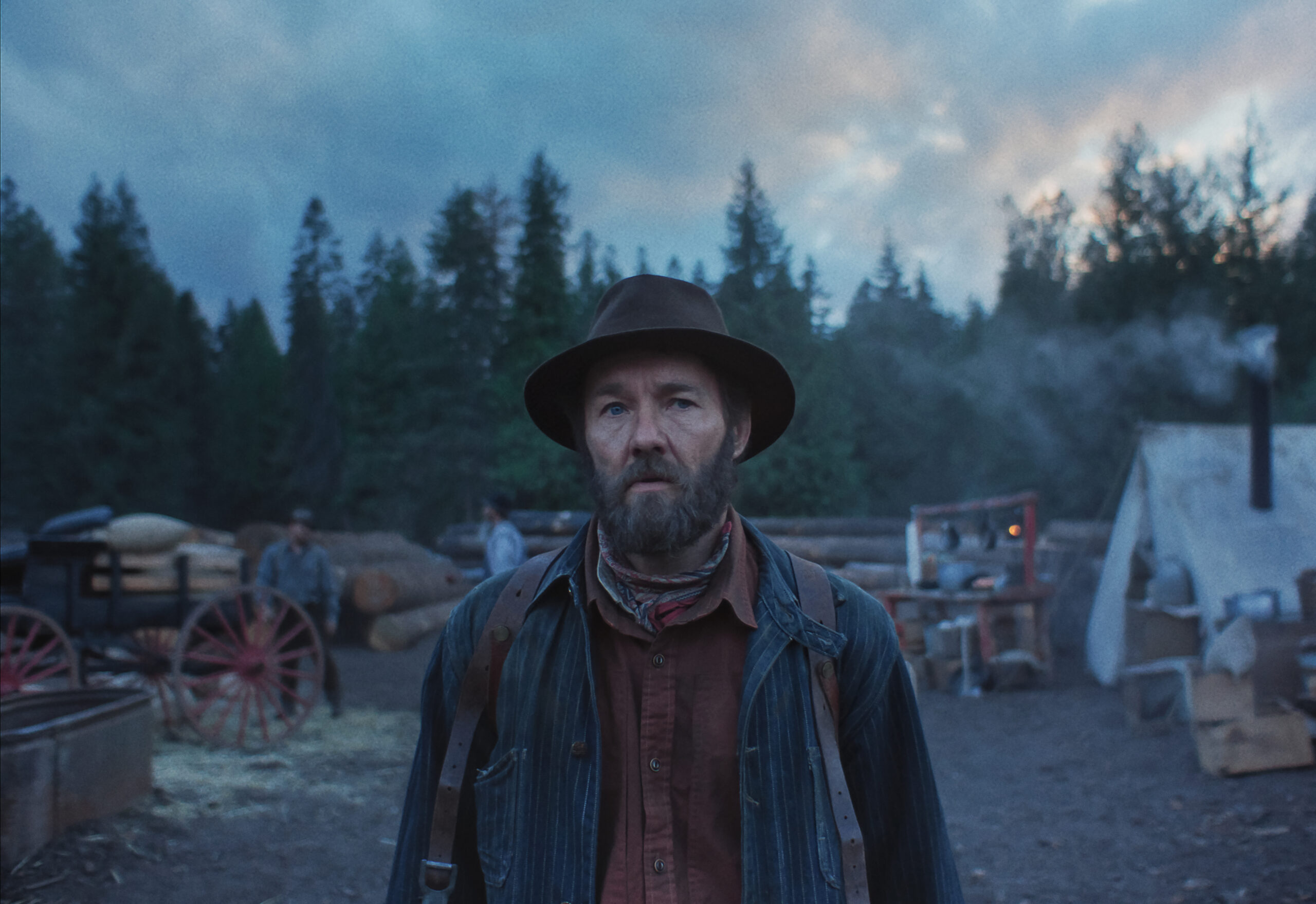
Train Dreams. Joel Edgerton as Robert Grainier in Train Dreams. Cr. BBP Train Dreams. LLC. © 2025.
In Train Dreams, Clint Bentley’s adaptation of the Denis Johnson novella, Joel Edgerton plays Robert Grainier, a laborer in the American West grappling with encroaching modernity while trying to protect his family. When it premiered last year at Sundance, the movie played like a meditative arthouse drama—because once, that’s exactly what it would have been. But when Netflix bought the film for $10 million, its trajectory shifted. Since dropping on the streamer last month, it has struck a specific chord online, finding a loud audience for its quiet devastation. For Edgerton, the project marks a line in the sand. Now a father, he found the distance between his real life and his character collapsing for the first time. He hopped on a call with us to discuss the trickle-down economics of Hollywood casting, his response to the Train Dreams discourse, and why he’s finally done hiding.
———
BARNA: The last time we talked, Warrior was coming out and your career was really taking off. What do you remember about that time?
EDGERTON: I remember the press tour so well and hoping so much that it would get seen, but almost no one went. And yet it’s now become probably my most talked about movie when I encounter strangers at airports. The other day, a guy came up to me and said, “My brother and I hadn’t spoken for years. I watched Warrior and immediately got on the phone with him and now we have a relationship.”
BARNA: Based on its place in the culture, I would’ve thought it was a hit when it came out, but I guess it wasn’t, which is crazy.
EDGERTON: No, it wasn’t, but a movie is a hit to me if it stands the test of time. We all love a big box office success, but movies sometimes take their time to get spread around.
BARNA: That’s very relevant to the movie you’re here to talk about. Just before we got on Time named you one of the 10 best performances of the year. Do you have somebody texting you every time you rack up another one of these accolades?
EDGERTON: Yeah, we get these notifications from publicists. I also don’t get the notification if it’s something I’d be disappointed by. I’d be lying if I said it doesn’t make me feel good to be considered on those lists. On the communal, altruistic level, I’m thrilled for the movie itself, and then on an ego level, it does pluck one of my ego strings.
BARNA: I was in Times Square on Friday night and there was a massive LED Train Dreams billboard, which I found so striking for a movie like this. Is this a big movie or a small movie, or is it a small movie that became big? Or is it just a small movie with the Netflix machine behind it?
EDGERTON: An artist could make something in their bedroom with one or two instruments, and it can sit alongside the most highly produced, expensive album. Movies are the same because the one ingredient that a big or small budget movie can have that will make it resound is story and character, and those are cheap. They’re not easy to craft, but they’re the common thing between any story on film that’s successful. Train Dreams trades in a good story and good character in a way that it can still sit alongside movies that seem bigger and louder. The success of the film on a business level struck me at Sundance when Netflix became so deeply interested in taking it on and their plan for rolling it out and putting a lot of care and attention into a campaign. The thing about Netflix, it’s like plugging into a louder amplifier. But again, none of that would matter if it wasn’t for the fact that Clint had crafted something that was a good story with good character.
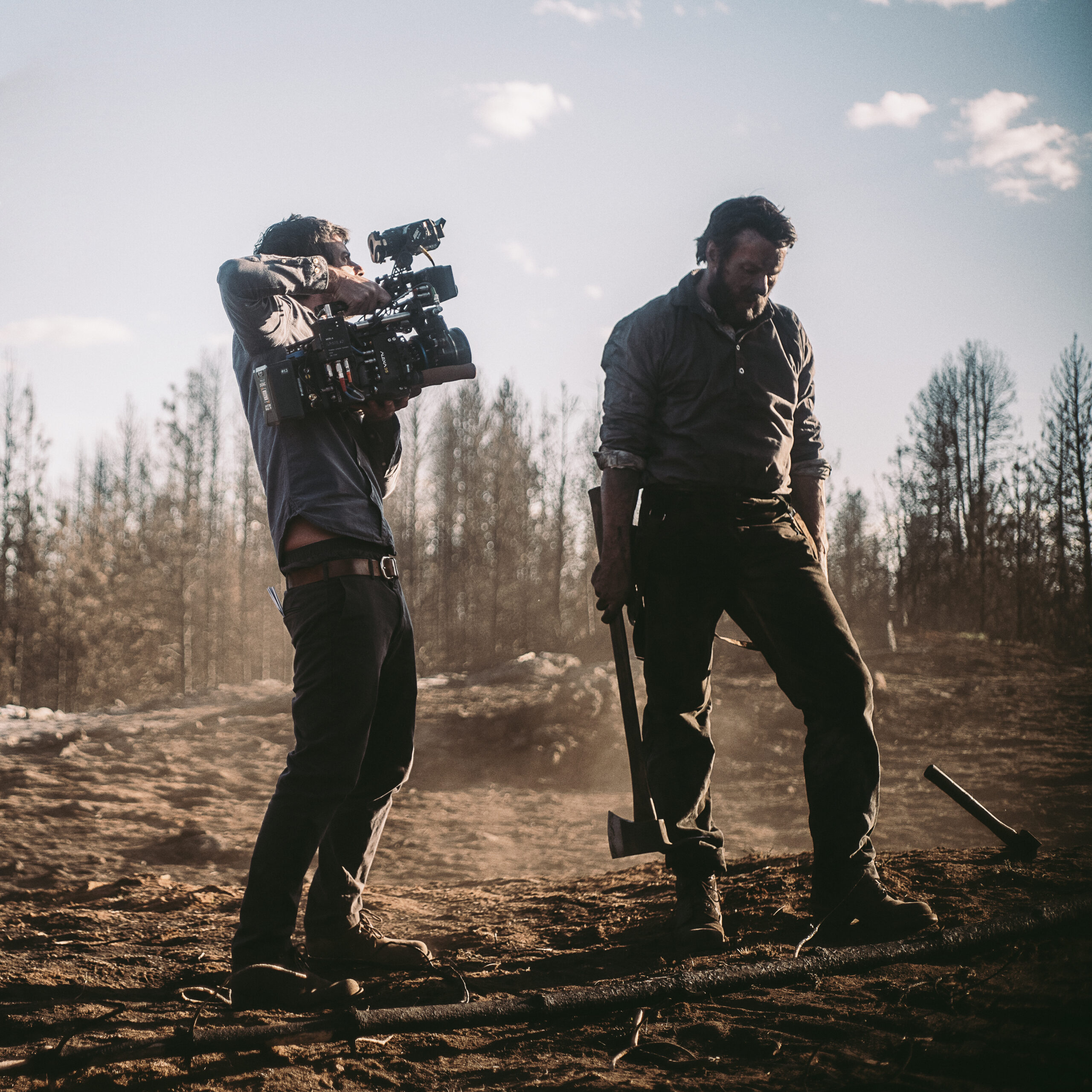
Train Dreams. (L-R) Director of Photography Adolpho Veloso and Joel Edgerton as Robert Grainier on the set of Train Dreams. Cr. Daniel Schaefer/BBP Train Dreams. LLC. © 2025.
BARNA: Do you think there’s a trade-off in terms of Netflix’s reach versus the theatrical experience?
EDGERTON: I would always want to strive and fight for the cinematic experience, but even the movies that do have a dedicated cinema release, they last for a handful of weeks and they’re gone. David Michôd, who I collaborated with on The King and is a longtime friend, said something really cool to me when we were wrestling over where to place this movie, The Stranger, we’d made that was showing at Cannes. Netflix was very interested, and at the time, I was still very on the fence about streaming, depending on the film. And David said to me, “How many of your favorite films have you ever watched on the big screen?” And knowing that some of my favorite films were made in the ’70s, I ended up watching them on VHS tapes. I didn’t get to experience them in the cinema, but I was drawn in by the story and the characters. I want people to see my movies at the cinema if they can, but I’m also pretty pleased by the idea that a movie like The Stranger was on the top 10 list in 60 countries and seen by millions more people. What I secretly wish though is that I could sneak into the homes of anyone watching Train Dreams and make sure their TV is not on sports setting because I feel like it makes any opulent cinematic film look like a terrible made for TV piece of crap.
BARNA: Right.
EDGERTON: This may sound controversial, but I’d rather someone watch it on any device rather than not watch it at all.
BARNA: Yeah, 100 percent. There’s a bunch of discourse around the film taking place online. Have you been paying attention to it?
EDGERTON: Can you explain to me what that discourse is? Because I actually texted Clint [Bentley, the director] and said, “I noticed there’s a discourse on the movie. Do you know what it is?” And he said, “I’m just looking into it.”
BARNA: There’s levels to it. There’s the softening of the Robert character. Book readers say the film has made him more heroic or likable by smoothing out some of the rougher edges that were in the novella. Others are accusing it of being derivative of Terrence Malick, and then there’s a whole ASMR conversation around the film.
EDGERTON: Is there a fourth one?
BARNA: I can’t think of it off the top of my head but essentially I think people are talking about what it is about this specific movie that has struck such a chord.
EDGERTON: First of all, in the old days, people used to say, “Any press is good press.”
BARNA: Absolutely.
EDGERTON: I guess discourse is a more gentle version of saying debate. No movie’s going to please everyone. If we could do that, we’d all be rich. Trying to honor a book is a really challenging thing. What I do admire about what Clint’s done is he’s acknowledged that to take a book and turn it into a visual thing, you’ve got to take some authorship. The book is far more fractured. One thing Clint has given more fabric to and amplified is our investment in the marriage of Robert and Gladys, because in the book, we barely even know Gladys, and then it’s in later chapters that we catch glimpses of their earlier courtship. Clint has created the fabric of the relationship so that when things happen, we can really feel devastated by loss.
BARNA: For sure.
EDGERTON: And it’s really interesting around the Chinese worker. We had two hours to shoot that sequence. In the book, this description of this big mountain and the men carrying the Chinese worker up the mountain was not possible for us, limited by our location and the bridge we found. I get this feeling online that people are talking about how I’m trying to stop the worker from being carried away. In fact, I am trying to help. It’s just such a short amount of time. Clint and I talked about the power of the decency of Robert as something to really cherish, which we don’t often see on screen—a decent man who does try to help, but he’s so decent that by simply putting his hands on the worker, he feels like he’s had a hand in his death. I think in the book, there’s questions around whether he lives or dies. He finds his way down the bridge and jumps into the river, and there’s a possibility he survived. But just to put a real strong marker in the ground that there’s a death, that he’s so mistreated and that Robert feels the impact of guilt from that that haunts him throughout the story, I find is quite special.
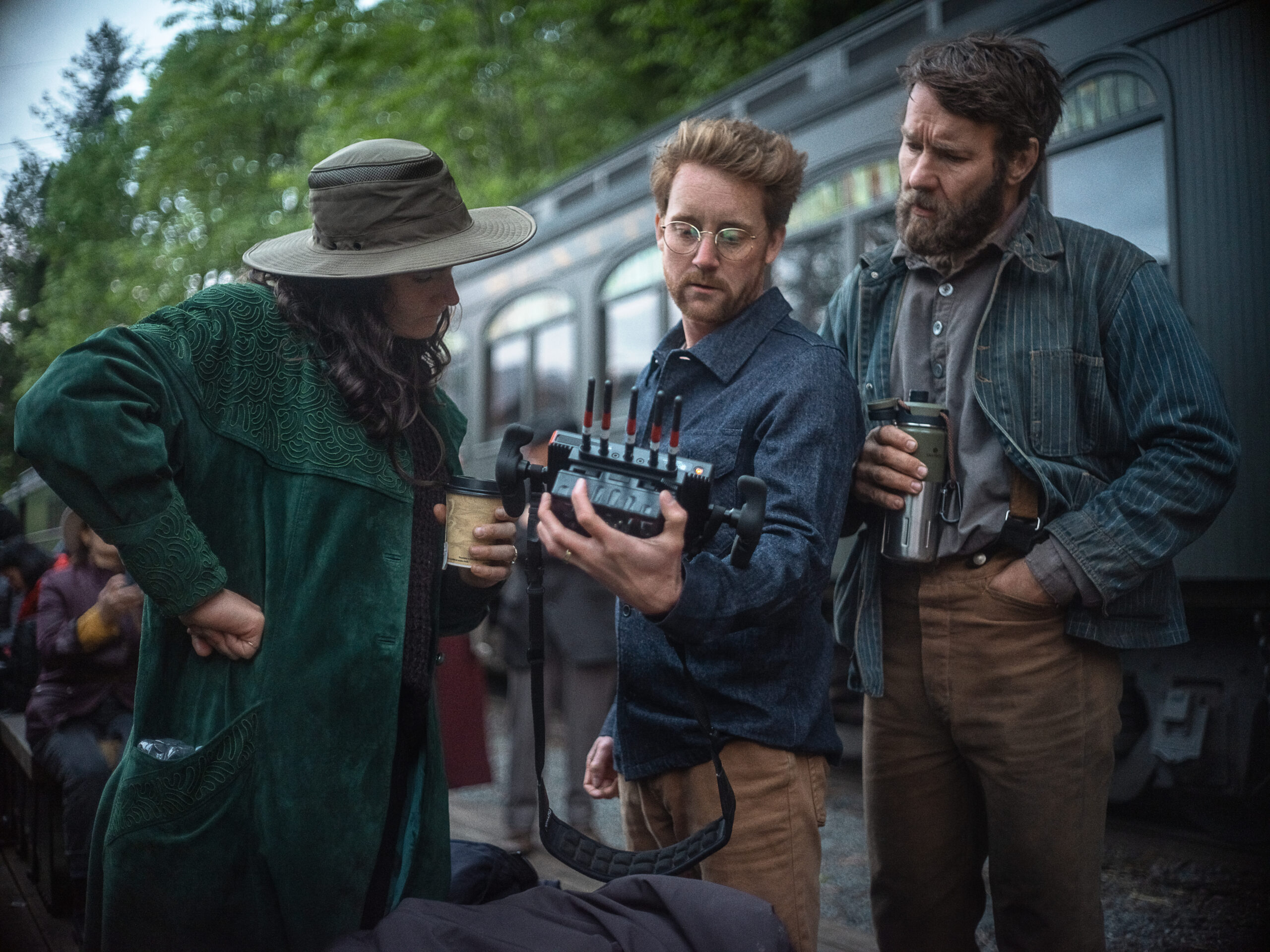
Train Dreams. (Featured) Director Clint Bentley and Joel Edgerton as Robert Grainier in Train Dreams. Cr. Daniel Schaefer/BBP Train Dreams. LLC. © 2025.
BARNA: Oh, for sure.
EDGERTON: The Malickisms, I think, has to do a lot with the cinematography, the fact that we’re trading in this photography of nature and questions that swell around not the meaning of life, but questions of why we’re all here. I also don’t think it’s a terrible comparison to make, but I certainly don’t think Clint was trying to do a Terrence Malick cover song.
BARNA: I would agree.
EDGERTON: One of the things I find interesting about the discourse about the qualities of the film and whether it’s gentle or quiet is just how epic the ideas of falling in love and being a parent are, partly because I’m a dad, and I’m in love. They’re two of the biggest things that happened to me. As a result, my greatest fears are around losing the people that are important to me. In that sense, I find Train Dreams has some of the biggest peaks and valleys in life itself. Audiences are maybe wired that cinema should be about bigger things like murder and explosions and bigger, spiky, dramatic things. What Train Dreams sets out to do is to show the majesty of ordinary life. So if it feels comforting for people, great.
BARNA: Do you see Robert as an ambitious person? He’s focused on survival and family. What do you think about him in those terms and how do you relate that to your own ambition?
EDGERTON: It’s interesting, when Gladys brings up the idea of them starting a lumber mill, duly for the purposes of Robert keeping the family closer together, it’s something that’s never even occurred to him, to improve his station in life. I do believe that most human beings see that there’s an invisible ceiling in their life based on what socioeconomic situation or racial group or community within a certain country they grew up in. If they’re immigrants or lower class or middle class, everyone has a ceiling they imagine. It’s ambitious people that break through ceilings. Robert’s not one of those people. He’s just someone that’s putting one foot in front of another. Each problem that exists in front of him or each task is something he does to the best of his ability, and he tries to be a good person along the way.
BARNA: And what kind of person are you?
EDGERTON: I was never a really ambitious person. I had ambitions to be a stage actor, but I never imagined I’d be sitting here talking to you about starring in a movie, that’s for sure. But as each thing came in front of me and the opportunities started to open up, I started to develop an appetite for the next platform above me. One of the things that excites me about a movie like Train Dreams having a certain amount of success is that there’s still stuff I want to do that is not in my reach, working with certain people and getting my hands on the kind of characters and story that I don’t often get because I miss out on them to someone more famous than me. Train Dreams was a gift to me because I felt like it was so personal. It felt like I was the right person to play the role. It’s one of those rare occasions where I’m number one on the call sheet, which is not always the case. If I’m lucky enough to do a movie like Train Dreams, I secretly wonder who said no in order for it to trickle down to me.
BARNA: Really.
EDGERTON: Years ago, I was a young actor doing a movie called The Hard Word with Guy Pearce and Rachel Griffiths, and me and this other young actor were sat in the back of the car and Rachel and Guy in between setups were talking about who has to say no to a film before it trickles down to them. I remember thinking, “Fuck, man, I am so far away from even that.” The way they were talking was like they were third or fourth on a pecking order of Hollywood. Brad would have to say no. Johnny Depp would have to say no, and then maybe just maybe Guy would get his hands on it. He wasn’t being mad about it and he was being relatively humble in admitting that he knew how it all worked. Some of my favorite Hollywood stories are the trickle down.
BARNA: Absolutely.
EDGERTON: The fact that we get certain actors that we love like Ed Norton, because someone else said no.
BARNA: We got Keanu Reeves in The Matrix because Will Smith said no.
EDGERTON: Yeah. I have a rule that if ever I happen to pass on a project and it went to someone else, that I would, unless I start to lose my mind, never be like, “I said no to that.” But if I ever find out someone’s like, “I said no to that,” and it ends up in my hands, there’s no ego involved. I’m just like, “Well, lucky me.” Because then I get to put my hands on it and do what I do, hopefully serve it the best. So I’m never even going to ask Clint that question. [Laughs]
BARNA: Has doing this movie changed the way you look back on your career up until now?
EDGERTON: Yeah.
BARNA: How so?
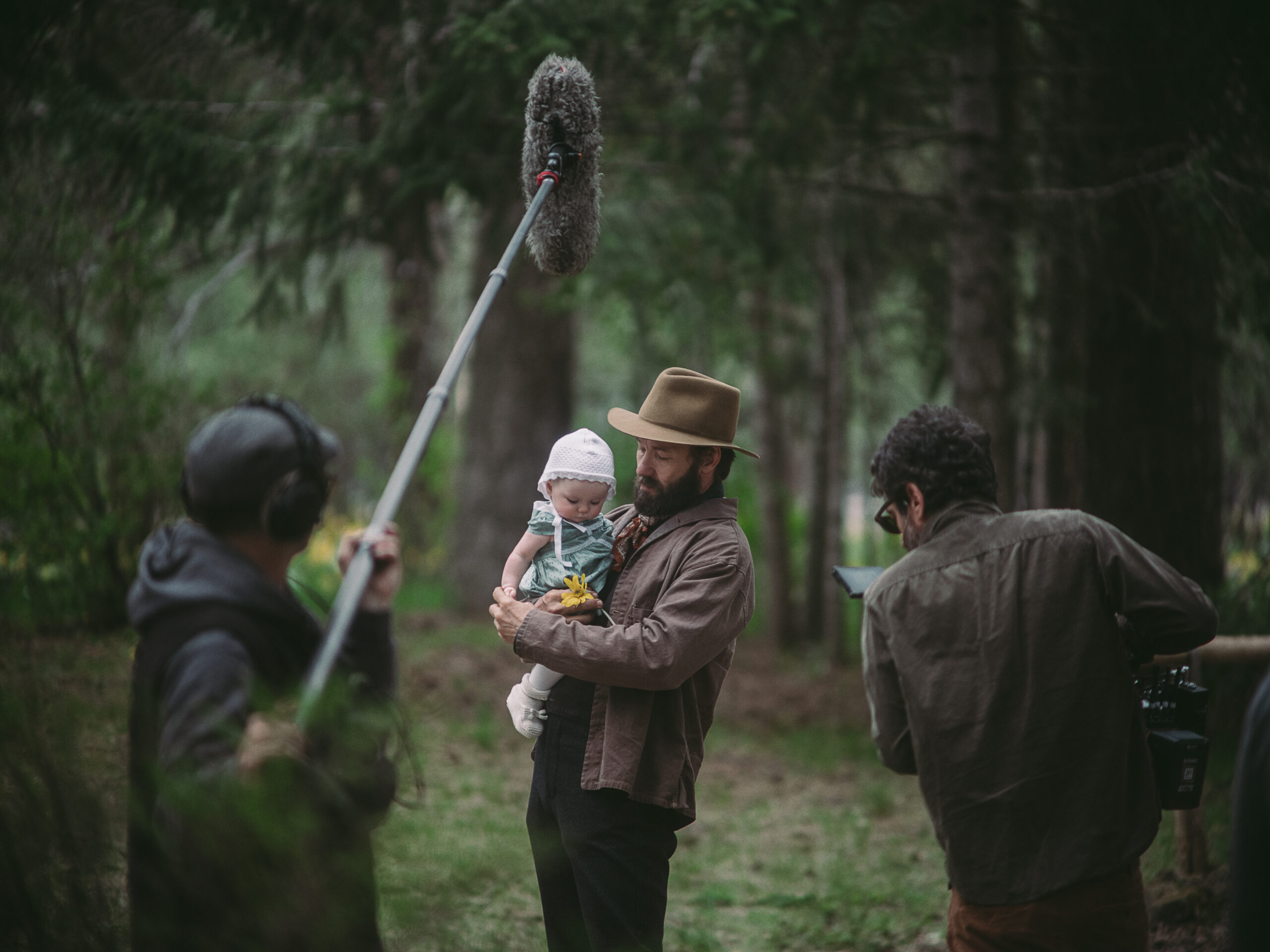
Train Dreams. (Featured L-R) Joel Edgerton as Robert Grainier and Director of Photography Adolpho Veloso in Train Dreams. Cr. Daniel Schaefer/BBP Train Dreams. LLC. © 2025.
EDGERTON: Well, I’ve always coveted that idea of going, “I want to play a character that’s not really me.” And for example, in The Great Gatsby, playing Tom Buchanan or playing John Connolly in Black Mass was a chance for me to try and play a bit of dress up and find a different energy or arrogance. I tended to avoid things that felt personal. Train Dreams was so much lined up with who I am and what I’m going through, that I felt like it was a chance to do the other thing. I’ll always want to keep doing the Black Masses and the Gatsbys, but I’m also keeping my eye out for those things that I do connect with more personally because it’s a chance to go to work without having to stretch your imagination too far. Train Dreams was a chance for me to just bring myself to set in many ways.
BARNA: I’d love to talk to you about the Warner Bros. Netflix and Paramount fiasco but I’m being told to wrap.
EDGERTON: I will say one thing about all that. I think Netflix is a very powerful and successful business and however they’ve got there, they’ve done it very well. It’s a behemoth of a business, but I do want the old Hollywood studios to survive.
BARNA: Of course.
EDGERTON: I think that there’s enough toys in the sand for everyone to play with, and I don’t think everyone should have all the toys.
BARNA: Good way of putting it.
EDGERTON: Sometimes the only shot young filmmakers have is to get their films made on a streamer or not at all. But I also stand by and champion anyone who’s willing to fight the good fight for cinema because it’s a chance for kids to go somewhere healthy and exciting and creative to keep immune. And it’d be a shame if it limped off into the dust.
BARNA: Yeah. I think it’s the older folks who are content to watch things at home in a certain way.
EDGERTON: Yeah. People like me just want to watch movies in their underpants.