


BEAUTY
Rebecca Hall and Evan Peters Are Trying To Get Through This Interview


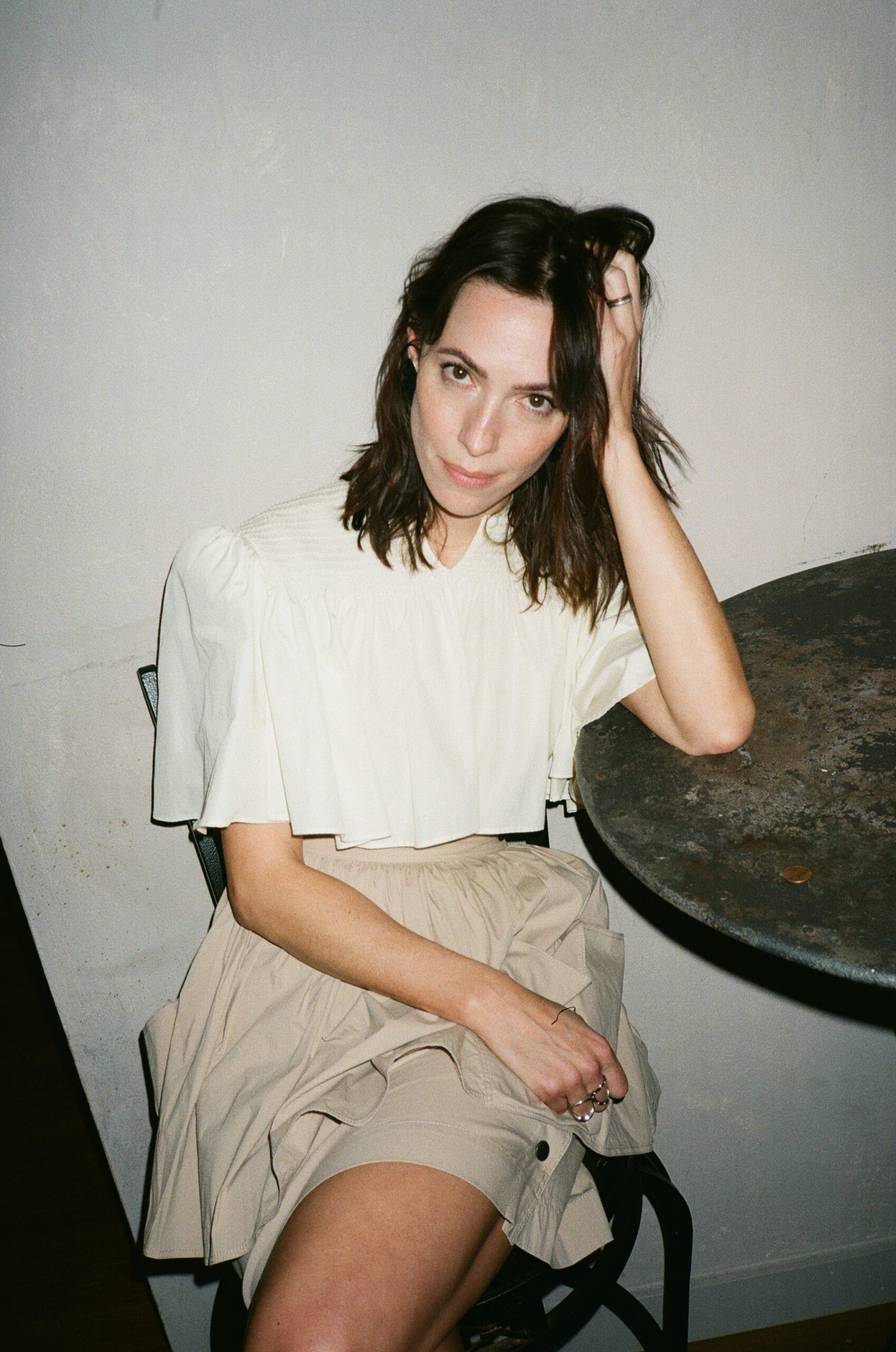
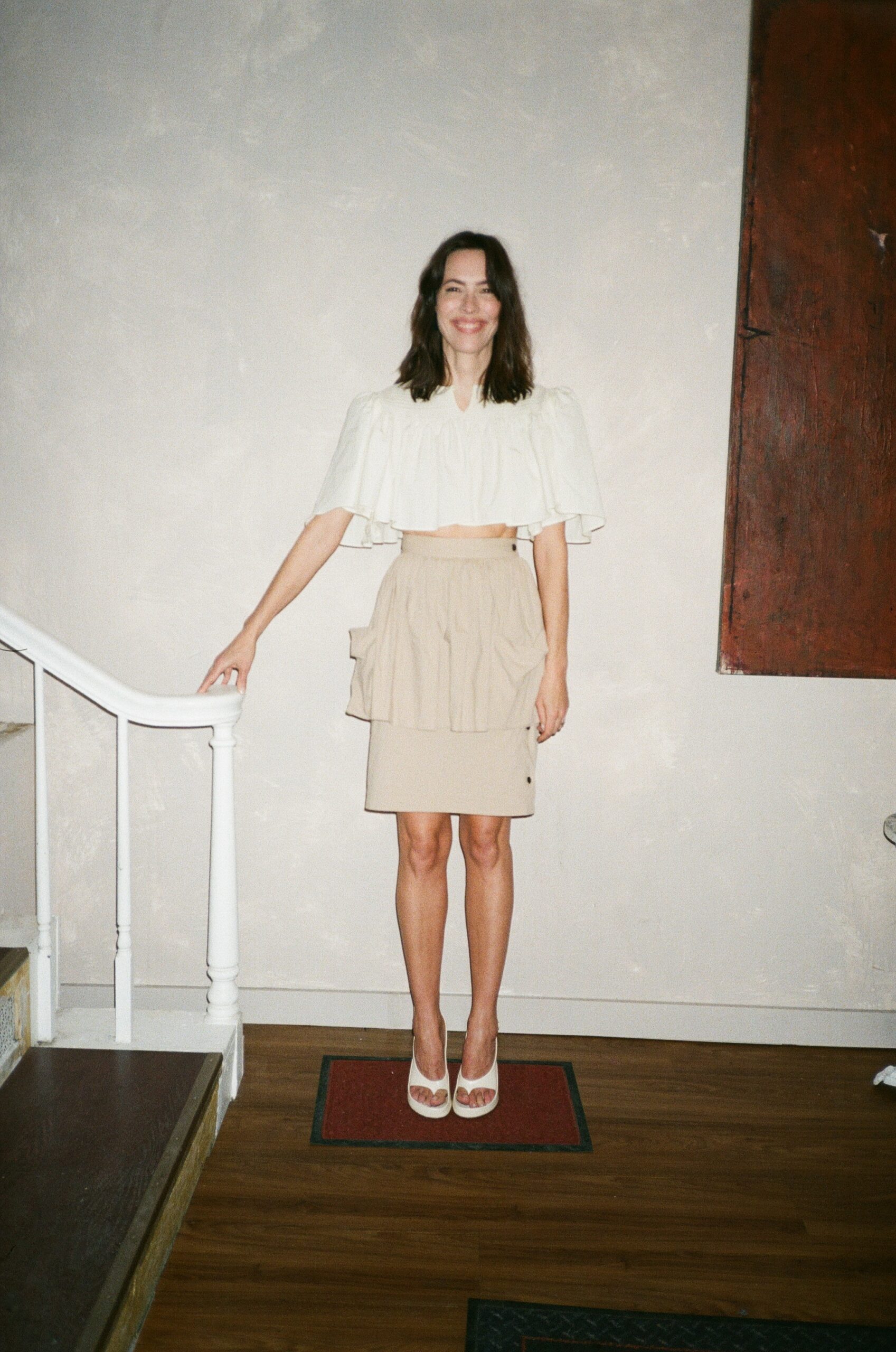
Rebecca Hall, photographed by Matt Weinberger.
Rebecca Hall has been quietly one of the best actresses for a while, reliably showing up in indies and blockbusters, anchoring them with a feeling of grace and gravitas. She also wrote and directed Passing, one of the more striking directorial debuts in recent memory. Now she’s in The Beauty, Ryan Murphy’s new FX body horror series about a sexually transmitted virus that makes people physically perfect and then kills them, which Murphy has described as a meditation on “Ozempic culture.” Hall plays Jordan Bennett, an FBI agent investigating a string of supermodel deaths that leads her into the arms of a shadowy tech empire. Like most Ryan Murphy shows, it is loud, theatrical and unhinged. Hall is, as usual, the calm in the eye of the storm. To discuss the project and her process, she sat down with her co-star Evan Peters. It did not go entirely as planned.
———
EVAN PETERS: Hey, how are you feeling?
REBECCA HALL: I’m delirious. I feel like a melted puddle. I once was, and now I am but a puddle. How are you?
PETERS: Is that a poem?
HALL: Yeah, by me, just now.
PETERS: Okay, great. I’m good. I’m very jet-lagged.
HALL: Me too.
PETERS: Let’s dive right in. I told you that I’d never let you live it down, and now the readers won’t either, but you did forget your ID and had to Google yourself recently in London to show the bouncer outside the salsa/reggaeton club that you were, in fact, over 18, which is a lovely compliment considering the brutality of The Beauty. And particularly funny because, considering all that you’ve accomplished in your life, you really are one of the most humble, down-to-earth, and hilarious people I’ve ever met, and were actually quite embarrassed to have to do that.
HALL: [Laughs] Aw, come on.
PETERS: This is a puff piece, I just want to let you know that.
HALL: I’m glad that you accepted the bribe.
PETERS: There’s a payoff at the end for me. So we’re just going to start with a hard-hitting question and get it out of the way. What is your favorite bathtub toy? Don’t answer that.
HALL: I want to answer it.
PETERS: No, no, you don’t have to. We’re going to split this up into three different sections: the acting section, the directing section, and the writing section. When I was younger and I would read interviews of actors and actresses that I liked, I’d always look for little nuggets of wisdom, and I’m going to try to weave these into the show somehow. So here we go: Acting.
HALL: Heard of it.
PETERS: What is it?
HALL: What is it about?
PETERS: It’s a weird thing. You started when you were nine, so what do you like about it? How has it changed for you? You seem very relaxed and at ease, as if inspiration just sort of comes free-flowing out of you, which is really annoying.
HALL: When we were doing the press tour, I said something I’d never said before. But it was one of those, “Oh, that’s really true of me.” On the whole, I’m more self-conscious in life than when I’m acting. I’ve always been a very shy person, and when I started acting, I felt completely free and easy. I didn’t feel like anyone was watching me, which is really perverse.
PETERS: That’s just totally backwards.
HALL: It doesn’t make any sense.
PETERS: [Laughs] I’ve never heard anything like that.
HALL: It’s a psychological framework that I’m living with, and I’m happy with it. A therapist might have something to say about it, but I’m good with it, so kindly shut your mouth.
PETERS: [Laughs] Well, that’s amazing.
HALL: I work really hard prior to getting on set so that I can just let whatever happens, happen.
PETERS: You do all that stuff, and then you can let it all go.
HALL: Don’t you?
PETERS: Yeah. Do you find that your system has changed over the years? Like what works for you, you keep doing, and what doesn’t, you let go?
HALL: That sounds like that’s true for you.
PETERS: That is what’s true for me, but you said you’ve had systems, so I’m wondering if—
HALL: I’m more flexible according to what the thing is. When I started working in film—and I guess TV—shooting out of order seemed so psychotic, because I came from theater, where you spend so long crafting the overall arc. So I developed a system where I’d get a very large piece of paper and then separate out the character’s scenes from the script and just do a chart. It’s like a mind map, so it moves around, and I’d stick it on the trailer wall. It wouldn’t be as prosaic as, “This is what’s happening in the scene.” It would be more like, “Here’s the emotional state I’m in when I enter the scene, and here’s the emotional state I’m in when I leave it.” So I could look at a scene and know where I had come from and know where I was going at any given point.
PETERS: Wow.
HALL: It’s a complete waste of time, because then people take things and edit them, so they’re never in the right order anyway.
PETERS: [Laughs] At least you’re giving them something, and you can sleep at night, so that’s nice.
HALL: Yeah. [Laughs]
PETERS: That’s a very cool little nugget. We just got a great one there. I’m very excited that I learned that, and I might steal it. Alright, that’s our time on acting. Moving on. Our next one is directing. Passing was brilliantly directed, and this puff piece is my attempt at getting in your next directing endeavor. Talk to me about that leap and the challenges, excitements, terrors.
HALL: This is so awkward to do! I don’t like talking about myself with my friends. It’s one thing to do it with a journalist.
PETERS: You have to. The truth is we’ve never talked about anything, we just fuck around.
HALL: We just talk shit!
PETERS: Yeah, we talk shit all the time.
HALL: I’m very comfortable talking shit. This seems very boring.
PETERS: You asked me to do the interview, so I’m doing it, and I’m trying my best, dammit, to get to know the real Rebecca Hall.
HALL: Have you ever wanted to be a journalist?
PETERS: I do now. I’m enjoying this thoroughly.
HALL: It’s making me feel very uncomfortable.
PETERS: [Laughs] That’s probably the joy of doing it, right? Because here’s the thing. Let’s say I’m an up-and-comer, and let’s say I want to make the switch and I’ve got chocolate pudding in my underpants and I need advice. And I say, “What do I do?”
HALL: How do you do it?
PETERS: What are you going to tell me when I’m like, “I want to direct this thing?”
HALL: Actors are really lucky because we spend so much time watching directors and understanding what the job is. What you don’t know about is the edit. If you’re a writer, then you’ll understand the edit, because editing is an extension of writing the whole thing all over again. Honestly, it was in many ways my favorite part, because I love writing. But that’s for the writing section. I’m so sorry, I’m jumping sections.
PETERS: We’ll get back to that.
HALL: I’ve seen lots of different ways of directing, and there really is only your way. When you first do it, it’s scary because you feel that there’s a whole bunch of stuff that you ought to know that you don’t. What it really boils down to is your relationship with the screen, the monitor, the thing you’re shooting, and the frame. Do you like what’s in the frame? Does it calm you? Does it irritate you? What do you feel? And is it, emotionally speaking, the story that you need to tell? That’s what it all boils down to. And there are obviously lots of different ways to talk to actors, and lots of different ways to talk to your crew, because I think the director’s number-one job is to work out what everybody needs to do their best work. And honestly, you feel a little crazy, because you can never underestimate how little people don’t see what’s inside your head. You make yourself go crazy. Draw the pictures. Show the images. Say it again. Repeat it. And when you think you’ve repeated it so many times that you’re the world’s biggest bore at a dinner party, that’s when you repeat it again. That would be my advice.
PETERS: That’s amazing.
HALL: That was a lot of words.
PETERS: No, no, no, that was perfect. That was a golden nugget. Yeah, it’s communication, but that sounds—
HALL: That was a much easier way to say what I just said in a very long-winded—
PETERS: No, no, no.
HALL: Just communication.
PETERS: It was brilliantly said, because it’s far easier said than done. That sounds like a ridiculously difficult task, steering that ship.
HALL: It’s also the best job in the world.
PETERS: So fun, I imagine, once you get the ball rolling.
HALL: I loved it and love it and will love it again, I hope. Knock on wood.
PETERS: Let’s quickly tie that into The Beauty. How was working with Ryan [Murphy] as a director?
HALL: It was so fun. I also want to say thank you to you and Ryan, because you have such a history at this point, and you were both so generous with me coming into that. I loved working with Ryan. He knows exactly what he wants, and he’s very relaxed about it. I have much more faith and trust in a director when they allow you to do whatever you want.
PETERS: Right. He has a very strong vision and can communicate well.
HALL: Right, but he also makes you feel like you’ve come up with a whole thing.
PETERS: That’s right. He’ll give you this space in the room to do whatever you need to do, so it’s a masterclass.
HALL: He let me make up a lot of nonsense and also was very good at telling me, “Okay, don’t do that.” [Laughs]
PETERS: [Laughs] That’s right. He’d go, “Okay, we got that,” and then we’d do something else. A very nice way of saying, “Moving on from that.”
HALL: Yeah.
PETERS: Now we’re going into the writing section. I have a great little book that has writer rituals. I love it so much. Do you have a ritual?
HALL: I meditate every morning, and I meditate again in the afternoon because I’m crazy like that.
PETERS: You’re addicted.
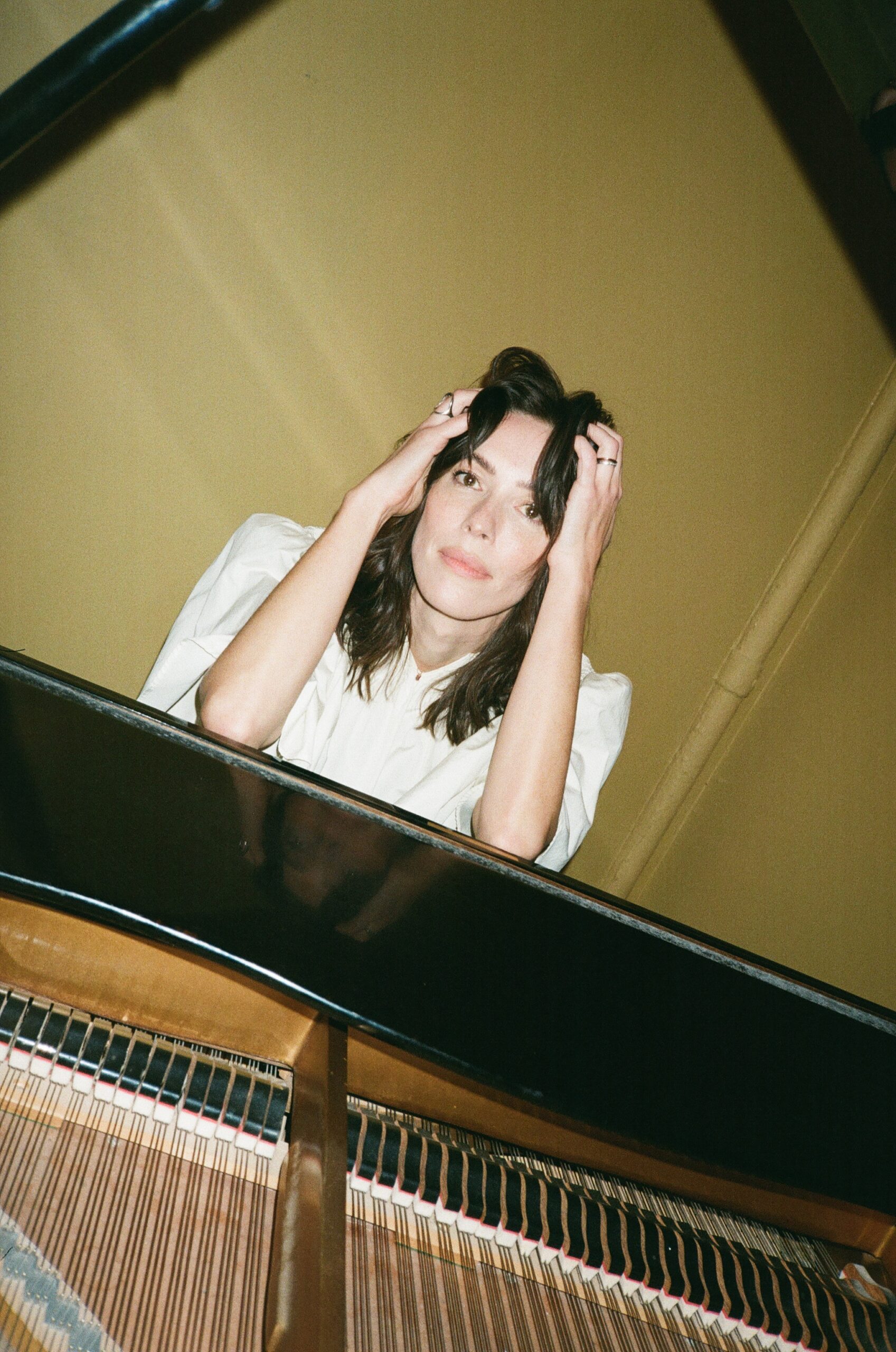
HALL: Nothing really starts until that happens. In some ways, the act of sitting down and deciding to write is a ritual in itself, and there needs to be a pause around it, because there’s a moment when you’re like, “I’m going to commit myself to being in this place.” But when I start, I tend to not be able to stop. And I can be very fast with scripts, actually. I wrote something I’ve been trying to get made—the first draft of it—very quickly. That’s because I get a little fevered with it, and then I can’t really settle on anything else until it’s done, unless it’s something that just clears my brain out. There are three things that do that. One is gardening, two is painting, and three is playing the piano.
PETERS: You also play the piano?
HALL: Yeah.
PETERS: I did not know that. How about that? A pianist as well. That was a brilliant train of thought, and I’m sorry.
HALL: I’m very annoying when I get into these states, and I’m very grateful that I have a very tolerant husband. Morgan [Spector] just tends to laugh at me and also worry about my wellbeing. He’ll occasionally knock on the door and be like, “Have you drunk any water, and have you eaten any food?”
PETERS: That’s truly inspired. You’re in the flow state.
HALL: What I like about jumping between the two is I can refine the flow state in one of the other things, and then I can go back to the writing. But really, it can be anywhere as a result of that, because when I’m writing something, I’m writing it. I’ll be sat on the couch in the midst of all the noise, with my daughter running around, doing things, Morgan on the phone. Or I’ll go into the garden. There’s a little bench that I sit on when the flowers are in bloom. I’m very happy in that place. I’ve also been known to write in the back of a car. Something about being in transit takes the pressure off.
PETERS: No car sickness?
HALL: I do get car sick, but not when I’m writing.
PETERS: Oh, that’s truly a gift.
HALL: There’s something in my head that’s just like, “No, fuck it. I’m just going to do this, and I refuse to get sick,” and I don’t.
PETERS: You’re possessed. You’re obsessed. You’re entranced.
HALL: Yes.
PETERS: That’s the dream.
HALL: I love writing almost more than anything else that I do.
PETERS: Really!?
HALL: Yeah.
PETERS: Let’s talk about the editing for a couple minutes. I’ve sat in an edit before, and it’s amazing what they can do now with the technology.
HALL: What these kids can do now, honestly.
PETERS: Those kids now, with the turbo speed.
HALL: The computers and the digitalization thing.
PETERS: [Laughs] Yeah.
HALL: Really remarkable.
PETERS: I’ve heard multiple times movies are made in the editing room. I feel like the whole thing is crafted and changed and developed there.
HALL: Yes.
PETERS: Do you want to not have me talk about that?
HALL: No, but you said it so brilliantly, that I couldn’t agree with you more.
PETERS: I was going to tie it into the show with: I called you for a little expertise in helping to shape some ideas for that Venice bar scene in episode two, which I was grateful for.
HALL: Yes.
PETERS: And you have such an ease and a worry-free mindset about these things. I was wondering where your inspiration came from, if it came naturally, if you had to set aside time for it. But it sounds like you can do it anywhere.
HALL: I don’t know where it comes from. I’m not going off on a sort of spiritual tangent, but I just think it feels like plucking it. You’ve got to be around to catch it.
PETERS: Rick Rubin calls it “the source.” You’ve got to tap into the source.
HALL: You’ve got to tap into the source.
PETERS: And then once you get tapped in, you stay on it.
HALL: Yeah, it’s nothing to do with me. That helps, to think that. I’m like, “Oh, I’m just getting on with it.” But I think that about everything on some level.
PETERS: A true artist.
HALL: Evan Peters, you’re amazing. I love working with you.
PETERS: I love working with you, too. You’re fantastic.
HALL: I hope that we don’t have any more conversations like this.
PETERS: I’ve learned so much about you, and I’ll never learn anything again, so that’ll be great. We’ll just bullshit from here on out.
HALL: [Laughs] Great.
PETERS: Thank you for all the golden nuggets. I’ll take these three and run to the bank with them, and I hope our readers do, too.