


OUTER SPACE
The Project Hail Mary Directors Tell Maya Rudolph How They Pulled Off This Year’s Biggest Hit


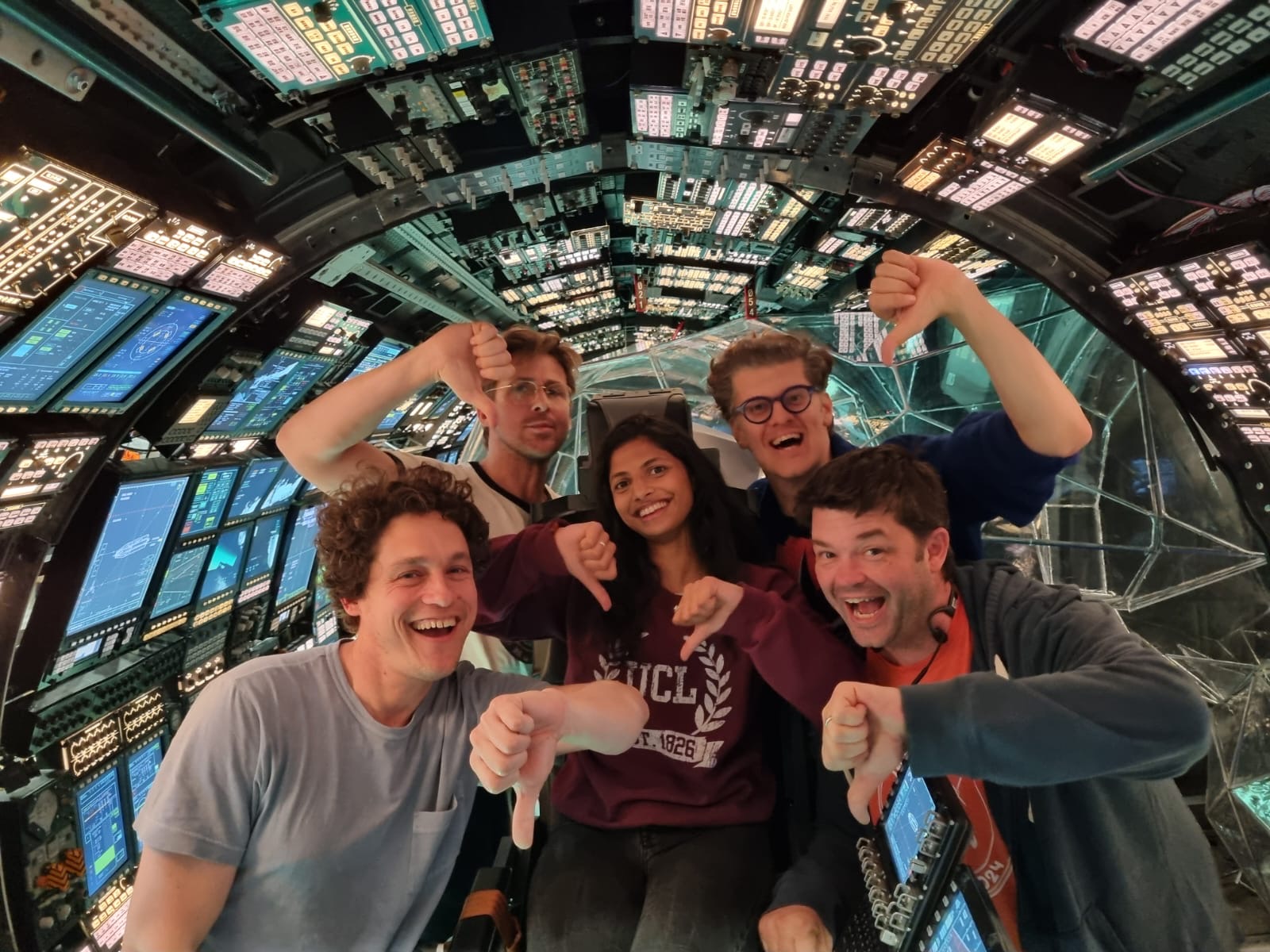
Phil Lord and Christopher Miller have a gift for finding the heart and humor in any material they touch, from their early work rebooting 21 Jump Street to their Oscar-winning effort producing Spider-Man: Into the Spider-verse. Now, after getting let go mid-production from directing Solo: A Star Wars Story in 2017, the directing duo have returned to live action blockbusters with Project Hail Mary, an adaptation of Andy Weir’s bestselling novel that just broke all sorts of box-office records. Starring Ryan Gosling as a lone astronaut who wakes up in deep space with no memory of how he got there and is tasked with saving the world from a dying sun, the movie opened to $80 million domestic and proved that audiences are still willing to come to theaters if the material is worthy. Maya Rudolph, a longtime friend, collaborator, and self-described Gos-head, was one of the people who couldn’t resist Project Hail Mary’s charms, so when she connected with Lord and Miller recently over Zoom, she wanted to know how they did it.
———
RUDOLPH: I got dressed up for you guys.
MILLER: Oh, you look nice. I put on my finest T-shirt.
LORD: At least you’re wearing a collar. Thank you for doing this. It’s an unbelievable imposition on you.
RUDOLPH: I was lucky because I got to watch the movie and I snuck my son in—he’s a total Gos-head.
LORD: Of course he is.
RUDOLPH: He’s 14. I don’t want to speak for my son, but I loved it. It made me realize I haven’t watched a movie that made me feel that way in a very long time, the way I used to feel when I watched movies. I felt cradled in the arms of Ryan Gosling. I have a lot of questions for you, but my first one is: how did you know that the dynamic between Ryan and Sandra Hüller was going to be so perfect?
LORD: We just got really lucky.
RUDOLPH: What the fuck?
MILLER: When you put two great actors together, you assume it’s going to be great. But it was even better than we thought because she brought all this nuance and warmth to a character that could have been a cold, stock boss-lady. They wanted to do a great job for each other, and you could feel that energy every time they were together.
LORD: They were nervous in front of each other.
RUDOLPH: They were?
MILLER: So nervous.
LORD: It’s two different spheres of cinema bonking into each other.
RUDOLPH: I don’t know how much of it was improvised, but because I’ve had the luxury of saying some of your words on screen, I know there’s always room for it.
MILLER: There’s always some play, yes.
LORD: It was really loose.
MILLER: There’s only one scene between them that wasn’t loose, and it was their final scene together. We rehearsed it and it was like, “Yeah, these are the words.”
LORD: Drew Goddard wrote that scene, and we were like, “We can’t mess with this. Just do it three times.”
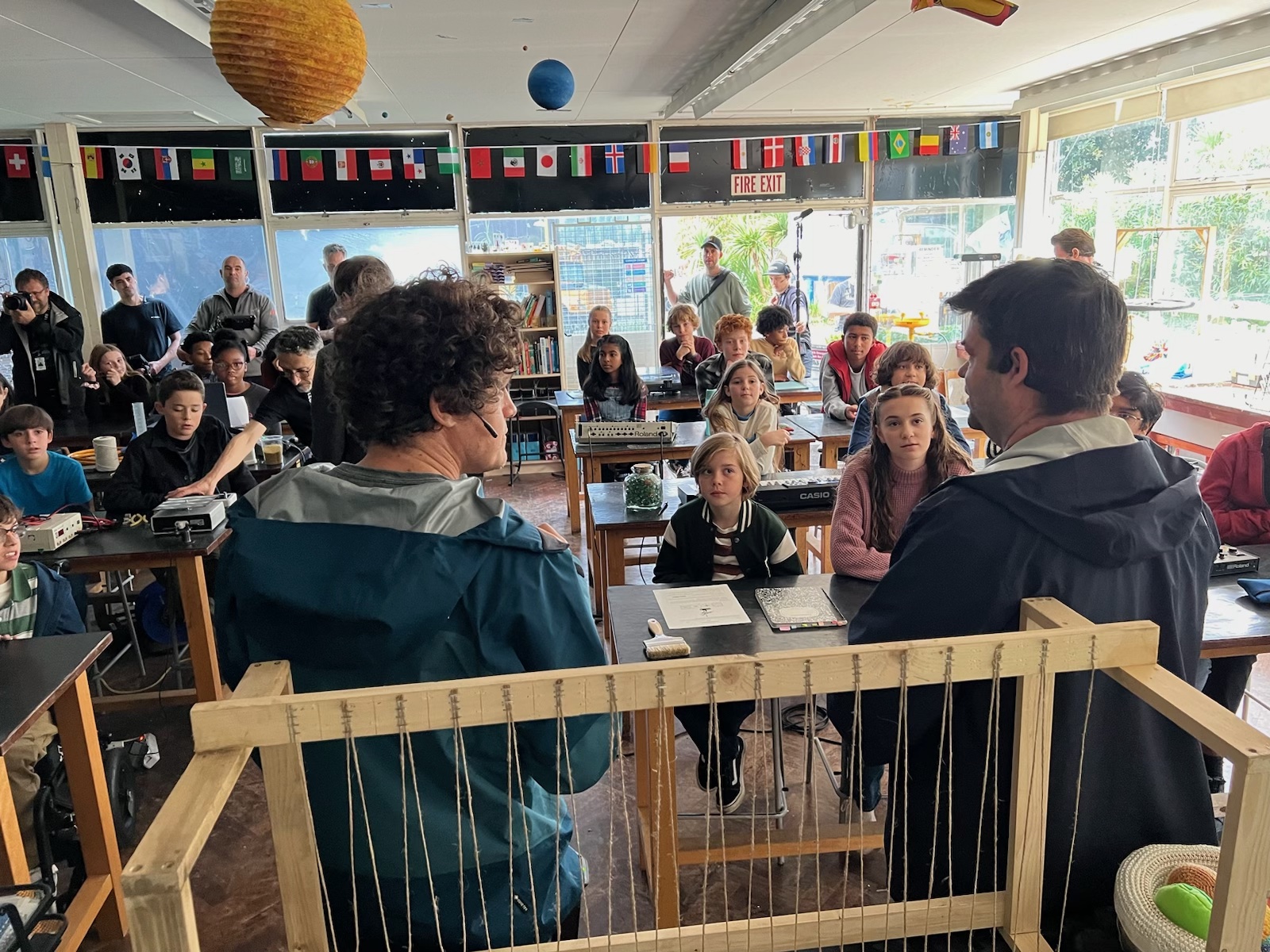
MILLER: The way they did it even in rehearsal was like, “This is it. Let’s just capture it.”
RUDOLPH: It’s the gravity of the subject—how dire things truly are at that moment—that needs to be communicated. Did this come from thinking about what we’re living with?
LORD: I don’t think Andy [Weir] based it on any specific things. It’s his thought experiment: “Okay, what would we do? What would it take?” He tried to plan it out and understood there would be a very brief window where, if somebody was as powerful and compelling as Sandra, they might be able to get different space agencies to work together.
RUDOLPH: I implicitly knew, loving your work, that I was excited to see what you’d do in live action. The way you already speak so many visual languages, it makes perfect sense that it’s Ryan and Sandra, and that it’s about a space buddy and the world falling apart. I had no expectations of what you were going to make, I was just expecting a new language. What’s incredible about this movie is it gave me the feelings of a traditional film I grew up watching, but with all the sophistication of the way you guys work visually. When Rocky’s ship came in, I was like, “Yeah, they probably talked about that a lot.”
LORD: For about a year. All of our ships are tubular because our materials aren’t strong enough. If we put a corner on a spaceship, it would explode. But Rocky’s materials are so strong he can have angles. And then we thought, “What’s the most creative animal on earth? A bird. So maybe they made it like a bird’s nest.”
MILLER: Every aspect of the movie took a lot of smart people working together, but this movie has so much invention in it. The production design team, the VFX artists, everyone, they were coming at it from a philosophical standpoint from the beginning. People felt a sense of ownership because, from the start, everybody could feel it could be something special.
LORD: Charlie Wood designed everything. He lives in a 500-year-old house in Bath, full of stained-glass windows. So he said, “What if Rocky’s ship looks like Notre Dame, with buttresses all over the place?”
RUDOLPH: It does.
LORD: It’s like an exoskeleton. We kept thinking about how, when you meet somebody new, you only see the surface. The more you get to know them, the more you understand the layers inside. Ryan and Rocky meet and aren’t sure if it’s friend or foe, but the more time he spends with him, the better he gets to know him. We wanted the ship to unveil itself the same way.’
RUDOLPH: In the cold silence of space, when that thing starts following him, you’re like, “Is this going to eat me?” It looks sharp and terrifying.
LORD: I know.
MILLER: That was Ryan’s feeling too. “If a mysterious object that looks like a bundle of sticks showed up, my first thought wouldn’t be, ‘What is this?’ It would be, ‘I’ve got to get the hell out of here.'”
RUDOLPH: I would just have a heart attack in space. When he woke up with that tube down his throat and looked out the window, that’s the moment I give up.
LORD: We condensed it to the length of one Kris Kristofferson song, but there’s about half an hour’s worth of material of him flipping out, being drunk, being unable to deal with anything.
MILLER: We shot so much of him just falling apart, and ultimately, the audience—
LORD: They had a hard time with it. You can be sad for two minutes in a movie, but then you’ve got to get a move on. You’re not the first person to say it felt like a throwback. Are movies too mean now?
RUDOLPH: Yes.
LORD: They’re trying to freak you out.
RUDOLPH: We were all raised with heroes we could picture ourselves knowing or being friends with—relatable, but also genuinely funny. The humor that comes out of that man’s mouth, he’s our guy for our generation.
MILLER: It’s hard to imagine someone else doing this part. Luckily we didn’t have to because he had the rights to the manuscript from the beginning.
RUDOLPH: Oh, wow.
LORD: He’s a frustrated comedy writer in the body of a very famous, good-looking movie star.
RUDOLPH: That’s showing up more and more. He’s definitely gotten more comfortable at SNL — he has people there he can laugh with now, like Mikey [Day]. They’re like, “Just put The Gos in. We’ll be all right.”
MILLER: Let them do their thing.
RUDOLPH: When you think about a Marty McFly, or watching Raiders of the Lost Ark, somebody charming and funny and relatable and strong and charismatic that you feel good about, and then you see their heart burst open with love for a rock creature, it reminds us of our humanity.
LORD: We wanted to make a movie that was affirming. The movie thinks you’re smart and loving, and maybe sometimes we just need to be reminded of that. I thought that’s what every movie did. That’s what Paul’s [Thomas Anderson] movie did.
MILLER: We really wanted to explore his vulnerability, fear, and frailty. He’s a great microbiologist, but not a guy who’s an expert at everything, not an “I’ll go into that burning building to save the kittens” guy. We wanted him to wake up terrified and have to overcome his fears and actually grow into a brave, heroic person. That’s why you can relate to him. I don’t really relate to people who are super confident winners from the jump.
RUDOLPH: Ryan’s definitely the guy for the job, even though he’s far more good-looking than the majority of us.
MILLER: His secret is that he often plays the low man in the scene and confers status onto whoever he’s with. When you’re handsome and confident, your instinct is to be like, “Fuck you.” But even in scenes with a rock puppet, he was like, “Sorry, I’m talking so much.”
LORD: He’s like Warren Beatty or Robert Redford—big, tall, strong, handsome movie stars who are always trying to find ways to get lower than the other people in the scene. Isn’t that interesting?
RUDOLPH: You guys remind me of musicians. Bringing the style of Ryan to meet the style of Sandra, those are two completely different rhythms that work so beautifully together. I’ve always had this thing with great musicians where I can’t wait to see them play live.
LORD: I like that analogy. When you see a great band, you feel the different personalities of the musicians and how they come together. What I love about a movie is seeing all the heads of departments and all the actors represented on screen, not squished into the single voice of a dogmatic filmmaker, but with an aperture wide enough to include lots of different voices. In animation, the hardest thing is getting personality into the movie, so we always encourage the animators: “Bring ideas. Try stuff. These things are gagging for personality.”
MILLER: For James Ortiz, who was Rocky—both the lead puppeteer and the voice—we auditioned and did chemistry reads with puppeteers from all over the world. We had two scenes and an improv game for them to do with Ryan, and it was immediately clear when James came in and said, “I don’t need your puppet. I brought my own.” He put Ryan on his back heels, and after he left, the three of us looked at each other: “That’s Rocky.”
RUDOLPH: So they were really in the room together?
LORD: Yeah.
MILLER: We built a creature with Neil Scanlan and the Creature Shop team. It took a year to get him right. By the end of the movie, it’s about 50/50 animation and puppetry, but he was always on set. James was always in the scene, even when what they were doing wasn’t physically possible with a puppet, like rolling around inside a ball.
LORD: All the sets are built five feet off the ground to accommodate the puppeteers underneath.
MILLER: They were always working behind a wall because of their different atmospheres, but they could react together and improvise and chase ideas. That’s why even from the early camera tests it was clear: they had chemistry. Some of Ryan’s laughs are him being genuinely delighted by the puppet and by James.
RUDOLPH: I really loved his stuff with Lionel [Boyce] too. That’s where you start to trust him: “Oh, this is going to be my guy. He’s good. He makes friends.”
LORD: That’s his instinct.
MILLER: He’s always looking for connection in a scene. That’s why we had Priya Kinsara as Mary, the computer voice of the ship, in a little soundproof booth in Ryan’s ear, so in those early scenes, before he had anybody, he could talk to her and she would respond. So he didn’t feel totally alone.
RUDOLPH: That’s the elephant in the room of this movie. How many people can be on screen by themselves for that long and keep it interesting? It never feels like he’s alone. You’re never thinking, “When does the next person come in?”
MILLER: Very few people could have pulled off what he pulls off.
RUDOLPH: There’s also such beauty in what you created to tell a story of solitude. Solitude sounds like the worst thing in the world, and all the way off planet Earth sounds like a full-blown nightmare, and yet it was fascinating and funny and charming, and I was there for every second.
LORD: We tried hard to make it not punishing to the audience.
RUDOLPH: It’s never punishing.
LORD: The movie means you well. Even in the music, we told Daniel Pemberton, who did the score, “These singers need to be rooting him on. This melody has to say, ‘We believe in him. It’s a call to action.'” We did versions that were just really spooky.
RUDOLPH: Like 2001 vibes?
LORD: Yeah, spine-tingling.
RUDOLPH: When I think of never wanting to go to space, I secretly think of the 2001 score. It’s fucking terrifying.
LORD: One of the things we spent time on is the idea that space is where we live. We’re all from space.
RUDOLPH: What the fuck?
LORD: As the movie goes on, we actually made the stars friendlier, more colorful, happier, because we wanted the characters to slowly feel at home out there.
MILLER: So many space movies are about a person leaving the warmth of home for the loneliness and cold darkness of space. This felt like this guy is more alone at home, and when he gets to space, he makes a friend and finds a new home. We wanted it to start off scary and overwhelming, then become warmer as the friendship builds.
RUDOLPH: You guys are really good.
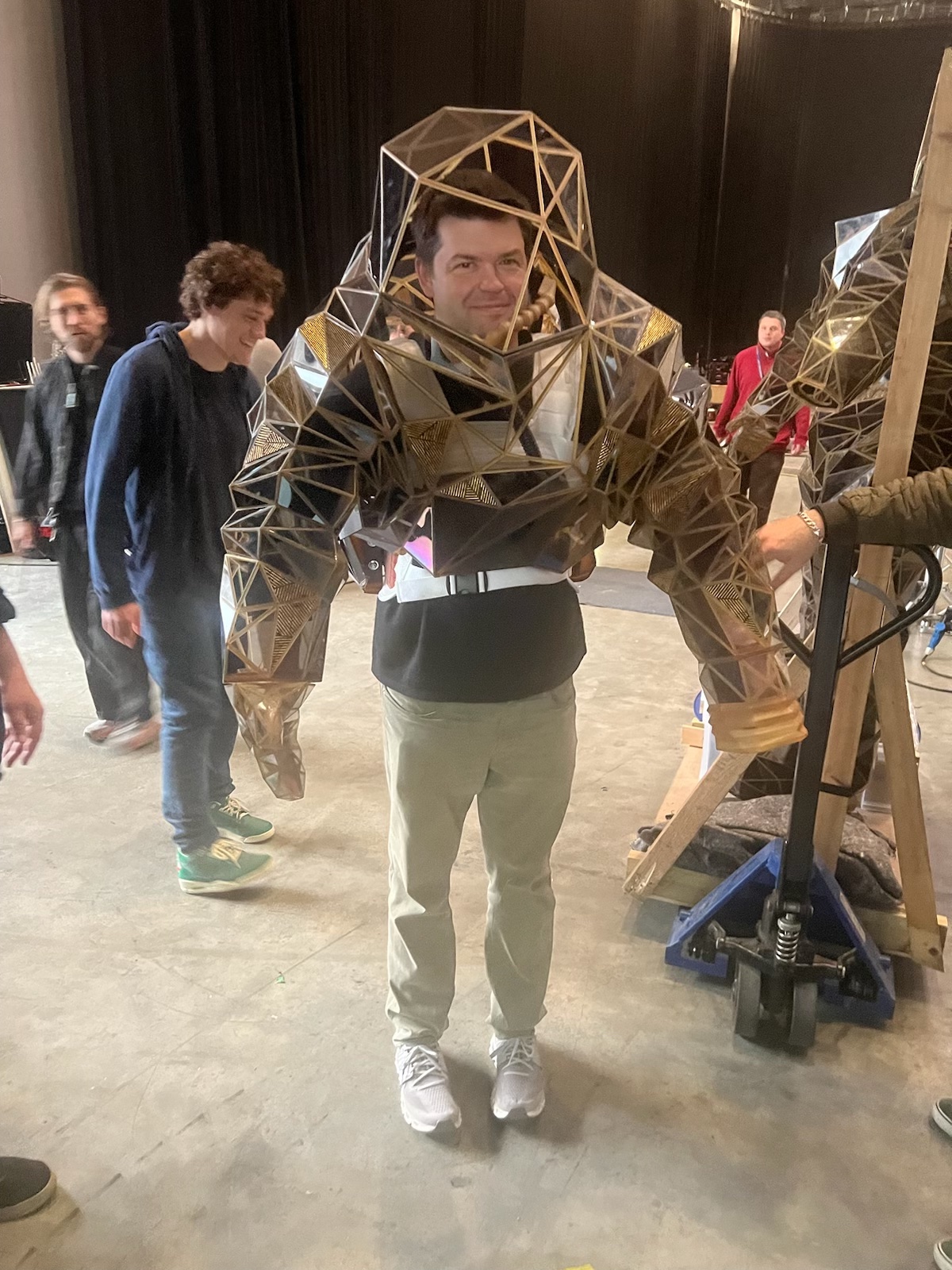
MILLER: Our job was to plan extensively and then set up a playground, so that when Ryan and others came on set and we found a better way to do something, we could pivot. Sandra singing karaoke wasn’t in the script.
RUDOLPH: Really?
MILLER: We were scouting the ship where we’d shoot the aircraft carrier scenes and it had a karaoke machine. We thought, “Everyone should be socializing, but Sandra can’t because she’s the boss.” Ryan came to us and said, “Sandra has a beautiful voice. It’s crazy we’re not asking her to sing karaoke.” We said, “But we’re only on set for another 36 hours.” So we asked her anyway: “Would you sing a karaoke song tomorrow at the end of the day?”
LORD: So fucking uncool.
MILLER: She said, “Okay, but I get to choose the song.” That night she chose the Harry Styles song. The lyrics are absolutely perfect for the story. We told her, “The idea is that you want to show the crew you believe in them, that you love them, that it’s going to be okay, and then when you’ve communicated that, you shut it back down and get back to work.” She came and did it, and we started shooting the reactions of the other people. They didn’t know what she was going to do, and everybody’s jaw was on the floor. Those reactions are all real. It ended up being the heart of the movie and a crucial part of her character.
RUDOLPH: That’s why I love when you guys make movies. What I learned at SNL was: “We don’t have time to wait. We have a show tonight.”
MILLER: “Figure out a way to make it happen.”
LORD: A set should be a place where everybody’s trying to say yes.
RUDOLPH: So many technicalities to fulfill, and yet you still created space for play and fun. Very few people are capable of that. I’ve known you guys for a very long time, but I’ve decided, after this conversation, that you’re a band.
LORD: You have to accommodate both voices.
RUDOLPH: Different voices that speak the same language but listen to each other’s.
LORD: The building block of everything we do is a relationship.
RUDOLPH: You’re like The White Stripes and The Black Keys, but different. If anybody is capable of EGOTing, it’s you two.