


ICON
The Many Lives of Designer Barbara Hulanicki


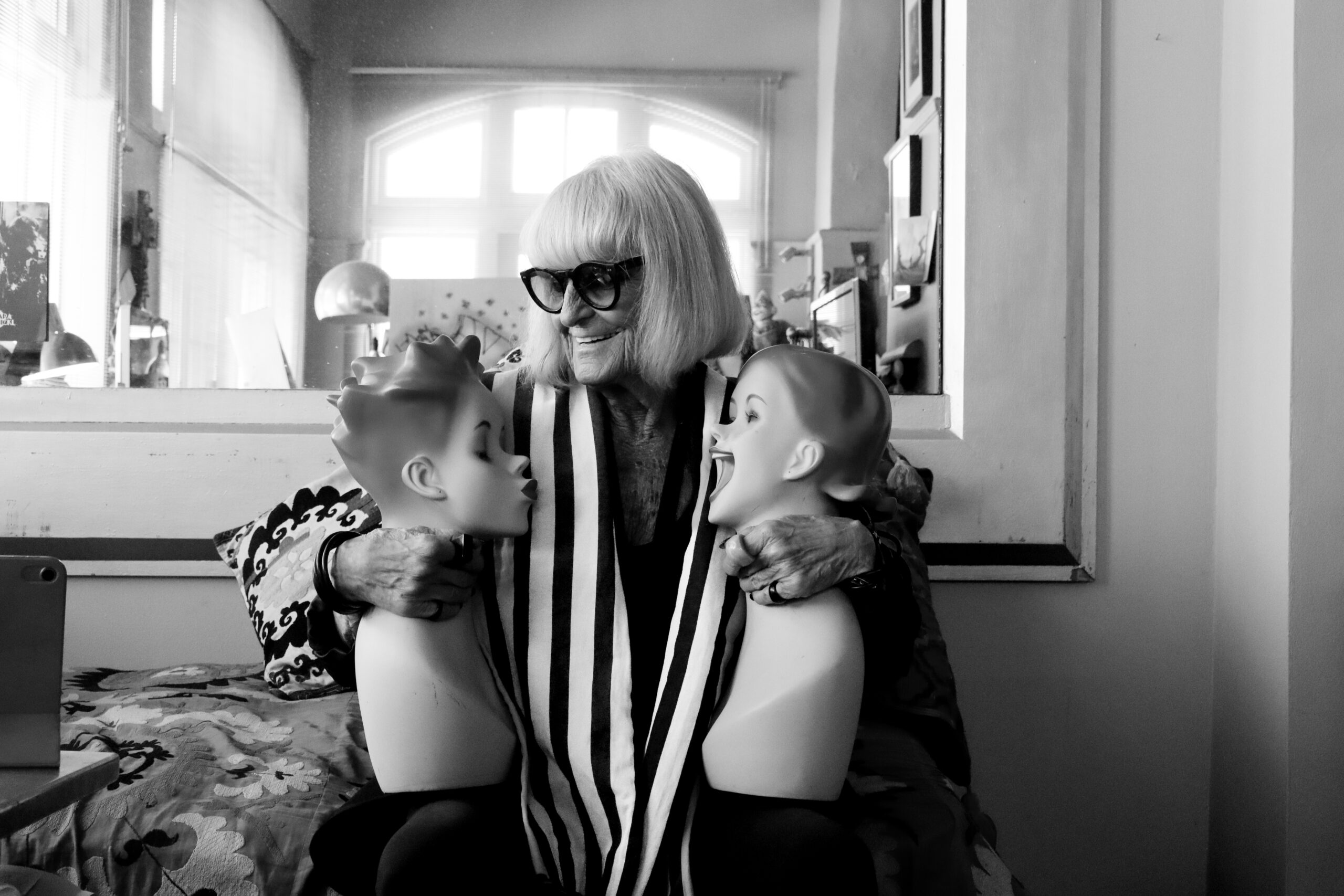
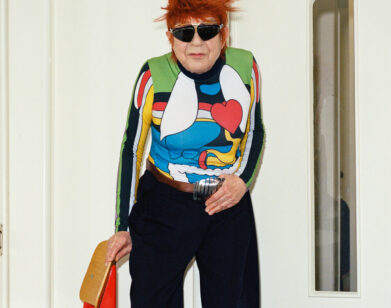
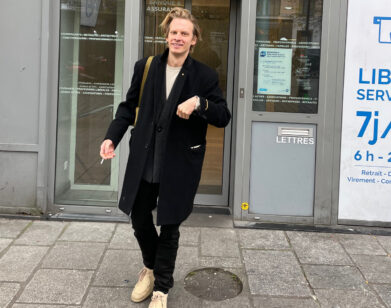
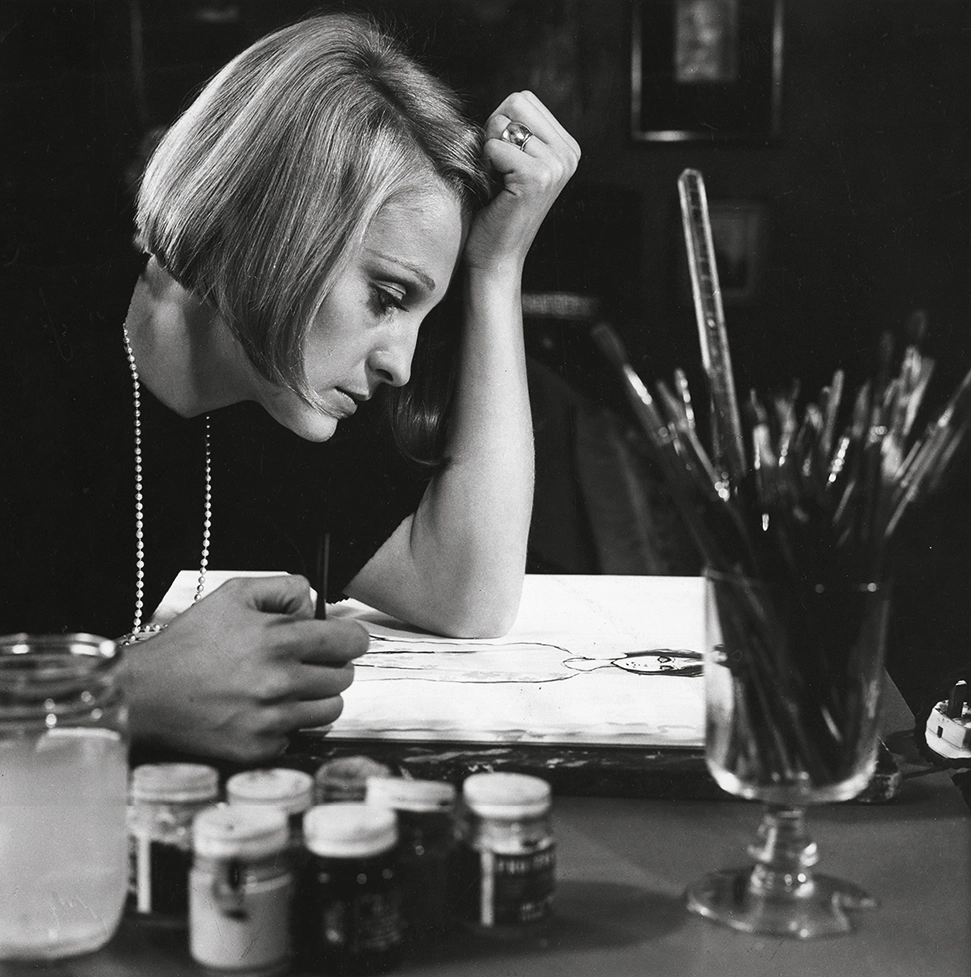
Barbara Hulanicki, photographed by Isaac James.
Barbara Hulanicki has the sort of magnetic presence that makes you understand why teenagers once queued around the block just to wear her designs. When I visited her last month on Miami Beach in 85-degree heat, we greeted each other in head-to-toe black leather and Tom Ford shades (hers were $5 from her go-to secondhand shop, where everything is fake). That’s Barbara: allergic to pretension, devoted to beauty, and always willing to sketch you on the spot. Hulanicki, of course, once presided over a teenage empire in London, where she ran her namesake boutique, Biba. Over the course of a single afternoon, she slipped between the multiple lives she’s lived: styling Twiggy in the Rainbow Room, chatting hair-dye with a not-yet-famous Andy Warhol, inventing the miniskirt by mistake, briefly employing (and promptly firing) a teenage Anna Wintour, and building Biba into a universe where music, fashion, and teenage rebellion collided. “Am I skinny enough to fit into Biba?” I asked her. “Oh, yeah,” she replied, sending me off with a wet smooch.
———
ISAAC JAMES: Barbara, thank you for having me, and thank you for doing this.
BARBARA HULANICKI: It’s so good to see you.
JAMES: Us in our all black.
HULANICKI: And I’ve got those glasses.
JAMES: Put your Tom Ford’s on, running around Miami Beach.
HULANICKI: Mine were $5.
JAMES: Are they fake, or you bought them secondhand?
HULANICKI: Of course. They’re in these secondhand shops that have—
JAMES: They have fake shit?
HULANICKI: [Laughs] Everything, yes.
JAMES: We should get an Hermès bag, a Birkin.
HULANICKI: Oh no. No Birkins. Sorry.
JAMES: No Birkin? Okay.
HULANICKI: It’s such a business, this secondhand thing. And they really know their stuff.
JAMES: Right outside the Interview office on Canal Street in New York, it’s all these street vendors selling fake shit.
HULANICKI: Oh, really?
JAMES: Yeah. It’s crazy. And sometimes it’ll be expensive, just not as expensive as the real thing.
HULANICKI: Whenever they do something on The Kardashians or something, they always show their room with all their handbags. It used to be shoes—5,000 shoes—but now it’s all Birkin.
JAMES: I know.
HULANICKI: I knew [Jane] Birkin.
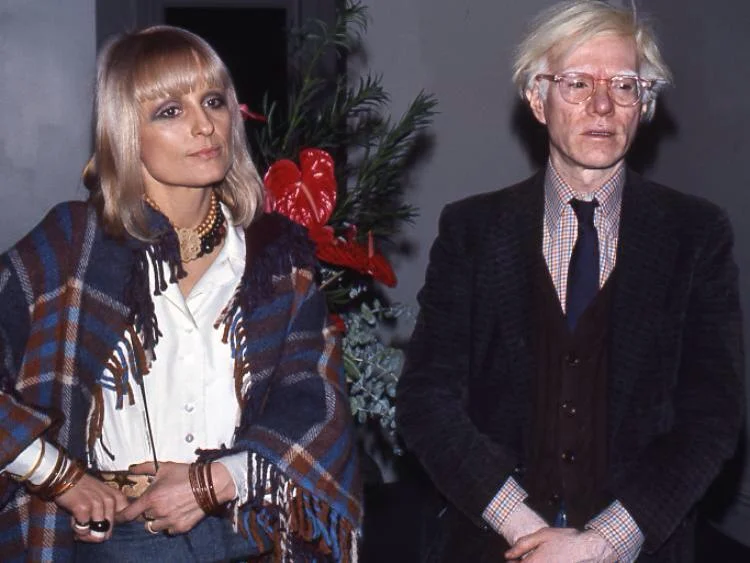
JAMES: Can you tell me about this photograph of you and Andy [Warhol]? How did this come about? Do you remember where it was taken? What was the vibe?
HULANICKI: I was working for Fiorucci in Italy and Elio [Fiorucci] walked in one day and he said, “We’re all going to go to Italy because I want to see how my shop is going.” They were building his shop, and he took like 10 of us. I said, “Well, we don’t have the clothes.” “Never mind. You don’t need the clothes.” So he flies us, very glamorous and everything.
JAMES: Were you on a private jet?
HULANICKI: Yes, definitely something smart. But there were thousands of us and everybody was a bit frightened. When we arrived in New York, we had to do a bit of work with Fiorucci’s shop to get the layouts done. And then he had to make an appointment with Andy. Then, first thing in the morning the next day, we marched down to this big square and this wonderful house. We go in, and we go to the front sort of reception room. I walked in and I thought, “Oh god, this is Biba, but it’s real.”
JAMES: And was this Andy’s home?
HULANICKI: It was real Art Deco. Then he took lots of photographs with everybody, and I thought, “After all this trouble, might as well have a picture, because one day he’ll be famous.” [Laughs]
JAMES: So Andy wasn’t totally famous yet when you went to his place?
HULANICKI: No. He was well-known, but—
JAMES: He wasn’t Andy yet.
HULANICKI: He wasn’t the god. I think we talked about hair.
JAMES: Wait, tell me about the hair.
HULANICKI: I think he asked me what bleach I used. He thought that mine was better than his.
JAMES: Your blonde does look a bit better in this photo, in my opinion.
HULANICKI: But he was very stressed out. I think he must have been very stressed out with money. Nobody ever paid, and they said they would.
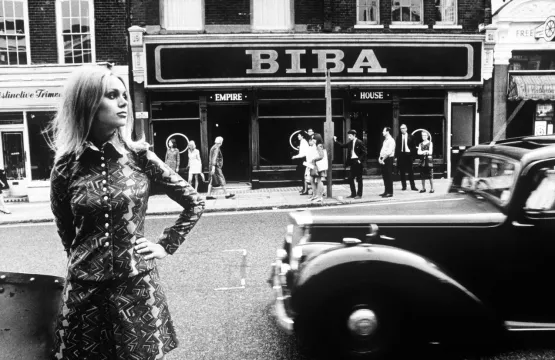
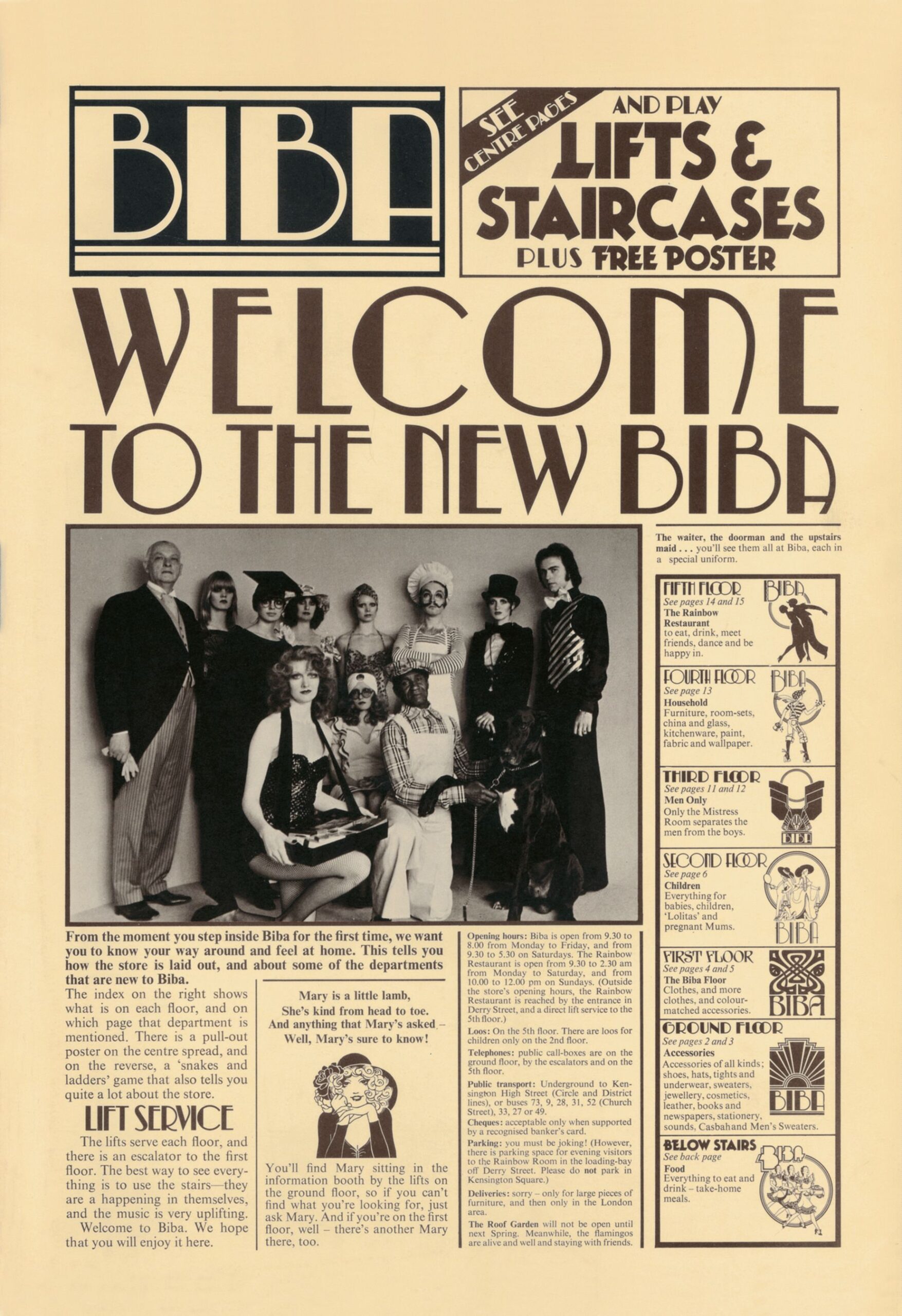
JAMES: Yeah. Can we chat a little bit about this photograph? This Biba was the first shop, right?
HULANICKI: No, the second. The first one was on this wonderful old 1900 corner. This was just down the road.
JAMES: And what street was it on in London? Do you remember?
HULANICKI: Abingdon Road. This was on Church Street. And then the big one was on High Street, Kensington.
JAMES: Got it.
HULANICKI: They’re all round because what [Stephen] Fitz [-Simon] would do is, when he went to get his cigarettes, he’d just look at the properties. You could just walk into properties if you wanted. And this property was owned by an oncologist. Fitz walked in and the owner was in the back of this huge shop, about 3,000 feet. They had a chat and the owner said, “Yes, I’ll sell it to you, but I have to meet the wife. I want to hear if she’s okay.” So he dragged me. Can you imagine?
JAMES: [Laughs] Oh my god.
HULANICKI: I said, “Oh, this looks very pretty.” And the landlord lived below in the basement.
JAMES: You guys made a deal.
HULANICKI: It’s a fabulous Georgian inside.
JAMES: And who was your customer? Were they young?
HULANICKI: Young. Absolute schoolgirls.
JAMES: And you were how old at the time?
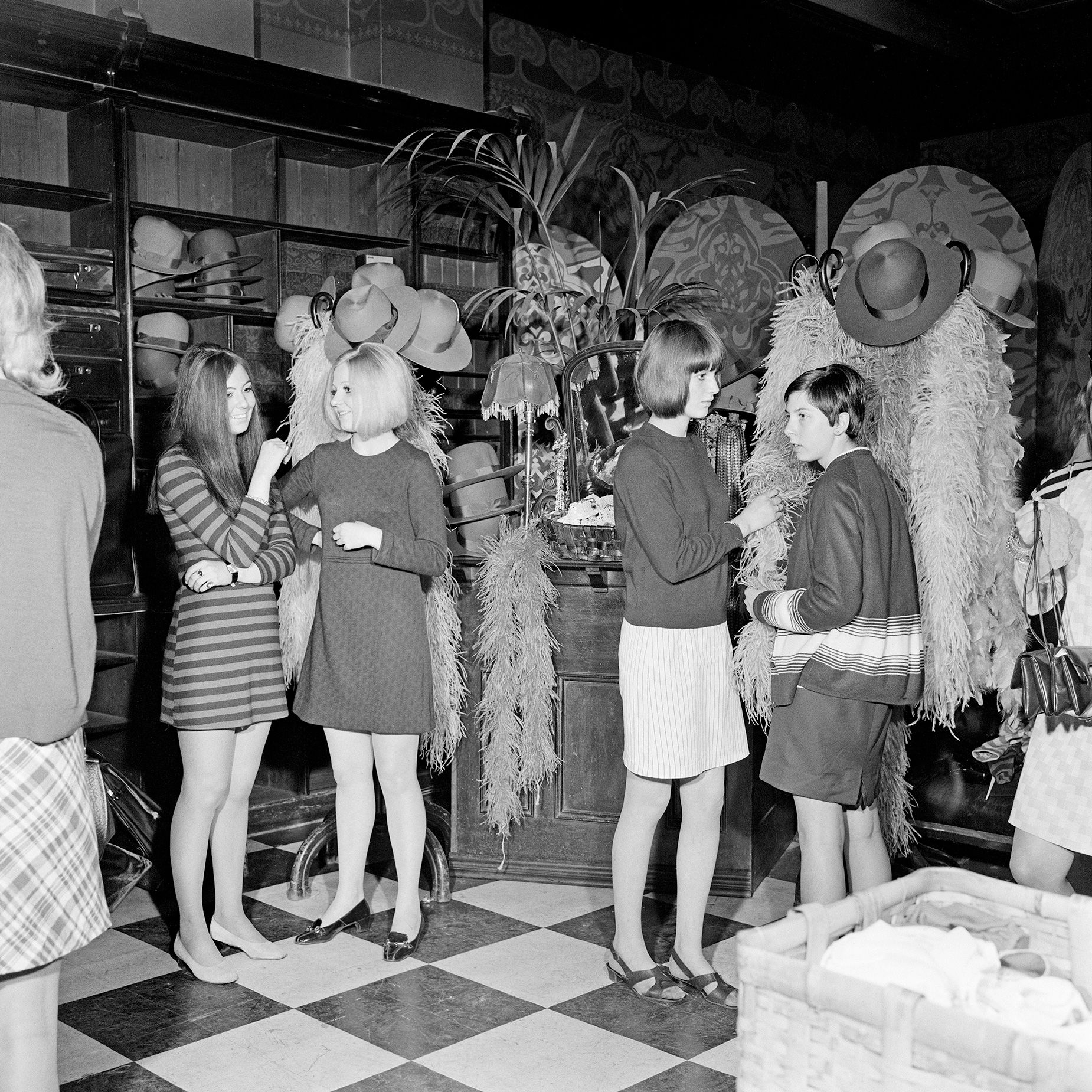
HULANICKI: We were 24, and we were considered very old. You see, what was happening in those days, everybody had to go do their two years in the Army and everything. I’m a Catholic, but I came from Palestine, and all the men were killed in the wartime. So when the war finished, there were all these women—just like my aunt—absolute bitches. They were terribly sad and skinny like sticks. They hadn’t eaten anything. They’d never seen butter. [Laughs] We couldn’t believe how bad it was in England.
JAMES: So it was all these frail women with dead husbands?
HULANICKI: Yes, but they had babies. Sometimes we didn’t know where the babies came from. And these children grew up and they had such a bad time at home. And again, there was nothing. The big deal was baked beans. They were working as assistants in shops, and there was nothing to buy. Nothing. It was very small money, but it was money. And they could leave home. They would share flats in London and it was all about music—music and clothes. The boys were doing their own thing and the girls were doing their own thing.
JAMES: Lovely. And then with this photo of the first shop, how did it get its name out there? Was it just young people walking around and seeing a cool shop?
HULANICKI: No. Because I’d been working with a lot of the newspapers, and there were costume editors.
JAMES: And you were working there as a fashion illustrator, right?
HULANICKI: Yes. So I knew all the fashion—
JAMES: Press people.
HULANICKI: Yes, and they had absolutely no content. There was only Mary Quant, who never came out of the room. And then Fitz was absolutely amazing about—
JAMES: Business.
HULANICKI: Yes, and buying stuff. Because I wanted all these colors. I wanted 12 colors, different colors.
JAMES: In fabric?
HULANICKI: Yeah. We used to just get in the car and drive down to Belgium and find a factory that we knew about. So we amassed all these fabrics, and then we had them all dyed up to our color and then stored it in London.
JAMES: And then you would make them, or no?
HULANICKI: It’s funny. Suddenly there were some wonderful Greek people, families that were manufacturers, who found us. Mr. [Theo] Sava and all his family, and he’s incredible. We became great friends, and they manufactured everything, like, daily. But we had to have different stuff all the time because it was the same people coming in. So we had one room where there was a pattern cutter and a machinist. The machinists were easy, but we were just making stuff every day. And Mr. Sava would come and say “I want more.”
JAMES: “I want more pants, I want more coats, I want more skirts.”
HULANICKI: The whole family was making the stuff. So we always had the fabrics ready that were our colors and our type of cloth. All the stuff for young people then was coming from Belgium.
JAMES: And did you like the clothes, or no?
HULANICKI: No, they were awful because they were very badly shaped. It was all about shape. Because all these girls were really skinny because they weren’t eating. Except the baked beans. [Laughs] I mean, god.
JAMES: It was like $5 for Biba, $5 for rent, $5 for baked beans.
HULANICKI: Yes.
JAMES: I know there are a lot of celebrities that would come in and shop, like Mick Jagger and Cher.
HULANICKI: The boys would come in because of the girls. And then I said, “Okay, we’re going to put sofas in there.”
JAMES: For them to hang out and mingle.
HULANICKI: Yes. “And then we’re going to put music up.”
JAMES: What kind of music were you playing?
HULANICKI: Oh, all the lates, because it was huge music. Then the boys start coming in because every Friday, Saturday, Sunday, they would be playing from about five o’clock. They would’ve danced.
JAMES: You guys would dance in the shop?
HULANICKI: Yeah, but usually down the road there was a big dance.
JAMES: A pub or something like that?
HULANICKI: Yes. Pubs and dance halls had grown bigger and bigger. It was all about dances.
JAMES: And it drew in more people?
HULANICKI: Absolutely.
JAMES: They needed stuff to wear.
HULANICKI: Yes. It was absolutely stressful—driving up to the East End to get more stuff. And then we’d have to drive around Europe, go to fairs, hunt down manufacturers that made belts or bags and work with them and do it that way. And then the adults would come in and go, “Ugh, this is awful,” and walk out.
JAMES: I know. It had a very punk mentality in a way.
HULANICKI: Yeah. And I’ll tell you what happened with the mini skirt. Mary Quant did not do it. In that second shop, we did terribly well with jersey, and it was dyed in Belgium, 12, 14 colors. We had it all in rolls like this in the warehouse—a huge warehouse full of the stuff. Then, when Fitz would send off all the cutting to the manufacturer, the fabrics, and they had instructions, but because they were Greek, they didn’t understand. You’d have to lay this jersey out overnight and let it shrink that way, length-wise. Of course, Mr. Sava was so frightened of Fitz.
JAMES: The businessman.
HULANICKI: So he cuts it as it comes in, right off the roll. And the following day, he delivers everything, these little mini skirts and dresses and everything. We used to have hat stands, and we’d hang the dresses on them, and they’d be going up like this because of the fabric, it would stretch.
JAMES: That’s so funny.
HULANICKI: And I look, and I burst into tears and rush home crying. Then Fitz comes back. We’ve got queues for them. It’s the shortest skirt.
JAMES: I always knew that you were the mini skirt pioneer.
HULANICKI: Yes, because they had to have minis to go dancing.
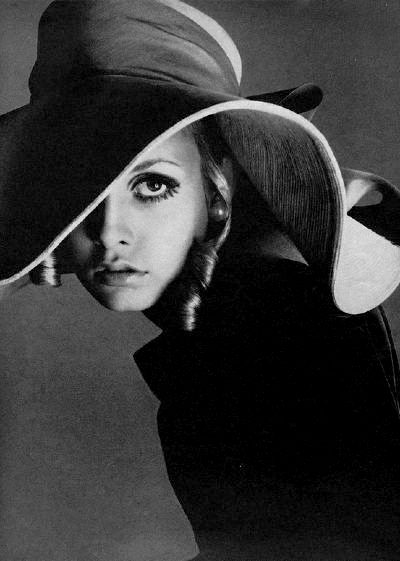
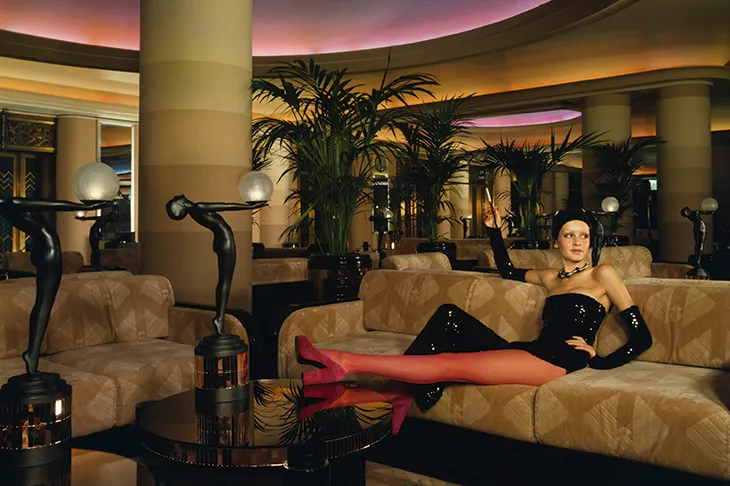
JAMES: And show off those legs. Can you tell me a little bit about this photo of Twiggy?
HULANICKI: That’s the Rainbow Room.
JAMES: At this point, you’re in Big Biba now?
HULANICKI: Yes.
JAMES: Your giant department store.
HULANICKI: Fitz comes in one day to the third shop and he says, “They’re going to pull down that big Art Deco building,” because Art Deco had no status in England. And I must say, Auntie [Zofia] taught me about Art Deco.
JAMES: You’re like, the Art Deco queen.
HULANICKI: [Laughs] Yes. And so we rushed up there.
JAMES: And you fell in love with it.
HULANICKI: I said, “Fitz can’t let them smash art.” And then we go up to the top, and there’s a roof garden with a running river right across.
JAMES: What was the building functioning as before?
HULANICKI: A department store, which was not working because it was a funny area—rich ladies didn’t come anymore.
JAMES: They went out of business.
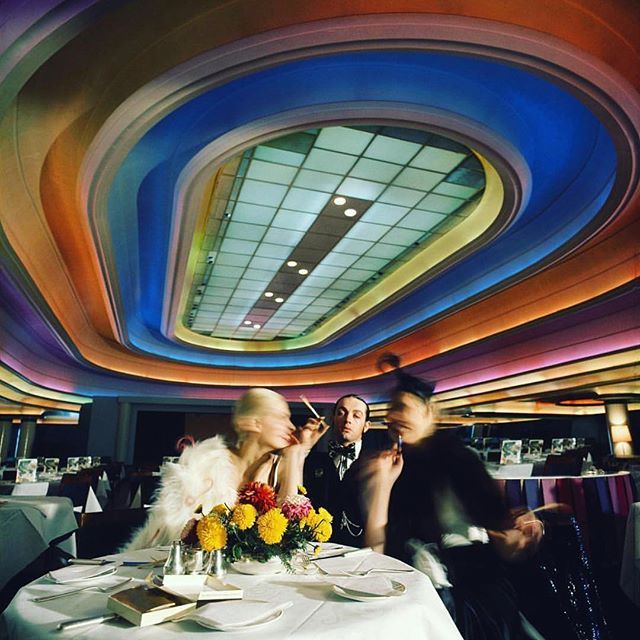
HULANICKI: The Rainbow Room, all the beautiful Art Deco entrances and hairdressers. The pictures of the hairdressers are just unbelievable. There’s a terrific picture we did of all the staff, all the girls and pattern-cutters.
JAMES: Were you guys doing a photo shoot? Were you playing dress-up?
HULANICKI: That was a real photo shoot with Twiggy.
JAMES: And did you style her for this?
HULANICKI: Oh, yeah. She’s amazing to style. She could do anything.
JAMES: And then can you tell me about this leopard situation?
HULANICKI: Oh, this? Leopard was a very big Auntie thing.
JAMES: Something about it is so sexy.
HULANICKI: It was all for hookers. Dodgy ladies. Fitz and I heard about this huge fair in Spain and we rushed down there because it’s underwear. And when we got there, half the people didn’t turn up. It’s a huge fair, thousands of—
JAMES: Stands.
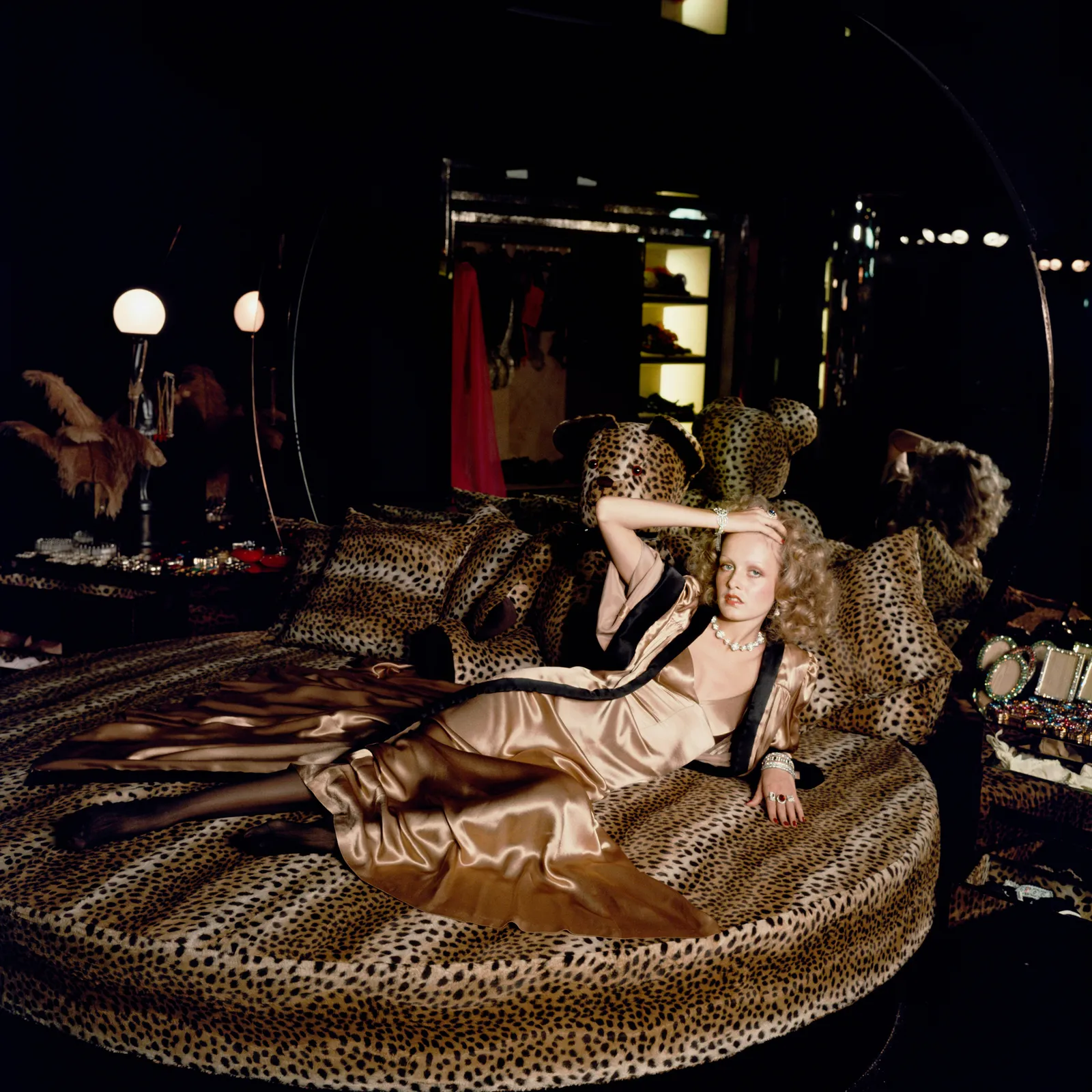
HULANICKI: Stands of real hooker, sort of terrible bras. So I said, “Okay, we’ll start a room for the ladies—a hooker room.”
JAMES: I love it. Can you tell me a little bit more about the Rainbow Room?
HULANICKI: Yeah. That was amazing. It was a 500-seater restaurant and we used to have concerts.
JAMES: So amazing. The New York Dolls, Lou Reed—
HULANICKI: Yes.
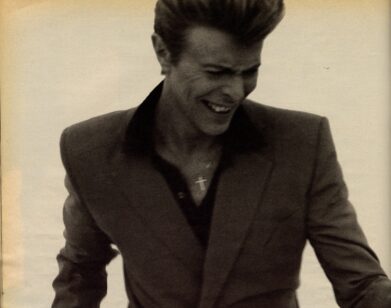
JAMES: Tim Harden, Steve Harley, Sparks, Tiny Tim, Edith Piaf, David Bowie, The Kinks, Sailor.
HULANICKI: I have pictures, of course, of one of the guys who did the most beautiful stage that worked with this.
JAMES: That’s amazing. I know Bianca Jagger worked at Biba, for a while, right?
HULANICKI: She was gorgeous, yes.
JAMES: So while she was working there, she met Mick?
HULANICKI: Well, because the boys were practicing all the time or hanging out.
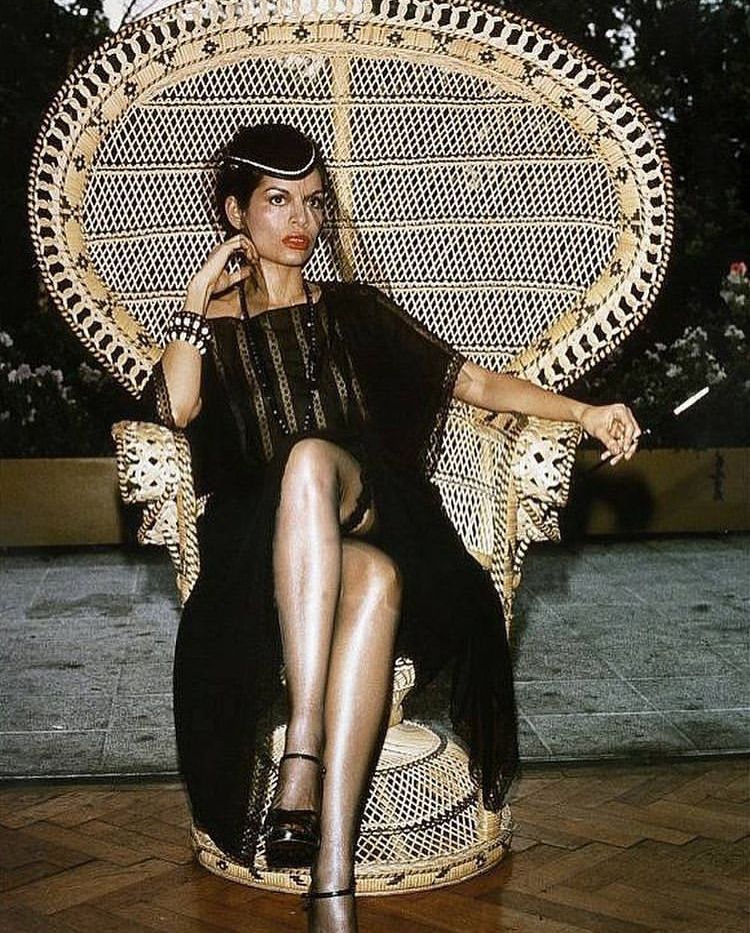
JAMES: Mick Jagger would practice his music in Biba?
HULANICKI: Oh, yes. They all were. They weren’t —
JAMES: Mick Jagger yet?
HULANICKI: No. Everybody hung out at night when they were dressed up. And there was another place in London down the East End. It was a very famous place, just next door to the art department, the place I was working in. But it was very tight, the whole thing in London.
JAMES: Everyone kind of knew everyone.
HULANICKI: Oh, yeah.
JAMES: It was a real scene.
HULANICKI: But snobbery…
JAMES: Snobbery?
HULANICKI: The English were so snobby. But this was visually snobby. They had to have small boobs, long hair. You could never make something for big boobs. That came later. We sold, in my book, about 10 to 20,000 pairs of boots.
JAMES: Holy shit.
HULANICKI: A Biba boot was always a very good price that people could afford.
JAMES: And then Twiggy kind of became the face of Biba.
HULANICKI: Oh, yeah.
JAMES: Was she your main model?
HULANICKI: She was.
JAMES: How did your relationship start with her?
HULANICKI: Well, this little thing was sitting there every day in front of one of the girls in the office. And we started chatting and then she became part of the—
JAMES: The Biba gang.
HULANICKI: Yeah, and that was amazing because she was much younger than the rest as well.
JAMES: She looks like a baby.
HULANICKI: Yeah.
JAMES: This photo is amazing. That’s a Biba hat, I’m pretty sure. This photo is fucking crazy.
HULANICKI: I said, “Fuck, who bent that hat?”
JAMES: [Laughs] But it works for the photo.
HULANICKI: I know, I know. It was an incredible time for us.