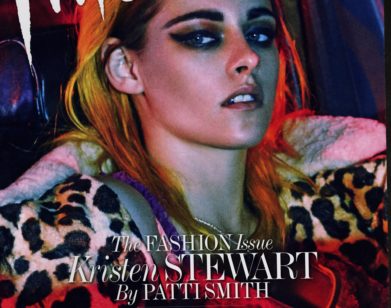



IN CONVERSATION
Take It From Kristen Stewart: Anna Baryshnikov Is a Star


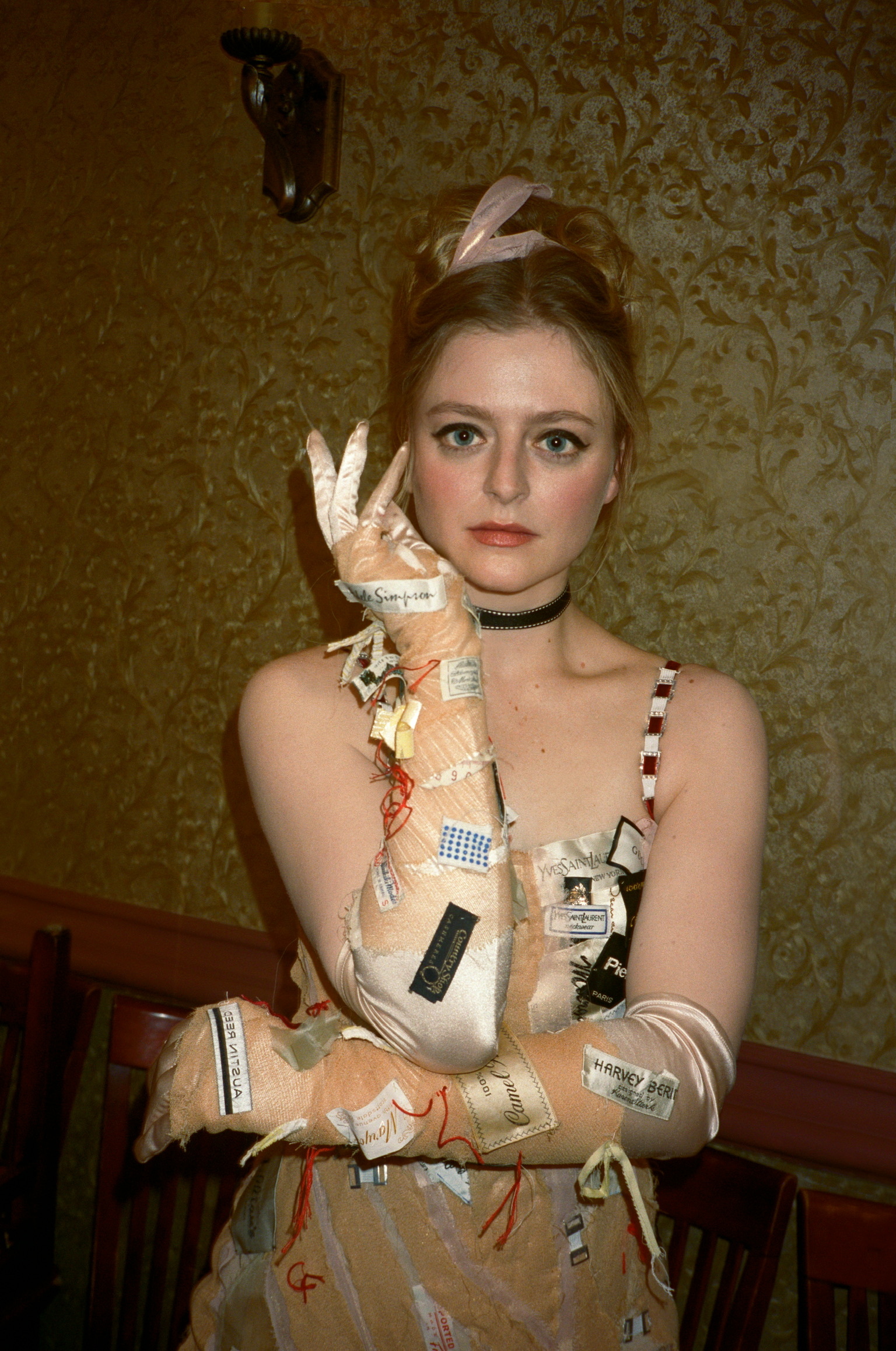
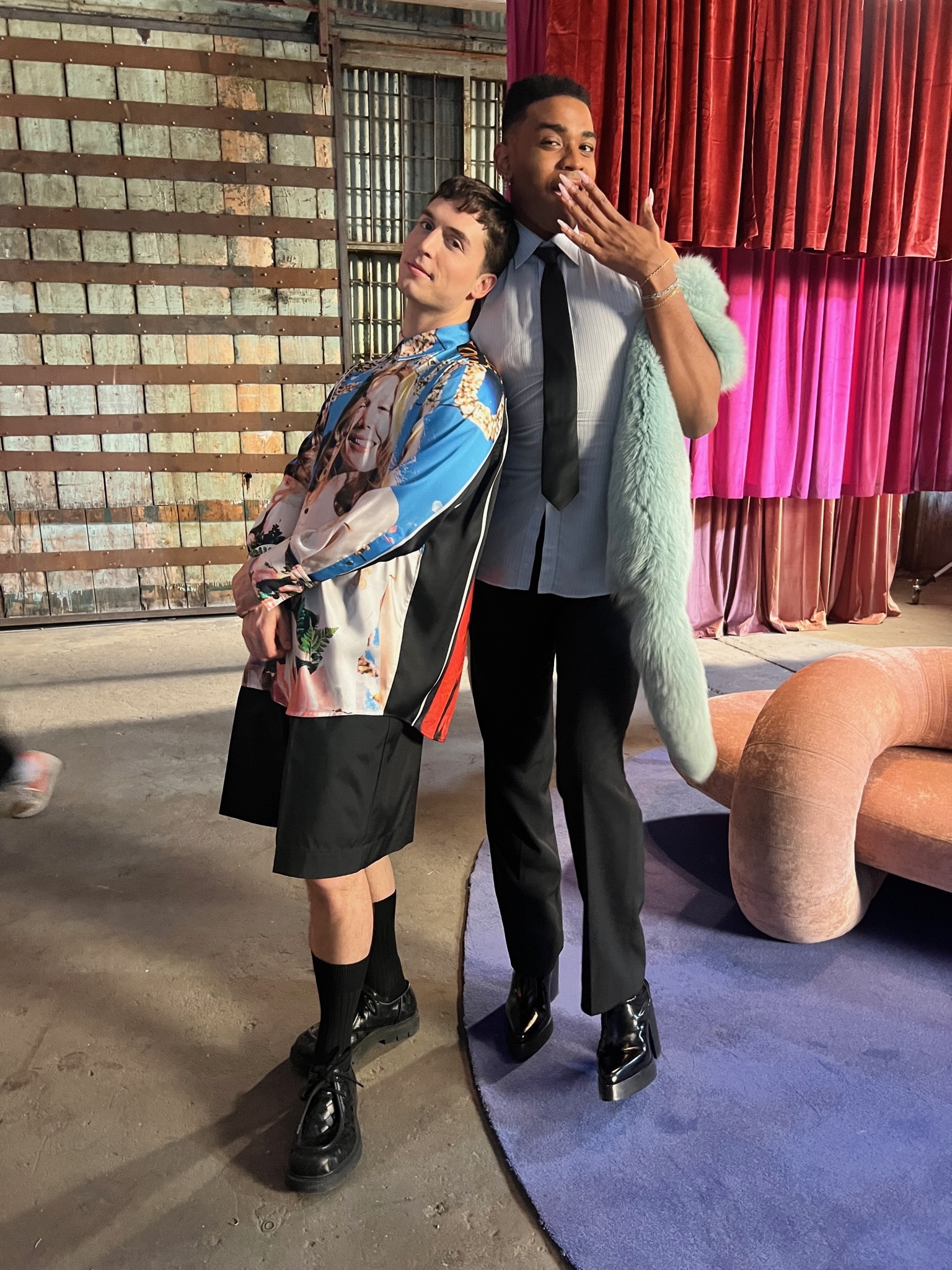
All photos courtesy of Anna Baryshnikov.
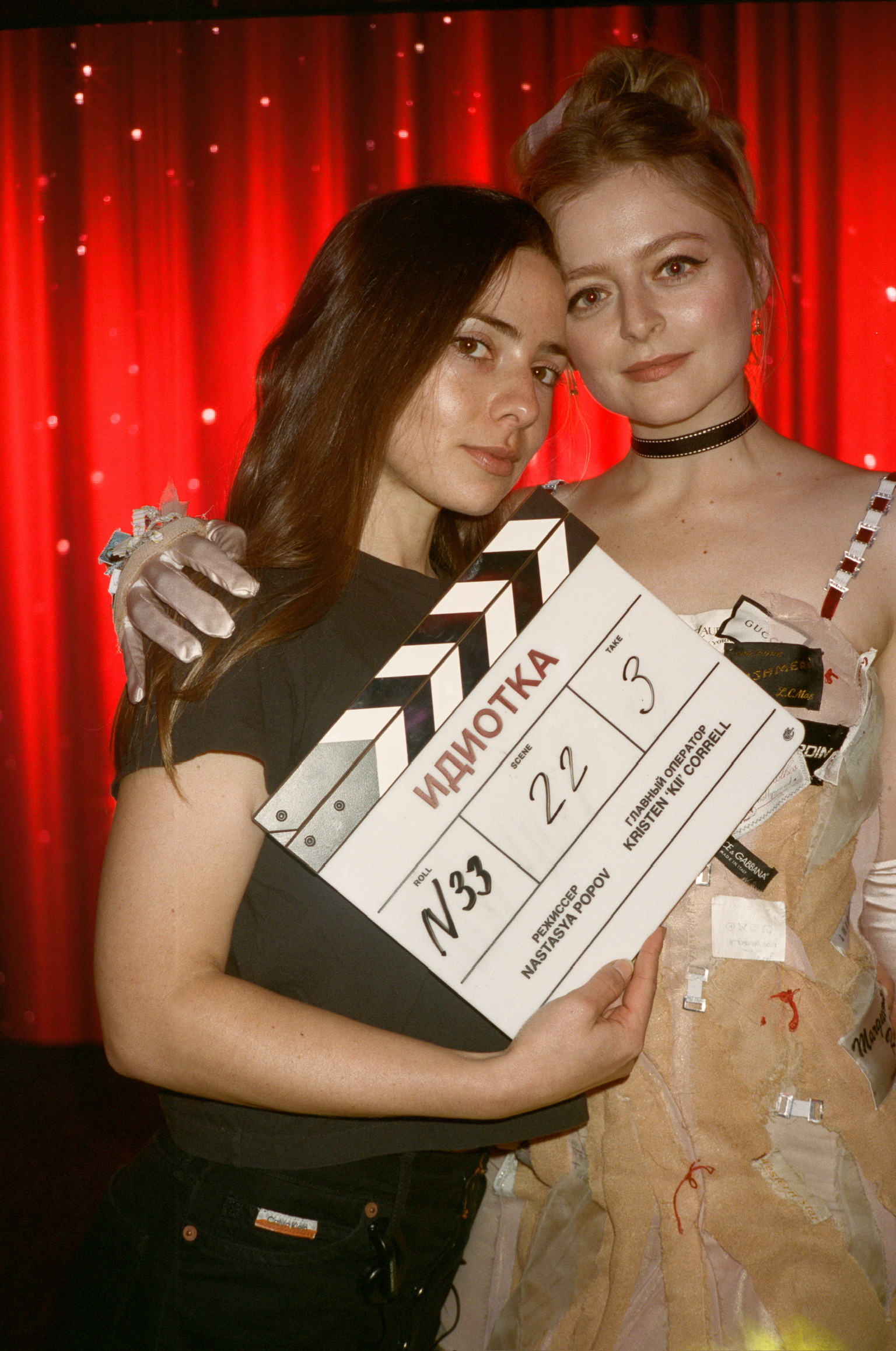
Anna Baryshnikov, daughter of Mikhail and graduate of Northwestern, has spent years being very good in small parts in other people’s things. In Idiotka, the debut feature from director Nastasya Popov, she finally has a movie to call her own. In it, she plays Margarita, a scrappy fashion designer in West Hollywood’s Russian enclave who enters a reality TV competition called Slay, Serve, Survive as a last-ditch effort to save her family’s home. The movie, which costars Julia Fox, Owen Thiele, Camila Mendes and Gabriette, among others, is both sharp satire and tender immigrant story, elements Baryshnikov worked on closely with her director during the movie’s scrappy and collaborative development process. As her Love Lies Bleeding costar Kristen Stewart told her when they reconnected for this conversation, it’s a small film with a lot of world inside it.
———
ANNA BARYSHNIKOV: Hi.
KRISTEN STEWART: Hey, dude. What’s up?
BARYSHNIKOV: We had our premiere last night, so I’m a little worse for wear.
STEWART: Really? Are you in New York?
BARYSHNIKOV: I’m in New York.
STEWART: It’s also 4:30 PM. So, damn. Well done.
BARYSHNIKOV: That makes it sound like I had a crazy night. I just didn’t sleep because I was excited and happy.
STEWART: That’s so nice. So not a boozy hangover, but not even a weird, “Oh, everyone just saw my vulnerable art thing” hangover? Because sometimes you wake up and you’re like, “It’s just out there now, looping in people’s memories!”
BARYSHNIKOV: No, no, no. I’m half really happy and half filled with self-hatred.
STEWART: No.
BARYSHNIKOV: Just a healthy amount.
STEWART: I actually just watched [Idiotka] this morning. Dude, it’s so trippy because we made Love Lies Bleeding together, but because we live on separate coasts, and I’m admittedly pretty bad at keeping in touch with people, I’m so curious about what the fuck you’re doing all the time. As someone who misses you, it’s so fulfilling to watch this movie because so much of it is you. There were parts where you got to imbue so much of your selfhood and, not to sound cheesy, but it was really nice and to watch the movie for that reason, because it’s been ages.
BARYSHNIKOV: Thank you. I miss you, too. I saw that you just bought a movie theater. No big deal.
STEWART: I can’t wait to tell you about that. It’s so sick.
BARYSHNIKOV: I can’t wait to talk about that. But yeah, you hit the nail on the head. There’s a lot more of me in this movie than anything I’ve done. That was such a funny thing to arrive to because I really thought I was playing Nastasya [Popov], the director. So much of it is so personal to her, and we had gotten so close leading up to it that I felt like I was trying to channel something in her. But then I watched it and I was like, “That’s actually a lot of me, in fact.”
STEWART: How much of that is motherland Russia [Laughs]?
BARYSHNIKOV: [Laughs]
STEWART: And how much of that is because of your concentric circle type stuff, which usually happens when you make a movie with someone and it’s the right time, right place, right person.
BARYSHNIKOV: The mother Russia of it all, we had very, very different childhoods in that respect. She grew up in this very specific enclave in L.A., and she introduced me to a version of it that I didn’t know existed. Both of her parents are Russian, and I grew up much more baked into my mom’s side of the family, so much of my understanding of my Russian identity was seen through the lens of someone who had left that country and politically is very opposed to that country, as is Nastasya’s family, but she had this very particular immigrant experience. She had been writing the movie for a year when I first read it, and we developed it together for another year. Then we shot a little teaser in her grandmother’s apartment and raised all of the money. By the time we made it, not only was she like my sister at that point, but I knew her world a lot better. Also, I realized a lot of things about how I grew up that I thought were just quirks about my family are actually quite Slavic.
STEWART: And this is her first movie?
BARYSHNIKOV: Yeah.
STEWART: Hell yeah. I think that you doing two things at once is exciting. I was just talking to another actor and I had assumed they had something to do with the writing of this thing that they had worked on and they were like, “No, I didn’t write it at all.” I would’ve said the same thing to you if I didn’t know you. That might’ve sounded super naive, but that’s only because they had such a defined role in the movie. So, I guess my question is: Did you actually help write this thing? Because it feels like two voices infused, and I could be totally off base, and the writer/director could be like, “Fuck you. She didn’t. “
BARYSHNIKOV: She wouldn’t say fuck you, she’s a big fan. [Laughs] It was such a different experience because a lot of how I approached my work in the beginning of my career was very much in reverence of someone’s vision. But Nastasya always wanted the best idea to win. When something is autobiographical, that’s also really tricky because you’re getting notes on things that you actually experienced. I know you’ve been through that process with your own movie. So, I was just kind of blown away by how flexible she was. The real turning point with my involvement in the development was when we shot this teaser that we were going to send around to beg everyone for money—
STEWART: And then also having to send their fucking ideas with proof of concepts no matter what because nobody can actually make it happen. It can’t be just a script and an incredible actor. And you’re like, “Why is this so hard?” Because they’re like, “Can she really do it?” And we’re like, “Yes! We’ll make the five-minute thing to show you that we can really do it.”
BARYSHNIKOV: Yeah, you have to make like 17 shorts and beg people, and she made upwards of 100 mood boards. But the teaser, financing aside, was really useful because it was really clear what felt most alive about the project. The early iterations of the draft were much more like quiet family stories. It used to be called Dochka, which is the Russian word for daughter, and it was focused on that father-daughter relationship. But there was always this undercurrent commentary on L.A. and how much the process of trying to get her work made made her feel like an idiot. This sense of humor emerged from the project and that was really out of conversations between Nastasya and one of the producers, Tess [Cohen], who’s also like her best friend. That was when it all kind of became a bit of a mind meld.
STEWART: That’s so cool. This is like a snow globe movie. I don’t mean to sound platitude-y, but when the connectivity on a set is ornate because there’s so much acceptance of other people’s ideas, you get to make these small movies feel fucking immense because there are so many different lives in it that’s not just the singular director’s vision. Making movies is trippy because you have to plan as fuck, and there are all these parameters in which you can lose control. But if you stay stuck in this narrow expectation, you don’t see all the shit that happens around you. So I’m impressed with this movie just because it does feel like this tiny thing, but then when you look in, it’s this big, huge world. And I feel like girls are really good at doing that. Not to be too binary about it, but it’s because you’re open.
BARYSHNIKOV: I think you have to be willing to nip your ego in the bud right away. I was just amazed at her ability to do that after she had done so much self-mythologizing to get the movie made. She was 29 when we shot it.
STEWART: Damn, that’s impressive. It’s tricky to watch younger people make movies about the internet because you can be more scathing without being condescending. When I watch movies that have vlogs or anything that talks about that kind of presentational experience, the worst is when it condescends to it and tries to be like, “We’re better than the internet. We’re making fun of the internet.” Your movie did not do that at all. She’s on the show and she never at any point goes, “This is all bullshit. This is too dark.” Because she really loves what she does and there are ways to get visibility. There are also environments in which there are monsters at work because our world can’t really escape that. I guess all in all, what I’m saying is that the movie doesn’t shit on ambition, even if it could feel trite to other people, it’s like she still feels super pure in what she wants. And so therefore, yeah, use that fucking show, girl. Use the internet.
BARYSHNIKOV: It was weird because when we were trying to get the movie made, it felt like we were going through the process that she goes through in the movie, which is that you have to be down to play the game.
STEWART: Totally. So what else are you doing?
BARYSHNIKOV: We’re going to Chicago with this, which is fun and scary because I’m going back to my college campus for the first time, and I was not good at being in college. I did not thrive.
STEWART: [Laughs]
BARYSHNIKOV: Then I’m going to SXSW to see another feature [Sender] that I did that is someone else’s first feature. I feel like I’ve been through it with Nastasya and I’m thinking about what he’s [Russel Goldman] about to experience. I also did a little scene in The Drama that’s coming out in April and a Cape Fear adaptation that’s coming out in June.
STEWART: Holy shit, girl.
BARYSHNIKOV: Yeah, I did Cape Fear with Javier Bardem. Have you worked with him?
STEWART: No. I’ve met him, but I have not worked with that man. He’s so cool.
BARYSHNIKOV: I love him. Such a crazy good actor.
STEWART: Who made that movie?
BARYSHNIKOV: It’s a TV show.
STEWART: Oh, that makes sense.
BARYSHNIKOV: The creator of the show is Nick Antosca, but they’ve also got the [Steven] Spielberg and the [Martin] Scorsese looming over the project.
STEWART: Oh, shit. Gosh, we started a company so we have lists of people that we’re like, “We just need to work with this person again.” I’m using this opportunity via an Interview article to be like, “We have some stuff for you, man. It’s headed your way! [Laughs]
BARYSHNIKOV: [Laughs] I know. I do feel like you just asked what I’m doing and I was like, “Well, here are the talking points.”
STEWART: No, I genuinely did want to know all of those things. But doesn’t it feel weird when you do a bunch of acting and then do so much talking about it?
BARYSHNIKOV: Right now I want to be like, “Just watch it.”
STEWART: Yeah, there has to be a way to fluff people up, get them hard for your project, but not necessarily tell them everything before they’ve walked in. What happens is that you start providing a syllabus on your movie, and you’re like, “I’m just an actor. What the fuck? Watch the movie and think for yourself.”

BARYSHNIKOV: This one, we really set out to make something fun, so it’s easy to have a good time talking about it. It had been a minute since I met someone like Nastasya, who cared about entertaining people so deeply and really wanted to make something that she and our friends would enjoy. I found Nastasya for this movie when I was at dinner with a friend, and I was saying how much I loved being on set, and even though I had had a few great jobs right before then, like Love Lies Bleeding, I was parachuted in for three days and got high having so much fun doing it. Then it was over and you look at the people opposite you and you’re like, “Now they’re going to do it for the rest of the day and I’m warm and I want to do more.” So I was just saying to this friend, “I really want to be number one on something because I want to know the crew. I want to be there.” Now, I’m almost scared of all of this to be over. If I don’t have an Idiotka task left to do, I’m going to be really sad. I can imagine you feel the same way about your movie [The Chronology of Water], which I fucking love so much.
STEWART: Thanks for going to watch it. But yeah, being on set with you was so fun. I was like a pig in shit on that project. This is a good way of putting it, especially in print when people can’t see that I’m really a nice guy and that I’m not a fucking asshole saying this. You do really remind me of me in your enthusiasm for never wanting to leave. There are some people that come in and don’t want to meld with the process. You know what I mean? Just become inextricable from it so you could just never leave. You already know I feel this way about you, but that is so rare to encounter. Even when people are good, it’s rare to feel so enlivened by somebody else’s excitement. And also, you’re like an acrobat, you’re so funny and you hold every moment. Your control over timing—and I don’t mean ba dum dum funny—but you’re good at making jokes. There is a tension and release that you have very adept control over. We all have our different shit that we’re good at, but you are fucking good at yours.
BARYSHNIKOV: Now I’m sobbing. That’s too nice.
STEWART: It’s true.
BARYSHNIKOV: Thank you. Actually, watching you, I feel like I can give myself a little permission to say out loud how much I love doing it, because you were like, “You want to make movies? You love movies?” And I’m like, “Yeah!” [Laughs]
STEWART: [Laughs] Fuck yes.
BARYSHNIKOV: I mean, so much of what I love about doing this is being with other people. Nastasya’s dad had us over when we were done shooting and he was like, “So you made a movie, proud of you guys. But you know each other now, and that’s what’s really important.” We were so high on the movie that we were like, “No, the movie’s what’s important.” But now I feel like the time I spent with her—those 19 days—is the thing that I will cherish so much.
STEWART: But dude, those 19 days are the movie. Movies are like timestamps—they’re like little flagpoles you put in your life when you’re lucky enough to be somebody who gets to work on movies. Making that movie is the time you spent together, and the movie’s a trace of that. I feel the same way with Immy [Imogen Poots] in my movie. The movie happens to be this little shadow of our relationship.
BARYSHNIKOV: She’s so good in your movie. Goddamn.
STEWART: It’s crazy.
BARYSHNIKOV: I’ve never seen someone able to embody being different ages like that in the same film. She felt so young in the beginning, and she grew so much. She’s just crazy.
STEWART: It’s nuts. She just has integrity. She was like, “I’m 17.” And you’re like, “Okay, cool.” [Laughs]
BARYSHNIKOV: There was a description in an early draft, it was the first thing that I read in it that I was obsessed with, but was stealing a tomato while walking down the street and eating it. And there was this description of the tomato dripping down her forearm, and I now appreciate how hard it is to make those moments happen, especially when you’re moving so quickly.
STEWART: It’s scary.
BARYSHNIKOV: Yeah. And watching your movie, I was just like, “God, they got all of these delicious moments.”
STEWART: The most important scene is the tomato, period. Do you know what I mean?
BARYSHNIKOV: I mean, people always say this, but the accidents are the best. A tiny moment of the movie that’s one of my favorite moments is when I’m scrambling to get ready because they’ve showed up at the house and I overslept. And when we were shooting it, toothpaste got all in my hair, and I did that thing where you run through it really quickly and it makes it disgusting and worse. I was so annoyed that it had happened, but then when I watch it, I’m like, “Ah, well, that’s my favorite move in the movie, I guess.”
STEWART: Yeah, totally. I bet there’s tons of those in there. And you shot in L.A.
BARYSHNIKOV: We shot during the writer’s strike, and I feel like we got away with murder a little bit. I was also struck by how nice it is for people to be able to shoot in L.A., for the crew and their families. I mean, I’m preaching to the choir, but obviously more should shoot there. It was really about that city and a corner of that city that I had never seen on screen before. And now I love it there.
STEWART: I know. We just shot The Wrong Girls here, and we’re inside most of the time. Even though we got the tax credit, we didn’t have the money to then ever be allowed to go outside. There’s a few times where we’re like, “Oh my god, a palm tree.” They make it really impossible unless you’re fucking Paul Thomas Anderson. And by the way, not disparaging him. Love him.
BARYSHNIKOV: It felt like we kept stealing shots. We were like, “We’re just going to do this outside really quickly.” And then a Russian store owner would come out, and Nastasya would start negotiating with them in kind of broken Russian because she was nervous. And then we would get the shot really quickly and move on.
STEWART: You could spend more time here if you wanted to. Just throwing that out there.
BARYSHNIKOV: Perhaps I will.
STEWART: Well, when the fuck do I get to see you again? We should do a Nevermind [Pictures] meeting. By the way, the name of my company is Nevermind if you were like, “What do you mean a Nevermind meeting?”
BARYSHNIKOV: Oh, I thought this was an L.A. cultural thing that I don’t know. Yeah! I’m available.
STEWART: We just need to pull your ass into our office and ask you a bunch of questions.
BARYSHNIKOV: I would love it.