


SHORT
Sean Baker and Michelle Yeoh Went to Malaysia With an iPhone and Made a Movie


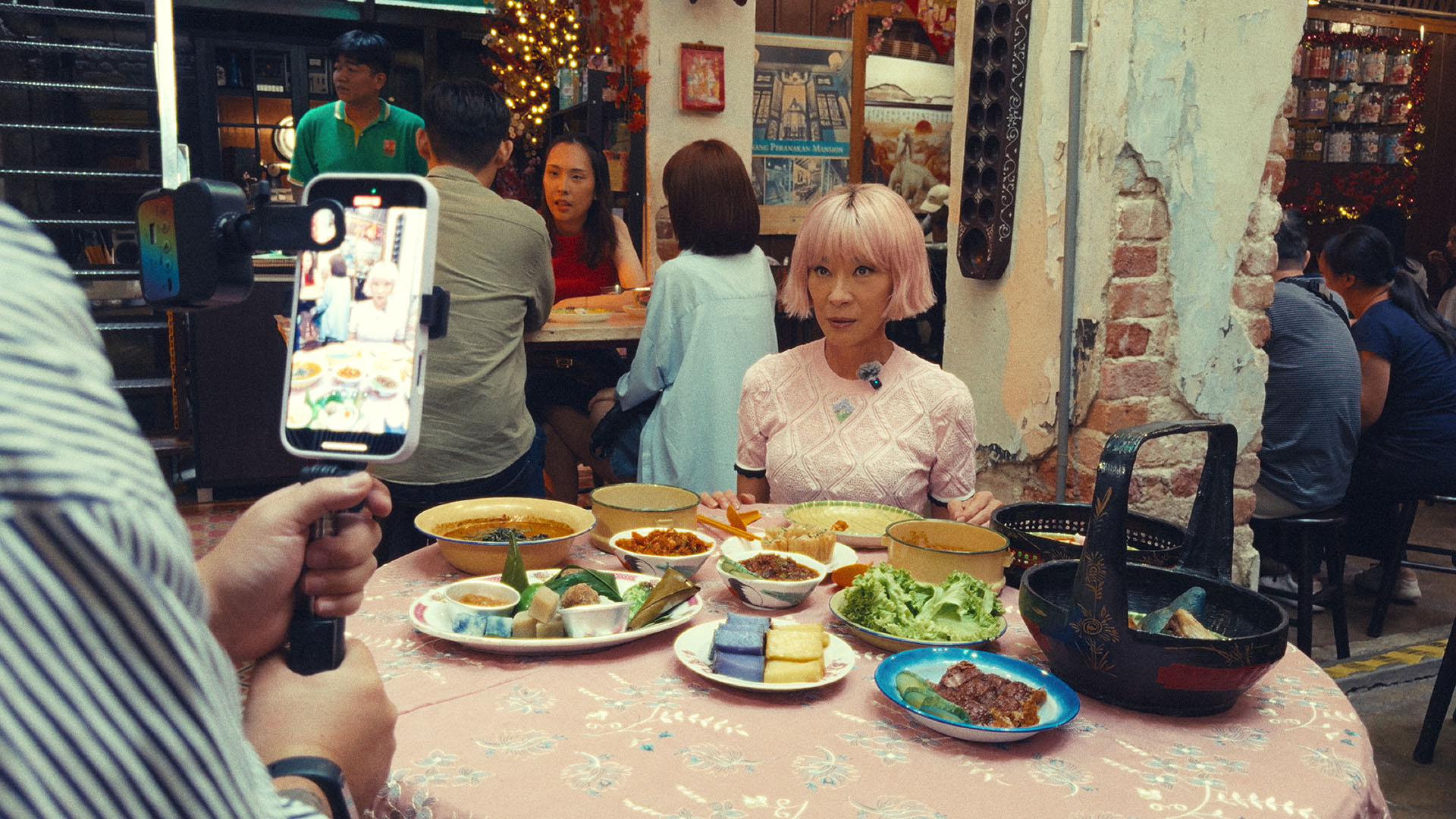
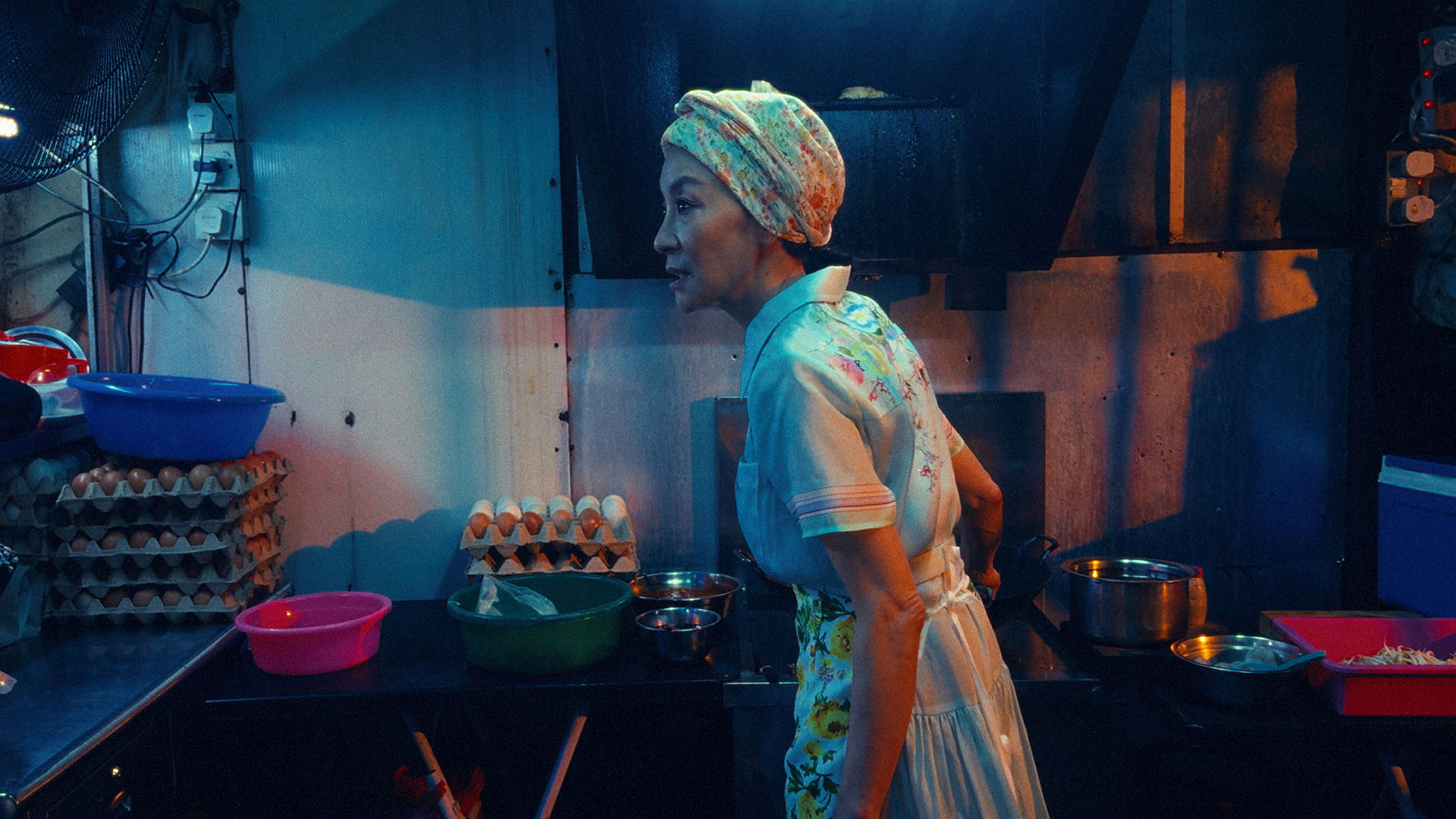
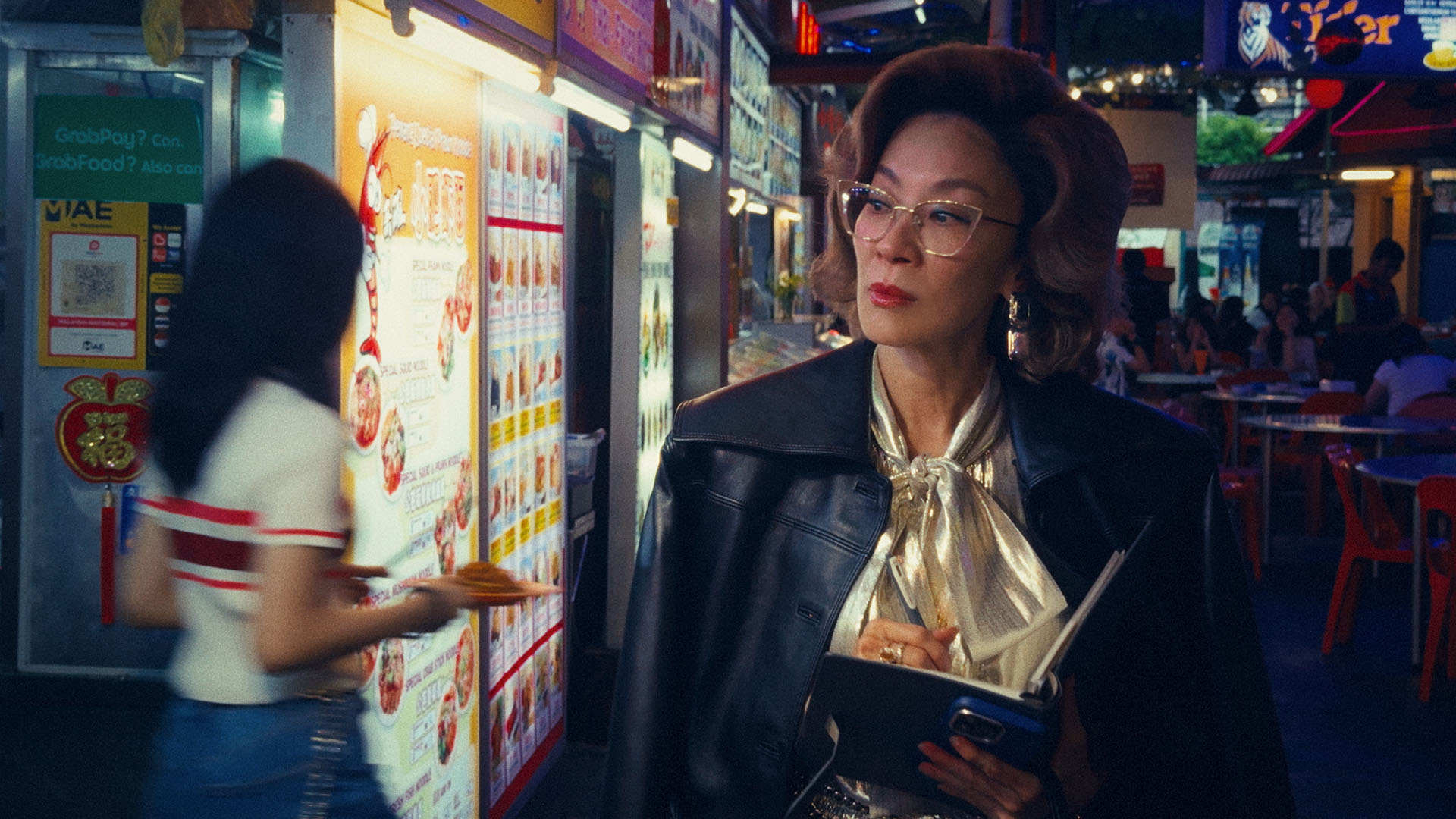
When Sean Baker finished Anora, he could have taken a breath. Instead, he flew to Penang, Malaysia, with an iPhone, a skeleton crew, and Michelle Yeoh and made Sandiwara, a short film for Han Chong’s self-portrait residency which premiered at the Berlin Film Festival. Shot guerrilla-style in the streets and hawker markets of George Town, the movie follows Yeoh, who plays five different women—a hawker, a food critic, a waitress, a pink-haired vlogger, and a singer called Lady Orchid—each moving separately through the streets and food stalls of the city before converging at a neon-lit open-air food court. It’s s character study, proof that Baker’s instinct for finding real life inside real places survives the leap from indie cinema to fashion commission. Here, the two talk Penang, iPhones, and why sex comedy might be the next frontier.
BEN BARNA: Do you see this as your official follow up to Anora? Is it part of the Sean Baker filmography?
SEAN BAKER: Yes, officially it’s my follow-up to Anora in the sense that it’s the first project I’ve directed since finishing that film. Obviously it’s a short and not one of my features, so it lives in a slightly different category, but I absolutely consider it part of my filmography. For me, everything I direct is part of the same creative path, whether it’s a feature, a short, or something commissioned. It’s all practice in storytelling.
BARNA: You play five different characters in 11 minutes. Which one was the hardest to find in such a short amount of time?
MICHELLE YEOH: Sean and Han made it very clear from the beginning that each woman had her own identity and place in Penang. My approach was to understand who they were, what they wanted, how they moved through their daily lives, and what mattered to them. The Hawker character was the hardest because when you don’t have dialogue, you can’t hide behind words, the final scene was emotional. And, The Vlogger was interesting as she was so far from who I am. I remember thinking, “Who on earth is this person?” And I did a lot of research to make sure I do it right.
BARNA: What was it like making a short? Was it easy in comparison to what you normally do? Was it liberating?
BAKER: I tend to put my full heart into everything I do, so the level of effort doesn’t really change whether it’s a feature or a short film. The scale might be smaller, but the creative investment is the same. At the same time, this project was for Han Chong and self-portrait, so there’s a different kind of pressure there. When someone invites you into their world and trusts you with their brand, you want to make sure you deliver something that makes them proud. So it’s liberating in some ways, but there’s also that responsibility.
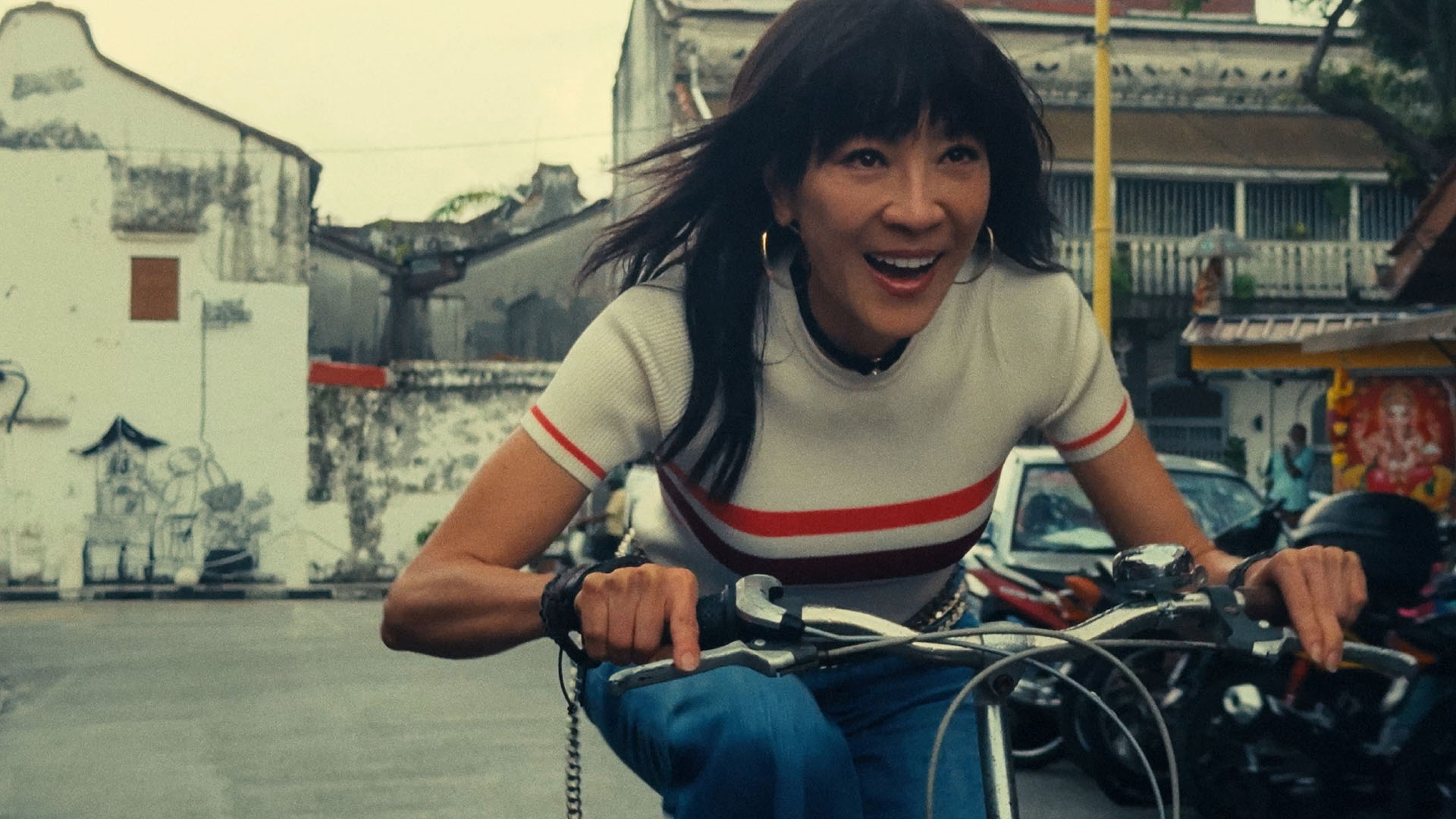
BARNA: What was it like to work on a guerrilla set with a tiny crew after doing so many massive blockbusters lately?
YEOH: It felt like going back to the core of filmmaking. Simply capturing life as it unfolds. Shooting on an iPhone really showed how storytelling has become more accessible in this time of creators. Working with Sean, Sammy, Chris, and Alex in such an intimate setup, in real environments, it allows ideas to flow easily, bringing a kind of immediacy you don’t always get on larger productions.
BARNA: Did you feel self-conscious at all about having to deliver a Sean Baker-feeling project for Self Portrait?
BAKER: Not really. I think the reason I was brought on was because Han likes my style and was interested in seeing what that perspective might look like applied to Penang. That actually makes things easier because it means I don’t have to second-guess my instincts. As long as I felt I had some understanding of the place and the environment we were working in, I knew I could approach it in the way I normally approach my films.
BARNA: How did it feel to film in Penang, effectively in your own backyard?
YEOH: Penang felt familiar, but seeing it through Sean’s eyes made it feel new. Watching him work with his team, Sammy, Chris, and Alex was like being part of a masterclass in curiosity and observation. They approached the city with real openness, and that allowed its texture and life to come through naturally.
BARNA: Sandiwara marks your return to the iPhone after Tangerine. Why did this specific story in Penang require a smartphone?
BAKER: There were very practical reasons. We had a two-day shoot and Michelle was playing five different characters, which meant we had to move extremely fast. A lot of the scenes take place out on the streets of Penang or in a busy, active food court, so we needed a setup that allowed us to be quick and relatively invisible. Shooting on a smartphone meant we could work with available light, move through real locations, and capture moments without shutting down the environment around us.
BARNA: Which of the five characters’ outfits from self-portrait did you actually want to take home?
YEOH: Each outfit was so thoughtfully tied to the character wearing it that it’s hard to separate the clothes from the character. They really helped shape how each of them moved and existed in the world. I honestly couldn’t choose just one.
BARNA: What does shooting on an iPhone give you that other cameras don’t or can’t?
BAKER: The biggest thing is freedom. You can shoot very discreetly, which is incredibly useful when you’re working in real locations with real people around. It also lets you get into tight spaces and move quickly without a large footprint. And there’s another aspect I like, which is that it removes a lot of the intimidation factor, especially if you’re working with people who aren’t professional actors. A smartphone camera feels familiar, so it can help create a more relaxed environment.
BARNA: How do you balance the needs of a fashion brand with your desire to tell a story?
BAKER: For me it’s about making sure the designs are celebrated while still keeping story and character at the center. Han’s work is beautiful, so you want to give it the space to be seen. But I approached it as a short film first. If the audience is entertained and engaged with the narrative, then the fashion becomes part of the storytelling rather than feeling like an interruption.
BARNA: What do you think the appeal is of seeing food on camera, and people eating on camera?
BAKER: It just works on a visceral level. Food is one of those universal experiences—everyone can relate to it. When you see something delicious being prepared or eaten on screen, it taps into the senses in a very direct way. It can make a scene feel more immediate and more alive.
BARNA: You shot a vlogger segment within the film. Is that character a critique of how we consume content in 2026 or an embrace of it?
BAKER: It’s definitely timely. The vlogging culture is such a huge part of how people document and share their lives now. For us it was also just a fun opportunity for Michelle and me to lean into the humor of that format. It allowed the film to play a little bit with tone and perspective.
BARNA: You’ve announced your next feature is a love letter to 1960s/70s Italian sex comedies. What draws you to that specific genre right now?
BAKER: I think it might be time to bring sex back to the screen in a way that’s playful and a little irreverent. Those Italian comedies had a sense of humor about sex that felt very human and very honest. They weren’t afraid to be silly or awkward about it, and that’s something I find appealing. There’s a lot of comedy in sexuality, and I think sometimes we forget that.