


SCREENWRITER
Drew Goddard Tells Cynthia Erivo the Real Story Behind Project Hail Mary


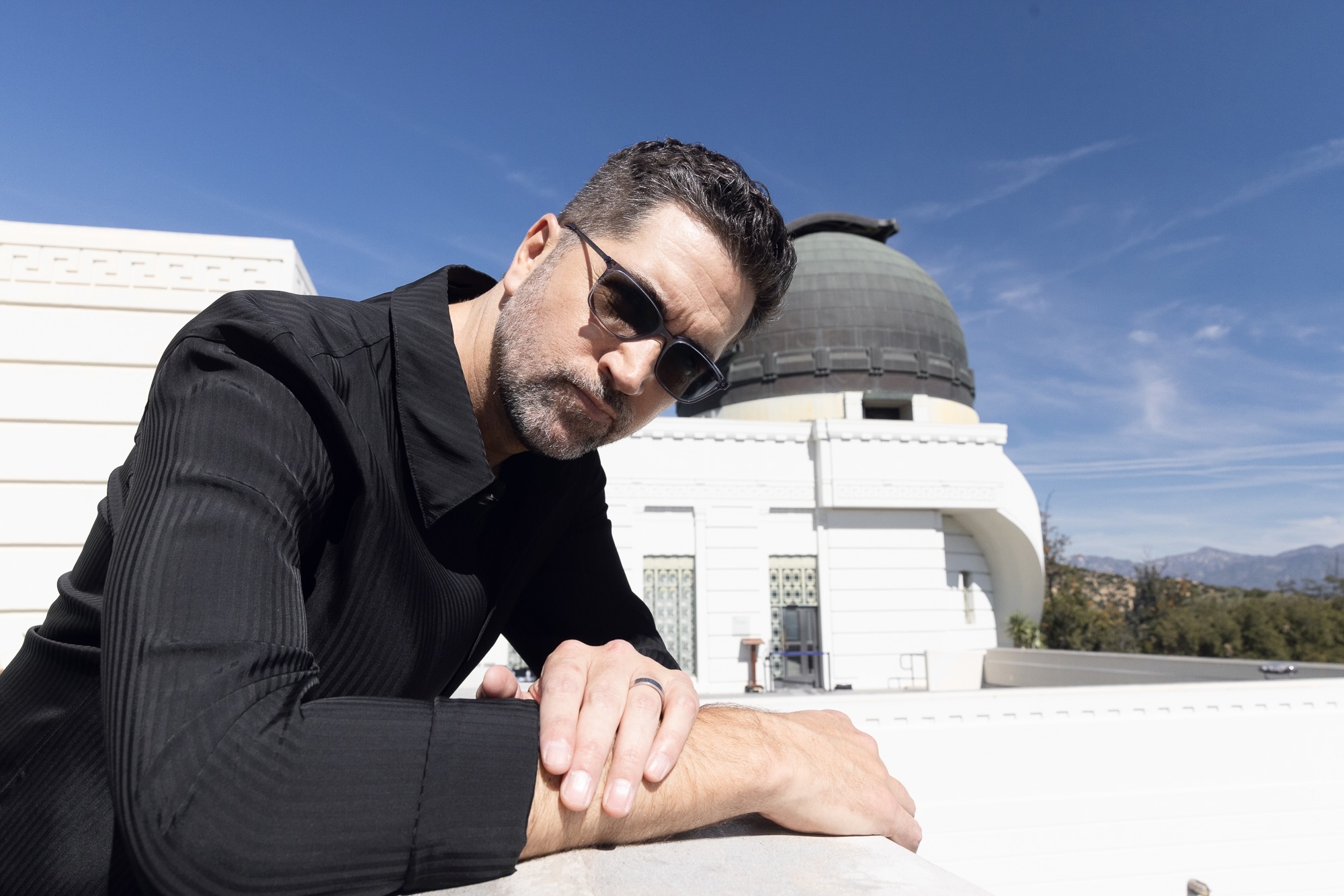
Drew Goddard has a knack for finding the human center inside material that should feel impossible. He did it with The Martian, turning a man stranded alone on Mars into one of the warmer films of that decade. He pulled that same trick with Bad Times at the El Royale, wringing empathy from a cast of strangers with secrets in a roadside motel. Now he’s done it again with Project Hail Mary, the adaptation of Andy Weir’s bestselling novel which just pulled in $80 million its first weekend and has become the most talked-about film of the year. To unpack how, Goddard sat down with Cynthia Erivo, his collaborator on Bad Times, for a conversation about the women that made him, the fear that comes with creating, and why making great art doesn’t have to cost you everything.
———
GODDARD: This is Drew Goddard.
ERIVO: This is Cynthia. We are at the Mandarin, sitting in this really pretty restaurant.
GODDARD: It’s empty, which is fun.
ERIVO: It’s also an indication of how far we’ve come. I’ve been here so often that they’re just like, “Here, fine, have the room.” [Laughs]
GODDARD: I think you deserve the room.
ERIVO: So do you. This is such a lovely thing to be able to do with you today.
GODDARD: I’m so grateful that we’re doing it. I was thinking about it on the drive over, if we had told ourselves 10 years ago, when we were standing in the rain on Bad Times [at the El Royale], that 10 years from now I would be promoting his talking space rock movie and you were playing 23 roles in Dracula, we’d say, “That sounds about right.”
ERIVO: I’m glad we’re here. To have sat in that cinema and watched that movie, I cried and laughed at the same time and texted you immediately. “This is insane. I don’t know how I’m so connected to both of these characters, one of whom doesn’t even have a face.” I think this is a part of who you are. You can be invested in something that should be inanimate, but make it so completely full of feeling and connection. What goes through your mind when you’re creating characters that way?
GODDARD: I can look back at my work and see that so much of the joy is through the characters. That’s what attracts me. Doing characters that aren’t like me.
ERIVO: Yes.
GODDARD: I find that thrilling. I grew up in a small town in New Mexico wanting to get out, and I’ve found a way in my career to see the world.
ERIVO: Mm-hmm.
GODDARD: With this one, it was based on a book and I had worked with the author [Andy Weir] on The Martian, but that scared me. I didn’t want to go back to the well. But when I read it, I could find compassion for a creature that had no face. From a screenwriting point of view, it was a nightmare. From an artist’s point of view, it was thrilling.
ERIVO: It’s the challenge, right?
GODDARD: That’s my sweet spot.
ERIVO: You’re lured by the challenge, but terrified by it.
GODDARD: We have that in common, right?
ERIVO: This is what the 23 characters are. You’re lured by it, but also absolutely mortified and terrified by what it will bring. There’s innate curiosity in the way you find these characters. Even on Bad Times, each one is so different and yet so full, each one completely excavated all of the many complications that come with being a person that is alive, that has to make a life for oneself within each character. And I found that within this piece.
GODDARD: I love hearing that because it’s never a conscious goal.
ERIVO: Yeah.
GODDARD: I just love learning, and what jumps out to me now that I’ve finished this movie is that it’s a movie about learning and the value of learning. I’ve picked a career that forces you to learn all the time. That’s not accidental.
ERIVO: When you say the word learning, it’s in neon lights in my brain, because as I look back at what I was watching, each one of these characters is desperately trying to find a way to communicate. They have to find a way to learn each other’s language in order to survive.
GODDARD: Yes.
ERIVO: The wonderful thing, as a viewer, is watching how that unfolds, the patience it takes, the time, the discovery. It feels like you’re creating an instruction booklet on how to communicate with another person who is not like you.
GODDARD: I don’t know that that’s how we set out, but we knew what we wanted to not do. It sort of works on the page, but in cinema, you want to see these characters interact. Me and the directors, Phil [Lord] and Chris [Miller], we all kept each other honest by saying, “The very hardship of creating this is going to be the point.”
ERIVO: I wonder how you found the way to communicate empathy and compassion through these characters, because I can’t imagine any part of this was easy. In the making of it, in the patience of it, it feels like that filtered into the DNA of this piece.
GODDARD: I think so. Finding empathy and compassion through the art of making something together leads to the product. There’s a reason we’ve picked collaborative art. We could do other art forms that are just about us, but we’ve chosen a different path.
ERIVO: It forces us to learn about how people work, how people tick. And hopefully it forces us to learn how to be better communicators, even when it’s difficult. That’s the very heart of what we do. I think it’s in the heart of what you particularly do. I will never forget, just before we started shooting Bad Times, sitting with you and Jeff [Bridges]. He had shown me a video of a person having an episode of Alzheimer’s.
GODDARD: Yes.
ERIVO: Both of us watched it in silence. When we came away, we were both in tears. And throughout the whole experience, there was a real fervor for understanding each of these characters and where they come from and why they are the way they are. No one’s story is linear. Neither of them have a linear path. The way our protagonist gets there is almost completely through force because someone else, whether right or wrong, believes in him.
GODDARD: Yes.
ERIVO: And he doesn’t believe in himself. But how do you make a character like Sandra Hüller’s feel really clear, not as though she feels sorry for herself, but clear about what she has to do, while still showing empathy in the hero?
GODDARD: You trust first and foremost what your initial attraction is. Sandra Hüller plays Stratt, who’s in charge of this mission. This whole movie is a triangle between three characters: Ryland Grace, who’s Ryan Gosling, Eva Stratt, who is Sandra, and Rocky, our space rock. We needed all three to be fully fleshed out characters, and that excited me.
ERIVO: Yeah.
GODDARD: Sandra said something in an interview, that she was grateful to play a woman who wasn’t defined by her struggle.
ERIVO: Right.
GODDARD: It’s fun to see a person in charge who has to make decisions that affect the entire world. That’s the type of role we see men play all the time. It just felt different to do it this way. I liked writing her. She’s a character I have needed throughout my life. I am a person who has had women specifically believe in me when I did not believe in myself and knock me upwards at key moments. I think about teachers a lot because this movie is about teachers. My mom’s been teaching school for 50-plus years.
ERIVO: Wow.
GODDARD: She defines her existence as a teacher and a mother. But the most important thing that happened to me as a writer was when I started at the University of Colorado Boulder at the same time Lucia Berlin started teaching. Lucia is an exquisite short story writer, nothing like the work I had been interested in at the time, who saw me and believed in me when I didn’t. She said, “No, you can do this,” and exposed me to a world of knowledge I never would have seen. I think a lot of that is in Stratt.
ERIVO: You talk about the women in your stories, and I have to agree. You don’t write them like anyone else. You really have an understanding of the full life of them. I love that you’ve taken from the women in your life and made an effort to create them fully on your screens. If there was another adventure you could write for a woman, where else would you take her?
GODDARD: First of all, I’m not sure I do have a full understanding—I recognize that I can’t. So part of it is saying, “Here are the building blocks I can see. Now let’s find other artists who actually do.” And this is where I bring it back to Bad Times, because that’s what it became.
ERIVO: Yeah.
GODDARD: I can’t fully know, but I can trust you. That’s part of this, “Here’s what I’ve got. I’m not going to be perfect, so help me.” I’m more comfortable now saying, “I don’t have the answers.” That comes with maturity. And then understanding that it’s exciting. My favorite moments on Bad Times were when I was wrong and you would make it better and I’d realize, “Oh, this got better in a way I did not see coming.” That’s what makes art thrilling.
ERIVO: To be able to see it through someone else’s eyes and go, “Oh, your idea.”
GODDARD: Yes. That’s what’s really fun.
ERIVO: Forgive me if I assume, but is there a particular love of music?
GODDARD: Oh, without question.
ERIVO: I think it speaks through your work. In this film specifically, in two ways—the space in the silence, and the needle drops. Did you know what musical drops were going to be in there?
GODDARD: It was not me. Because of The Martian, I had written very specific needle drops, but I did not want this to feel like The Martian. Chris and Phil said, “Let’s do this differently. We also don’t want a long array of pop songs. We don’t want this spaceship to feel like an American spaceship, we want it to feel like it was built by the world.” So they challenged themselves to put songs in from all over the world. Now when I watch the movie, because part of it is about language, I’m struck by how you don’t recognize the languages. Some people can, of course.
ERIVO: Well, I’m a geek. I freaked out when I heard “Pata Pata” because I’m obsessed with Miriam Makeba. I’ve never heard it in a movie before. It’s very rare to hear a South African artist in the mainstream. She’s one of the biggest South African stars there ever was. To hear that, and to understand it was an attempt to make it feel of the world, was such a beautiful thought.
GODDARD: When I told them that, they were so happy. The other thing I find lovely is that it’s doing the very thing happening to the protagonist, putting the audience in a position where they don’t understand the language and yet they’re connecting to the emotion. I don’t understand all those languages and yet I understand the emotion.
ERIVO: How do you go about writing a character that cannot speak?
GODDARD: It was really hard. We’ve been working on this movie for six years. I always try to start from a place of emotion. What are we trying to convey? How would I convey this if you’ve taken away all my safety nets? You go brick by brick. With Rocky, the animated form was crucial. That’s why Chris and Phil, who had revolutionized animation with the Spider-Verse movies, were the right people to direct this. I don’t know anybody else who could have made this creature come to life visually.
ERIVO: Did you know when you began writing this that you wanted Ryan to play the lead?
GODDARD: He was attached to the book before I was, which was fun because I know his range. He’s very comfortable in comedy, drama, and heartbreak, which are the big three polarities for me. I didn’t have to self-edit. I could swing for the fences knowing he would be up for it.
ERIVO: Did the writer come to you to do the screenplay?
GODDARD: Andy texted me April 1st, 2020, two weeks after the world shut down. That was in the backdrop of this, the terror of it all. Andy said, “I finished a new book. I’d love you to do this. Will you please read it?” My initial response was, “Andy, I don’t want us to just go back to…” The Martian was such a special experience. I didn’t want to let him down. But then I read it and realized, though he had started working on it years before COVID, it was speaking to larger themes of the importance of empathy and compassion in a scary time. I thought, “Oh, I’m going to have to do this.”
ERIVO: I hate that so much, and you love it. Or hate it and love it at the same time, because once it happens, you can’t put it down.
GODDARD: When I start to think I’m going to do something, I find myself looking for reasons not to. Do you do that too?
ERIVO: Yes. Every fiber of my being made me want to say, “What are the reasons I can’t do this?”
GODDARD: What makes you say yes? What are those pieces?
ERIVO: If I feel like I don’t know it, if I feel I’m going to be forced to learn more about myself, if I know it’s going to challenge me and force me to become a better artist, that’s the thing that makes me want to go for it. Even when I’m very sure it will be hard. It doesn’t stop me from wanting to challenge myself, because I think it makes me stronger.
GODDARD: Without question. I look back and think, “I picked that because it would make me better,” not just as a better artist, but as a better person.
GODDARD: How much do the people you’ll be working with factor into your decision? We’ve all internalized this idea that filmmaking has to be hard to be good, grueling to be good, destroy lives to be good. When I look back at the directors everyone revered, the story was always the same: “Yes, I was divorced four times, my family was destroyed, but I created this work of art.” When I was younger I thought, “I’m never going to be great because I care about my family too much.”
ERIVO: There’s another way.
GODDARD: And we don’t talk about the other way nearly enough.