


MEETING
When Real Ann Dowd Met Bald Ann Dowd


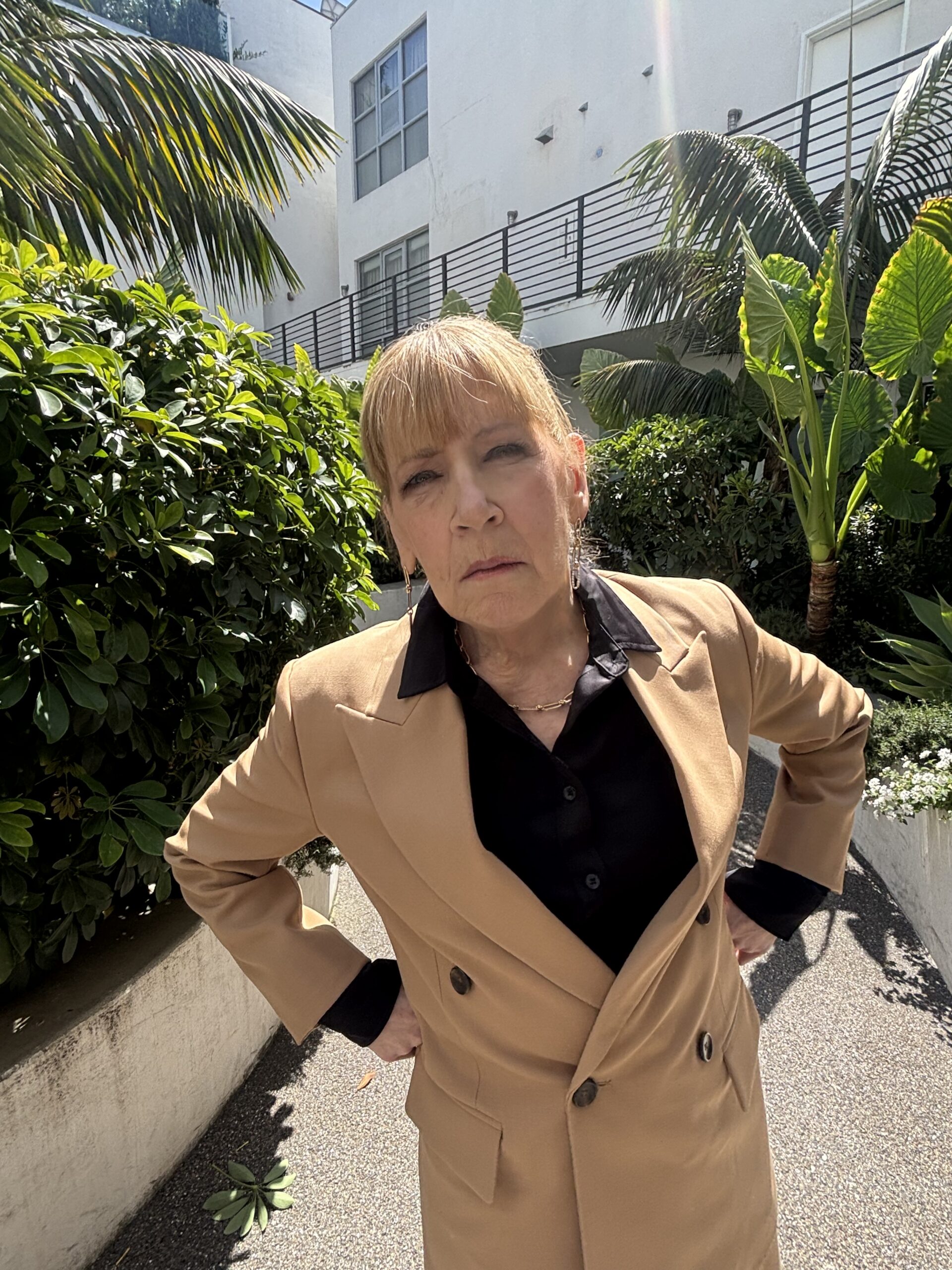
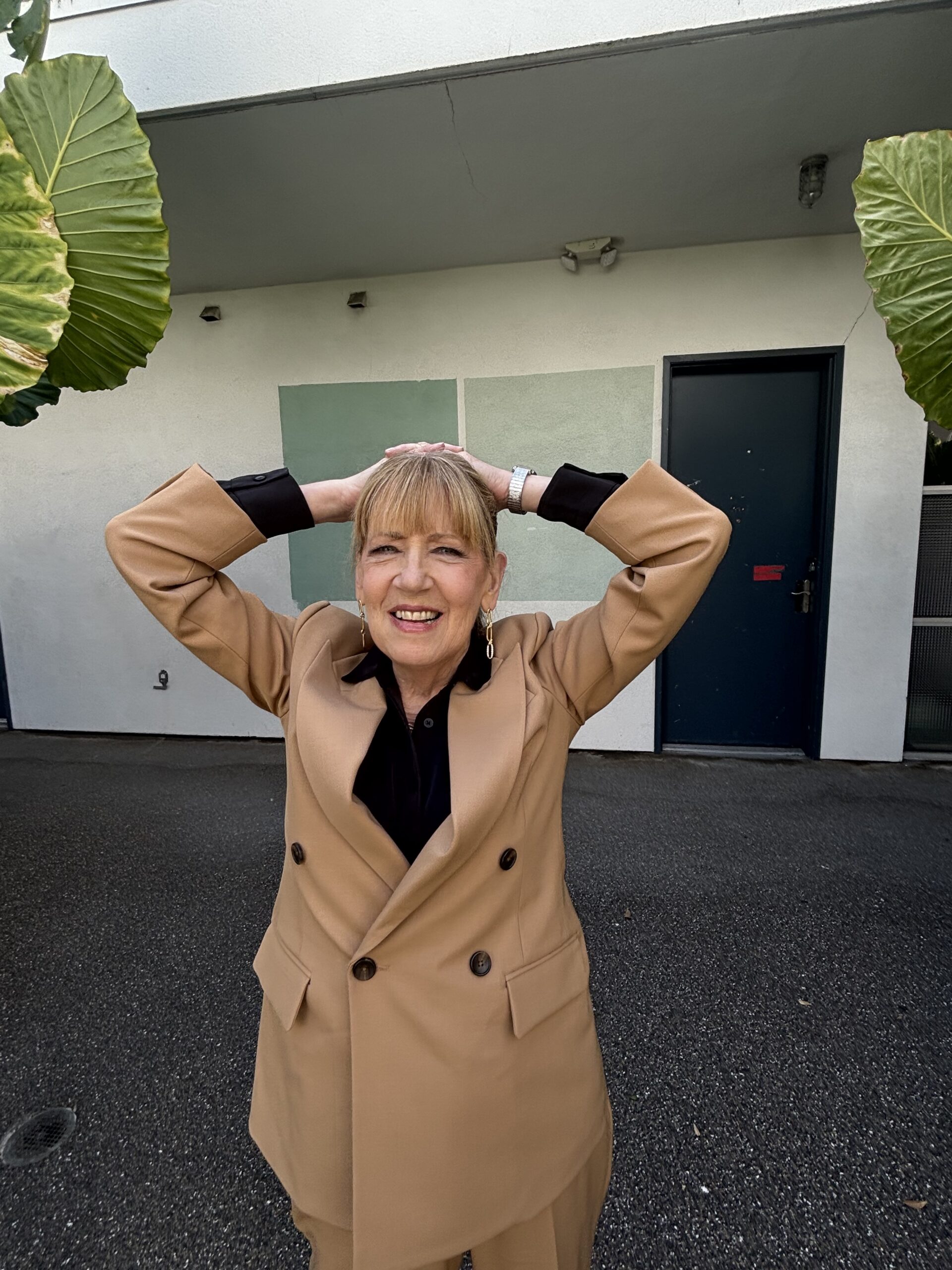
All photos courtesy of Ann Dowd.
It’s a gorgeous spring afternoon on the Lower East Side, and I’m counting each clack of my heels against the pavement as I traverse the short distance between my apartment and Nine Orchard. After nearly 3 years of posting online under the screen name Bald Ann Dowd, an absurd bit whose conception and traction I still struggle to explain, I’ve been invited to interview the real, haired, and acclaimed Ann Dowd, who, in Hulu’s The Testaments, is about to reprise her Emmy-winning role of Aunt Lydia, one of television’s most compelling and menacing antagonists. Dowd has quietly been acting circles around her peers for decades, flawlessly embodying each character she sinks her teeth into: a childlike yet nightmare-inducing family member in True Detective, an empathetic and grief-wracked mother in Mass, and (perhaps my favorite) The Leftovers‘s nihilistic and off-kilter cult leader, Patti Levin, who delightfully toes the line between villain and slapstick comedian. I revere her body of work deeply, so much so that I, as only a specific type of internet-brained Zillennial could, have inadvertently melded our identities together into some sort of niche and nonsensical digital community leader. She should not have to know who I am.
My head spins as the elevator ushers me up to the suite: “How did a few thousand ridiculous tweets land me here? Is she mad at me? Is this all an elaborate ploy to get us in a room together so she can serve me a cease and desist?” My thought spiral is abruptly interrupted as I find myself face-to-face with the woman whose name I have, in some way, subconsciously started to recognize as my own. A fierce monochrome purple set adorns her 5-foot-something frame, and the early afternoon sunlight refracts off of her flowing blonde tresses, freshly cut and styled as though to assert, “Not only am I not bald, I have some of the best hair you’ll ever see in your life.”
Dowd welcomes me into the room with a striking kindness, wrapping me in an embrace and complimenting my recently-thrifted leather trench. She shares in my delight that it was marked down an extra 20 percent for spring, and we chat like old friends about Manhattan’s thrift scene. As our introductory chatter dies down and The Testaments bubbles up to the top of the conversation, I revel in how distinctly un-Lydia she is. Although I’m probably, conservatively, the millionth person to say this to her face over the last decade, she laughs graciously and thanks me for my kind words. I want to know everything about her.
———
ALISON SIVITZ: Yay. Okay. I have a bunch of these cards here—I was a little nervous, but I feel like we can just chat.
ANN DOWD: Whatever you’d like, honey.
SIVITZ: I just finished watching the show.
DOWD: Oh, you did?
SIVITZ: I did. Congratulations.
DOWD: Thank you so much.
SIVITZ: It’s so great.
DOWD: Thank you for watching.
SIVITZ: Thank you for making it. I’m a huge fan of the original book series.
DOWD: Oh, good.
SIVITZ: I read the book for the first time in college. It was such a special thing. I brought my mom into it once they made the show—something we bonded over. I know you have a daughter about my age, right?
DOWD: Yes, she’s 27.
SIVITZ: I’m 26. Is it something you’ve watched with her, talked with her a lot about? Have you found a connection with the women in your life through the show at all?
DOWD: Well, through The Handmaid’s Tale.
SIVITZ: Yes.
DOWD: That’s an interesting question. We’ve talked about it together, and she’s loved it. Here’s the thing—I don’t watch.
SIVITZ: Really? Never?
DOWD: No.
SIVITZ: Is it because you find it hard to watch yourself, or because you just don’t want to be critical?
DOWD: Believe it or not, the core of it is when you work on scenes, give it everything you can, and get to the place where you know it’s right, there’s nothing better in the world. My thought then is, why would I watch it? I just did it. That’s the most positive way of thinking about it. The other thing is that I’m critical.
SIVITZ: Totally.
DOWD: It takes away from the experience, from the wholeness of the scene. If you can’t appreciate it, then don’t watch it.
SIVITZ: That is a very healthy way to look at it. Even with something like writing, you read it back and you’re so critical about what you’ve done that you forget to congratulate yourself for having done anything at all.
DOWD: There you go.
SIVITZ: When you get a script like this, how long do you sit—I mean, you’ve been with this character for almost a decade now, so you know her very well.
DOWD: She’s changing.
SIVITZ: She’s kind of “toned down” in a way that feels—
DOWD: Gentler and kinder.
SIVITZ: Gentler. The body language, the line, just everything about her has changed, which I thought is just a testament to how good you are.
DOWD: Oh, thank you.
SIVITZ: You’ve had so many monologues, so many big scenes. How long do you sit with that and go over it?
DOWD: As soon as I get it. I like weeks in advance.
SIVITZ: Okay.
DOWD: I want it to be absolutely my friend by a good solid week before we do it. I like that. I want to make sure the brain and memory’s working properly.
SIVITZ: You’ve obviously talked a lot about Lydia over the past 10 years. You’ve been asked a million questions, and you know her quite well. You approach her with such empathy. Is there anything about Lydia that no one ever asks you about? Are there any parts of her that you feel like no one really understands in the way that you do?
DOWD: This is embarrassing to say, I suppose, but it occurred to me that she’s really a loner, Lydia.
SIVITZ: Yes.
DOWD: And what does she do when she’s with herself? What gives her peace? What gives her joy when she’s alone? I think those things are important to think and talk about because it’s a part of the character we never see. So I would say those things.
SIVITZ: What do you think brings her joy?
DOWD: I think a spring day brings her tremendous joy. And a beautiful snowfall, but spring is her season, I believe. I think she’s a swimmer.
SIVITZ: Really?
DOWD: Yeah. A very good swimmer. She was when she was a teacher—went to the YMCA and had a fine time there. I don’t know that she’s able to do that anymore, or if there’s the opportunity to do it. I think she reads, which she does in secret, of course. I think she’s a writer.
SIVITZ: I love the idea that she’s documenting these things because part of her knows that this needs to be written down.
DOWD: Yes.
SIVITZ: There were a few films last year—I don’t know if you saw The Secret Agent, but that was one of my favorite movies. It’s kind of about keeping records and remembering history and making sure that stories are passed on correctly. So I just find—especially now at this moment in our history—it’s just so fresh and so beautiful to see on screen and read in a book. I haven’t finished the book yet, but I’m loving it.
DOWD: Is it the start of The Testaments?
SIVITZ: Yes. It’s wonderful. When you first get a character, do you write out what you think their backstory is? Do you keep logs? Do you find images that maybe speak to you?
DOWD: With Lydia, I first wondered what in my life would help me to come to know her. I was educated by Catholic sisters, and I have two aunts who were Catholic sisters—god bless their souls. And they were never cruel. Some of the things that Lydia does, you could call cruel. And not that Lydia saw it as cruel, but the nuns were never like that. What they did have was a very strong work ethic. You are not special. You have a job. You get it done properly. If you don’t get it done, you come back or you finish, up to you.
SIVITZ: Yes.
DOWD: Don’t think someone else is going to do it for you. And I had times—I don’t know if I’ve said this before—but I’d be down at basketball practice having a fine time after school, and Mother Claude would come to the door and say, “Why do you think I’m calling you?” And we’d walk to the room and she’d say, “What is that? Where’s the broom? Get it. Finish the job.” And I love that work ethic. I love that notion of, nobody here is special. You’re all going to be treated the same. Just listen carefully to what’s going on. I found that extremely helpful. The interesting thing is, if you asked me at the time what I thought of Sister Claude? Oh, I couldn’t get near her. [Laughs] But I ended up loving her for that reason—teaching me.
SIVITZ: Yes. I have some questions that aren’t related to Handmaid’s Tale.
DOWD: Whatever you like.
SIVITZ: I think and talk a lot about pieces of media that I love as someone in my mid 20s and that have helped me connect to other people in my life through shared experience— bonding over these things. Are there any performances, films, books, anything that were special to you from a young age that make you think, “Oh, that’s so me.”
DOWD: I’m sure I do, I just don’t know how I’d bring them to my mind at the moment. But the actress that moved me in a way that I thought, “Oh my gosh, if I could ever achieve this,” that’s Geraldine Page.
SIVITZ: Any specific performance?
DOWD: Interiors.
SIVITZ: Okay.
DOWD: Honey, do you have coffee?
SIVITZ: I do not.
DOWD: Do you want coffee?
SIVITZ: I’m fine. I did guzzle a lot of coffee this morning. I’ve been doing the oat milk too.
DOWD: I just started because the stomach gets too upset from dairy.
SIVITZ: I don’t know what happened, but I hit 26, and now get horrible acid.
DOWD: Do you take at night—what do you call those white things?
SIVITZ: Pepcid?
DOWD: Antacid.
SIVITZ: Oh, Tums. Yeah.
DOWD: Tums. I find that quite helpful.
SIVITZ: Really?
DOWD: It does it in one second. I’m not kidding.
SIVITZ: They haven’t been hitting for me.
DOWD: That’s terrible. There are stronger ones. I use stronger ones than Tums.
SIVITZ: Okay. I need to investigate my Tums. [Laughs]
DOWD: Alright, back to Geraldine Page. [Laughs] Just the dropping into a character—that, to me, is the ticket to heaven. In the times I’ve experienced it, I’ve thought, “Let go of the controls. You don’t need to. They are alive and present. I remember feeling that so often in Mass. I don’t know if you ever saw that.
SIVITZ: I was just going to bring up Mass. There’s a moment in it that I watched yesterday where you—before everything kicks off—sit down at the table and you just very lightly brush your hands on the table . And I’m like, “Oh, she’s so in this moment right now.” It couldn’t have been written into the script, but it was so, so good.
DOWD: That experience, I’ll never, ever get over it. That cast, that writer—Fran Krantz—the director, everything about it. It was a blessed experience because it all came together.
SIVITZ: You could feel that Fran had such control over the vision.
DOWD: An experience like that—as I was saying with Geraldine Page—there’s so many wonderful actors, but she’s the one that has moved me the most. I met her briefly once. She was a very interesting person.
SIVITZ: In what context did you see her?
DOWD: Because she went to Goodman School. So, Bella Itkin, who was an incredible teacher, brought her to an occasion we had. I don’t think she wanted to be there. She didn’t strike me as a very social person. But don’t quote me, I could be wrong on that.
SIVITZ: Have you ever been starstruck?
DOWD: Denzel [Washington.]
SIVITZ: Oh, perfect answer.
DOWD: And I remember saying, “You are just the most wonderful actor.” And he was like, “Well, thank you. You can stop now.” [Laughs]
SIVITZ: [Laughs] Do you find that most actors, when you compliment their work, do they recoil or—?
DOWD: It’s interesting. When I see Laurie Metcalf, she’s not big on accepting tons of compliments. She just gets down to business.
SIVITZ: Do you get approached for comedies?
DOWD: I don’t get approached often, no. I have to talk to my manager.
SIVITZ: We need to make that happen.
DOWD: It’d be so fun. When we did Live in Front of a Studio Audience , I don’t know if you saw that—the actors, who am I thinking of? She’s completely wonderful. She does The Morning Show. Jennifer Aniston.
SIVITZ: Yes.
DOWD: Other actors said the best way to make a living and live a life is with half-hour comedy, because it’s not the 16-hour day. You know what I mean? I’d like to have a look at that.
SIVITZ: Yeah.
DOWD: My days aren’t 16, really. They’re 14.
SIVITZ: That’s still long.
DOWD: It’s way long. You just get used to it.
SIVITZ: Do you find it harder now at all to leave it at the door? So many of the images in The Testaments struck me.
DOWD: Oh, really?
SIVITZ: Because I open my phone, I look at the news, and I see these armed guards, these people with big guns, horrible things ripping families apart. And now when I see it in this show, it was striking. Does that wear on you at all, or are you still able to keep the separation between the work and—
DOWD: I keep the separation.
SIVITZ: Good.
DOWD: That’s just a long, long habit. If this sounds trite, I apologize—it’s make-believe for us. We don’t go home with the consequences. If you’ve had a good day where you’ve given it everything you have, there’s nothing better than going home in that feeling of joy and having your martini and putting your feet up, and then coming in the next day and beginning again. But it’s appalling what’s happening. It really is.
SIVITZ: Horrible.
DOWD: What can be done?
SIVITZ: I don’t know.
DOWD: It’s so terrifying.
SIVITZ: What do you do if it’s starting to wear on you? If you get home from a long day, what are you doing to decompress?
DOWD: Talk with my husband, read my book.
SIVITZ: What book?
DOWD: Right now I’m reading Raymond Chandler. My husband read all the books, so I’m reading all of them, too. I don’t even know which one I’m on, but that’s what I’m reading.
SIVITZ: I love that.
DOWD: Yes, exactly. And what else do I do? I love to shop.
SIVITZ: Yes, I can tell. [Laughs]
DOWD: How can you tell?
SIVITZ: You were asking about the thrift stores.
DOWD: Oh, yes. Sorry.
SIVITZ: No, it’s great. I feel like there’s something I’m forgetting to ask you. I’m looking at my cards.
DOWD: Okay. I want to sip this cup of tea.
SIVITZ: What am I forgetting? I don’t know.
DOWD: I want to ask you something.
SIVITZ: Oh, go for it.
DOWD: How are your parents?
SIVITZ: They’re good. Thank you.
DOWD: Are they good, sweetheart?
SIVITZ: Yes.
DOWD: They are? I’m so glad.
SIVITZ: Thank you so much. That’s really sweet.
DOWD: And the other thing, how did you ever come up with Bald Ann Dowd? It makes me laugh every time I hear it.
SIVITZ: Really?
DOWD: Oh god, yeah.
SIVITZ: I kept joking—I was going to come into this interview and sit down, and my first question was going to be, ”Are you mad at me?”
DOWD: No, I love it. It’s so odd in the best sense of the word.
SIVITZ: You know what it was, actually? I was watching True Detective, season one—which I often call my favorite season of television—and you showed up in the finale, and I was like, “Yes, it turned out.”
DOWD: Thanks, sweetheart.
SIVITZ: And I don’t know, the bald of it all, I truly don’t know.
DOWD: Can I tell you what I thought it was? Just don’t tell anyone.
SIVITZ: No, go for it.
DOWD: I’m embarrassed to say it. I thought you were in the midst of one of your parents being treated for cancer, and they lost their hair.
SIVITZ: Well, that happened earlier. And my dad—can I tell you?
DOWD: Yes.
SIVITZ: I printed my dad a shirt when he was going through chemo, and it said “Bald Ann Dad” on it, and he would wear it everywhere. [Laughs]
DOWD: That’s so sweet. I thought it was about that, that somehow you wrote about that.
SIVITZ: It turned into that.
DOWD: I’m so glad he’s good.
SIVITZ: He’s really good. We’re both great.
DOWD: And I love “Bald Ann Dad.” I think it’s hysterical.
SIVITZ: Thank you so much. At the end of the day, it was like: you’re not listening to me. The people my age—you’re not hearing me when I say you have to go watch everything, Ann Dowd is in.
DOWD: Oh my god.
SIVITZ: I’m going to make sure you do.
DOWD: That’s so kind of you, darling.
SIVITZ: I’m so glad you’re cool with it.
DOWD: Someone told me about it. I said, “No, nobody’s doing that.”
SIVITZ: They put something I posted on a billboard one time, and I was like, “I don’t know if we have the rights to use this image.” So they had to black it out. I was like, “I don’t want to get sued.”
DOWD: I’m not going to sue anybody. Don’t you worry about that.
SIVITZ: Gorgeous. [Laughs] Okay. Thank you so much for talking to me.
DOWD: You can call me anytime for anything under the sun.
SIVITZ: Oh my goodness. Thank you so much.
DOWD: Can we have a picture?
SIVITZ: Of course.