


TRANSFORMATION
Jay Manuel on the Rise and Fall of America’s Next Top Model


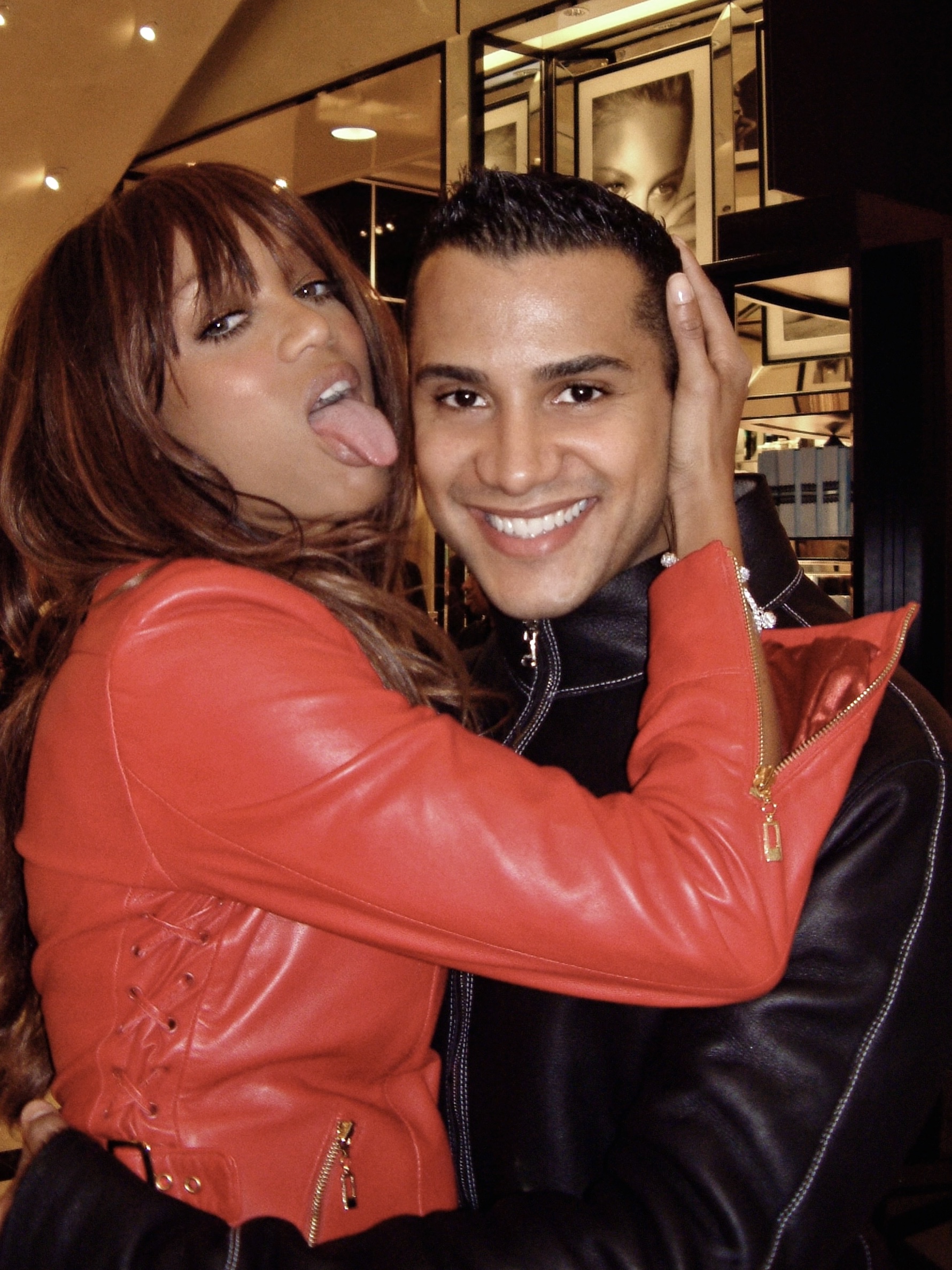
All photos courtesy Jay Manuel.
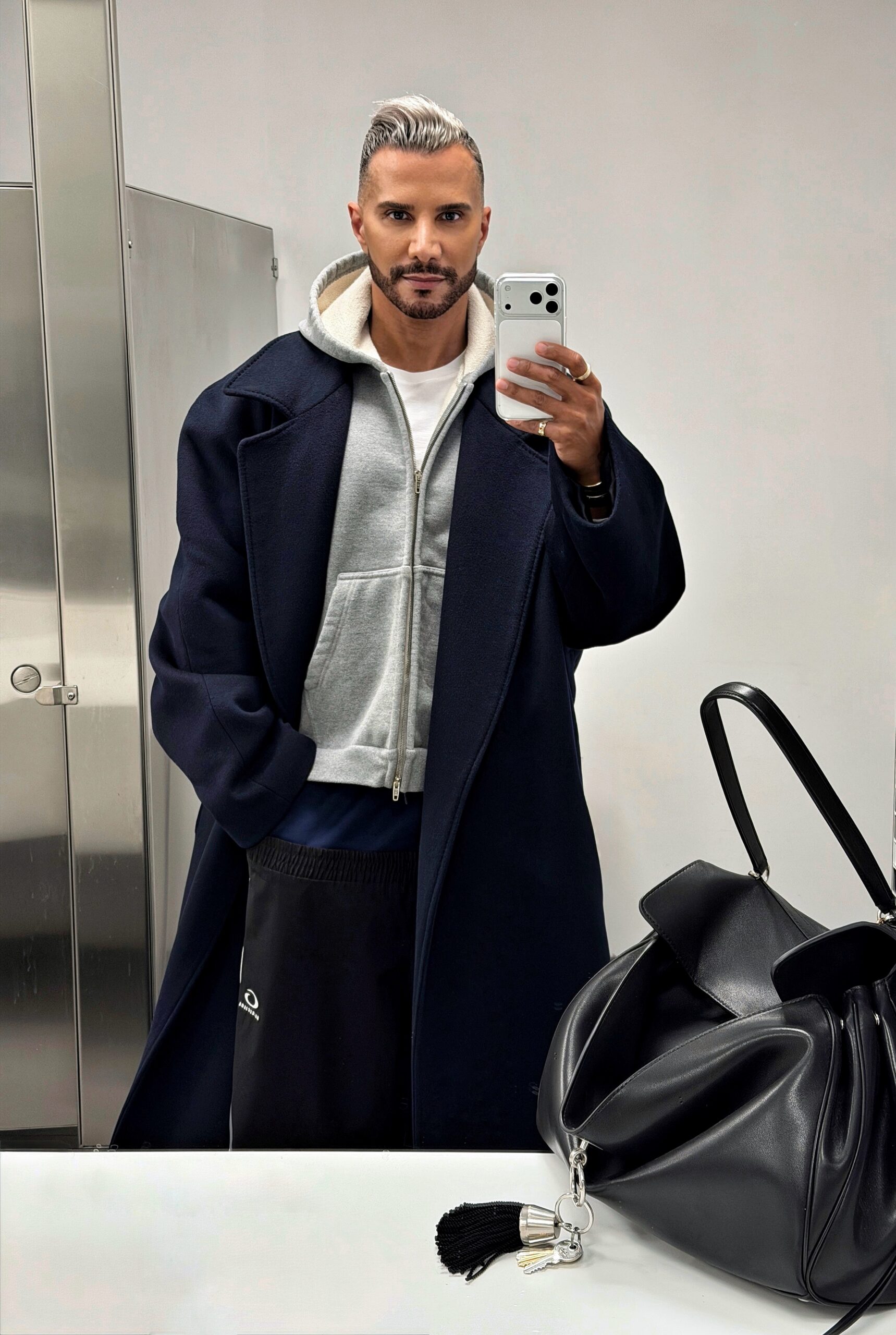
Jay Manuel appears like a Balenciaga-adorned apparition at the host stand of La Mercerie. He’s early for our interview, as am I, and I struggle to out-polite him. Charming, affable, and less catty than ever thanks to what I assume is a desire to make up for the reality TV reckoning, the America’s Next Top Model star isn’t the man I remember from my screen. Yes, his signature blond is a darker shade of silver, but as the creative director turned author tells me, my lack of recognition has more to do with the fact that us viewers never knew the real him in the first place. Parasocial relationships aside, I still have some invasive questions—like, what’s going on with Jay and Tyra? And how exactly did they come up with all those insane shoot concepts? Lucky for me, Netflix’s new three-part documentary Reality Check: Inside America’s Next Top Model, is about to begin streaming, and Mr. Jay is ready to reveal everything—snakes, coffins, and all.
———
TAYLORE SCARABELLI: So how are you feeling, one week out from the documentary airing?
JAY MANUEL: First of all, I’m really grateful that Netflix greenlit this project. When I found out Mor [Loushy] and Daniel [Sivan], who I was already a fan of, were directing it, I just instantly found peace. Throughout the years, huge outlets and networks have approached me, but I didn’t feel comfortable speaking about the show. Most people were trying to approach it like, “We’re going to do a whole takedown piece on the show or Tyra,” and I’m not interested in takedown culture.
SCARABELLI: So why did you feel differently this time?
MANUEL: I didn’t jump on board right away. The first conversation I had with one of the executive producers, I told him, “I just want to make sure we’re going to have an honest conversation and there’s an opportunity for everyone to speak their truth.” Because the girls have really not had that platform. And so we had a conversation and I said I’d think about it.
SCARABELLI: Watching it now, having been on reality TV for years, are you happy with your edit?
MANUEL: There are many questions that I was asked and I answered all of them. So it was interesting to see what they chose to be part of their storyline, especially when it’s your life up there. I thought it would be much more about the girls’ journey and their truth. I did not anticipate there being a focus on my relationship with Tyra.
SCARABELLI: I do think the girls get their moment, but before we get into that I want to go back to the beginning. What were you doing right before you started ANTM? You were a makeup artist to the stars and—
MANUEL: I was doing a lot of art direction and post-production. I was brought in to sit down with retouchers for major beauty campaigns that I was working on because they wanted my eye. They wanted me to say, “What can we push? What looks real, what doesn’t?” This was the early days of photoshop when there weren’t a lot of tools. So I was retouching Revlon campaigns, doing makeup, as well as doing celebrity clients and editorials. And this was at a time where you were not allowed to be a multi-hyphenate. Tyra was my client and one of the first people who empowered me by saying, “Don’t let someone force you into one box.”
SCARABELLI: Right.
MANUEL: Iman and David [Bowie], who were also clients, supported me as well. When the final episode of the first season of America’s Next Top Model aired, my phone rang, and Iman was like, “We watched.” She literally passed the phone to David and he said, “I think you found the place you belong.” And although I’m older now and I recognize that validation has to come from within, having those two call me changed my life at that moment.
SCARABELLI: I can’t imagine. Okay, so you’re working with Tyra. She’s like, “I have this show idea and I want you to be a part of it.” In the beginning you’re coming on as a kind of co-host, or—
MANUEL: So originally, I was hired to be Tyra’s makeup artist on the show. After the first photo shoot in season one, where the girls are on that rooftop in bikinis for Maxim, Ken [Mok, the producer] figured out the format for every episode. It had to have a challenge and a photo shoot and then a judging, and he had a producer who was supposed to make those shoots happen.
SCARABELLI: Right.
MANUEL: After the Maxim shoot I remember going to Tyra’s hotel room to get her ready and we had to stop hair and makeup for this meeting. They said, “We’re supposed to do the next shoot in two days and the producers can’t get anyone. No one will do this.” They were coming to her to say, “Okay. Now we’re going to lean on your connections.” I’m just a wallflower in the room, and Tyra turns to me and says, “Jay, can you do something?” So I said, “Let me call Pier 59 because I know the manager. Let me see if I can get Troy Ward.” We’d worked together many times, so I said, “Hey, we’re going to do this beauty shoot with snakes around the girls’ necks.” And he was like, “I’m in.”
SCARABELLI: And then you became the creative producer of the show?
MANUEL: Well, the other thing you kind of see in that episode is that I not only did I have to get up early in the morning to get Tyra ready and make sure the shoot was going well, but I also had to do make up for all the girls—Elise, Robin, everyone—because they didn’t have the budget for teams. Then the next shoot, they couldn’t get anyone either. And Tyra was like, “Who can you get?”
SCARABELLI: Of course.
MANUEL: So that happened twice and then we were standing in the production office and Tyra kind of made this announcement in front of Ken. She was like, “Jay is one of the most creative people I know, he needs to be the photoshoot producer, period, because we keep turning to him to bail us out.”
SCARABELLI: This is classic fashion world shit where it’s like, “Okay. You have this new role that you fought for, you can take on this other stuff, but you still have to do your original job because Tyra needs her makeup done.” And then it’s not until you get that call from Iman and Bowie when you realize you’ve found your place.
MANUEL: To be clear, they were validating that transition, but before the show I had worked with Avedon, Scoville, Annie Leibovitz, Herb Ritz, all the legends that I admired growing up from my bedroom in Toronto, Canada.
SCARABELLI: You were already in-in.
MANUEL: Yes.
SCARABELLI: I guess I was just thinking about it more in the context of the title of Creative Director and your relationship with Tyra, because there must be some edge there, in terms of you outgrowing your old role.
MANUEL: Well, at that time there was no edge because she knew, and she still knows to this day, that I was only there to help her. Because everyone in my life—with the exception of David and Iman—all the beauty editors, and I won’t name names because I really still respect them, advised me on the side and said, “You’re throwing your career away.” A reality show behind the scenes of fashion when you’re already doing major advertising—like the big campaigns where you get paid a lot of money—
SCARABELLI: They’re like, “Why would you do that?”
MANUEL: At that time, I was flown around the world first class for brands like De Beers. I had a very successful career, I bought an apartment in New York City with money that I was making before I was on TV. Everyone told me I was absolutely insane, but I just felt like if I said no to Tyra I would be letting her down. And the thing for me back then, and still to this day, is that I really hate letting people down. So I was like, “I can manage both of these things. I can be there for her.”
SCARABELLI: So there wasn’t something in you that felt like this was a way out of advertising or whatever?
MANUEL: Well, I was lucky because I spread myself between fashion editorial, advertising, and even music industry talent. Now, everyone does everything. But back then the editorial girls wouldn’t touch advertising, and the advertising girls wouldn’t touch the music industry.
SCARABELLI: So when the show comes out, there’s a divide between the people who were supporting you and the people who were being shady. Did you feel stressed or were you just like, “Fuck it, we’re doing it, this is going to be major.”?
MANUEL: When the show first aired people were intrigued by it, and even though the first season popped, people thought it might be a blip. So nobody wanted to give Tyra, or any of us, our flowers.
SCARABELLI: Right.
MANUEL: So we kind of went back to our jobs. Tyra was modeling, she was still doing Victoria’s Secret. Want to hear a funny story?
SCARABELLI: Yes.
MANUEL: Heidi was in the makeup chair right next to Tyra on the Victoria Secret set and she says to Tyra, “Wouldn’t it be amazing to do the exact same show but with designers?” And Tyra said, “I don’t know if that would work.” And then shortly after, Project Runway came out.
SCARABELLI: People didn’t want to give you your flowers but the industry was watching. So it’s the second cycle, and now you have to come up with a bunch of new concepts?
MANUEL: Tyra and I, whether it was in L.A. at her house or my house in New York, would lie on the bed and dream up ideas. I was always taking her lead, and quite genuinely, when she started the show, she really did want to find the next top model. And she really did want everything rooted in something she had done. We would come up with an idea and then she would say to me, “And you do you.” No one from production would tell me what to do on those early shoots.
SCARABELLI: So when did it start to feel like you were no longer in control?
MANUEL: By season three, the show had become a thing, but I still felt like there was a level of integrity to what we were doing. At that time we were bringing in sponsors for the shoots and it was my job to work with product integration. Season three was the introduction of CoverGirl. People make the assumption that, “Well, Tyra was a CoverGirl, so of course CoverGirl came on board.” But we had to go through a formal pitch process that Tyra was not involved with.
SCARABELLI: Of course.
MANUEL: By cycle four, there was no more of that intimate Tyra and I coming up with creative ideas. There were big meetings and there were all these asks. Then there was the famous race-swapping shoot. I remember my heart dropping out. I was like, “There’s no way I can do this.” Because of my last name, people think I’m Spanish. I’m actually biracial and my parents are from South Africa and grew up under apartheid. I remember calling my mom and saying, “I don’t want to do this shoot. How can we put someone in blackface?” Tyra told me she was doing it from a place of empowerment and said, “Don’t worry, you won’t wear this, but you have to go to work,” because I asked to be excused from that shoot and they would not allow it. People thought as the creative director, it was my choice. I had to walk around and wear it. And as a person of color with an extended family who still lives in South Africa, it was not easy for me, and I just didn’t know how long I could survive in that environment.
SCARABELLI: Right.
MANUEL: But I had a TV contract at that time, and you can’t break those very easily. So I did the best that I could while riding out the cycles I had left on my contract. By cycle 8, the show was airing in over 150 countries. It was at its height. How do you tell her you’re not staying?
SCARABELLI: And that’s when you tried to quit. What was the breaking point for you?
MANUEL: It was a combination of many things. The shoot creative became difficult to stand by as if it was a hundred percent my idea when there were a lot of cooks in the kitchen. There were a lot of shoots they wanted shot a specific way with a specific creative and it just didn’t feel like fashion anymore.
SCARABELLI: Can you name a couple that particularly irked you?
MANUEL: What’s oddly coming to mind is Cycle Five when we take the girls to London. They wanted to do this modern interpretation of classic art and I was like, “That’s a cool idea, I could see a magazine doing something like that.” Side note, that’s the shoot that I wore that Vivienne Westwood t-shirt with the breasts, because to me, that was a modern interpretation of classic art.
SCARABELLI: So iconic. Do you still have it?
MANUEL: I gave it away to a really good girlfriend of mine about five years ago. But back to what I was saying. I remember one of the last shoots we had to do in America had the most crazy creative. I don’t remember exactly how it was pitched, but Bre had to look like she was running away from a giant energy bar because the girls had accused her of stealing another girl’s energy bar or something like that. I was like, “What?” Obviously there was other questionable creative. Everyone talks about the Seven Deadly Sins shoot. The girls felt that that shoot was created last minute because production found out that Kahlen’s friend had just passed away and she was asked to model from a coffin. I can tell you that shoot was absolutely decided on before the cast was even set. It was a cool idea, but unfortunately, look at how it played out. I still talk to Kahlen today and she’s expressed to me that I was supportive to her in that shoot, but fans of the show still watch that and wonder, were we doing it to torture her, and it was absolutely not the case.
SCARABELLI: But that was the premise for a lot of the shoots, “We’re going to challenge you to get you outside of your comfort zone,” which made for good TV. Also fashion editorials were insane at that time. It wasn’t weird to dress models up like homeless people or plastic surgery victims.
MANUEL: And for a lot of those early season shoots, we had a direct reference of a similar shoot Tyra had done. She had been put in the exact same situation, so if Tyra, as a bonafide top model had to do a shoot like this, these girls should learn from that experience, because they could be put in the same situation. I think it all started from a very honest place.
SCARABELLI: It’s interesting hearing about how people were warning you not to do the show, like, “This isn’t going to fly with the rest of the fashion industry.” I think you came out on top in this situation—
MANUEL: Pardon the pun.
SCARABELLI: [Laughs] Yeah. But I think what’s touched on in this documentary is that a lot of the girls, even if they made it to the top, didn’t find success as models after. You must have had some idea that, “Hey, this might not actually work out for these girls.” Did that weigh on you or was it ultimately just like, “We’re making a TV show.”
MANUEL: If that show was born today, I think it would create a bonafide influencer every season. It was like the birth mother to social media if you think about it. So the way I felt was, a lot of girls work their ass off and don’t even get a call back, so if someone’s going to get this platform, absolutely will have a leg up in the industry.” I really believed that, especially in those first couple of seasons. But by the time we got into cycle four, five, six, and I’m starting to think, “Are we really creating a top model?” And the question that I didn’t dare ask Tyra, for fear of offending her, was, “Why can’t we just do amazing kick-ass fashion shoots and literally let these girls duke it out on the receipts?” I didn’t understand why the shoots had to become gimmicky.
SCARABELLI: Right.
MANUEL: And so it became hard for me, from a creative standpoint, and then also seeing what the girls were going through. Do I regret being on America’s Next Model? Absolutely not. I own it. But I wish I had a better sense of boundaries and the ability to help create a truly safe environment for all of the girls. I’m still close with a lot of the contestants, and the ones I’m still in touch with, they’ve told me they felt safe, but I honor the girls who say they didn’t. And I really love Keenyah’s voice in this documentary. She did exactly what she was supposed to do in that shoot and speak up and say I was uncomfortable [with that male model on set] and the judges should have had her back.
SCARABELLI: There’s a few examples like that in the documentary, like Ebony talking about when she got her hair done during the makeover and she felt disrespected. She was like, “I did what I thought Tyra would do and stood up for my needs as a Black woman,” and then she got shut down by Tyra herself. The vibe was very, “Come on in, open up to me, but I might turn that information on you later.” In practice, Top Model was operating like the rest of the fashion industry.
MANUEL: Ebony’s voice was powerful and the fact that she was in cycle one as an open lesbian woman was so brave of her. And Jay and I were the queer talent on the show, which was also a very big risk there at that time. Queer Eye wasn’t out, we were technically the first out talent on camera. I mean, it’s not like we were walking around wearing rainbow flags, but we were authentically ourselves.
SCARABELLI: Well, Miss J was pantless wearing six-inch heels the very first episode.
MANUEL: But it wasn’t a storyline. We were just naturally being who we were. And can I take this moment to actually say something about Miss J Really quickly? Being on the show with him helped me authentically own my space. We were a united front of two queer men on TV together. And if it wasn’t for him to lean on, I don’t know if I could have been so confidently proud in just being myself. He really allowed me to be me, and I will forever thank him for that.
SCARABELLI: That’s beautiful, and I think a lot of viewers feel the same way about you both. Now I know you don’t want to talk about Tyra—
MANUEL: I can answer your questions. Even though we don’t speak, I have a level of understanding and respect for her history. I think the thing that instantly connected me to her, initially, even when we first met and started developing our relationship I recognized a real vulnerability with her and this place of pain. And, as a Black model in this industry, recognizing what she’s had to go through, and what she’s shared with me, I will keep her confidence, even though we don’t speak anymore. I’ve been given the gift of trust with her, and even though there was a divide, I can understand where she comes from and some of her reactions.
SCARABELLI: Well, that’s kind of what I was wanting to get at, because there’s been so much talk about this show being problematic, and some of the contestant really did go through torture, but it was also really fucking uplifting for a lot of viewers. It changed how people looked at fashion, how they saw themselves in that world. I don’t think Tyra comes off great in this documentary. She seems a little unapologetic and inauthentic, but I don’t think it’s fair to think of her as a villain, because her intentions were genuine, at least at the beginning.
MANUEL: Absolutely. We had a few little moments where the viewer almost got some vulnerability, but I don’t think she was willing to go there in this documentary. In the third episode when they ask her, “Are you willing to share your view of what happened with your relationship with Jay?” Her reaction was, I think, probably one of the most authentic reactions in the piece, but ultimately, she doesn’t answer the question. She says something like, “It’s a phone call to Jay.”
SCARABELLI: But she hasn’t called you.
MANUEL: No. I don’t think she would, but you know what? I would be absolutely ready to sit down with her. I’m in a very healed space now, so if she wanted to sit down and have tea, I would do it.
SCARABELLI: Yeah.
MANUEL: I’m a little hesitant about a phone call because of witnessing how the phone got used during production with other people on the line, but I have nothing to blame her for. I’m grateful for everything, the good, bad, and the ugly, because it’s made me who I am today.
SCARABELLI: Of course.
MANUEL: I know this is going to sound a little corny, so just forgive me, but I go to the theater every other week, and when Wicked first came out Kristin Chenoweth was a client of mine and I was like, “I love the show.” So, I was like, “Tyra, I’ve got to take you. This is like mid, late 2000s-ish. When I got home, she texted me and said, “I’m listening to that song, ‘For Good’, and I realize that song is us.” It’s so fortuitous because we are not in each other’s lives now. My life was changed for good because of her, and I don’t want people to think of her as a villain because I don’t, at all.
SCARABELLI: And, like I said, the show did so much for so many people, and we still love watching it today.
MANUEL: Right. There are all these young creatives on social that will reach out to me and say, “I became a photographer, or a makeup artist, or whatever, because of watching that show.” Even a lot of the Drag Race stars. Shea Couleé, said, “I was literally sitting in my basement and thinking, ‘Oh my god, I can be a queer star’,” because she was watching Miss J and I on TV. I didn’t realize at that time that we were having that impact, and, I know Ms. Jay didn’t either. We weren’t thinking of ourselves as trailblazers, we were just trying to do our job on TV.
SCARABELLI: I have to ask you, have you talked to Janice?
MANUEL: Not recently, but her and I had a blast. She’s quite genuinely fun. People want to paint her as crazy, but you know what? She’s gone through hell and back in an industry that was so hard to succeed in, and I have so much respect for that woman.
SCARABELLI: But you guys were always bickering.
MANUEL: Janice was somewhat picking on Tyra. And, you guys have to understand that when we were shooting in New York, Tyra would come and sit in my living room with me and download how she was feeling, the intimate feelings, the real Tyra. And, I saw how this strong Black woman, who I really admired, was being just slowly chipped away at. Janice was slowly getting to her and she was doing everything to not react, because then Tyra can be painted as something else. So, I then played big brother and then I felt like, okay, when I sit at the judging panel, if Janice so much as goes at Tyra once, I’m just going to unleash on her. But when I watched the clip of us going at it in the documentary, I was like, “Oh my god. I look like a bitchy queen. That’s not who I am.”
SCARABELLI: That’s not your energy, but it’s fun and funny for TV. Obviously, Miss J could really give it.
MANUEL: Oh, Miss J could throw his one-liners, but they were delivered with humor, too.
SCARABELLI: Exactly.
MANUEL: The first time I met Miss J I was wearing some Cavalli embroidered pants, again, 2003, don’t judge, and a Gaultier shirt or something. I was still kind of chic, but he was looking me up and down, the only way Miss J could. He was like, “I was wondering who brought those clothes.” [Laughs] He was trying to be funny, but I think that was his way of testing you. I probably laughed it off and he thought, “Okay, this kid I can’t really rattle.”
SCARABELLI: I love it. Okay so to wrap this up, because we’ve been talking for over an hour, I want to ask you again. Do you feel satisfied with how your story has been told?
MANUEL: I’m just grateful that I could just be me and not be the television personality Jay. I became a caricature of myself on Top Model, and I didn’t want to be that person during the interview. I just wanted to answer the questions to the best of my ability, as opposed to reacting to them. When I watched the finished piece, it was a little jarring. I don’t think I’ve seen myself be that vulnerable. But I think it’s important to show people the real me.
SCARABELLI: Absolutely.
MANUEL: Tyra was “on air” Tyra in the documentary, but Nigel [Barker] was also very honest, and Miss Jay, when we get through to his reveal, is the most vulnerable I’ve ever seen him be on TV. It was time for us to just be ourselves.