


SUPER BOWL
How the NFL’s First Fashion Editor Finds Clothing For the Big Boys


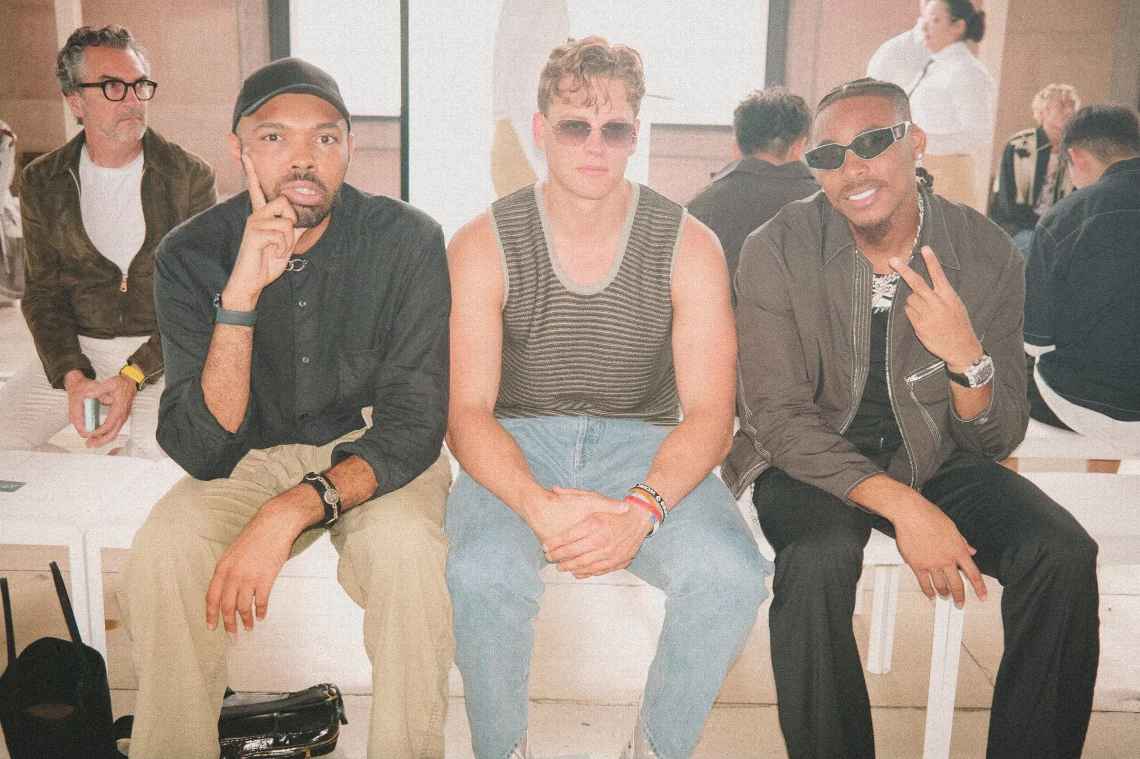
Photos courtesy of Kyle Smith.
One-size doesn’t truly fit all—and maybe it shouldn’t. The NFL’s first-ever fashion editor, Kyle Smith, would agree. Prior to his official appointment, Smith was a content strategist for the league and a stylist for on-air talent. But when Cincinnati Bengals’ quarterback Joe Burrow needed some serious assistance for the 2024 Vogue World show in Paris, Smith’s role began to see a shift, as did the function of fashion in football. It’s no surprise that dressing seven-foot-tall, 300-pound linebackers requires some expertise, but the NFL has nevertheless emerged as a site of genuinely cutting-edge style. “If you are a bigger guy and you want to see some inspiration,” Smith says, “watch the NFL tunnel.”
If you’re not a professional athlete with a personal stylist, though, options are, well, slim. That’s why Connor Norton started MANY Apparel, a clothing line specifically tailored for bigger-bodied men who want to actually feel good in clothing. That’s why his first collection features wardrobe staples that aren’t merely bigger, but actually designed to scale. With Super Bowl Sunday on the horizon, he gave Smith a call to pick the stylist’s brain about dressing some of the world’s best and most physically imposing athletes. “Gen Z fully understands that you can be interested in sports but also fashion,” Smith exclaimed. “It doesn’t make you less of an athlete, and it doesn’t make you less of a fashion enthusiast because you play sports.”
———
KYLE SMITH: Hey, Connor. So, what’s up?
CONNOR NORTON: I have so many questions for you, but let me start by explaining why I wanted to talk to you in the first place. I feel like you’re one of the few guys out there that I see dressing a myriad of bodies. I started my own brand, Many Apparel, and as far as I’m concerned, we’re the only luxury brand for big guys on the market. I’m sure you’re well aware from dressing NFL players that it’s just a very underserved community.
SMITH: It is. And it’s really, really hard. I work with all of our players, anyone that’s asking for help, whether it’s education around fashion or directly dressing them for a tunnel fit. And I work a lot with Joe Burrow, for example, but to be honest, he’s off the rack. We share a lot of clothes. [Laughs]
NORTON: No way.
SMITH: It’s not that difficult to dress him, but then the other day he said he wants to style Ted Karras, who is an O-lineman on the Bengals.
NORTON: I love that.
SMITH: I was like, “Joe, just so you know, it’s not as easy to dress him.” Joe could ask me the day before to dress him and I’m like, “Yeah, that’s easy.” I can go to the stores I usually go to, talk to the brands I usually talk to, bring my own clothes if I’m really in a pinch. But then I was like, “Ted is going to be a little bit different.” I hated saying it out loud, but it’s just so true.
NORTON: Do you have any go-to luxury labels where you’re like, “Okay, this one’s safe. They do oversize and I know I can fit them into this.” Because sometimes I find it so hard to find anything for me.
SMITH: Balenciaga is really easy to pull some pieces. We did Rick Owens, too. I think Ted was a 44 waist, maybe?
NORTON: That’s me.
SMITH: I think the largest size I could find readily available at Rick Owens worked for Ted and he ended up wearing some Rick pants. And Gucci came through with some pieces that were even bigger than what we needed, which was great to see. But again, there weren’t as many choices as I could get for someone like Joe. But I used to dress R.K. Russell, who’s retired now, but he was an O-lineman, I think. Don’t quote me on that. [Laughs] I know nothing about positions.
NORTON: I have to laugh that we’re two gays talking about dressing right before the Super Bowl.
SMITH: But also that’s who the Super Bowl is for now. There’s the hardcore fans, the avid fans, but it’s for the gays and the girlies now, too.
NORTON: Exactly.
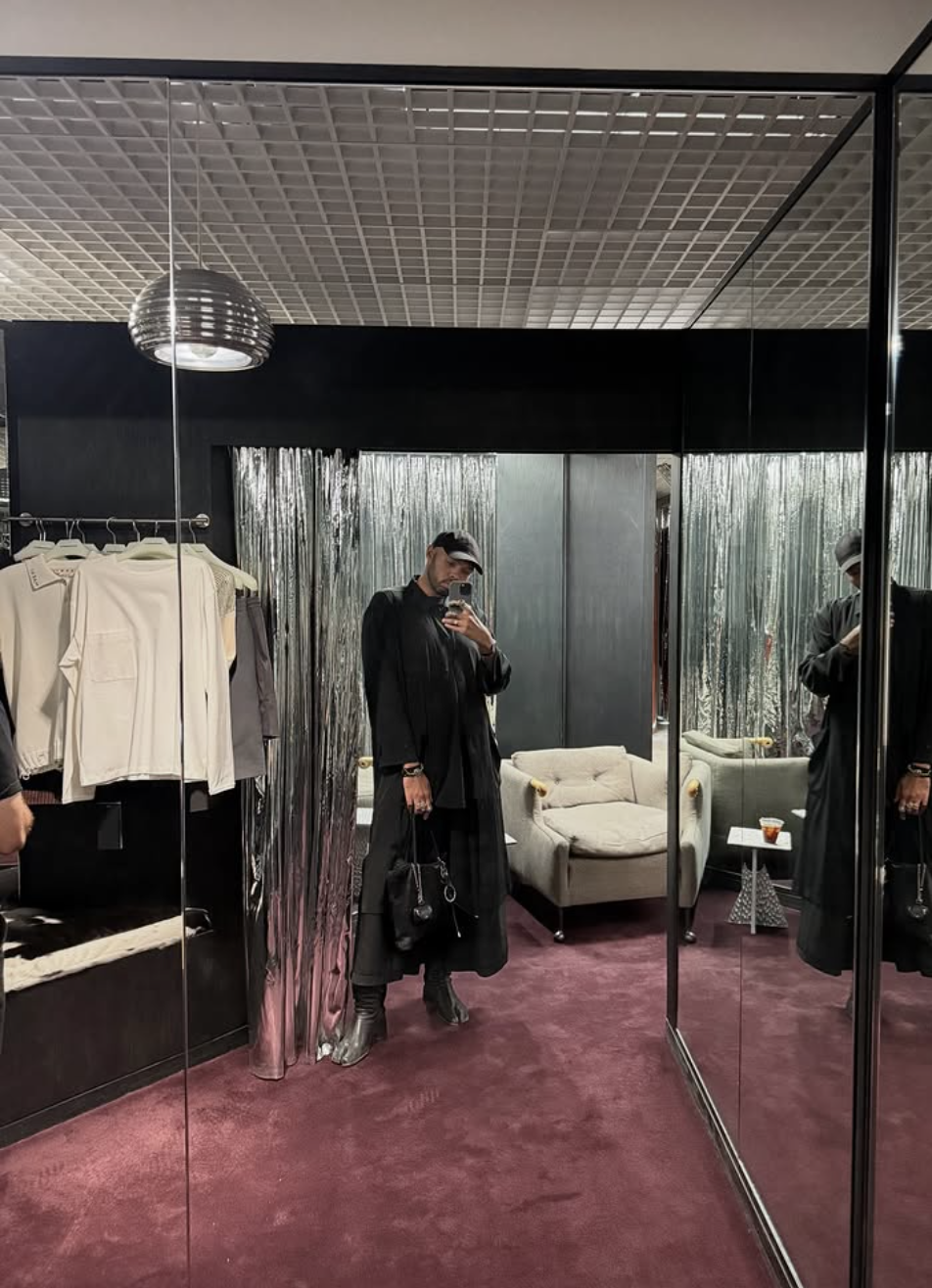
Photo courtesy of Kyle Smith.
SMITH: But R.K. was one of the first players with a very large, athletic body that I had to start dressing. I remember going to a fitting with him and getting some great things, Levi’s and stuff, but their thighs—
NORTON: The butts, too. I mean, I was a lineman growing up.
SMITH: Oh my god, really?
NORTON: I literally played in high school.
SMITH: Wow. So yeah, the thighs are so big, but then the waist is small. You have to either size up to accommodate the thighs or do the waist size and then figure out what you’re going to do about the thighs. But what was so funny was that I was wearing some Yohji [Yamamoto] pants that fit me. I’m a waist size 33, but the waist on these pants were ginormous. And I was like, “Maybe these pants might work.” I literally took the pants off my body and gave them to R.K. to wear and they fit perfectly.
NORTON: Yeah, they have a lot of elastic waistbands and stuff, drawstring, which is so fierce. Something that’s important to me is that I want to be able to buy pants that have a button on them, that have a zipper. I want to be able to have a button-down shirt where the neck fits at the collar. You can get away with some of the designers and the oversized stuff, but when it comes down to getting a luxury button-down shirt that’s not super-drop shoulders and whatnot, that is the hardest thing to find. And that’s what I’m trying to put out in the market.
SMITH: And if you need a shirt that large to be well-tailored, it’s a whole other thing.
NORTON: Totally.
SMITH: For it to be well-made and not pulling certain areas and really fitting and looking good on the body is really difficult in general because of the death of tailoring.

Photo courtesy of Connor Norton.
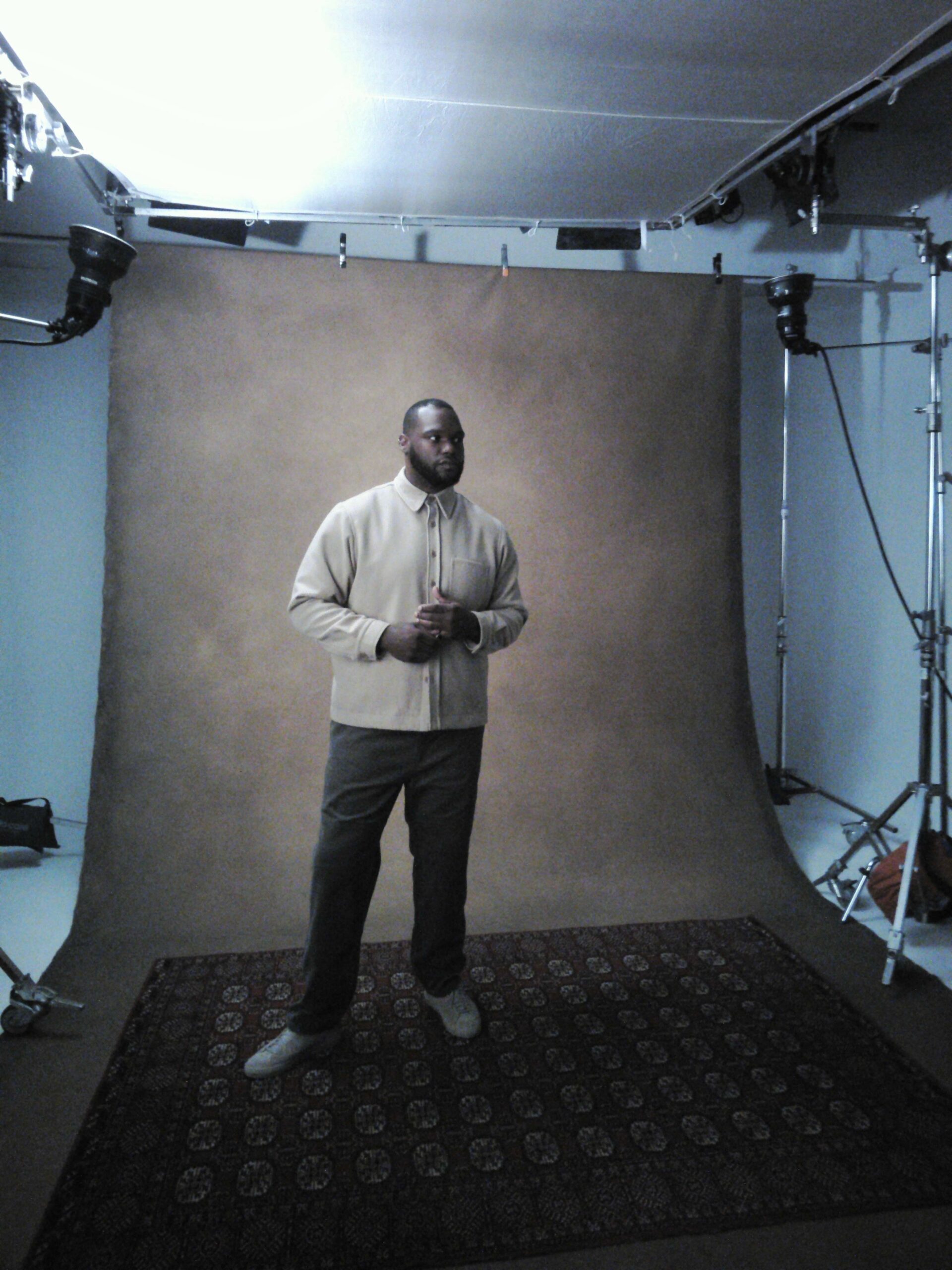
Photo courtesy of Connor Norton.
NORTON: What I’ve learned making this clothing is that normally, when you’re buying this stuff, it’s usually a fit model—size small, size medium, and then they size it up. The sleeves are down to my thumbs. [Laughs] It’s like, “I’m not nine-feet tall, I just need six extra inches right here in the stomach.” So it’s very difficult to find a happy medium here. Everybody’s neck size is different, people put weight in different areas of their body. So even in this endeavor, I’m still catering to a really small sliver of what the larger male body could be.
SMITH: That is always the problem too. In the few brands that I’ve worked for, seeing that design process and getting the fit model, they think it’s just like, “Okay, you just grow, grow, grow everything at the same time.” And that’s not how it works. Each body is so different. I actually used to be way bigger in high school and middle school. And even just the way I tried things on, my friend once said to me, “Oh, I can tell you always do this thing when you try clothes on.” And it’s a vestigial trait from when I really needed to think about a lot of other things when I was getting dressed.
NORTON: I have the same thing, all that playing around with how it falls on the body and whatnot. So one thing I wanted to ask you about is how your styling gigs come about. Do players express interest in working with you? Does the League put people on your plate?
SMITH: It’s funny you ask, because I remember reading this scathing review of my appointment at the League. They were like, “Oh, the League is just trying to push narratives out there.” And I’m like, “They’re actually not.” The League isn’t telling me which players to dress or who to work with. It’s always up to me and it’s a lot of organic relationships and players reaching out on their own to say, “I’m interested in fashion, and I want to know what the cool brands are and how to become a part of the fashion industry,” sometimes as a brand ambassador or even starting their own clothing line.
For people that aren’t very well-versed in sports or the NFL, a lot of our players are just really young, cool guys. Gen Z fully understands that you can be interested in sports but also fashion. It doesn’t make you less of an athlete, and it doesn’t make you less of a fashion enthusiast because you play sports. You can be so multifaceted. They wear helmets, thankfully, and we love safety, but once you put on a helmet, it’s hard for a fan to know who you are unless they see the number and name on your back. So using fashion to build that personal brand image has become really important not just for the League, but for our players, so that they can really start to differentiate themselves and build their own brand. It’s easy for me to say, “Put on a band T-shirt.” [Laughs] I’m always wearing this Ethel Cain hoodie. But when I say that to a player they’re like, “Suiting is more my style.” And for a 350-pound dude that’s 6’8″, it becomes harder to truly express yourself the way that you want to.
NORTON: That’s what I found, too. A lot of the market right now for big guys is this sort of Land’s End aesthetic, and there’s nothing wrong with that. But when it’s the only option, it silences you in some way. So what I’m trying to do is give some space and voice back to a legitimate consumer. We’re not not there. We’re here. And I’m hoping that with a few more options available, people can actually involve themselves in a world where they have not been admitted.
SMITH: And like I said, they really do love fashion. They love to talk about fashion and engage with it. They recognize the opportunity that exists by just dressing up and being themselves. For some people, fashion is just getting dressed to go to the office. But for them, it’s the tunnel. And when it comes to me and how I work, sometimes it’s talking about everything but fashion—talking about movies and music, places they like to travel, causes that are really important to them. And that’s important because fashion touches everything. Like, I love that Prada’s working with NASA to design spacesuits. You really can be interested in anything and find connections through fashion.
NORTON: Not to quote RuPaul, but it’s just drag.

Photo courtesy of Kyle Smith.
SMITH: And that’s what I say about our fans. The most manly person you know goes to a football game and puts on makeup and wigs. I’m like, “You’re in drag at this football game. You have eye-blacks on, you’re dressed as a pirate.” So this is a form of drag and it’s really cool to see.
NORTON: Exactly. I also want to touch on your career, because you really made a position for yourself. Brand partnerships, celebrity partnerships, fashion campaigns—I feel like that’s the direction it’s going for football players. They’re just the most beloved figures right now, and there’s not much risk involved the way there might be with other celebrities where you think, “Are they still going to be hot when this movie ends?” There’s something reliable about them. So where do you see that going?
SMITH: The future is limitless. And to your point, as much as I love movies and music, it’s a musician and an actor’s job to sell that project that they’re working on. Think about Margot Robbie doing Barbie. Her job is to act and sell that product. But with athletes, that’s not their job—their job is to be the best athlete that they can be, to do it really well and train really hard. And I think that’s something that people really connect and resonate with, just this story of human resilience. That’s not something you can fake. It’s not something you can phone in. We see them training day in and day out. So when I’m styling Joe and he comes home, he’s like, “You have 30 minutes for this fitting,” because I know he’s going to go back for round two of practice and he’s working really hard. They have a job, so if they’re wearing something for the tunnel or endorsing something, it’s because they really believe in it and want to support it. And that authenticity is what can drive conversion and sales for any brand, so they should really start utilizing athletes in that way.
NORTON: Absolutely. Hearing you say that makes me think of Jordan Mailata and his singing career. I’m like, “You better!”
SMITH: Go off.
NORTON: He’s seven-feet tall. He’d be fun to style.
SMITH: Yeah. I just started dressing a player that’s going to be playing in the Super Bowl on Sunday. He sent me his sizing and I was like, “Whoa.”
NORTON: Is it Byron Murphy?
SMITH. No. [Laughs] But that would be a really fun one. Thankfully, styling isn’t all of my job. We have a presentation and a big fashion show in San Francisco this week, plus NFL Honors, and we’re bringing out really great fashion creators for that. There’s so much that happens the week of the Super Bowl, so that’s what I’m buckling down for. And I’m sure you know from your background in styling, you’ve just got to make it work. You’ve got to make it look good. And now with some of the pieces that you’re making, it’s going to be a little bit easier for some of these guys.
NORTON: I hope so. It’s all about the actual room in the garment, but so much of it is the fabric too. It’s all starchy fabrics, stuff that is thick and will look good on camera so that a gust of wind’s not going to come and mess up—
SMITH: Yes.
NORTON: So, for the bigger guys reading this piece, do you have any tips? How can these bigger guys dress themselves in a better way with the resources that are out there?
SMITH: I hate to say it, but try on everything. Put in the work. Taste takes work, a good wardrobe takes work. Some people have it a little bit easier, but in the end it’s about trying on everything and taking some time, whether it’s a few days or a few weeks. Just figure out what works for you. And this goes for everybody: invest in a good tailor, because anything could be tailored and a lot of things should be tailored. And I hope with really cool collections like what you’re doing, it becomes slightly easier for people to develop that wardrobe and know what looks good on them. Get some core outfits in there, and then accessorize.
NORTON: Yeah, that’s smart, because one of the things I was thinking about while making this line is creating a canvas that’s reliable so that you can self-express on top of it. You can wear a nice designer accessory and not have to pair it with a really poor quality, Big and Tall store shirt just because that’s all that fits. You kind of need the canvas to be pristine and clean for the other things to actually have their moment to shine.
SMITH: That’s why I wear a lot of black and then I’ll put a fun chain on top of it or some rings. Building the canvas is so key.
NORTON: Well, I want to thank you for taking the time, ‘cause a lot of the time these articles come out and it’s a referendum on the big guy luxury market. Everyone’s just sitting there with their hands up wondering, “Where do we go? What do we do?” So I’m happy that this is a solution-driven conversation.
SMITH: Well, you’re building the solution. You’re putting it out there. And one more tip, actually. If you are a bigger guy and you want to see some inspiration, watch the NFL tunnel. Because people always ask, “Would you consider other sports?” And I’m like, “No, the NFL’s awesome. We have every kind of body there.” We have guys that are shorter and smaller than me, guys that are way bigger than me, guys that are just really tall, and you can get fashion inspiration from so many different players in the League.
NORTON: It’s so true. A pipe dream of mine is being at the Met Gala with five linemen, just me and some big-ass men rolling up to the red carpet.
SMITH: I need that for you. I need it bad.
NORTON: My last question: do you have a favorite team?
SMITH: A mother doesn’t choose favorites.

Photo courtesy of Connor Norton.

Photo courtesy of Connor Norton.