


FASHION PERSON
Alaïa Designer Pieter Mulier Thinks You Should Worry Less About Clothes


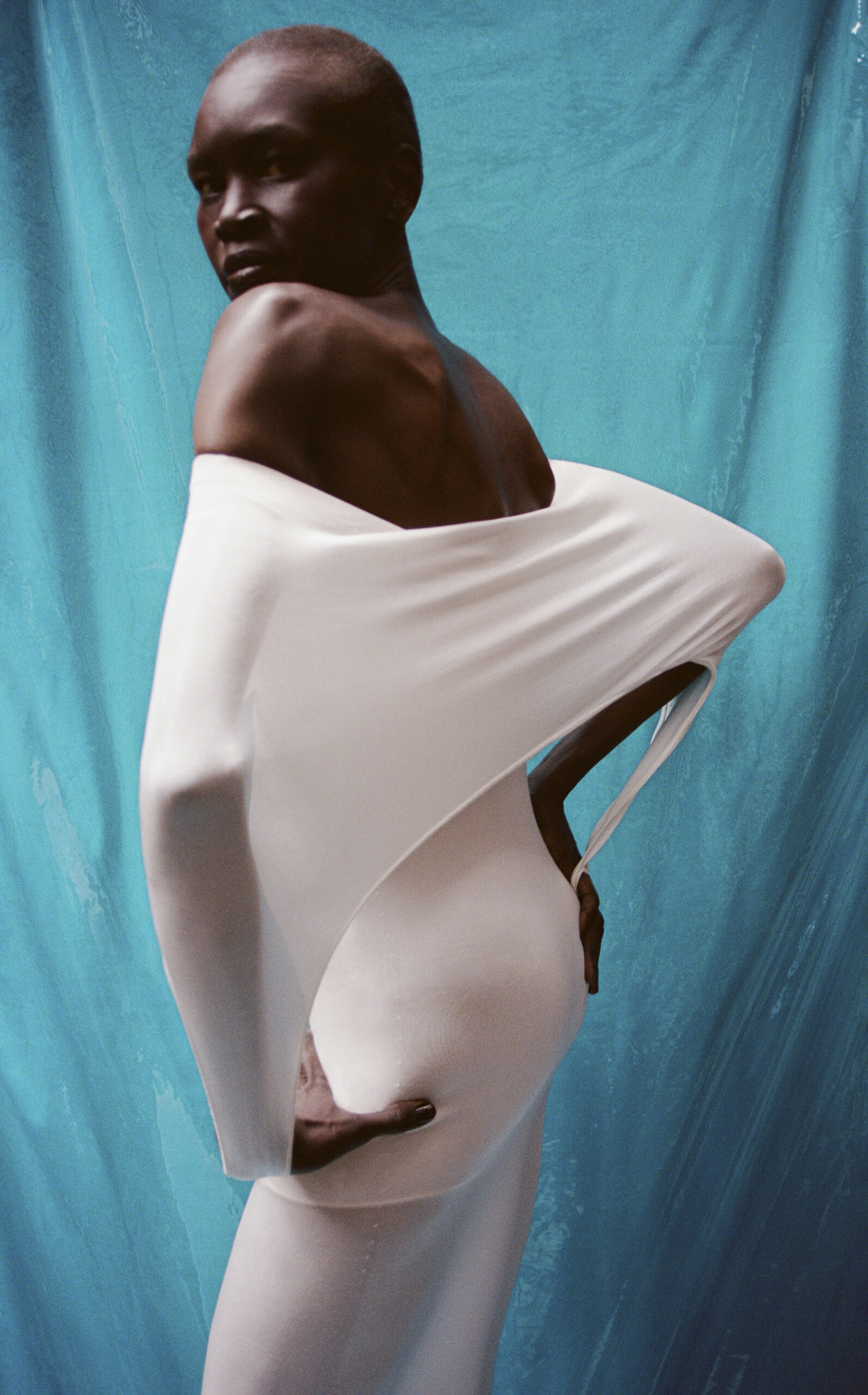
Clothing and Accessories (worn throughout) Alaïa.
For Pieter Mulier, the mastermind behind the sculptural silhouettes at Alaïa, it’s important that designers lead a normal life. As he tells our editor-in-chief Mel Ottenberg, his mission is simple: bring back humanity in fashion—sensual silhouettes and all.
———
SUNDAY 2 PM OCT. 26, 2025 ANTWERP
MEL OTTENBERG: How’s your day going?
PIETER MULIER: Good. It’s Sunday, so it’s calm. I woke up at seven, walked the dog for two hours, worked a little bit, went running, food, and now you.
OTTENBERG: Where are you? It looks nice.
MULIER:I’m in Antwerp. Were you here when we did the show here in the apartment in Antwerp?
OTTENBERG: No. Tell me about that. Those trees are incredible.
MULIER:It’s a Brutalist apartment from 1964 and we’re on the 22nd floor. This is the view. There’s a garden all around.
OTTENBERG: Oh, wow. How long have you been there?
MULIER:Eight years. If you come, you have to stay here. I often give the apartment to friends.
OTTENBERG: I accept, especially now that I’ve seen the view.
MULIER: The view is amazing. I actually spend more time here than in Paris.
OTTENBERG: Azzedine Alaïa’s first show was in his apartment, right?
MULIER: Yeah. So conceptually it was the same thing, and I always thought that this was an apartment to share—that’s why we invited 160 people. The girls were walking into the bathroom, the living room, the library, the kitchen. And the public was everywhere. Even on my bed.
OTTENBERG: Do you like throwing parties?
MULIER: I throw parties here on New Year’s Eve, but so far we haven’t done hardcore parties. But let me know whenever you come. I’ll give you the keys.
OTTENBERG: I will. So tell me about the collection you showed in October.
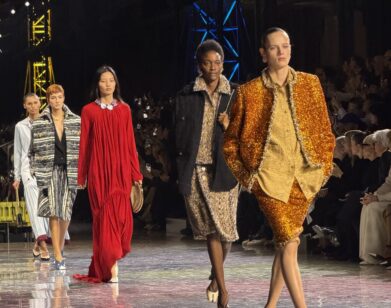
MULIER: It was a whole evolution. I knew I wanted to make a movie—I liked the idea that the girls were walking on themselves. That was the background. But the concept was having two extremes: a woman completely dressed up and a woman in pure vulnerability. We shot all 47 girls the day before the show and we edited all night, so we didn’t sleep. But the concept was really simple. Bring back the human aspect of fashion.
OTTENBERG: When do you start working on a collection like this?
MULIER: I start thinking in April, May, and then we go into volume fittings. I give the team some ideas but it’s all very architectural. There’s no detail. And then based on emotion—what I feel like looking at—we go further. Then in June we start to go into details, fabrics, and colors—but we always start with silhouettes.
OTTENBERG: In your own words, what is the silhouette?
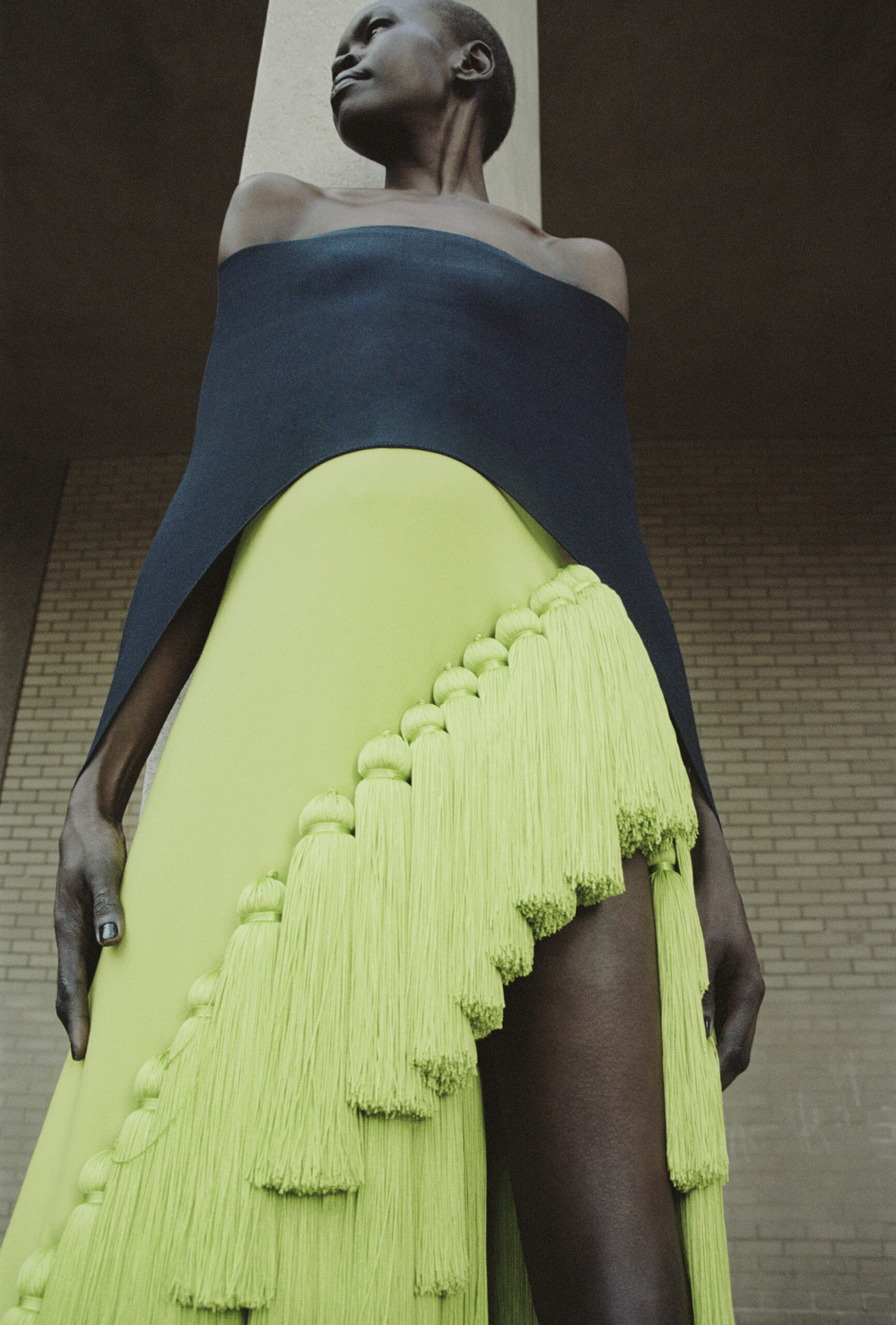
MULIER: The silhouette is nearly always the same. I took that from Azzedine—it’s about the body. But for the first time, we opened with six square silhouettes, nearly identical. Instead of going body con, which is the essence of what Alaïa is, this time it was a square with something moving on the bottom. That’s it. The idea of “Clothes That Cry” came from that. It’s a perfect square. And that came from the uniform that Azzedine always wore: a Chinese shirt, which is literally a T. It’s a square with two arms and a closing system. Very simple.
OTTENBERG: Yeah, it was exciting to see the leather jacket with the pants with the hole cut out. The pants have a sexy shape to them that I don’t recall seeing before.Was that a happy accident or was that part of the plan?
MULIER: No, no, no. Every collection I work on icons of the brand, and what Azzedine liked. I love the idea of doing hybrid things and also things you haven’t seen yet, like the pants you’re mentioning. Basically we started from a skirt. We attached the skirt to the ankles and cut it all the way out until you had a notion of what the classic Azzedine silhouette is, which is a fit and flare. The fit and flare becomes a triangle and is open completely on the side. But it’s interesting that as a brand, we still have the room to propose something new.
OTTENBERG: I think there’s an appetite for it, don’t you?
MULIER: For sure. It’s more difficult for bigger brands to do that because the fashion audience has grown so enormously big that if you propose something new, not everyone will understand it. Our audience is a little smaller, so we still have the room and the platform to do it.
OTTENBERG: Did you feel a connection with Azzedine Alaïa in the ’80s and ’90s?
MULIER: Very much. There were not many brands that I liked then whenI was 12 or 13. But I loved Azzedine a lot because of the iconography. He was the first one to work with big, big, photographers, since 1984. He saw it more as a collaboration than as advertising.
OTTENBERG: Were there other designers that influenced you?
MULIER: Of course. Versace, who was very linked to Azzedine back in the day. Helmut Lang. I also used to be really obsessed with models like Cindy Crawford when I was a kid.I cut all her images out and covered all my books for school.
OTTENBERG: Absolutely.
MULIER: And then it was Herb Ritts who made me feel I was gay back in the day. I’m talking early ’90s.
OTTENBERG: Okay. There must be a visual in your head when you say this.
MULIER: There’s so many. But my attraction to this late ’80s/early ’90s fashion thing is mostly pictures. What people like Bruce Weber and Herb Ritts were doing. It’s the idea of a top model, which exists now, but not to the same effect as when we were kids. We turned on MTV and they were always there. They were superstars.

OTTENBERG: I know. Remember the feeling of seeing the “Freedom! [’90]” video for the first time?
MULIER: Oh my god, yes.
OTTENBERG: And the “Too Funky” video? It was unbelievable.
MULIER: Honestly, those were crazy days for fashion. I remember on MTV, even Dolce & Gabbana were doing customization programs. You’d take a pair of jeans, cut them off, and bejewel them.
OTTENBERG: I remember Todd Oldham doing that with Cindy for House of Style. He took a combat boot and cut the toes and heel out to make a sandal.
MULIER: Yes.
OTTENBERG: That stayed with me. Were you ever an intern?
MULIER: I studied architecture until I was 22, so fashion came much later. Raf [Simons] was on my graduation jury. He came to me and he said, “I don’t think you’re an architect. I think you’re a fashion designer. Come and do an internship with me.” I did an internship there for a year and I stayed. So I never thought about being a designer. I always wanted to be an architect.
OTTENBERG: When you were working for Raf, were you doing plans on paper or draping, or a mix of both?
MULIER: We were cutting up a lot of vintage. We were draping a bit, but not a lot. It was more making silhouettes with things that existed already. Very Raf, just cut it up and experiment to find a new silhouette. I think what I do at Alaïa comes from that. For a few weeks we cut everything up and try to come up with something new.
OTTENBERG: When the job at Alaïa came to you, do you remember what you first thought?
MULIER: I remember it very well. When they called me for the first time, I said yes after 60 seconds. [Laughs]
OTTENBERG: Cool.
MULIER: And then a week later I met them and I told them, “I will wait for your answer for three years, but I want the job.” They called me a year after to tell me I had it.
OTTENBERG: Okay, so this was pretty soon after he passed that they called you?
MULIER: During COVID. I didn’t work for a year. I was planning to sign with another company in Italy, but when they called me, I called the other company and said, “I have something better on the table.”

OTTENBERG: And so you just chilled in your garden for a while with the idea that something was on its way?
MULIER: Yeah, I literally did nothing for two years. Towards the end I designed collections for Alaïa. I made bibles, books, researched every element, worked on advertising campaigns, and kept it all. And then a year later, I started. I took all my books, all my vintage, and left to Paris.
OTTENBERG: Also, for context, because we’ve known each other quite a while, you did an incredible amount of work for so many years, so those two years off must have been really great.
MULIER: Oh my god, Mel. It was the best. I recommend to many people to just stop for a year or a year and a half if you have the financial ability to do it. It’s the best thing in the world, especially in fashion. You need it to see if you still like it. Because after Calvin [Klein], I thought, I will never do fashion anymore. I’ll do something else—architecture, decorator, whatever. But then after six months it started to come back. Once you get that feeling of what fashion can give you, you start to crave it again. I realized that I am a fashion person.
OTTENBERG: Just when you thought you were out, they reel you back in. Wow. It’s funny because this morning I said to two different people that I need to go hiking in Tibet for two years because I cannot deal with another celebrity.
MULIER: [Laughs] I swear it puts everything in perspective. For instance, after a show, I’m always very nervous about what people will say, but once you’re out and you don’t look at anything anymore, you know that we work in an industry that is not that important. Of course now with social media it’s changed. Fashion has become the new football and designers have become footballers. It’s crazy.
OTTENBERG: Now that you’re back in it, how do you stay calm?
MULIER: I’m a person that loves to be alone. I don’t know if it’s a good thing or a bad thing, but I need it. So I never stay in Paris, that’s the rule. That’s how I stay safe, knowing I can get away from it. I also know that it’s not the most important thing in my life.
OTTENBERG: So what do you do when you’re in Antwerp?
MULIER: I walk the dog. I garden. I cook for my friends—basically all the things I didn’t do when I worked in fashion. For 15 years, I didn’t see my friends. After COVID, I said, “I need to be at home and have a regular life.” I think it’s important for designers to do so. It means I don’t go for dinner with stars. I don’t have a glamorous life. I actually have quite a normal life.

OTTENBERG: You mentioned that designers are the new footballers and everyone’s got an opinion about stuff. How do you feel about critics?
MULIER: Let’s say they can hurt me like crazy, but only for 24 hours.
OTTENBERG: Okay.
MULIER: We live in a world where everybody’s a critic. There’s not many good professional journalists left in fashion, so I respect all of them and I try to learn from what they write. Sometimes I think it’s ridiculous what people write. I also think it’s ridiculous that people see the show as a 10-minute thing and don’t realize that there’s 1000 people working on something together. It’s not always easy, but I do respect it.
OTTENBERG: And what about Instagram? Because that world certainly has an opinion, too.
MULIER: They have a big opinion on everything. Listen, I read some of them. People seem nice most of the time. But at the last show, there was a whole thing about this cocoon stretch jersey look. Even a big American newspaper wrote about it in a way that was not objective. It bothers me like crazy. But then again, that person’s only human. She didn’t see how it was constructed. It’s okay.
OTTENBERG: When I saw those cocoons come out, I was like, “These are so fun and they’re such a great picture. The haters are going to have a field day because I’m feeling something here.” That’s what you desperately want. And as someone who has gotten to a place that I could have never dreamed of getting to in the world of fashion, I just want to feel something.
MULIER: That was the idea of the show: to give you all a little bubble of beauty very early in the morning. But a lot of people loved them and a lot of people criticized them, which is always good with a new silhouette. At least there’s discussion online. We made them in an experimental way because it’s a fully stretched cocoon on the body. But you can move, you can drive, you can do whatever. It’s just a new silhouette. So to slash it in an American newspaper saying that it’s women-unfriendly and it blocks the arms—there are openings. It’s just the two panels draped and you can put the arms out completely. I think the person who wrote that just didn’t see it.
OTTENBERG: Well, first of all, I’m loving the image of Alex Consani and Anok [Yai] racing in convertibles the same colors as their cocoons. I think it’s extremely hot. I’m picturing them in driving gloves.
MULIER: I agree. It’s sublime. It was like a sculpture from the front. But when she turns, her arms are fully free.
OTTENBERG: Also, what you can’t see from the photos online is that it’s proposing the back as the erogenous zone, which I really liked.
MULIER: Yeah. Usually it’s all about breasts and waists. You can do something so simple by emphasizing the back.
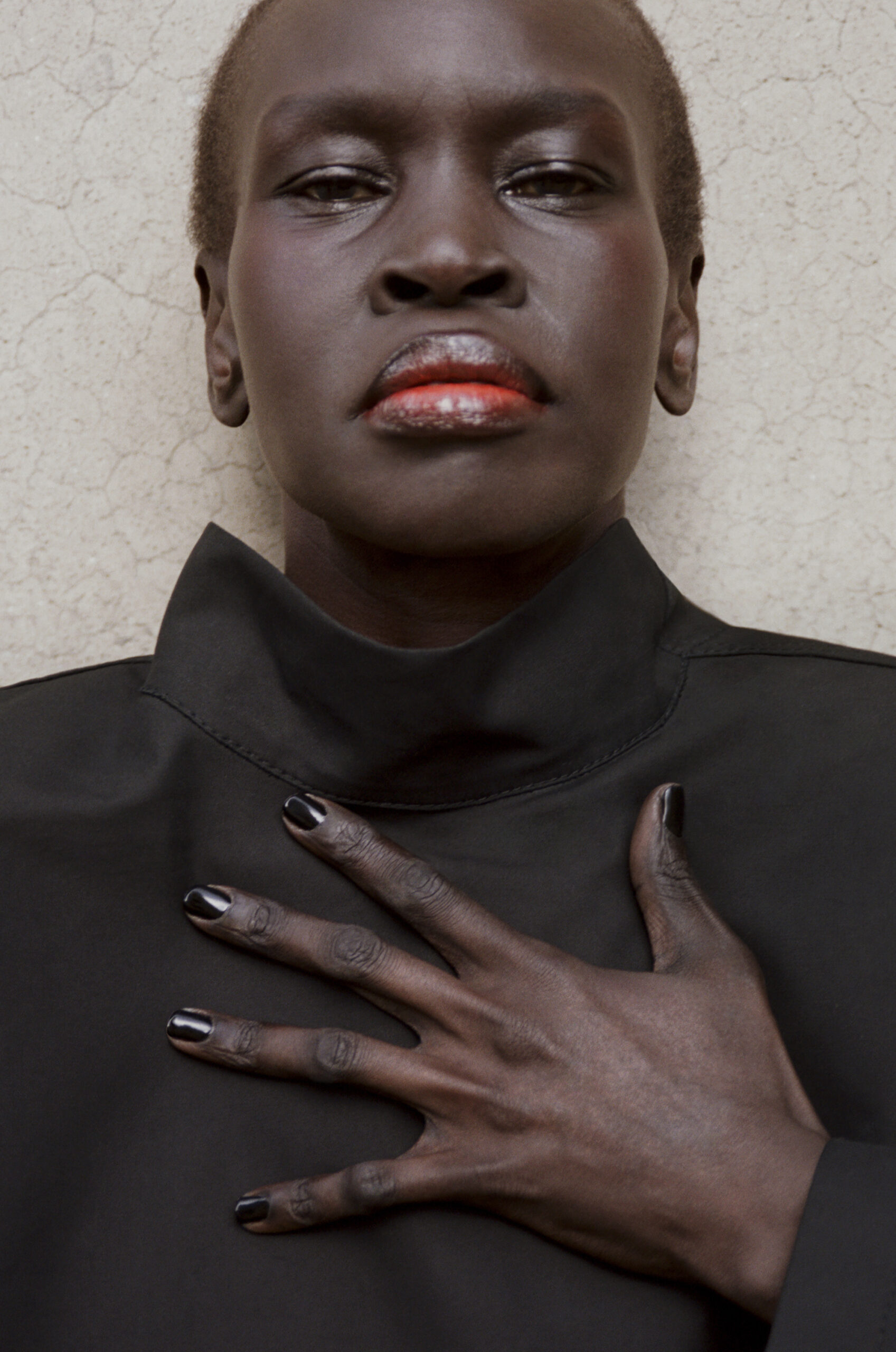
OTTENBERG: The discourse is interesting. Just because you hate it doesn’t mean it’s not good.
MULIER: In the end, it’s just clothes. Calm down. If people cannot look at it as a proposition of something new, don’t look at it.
OTTENBERG: Fashion doesn’t have to be for everyone. And when you’re doing a brand like Alaïa, there is absolutely no reason why everyone has to see themselves on that runway.
MULIER: I completely agree. It’s not our job to talk to everyone. Other brands have to do that because it’s the base of what they are. People come to us because of what we propose, not the opposite. We will never make something to please other people. That’s what commercial collections are for.
OTTENBERG: And your Maison Alaïa commercial collections are successful. That makes you able to freak out on the runway. Do you also learn from what people are buying?
MULIER: For sure. I make the commercial collections as well, but I don’t think a show is made to show commercial propositions. That’s what pre-collections are for, and I will stick to that concept. There’s no reason to spend so much money and work with such a large amount of people on something if it’s just to sell a skirt and a blouse. Then it’s not fashion anymore. Then it’s just business.
OTTENBERG: Love it. Alright. I’m going to ask you a few more questions. This is a speed round. What’s your favorite candy, Pieter?
xMULIER: Marzipan with a chocolate cover. I eat it every day.
OTTENBERG: Oh, wow. Okay. What kind of cigarettes do you smoke?
MULIER: All of them. But I’m a Marlboro man.
OTTENBERG: Fabulous. Color—you were saying that in June you guys were doing the colors. How do you decide what you want to do?
MULIER: It’s more, “This is a feeling.” People always say that Azzedine was black or white, which is pure bullshit. So we went from ’83 to ’90, looked at every color from the archive, and every color in the show is a color of Azzedine. So out of 14 collections, we picked the colors I found the most beautiful and used all of them.
OTTENBERG: How do you know when it’s too much or not enough?
MULIER: I’m used to seeing girls in silhouettes that are far out, so if I think it’s too much, it is too much. [Laughs] That’s the barometer I use.
OTTENBERG: We talked about Azzedine Alaïa’s uniform. What’s your uniform?
MULIER: White t-shirt, jeans, and a John Lobb shoe.
OTTENBERG: Okay, wait, what are you wearing right now? Is it a gray sweatshirt?
MULIER: It’s a gray wool shirt. But I always wear t-shirts and I always wear jeans.
OTTENBERG: I feel like your t-shirt is vintage, right?
MULIER: They’re all vintage and I always wear doubles. It gives me shoulders. One long sleeve and one short sleeve. Every day.
OTTENBERG: What are the jeans?
MULIER: Celine from Hedi [Slimane]. When he left, I bought 15 pairs of the same ones.
OTTENBERG: [Laughs] Very smart.
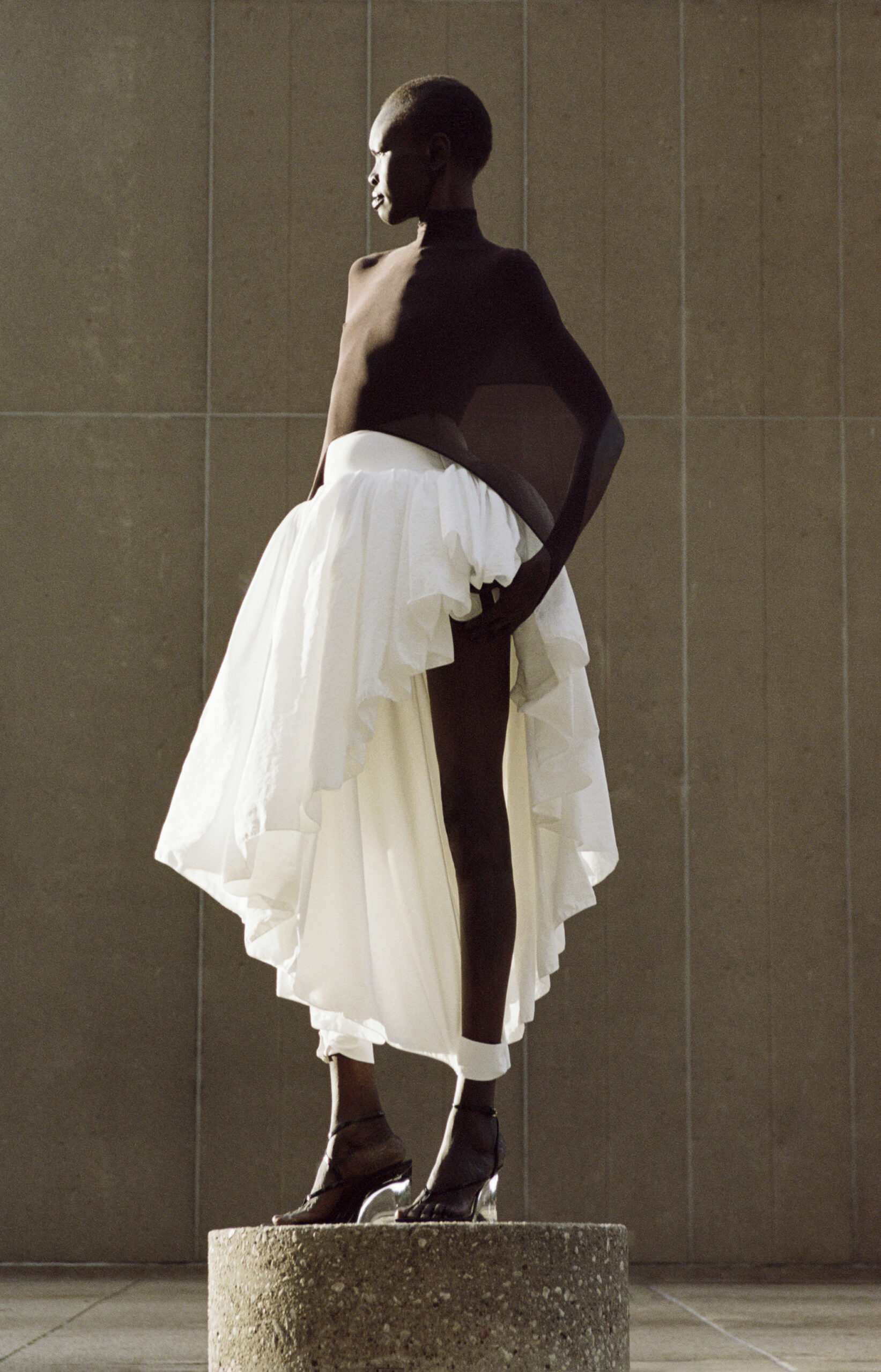
MULIER: Yes.
OTTENBERG: What are you listening to right now?
MULIER: I’m not a big music person. I mostly listen to classical, and after the show I’m always quite down. So now I’m listening to a lot of Bach.
OTTENBERG: What Bach should I listen to to soothe me, because I’m going to clean my apartment right now and I’ve been in a bad mood.
MULIER: I’ll send you some. I don’t know them by heart because it’s a symphony and a number.
OTTENBERG: Okay, perfect. Do you have an ultimate Alaïa dream?
MULIER: I think Alaïa should be amongst the biggest houses in the world, so my ultimate Alaïa dream is to do Alaïa couture.
OTTENBERG: Fantastic. Wait, remind me what Azzedine’s relationship to showing couture was?
MULIER: He always mixed some couture pieces into his ready-to-wear shows. The most beautiful show I’ve ever seen is his first couture show. I think it’s 2001 or 2002, when he came back and Prada bought the company. That to me is the most beautiful show in the world.
OTTENBERG: Oh, wait, wait, wait, I forgot to ask you. I’m lucky enough to have had a couple of amazing personal experiences with Azzedine Alaïa, who was tricky as hell. I was like, “Damn, you’re scary, but I obviously worship you.” Did you ever meet him?
MULIER: I met him a few times. When I worked at Dior, he came to the couture shows of Raf, so I always showed him the collection backstage.
OTTENBERG: Oh, cool.
MULIER: Like you, I shitted my pants when I met him. But he was always very human, and what I remember the most is that he looked at clothes like a kid. He was so obsessed. He’s the only one that claps during the shows, which is very funny. He gets genuinely excited.
OTTENBERG: Me too. He invited me to dinner multiple times. I spent a very long day in the archive once. I couldn’t believe it. I was like, “This is so major and I’m so lucky to be here.” Anyway, what’s your coffee order?
MULIER: A flat white, regular milk, classic.
OTTENBERG: Are you an optimist, Pieter?
MULIER: I’m both. I’m as much an optimist as I am—
OTTENBERG: A pessimist?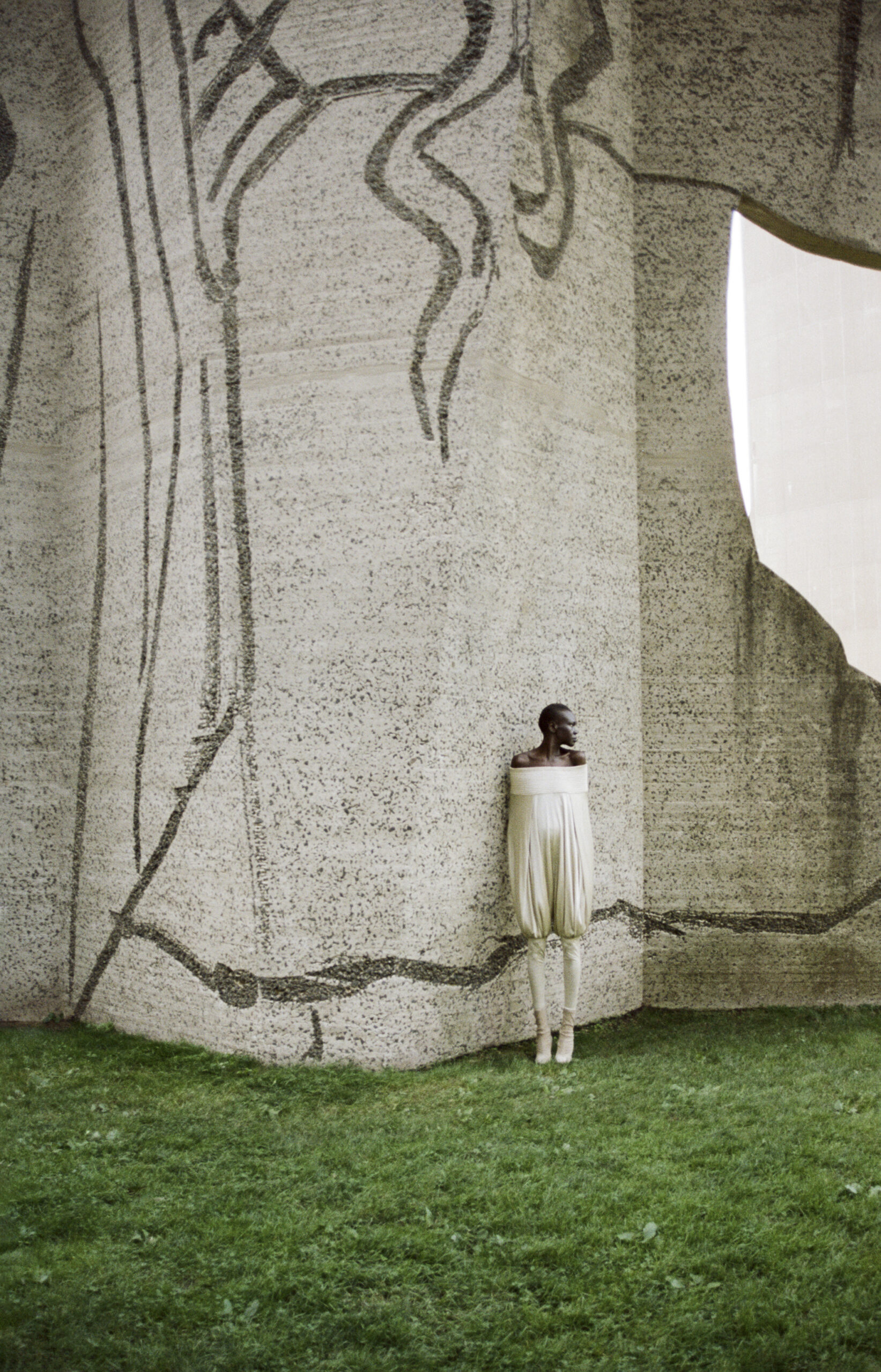
MULIER: Yeah. I’m a Scorpio.
OTTENBERG: Is it Scorpio season right now?
MULIER: Yeah.
OTTENBERG: Oh wow. Happy birthday.
MULIER: Thanks. [Laughs]
OTTENBERG: You’re welcome. What does modern glamour mean, for real? It sounds like such an annoying question, but you’re giving modern glamour.
MULIER: One, it depends on the girl, and two, it’s simplicity. It’s the way someone wears something. It has nothing to do with the clothes in the end. It’s about the person and how she sees glamour, because I can find somebody glamorous in a pair of jeans and white t-shirt. But we get fed glamour on Instagram all day from every celebrity we know and not even 1 percent I find glamorous.
OTTENBERG: This is my last question. What are your current rules?
MULIER: In life or—
OTTENBERG: Life or fashion.
MULIER: My current rule is spend more time with friends, worry less about fashion, and just enjoy life. That’s it.
OTTENBERG: Fabulous. I really enjoyed talking to you.
MULIER: Me too, Mel. The shoot is amazing, by the way.
OTTENBERG: I know. I’m really, really, really into the shoot.
MULIER: It’s really beautiful, I love Alek [Wek] so much.
OTTENBERG: Alek is really special.
MULIER: She was one of my icons at the end of the ’90s. She’s perfect for Alaïa.
OTTENBERG: Absolutely. Well, I hope you have a great Sunday afternoon.
MULIER: You too. Enjoy cleaning.
OTTENBERG: Thank you. Bye, Pieter.
———
Model: Alek Wek at IMG Models.
Hair: Joey George using Kérastase at Streeters.
Makeup: Dick Page at MA+ Group.
Nails: Dawn Sterling at E.D.M.A.
Market Assistant: Nicholson Baird.
Production Director: Alexandra Weiss.
Executive Producer: Georgia Ford.
Production Intern: Isaac Levy.
Social Intern: Alexa Spellman.