


IN CONVERSATION
Inga Ibsdotter Lilleaas Takes Sebastian Stan Inside the Whirlwind of Awards Season


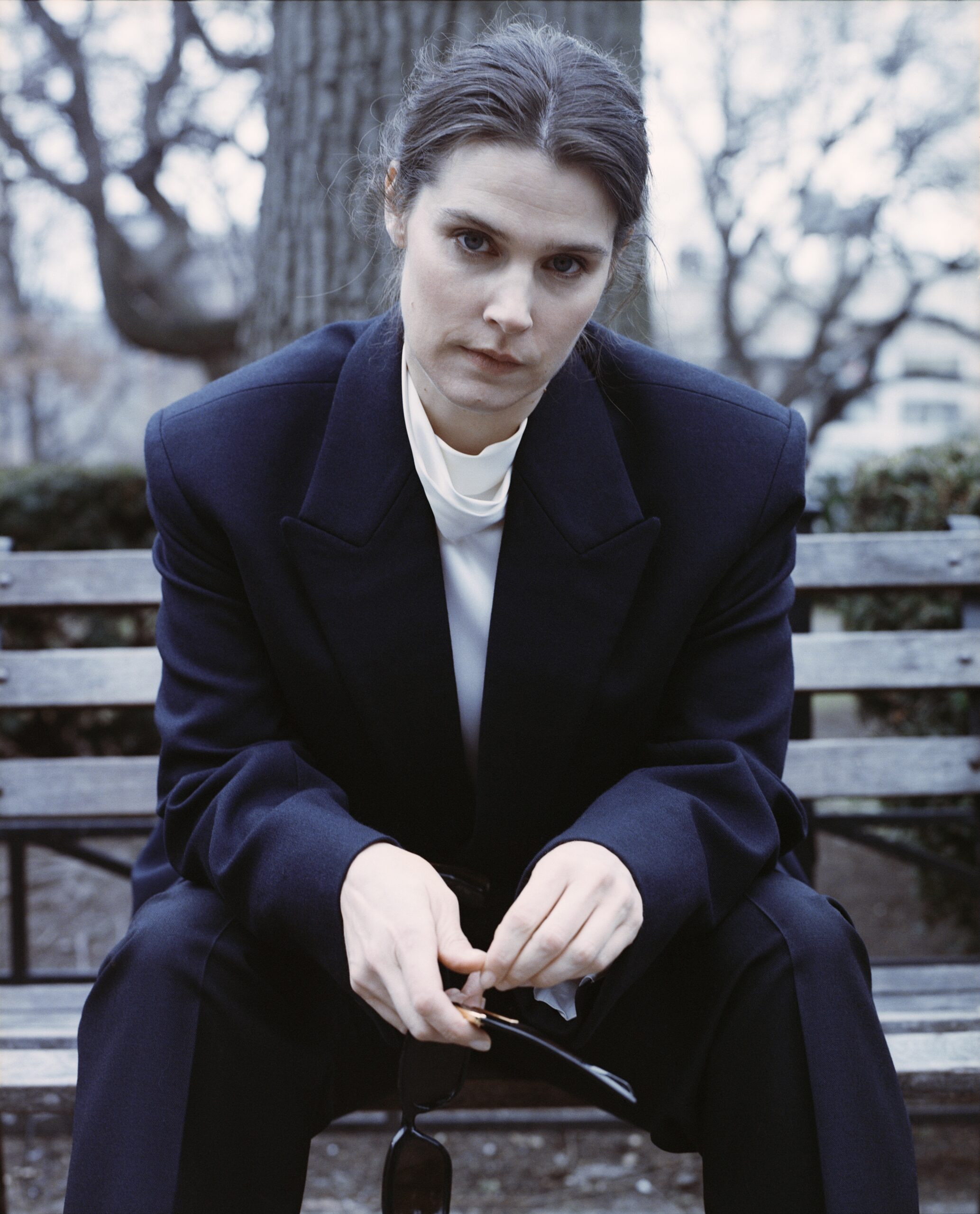
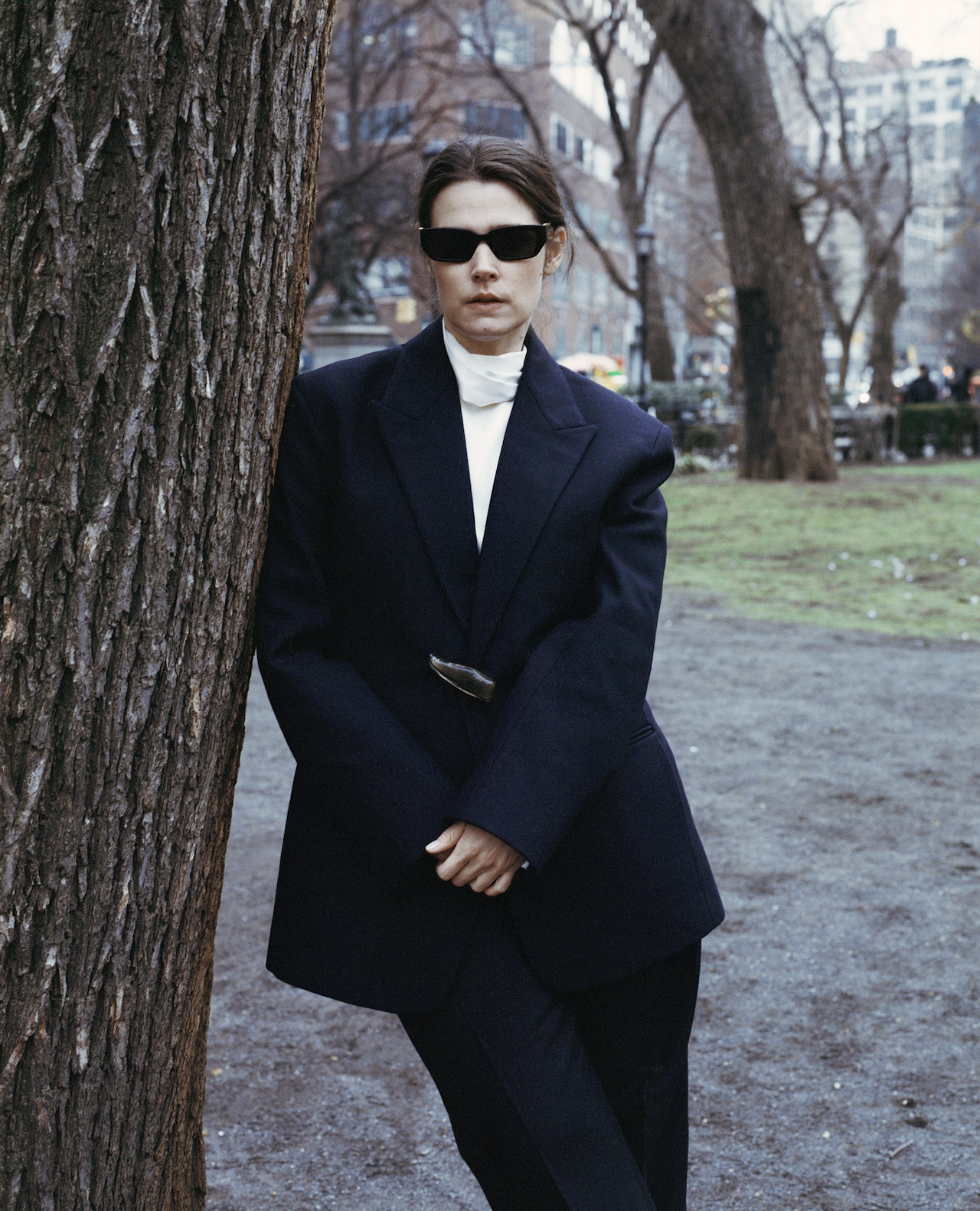
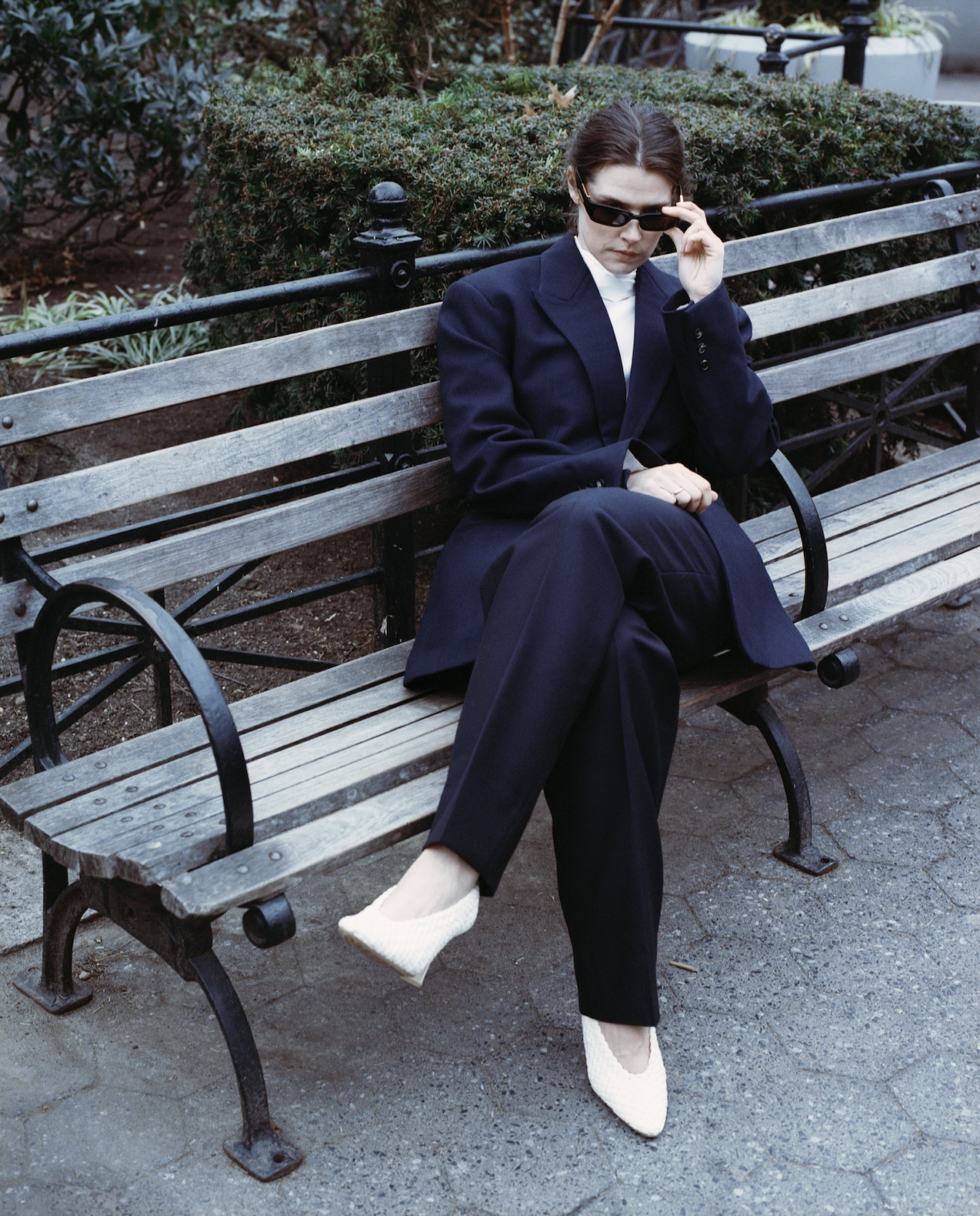
Inga Ibsdotter Lilleaas, photographed by Danny Lim.
The path to Hollywood isn’t a yellow brick road. Starting from a small village in Norway, Inga Ibsdotter Lilleaas made several detours: after being rejected from Norway’s top acting school, she joined an exchange program in Brazil, studied psychology for a year, spent a semester at New York’s Lee Strasberg Theatre and Film Institute, and then returned to Norway, where her parents run a theater production company. And now, at 36, Ibsdotter Lilleaas is a first-time Oscar nominee for her quietly affecting turn as Agnes in Joachim Trier’s Sentimental Value, where she and Renate Reinsve play sisters navigating the prospect of reconciliation with their estranged filmmaker father (played by Stellan Skarsgård). The film’s meta-commentary on memory, trauma, and filmmaking itself has captured the hearts of audiences and critics—each of its lead actors are nominated for Academy Awards, as well as Trier for his direction. As Ibsdotter Lilleaas approached the final leg of her very first awards circuit, Sebastian Stan put her in the hot seat to reflect on a number of pinch-me moments, from meeting Susan Sarandon to being called the year’s best “special effect” by none other than Paul Thomas Anderson.—SIMON DWIHARTANA
———
SEBASTIAN STAN: Hi, Inga. It’s so nice to meet you.
INGA IBSDOTTER LILLEAAS: Hi, nice to meet you too. Thank you for doing this.
STAN: Yeah, no problem. My pleasure. Where are you?
LILLEAAS: I’m back in Norway.
STAN: It’s late for you, right?
LILLEAAS: Well, nine o’clock. I just took my son to bed and he fell asleep like, five minutes ago.
STAN: How old is your son?
LILLEAAS: He’s four-and-a-half.
STAN: I am so impressed with you and Renate [Reinsve] to have been doing this for months and being moms at the same time. It’s just superhuman effort.
LILLEAAS: Sometimes it feels like it actually. [Laughs]
STAN: Yeah, I’m sure. First of all, you’re incredible in the movie. I think you and Renate and everybody did such a beautiful job. It’s real and authentic and raw. I loved the movie and I loved your performance, but I didn’t know that you also decided to go across the globe to Brazil, then you ended up learning Portuguese? How old were you when you went to Brazil?
LILLEAAS: I was 17 and I wanted to do a year of exchange. I actually wanted to go to America, but of course, it was full. I was too late. So they just listed a bunch of countries and I just heard Brazil and I said, “Okay, I’ll go there.” I didn’t speak any Portuguese.
STAN: But you speak it now.
LILLEAAS: I do, yeah. I learned it while I was there. Was there any acting involved with the exchange program?
LILLEAAS: It was very academic, so I just sat in the classroom and I didn’t understand anything. I just wrote letters and read books and studied. But I think I’ve always wanted to be an actor. My parents, they ran this theater workshop where they rented out costumes and lighting equipment, sound equipment, and they produced amateur theater groups in the whole area where we lived. So I grew up more focused on theater production than the acting, and it wasn’t until later that I even understood that you could do it as a job.
STAN: It’s funny because when I was around that age, I wanted to go to Lee Strasberg and NYU, so I was definitely trying for it.
LILLEAAS: I actually wanted to apply to the school in Norway, the most famous one, but I didn’t get in. So I just started university and I did a year of psychology there, but then I felt like I had to sort of go somewhere. My mother was the guidance counselor in our high school and also a theater person, so she knew about a lot of different schools and methods and stuff. She said that that one was a famous one, so I read about Strasberg, of course, and I was curious. And I learned a lot—I feel like I grew up a little. And then when I came back, I applied to another school in Norway that’s further north, so I went there.
STAN: Was that also an acting school of some sort?
LILLEAAS: Yeah, it’s an acting school. All of the acting schools in Norway are theater schools, but they have film courses. My first love of acting is with theater. But I always had this feeling that I could do movies, that I could be good at that way of acting. I did a short film in my third year of school and it was a really good experience. Then I got the lead in a movie, so I started to feel like I’d found a way to work as an actor that really resonated with how I wanted to work in a more intimate way—not so big on the very big expressions, on acting to the back row and all of that.
STAN: At what point in time did you become aware of Joachim Trier or his films?
LILLEAAS: I remember watching his first movie, Reprise, when I was in my 20s when I was a student in the university and I really loved it. And I had some friends who were obsessed with it. So when his next movie came out, I was in acting school and we all went to see it and I was so blown away by the actors. I thought they were so natural and conversational. There was so much going on under the surface, so much unsaid that was so intriguing, so then I just followed his movies ever since. I’ve always wanted to work with him since then and I just never thought that that was going to happen. And then after The Worst Person in the World, I don’t think any of us thought that he would stay and make a movie in Norway again, but luckily he did. We thought they would disappear.
STAN: So for this movie then, did he seek you out? Did you seek him out? Was it a meeting where you talked about the script?
LILLEAAS: I’d met him a few years ago, but we never talked and didn’t know each other. But I know the casting director and she calls me often for things, so I went in for a normal first audition and then they called me back for a second one. Then I had a long conversation with him, then a test with Renate. And then, it was such an unusual thing for me to meet the director in a second audition, that he took that much time to have a conversation with me that wasn’t necessarily about the script or the character. We talked about life and art, a lot of stuff. I mean, he’s very good at creating relationships with people, getting to know them. Rarely do I feel like I’m able to find anything of value in an audition, but now I felt like I had some valuable experience going through these meetings and these tests. I felt like I’d gone to work and that if I didn’t get the part, I would still have something that I could take away in a way.
STAN: I wish I would’ve been like that. [Laughs] I always took things a little personally, I guess. When you read the script, with the family being involved in the arts, did any of that immediately resonate for you because of your own experience with the theater group that your parents ran?
LILLEAAS: Well, it definitely resonated somehow. I don’t necessarily know if it’s literal, but I recognize the parents who have a passion, who put in a lot of work and time and effort somewhere else and how, as a child, that affects you in a way. But also the sibling relationships; I have an older sister and a younger brother, so I’m in the middle. And I really recognized those conversations as true—I was really taken by them and responded very emotionally to the whole script. Because it’s also the aging director who’s trying so hard, but he’s also just a little boy looking for his mother. And also the actress aspect—the American actress coming into this family. Not that I know what it’s like to be an American movie star, but the struggle is the same, I think. You’re trying to get to the bottom of something, and oftentimes it’s not so easy.
STAN: I saw this interview where you talked about how you guys had these rehearsals where you’d get together—you and the DP and Joachim in the home—and go through the scenes and he would film it? So I’m curious how much it evolved over time, the scenes and how they were written.
LILLEAAS: He films all of the rehearsals, and then we’d do a little improvisation and we’d do the text and try to figure out the words—what’s the best way to say this? They’d already done a really good and thorough job with the lines and everything, so not a lot needed to be changed. But we also removed a lot while we were rehearsing. So we always shoot the scene as it’s written—we try to do a “right take,” if that’s how you would say it. But then he does “jazz” takes, where you can just do whatever you want, basically.
STAN: That sounds kind of great.
LILLEAAS: Yeah, to sort of make mistakes, to mess it up. And we talked about that a lot—I’m always afraid to make mistakes, and that’s a thing I struggle with while I work, to not be so scared to do stuff, to not be afraid to fuck it up.
STAN: When you were filming, did you have the sense that this is going to be special?
LILLEAAS: I remember that they were nominated for an Oscar for the last movie they made at some point and just having this panic feeling. It was before we started shooting, but then I forgot about it when we started working. But I did always feel like we were making something of value. And when it was coming to an end, I felt such grief that it was over and that this is never going to happen again. This moment, this thing that I’ve experienced, is something else. It’s when everything comes together, everyone’s perfect in a way. The editor’s great, the cinematographer’s great—it’s just everything.
STAN: And Stellan Skarsgård is such a legend over there. Were you intimidated by him at all? And if you were, did that help you? Because technically, as his daughter, you had to sort of deal with this dynamic.
LILLEAAS: Yeah, but I think Agnes needed to be so comfortable with him in the discomfort. She makes herself connected to him in this way because she insists on this relationship working. It would’ve been a problem if we didn’t have a good chemistry or if he was kind of a douchebag. But he’s very much not. [Laughs] He’s very nice. He’s so normal in his way of being, he doesn’t take too much space. He takes a little and then he leaves a lot for the rest of us. And he always stays on set; he doesn’t leave. So he becomes part of the… what is it?
STAN: Family?
LILLEAAS: Part of the furniture almost.
STAN: And then suddenly you guys are all nominated for the Oscars and you’re going to L.A. and you see Steven Spielberg, all these people. Paul Thomas Anderson saw your movie and knows who you are and called you “the best special effect of the year.” How do you deal with that? What is that feeling? Is there a moment over these last few months that you’ll always go back to or think about?
LILLEAAS: I went to this luncheon thing in New York, me and the whole cast in New York, and Susan Sarandon was there. I’m a fan of Susan Sarandon, of course. We were going into a room and she came in front of me and Renate and she just said some things about the movie and about us and I was just so… That’s the only time I’ve been emotional. I almost cried in that moment. And Susan was emotional, Renate was emotional. It just felt profound, in a way. And then I met Paul Thomas Anderson on, what was it, Tuesday?
STAN: That’s so fun. And I guess the other piece now is like, CAA is now going to be part of your life. So is that exciting or is that nerve-wracking? Do you think you may have more of a relationship with the U.S. now, working in English more?
LILLEAAS: I don’t think I’m able to imagine that far ahead. It’s always such a difficult thing for me because I’m so used to living day to day. As an actor, you don’t know what you’re doing tomorrow, so I sort of trained myself not to think ahead. I’m not planning on moving there and trying that kind of thing. I’m too old for that, I think, and life is too cemented here. But there are a lot of really good filmmakers in America that I’d love to work with. And if I would be able to work with any of them, I would be very happy to.
STAN: But do you think you’d ever do Jurassic Park?
LILLEAAS: [Laughs] You’re the first person to ask Jurassic Park. A lot of people say Marvel—”Are you interested in doing a Marvel movie?” I don’t know why people ask that.
STAN: I sort of feel like in the U.S., you’re often encouraged as an actor to find this balance of both worlds, where you can do something more commercial that also enables you to provide for your family. And then maybe you’re lucky to get one of these great sort of films…
LILLEAAS: Well, I’m not going to say no to Jurassic Park right now. [Laughs]
STAN: Well, I think there’s something to be said about it, but I’m very impressed with how grounded you are about it all. I’m not surprised, because at least in your performance, without knowing anything about you, I felt I saw a real person. But it’s very exciting to imagine what you might do next.
LILLEAAS: Internally, I’ll feel like I have to prove something. I already feel that so much of the time.
STAN: Yeah, but you’re not alone in that. I remember one time I worked with Julianne Moore and I remember she had to cry in the scene. So I just sat there being like, “I’m going to watch this.” And beforehand, she was incredibly nervous. She was really worried about it. She was like, “I hate doing this. I never think I’m going to be able to do these kinds of scenes.” And of course when it happened, it was incredible. But I think it’s something that we all share because of the way that we’re exposed in those situations.
LILLEAAS: I think that’s why I’m an actor, because I am very curious. I’m curious about myself, but also other people. And I’m trying to understand other people by understanding myself.
STAN: Are you bringing your son to the Oscars? [Laughs]
LILLEAAS: He’s like four-and-a-half, so…
STAN: That might be a lot.
LILLEAAS: This has no value to him. I’m trying to explain to him and make him understand that it’s like, a competition. It’s like the biggest competition that an actor can be in. You don’t really do anything, so it’s not really a competition, but when I’m trying to explain it to him it just loses value. The more I say, the less it sounds like.
STAN: Maybe when gets a little bit older, you can show him the movie The Hunger Games and you can go, “This is what your mom had to do.” Because sometimes, I honestly fucking think it’s The Hunger Games.
LILLEAAS: If it was The Hunger Games, that would’ve been easier for me. I mean, I love talking about this movie, but it does drive you a little crazy and it’s—
STAN: It’s not normal.
LILLEAAS: Oh, no. It’s not.
STAN: But this is going to be a movie that will be talked about for years to come. I mean, it can really make me cry. [Stan starts to cry] And these things about our parents—they’re doing their best, but then it’s our turn. That’s going to happen for all of us. Anyway, a movie like that should never be taken for granted. And I think you guys will have a good night no matter what happens.
LILLEAAS: Yeah, I think so. We’re going to celebrate and be together and it’s going to be great.
STAN: And I’ll just be over here crying. But you enjoy the ride. You deserve it and I’ll be rooting for you guys.
LILLEAAS: Thank you so much. Thank you for doing this.