


TEARJERKER
Chloé Zhao and Bradley Cooper Go Super Deep on Hamnet


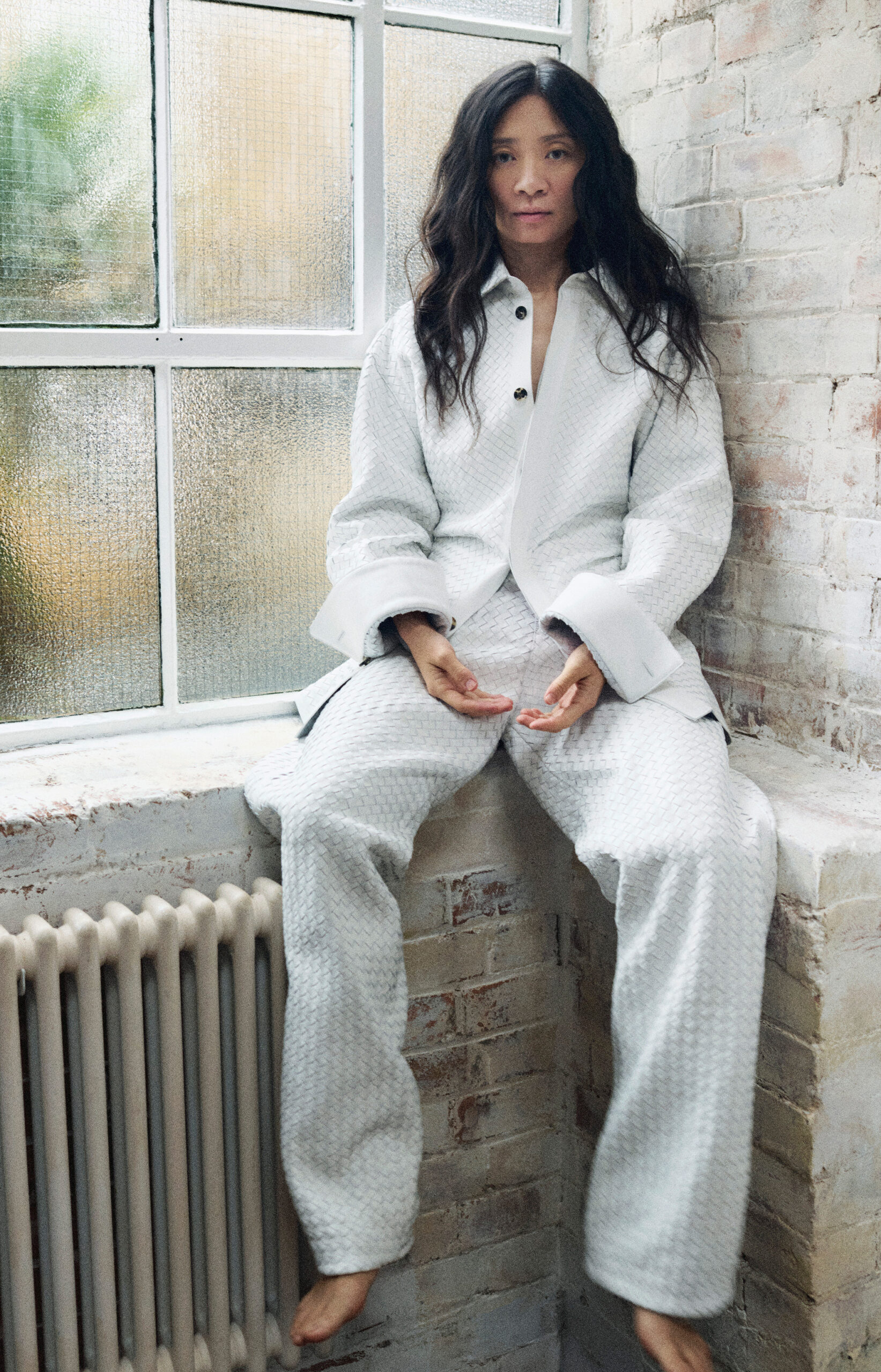
Shirt and Pants Bottega Veneta.
Chloé Zhao spent her early career as a director on the American back roads, casting rodeo riders and nomads in films that felt more like documentaries than fiction. The Rider made people pay attention. Nomadland won her an Oscar. Then she did Eternals for Marvel, a lesson in big-budget storytelling that she took with her. Now she’s back with Hamnet, based on the Maggie O’Farrell bestseller about William Shakespeare (Paul Mescal) and his wife Agnes (Jessie Buckley) grieving the death of their son, and how that loss inspired Hamlet. It’s her most personal film yet (it’s got 8 Oscar noms, including a Best Director nod for Zhao), all Jungian symbolism and dirt under fingernails. Steven Spielberg, who produced the movie, says she’s the only director who could’ve pulled it off. Bradley Cooper, who interviewed her the day after she won a Golden Globe, agrees.
———
MONDAY 11:30 AM JAN. 12, 2026 LA
BRADLEY COOPER: Hey.
CHLOÉ ZHAO: Bradley.
COOPER: What’s up?
ZHAO: About to eat a chocolate bar because I need sugar. Don’t know if it’s too early in the morning for that. Happy belated birthday.
COOPER: Oh, thank you. I just heard that you won the Golden Globe last night.
ZHAO: We did.
COOPER: Congratulations. The Eagles lost, so it’s a good balance.
ZHAO: Oh, no! I’m sorry. I know you’re a big fan.
COOPER: Yeah. Let me just start by saying how honored I am to be doing this. If you told me as a kid that I could see a movie that affected me the way this did and then be able to talk to the filmmaker for 45 minutes about it, I’d fall over and faint.
ZHAO: It’s very generous of you.
COOPER: I’d like to talk about the first image of the film, how Agnes [Jessie Buckley’s character] is asleep within the root of a tree, and the cavern below the tree. I’m bringing this up because there’s nothing arbitrary in this movie. I’ve seen it twice, and you really feel like you’re learning about the filmmaker in any film worth its weight. I felt like you opened your soul in this one.
ZHAO: Your intuition is really strong. With the little time we’ve spent together, you can probably tell it has more me in it than all my previous films.
COOPER: Yeah.
ZHAO: For me, the beginning of a script is always the hardest to write. I don’t know how to start films, because I feel like the beginning and ending isn’t a line, it’s a circle. With this film, I was stuck for months.
COOPER: Right.
ZHAO: Out of desperation, I called Maggie O’Farrell, the writer of the book and my co-writer on this project and said, “Is there a piece of music you listen to?” Because when things don’t work in life, I tend to look to poetry or music, something older than film. More abstract.
COOPER: Yes.
ZHAO: She said, “Actually, there’s a song I was listening to on repeat,” which was [Henry] Purcell’s “When I Am Laid in Earth” [Dido’s Lament]. He wrote it maybe a decade after the original Hamlet was performed. The chorus keeps repeating one sentence, which is “Remember me remember me, remember me.” Maggie thinks maybe Purcell had actually seen a production of Hamlet and was inspired to write that opera [Dido and Aeneas]. As soon as I heard it, the opening wrote itself because something bigger came through.
COOPER: Yes!
ZHAO: You understand that.
COOPER: I do.
ZHAO: In terms of the tree, the black hole in the ground was not part of the script. I just happened to be in Kyiv right before I went to Wales to scout, and I was with somebody who was making a documentary in a strip of forest on the frontline. By the time I got to my forest in Wales on a peaceful spring day, he was sending me images and footage of his forest, and I saw these black holes in the ground that were land – mine holes and dugouts. In my forest, there were also these natural black holes. I just sobbed and sobbed by this hole, feeling like death in some way connects us. It comes for all of us, and yet it gives us the capacity to love and to have empathy for each other when we experience loss and grief. Somehow it became clear to me—this hole has to be at the beginning of the film.
COOPER: Isn’t that something?
ZHAO: You exist, you wait, and something is going to speak to you.
COOPER: Yes, Chloé. It’s unbelievable. Talk to me about the choice, which I just loved—I was so floored when Agnes touched Hamlet’s hand, and she sees William [Shakespeare] for the first time, for who he really is. Then the second time I watched the film I realized that in seeing him, she got the gift of understanding that there is an afterlife, that there is faith in something greater than earth. By seeing his art, she became a believer. And for me that’s why she’s laughing. Tell me if I’m on the right path.
ZHAO: I’m getting chills, because you’re touching on the underwater part of the iceberg of what I’m trying to archetypally discuss. We both worked with Kim Gillingham, and I’m sure because you also worked with Kim, you also read Jung. Jung really gave me a language that helped me understand what is going on with me, because I didn’t grow up with religion. Jung believed that spirit and matter, when they come together—when spirit penetrates matter, when matter holds spirit— they produce what he called the divine child. That is another word for soul. William is a representation of spirit, and she is a representative of matter. And that is the earth. And then the other one is this idea of the— what’s the word?
COOPER: The ethereal?
ZHAO: The spiritual. Storytelling is a big part of that. Words materialize what we don’t quite understand. She can’t transcend matter. That’s why she’s frozen in grief, and she needed that beam of light, that spirit, to penetrate. And for him, without her grounding him—
COOPER: He’s going to float away.
ZHAO: He’s going to float away. So the death of his child, the density of his wife’s grief, is the matter, and his own body as he ages is what brings him down. That’s what makes his work so soulful, because those two things are affecting each other.
COOPER: I mean, he puts earth on his skin.
ZHAO: I know! I love that you say that. I’m going to use that in my Q&As. “He puts the earth on his skin because it’s matter containing spirit.” Thanks, Bradley.
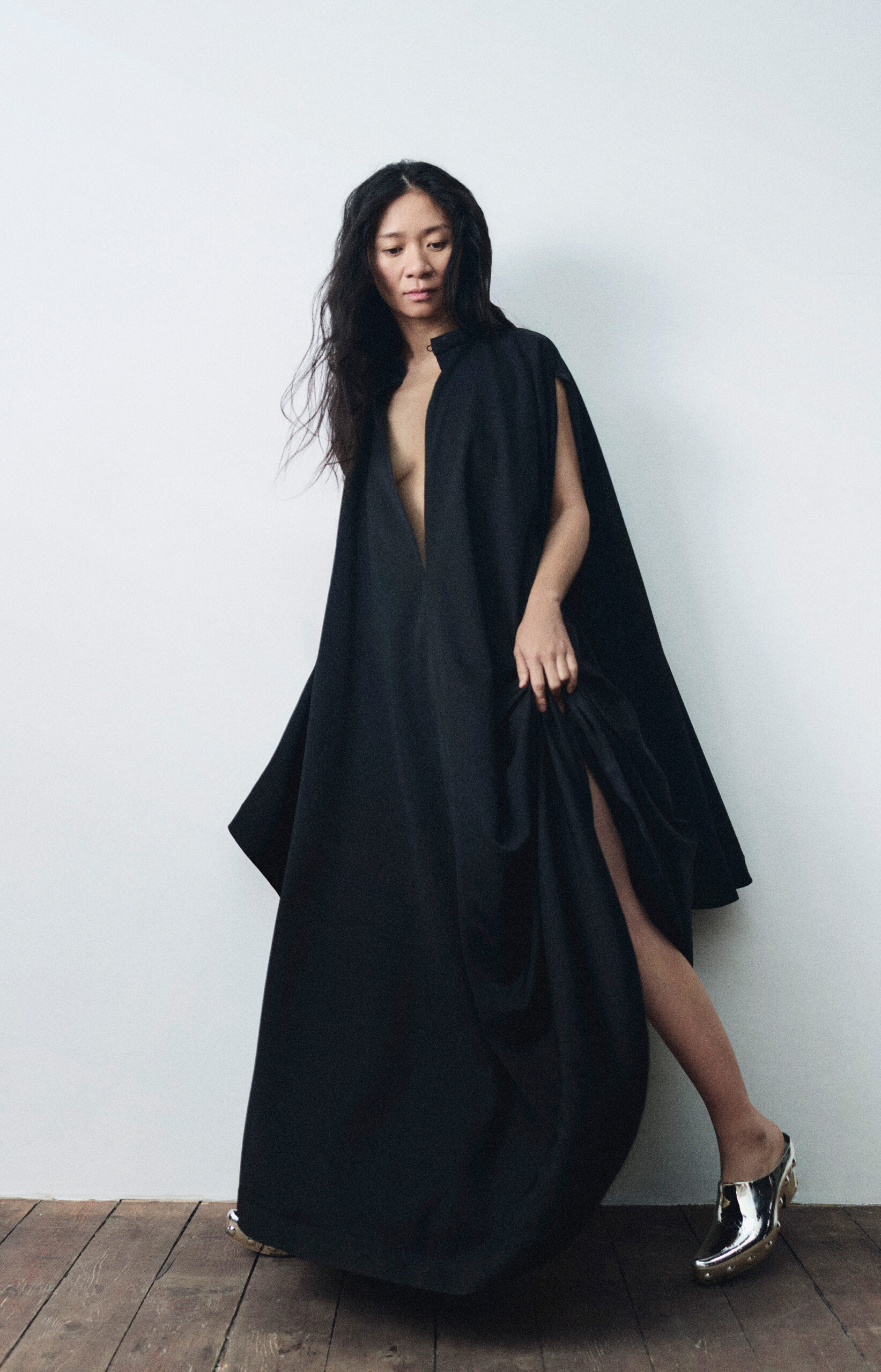
Dress and Shoes Bottega Veneta
COOPER: [Laughs] It goes back to when you are watching the work of a filmmaker who is thinking on those plateaus, that’s when everything becomes so specific. As a viewer, I was in such great hands. It’s a catalog of images that all point to the very thing you’re saying throughout the entire film. It’s really incredible.
ZHAO: Thank you.
COOPER: I loved how you shot the breakfast and dinner table scenes with William’s family, so often just staying in that wide shot. And I love your willingness to have characters walk out of frame and not pan over. You saved that slow pan for that room where the child was getting sick. Roma did that so wonderfully, remember?
ZHAO: Yes.
COOPER: Can you talk to me about the cinematic language in that respect?
ZHAO: Just like our first trip to the forest with Łukasz [Żal] my cinematographer, our desire is to find Agnes’s language. If it’s rational, you should frame the whole person. But for her, there’s life that exists outside rationality and there’s life that exists just off the screen.
COOPER: Wow.
ZHAO: Sometimes if we did a shot where the camera was catching everybody, Łukasz would go, “Too perfect. We want the camera to sometimes just miss someone.”
COOPER: That’s beautiful.
ZHAO: I also give a lot of credit to my editor Fonsi [Affonso Gonçalves]. I’m not very good at editing coverage. If you give me a bunch of coverage and six people talking around the table, I don’t know where to start. [Laughs]
COOPER: I agree.
ZHAO: But if you give me a montage, I’m your girl.
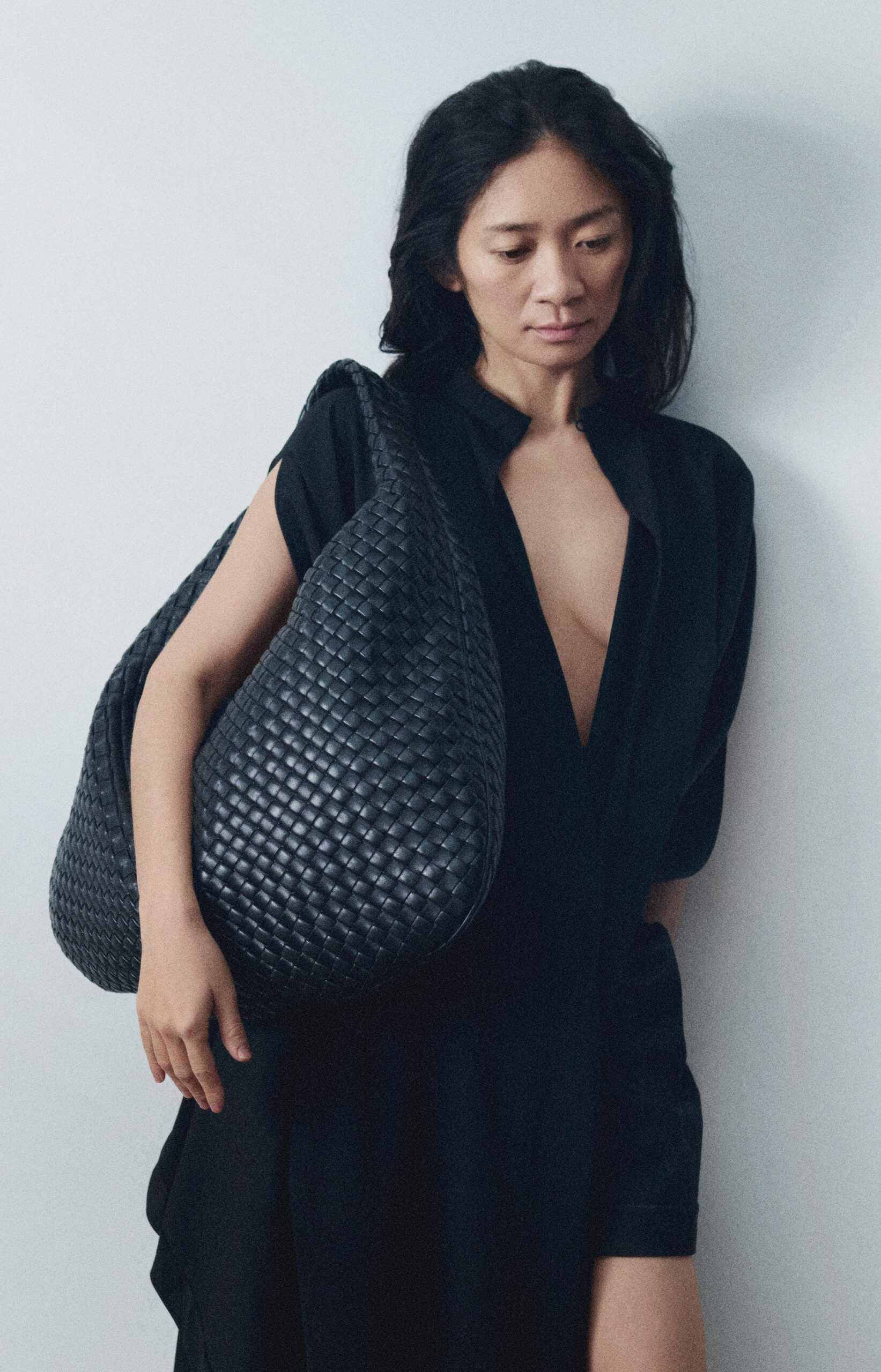
Dress and Veneta Bag Bottega Veneta
COOPER: I’d like to pivot to your actors. Jessie Buckley was so overpowering when I first saw it. It’s kind of all I was left with, because she just floored me. I’m so glad when I saw it the second time, I could really appreciate how wonderful Paul Mescal is. But she’s just so singular that I didn’t have the bandwidth to take in anything else on the first viewing.
ZHAO: I appreciate you saying that, because both of them stepped out of their comfort zones and went to places they were previously a little hesitant to go.
COOPER: Yes.
ZHAO: It’s sort of the imagery of looking at a volcano, something in nature that man has not tainted. And then you have this lonesome hunter with his dog in a little shed, away from his family. He’s trying to find the beast. That’s what we’re talking about—the relationship. Because we are him. We’re looking at this thing that we have lost, which is our inner animal, our inner Agnes, our inner forest and volcano. And the reason why we can’t look away from her is because we see a part of ourselves that we have cast away and denied.
COOPER: Wow.
ZHAO: You feel for him because that’s the caged animal we feel so often, it’s him. And from there, great, great art and storytelling is produced.
COOPER: So how did you begin to explore this volcano with Jessie? Talk to me about how she came into your life for this project.
ZHAO: I had not seen her earlier work. I was on the jury at Venice and I saw The Lost Daughter and thought, “Wow, who is this?” And then when I read the book, I couldn’t quite see anyone else but her. I needed somebody who was willing to take all the masks off and give themself completely to the camera. Because the moment you feel like she’s holding back, she’s worrying about her angle, any of that, you’re going to lose the audience. You need somebody who’s going to be present moment to moment, and to do that, as you know, is physically, spiritually, emotionally, extremely taxing. She actually introduced me to Kim. Jessie writes poetry, draws, reads so much, gardens. She’s always trying to create. She’s not just an actor, she’s a storyteller. She just has something she has to get out of her. And then we did a dreamwork session together for the first time. It was my dream. That session, I feel like we ’re still unpacking. That was almost two and a half years ago, and that informed the script massively.
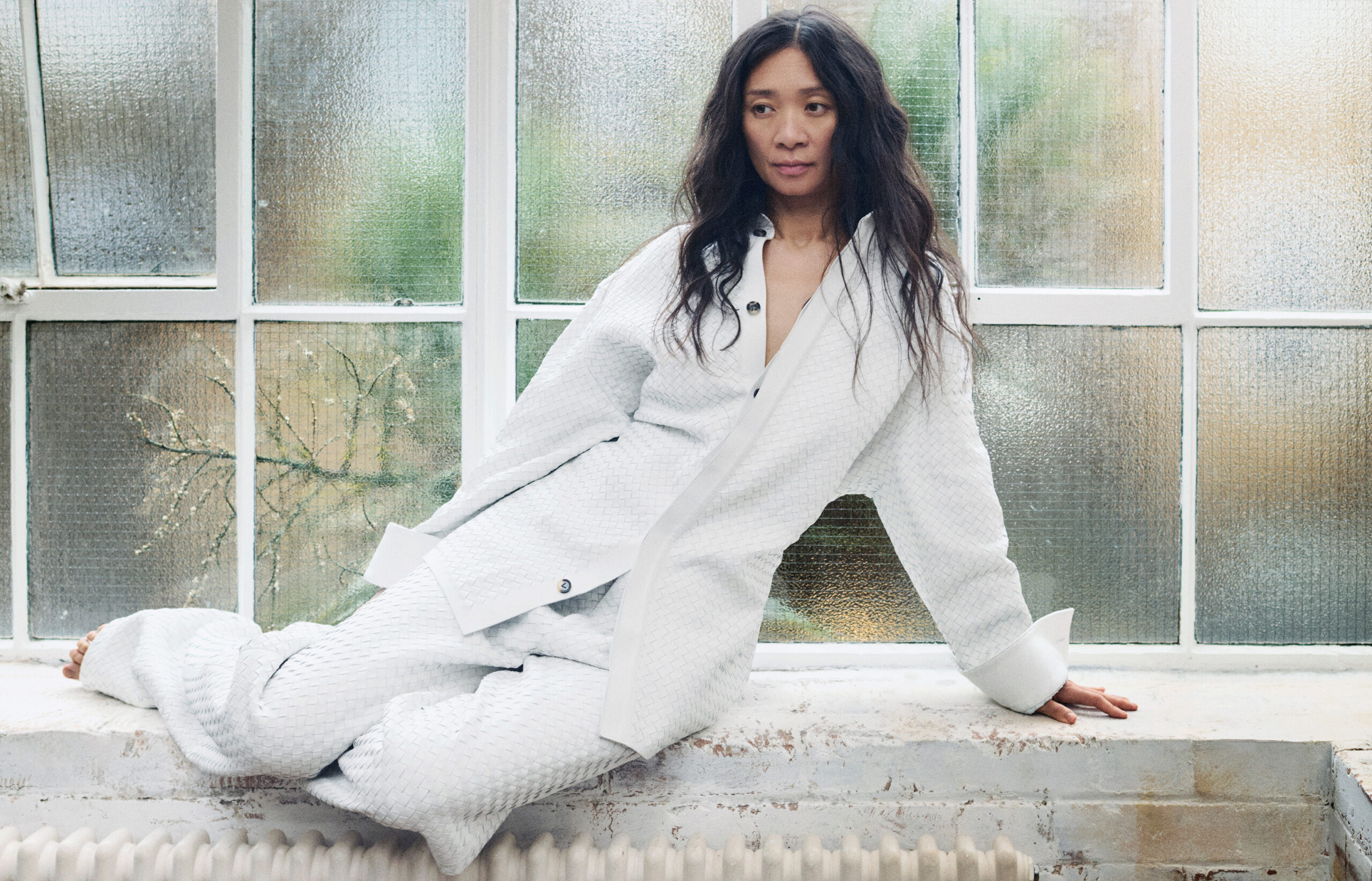
Shirt and Pants Bottega Veneta
COOPER: Wow. Tell me about Paul.
ZHAO: I initially wasn’t going to say yes to this project because of the logline. I felt like I didn’t have the life experience to tell that story. And then a few hours later, when I got to Telluride after receiving that call from Amblin [Spielberg’s production company], I met Paul for the first time. I didn’t know who he was because Aftersun hadn’t come out yet. I just remember going for a walk with him. He has this nervous energy. You feel like this person has a wolf gnawing at him. The compulsion to create, if it’s not exorcised, will eat him alive. And then I kind of went, “Do you think you can play young Shakespeare? ” I wanted somebody like Brady [Jandreau] from The Rider [Zhao’s debut film], someone I don’t know. When it’s like, “There’s something you haven’t shown the world, and I would like to create a vessel for you to show it. ” That s exciting.
COOPER: Very exciting. That’s how I felt with Will [Arnett].
ZHAO: Totally.
COOPER: And even Laura [Dern]. I wanted to write a character for her that we haven’t seen and that would push her to a place I know exists in her, but maybe she hasn’t explored fearlessly.
ZHAO: That’s the joy as a director, right? What else can you ask for?
COOPER: That’s it. Because then you’re just bored.
ZHAO: You’ve done that for people in your films over and over. I think we’re both excited about that merging of the essence of a person and the character.
COOPER: Somebody was telling me the other day, I don’t know if it was Warren Beatty who said, “Casting is plot. ” I love that line.
ZHAO: Sometimes I don’t know how to answer questions about how you work with the actors day-to-day. Once you cast the right person, the well is so full.
COOPER: Yes.
ZHAO: You just find ways to get the water out every day, but if the well is not deep enough, techniques don’t matter.
COOPER: To that point, how did you meet these children?
ZHAO: The casting process for the twins was long, but Jacobi [Jupe] had been there from the beginning because he’s Noah Jupe’s little brother.
COOPER: Right. I learned that after.
ZHAO: Yeah. Noah played Hamlet. He’s from an acting family, but we thought, “It can’t be him. That’s too easy. This is going to be a long process. I need to go to my casting director.” And then in the end we went, “I think it’s still Jacobi.” We did a lot of auditions with him. We put him through the E.T. test, which Steven [Spielberg] told me about.
COOPER: I don’t know that.
ZHAO: It’s on YouTube. When they auditioned the kids from E.T. They basically told them, “I’m going to take someone important from your life away.”
COOPER: I have seen it!
ZHAO: I did that to the main three kids that auditioned. The goal is not to see if they can achieve the right kind of acting. It’s to see if they’re willing to be present.
COOPER: I saw that Sam Mendes and Steven Spielberg are part of this project. What was it like to navigate the waters of making a big studio movie that is so specific and personal to you? Was that an effortless journey or did you find yourself having to protect things you wanted to explore?
ZHAO: I learned, and I can see from your film, that you lead this way as well, that the strength of leadership doesn’t come from dominance. It comes from interdependence within an ecosystem that needs to be carefully protected and tended. Interdependence doesn’t really fit the model our industry is built on, even the word director.
COOPER: Yes.
ZHAO: I find that word—
COOPER: Even the word action.
ZHAO: I know. [Laughs] Things always balance themselves out in the end. I was very lucky that I did have people like Steven and Sam and Focus Features, and there’s an understanding of the umbrella that they’re putting above me so I could cultivate that environment. Also, the film is not that expensive. We have almost no establishing shots because we couldn’t afford it. [Laughs]
COOPER: But in my memory, it doesn’t feel like that. I smelled, saw, heard the environment throughout the whole thing. The earth is such a major part of it. Such a tangible part of your film is the vast nature of it. It’s not myopic, it’s not small. So it’s incredible that you had all these restrictions, because it feels so epic to me.
ZHAO: I’m always fascinated by the intelligence of the audience. If you can get them onto the right emotional landscape, they don’t care about these other things.
COOPER: No. Because they start to create them, they see them anyway.
ZHAO: Totally. It’s the imagination of each person, not just an artist. Anyone has access to the divine. We just lost the rituals to do it. We were born creative, imaginative creatures.

Jacket, Shirt, Pants, and Shoes Bottega Veneta
COOPER: I was just talking about this the other day. Everyone is so creative. All you have to do is allow them the playground to walk into. I had such a wonderful time with Steven on Maestro, where I also felt that bubble that was created that allowed me to explore and be fearless. He’s a wonderful curator and shepherd for artists in that way. We’re lucky he’s around.
ZHAO: Absolutely. And when he gives notes, they’re sharp.
COOPER: Yeah. And by the way, you’re going to have to defend your point of view and discuss it, which is the way it always should be when you’re creating. There just can’t be any lie. Everybody has to say exactly what they think.
ZHAO: Yeah. He read the first draft and had a couple of notes, but the big one, he was like, “It’s missing a moment between father and son. ” Because we adapted from the book and it’s less about Will. So that scene, “Will you be brave, ” that didn’t exist in our first draft.
COOPER: And what about Emily Watson? Her performance.
ZHAO: There was a moment on set on her first day. I was like, “Guys, we’re watching Emily Watson act. ” It’s just a treat.
COOPER: It’s something, right? I remember watching Sam Elliott on A Star Is Born and I was like, “Whoa. This can’t be happening.”
ZHAO: I don’t know what it is with that generation. Maybe what they went through when they were young is so unthinkable to us.
COOPER: Where to from here, filmmaker?
ZHAO: In general?
COOPER: No, artistically.
ZHAO: I think I want to do a play.
COOPER: Wow.
ZHAO: I want to be more in the body. There’s something paradoxical about cinema.
COOPER: Yes.
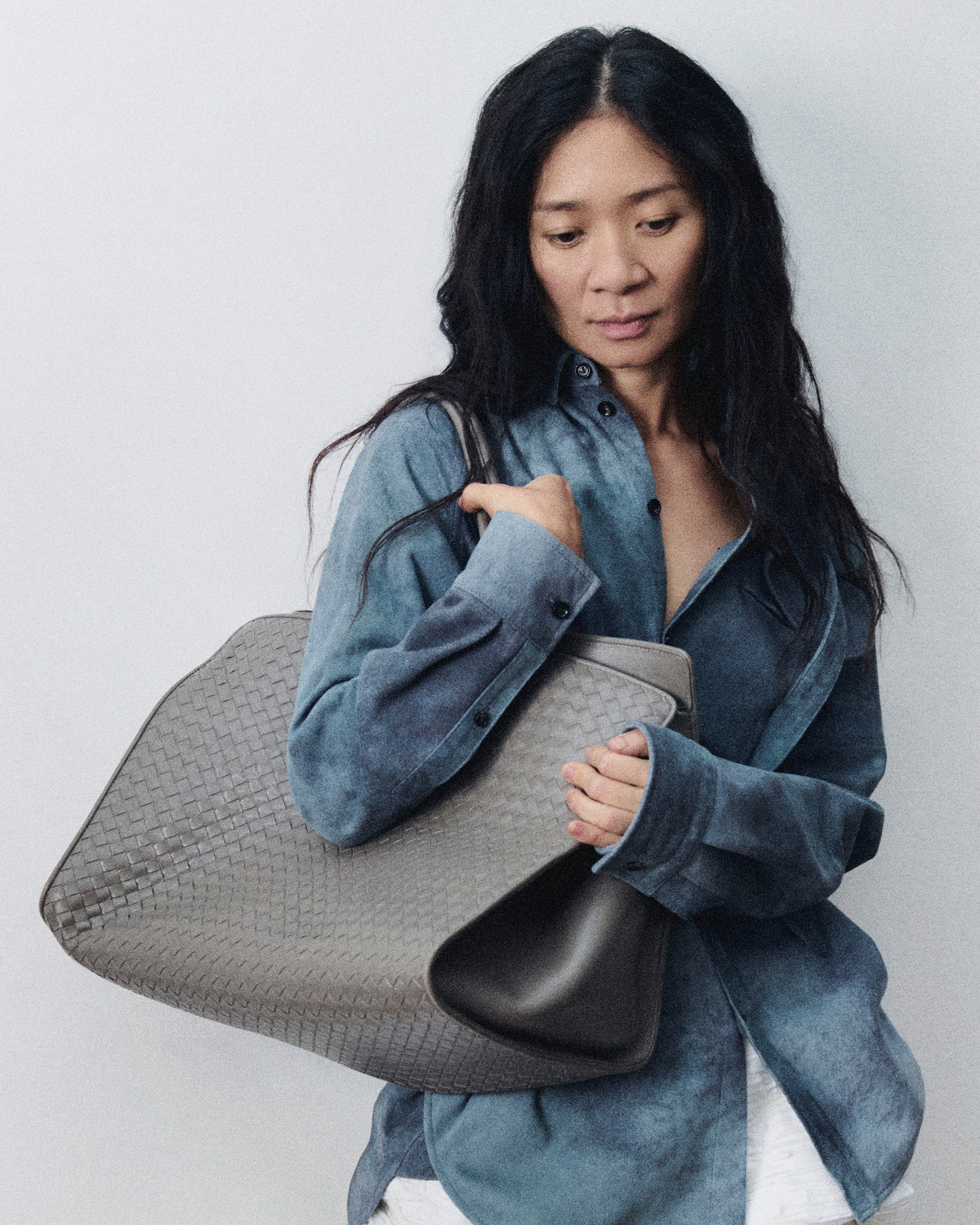
Shirt, Skirt, and Barbara Bag Bottega Veneta
ZHAO: I try to see how present I can be to make movies. And then being in some of the theaters when Hamnet screened, I went, “I pushed as far as I could right now with my knowledge and ability because it did transmute. It does allow the audience, whether it’s through music, sound design, or the actor’s performance, to be in their body more.” But then a play, I wonder if that can teach me something else that I can bring back into cinema.
COOPER: That’s really smart. I think we’re on a similar path of trying to represent the immediacy of human existence, but through a lens.
ZHAO: This is why it feels so simple, but also deep and personal. Sometimes people ask me, “How do you place the camera? ” And I say, “I’m actually next to the camera and I use my body as a gauge. ” If I’m feeling something I want the audience to feel, then the camera’s in the right place. And you’re also a great actor, so you tapped in that way. You know you can use your own body. The camera is a body. It’s a camera body, not a camera mind.
COOPER: That’s right.
ZHAO: Look at us.
COOPER: We’re growing.
ZHAO: We’re like kids in high school. We re maturing. Thank you so much for doing this.
COOPER: It was an honor. I’m so happy.
ZHAO: I hope I see you.
COOPER: Yes. Thank you for this.
———
Hair: Amidat Giwa using Oribe at Bryant Artists
Makeup: Lynski
Lighting and Digital Technician: Benedict Moore
Fashion Assistant: Emeline Taverne
Production Director: Alexandra Weiss
Photography Producer: Georgia Ford
On-set Production: Andre Augusto
Post-production: Cecilia Rabeschi
Location: Epitome Studios