


HOTELIER
Pablo Carmona and Joshua Kremer Take Us Inside Their Baja Oasis


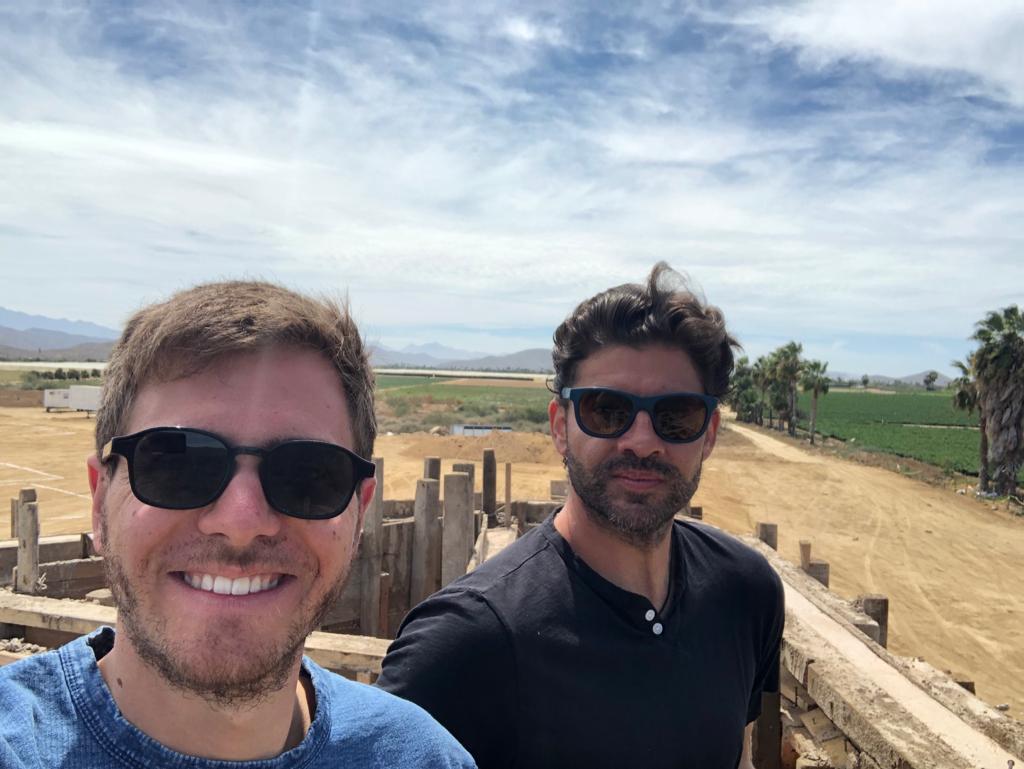
Photo courtesy of Pablo Carmona and Joshua Kremer.
Seven years ago, when the Mexican hospitality maestros Joshua Kremer and Pablo Carmona got on a business call, they agreed that three things would change the world: technology, bioscience, and travel. But what kind of venture, exactly, could marshal all three into perfect alignment? Their idea crystallized with the idea of experiential travel or, as Carmona said when he and Kremer got a Zoom call last week, the kind of vacation that “inspires you not to sit down at a pool, drink at the typical beaches with bikinis and margaritas, but to really connect with nature and create amazing communities that push you from ongoing travel into what we call future living.” The future, they discovered after no less than 800 site visits, was on a five-and-a-half-acre plot within a farming community in Todos Santos, Paradero. Two years later, the pair opened Paradero Todos Santos, a 35-suite property in Baja California Sur where you’re just as likely to find hotel guests hiking, surfing, and communing with nature as you are to find them sunbathing by the pool. Below, Carmona, a former banker, joins his partner Kremer, a graduate of both Le Cordon Bleu and Ecole Hoteliere de Lausanne, to take us inside their Baja oasis.
———
INTERVIEW: Hey, guys. How’s it going?
PABLO CARMONA: Very well.
JOSHUA KREMER: I am wonderful.
INTERVIEW: Tell us how you guys came to meet.
CARMONA: Josh, I can start if you want.
KREMER: Go ahead.
CARMONA: Well, interestingly, prior to COVID in probably 2018, Josh, you might remember I was doing investment banking. I’ve always been an entrepreneur since I was little. And Josh was also doing banking in London. I was based between Mexico City and New York. One of my favorite things to do is skiing, and I was skiing in Colorado. Through a common friend, who actually was the first Mexican to become a professional skier, I met Josh. We went out for dinner and literally, in one hour, we were sharing our thoughts on what we wanted to do in the future.
The conversation went all the way up from the philosophical to what we wanted in our lives. And we immediately connected, thinking about the future. This was in 2019, and we coincided that there were three major things that were going to change the world: technology, bioscience, and travel. Specifically on travel, we ended up discussing so much about how little people have traveled to really understand all cultures. And even thinking about luxury travel in places like Africa, South America, and parts of Asia, there were only a few players that were actually making amazing and experiential travel with nature.
Long story short, that same night, through WhatsApp, we agreed on a LOI partnership. And since that night, we never stopped. In two weeks, Josh was living in London, I was based in Mexico City, and we were hiring someone to be fully invested in our vision of creating a concept and a brand around experiential travel with nature—our idea of transformational travel. A better way to exchange culturally, to learn and really convert spaces into amazing designs that inspire you not to sit down at a pool, drink at the typical beaches with bikinis and margaritas—but to really connect with nature and create amazing communities that really push you from ongoing travel into what we call future living.
INTERVIEW: So what came next, Josh?
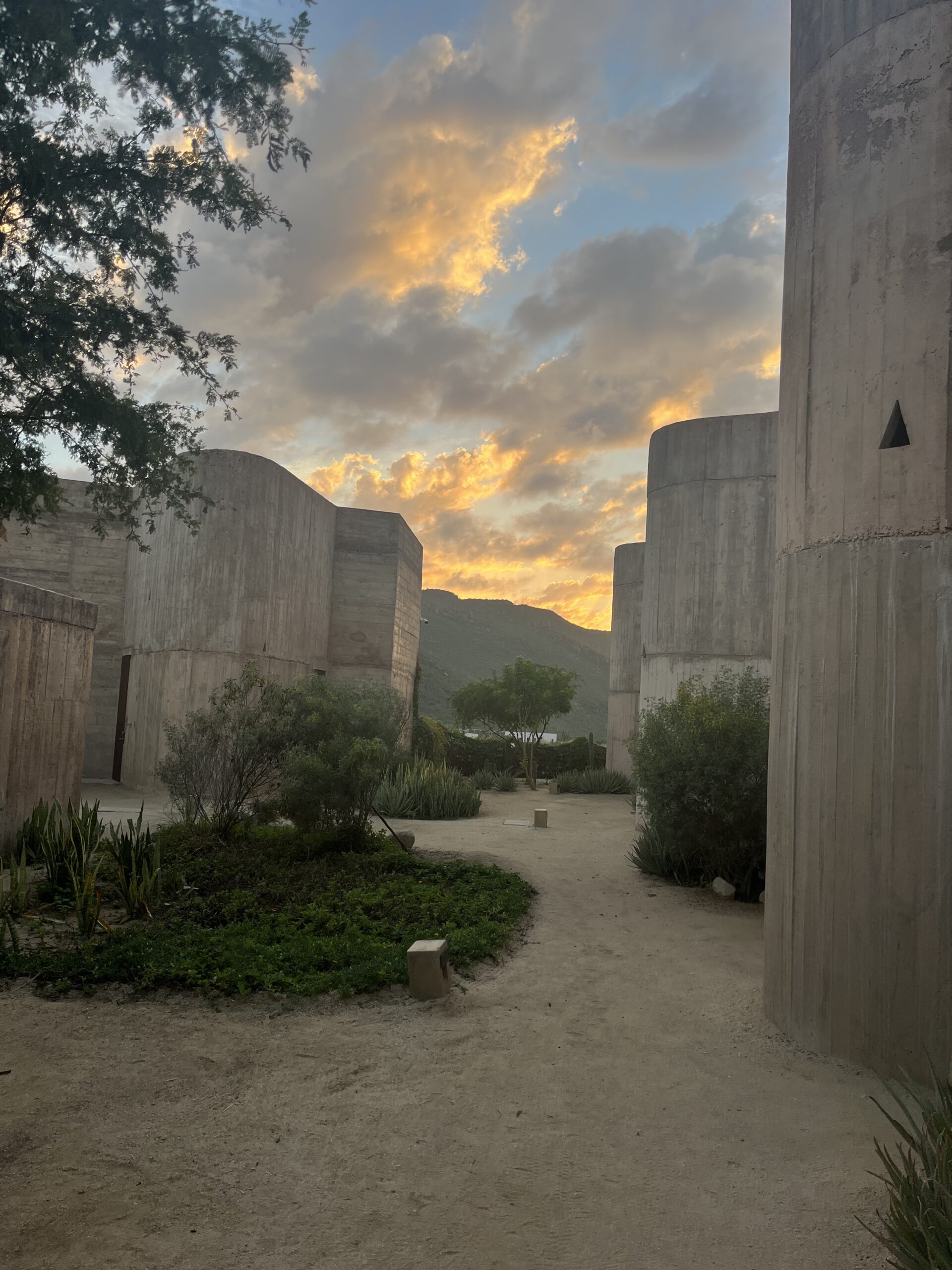
KREMER: Throughout that journey we basically looked at over 800 sites throughout Mexico in 2018, and we ended up deciding on Baja as a spectacular destination for making that vision of experiential travel a reality. We acquired the site in 2018, designed it in ’19 with an incredible design team, built it in 2020, and opened in 2021. And it’s been five incredible years of operation. We started initially with just 35 suites, 10 acres of land. Today we’re on our way to building a 92-key, 60-acre project that’s going to be one of the best in the area.
And I think more important than that is how all this expansion has been really driven by our guests. Seeing how our guests are enjoying being connected with nature, trying new experiences, and basically saying to us, “Hey, I want to come back with my kids. I don’t want my kids to be playing video games all day at the kids club. I want them to be on the farm playing with horses.” That’s what inspired our expansion into our villas project. And the same happened with homes—we had guests that wanted to make that a part of their life completely. That inspired us to create a spectacular project that is currently getting delivered—the first unit. And it’s incredible.
CARMONA: It’s funny because it feels natural hearing you right now. It’s 2025, but that was our thought back in 2018.
KREMER: [Laughs] Exactly.
CARMONA: It was creating the first experience-inclusive model, as we call it.
INTERVIEW: And what do you mean by “experience-inclusive”?
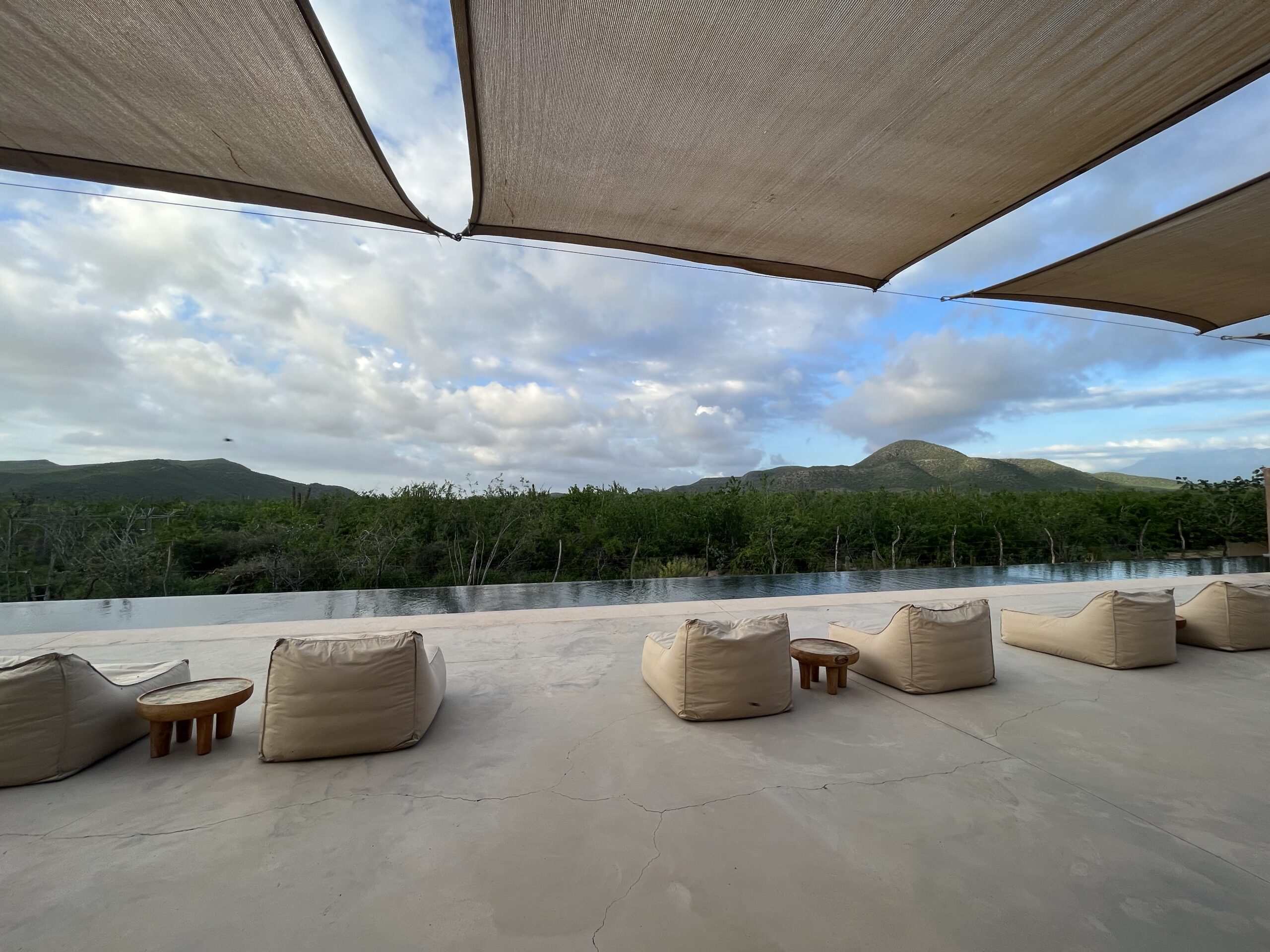
CARMONA: And what I mean by experience-inclusive is, you stay at Paradero and you do all these experiences that are part of not only of the rate but the intention. Our team will actually take you surfing one-on-one, take you on the farm, gardening, biking, and sailing. It seems secondary, but as you stay there you realize it’s all about being in property but out of property too. Really guide you to be the guides of the destination. Our guests are learning how to surf. The next day they’re out on the Sea of Cortez. Now we’re taking it to the next level, where guests want to learn how to do freediving or they want to go deeper into farming. So it feels like yesterday, but what was interesting is that we cannot control what eventually happened. When we opened, I think the main feature was the design and the landscape. But here we are with experiential travel.
KREMER: I think it first starts with our team. Paradero has been able to attract some incredible talent, from dishwashers to general managers. Paradero has inspired many of these people to be better versions of themselves, to be challenged and be part of a mission versus it being just another place to work. We’ve seen people grow into places that we never expected, and that has been amazing. At the end of the day, you need a team in order to deliver some incredible guest experiences.
INTERVIEW: What’s some of the most rewarding or gratifying feedback you’ve heard from guests?
KREMER: There was a guest based in L.A. who was a doctor. He was in Chicago doing an operation, and as he was about to fly back, he found out that his house in Malibu had burned down. He quickly decided that he didn’t want to go back to California, thought about where to go, and he chose Paradero. He was with us for 10 days, just really being in nature, contemplating the landscape. He did all the experiences and just got really immersed into this place. And at the end of the stay, I saw him. I went to say hello and thank him and he really opened up and shared how impactful and transformative the stay was, how it shaped his thinking in terms of what he had just experienced and changed his outlook in terms of what he was going to do next. That was a really cool and powerful experience.

INTERVIEW: And what about you, Pablo?
CARMONA: What I’ve heard from guests is that usually, when they stay in Cabo for examplle, in this beautiful luxury resort, they’re at the pool drinking, but the connection sometimes doesn’t happen. You have a lot of travelers that just want to be by themselves, not really engaged. At Paradero, you’re constantly doing different experiences on your own, but sometimes there’s going to be a few other guests, as couples or singles. So you start with a hike and after three hours, you kind of recognize someone. Then in the afternoon, you’re probably doing a Temazcal session, the next day a surf session, or eventually a beach sunset. We’ve seen amazing stories, such as people becoming best friends.
The other interesting bucket, especially over the last two years, is people who are more invested in longevity and are quite knowledgeable about biohacking and clinics. Some of these guests were originally going to stay for three nights and they ended up staying for a full week. They realize that the natural process of staying in Paradero is kind of like a circadian rhythm. They sleep really well, they wake up naturally, they’re doing hikes, and they’re out of the property meeting people. And after seven days they say, “This is exactly the foundation that I need.” It makes me think that about how fortunate we are. After looking at hundreds of properties, Paradero sits at a unique place. It’s a microclimate, right under the Tropic of Cancer, with year-round desert weather, but we’re fortunate to have a lot of fresh water underneath. But it’s not only the ocean view, the farmland, the cacti. It’s the weather, too. And this is what Paradero means: to be in the right setup and take just enough from nature and community.
INTERVIEW: Well, thank you both for taking the time to talk to us.
CARMONA: Anytime.
KREMER: For sure. Thank you.