


IN CONVERSATION
Kid Cudi Is Artmaxxing. KAWS Has Some Questions.


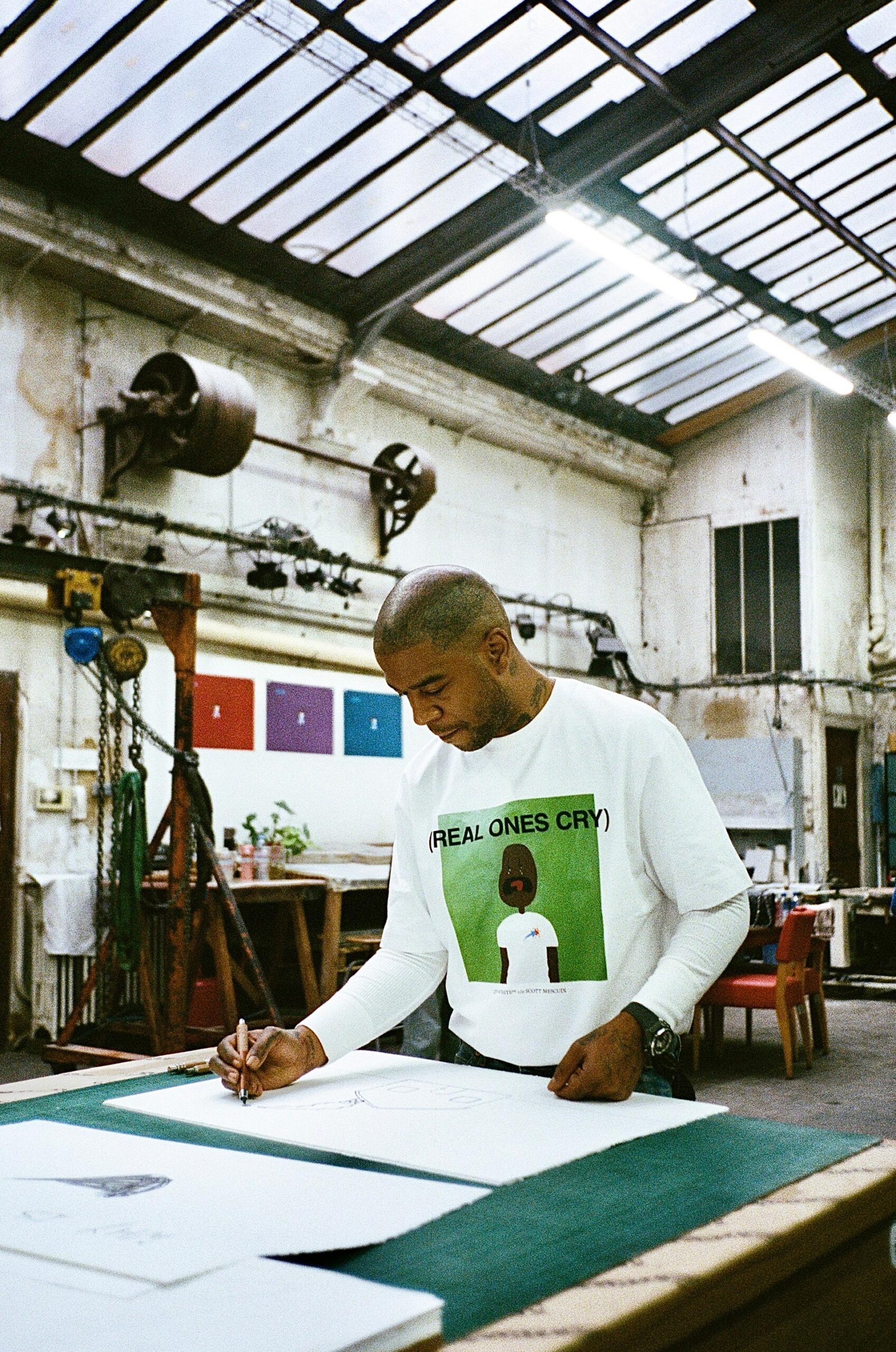
Kid Cudi/Scotty Ramone, photographed by Nils Müller.
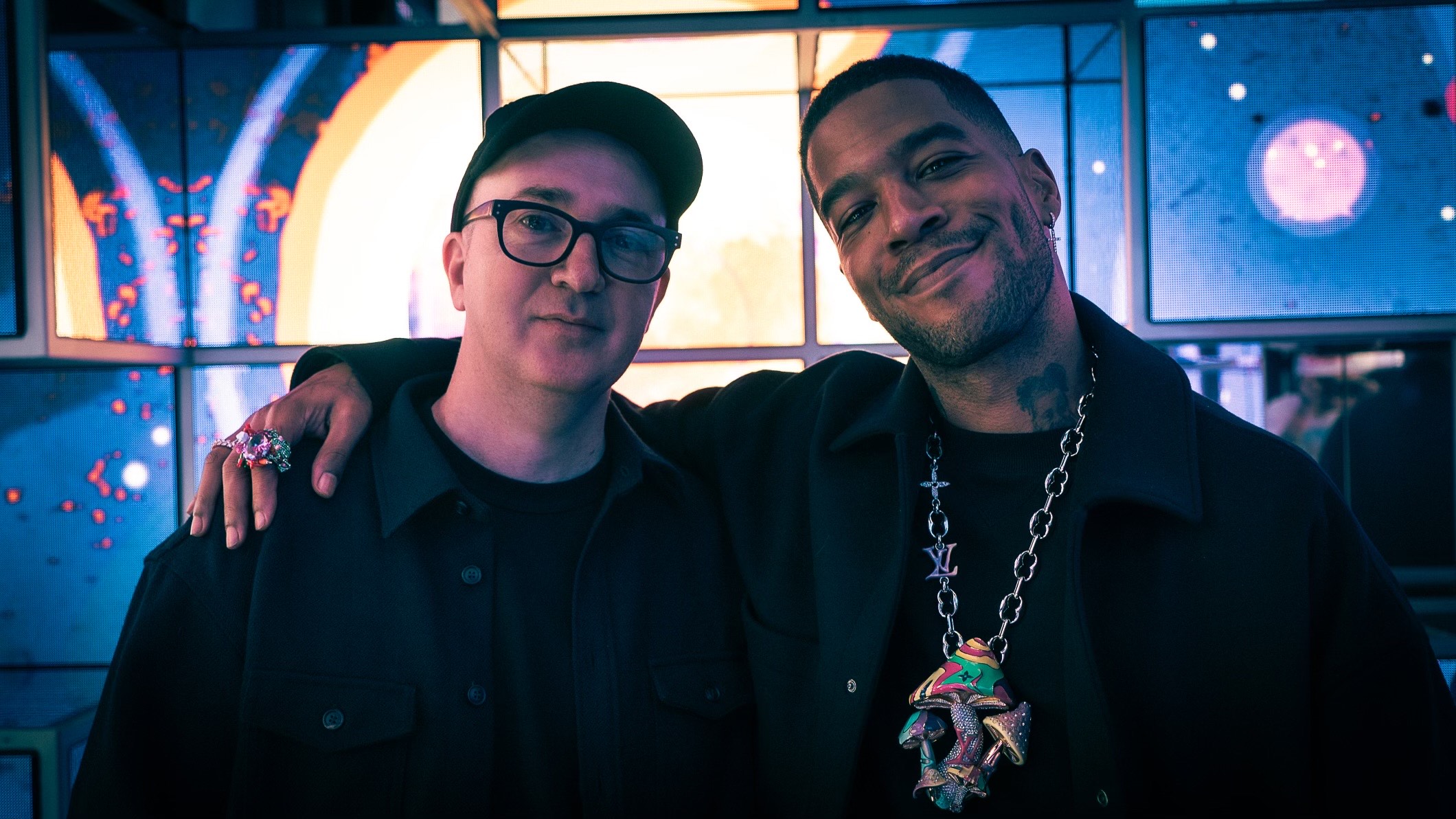
Why is Kid Cudi painting now? It’s the question one asks when the man who turned emo rap into public therapy quietly swaps the studio for a sketchpad and reintroduces himself under a new artistic alias: Scotty Ramon. Fresh off his artist documentary Echoes of the Past, which premiered at Art Basel Miami Beach last month, Cudi logged onto Zoom with longtime friend and pop-art heavyweight Brian Donnelly, a.k.a. KAWS, to address the particular audacity of beginning again at 42. “I just went after it,” Cudi said of his pivot to painting. “Nobody taught me how to paint, and that’s what was holding me back.”
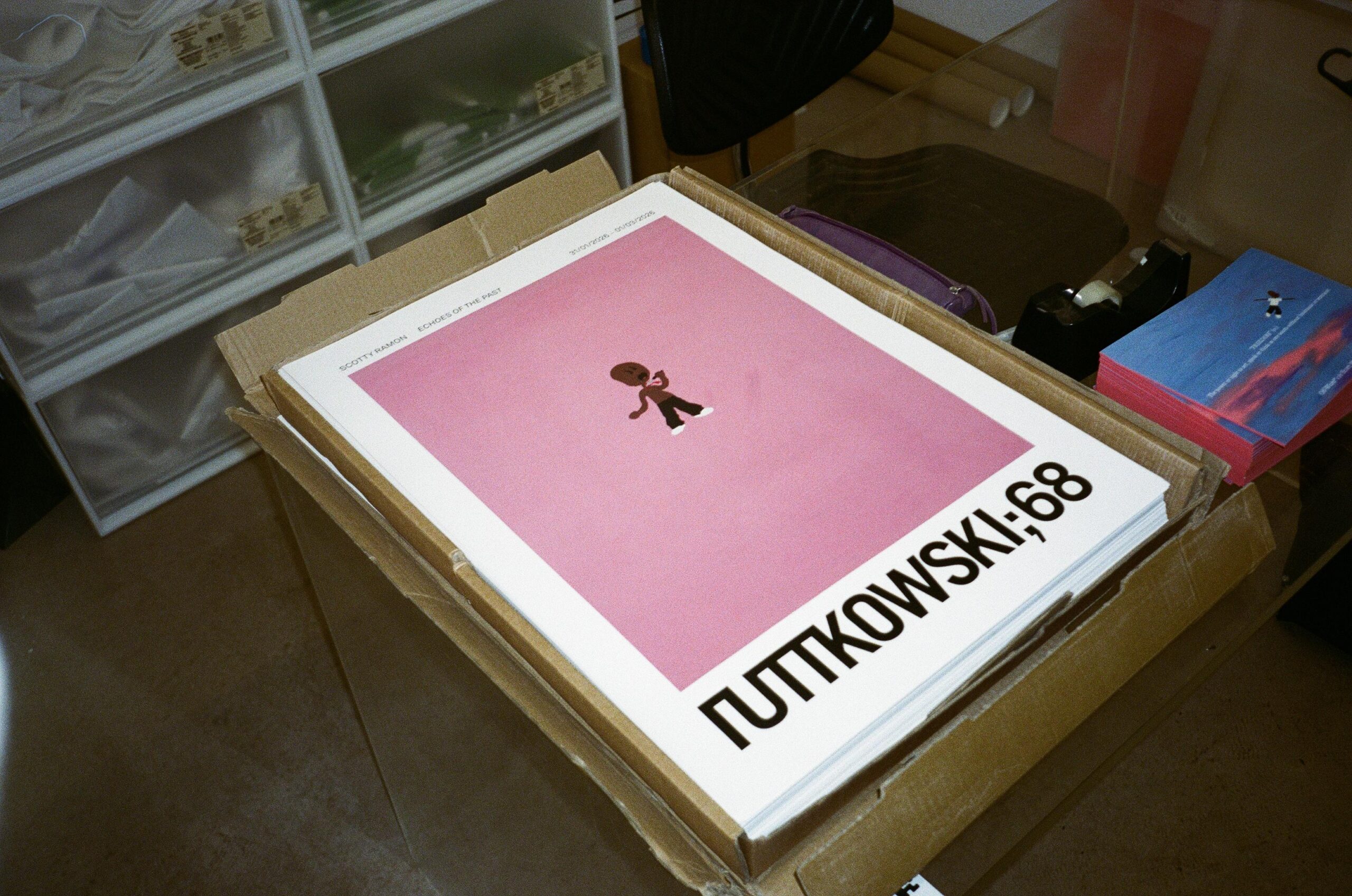
Running from January 31st through March 1st at Paris’s Ruttkowski;68, Echoes of the Past presents ten paintings that map Cudi’s interior landscape, imagined inverted geometries and playful color schemes.. Threaded throughout is Max, his wide-eyed alter ego and self-described “inner child,” while a 10-minute soundscape composed by Cudi hums through the space, a reminder that he never really leaves music behind. Skeptics may raise an eyebrow. Fans are lining up daily. And Scotty Ramon? He’s already plotting sculptures. “I want to see what else I can conquer,” he says.—OLAMIDE OYENUSI
———
KAWS: Hey, what’s going on?
KID CUDI: Let me get my camera going.
KAWS: You can turn the camera off if it’s easier to talk and focus.
CUDI: I look so high. And I fucking splashed salsa in my eye this morning—spicy salsa.
KAWS: Oh my god.
CUDI: Yeah. I’m kind of totally wavy right now, but it’s okay.
KAWS: I feel like that’s a good example of this entire year.
CUDI: Yeah.
KAWS: Just one fucking weird thing after thing. All right, should I just start with some questions?
CUDI: Yeah, let’s just get into it.
KAWS: All right. Let’s get right into painting, and your first exhibition. When you’re approaching painting, is it different from approaching a song or composing music? How do you compare those processes?
CUDI: Well in some ways they’re different, but in a lot of ways, they’re the same. For example, before I head to the studio to work on a song, I like to know what type of record I’m going to make. It’s premeditated. And that’s the same with my paintings. I have to have a vision in my mind of where I want to go, and then I sketch it and go from there. But sometimes if I try to go in and make a painting without a vision, it doesn’t quite come out the way I want it to. And with music, I can go in the studio and just let the music guide me and tell me what to do. So that’s how they’re different in that way.
KAWS: Do you have any routines when you go into the studio? For me, I walk in the studio and immediately turn on the kettle and have tea.
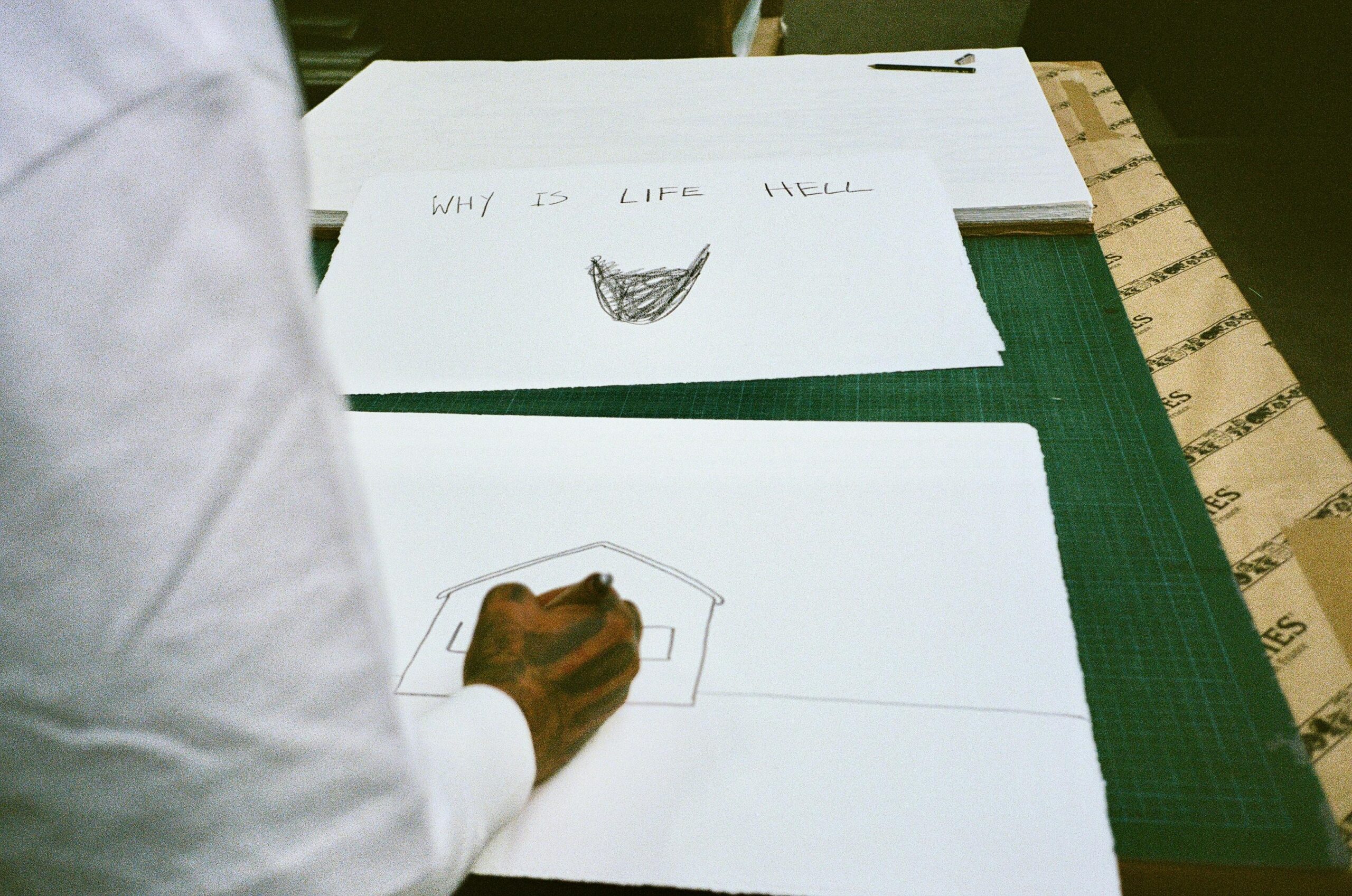
CUDI: Oh, yeah. I think my tea is my tree. So I come in the studio, grab a soda out of my cooler, and then I roll up some weed and smoke a little bit. Get in the groove, put on some music, and I get straight to it.
KAWS: What kind of music are you listening to? I mean, are you listening to your own stuff, or are you trying to extract imagery from previously created work?
CUDI: Sometimes I’ll play unreleased stuff that I’ve been working on just to vibe out and kind of study it a little bit. But when I’m not doing that, I’m usually playing classical music like Bach, and I’m just sitting for hours playing the whole entire album on loop.
KAWS: Oh, that sounds incredible.
CUDI: Yeah.
KAWS: Are there specific albums or songs that directly influence certain paintings, or is it just an overall mood?
CUDI: Classical and instrumentals are really the best for me. I can’t have anything with lyrics. If I do anything with lyrics, it’s mostly my own shit, but I can’t really listen to a song. I just need a mood.
KAWS: Like a soundtrack.
CUDI: Yeah, to soundtrack the whole process.
KAWS: That’s interesting. I listen to a lot of audiobooks and podcasts. Music, I don’t listen to so much, because I hate when it ends and I have to think of the next thing. But what does painting do for you that music can’t?
CUDI: Well, because it’s a new thing for me I feel like there’s a certain “I don’t give a fuck”-ness about it. The music is less, “I don’t give a fuck,” and I try to live up to what I’ve created all these years. Painting is such a new thing, so the “I don’t give a fuck”-ness is what excites me. I think people are connecting with that, but they also see that there are strong messages in the artwork. This isn’t just a bunch of pretty paintings. There’s always a deeper meaning to what you’re seeing. And that was important for me. Everything I do has to have a deeper purpose. You know what I mean? I also think it’s important for artists to explore and create in different mediums whenever they can.
KAWS: Yeah. I mean, I was super excited when you first started sending me pictures of paintings. I don’t remember when it was, maybe sometime last year.
CUDI: Yeah, November 2024. That’s when I started.
KAWS: It was just out of left field. I was pretty excited for you to just veer left and get into it. And now you just had your first show in Paris. How does that feel, having your visual art being seen publicly rather than just this long-crafted musician identity?
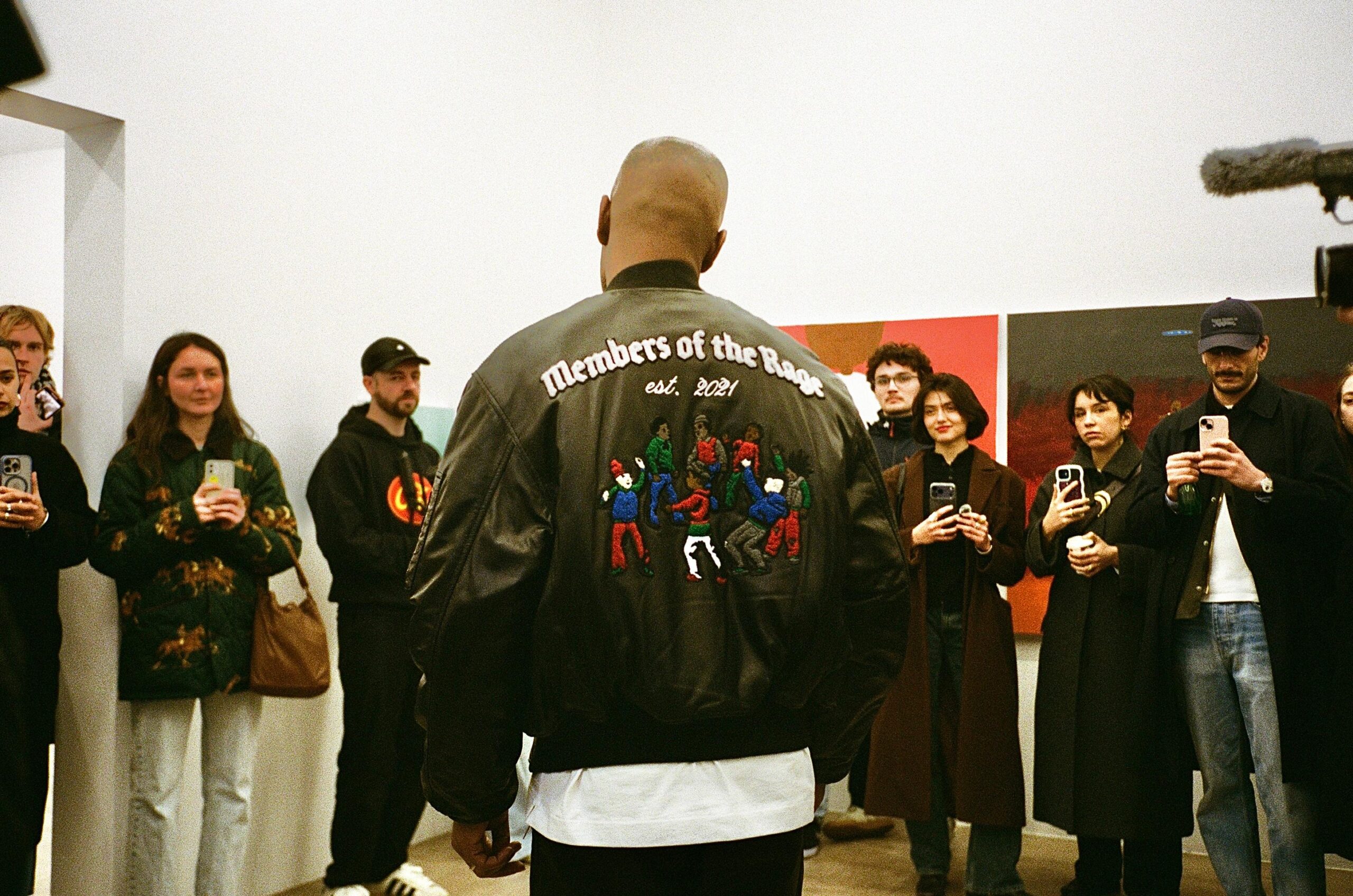
CUDI: It’s a mindfuck. I just saw a video of this yesterday, but people are still lining up every day to go see it. It’s been popping ever since we opened. It just warms my heart that I have this support. When I first started painting, I wasn’t like, “Ooh, I’m about to fucking have a gallery show one day.” If I really thought about it, it was like, “Oh, that’s not going to happen for another couple years.” My goal when I started painting wasn’t to have this kind of career. I was just doing it for fun. Then the more people I showed, it ended up becoming a conversation, because people were like, “Man, you got to show these. People have to see this.” Then it went from one person leading me to another. Then I met Nils [Muller, a gallerist at Rutkowski 68], and I was sending pictures of my paintings to Amy Verner, who is a writer for Vogue. We met when I was doing interviews for my brand, Members of the Rage, and she was very supportive early on. I would send her pictures, and she would just be like, “You have to send these to Sarah Andelman.” And I was like, “You really think so?” So I sent some pictures to Sarah, and she was loving it and was like, “I have some people you should meet.” Next thing I know, I was in Paris. Sarah set up a meeting with Nils, and boom.
KAWS: Yeah. It’s funny, all things lead back to Sarah. She’s just an incredible person.
CUDI: [Laughs] Yeah, she’s a connector of worlds, for sure.
KAWS: Yeah. Has exhibiting changed how you understand your creative identity? I’ve never made any sort of musical sound. I’ve only existed in a visual space, so I couldn’t imagine just adding this whole other lane.
CUDI: It’s kind of crazy, man. I’m the type of guy that will go out and do stand-up comedy for the first time and just take a swing and say, “Fuck it.” That’s kind of how it all started for me, even the Kid Cudi stuff. That’s kind of how I got to this place of confidence, just being like, “Okay, I will show my work and I’ll put myself out there.” And I’m painting what I want to paint. I hope that this is a kind of SOS out there to the world, so it attracts people that feel like me, who might’ve experienced some of the same struggles and who understand me as a human.
KAWS: Do you feel like it’s more vulnerable to show paintings than to perform music at this point?
CUDI: Man, I don’t know. Music is so tweaked, and there are so many things that happen to a song before people hear it. All these technical things, you know what I’m saying? But a painting is just me making contact with that canvas. It’s just such a personal thing. I made this. I painted this. This is all me. 100-percent me.
KAWS: How do you deal with criticism when you’re putting stuff that personal out there?
CUDI: I know there are people that are just like, “Man, what the fuck? Stick to rapping.” And it’s my duty to just keep pissing people off and doing whatever the fuck I want to do. [Laughs] You know what I’m saying? It’s my job to always inspire the youngins. Some kid is going to see me popping off in different realms and be like, “Damn, I’m inspired to do this and do that and do this.” When I was coming up, it was almost like you had to just pick one thing, and that was it. But now, at 42 years old, I want to see what else I can conquer. Music—I’m a master. I can make any song I want. I can make any album I want. It’s easy. You know what I’m saying? Sometimes I’ll be in the studio making a beat and it’ll be crazy, and I’ll just stop and be like, “This bores me.” Like some king. Unless I’m working with my friends or working on an album. But painting is a challenge for me because it’s like I’m learning something new. I haven’t put my 10,000 hours in. I’m still just cooking, and it’s the early beginnings. I’m just so excited to see where I’m going to be five years from now with painting. What will my shit look like then? What other mediums will I touch? Because I’m already getting into sculptures and things like that.
KAWS: Yeah. Are there visual artists that influence you?
CUDI: Man, you and Murakami really inspired me to do sculptures. I’ve always been a fan of your work, seeing what you’ve done with the Companion. It’s so ill and so inspiring. And that’s what made me want to create Max for my series. I just felt like I needed this representation that felt like me, where if people saw it, they would know it was a Scotty Ramon painting. The same way people see the Companion, they know it’s KAWS.
KAWS: Can we state for the record that I’m not paying you in any way for this interview?
CUDI: Yeah—put that on record. He’s not paying. [Laughs]
KAWS: [Laughs] Just put that in.
CUDI: But just seeing the sculptures you have around the world—the sculptures that Murakami has done—it just put my mind in a new place and helped me see what was possible.
KAWS: Yeah. What does having an alter ego afford you?
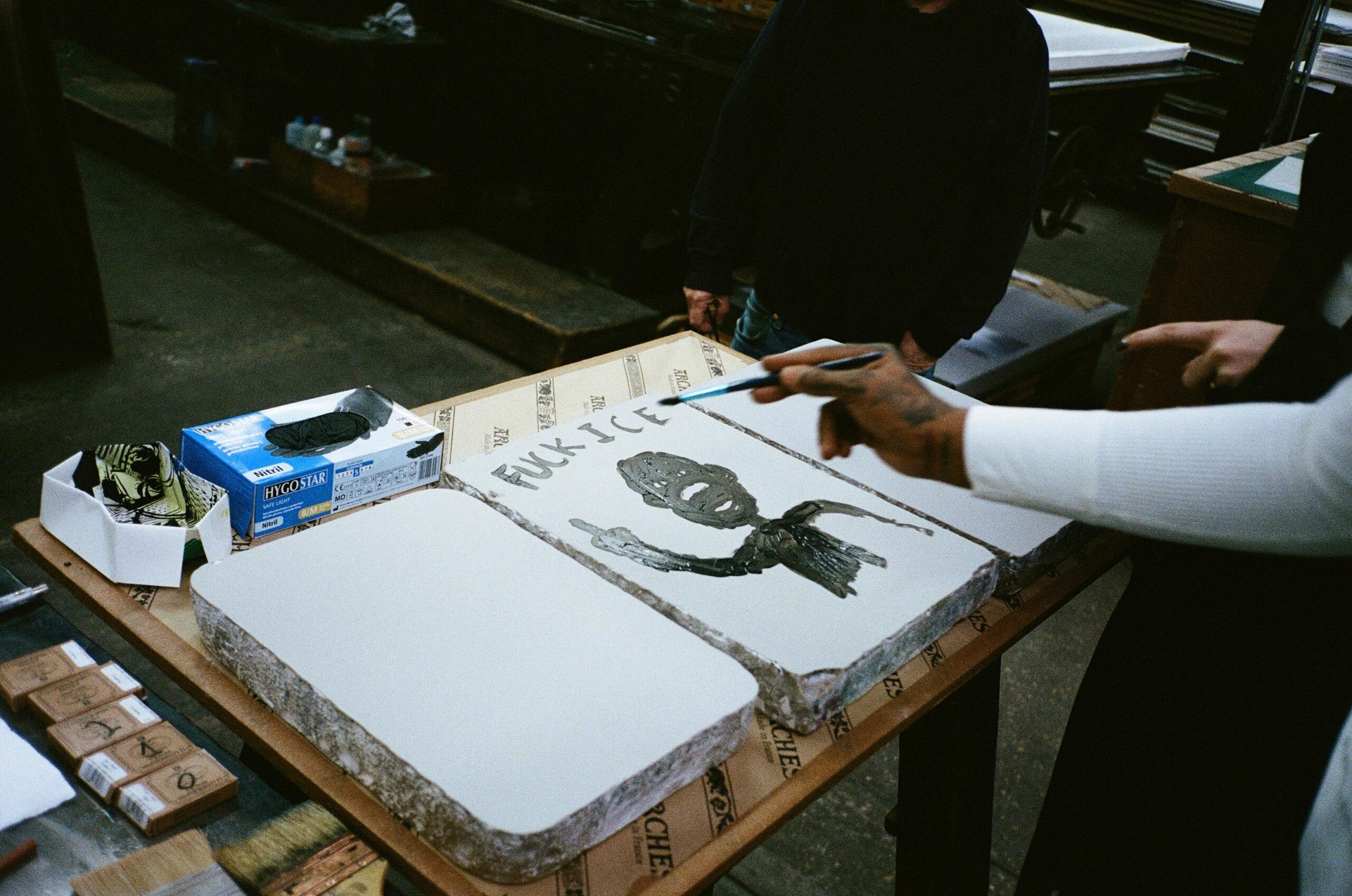
CUDI: It allows me to speak freely about things. It seems weird, but it’s like I have this bulletproof vest on when I speak from Max’s perspective about my inner-child experience. I can be completely vulnerable.
KAWS: Yeah. I mean, growing up, having KAWS in addition to my birth name always gave me a lot of play, and a lot of leverage. Sometimes I’ll be at dinners and the name card will say “Brian Donnelly” and the person next to me has no idea what I do, and it’s kind of nice.
CUDI: Oh yeah, I love that. I know people are going to think this is crazy, but when I walk in a room, I don’t assume people know who I am. So anytime somebody’s like, “Yo, I’m a fan of your music,” I’m genuinely surprised and happy. You know what I’m saying?
KAWS: Yeah. I wanted to ask you, have you had any formal training?
CUDI: With painting?
KAWS: Yeah. Or are these things that you’re just figuring out and learning?
CUDI: No, I haven’t had any formal training. I just went after it. I thought that was best, because that’s kind of what stopped me all this time. It’s like, nobody taught me how to paint, and that’s what was holding me back. But I was like, “Man, fuck it. Let me just try this shit and see what happens. I know how to draw. I feel like I can handle it.” I mean, a brush is a different beast than a fucking pencil or a marker. And that’s something I had to learn really fast—just the strokes, how to move the brush, and what brushes to use for certain things. That was all just trial and error.
KAWS: Right. So now that you kind of opened this door, do you think it’s a permanent parallel practice for you?
CUDI: I do. I already have my next two shows figured out. But I’m just waiting, taking my time. No rush.
KAWS: I didn’t get to see the show in person, which I’m still kind of bummed about, but there’s a soundscape in it.

CUDI: Yeah.
KAWS: What made you pull that into the exhibition?
CUDI: Man, I was just thinking about how usually in these rooms, they’re quiet, and you just have people talking. But I really wanted to have something that set the mood. I was like, “Hey, man, I make music. Let me just go on here and make a score.” I worked with my buddy Rami [Beatz], who’s a producer and a good friend of mine, and we just cooked up this score. It was a long jam session of just banging out different parts and making it one long, 10-minute piece. It was really dope.
KAWS: Man, I wish you to send it to me to hear.
CUDI: I’m going to send it to you after this call, for sure.
KAWS: Cool. Thank you. So the first show’s still up. Are there things already in the pipeline that you’re thinking of next, or is it just back to the studio?
CUDI: Well, you talking about—
KAWS: It’s funny, when I say “back to the studio,” I just realized you could take that either way.
CUDI: [Laughs] Yeah, like studio music or painting?
KAWS: I don’t know. I like to balance between doing commercial work, doing product, and then getting back into painting and sculpture.
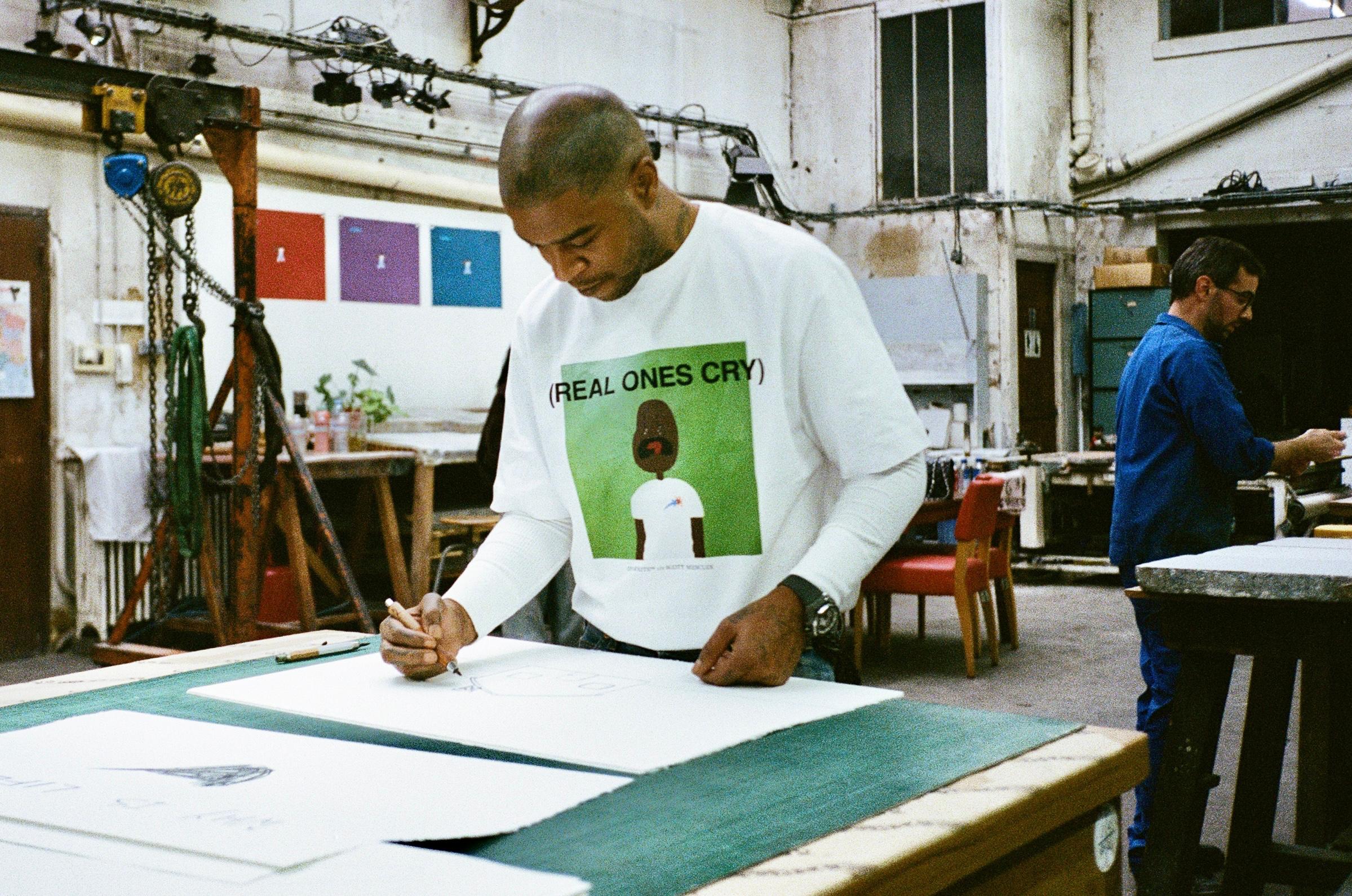
CUDI: Yeah, I kind of am doing both at the same time. Some days I’ll be in the studio, and then some days I’ll go to the art studio and just kick it there all day long and bang out shit.
KAWS: Yeah. Thinking about today’s culture, is there anything you wish you could change about it?
CUDI: Yeah, man. I wish there was more bravery in art and in music. I wish people took more chances. A lot of people play it safe because all they care about is numbers and awards and stuff like that, and they’re missing out on the opportunity to create something special. That’s why I want to keep doing my thing. I know years ago we talked about me giving up and hanging it up, and you had told me that was a mistake, but—
KAWS: [Laughs] I mean, come on—that was the one time I was right, right?
CUDI: Yeah, no, for sure. But the world needs artists like me to be out here and be a guide and let people know that you can be as trippy as you want. You can explore soundscapes, try different things, and you can still be successful. You know what I mean? You don’t have to have all the awards, you don’t have to do all this bullshit. You can still be successful and still shine.
KAWS: Yeah. I mean, I see success in just getting it made.
CUDI: Exactly. Doing a show, whether it’s for 50 people or 2,000 people or 20,000 people, the fact that you’re on a stage getting paid to perform your music is a win. Man, when I was getting $5,000 a show, I thought I made it. I was like, “I’m rich.” I ain’t never had no money like that before in my life.
KAWS: Yeah. Well, it’s been a pleasure talking.
CUDI: Yeah, man.