


FIERCE
Katya Zamolodchikova Is the Snob the Culture Needs


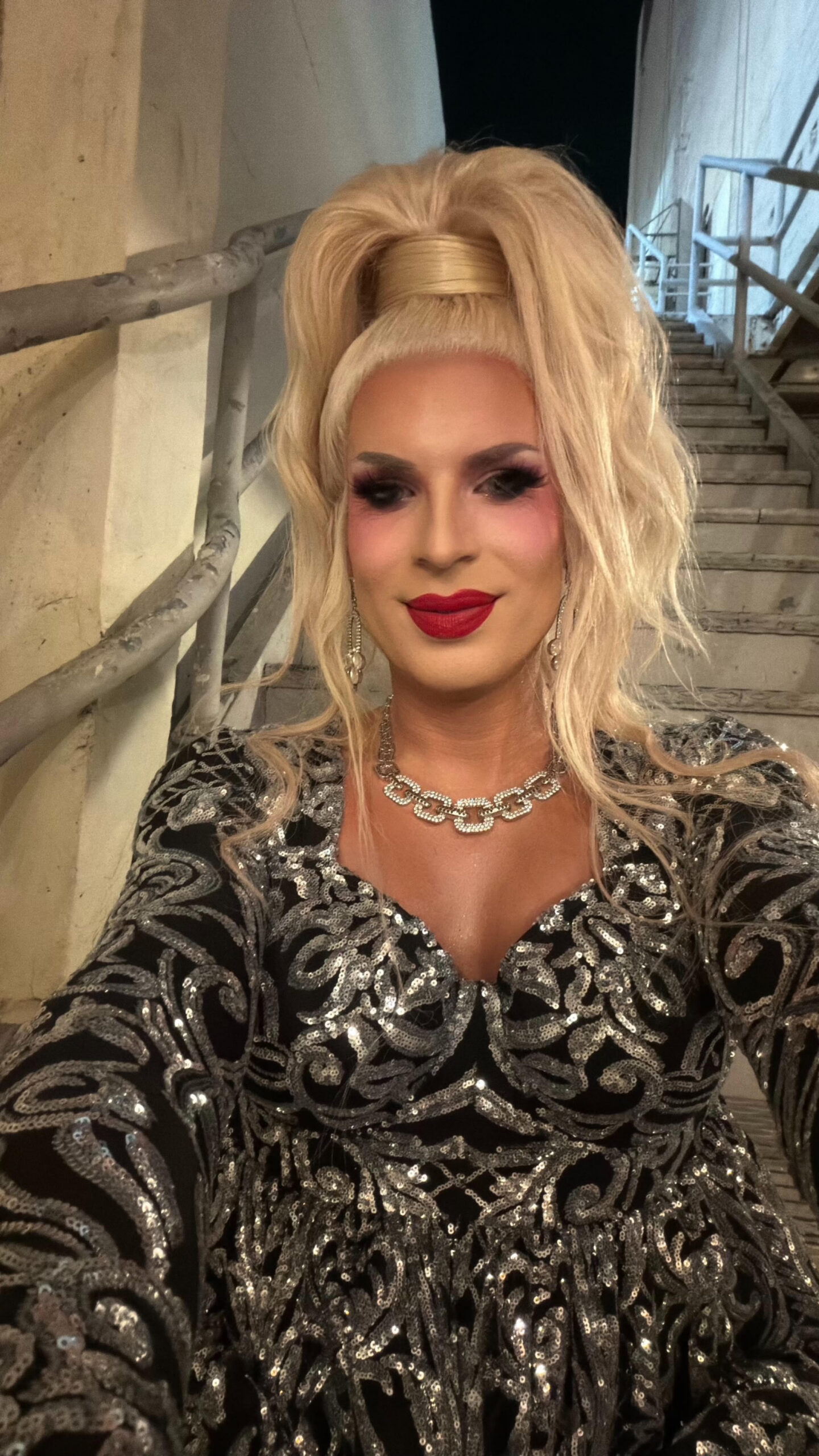
All photos courtesy of Katya Zamolodchikova.
She’s Lenin in the sheets, Dostoyevsty in the sheets; she’s the bright red scare with the long red hair, but you probably know her as: Katya Zamolodchikova. From the studio where she and Trixie are about to film the pair’s podcast, The Bald and Beautiful, the drag queen beams in with a pitch perfect Zoom background—the liminal hallway from The Substance. “Her butt is right there,” Katya says through an infectious laugh, pointing to the taut ass of Margaret Qualley positioned just beside her left ear.
I had every intention of asking Katya about her career and her talent. As one of the most notable drag queens to come out of RuPaul’s Drag Race, she’s the definition of a multihyphenate: a dancer, a writer, an artist, and the progenitor of infinite memes and vocal stims. She and I just happen to both be something that tends to supersede everything else—Bostonians. As it turns out, this shared identity proves an effective conduit for a conversation that covers everything from niche horror films to phone addiction. Together, we grieve the death of snobs–it’s what the culture needs! But what doesn’t occur to me until after our conversation—perhaps because it’s a role she so naturally assumes—is that the drag icon is the very critic she so desperately longs for. Katya is the snob she wishes to see in the world.
TUESDAY 3 PM JUNE 23, 2026 LA
———
CAROLINE REILLY: I know that you’re a Boston boy, I’m a Boston girl.
KATYA: We need to talk about this because I want to produce a workplace sitcom about Dorothy’s Boutique in Boston. I have written a whole treatment and basically a pilot for this sitcom about this place I used to work at, and it’s called A Friend of Dorothy’s. I really think it could be amazing. It’s Always Sunny in Philadelphia, but Boston-based and a black comedy workplace sitcom, half an hour. I just wanted to put that out in an official place because then maybe it’ll happen.
REILLY: Ok, yes. We need that. Growing up here, did you ever think that this was some sort of chic place? It’s so trendy now.
KATYA: No, absolutely not. It’s aggressively anti-chic. If anybody’s well-dressed, maybe they’re a European professor during his 45 minutes of office hours a month. Otherwise, it’s students wearing their pajamas and flip-flops.
REILLY: In 15-degree weather.
KATYA: Yes, because there’s only one fashion rule in Boston, and that is the minute the temperature goes above 60 that’s when you throw all of your long pants into the storage unit and never see them again until October.
REILLY: People always ask me, “Why don’t you date in Boston?” I’m like, “Well, I don’t always love to be on a date with a guy in a Celtics jersey and nothing underneath.” It’s just a lot for a first impression. [Laughs]
KATYA: It is a lot. I think it’s okay for gay guys because they’re sluts and they’re just like, whatever. It’s easy off.
REILLY: Do you miss Boston?
KATYA: I do. The last time I was there, I stayed at, I think it’s the Four Seasons? It was built over a dog park behind St. Germain Street, which was right behind where Dorothy’s used to be, and it’s beautiful. And I was just thinking, “God, this used to be a dog park.” I was like, “Oh, now that I’m kind of successful, maybe I could get a really small, little condo or buy an apartment here.” Yeah, right. Do you have $10 million?
REILLY: For the parking space!
KATYA: Exactly. It is beautiful though. I love it. I mean, I lived in Bay Village for almost ten years and that was a dream, my god. It was so pretty for $700 a month.
REILLY: I feel like LA, where you are now, is kind of the inverse of Boston in a lot of ways.
KATYA: LA isn’t really a city, it’s a bunch of suburbs. Everything beautiful is private. I think it was during COVID that the beautiful reservoir of the lake was fenced so homeless people wouldn’t find shelter.
REILLY: God forbid.
KATYA: Right. And there’s incredible beauty here, but it’s privately owned and gated and you can’t see it. [Laughs] But the weather’s lovely, which Boston does not have.
REILLY: I’m looking out at the rain right now!
KATYA: It’s great for reading.
REILLY: It is and, on that note, I have to be honest, I want to talk to you about drag and your art and why you’re a genius, but I’m also dying to talk about what you’re reading and what horror movies you’re watching.
KATYA: Oh, yes, let’s get right into that. I love movies so much and I watch a lot of movies. I just watched Mārama, which is a Maori film. It’s an anti-colonist horror movie that takes place in New Zealand and it’s a perfect horror film. Eighty-two fucking minutes. Fierce. And it was so gorgeously shot. I guess it’s the director’s first fucking film, which is wild. I can’t recommend it enough. Ugly, nasty, beautiful, cunty, everything. And then, I saw Obsession, which I liked. I thought it was about 20 minutes too long. I love horror because I think it really lends itself to a concise kind of structure. Most horror films, you can get everything you need in 90 minutes to tell the story. I think in Hollywood, there’s a lot of first drafts being made. You see it in the dialogue. You’re like, “Well, why did they just repeat that?” Even in fucking Steven Spielberg’s new film, it’s like, I’ve heard it! God, it was like, “Sir, it looks like they’re going north. Are they going north? Yes, they’re going north. Well, they’re all going north. We have confirmation they’re going north. They’re going north!” That was 20 minutes. Terrible!
REILLY: Completely. I also think good horror either scares us because it’s so disparate from the human experience or because it confronts us with how horrifying our experience is.
KATYA: Well, it’s like Pluribus—is that dystopian? I love that very real question of: Is this good? You’re describing a reality where everybody works together for the common good to avoid pain and to avoid discomfort. I think maybe one of the reasons why zombie stuff is so popular and continues to resonate really well is because we are living it, it’s not a metaphor anymore. Everyone is just doing this [picks up her phone and stares down], their neck cricked down, on the street, in the car. In! The! Car! Walking into telephone poles, walking into red lights, their mouth open, looking at their phone. It’s so fucking crazy. One of the things I like about podcasts and doing the podcast with Trixie is that we’re not looking at our fucking phones for two hours. And sometimes I get self-conscious when I’m like, “Oh god, this is just another podcast where two people are shooting the shit or whatever.” There’s not a lot of structure. But I was like, well, we’re funny and we’re present. I think that’s rare, which is so sad that that’s the baseline of good. It’s like, well, you were there and you weren’t on your phone, so that’s a big win.
REILLY: Sometimes I’ll go on TikTok or something and I’ll see an influencer with a podcast and they’re like this on the podcast and I’m like, “Why am I listening to you while you watch your phone?”
KATYA: It’s fucking crazy. I think it has something to do with the fact that I’m 44. I remember what it was like [before cellphones]. I grew up without a cellphone and I didn’t have one until I was 22 or 23, and it was one of those brick Nokia ones. I think that there’s something very, very severely neurologically deficient about the generation right under me. I think screenagers, as they call them now, are fucked. God go with them. Good luck. When I meet someone who’s not on social media, they could be a serial killer and I’d still date them.
REILLY: I was just talking to a colleague about American Psycho and how they’re talking about a reboot. How could they even do it? His skincare routine is what every influencer’s routine looks like, so what delineates Patrick Bateman from the average influencer’s pathology? Sure the killing, but I’d argue the 15-step routine isn’t incidental to his psychopathy. People doing it now are just completely unironic.
KATYA: I hate to say it, but even the killing would require a level of presence that people don’t have! And preparing, and strategizing, and, oh, here’s a big thing: Privacy! Today it would be someone filming themselves like, “Follow along on my quest to kill 45 fucking people! As you probably notice, I’m still wearing my plastic trench!” God, honestly, I hate to say it, but I think the version of American Psycho for today would involve a significant AI portion. I remember the first time I was at a lunch or a dinner with a bunch of drag queen colleagues on tour together, there’s maybe 10 of us at least, and everybody was looking at their phones and nobody was talking to each other. They were just collecting their photos from the previous show and looking at themselves, and either posting them or trying to self-promote it some way. I thought, “Oh man, this sucks. I guess it’s over.”
REILLY: It’s so fucking grim. It’s like, if I wanted to sit on my phone I would have just stayed home.
KATYA: Right! And I don’t even want to do it at home! I’m getting way better at it, but I’m still bad. I’m complaining because I do it. I wouldn’t be talking about it if I didn’t do it. I could just be sanctimonious because I would be better. I literally would be better than you. [Laughs]
REILLY: Yeah, I envy those people who are completely insulated from social media. And the wild thing is, you see these young people who are on their phones watching other people constantly and yet, they have no discernible social skills. You’d think they would pick something up through osmosis.
KATYA: No, instead they learn and then discard the 12 to 16-word jargon of the week. Not the jargon of the week! Not me with the jargon of the week! It’s giving jargon of the week. Not everything has to give, some things can be. It’s anti-intellectual; our vocabularies are reduced, not expanded, and it’s crazy. If you start a sentence with a capital letter and then you have correct punctuation with a comma, especially a semicolon, with a period at the end? You might as well be a fucking Oxford professor with a quill. It’s so antiquated and it’s so incongruent with the language that is being used and the language that determines whether you have anything interesting to say. It’s dumb. You just learn what people are talking about and it’s “pilled” or “coded.” There’s so many more beautiful and interesting ways to relate to information or experiences that aren’t “It’s giving.” There’s a vehement anti-intellectual movement in the United States, and it has nothing to do with money—libraries are still fucking free!
REILLY: Sometimes I feel very tinfoil hat about it, but I’m like is it a coincidence that we’re seeing the use of AI with the creeping rise of fascism? It feels like a second Dark Ages.
KATYA: I just had a major health issue. I was in the hospital for ten days, and I have friends at my bedside telling me what ChatGPT said about what happened to my body. I was like, “Listen. I have access to the head of surgery at this hospital. I’m going to listen to what he says and that’s it. So shut the fuck up.” This is how the AI thing is really tough, because I love information. I love getting information. I love learning languages. I try to learn something new every day. AI is very seductive. Thankfully, I come up against these roadblocks frequently when I’m looking for the English translation to the Russian lyrics of a song. It’s always wrong.
REILLY: That’s kind of reassuring, isn’t it?
KATYA: Totally. It’s one of the most interesting things about language acquisition. It just can’t really get it right. But it has such a voice of authority.
REILLY: It’s sort of like when you talk to a hyper-religious person. I have had a couple surgeries over the past year and without exception, someone will always say something to me like, “Have you prayed?”
KATYA: Well, no co-pay on the prayer.
REILLY: Exactly.
KATYA: And just like a hyper-religious person, you know what AI is going to say. And as a writer, I’m sure you’ll understand that it’s the writing that is the fun of it. You’re like, “If this were easy, it wouldn’t even be fun.” I think when I write something that I like and that I think is good, it’s an incredibly pleasurable activity, but that’s not AI. If you are writing with AI, you are not writing and you don’t want to write. You’re not a writer. So stop.
REILLY: It anesthetizes something that is so fundamental to the human experience, the creative process. It’s incredibly dark.
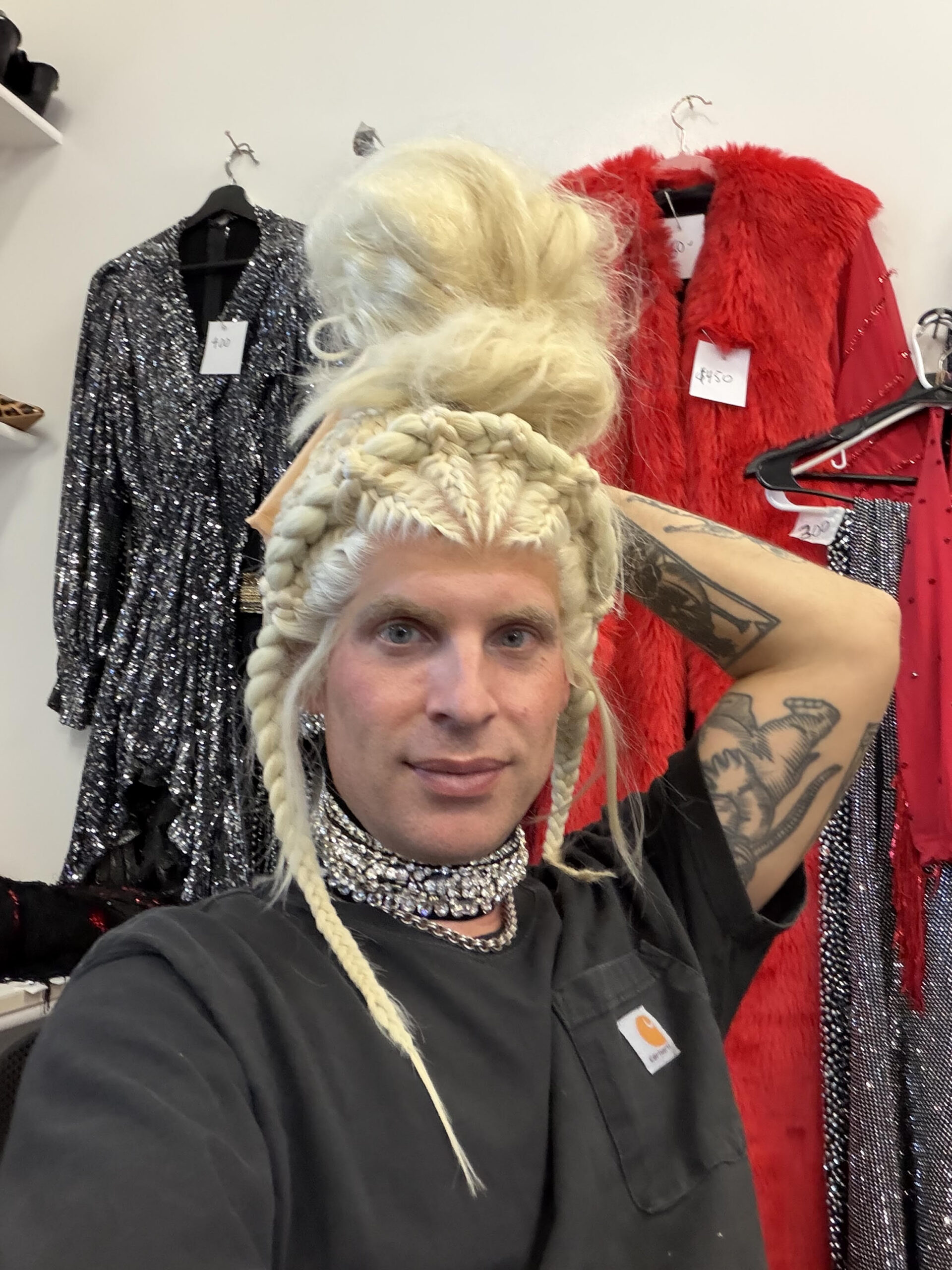
KATYA: This is a similar situation that has all the same flavor, just slightly different meat. When I’m trying to make a decision that I already know, I pull out my tarot cards. So I’m pulling a card about these three guys that I’ve slept with over the last year. I just want to see what the cards will say. They are interpretable. But I don’t take that and be like, “I’m going to go to the bank right now and sell my house because I got The Tower [card].” This is just a fun, little tool where I can get witchy and think about it, but it’s certainly not my first line of defense, and it’s not the last one either.
REILLY: There’s also this thing with AI where people have this superiority complex about relinquishing a task. Like, “Why would you want to martyr your way through thinking?”
KATYA: “Why go to medical school when we’ve got ChatGPT? We can get your appendix out, we can do it in the kitchen.”
REILLY: “The dog can do it!”
KATYA: [Laughs] “Just rub some peanut butter on your stomach, and then have the dog come in!” It’s like this anti-knowledge, anti-learning, anti-intellectual thing. I think we should bring snobs back. Snobs have such a bad rap because it doesn’t pay to be a snob. When you think about cultural critics, you think about Fran Lebowitz and that’s it. And what she’s about? Dressing well and not having a cellphone.
REILLY: It’s aspirational, really.
KATYA: Well, and the other thing we’re not discussing in this conversation, kind of the elephant in the room, is the money. I mean, if I’m growing up today, I could go viral on TikTok or get a liberal arts degree at a private university to make forty grand a year. I’ll have a fabulous, incredible, mind-blowing education to be a barista. Or, I can kick a shoe on TikTok, transform my outfit, and make $20,000 just doing that. When you open social media, how many English majors are there? They’re slinging drinks down at the coffee shop for $12 an hour. And the TikTokers are living in the Hollywood Hills! [Where I went] to college is now $70,000 to $90,000 a year. So you’re paying $350,000 for a fucking undergrad degree? Whereas, if you’re cute, kick a fucking shoe on TikTok!
REILLY: It can’t be a coincidence that education is getting more expensive and life is getting more mind-numbing. There is a part of me that’s like, maybe there is something moral about not doing certain things or not “selling out.” But then again, we all go to the same place when we die! No one gets a gold star on their bank account.
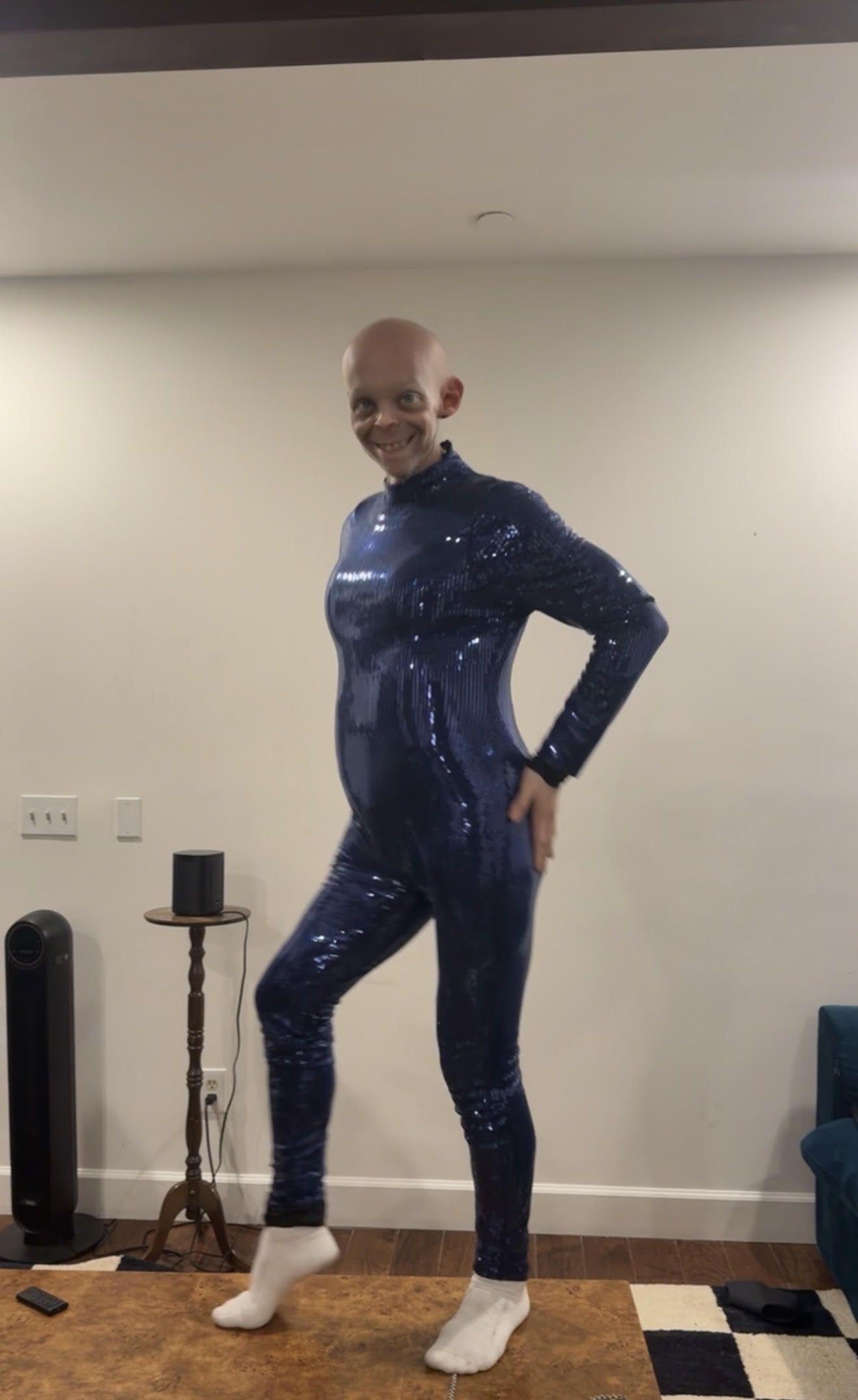
KATYA: And that was the thing about coming from art school and going into drag—it was very shameful, like I was “selling out.” Selling out? I need a job! I need to make money! I was working and stealing from a costume shop to pay my rent. So then, we got into drag and the rubric for “selling out” became adjusted; I was like no, I need to maintain my artistic integrity and just lip sync to Russian songs that nobody knows because that’s cool and interesting. And that’s what I really wanted to do. But then, I ended up selling out on weekends dancing to Britney Spears for the bachelorette. Shameful! And now, the basketball wives come in and throw $100 bills in our face and it’s like, “Wow, we made it.”
REILLY: I do think we all have a line, right? Or we’d like to think we do. A sort of moral compass where we say, “Ok, this is where I’m willing to compromise to.”
KATYA: No, because it’s a free for all now and I don’t blame anyone. I would not want to be a TikToker, but I fell into a social media goldmine. I got on a TV show and then, three weeks later, I had a million followers on Instagram. Here’s a perfect example of how bizarre this all is: I was in England in a suburb and I was trying to buy weed and I almost got robbed by a gang of young kids. It got very tense, push came to shove, and I don’t remember exactly how it came up, but I showed them my Instagram. They saw two million followers and they were like, “Are you famous?” These kids who don’t know anything about drag. And we became friends because I had something extremely valuable. All of a sudden, I was cool and it was because I had this incredibly valuable social capital—the new gold. It’s intangible, but it means possibility.
REILLY: I mean, that is such a literal illustration of currency–social and financial. It says so much about where we are as a society.
KATYA: My older brother is a huge influence on my life in the opposite direction because he meditates seriously. He did a 90-day silent meditation retreat, he’s in regular contact with the monks that live close to him, and he was always on the verge of joining a monastery. He doesn’t watch crap, he doesn’t do social media, but he doesn’t have an easy life. He is still a layperson with a job, and a seven-year-old kid, and a wife, and a house, and a mortgage, and all that stuff, which is very complicated. He did tell me the great thing about Buddhism—real Buddhism—is that the Buddha one day was done and he never looked back. What people don’t know, or they forget, is that the point of Buddhism is to close the door and leave the house forever. That you are done, that you are enlightened now. It doesn’t slip away. It’s a done deal. There is an endpoint, and you reach that endpoint and you never have to go back. I was like, “Yes, fierce!” [Laughs] Anyways, yeah, that’s my thought of the day.