


DEBUT
Izabel Pakzad Tells Gaspar Noé About the Dark Side of Joshua Tree


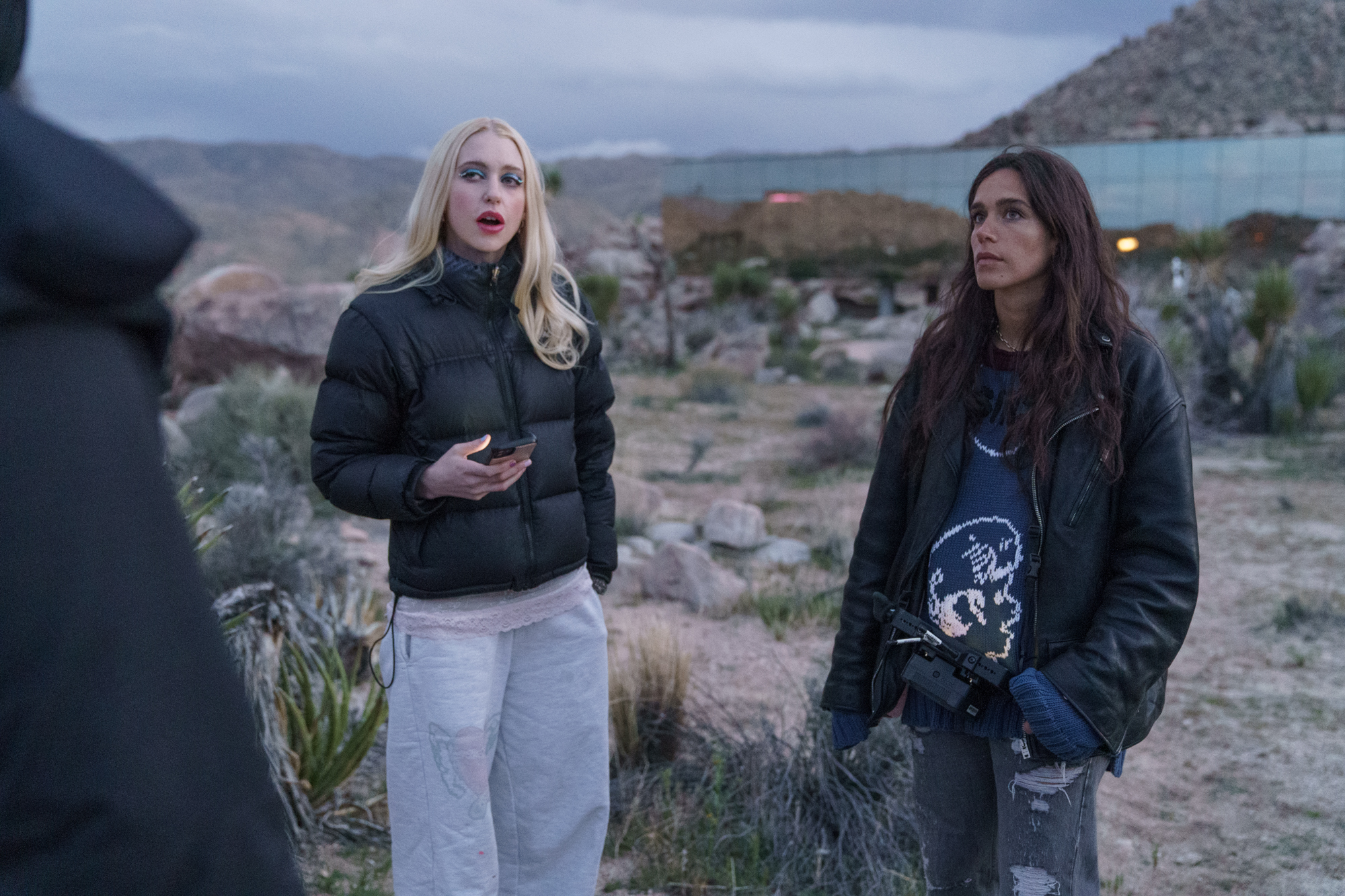
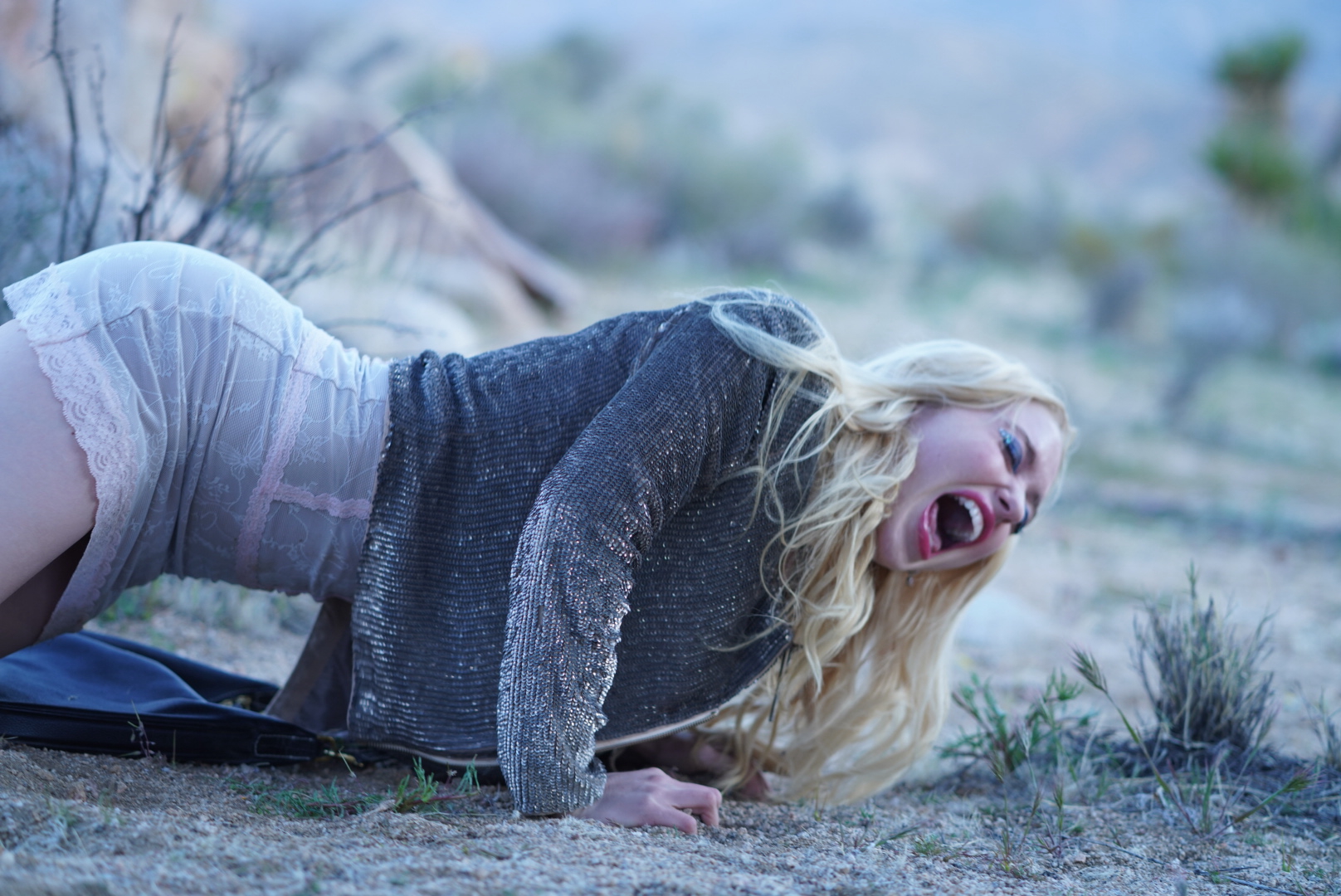
A last-minute yes to a girls’ weekend in Joshua Tree turned into the most terrifying night of Izabel Pakzad’s life when a stranger in a green Mustang chased her for almost ten minutes down a dark desert highway with zero cell service and nowhere to turn. The experience felt like a horror movie, and years later, she turned it into one. Find Your Friends is Pakzad’s debut feature as writer and director, and stars Bella Thorne, Chloe Cherry, Helena Howard, Sophia Ali, and Zión Moreno as a group of friends whose Joshua Tree party trip curdles into a nightmare. The film premiered at Fantasia last summer and hit Shudder this June, drawing comparisons to Spring Breakers and the New French Extremity films Pakzad has cited as inspiration, including the work of Gaspar Noé himself. Below, Noé gets Pakzad to break down the real story behind the movie, from financing it entirely through private Italian money, to shooting the whole thing in 21 days.
TUESDAY 2:30 PM JUNE 23, 2026 PARIS
———
GASPAR NOÉ: So how did the idea for this movie come about?
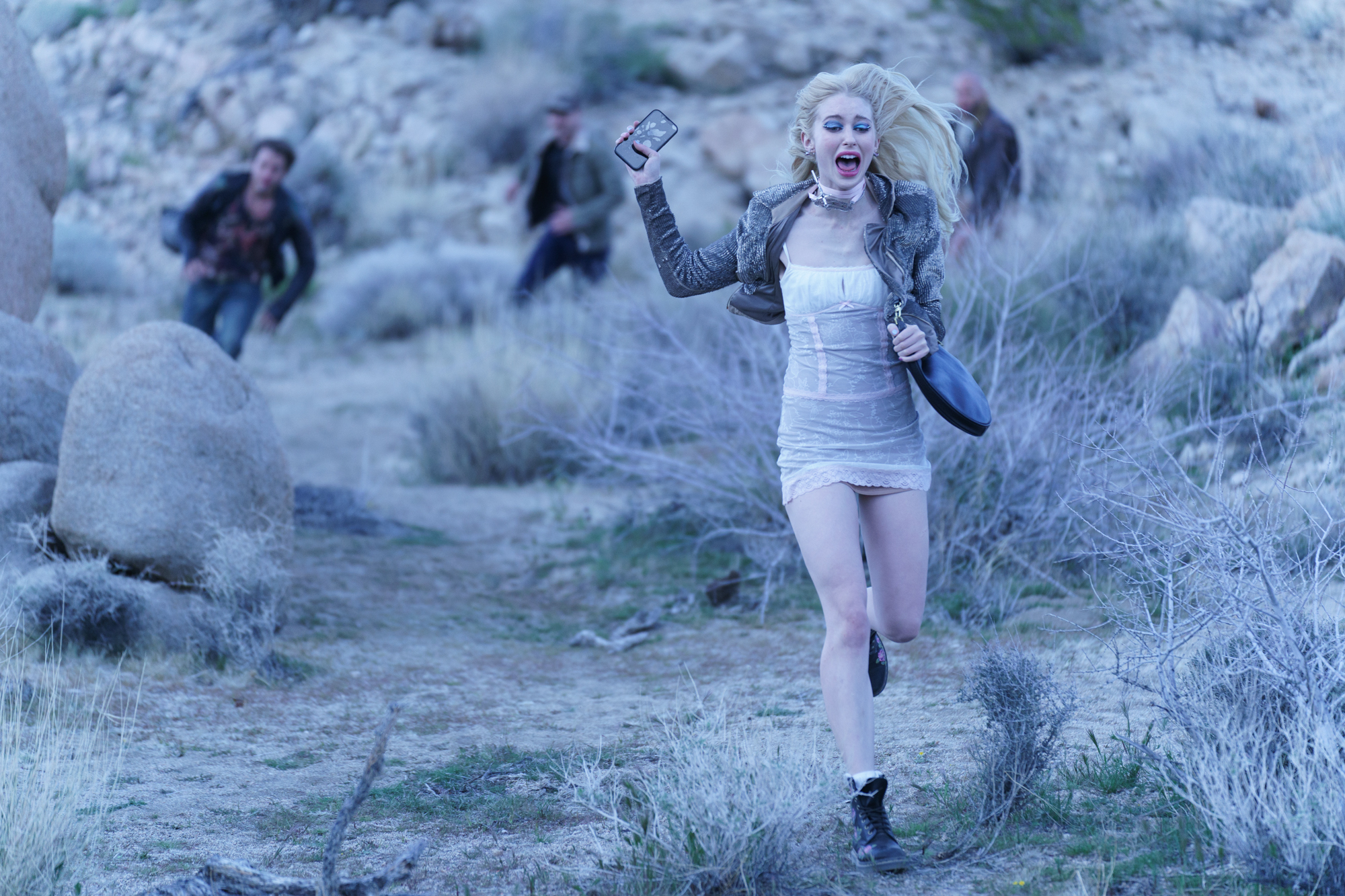
IZABEL PAKZAD: I don’t know if I told you this, but I had this traumatizing experience with me and my friends. We did a crazy girls trip to Joshua Tree, and when we got there we had these strange interactions with some of the local men, and everyone had this weird intuition like something was wrong. I had to leave in the middle of the night to go back to Los Angeles. I get in my car with one other friend, pull out of the Airbnb driveway, it was on a dead end road, and there’s this green Mustang waiting outside the house. He turns his brights on and blocks me into the dead end. So I take the car and drive around him, right onto the neighbor’s lawn, and just start driving as fast as I can. I look behind me and he’s already following me. We get into this crazy car chase on the Joshua Tree freeway for like ten minutes straight, him trying to swerve into my car and drive me off the road. We’re trying to call the police. No service.
NOÉ: But you were between the cars?
PAKZAD: It was just the two of us. If you’ve been to Joshua Tree, it’s this long highway that goes on for miles. So when we’re on the phone with the police, they’re like, “Where are you?” We’re like, “We’re on the freeway. It’s my first time here. I don’t know.” I get one glimpse of this man and he looked like he was on meth. Finally I see a car in the distance, so I drive over and start honking and screaming, “Help.” Once the other car came, he pulled a U-turn immediately. I saw his license plate for one second while I was on the phone with the police, and they said it wasn’t even a real plate. That’s the real-life incident that inspired the whole movie.
NOÉ: But you went to Joshua Tree to take drugs?
PAKZAD: Yeah.
NOÉ: I don’t know why all these people in L.A. go there. If you’re going to do drugs, it’s better to do it in the safest place in the world, not a desert where anything can happen.
PAKZAD: I know. Everyone from L.A. goes to Joshua Tree to do mushrooms and have the spiritual experience, but there’s something really creepy about it, especially for women. I did some research, and a lot of women who went there alone or with a couple friends have gone missing, their bodies found in the desert. I wouldn’t do it again. Never again.
NOÉ: Because it really feels like the Texas Chainsaw Massacre.
PAKZAD: I grew up right outside New York. I’d just moved to California, so I didn’t know anything about Joshua Tree other than it being this place people go to do mushrooms and have this fun experience. There’s something in the air, you can just feel it. It’s quiet, no one’s there, and it’s beautiful in one way, but really scary in another.
NOÉ: Probably, many centuries ago, they were doing human sacrifices out there.
PAKZAD: Definitely. It’s interesting. When we shot the movie there, I ended up spending a couple months, and some of the local people said there was a lot of cartel activity, planes landing in the middle of the national park. There’s the fun L.A. crowd side of it, but there’s also an underbelly.
NOÉ: Also in that kind of landscape, the worst thing is to be on a bad trip. These psychotic drugs shift so fast that in one second you’re in a total state of terror. How old were you?
PAKZAD: I was like 21.
NOÉ: And you never heard about this guy being arrested?
PAKZAD: No, it wasn’t a real license plate and they never found him. Our Airbnb was renovated, but the neighborhood around it was more local. After we went to the national park, one friend was having a trip from hell and walked by the neighbor’s house. A man was outside on the porch and said, “Are you girls here in the desert having a fun time tripping?” She freaked out. “The neighbor’s after us, everyone’s after us.” We never found out if he was connected to any of it.
NOÉ: Were you inspired by other horror movies?
PAKZAD: When the real thing happened, the car chase scene from Nocturnal Animals was what was running through my mind. Deliverance and Spring Breakers were big ones. Did you see Coralie Fargeat’s Revenge? That was a big inspiration.
NOÉ: Have you seen the old ones—Texas Chainsaw Massacre, obviously, but also Two Thousand Maniacs?
PAKZAD: I’ve never seen that one.
NOÉ: It’s about a couple going to a small town that once a year celebrates something, and if a foreigner gets to town, they chase them. I think it inspired Texas Chainsaw Massacre, there’s a whole genre of movies like that.
PAKZAD: You know Spielberg’s first movie, Duel?
NOÉ: Yeah.
PAKZAD: The whole thing takes place in a car. It’s different, but there’s some inspiration there, when he’s in the bar and thinks all the locals are watching him, all paranoid, I pulled a little from that.
NOÉ: Almost all the men in the movie are evil. There’s one who seems less evil because he’s stopped drinking and doing drugs, but when he doesn’t get what he wants, he turns evil too. You have a good image of the male kind.
PAKZAD: I know. You think his character is the grounded, nicer one, and then he turns on her too. The desert brings out the crazy in all of them.
NOÉ: The movie is stressful, but the party, the music, gives another kind of headache.
PAKZAD: Exactly. I went to a very crazy American party school, Penn State, and it felt like my whole four years there was EDM blasting nonstop. You don’t have a minute to think or process anything. I pulled that from my own experience, and from some of your movies too. I pushed it to an extreme, but I feel like women do talk this way, we just never see it in movies, and I wanted to show that. Larry Clark’s Kids, when the girls are talking about their sex stories, was a huge inspiration. It feels provocative but truthful. We don’t often get to see women being vulgar and unapologetic, speaking their truth in the craziest way possible.
NOÉ: What are the funniest reactions you’ve gotten to the movie? I think the American way of thinking and the European way are very different.
PAKZAD: In L.A. and New York, people laugh and enjoy it and understand it. I did a screening in Spain and it was quieter, the craziness wasn’t landing the same way. When they’re leaving the boat and Lola, Chloë Cherry’s character, says, “Yo, Peter, your dick is so small when you tried to fuck me, I thought I was being fingered by a cashew,” that normally gets huge laughs, but in Europe it doesn’t land the same. Overall it’s a polarizing reaction. Some people embrace it, some have a strong hate for it, which I knew going in. I surrendered to that. Some people are going to hate this movie, and that’s okay.
NOÉ: Toward the end, it probably gets so extreme that it becomes funnier, because before that the movie is very stressful, aside from the moments when the girls are talking shit about men.
PAKZAD: When the car crash happens, it feels like something releases in the audience. It’s funny when the car crashes and Amber goes, “We have to go back,” and everyone’s like, “No, what the fuck are you doing, don’t go back.” And then in the torture scene, people are howling and cheering, “Go get him.” People have more fun with it toward the end.
NOÉ: Was the music made for the movie, or did you have a music supervisor? It’s very current from beginning to end, like the same DJ playing for 90 minutes straight.
PAKZAD: There are 30 songs in the movie. I had to raise more money for the music because I wanted specific songs. I had a music supervisor who helped, but I had to raise extra funding. Once I edited the movie, we worked for two months to secure the music. Some mainstream songs, and a lot from the band that performs in the film.
NOÉ: To make a movie that edgy, how did you finance it in the States? Was it your own money?
PAKZAD: It was very hard to find financing. No one wanted to give me money, so it ended up coming through European financing, all private money. I knew going the traditional studio route would be too hard, so I went straight to private investors. My investor, who’s Italian, ended up funding the movie. A lot of American financiers passed on it.
NOÉ: How much did it cost, and how long did it take to make?
PAKZAD: It ended up being a $1.9 million budget, and it took 21 days to shoot. Fast.
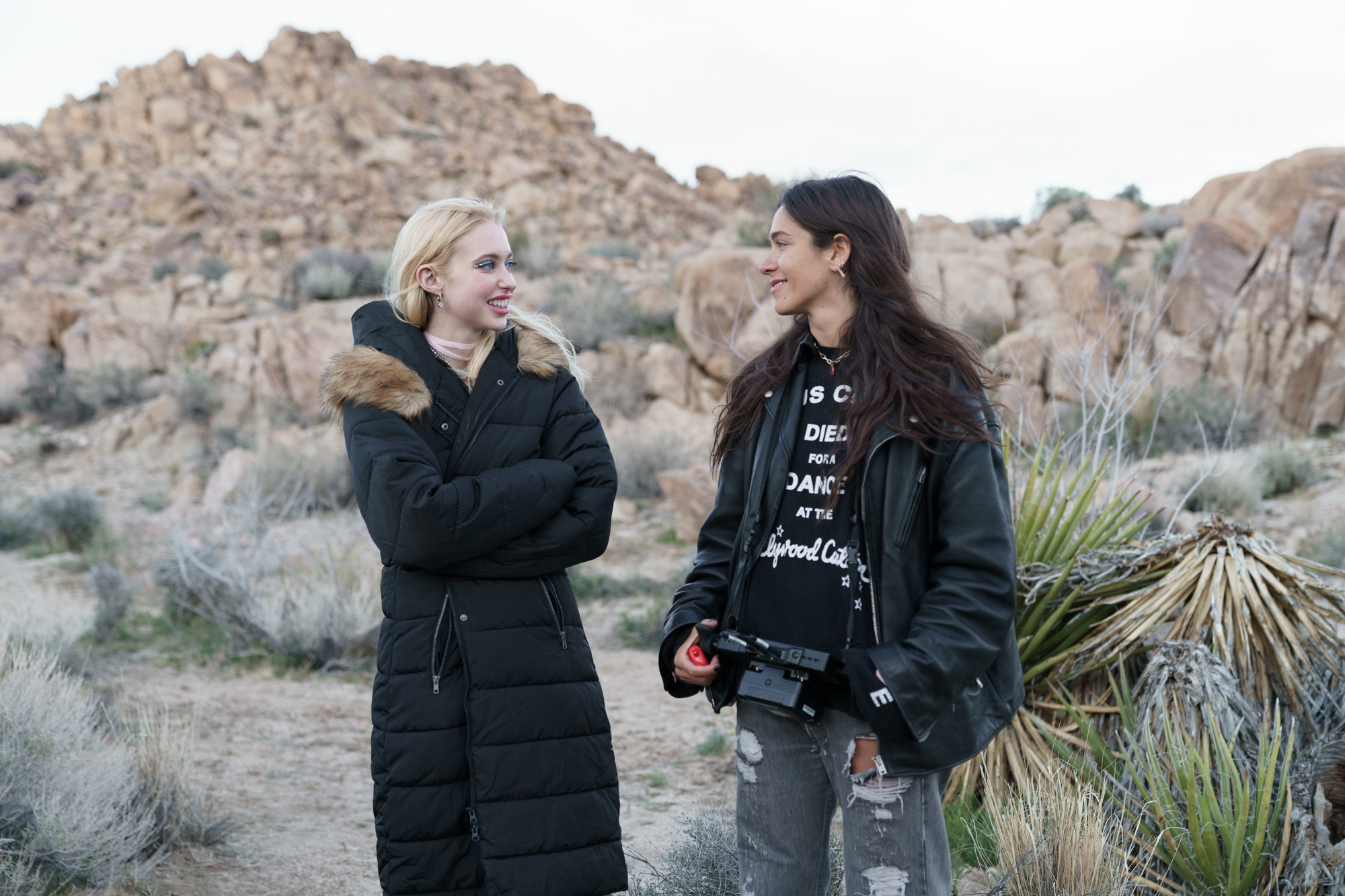
NOÉ: That’s such a short window, it looks much richer than that. I assumed you had at least six weeks. And the sunset images are so beautiful.
PAKZAD: Thank you. We were rushing every scene. The big party scenes especially, so many extras, and Joshua Tree is three hours from L.A.
NOÉ: So you had everyone bused in?
PAKZAD: Kind of. Some came from L.A., and some were local people from Joshua Tree who came and were partying for real. For some scenes we could just use the music since there was no dialogue, but they’d never been extras before, so when we had to cut the music for dialogue, they’d go, “What the fuck, where’s the music?” I’d say, “We have to shoot the scene.” And he’d say, “I just sprayed Molly in my mouth, I’m rolling face, I need to dance.”
NOÉ: There’s a trick for people talking while dancing at a party. You make an alternate version of the track that keeps only the low frequencies, just the beat, so people can dance without it affecting the vocal recording. Then you have a clean version of the voices, even if you dub them in post, and people can still dance to the subwoofer.
PAKZAD: I didn’t know that. Have you done that before?
NOÉ: I have, and it worked really well.
PAKZAD: Perfect for next time. When you’re making your movies, do you know what songs you’re using beforehand, or is that something you sort out after?
NOÉ: If people are dancing to it, it’s better to have the right track from the start, otherwise you need something at the exact same BPM, or you accelerate it. Also, inside a techno track, there are moments, disruptions where an instrument rises and people throw their hands up.
PAKZAD: Yeah.
NOÉ: So it’s always better to use the real music you want to keep, if you can negotiate it in time.
PAKZAD: Exactly. I didn’t have time to find my songs, but we got lucky. We used one from the band, a DJ mix of it. If I did it again, I’d try to lock in some of the music beforehand so it’s all aligned.
NOÉ: Had you done short films before this feature?
PAKZAD: Yeah, it was a proof of concept for this movie, a short version set in Joshua Tree, but different.
NOÉ: Put it on the Blu-ray.
PAKZAD: “Maybe. It’s funny, the short is more of a comedy called Don’t Worry, It’s Going to Be Okay. I did the short first but then I also went to Joshua Tree again a few months before we shot the feature and shot every scene on my iPhone before pre-production, just to try things out and play, but that ended up being its own short.”
NOÉ: You worked as an actress before this?
PAKZAD: Yeah.
NOÉ: I liked your small part in the movie, the jealous girlfriend.
PAKZAD: I didn’t even know I was going to play that part. It was the second to last day of filming and I just said, “I’m going to be the mean jealous girl on the boat.”
NOÉ: I liked that you put a drone shot above the boat at the beginning. Drone shots always look expensive, they give a sense of production value.
PAKZAD: That’s exactly why we did it. A lot of the movie is handheld, close to the characters, not many wide shots because we couldn’t afford them, but we got that one drone shot of the boat, and I hoped it would make the film feel big from the start.
NOÉ: If you shot the whole thing in 21 days, were you doing two takes per shot?
PAKZAD: Yeah, not many takes.
NOÉ: It’s always better to have at least two, in case you want to edit between them.
PAKZAD: Some scenes we had almost no time for. The last scene especially, all the torture, the prosthetics, the glass breaking, it all took a while to set up and we barely had time to shoot it. We had two cameras on the torture scene and two on the concert scene, and we just got it in two takes. For my first movie, it was hard following a group of five women and making sure everyone got coverage, but my DP was fluid and moved around fast. That’s the only reason we pulled it off in time.
NOÉ: The good thing about private financing is you don’t have distributors telling you how to cut the movie.
PAKZAD: Exactly.
NOÉ: Especially with an American distributor, it’s not just one person giving notes, it’s a whole team. In France, directors have final cut, but the people who put money in—the TV channels, not the official subsidies—usually still want to weigh in.
PAKZAD: You have a little control. I was lucky my investors let me fight for what I wanted, and ultimately it was my cut. But I hear stories from friends whose movies get taken from them and cut completely differently than they intended.
NOÉ: Do you think the movie belongs to a genre?
PAKZAD: I think it’s a thriller. It’s murky. The first 30 minutes you’re just in this crazy party, and then it turns into something totally different, which is what I wanted.
NOÉ: Do you think your next movie will have such a dark vision of men?
PAKZAD: No. But do you think this one belongs to a genre? The notes I got early on were, “It’s not genre enough, you have to establish it sooner.” But that didn’t feel like the movie. I wanted it to go somewhere unexpected.
NOÉ: It’s The Bling Ring meets Deliverance.
PAKZAD: Yeah, exactly.
NOÉ: Which comments did you enjoy the most, good or bad? Hateful reviews can be very rewarding.
PAKZAD: People tell me some of the bad reviews, but I don’t look myself, I get too in my head. Some of the funny ones: “These girls are going to have liver failure in five years, it’s like Brat but make it gory.” Some of the hateful ones don’t like how vulgar the women are portrayed, but I wanted that reaction.
NOÉ: Good reviews are sometimes boring and bad reviews sometimes come from an unexpected angle. Even if the hateful ones mostly tell you much more about the critic’s own phobias than about the film.
PAKZAD: You’re right. I’m learning to embrace this. It’s my first time seeing this kind of reaction, my first movie.
NOÉ: If you can shoot a movie like that in 21 days on such a low budget, you’re a good director to hire.
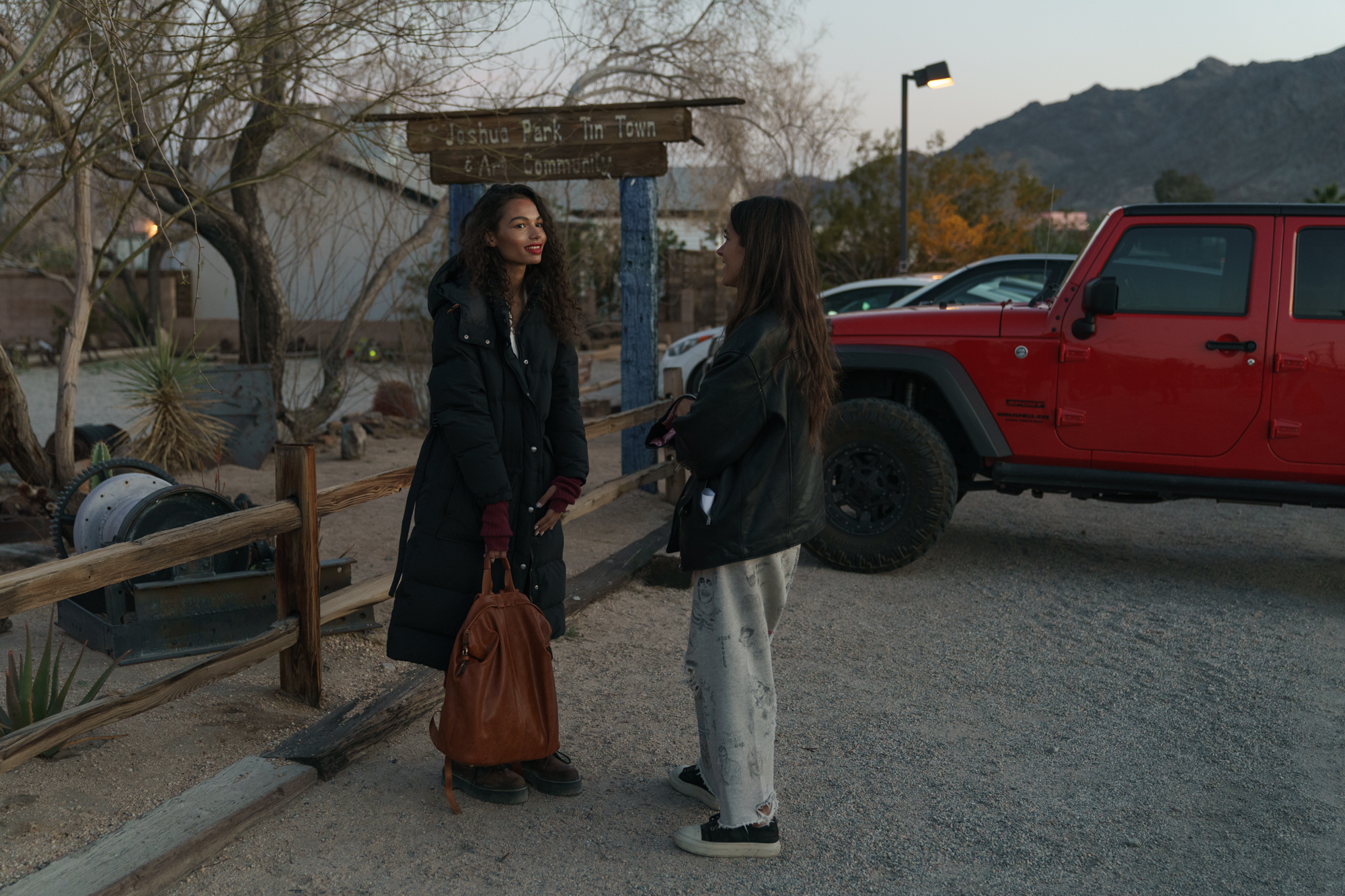
PAKZAD: I won’t name the actor, but there’s a famous one I sent the script to who emailed me back. The subject line was, “You may need to sit down,” and the whole email was why I shouldn’t make this movie. I want to frame that.
NOÉ: At least you got a direct letter from the actor.
PAKZAD: True.
NOÉ: What did your family think of the movie?
PAKZAD: They think I’m crazy. No, they loved it. They were surprised, like, “I can’t believe you made this, it’s so dark.” You don’t always show your family those sides of yourself. In my life I’m not like that, but in my creativity, I am.
NOÉ: So what’s part two about? Does she go back to Joshua Tree, or somewhere else? Maybe the Paris Fête de la Musique, and the same thing happens again?
PAKZAD: It’s funny you say that. We were just at Fête de la Musique and I told my friends, “I think this is part two. The girls come to Paris and all the crazy stuff happens on the streets.” Like Thelma and Louise.