


UNCENSORED
The G Strings on How to Turn a Striptease into High Art


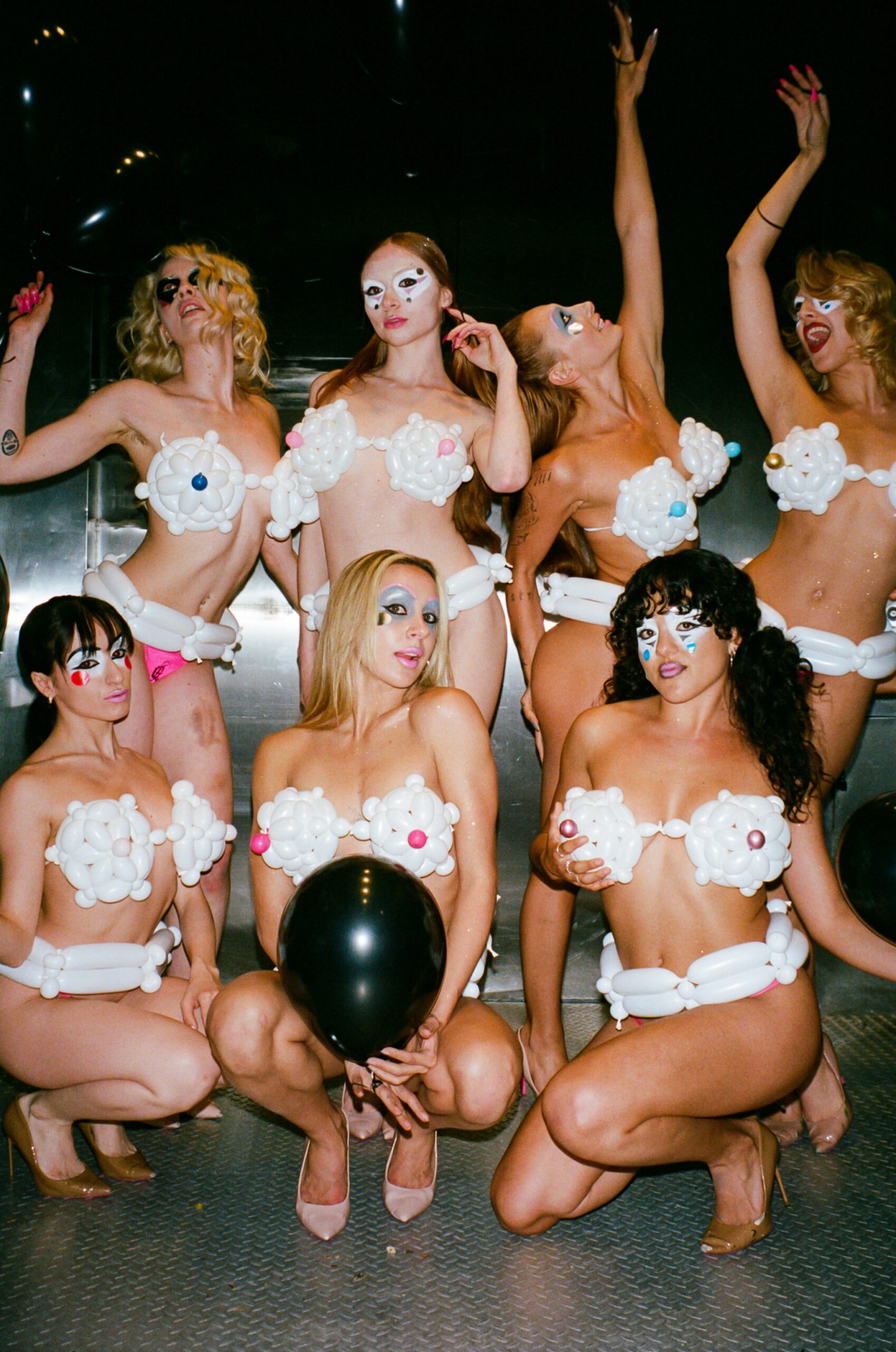
Photo by Austin Dewitt.
SATURDAY 1:55 AM MAY 23, 2026 THE SLIPPER ROOM
———
We’re in the third act of The G Strings’ show at The Slipper Room. Julia Fox has been handed an iPhone with an app that remotely controls a sex toy. Another guest artist pours a Corona down her leg in to the open mouth of a flushed young woman. The remnants of whipped cream pies and pasties have already been mopped up. There’s a row of mysteriously quiet men in business suits who have paid for VIP seats. Suddenly, two skaters, seemingly transplanted from Dimes Square or 1999, climb onto the stage. The Beastie Boys’ “The New Style” begins to play and five more boys appear in backwards caps and the baggiest jeans known to man. They proceed to perform one of the most high energy hip-hop and breaking routines I’ve seen outside of “Showtime” performances on the MTA. Three minutes later, the music changes to Goldfrapp’s “Strict Machine,” and the boys gracefully begin to strip. Seven young women appear in boxer shorts and T-shirts, looking like someone’s “college girlfriend,” before shedding every last piece of clothing in a dizzying act of erotic transformation.
Two hours earlier, hundreds of art school students in furry boots and said men in business suits waited patiently in the rain for admission to the 12am show. While waiting, the stage door on Orchard Street burst open and seven scantily clad dancers shimmied out, all in feathers, rhinestones, and lingerie underneath slinky silk robes. The crowd erupted in screams, something akin to Mick Jagger passing a crowd in the late ’60s, except there’s seven of them, and they’re girls.
I spent the next month following The G Strings – from a DIY rave in Bushwick to the Park Avenue Armory on the Upper East Side – to understand how they’ve charmed much of New York, from its underground subcultures to its yuppier patrons of the arts. Like most professional dancers, I learned the most about them in rehearsal.
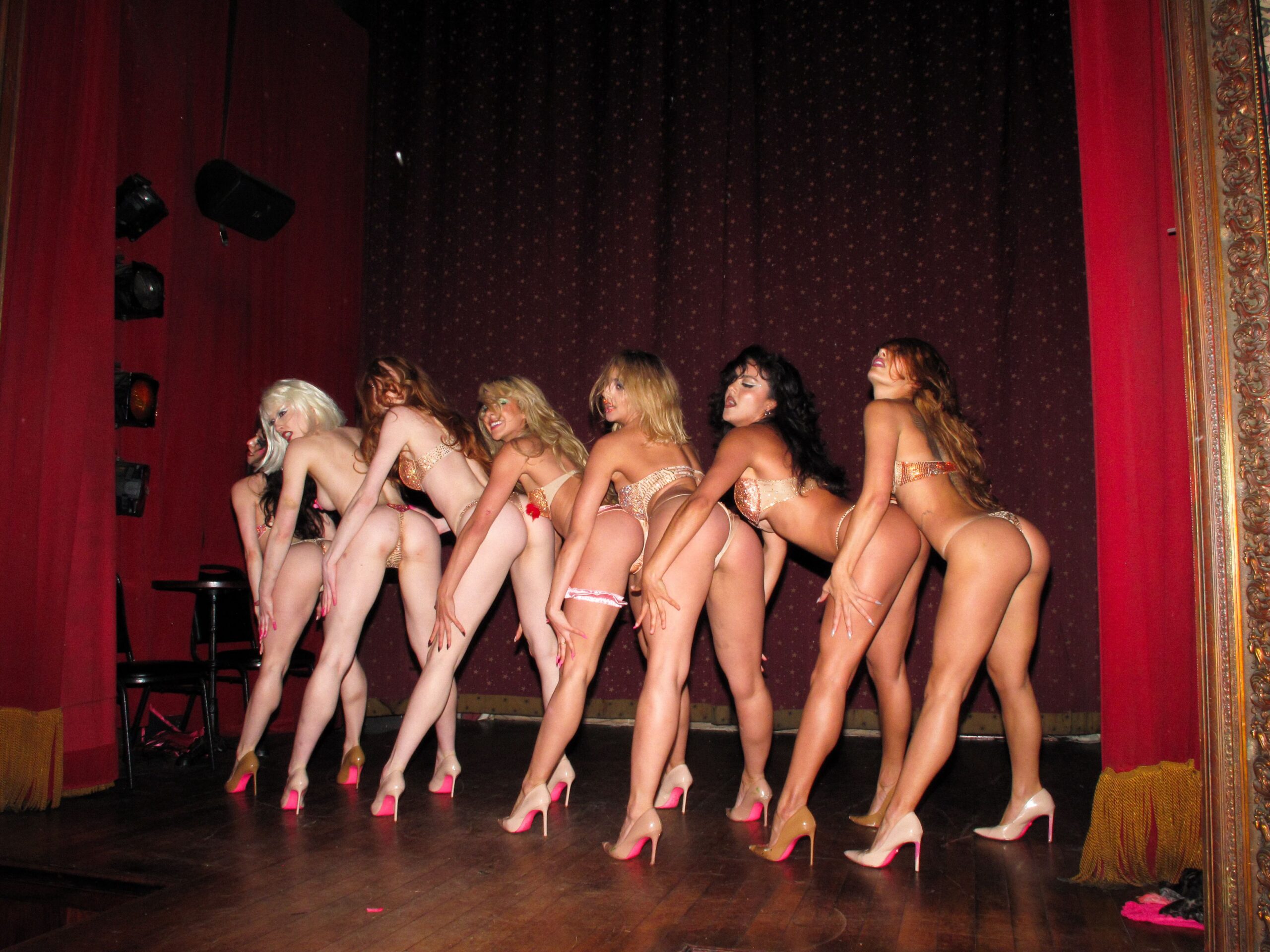
Photo by Austin Dewitt.
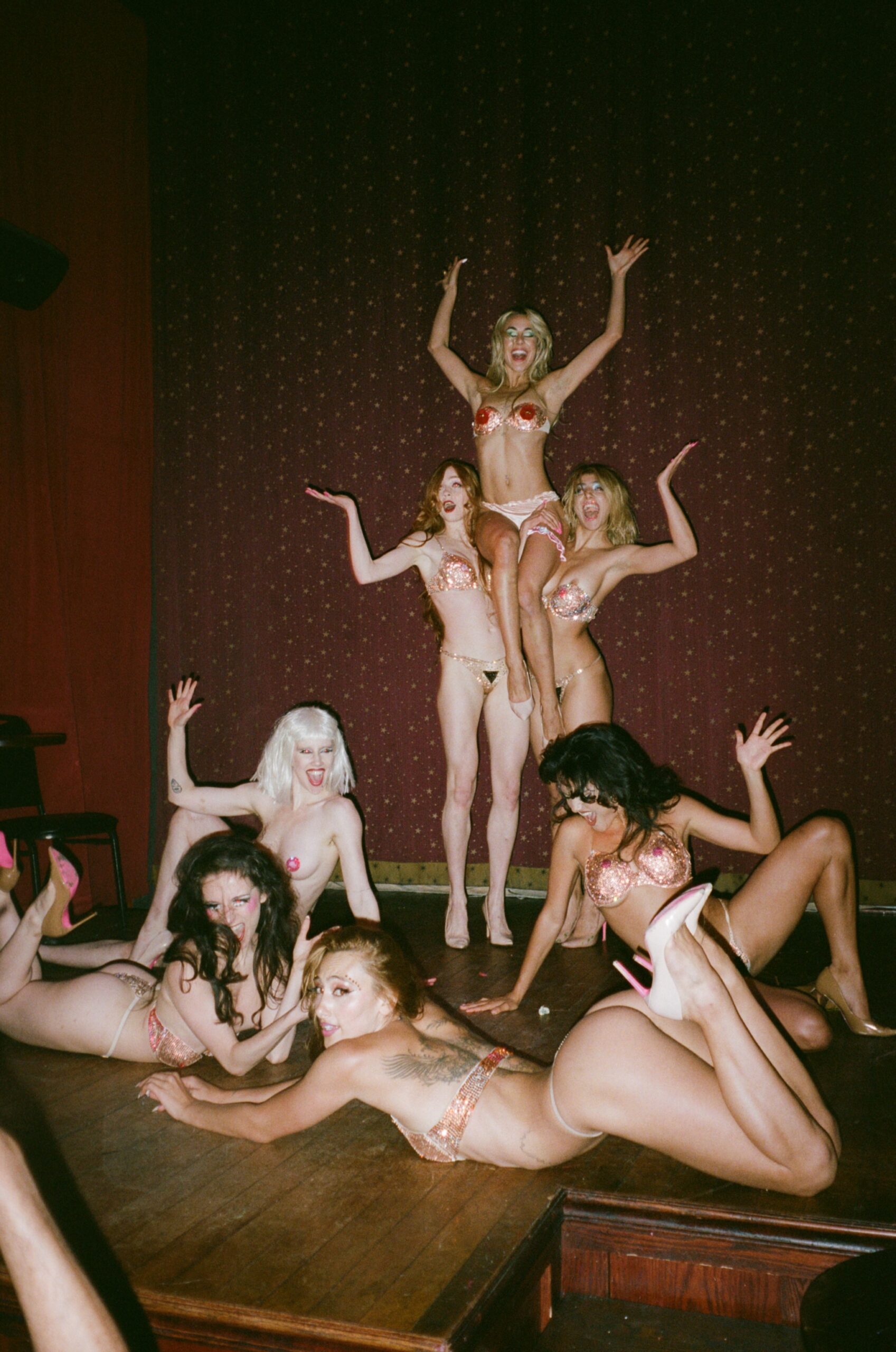
Photo by Austin Dewitt.
TUESDAY 9:35 PM JUNE 9, 2026 TRISKELION ARTS
———
“I once had a teacher tell me there are two things you can do as a dancer: you can either make it as a ‘real professional,’ or you can take your clothes off for money,” Roberta Lavalle tells me. The girls are smoking a medley of spliffs and herbal cigarettes in the courtyard of their Greenpoint rehearsal space, the home that The G Strings have christened with a spray-painted pink “G” on the sidewalk outside the studio door. With their growing popularity, the group has been trying to break open this binary drilled into them from childhood. The G Strings are made up of seven professional dancers, including Lavalle, Charlie Sue Birznieks, Julia DiPretoro, Emily Eshoo, Julia Padavona, Frances Pine-Rinella, and Chloe Terlingen. An hour earlier, in a swirl of Zyn, Ed Hardy sweats, dance shorts, and nip-slips, I watched the girls rehearse for their appearance at the Park Avenue Armory’s annual avant-garde party.
“There is usually a huge distinction between art with nudity and art without nudity,” says Pine-Rinella, pulling her platinum blonde hair into a bun. “Art with nudity is typically high art. Unless you’re in the underground scene, which we definitely are. But our ultimate goal is to be in every space.” It’s working. In the past month, The G Strings have performed at fundraising events and anniversary parties for MoMA PS1 and the Park Avenue Armory; something of a vertical move from their home stage at The Slipper Room, The Rosewood Theater, and Play Me Techno raves.
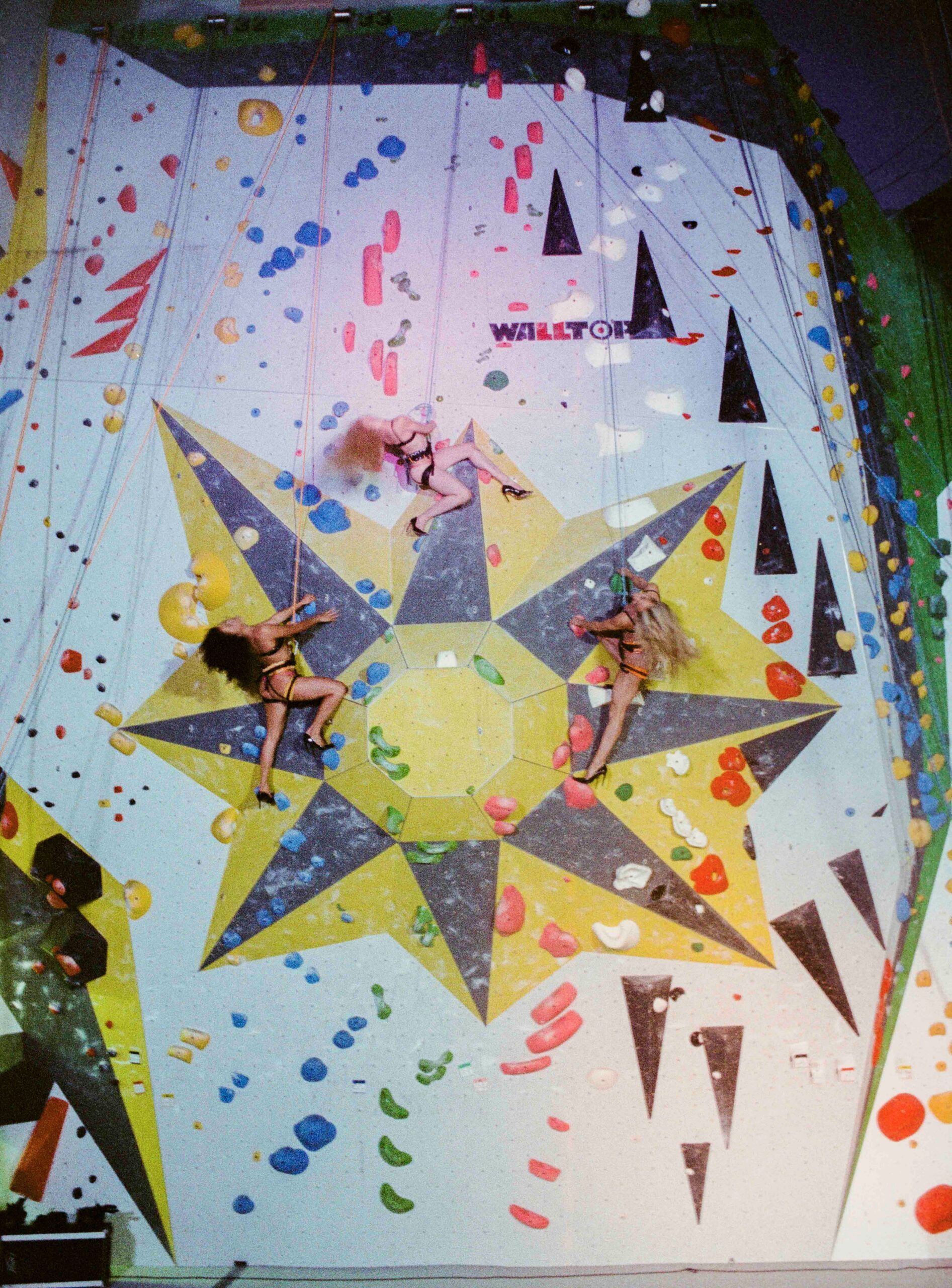
Photo by Julie Benatar.
The contemporary art world has long wrangled dancers as a variety act for one-off galas and fundraisers. In the last two decades, longer-form experimental dance work has taken stage in galleries and museums, but these spaces rarely, if ever, curate commercial dance. One of The G Strings, DiPretoro, is currently on tour with Addison Rae, whose most recent performances lean more heavily into burlesque and cabaret aesthetics, following a long line of female pop stars before her. One pop culture icon that is fundamentally closest to The G Strings is The Pussycat Dolls. Funnily enough, before they were a musical sensation, The Pussycat Dolls was a neo-burlesque group of professional dancers. In the mid ’90s, the group rehearsed in Christina Applegate’s garage before Johnny Depp booked them for a weekly show at The Viper Room on the Sunset Strip. Their re-branding as pop stars only happened in 2003, and one of the original members of the group, Joie Shettler, is Birznieks’s mother. A lineage that was evident in watching them dominate The Slipper Room stage in late May.
Between DiPretoro’s work with Addison Rae and Terlingen’s work as a Knicks City Dancer, their skill sets are by definition commercial. But what sets The G Strings apart from the average commercial dancer is that their work uses explicit nudity and focuses on the somewhat passé style of burlesque, which has seemingly re-emerged in the public interest. They are contemporary, yet evoke a previous era of dance and performance art (burlesque having its peaks across the 1890s, 1920s, and early 2000s – notably, in moments before massive economic collapse). Some of The G Strings are also professional strippers, something that hasn’t been embraced previously by either the world of concert dance or high-brow performance art. Stripping is the way most of the dancers subsidize their income between more glamorous commercial gigs and G String performances. Their self-produced shows aren’t a primary source of income, rather they tell me it’s a labor of love that celebrates their shared passion for American vaudeville. “[Vaudeville] is a space for every type of performance art,” says Birznieks as she takes a drag from the joint Padavona passes her. “It’s a space for poetry, music, clowns, burlesque artists, erotic dance, freak shows…But that’s what makes the entire thing erotic is because it’s always true. The sexiness and the sexual humor come from an equally true place. To me, that is what defines sexy and erotic, is that it’s primal. It’s straight from your soul and body.”
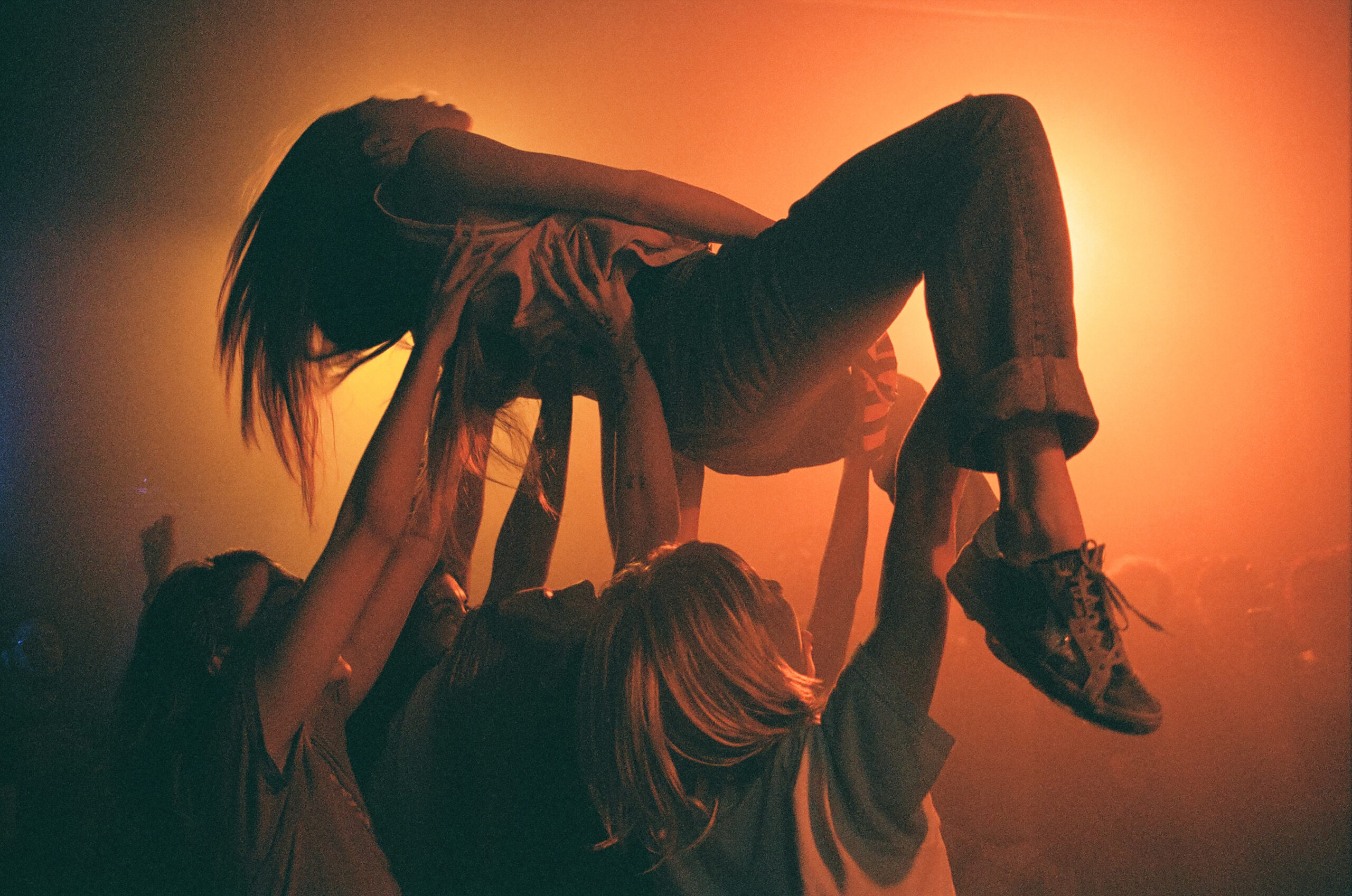
Photo by Em Higgins.
While on tour, I ask DiPretoro why she thinks vaudeville seems to be resurfacing in popular culture. “People just want to have fun right now,” she says, “and [vaudeville] is very much about the mess, which is so refreshing when everything can feel so polished nowadays.”
“When we make mistakes, when we’re messy, when we’re free, people can see themselves in us,” Eshoo, with her blazing red hair, explains as she soldiers through rehearsal (and all its head-banging) with a splitting migraine. Still wearing her sunglasses at 10pm she tells me, “It gives them this empowerment, like, ‘Oh, I can do that,’ because they’re not idolizing us the way you might when you watch a ballet dancer, where you’re like, ‘That’s beautiful, but obviously I can’t do that.’” To be candid, most dancers in the experimental dance scene probably couldn’t do what The G Strings do. The casual style of their performance may make their striptease look easy, but most viewers have no illusions about how virtuosic these dancers really are.
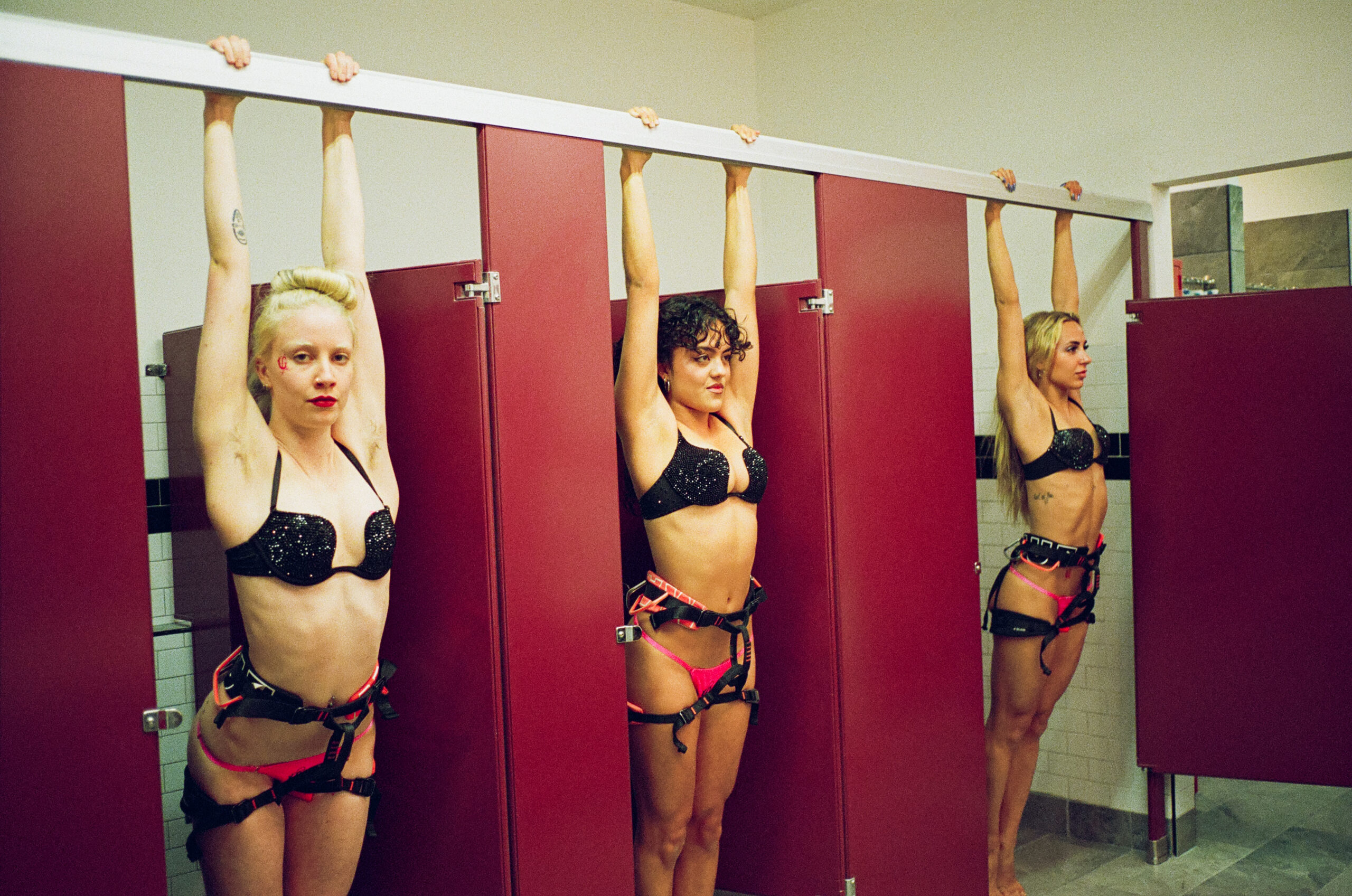
Photo by Em Higgins.
TUESDAY 6:45 PM JUNE 9, 2026 TRISKELION ARTS
———
The G Strings are in rehearsal on a perfect, early summer evening, and in four days the Knicks will win the Finals. “We love it here so much,” Terlingen tells me. The girls are high on an almost impossible combination of being young, beautiful, best friends, and beloved by New York City. Talking to them in the studio, I feel like it may as well be 1999 (even though most of them were born after 2002). I ask them what they think makes them celebrated across seemingly polarized art spaces. “It’s such a pure joy that we all have together,” Padavona says, curled up on the bench between Terlingen and Birznieks. “I think that’s the thing that makes it so magnetic is that it reminds audiences what’s possible for them too.”
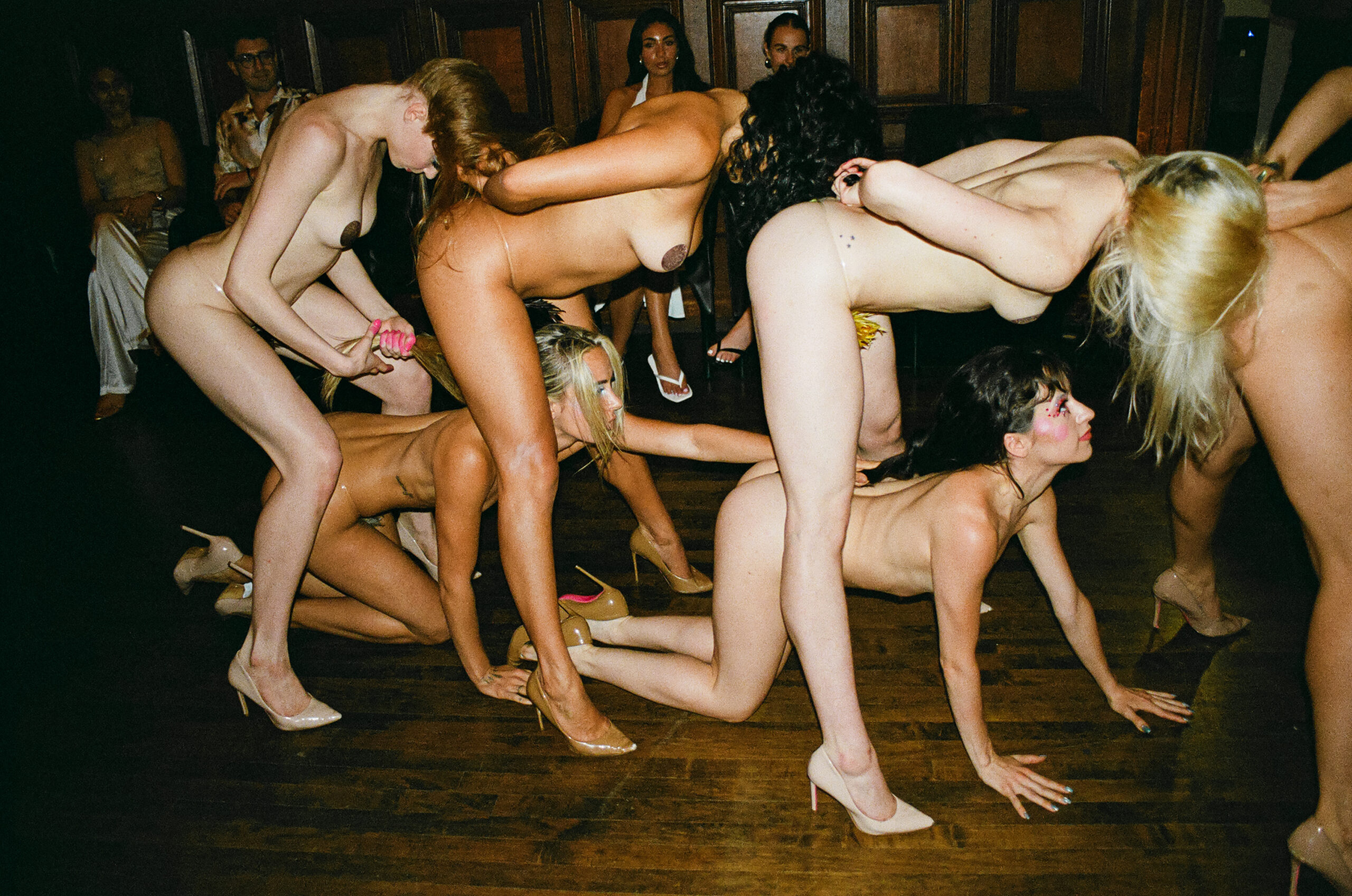
Photo by Em Higgins.
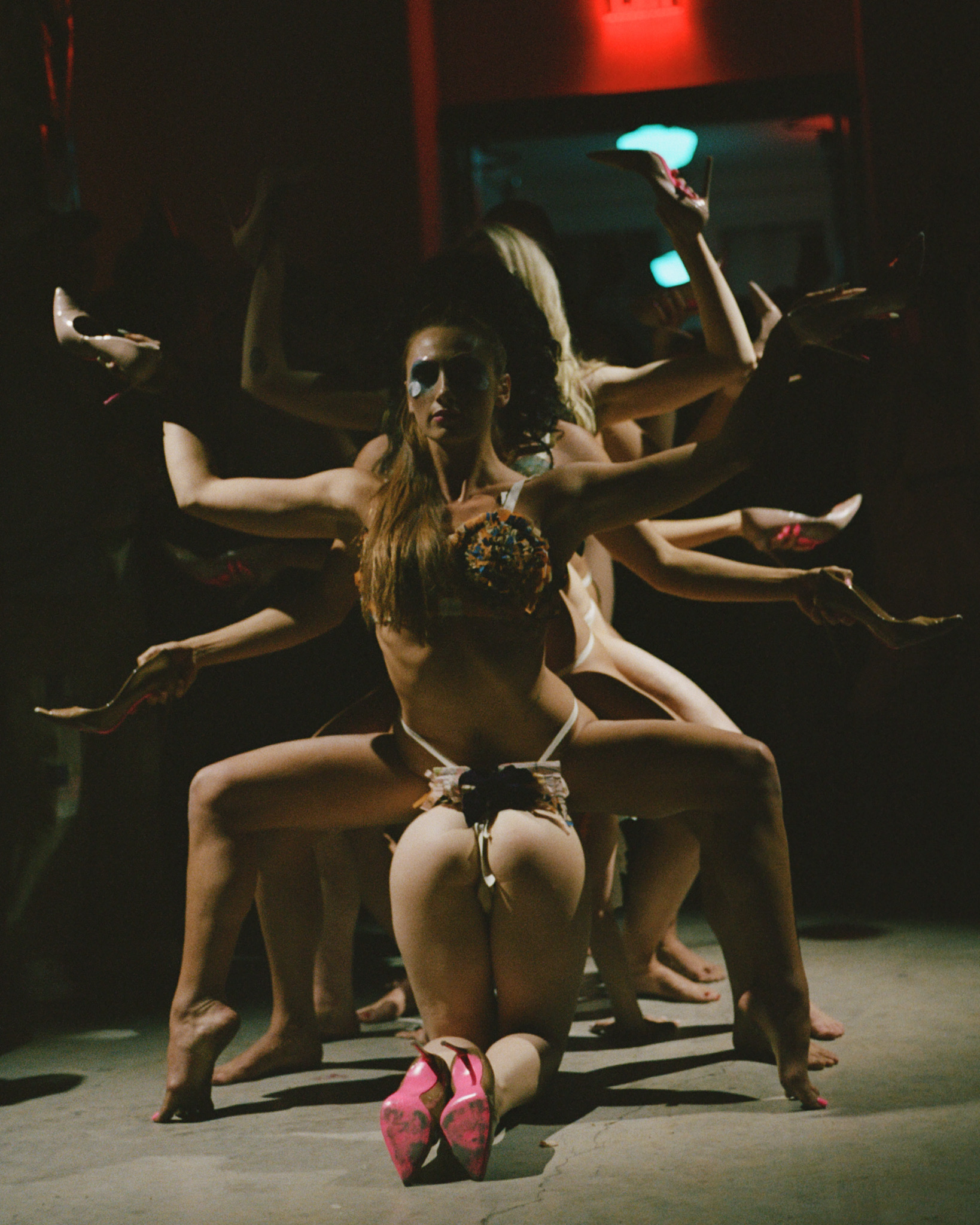
Photo by Jamie Heath.