


OPENING
Pietro Alexander’s Gallery Opening Was Also His Wedding


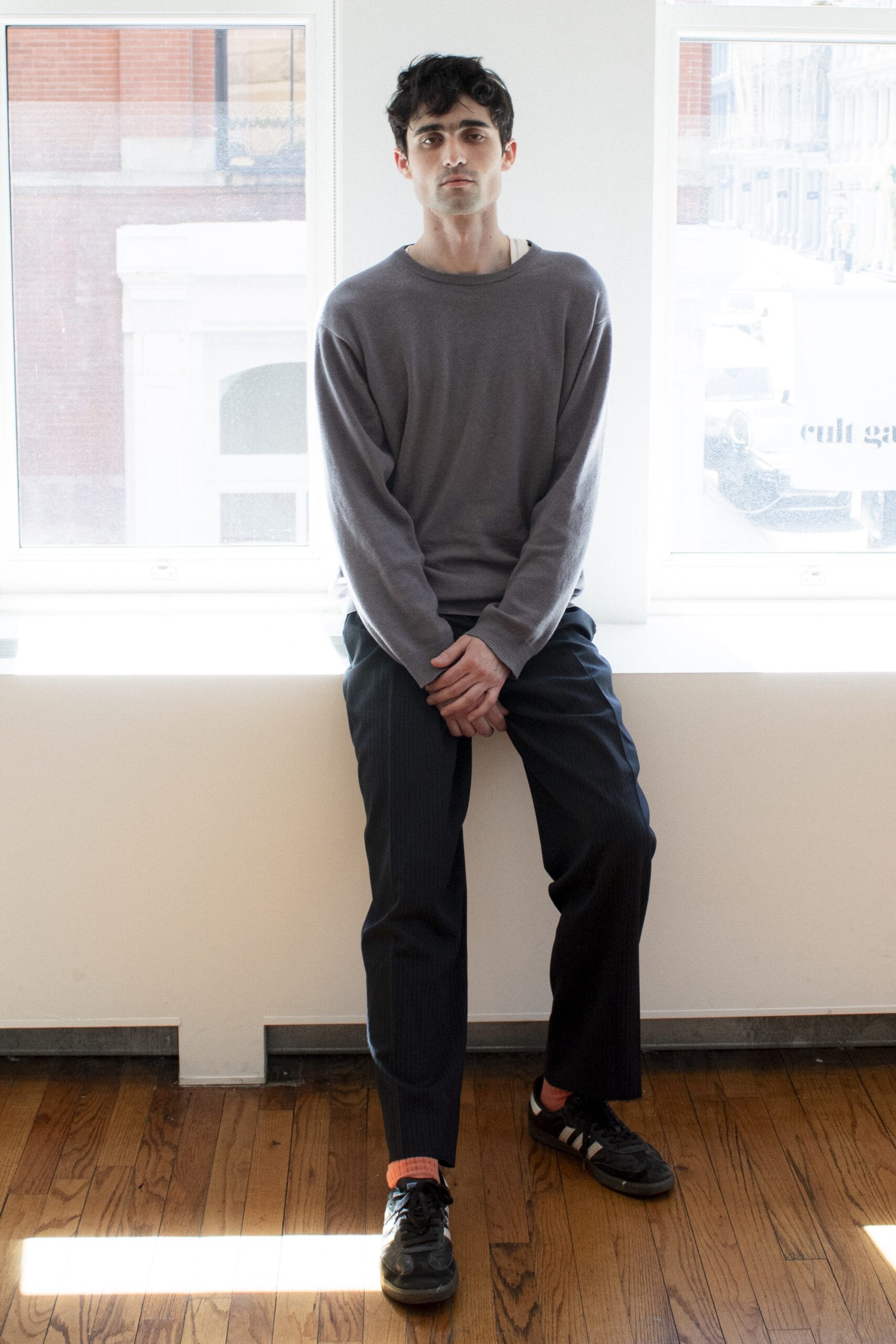
Pietro Alexander, photographed by Yahshel Macapagal.
Why not both? After running SPY Projects for four years, the LA-born gallerist Pietro Alexander is swapping coasts. Rechristened under his name, Pietro Alexander opened last week with his wedding to filmmaker and writer Sara Apple Maliki, taking place in the thirty minutes before the public opening.The last time someone got married in the space, located at 59 Wooster, it was the early 80s. That was when his uncle first opened the building, running it as an art space while living on the floor above. The rooms have sat largely untouched in subsequent years, with Alexander describing it as a “time capsule locked in amber.” Aptly named The Wedding Show, the inaugural exhibition melds together emerging and late-career artists across sculpture, painting, and installation from Ken Price, Craig Kauffman, Cristine Brache and Jaxon Demme (who Pietro and Apple first met each other through). While finding his feet in New York’s starkly different art world, Alexander sat down with Ellie Rines, the dealer behind 56 Henry who’s known for turning her downtown space into something of a blue chip incubator. In conversation, the two find out they have more in common than they initially realized. They’re both self-described landline dealers who believe the art world is far more regional than it appears, and that their common guiding principle is to commit first and figure it out as you go. At the gallery last week, the two reminisced about when people were hooked on buying art from JPEGs, and what it actually takes to open a gallery in 2026.
———
TUESDAY, 10:09 AM, MAY 19, 2026, NEW YORK CITY
———
ELLIE RINES: Were you born in New York?
PIETRO ALEXANDER: I was born in LA, in Santa Monica.
RINES: Santa Monica boy comes to New York City. And you’re opening this show with a wedding?
ALEXANDER: My wedding, yeah.
RINES: Not just any wedding, but your wedding.
ALEXANDER: Do you know the artist Stefan Bondell?
RINES: Yes.
ALEXANDER: Stefan’s a good friend of mine and of Sara’s. When we got engaged, we were debating what we’d actually do to get married. I really wanted to have a wedding, I wanted my family there. Sara was like, “Whatever.” And Stefan suggested, “Why don’t you make it a show?” We kind of looked at each other and were like, “That’d be a really great way to open a gallery.” I’m moving, I’m engaged. Sara said, “We might as well merge it all together and open the gallery by getting married at the opening.” Which is more complicated, I think, than I imagined at the beginning.
RINES: There’s something that feels kind of ’70s about opening your gallery with a wedding, this mixing of art and life. It makes particular sense for you and Sara because you’re these old soul romantics, and given the history of your gallery and your lineage. You’re kind of born with the context of looking at art over the past 60 years.
ALEXANDER: I’m the second member of my family to get married in this space. My uncle opened it in 1980. He lived on the floor above, but he’d had a gallery uptown since 1968 with my Aunt Carolyn. They were both involved in art. It felt kismet in a way. I’m moving from LA, opening this space, and there’s all this history here. It’s like an ’80s time capsule locked in amber. People are going to be really confused saying, “Why is he here?” and I wanted to find a way to answer all the questions at once. A lot of galleries open with a big smorgasbord group show of friends and artists you work with, a hint of what you want to do later on. I felt like it would be really funny if we made it into a wedding because the two seem kind of similar to me in a lot of ways.

Installation view of The Wedding Show at Pietro Alexander. Photography by Inna Svyatsky.
RINES: You’re really tightening the loop here. Can you remind me how you and Sara met?
ALEXANDER: We met over one of the artists in the show, Jaxon Demme. Sara used to do interior design and bought a piece for a friend of hers. I thought she was an art advisor. She bought it within 10 minutes of us exchanging emails, and I thought about it later and was like, “Wait, I don’t know who actually owns this.” So I insisted on installing the piece at the guy’s house, went and met her there, and was struck by her. We went out to dinner the next night and I told her I was in love with her a couple days later. We’ve been together ever since.
RINES: I love that. Guided by romance.
ALEXANDER: Wait, how’d you open your gallery? What was your first show?
RINES: My first show was with Polly Apfelbaum. It was a solo and, similar to you, I really care about the history and the traditions of New York City-based art making. I think it’s important to pay attention to place and location, and Polly had a studio in the seaport at the time, a stone’s throw from the gallery.
ALEXANDER: Your first space wasn’t 56 Henry, right?
RINES: No, I had a space called 55 Gansevoort that was an emergency exit of a building. I was very eager to open a gallery. I always wanted to be working with artists, and I wanted to learn on the job. I feel like something that you and I share is that we’ll commit to something and then figure it out as we go.
ALEXANDER: Yeah.
RINES: It leads to a ton of chaos, but also it’s important. The artists are baring themselves so much, right? It’s this huge exposure. I think that, as a gallerist, it’s important to also kind of go around with your pants down.
ALEXANDER: Yeah, you have to have skin in the game. Or have your pants down. From the moment we opened, I was lying about how long the gallery had been running. I wrongfully thought that would get me into art fairs easier.
RINES: You commit first and then you figure it out to get there. I feel like another thing that you and I share is that we trust the foundation of having the gallery. That it’s about being artists first, and we both run a gallery similar to the way that people have done it for 50 years. That’s what I love about you doing the wedding show, and that’s what I like about me opening my space with Polly Apfelbaum. There’s this respect for tradition, but we always want to show the stuff that’s the newest, the most cutting edge.
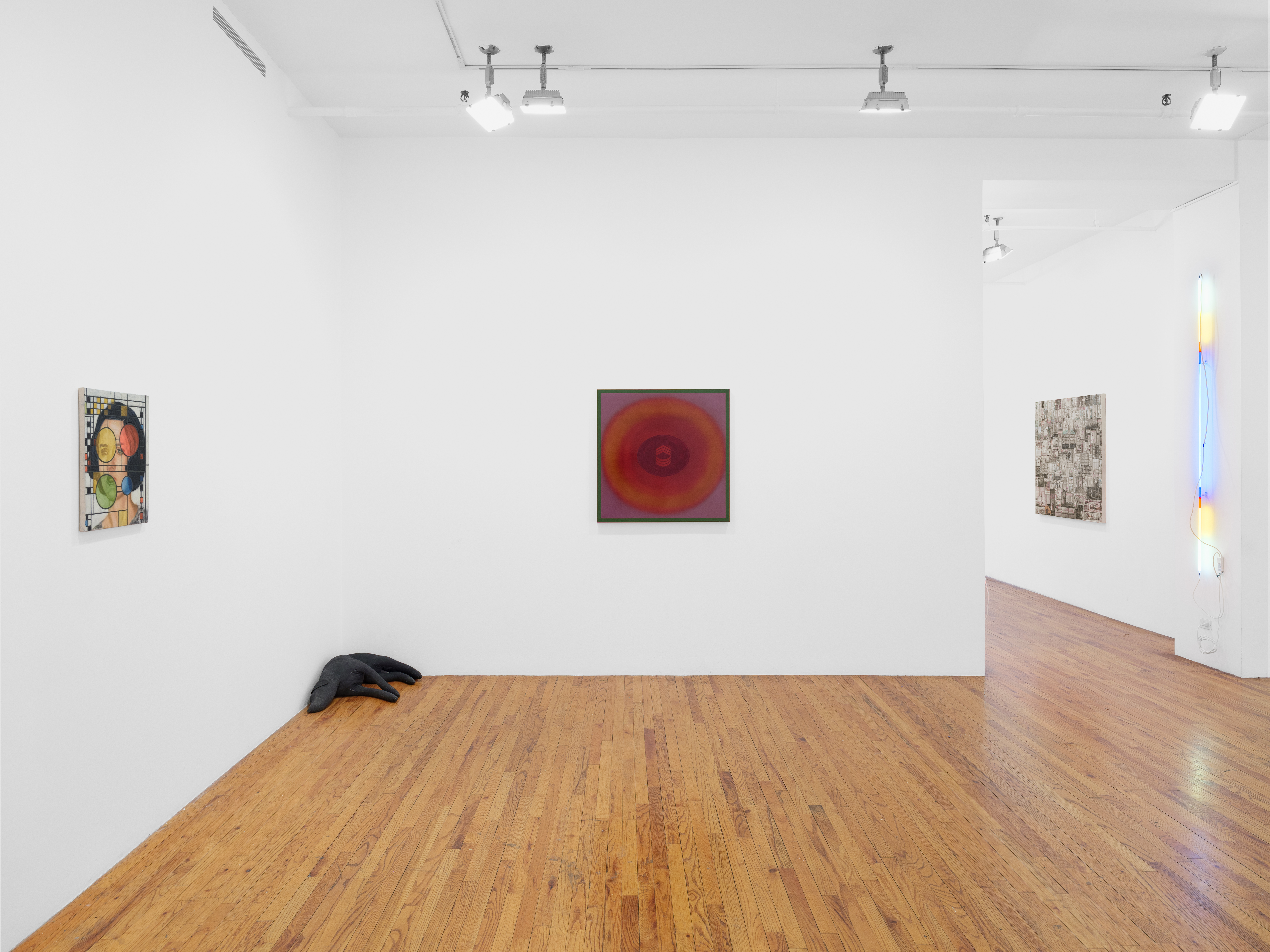
Installation view of The Wedding Show at Pietro Alexander. Photography by Inna Svyatsky.
ALEXANDER: I was reading a different interview you did, and there’s this line about not wanting to show young artists exclusively, just good art. Probably the best shows we did were with people I knew from RISD, when we were all in our early 20s. But I really wanted to show people who had been making art for 30 years, different perspectives, whatever was good. The young revitalize the old, and the old gives the young a reason for why they’re making the work. I love emerging contemporary. It’s the closest thing to public service, actually additive to the broader culture. But I want part of the program to be specifically historical, bringing in artists from the golden age of the ’60s West Coast and building a connection between them and artists making work today. In New York, there hasn’t been much effort to draw those connections. Right now, I have John Altoon, Billy Al Bengston, Craig Kauffman, and I’m asking whether that could be motivating artists working now. Maybe it’ll be completely dissonant and just cement that these are two different periods in time. But it’ll be interesting at least.
RINES: I think it’s a misconception that the art world is global. It’s actually a totally regional endeavor. There’s still this really unique sense of place even as we travel all over the place. I show a lot of artists that coincidentally went to Yale, but I’m not scouring the Yale MFA program like some pervert creep.
ALEXANDER: Just trolling these studios.
RINES: It just ends up happening that a lot of artists that I showed went to RISD, went to Cooper Union, went to Yale. We see it because we work so closely with these collectors who are the most addicted to championing emerging art. Like, you go to a New York home and the collection is entirely different from an LA home.
ALEXANDER: Of course.
RINES: They support all their hometown heroes, which I appreciate, and I think that’s a wonderful thing to keep it local a bit. So you’re kind of doing two things. You’re helping support bringing LA artists to New York, which I think is important because, personally, as a gallerist, I have found that people have become more conservative with shipping.
ALEXANDER: I mean, that’s a big question.
RINES: So we’ve been keeping it more local. I think it’s really important right now not to become passively conservative, which means not just showing the artists you already know. The most important thing for our sector is to take risks and be disruptive. There’s something disruptive but not loud or garish about showing artists from LA and New York together, doing cross-generational shows that push people to think harder and go deeper into history.
ALEXANDER: I think there are a lot of logistical and non-curatorial restraints for any gallery with a mixed program like that. I probably could have shown some of them in LA too, though it would be old hat if I did it there. These people are very well known there because they’ve been around, they’ve been showing within the same 20-mile radius for 50 years. It’s interesting because it feels like it’s brand new in New York, even though it’s been around. When you first opened, would you do anything differently now if you were opening in 2026?
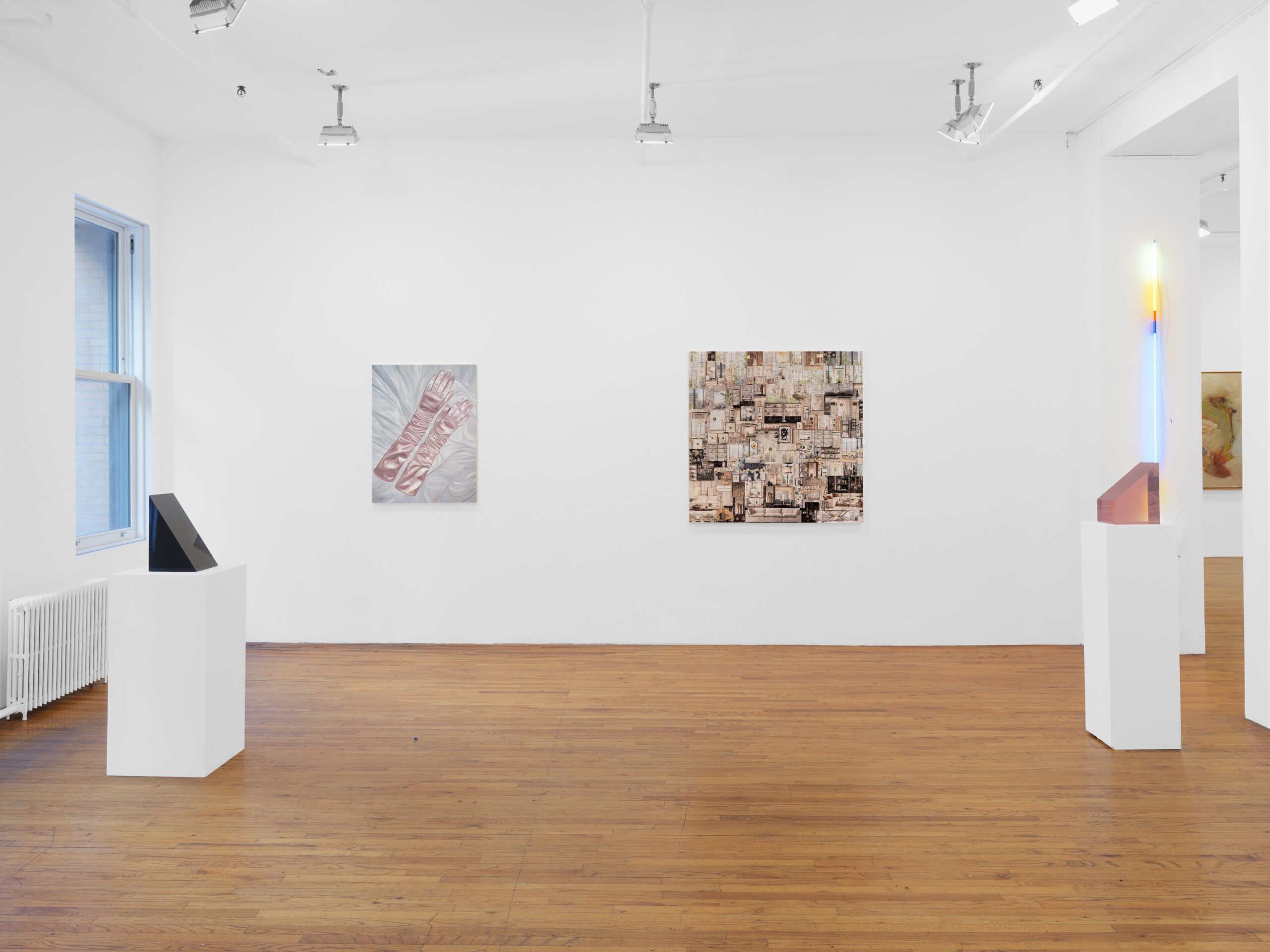
Installation view of The Wedding Show at Pietro Alexander. Photography by Inna Svyatsky.
RINES: Would I do it differently based on what I learned, or because 2026 is so different from 2015?
ALEXANDER: Because of 2026 being different from 2015. Is it any different?
RINES: It’s different in that people aren’t excited about buying art off of a JPEG.
ALEXANDER: They’re not.
RINES: Buying art off of a JPEG is like an incredibly outdated form of pornography.
ALEXANDER: It is. I mean, you reminisce about it a little bit.
RINES: No one’s getting hard off of zooming in on their iPhone.
ALEXANDER: But they were! They were.
RINES: They were. It was like a new form of porn. It was really exciting to get the checklist to hit your texts, the same way that it was exciting to buy shit online and order food online.
ALEXANDER: I caught the tail end of that with the first show I put together in 2020. I had no clue what I was doing, but the people were so ready. If you had enough brain cells to put together a PDF and shoot it to somebody in a text message, somebody would be willing to buy it.
RINES: Yeah, the crack era of the cell phone.
ALEXANDER: Oh my god. It was Freeway Ricky Ross figuring out how to flip a rock, but instead it’s a PDF painting for five grand. I thought I was just really good at what I edited. I was like, “I must be a natural, a master at this.” Because people started buying and buying and buying. Did you read the Josh Kline article everybody was talking about?
RINES: I did, in fact. Well, I started it.
ALEXANDER: I was so fascinated by it because when I was at Brown, my friends were at RISD, and so many of them moved to LA instead of New York because they could get studio space, and they could find an apartment that wasn’t a shoebox. There was no discussion at the time at least about what scene was better. It was just about the means of making work, and how you make work. But you know, New York is a different animal that I still am trying to kind of understand. There’s a different energy and a different way that people interact with galleries and art and with artists. Those are my first impressions at least.
RINES: But your approach works well where you keep things kind of simple. You choose artists that you believe in, and you encourage them to continue making work and keep taking risks. And you place the work with people that will care about the artist’s career as they develop. I think it is kind of that simple. Sometimes people try to apply tech innovation to the art world. But the artists are the ones there to innovate.
ALEXANDER: Exactly, the artists are the innovators.
RINES: I don’t spend that much time trying to think about how to innovate an approach to sending a PDF. I find it distracting to try to go down those tunnels.
ALEXANDER: Yeah. It’s about people. So your take on what it takes to open a gallery in 2026 versus when you first opened the gallery, it fundamentally isn’t that different then?
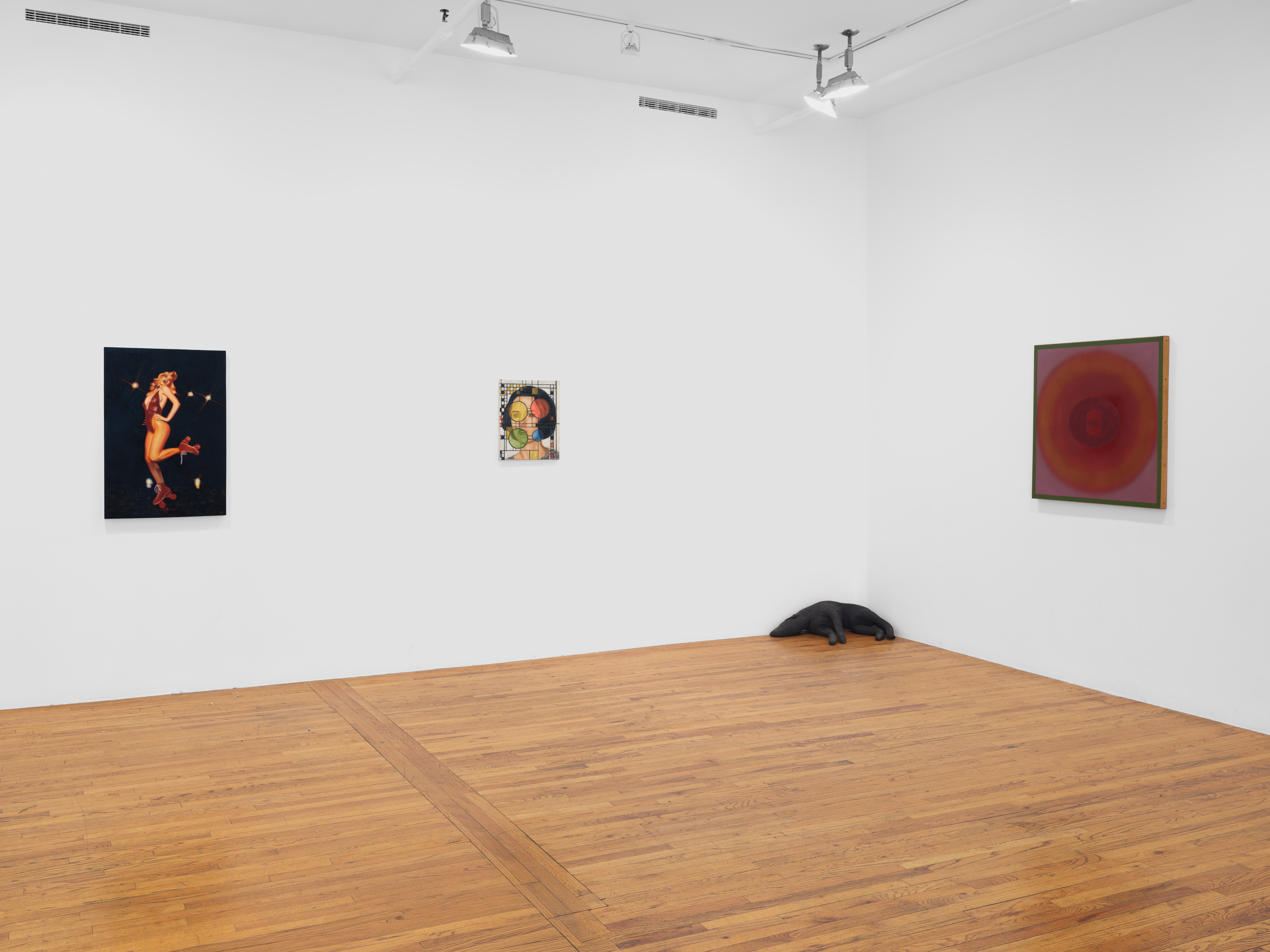
Installation view of The Wedding Show at Pietro Alexander. Photography by Inna Svyatsky.
RINES: I think that it’s all noise. It was really fun when you could sell art and it was easy. But when it’s easy, you’re still trying to get the work and the best collections, get it to locations that it hasn’t been to before, so the market noise is almost like being at the party. You think you’re doing all these things, but what you really need is to be having dinner with someone one-on-one.
ALEXANDER: Exactly, yeah.
RINES: So I would do it all the same, though I made some mistakes along the way.
ALEXANDER: Do you feel like the relative difficulty of the market now changes the tone of what gets shown?
RINES: Yeah, and I think that’s our responsibility when it comes to the artists, is that we can’t sacrifice our programs. The joke is that when you see paintings of flowers, you know the market’s in trouble. You have to make sure that you don’t succumb to some place of fear where you’re just showing something with the idea that it will sell. Also, when you show the thing that you think will sell, it never sells.
ALEXANDER: Yeah, you’re like, “Oh this is going to go. I know it.” And then it doesn’t.
RINES: Exactly. So I wouldn’t really change anything, and I ignore what’s going on in the market except as a way to manage expectations. I’ve become more conservative in the art fairs that I do because I know it might be harder to cover my costs. I have cut out doing gallery dinners, and I am being more cautious but also allocating my energy and resources to things that I think are more worthwhile. Less noise.
ALEXANDER: What’s worthwhile?
RINES: Going to cities around the country because, again, I think things are incredibly regional. For example, we wanted to introduce the artists to people in Minneapolis. Rob Shearer is an art advisor with a space there, so we brought the program and he hosted us. I want to give people as many opportunities to see the work in person and to do it slower. I do a lot of traveling around the country instead of running around Paris, London, Hong Kong. What I really want to work on is having the artist do more shows with galleries in other cities. I like to collaborate, and that’s been hard because people have pulled back a little bit.
ALEXANDER: I think that’s important. The one thing I would say is global is that you can communicate with other dealers. There’s a real benefit of allowing your artists to collaborate with other galleries, other dealers, to bring the work to more people.
RINES: Yeah, you want to collaborate so that your artists have a regional presence somewhere new.
ALEXANDER: Exactly. And that’s the only way to do it because the internet only takes you so far.
RINES: Yeah. We both have anti-internet values.
ALEXANDER: I do.
RINES: You and I are landline dealers. We both love to talk on the phone. When you call me, I’m usually on the phone with someone else and that’s why I can’t pick up, and vice versa.
ALEXANDER: There’s a real pullback. People have realized that you have to go in person to see it, and there’s no getting around it.
RINES: There’s no getting around it.