


FREEFORM
Artist Sue Tompkins Keeps Language in Motion


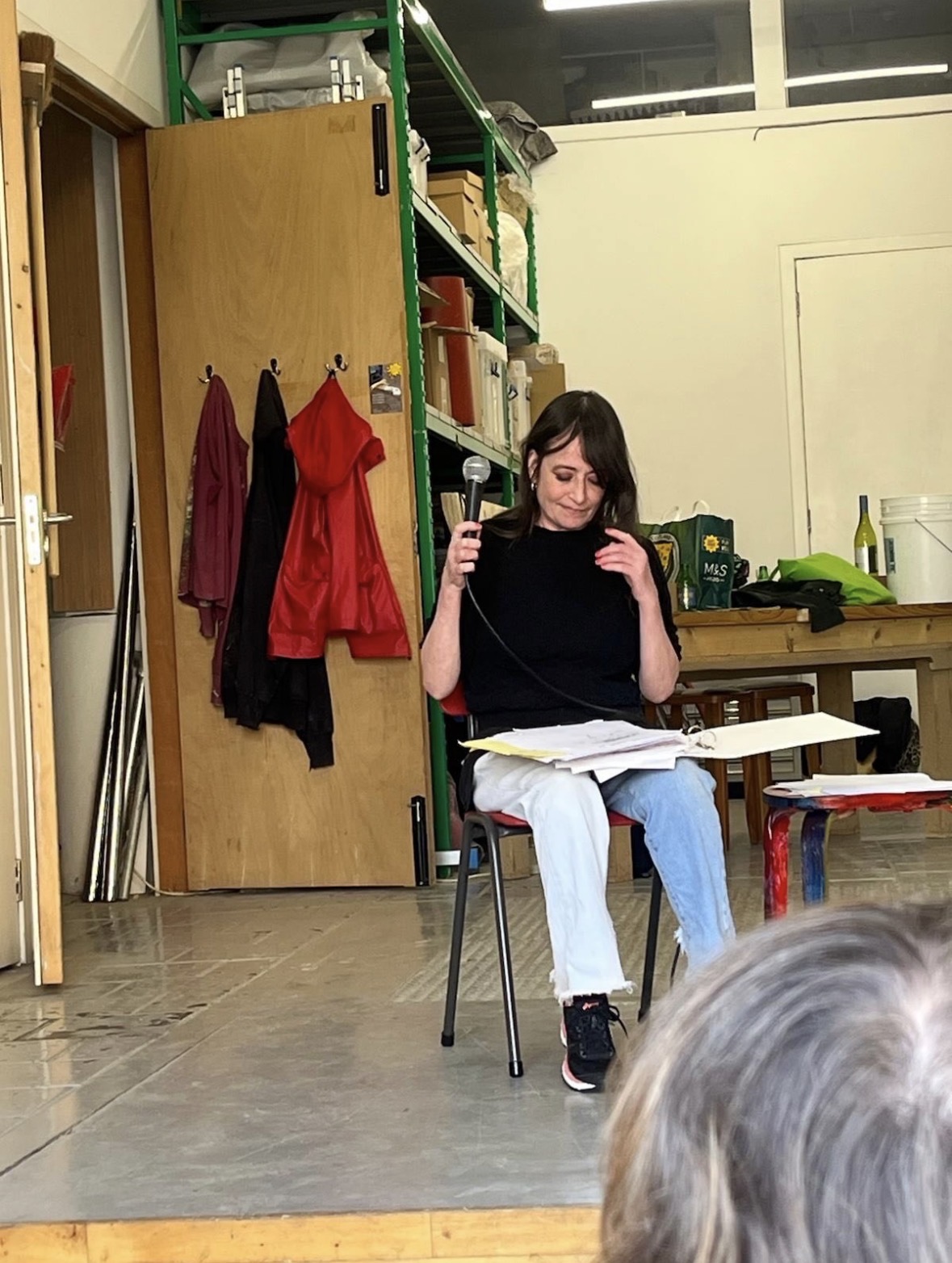
Photo courtesy of Sue Tompkins.
One of the hardest tasks for any artist is to simply sound like themselves. In the case of Sue Tompkins, there’s almost no mistaking her voice for anyone else. The Scottish multi-media painter and performer is probably most widely known as the frontwoman of Life Without Buildings, the cult indie rock band whose legacy as one of the very best of the 2000s was cemented long before TikTok came back to super-charge their reputation again. As lead vocalist, Tompkins brought a gleeful humanity to the group’s tricky, interlocking math rock; sounding out unnameable feelings through a mixture of singing, scatting, and shouting. The crossover over to the art world doesn’t always make for the smoothest transition, but Tompkins was always only ever really a tourist in the music industry. Despite being a naturally commanding singer, her roots lay in painting and performance, deploying a wide-ranging skillset to the problem of wrestling with the limits of speech. What many fans of hers might not have realized, was that the easy musicality that made her breathless, free-associating lyrics so thrilling had actually first been honed in art school and together in collaborations with the collective, Elizabeth Go. Whether type-written or hand-drafted, dripped onto a canvas or sewn into a textile piece, for years Tompkins has made her mark wringing meaning out of language by treating it as raw poetic material. Take for instance her painting, Of (2014), which is currently on display as part of her latest show Wanna at King’s Leap. Against a lavender and hot purple backdrop, Tompkins writes out a pretty clear “F” while dotting the work with circular blobs of acrylic paint and poking a small constellation of holes into the piece. The title becomes a preposition without a referent – you have no clear idea what the “of” here is referring to or whichever source it’s drawing from. Instead what Tompkins has provided is a landscape of small clues for you to marvel over, a scattering of potential “O’s” for you to try to make sense of her work. The only way to make it make sense is to let the richness of her visual language fill in the gaps in our speech. With the reformation of Life Without Buildings, a recent retrospective at the Modern Institute in Glasgow and her latest show, Tompkins has been receiving some critical recognition for her many interwoven talents. Last week, I spoke to Tompkins about process, performance, and her wide-ranging career.
WEDNESDAY 1 PM JULY 1, 2026 GLASGOW
———
HARRY TAFOYA: You have such a wonderful eye for color. When you approach a painting or a piece of text art, how do you pair text and visuals together?
SUE TOMPKINS: I mean, sometimes it’s really practical. I just start something and edit as I go along. It’s literally writing on a napkin going, “I’m so inspired. I have got to write this down.” Most of my text works are on really cheapy newsprint or the sort of pad that you buy yourself to write notes on. Then sometimes it’s slightly more refined on fluorescent paper. I don’t know, there could be a series of pink fluorescent pieces that do make some sense somehow together and then writing something that isn’t bright and pink and funny and nice and loving. Have I answered the question?
TAFOYA: Yes, absolutely. Sometimes you’ll meet artists who have very definite ideas about how these things relate to one another, whether it’s synesthesia or just personal taste, and it seems like it’s much up to chance with you.
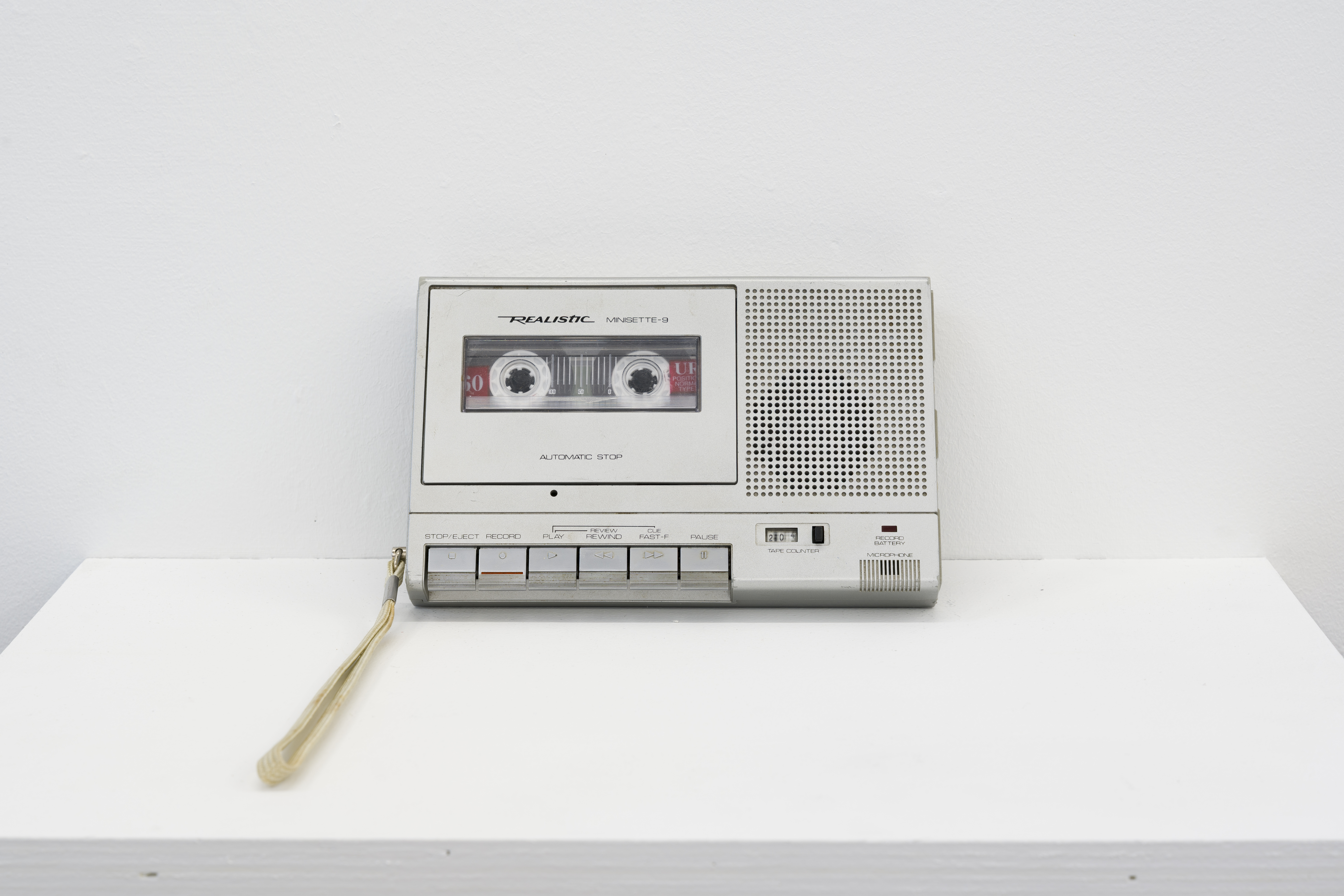
Klove, 2015. © Sue Tompkins. Courtesy the artist and King’s Leap, New York. Photo by Stephen Faught.
TOMPKINS: All of my work comes from literally just a thought. I might write that thought to myself literally in an email like a weirdo. Something really simple that solidifies an idea for me, and then it’s almost like some period of waiting to see how that appears again. Without sounding really airy-fairy, it’s quite grounded in a funny way. Doing an exhibition or a performance or music is almost like trying to connect with that initial thought or feeling. It’s much more about editing, which I think might sound weird because I think a lot of my work looks really unedited, when actually it is.
TAFOYA: So when you are editing and you’re looking for a specific idea, you’re looking for a specific flavor of words?
TOMPKINS: Yeah.
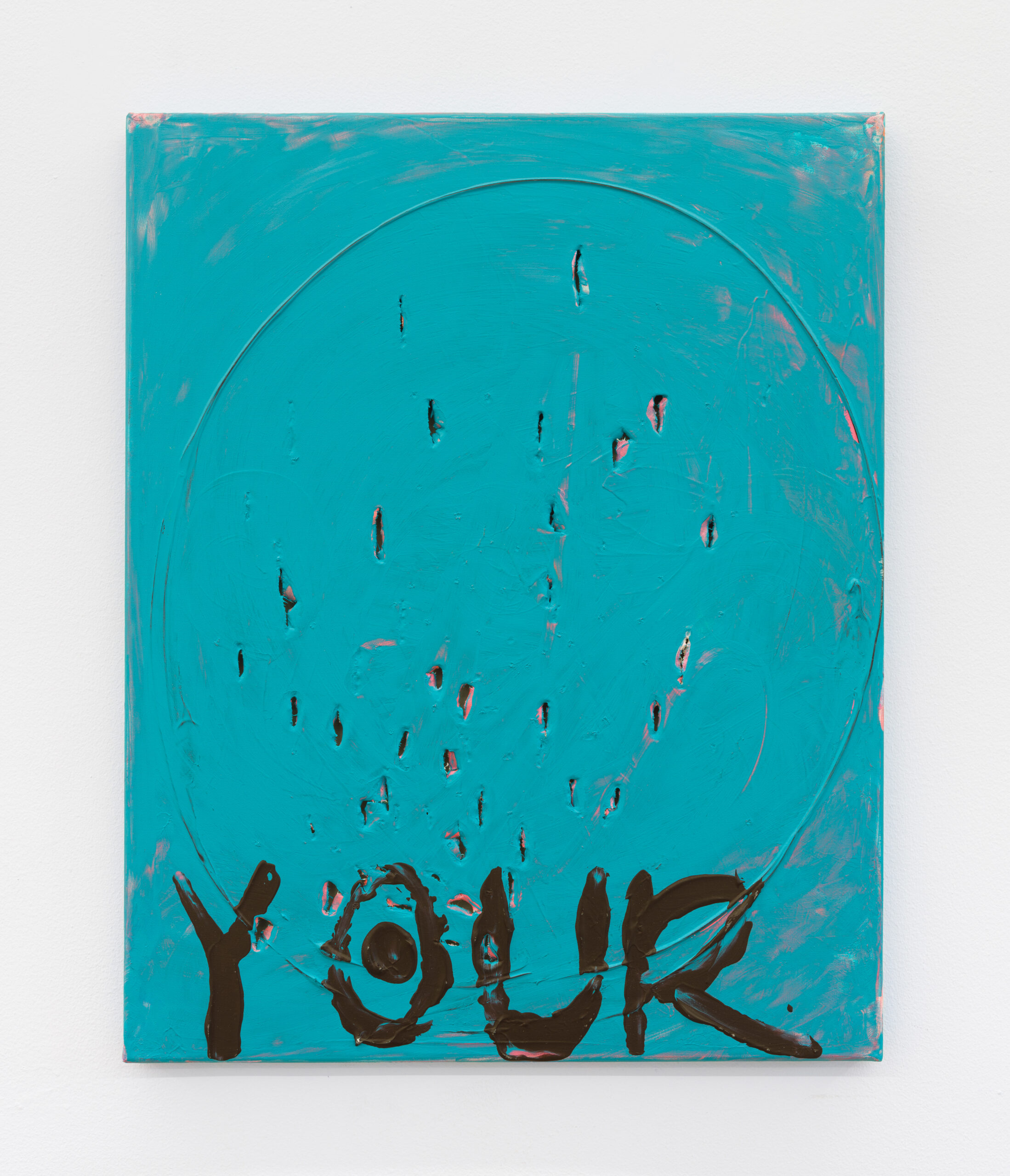
Your, 2014. © Sue Tompkins. Courtesy the artist and King’s Leap, New York. Photo by Stephen Faught.
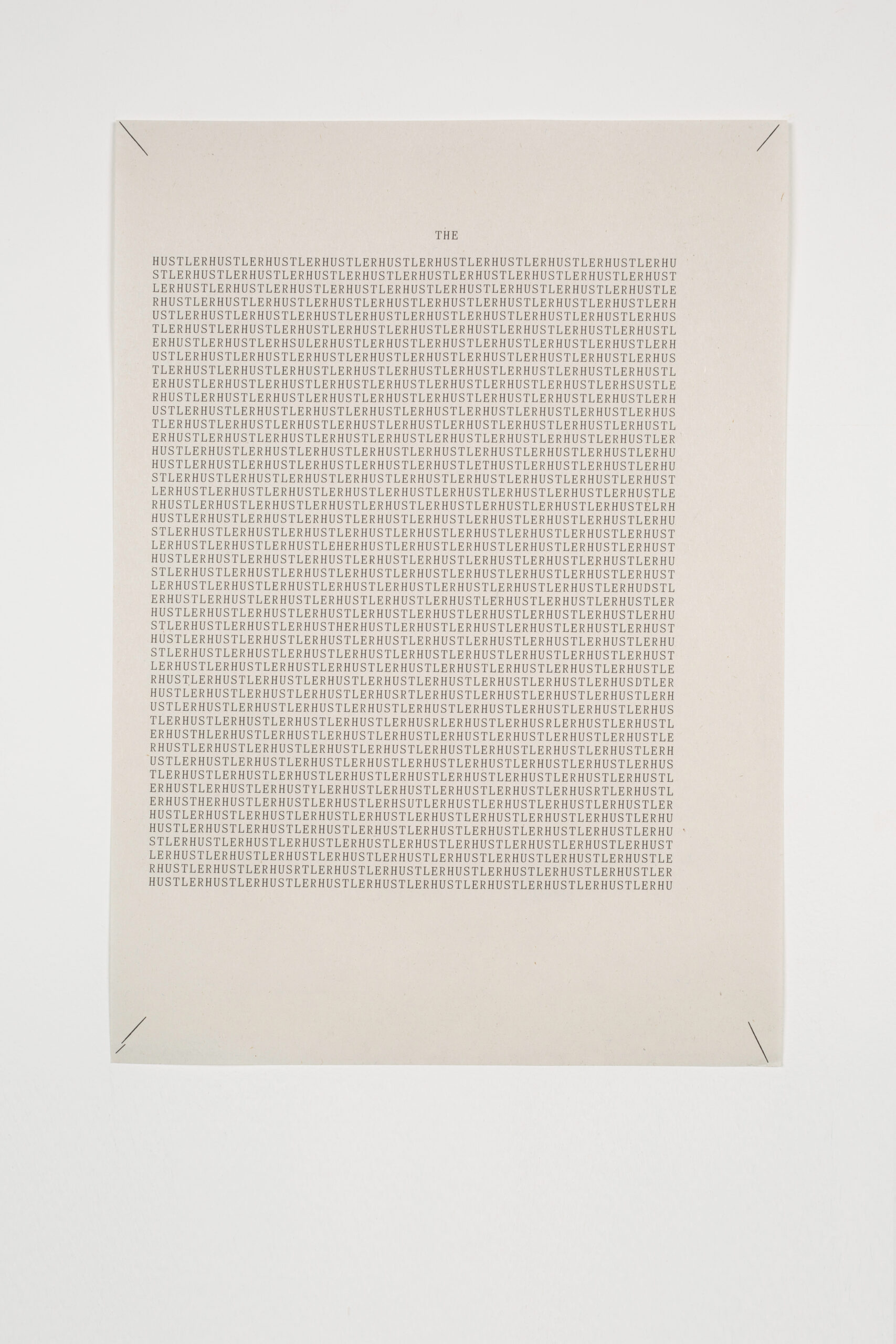
TAFOYA: It also seems like sound is important too. One thing I love about your art is that I can match your voice to the works. When you have an all caps repeating message like “THE HUSTLER THE HUSTLER THE HUSTLER,” it does also create a funny sense of musicality. Could you tell me about the link between visuals and sound?
TOMPKINS: It’s really hard to explain. I don’t ever work with an aim. You see what I mean? It’s almost like just allowing yourself to do whatever for a little bit. Just let go and let things come out, half of which might be crap, and then just I really enjoy looking through stuff going, “Oh, that’s quite good. And that’s crap.” But editing things that way feels more refined to me, even though what I might actually present as a performance or something might not seem this refined thing. And obviously performance is a different thing, because that in itself is a different approach to actually looking at words on paper or reading or singing.
TAFOYA: Well, it’s funny because when you think about a work on paper for something, it’s going to stay there. It’s not going to shift or move or do things by chance. So when you do have a work on paper and you’ve written it out, but you don’t have a look of the way it’s written out, are you quite rigorous about how you edit for that?
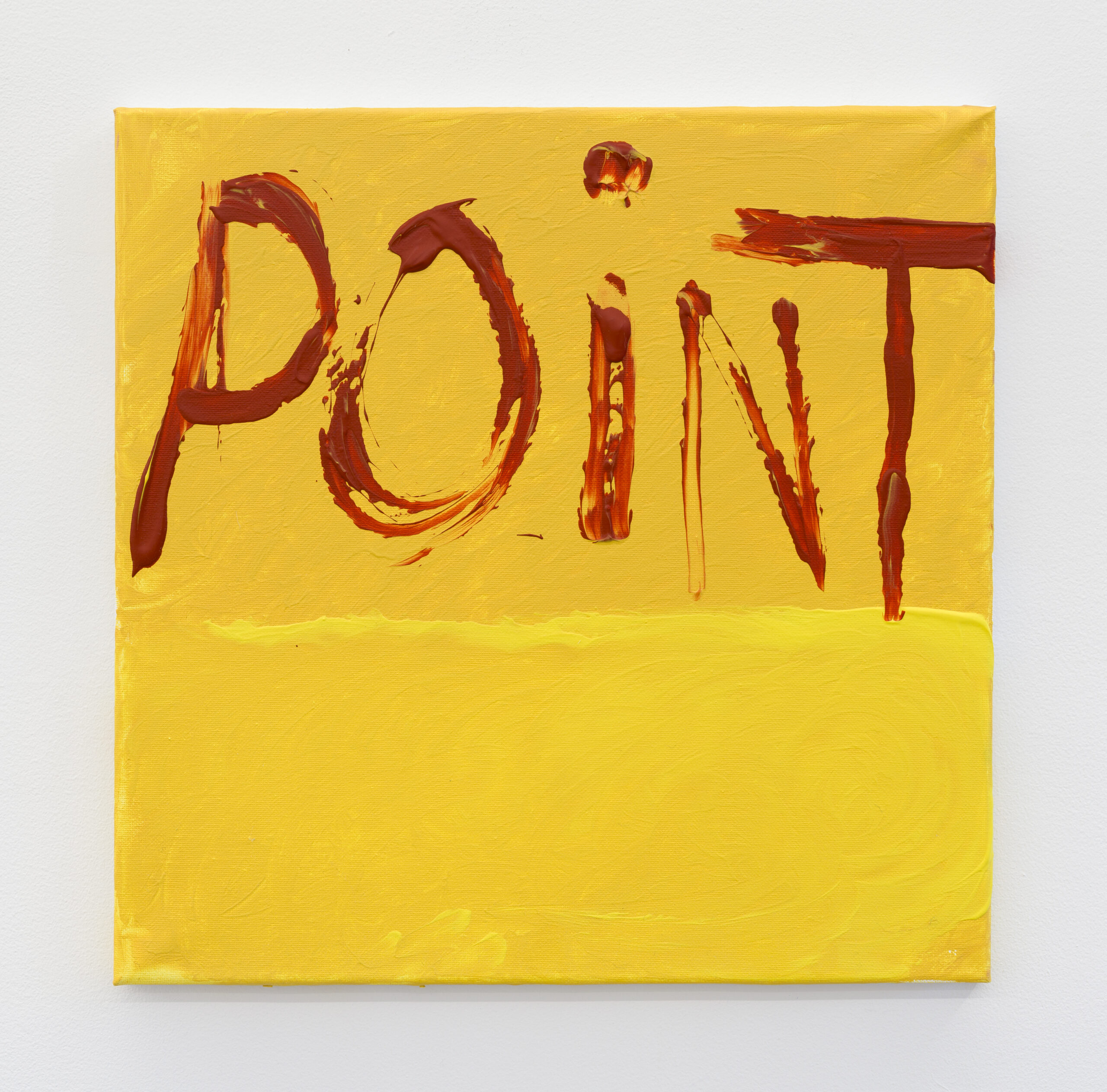
POINT, 2017. © Sue Tompkins. Courtesy the artist and King’s Leap, New York. Photo by Stephen Faught.
TOMPKINS: It really depends. Sometimes I write things and I really intentionally want them to be accurate. I want to spell the word “love” properly. I want to convey something in a very direct way, or at least the typewritten text is probably leaning towards the most direct place I can be, because it’s type. All of my work is about process. Sometimes that process can come into focus quite quickly, and that might be quite a look or sound or feel like a quite clear thing. Then I hope that opens up lots of other tangents. Not to muddy things, but it’s more positive than mud actually. But I really like mud as well. You know what I mean? Something that isn’t direct. So trying to communicate, then not communicating, then coming back, just the movement and keeping everything active and probable in motion.
TAFOYA: You have a lot of different ways of attacking these processes. You’ve got painting in the show, you’ve got written works, you have fabric pieces. When you’re handling something like the fabric, what is the approach? But also, what’s the kind of spark that makes you go, “This is a problem that demands we get out the typewriter? That means we need to whip out some chiffon?”
TOMPKINS: That’s a really good question. Honestly, it’s just instinctive. It’s like reaching for the thing that in that moment feels—which I know sounds so crap—like the best way of doing it. So those chiffon works and silk works, I haven’t made them for years. They’re like 15 years old or something. But at the time to me they reflected a rhythmical thing, a gesture, in a very simplistic way, I suppose. With those chiffon pieces, I remember thinking they’re so rooted for me in some sort of expression about a phrase or a line or a feeling or a suggestion or a statement, but without any words. At the same time as I was making those silk pieces, I’m sure I would’ve been writing too. Everything’s in conjunction the whole time.
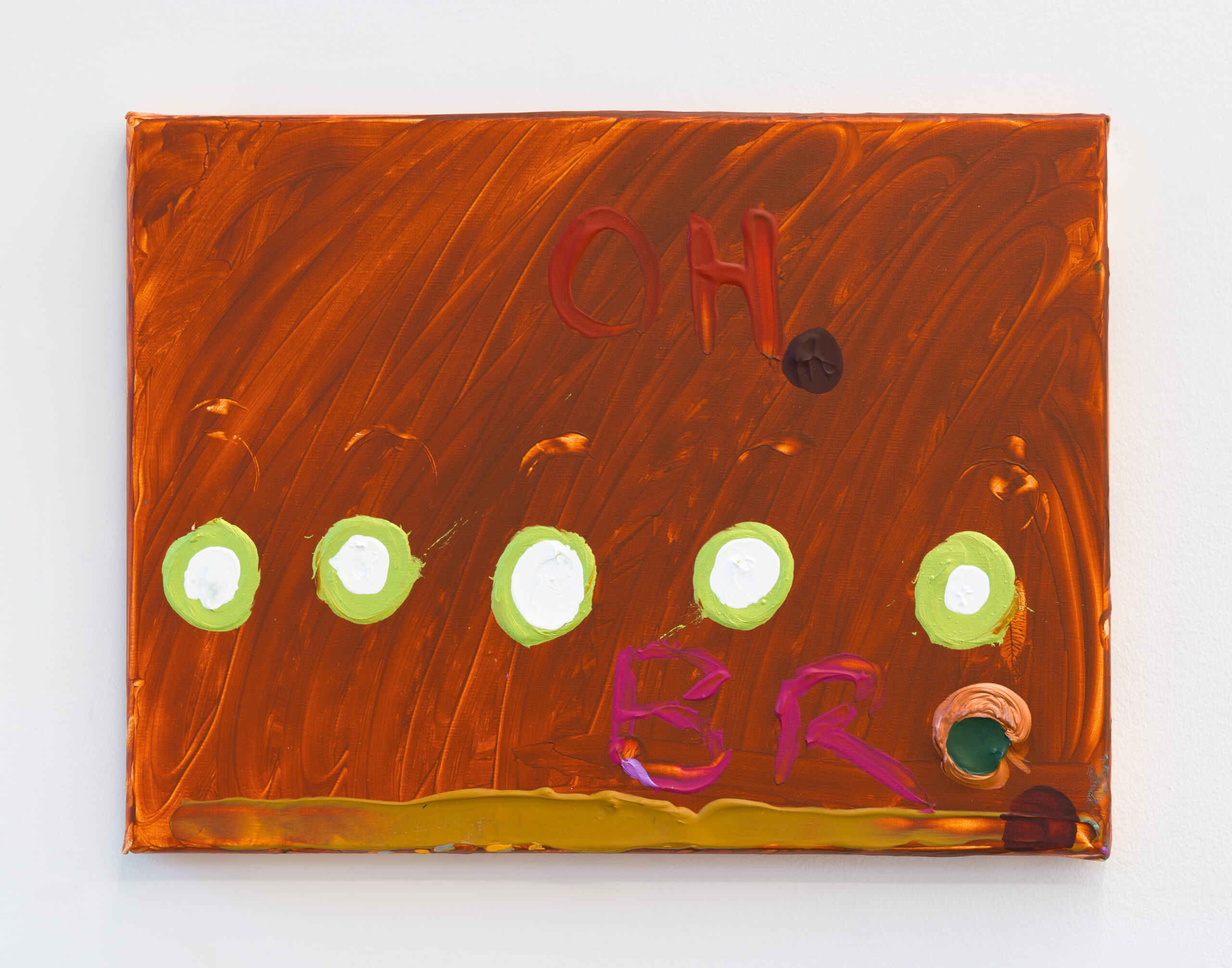
OH BRO, 2014. © Sue Tompkins. Courtesy the artist and King’s Leap, New York. Photo by Stephen Faught.
TAFOYA: Yeah
TOMPKINS: I don’t know why I did make them in the first place, honestly, but I felt like they reflected some suggestion.
TAFOYA: It’s a literary choice in a funny way, too. It’s a very particular shape that you want your words to take on. This is one of the things that I love about visual art, because as a writer you’re bound by the rules of grammar. But when you actually have chiffon for a sentence, it not only lets you break the rules but it also gives you shape and form and color as well.
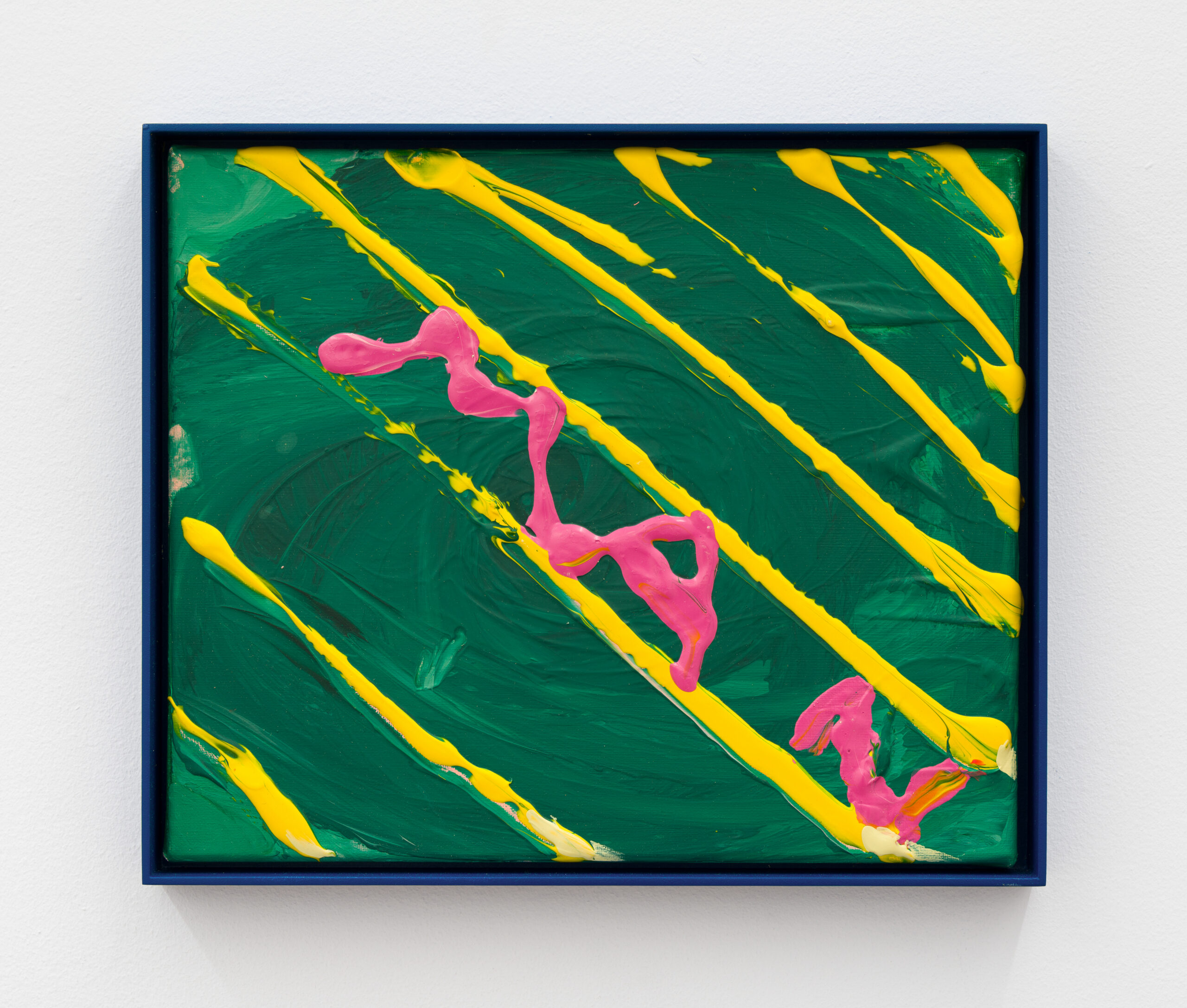
Man, 2015. © Sue Tompkins. Courtesy the artist and King’s Leap, New York. Photo by Stephen Faught.
TOMPKINS: I hope so. I mean, if I was to think about those pieces, they are a narrative description and gesture. But on the other hand, there’s almost nothing there. It’s literally just a bit of chiffon that I cut up. It was just made in quite a performative way, just sitting and going, “Oh, okay, I’ll cut this bit up, and then I’ll get this zip and then I’ll half unzip it, and then I’ll safety pin it, and then that’s it.” A painting isn’t a chiffon piece, and a chiffon piece isn’t a text work, or a performance or a sound piece or whatever. But I think there’s a lot of that reflection and mirroring in my work that it’s all the same thing really. There’s just something about going towards a way of working in that moment that feels the best way to communicate something.
TAFOYA: When did you first realize that you’d become enamored with words?
TOMPKINS: Oh, God. I would say only in my final year of art school in Glasgow. I was in painting, and at the time I just didn’t know what to paint at all. My sister–she’ll probably hate me for saying this, but my sister Hayley [Tompkins], I don’t know if you know her work, but—
TAFOYA: Yeah, she’s fabulous.
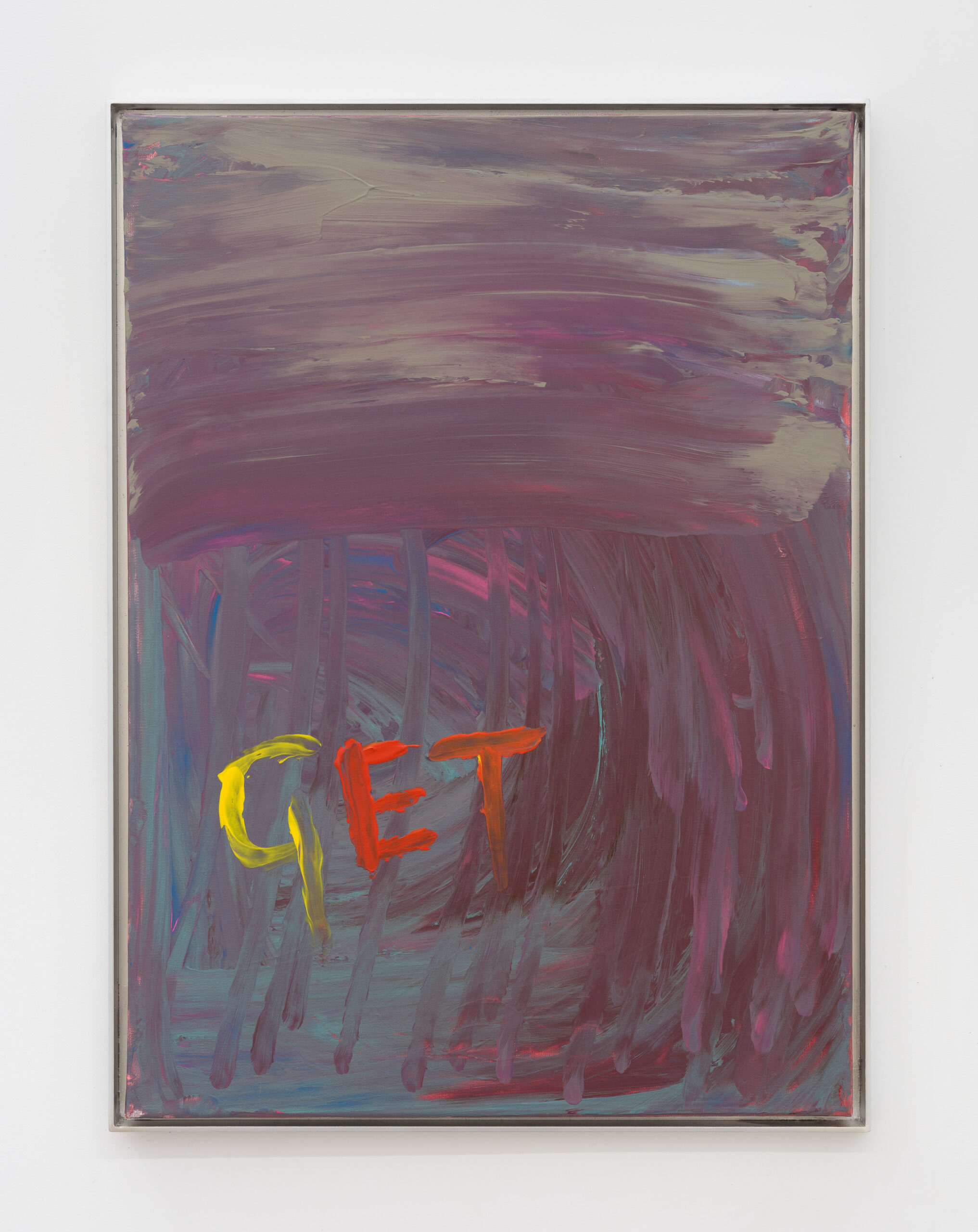
Get, 2013. © Sue Tompkins. Courtesy the artist and King’s Leap, New York. Photo by Stephen Faught.
TOMPKINS: Her language is paint, and it’s just so fluid. But basically I got to the last bit of art school and I remember having a tutorial with the head of painting who went, “We’re a little bit worried about you. We don’t quite know what your degree show’s going to look like.” And I was like, “Well, I don’t know either but I can’t imagine it’s going to be a load of painting.” I used to go to the Art School Library in Glasgow and just pick up a massive pile of books and look at them all. I think it all started to happen literally just from looking through a book and going “I love that” or “Oh, I’m not really into that”. That is probably a major part of the way I’ve worked continually since then.
TAFOYA: I think it’s so interesting that you had these options in front of you, and what you ended up doing was joining up with these boys in a band. What was it about all of that made you say, “I’m going to jump at this?”
TOMPKINS: It was just a really natural thing that happened, and I don’t know why it happened honestly. I mean we were all friends and connected through girlfriends, boyfriends. Such an incestuous place, Glasgow, but in a good way. I would never put us all together on paper at all, and I never wanted to be in a band. But our personalities I think work quite well together then and hopefully now.
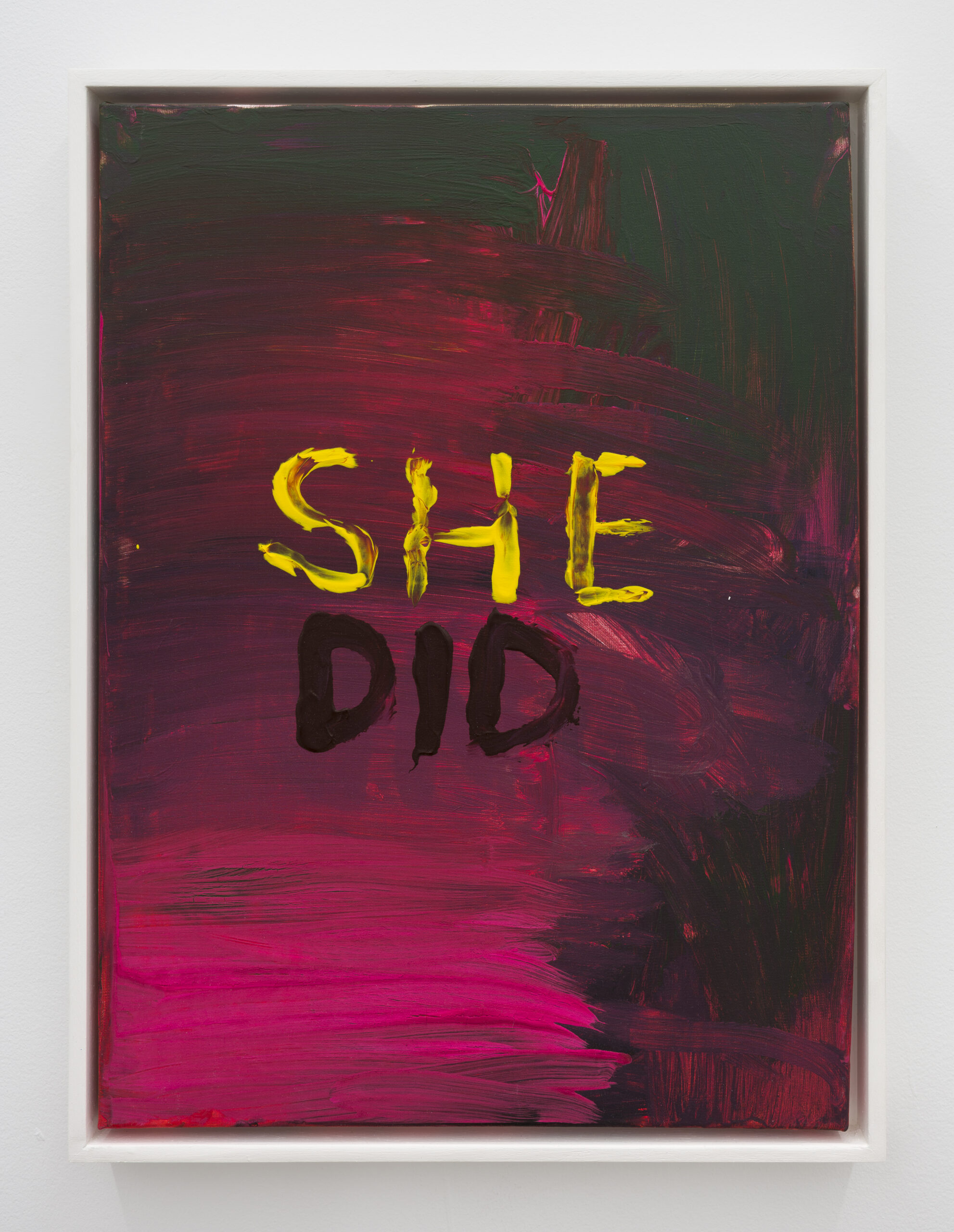
She Did, 2013. © Sue Tompkins. Courtesy the artist and King’s Leap, New York. Photo by Stephen Faught.
TAFOYA: It struck me as amusing just now that you said that you didn’t think that being in a band together would really work “on paper,” because again, it’s that funny thing with you where your forms of expression don’t really lend to one medium or another.
TOMPKINS: Yeah, and I can’t quite find the word to describe it, because I don’t want that to sound like, “Everything’s just free and easy.” I’m really conscious about how I put work out, if you see what I mean?
TAFOYA: Yeah.
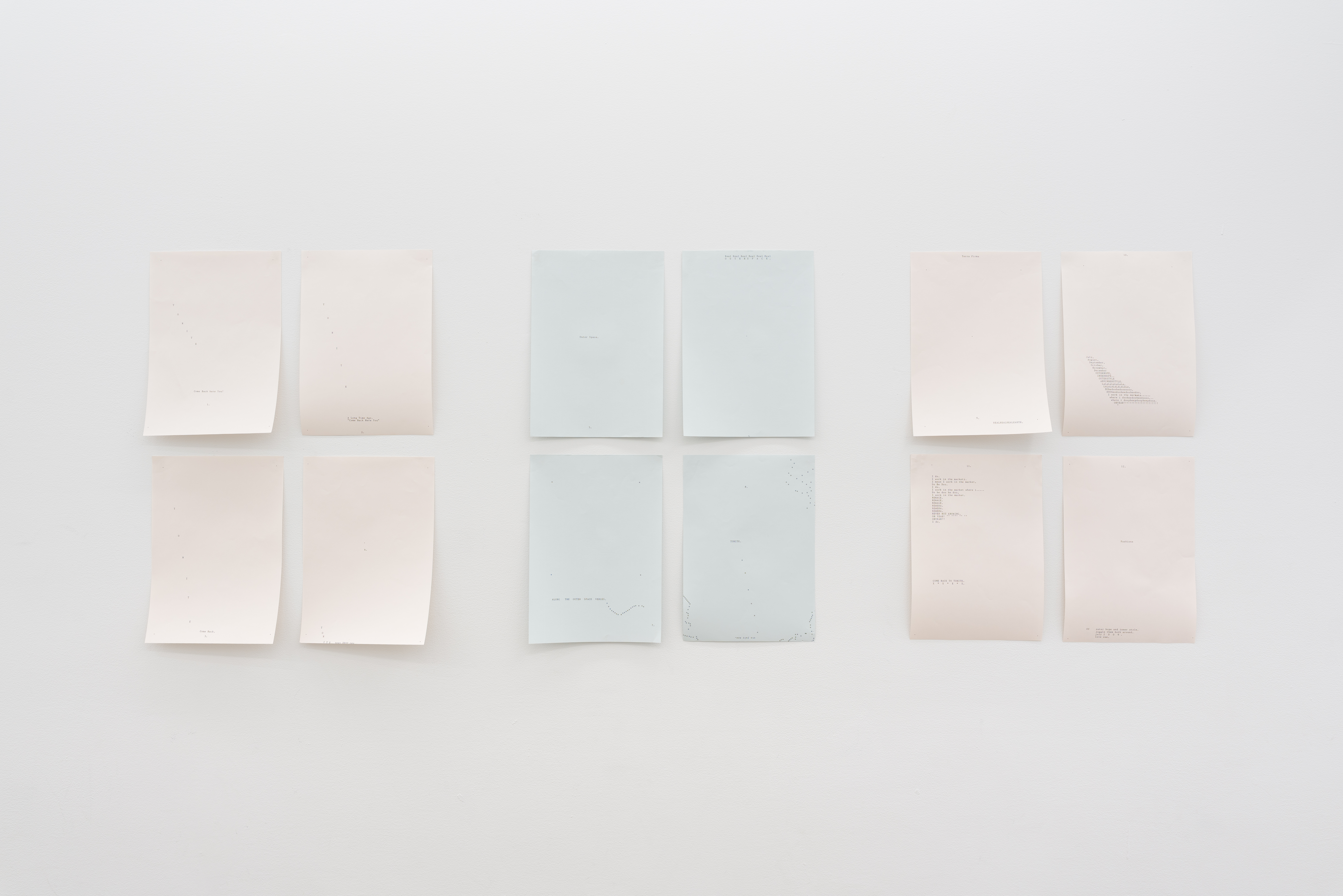
Fashions of Outer Hope and Inner Style, 2009. © Sue Tompkins. Courtesy the artist and King’s Leap, New York. Photo by Stephen Faught.
TOMPKINS: And with the band, for example, even with the very limited amount of songs that we did, the guys were very open to whatever I was going to do. There was no sitting down going, “How do we want to sound?” I’m sure they probably had those conversations by themselves, but not with me. So when I listen back I feel the freedom to actually just do what you are eventually going to do.
TAFOYA: I’m interested in how with music, obviously you’ve got a call and response, right? You’ve got the instruments in a certain place and you respond to them with words. But when you do record a sound piece like the one in the show, do you rerecord it over and over and listen to your voice and go, “Oh my God, not that one”?
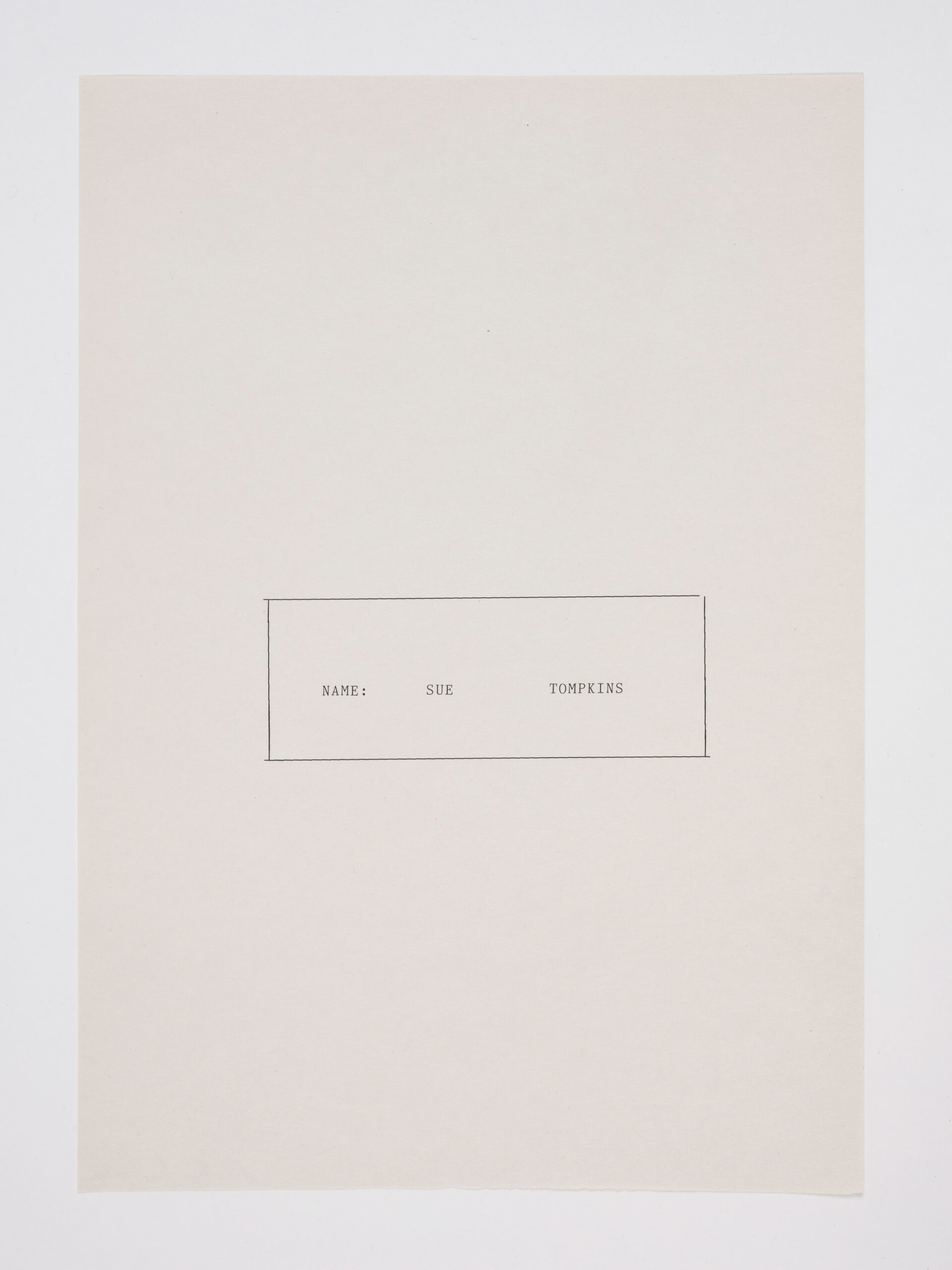
NAME: SUE TOMPKINS, 2014. © Sue Tompkins. Courtesy the artist and The Modern Institute/Toby Webster Ltd., Glasgow. Photo by Ruth Clark.
TOMPKINS: Yeah. Sometimes I would do a recording of something, and give it a bit of space. It makes me think about pauses in my work, because the process is quite continuous. I wonder if they’re sort of almost like markings of stopping a little bit. I suppose I never see anything in a really definitive way.
TAFOYA: I love that, because it means that the work is kind of infinite at the same time too.
TOMPKINS: Yeah, and that appeals to me. It’s all rooted in a process, and maybe almost a denial of the process. It sounds a bit weird. Something about not asking yourself why you’re doing something is really quite an important part of my work.
PINKNESS, 2014. © Sue Tompkins. Courtesy the artist and The Modern Institute/Toby Webster Ltd., Glasgow. Photo by Ruth Clark.