


In Conversation
Derek Blasberg and Mel Ottenberg on the Golden Age of Going Out



All photos courtesy of Derek Blasberg.
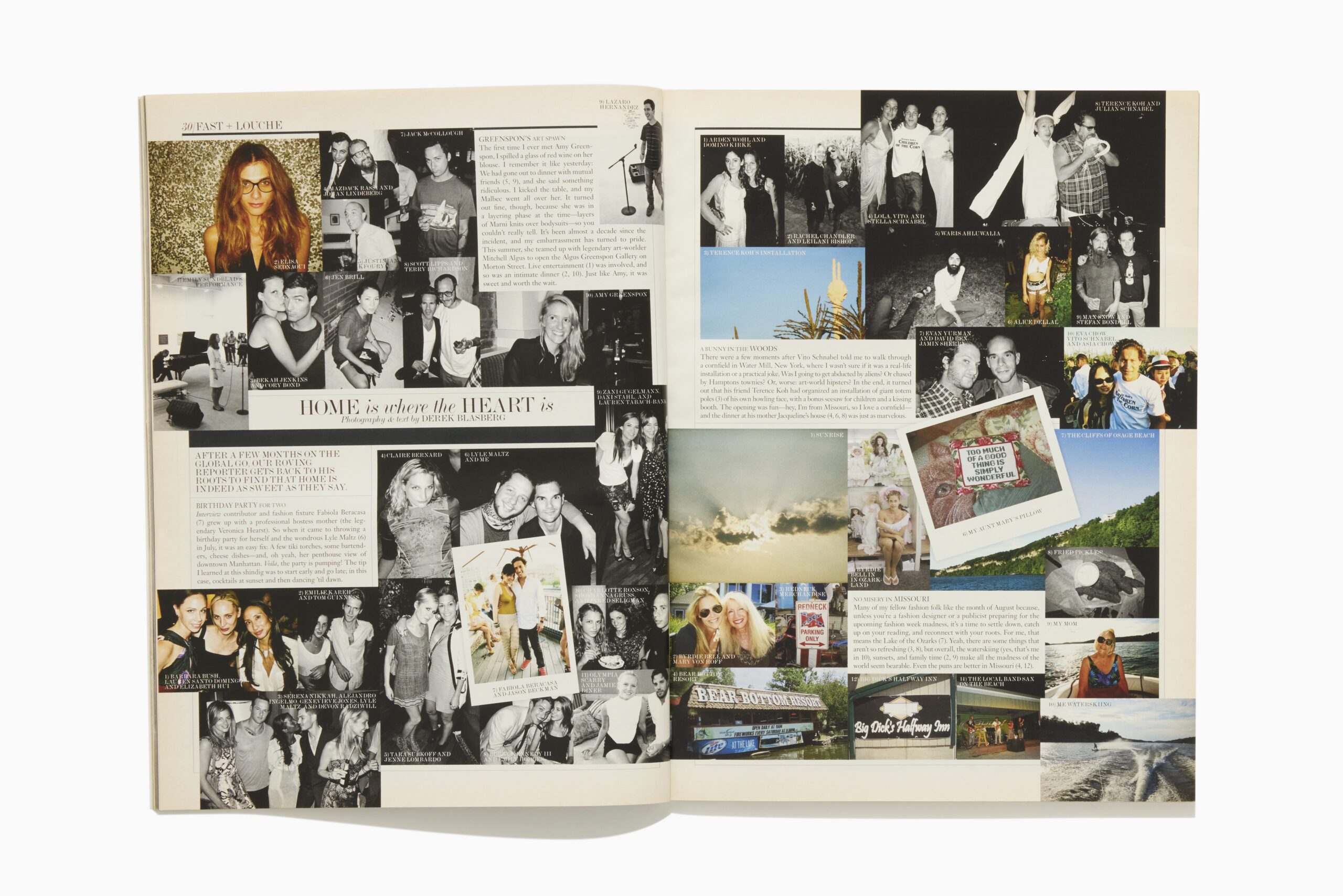
Today, Derek Blasberg is a prolific writer, high-society fixture, and father of two. But once upon a time, he was a fresh NYU grad with a vodka ginger and cigarette eternally in hand, and a total inability to turn down an interesting invitation. Although decidedly an uptown girl, Blasberg found himself documenting the indie sleaze era as he spent every night out partying with some of the biggest celebrities, socialites, and supermodels in the world. In his new book Fast + Louche, Blasberg waxes nostalgic for that time in his life, republishing all of his Interview columns and photographs of those unforgettable parties in one place. Last month, the author grabbed lunch with our Editor-in-Chief Mel Ottenberg to gossip about their friends, careers, crazy night’s out, and waking up the next morning to do it all over again.
FRIDAY 2:30PM JUNE 26, 2026 UPPER EAST SIDE
———
DEREK BLASBERG: Mel, I’ve been interviewed before.
MEL OTTENBERG: I know. So, hold on. Let’s go backwards. I know you from Beige.
BLASBERG: Oh, god.
OTTENBERG: Beige is earlier than this book. You were in college and I was just out of college.
BLASBERG: Should that be the name of our book? I Know You From Beige.
OTTENBERG: I Know You From Beige is crazy. There is no Beige now.
BLASBERG : I think it’s a condo complex now. A downtown, young, vibrant New York that was paved over and turned into luxury condos.
OTTENBERG: What I meant was, now there’s nowhere that every faggot in New York City goes to on a Tuesday night, no matter if you’re young and hot, a Warhol superstar that is homeless, Amanda Lepore, a celebrity, a publicist, a winner, a loser. You know what I’m saying?
BLASBERG: A trans superstar, a reality show—
OTTENBERG: Yeah.
BLASBERG: And Rupert Everett, Madonna‘s best friend. That was Beige.
OTTENBERG: But also, we were there. We were none or these things. I mean, I was not hireable. I didn’t have a job. No, hold on. I worked at Moss. I was the cashier at Moss.
BLASBERG: Moss, the interiors store?
OTTENBERG: Mm-hmm.
BLASBERG: That was your first job?
OTTENBERG: I was the cashier. And then I quit before I got fired, and then I don’t know. I eventually became a stylist, but you were at NYU.
BLASBERG: I grew up in St. Louis, Missouri and I came here for NYU.
OTTENBERG: And you went out every night.
BLASBERG: And I went out every night.
OTTENBERG: We’re talking about 1999?
BLASBERG: 2000. So, the doorman at Beige was called Derek.
OTTENBERG: Okay. I remember that.
BLASBERG: I was 18 years old, but he liked me. And I knew enough that if you go there early, they don’t card you. So if you tried to go there after dinner, you’d have to show ID. But if you went there and had dinner with Sophia Lamar at 8:30, you get a free meal and hang out with New York’s crème de la gays.
OTTENBERG: Until four in the morning.
BLASBERG: Until four in the morning.
OTTENBERG: Or until you left to go somewhere else.
BLASBERG: I would never go anywhere else.
OTTENBERG: Right. [Laughs] So, you were there from 9 PM until—
BLASBERG: 8:30 to 4:00. Because my dorm was on Washington Square West, so I would walk there and walk back. It was like a pre-war building. I had a view of Washington Square Park. I thought that’s what everyone got when they moved to New York.
OTTENBERG: Right. We are both from a time that they now call “indie sleaze.”
BLASBERG: Am I indie sleaze?
OTTENBERG: This book is indie sleaze adjacent.
BLASBERG: You are indie sleaze.
OTTENBERG: Culturally, I don’t feel like I’m indie sleaze. But we are from the time of indie sleaze, although you were always uptown.
BLASBERG: Yeah. I liked a little more polish.
OTTENBERG: You were always “Puttin’ on the Ritz.” You were always friends with rich girls, heiresses, future queens.
BLASBERG: But I would love to be known as indie sleaze.
OTTENBERG: Babe, you’re not indie sleaze. Look at this book, you’re an uptown girl.
BLASBERG: Look at those great Interview spreads.
OTTENBERG: Are all these pictures from Interview magazine?
BLASBERG: Yeah.
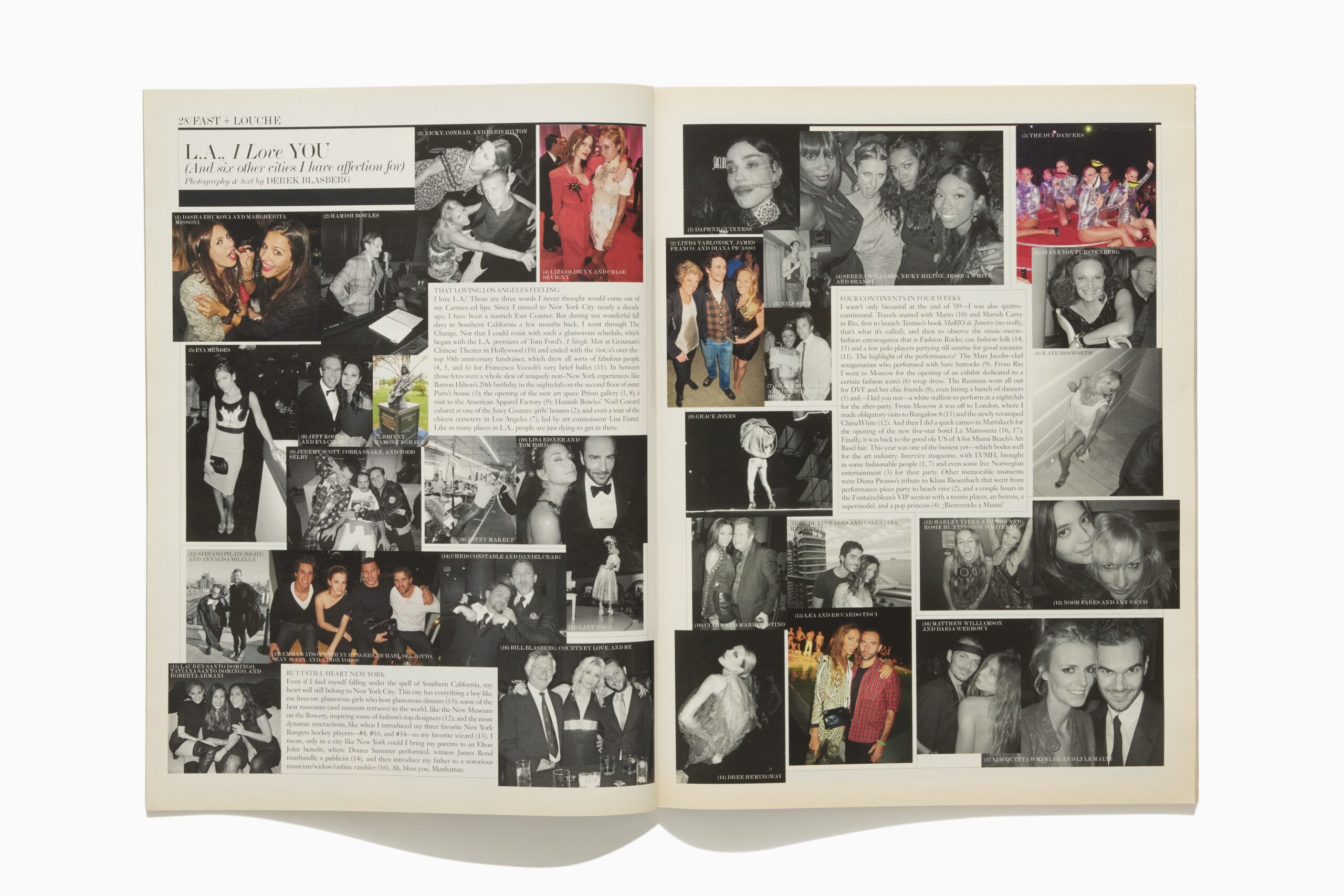
OTTENBERG: One thing about you, Derek, is you were always in the spot and you always had the chutzpah to take the fucking picture.
BLASBERG: Chutzpah. I love that. Thank you.
OTTENBERG: You’re welcome. But you started by doing it for Interview.
BLASBERG: Yeah. When I graduated NYU with two degrees, I double majored—thank you—in journalism and dramatic literature. My first job was working at Vogue. I was the assistant to the managing editor, and I was arguably the worst assistant in Vogue history.
OTTENBERG: You were fired.
BLASBERG: So, that didn’t last long. And then I was freelance, and then I had a column with style.com.
OTTENBERG: The Blasblog. Derek doesn’t like the word Blasblog whenever I’ve said it, but you seem fine about it now.
BLASBERG: I mean, I don’t want it on my tombstone—
OTTENBERG: We won’t do that to you.
BLASBERG: I don’t even think people use the word blog anymore.
OTTENBERG: They don’t. Blasblog was before this.
BLASBERG: When I was going back through all these pictures, the thing that I remember most is that I’m juggling 10 plates at a time. [I never had] one job. I had style.com and Interview and V and Harper’s Bazaar, all at the same time. I was hustling. I was so ambitious.
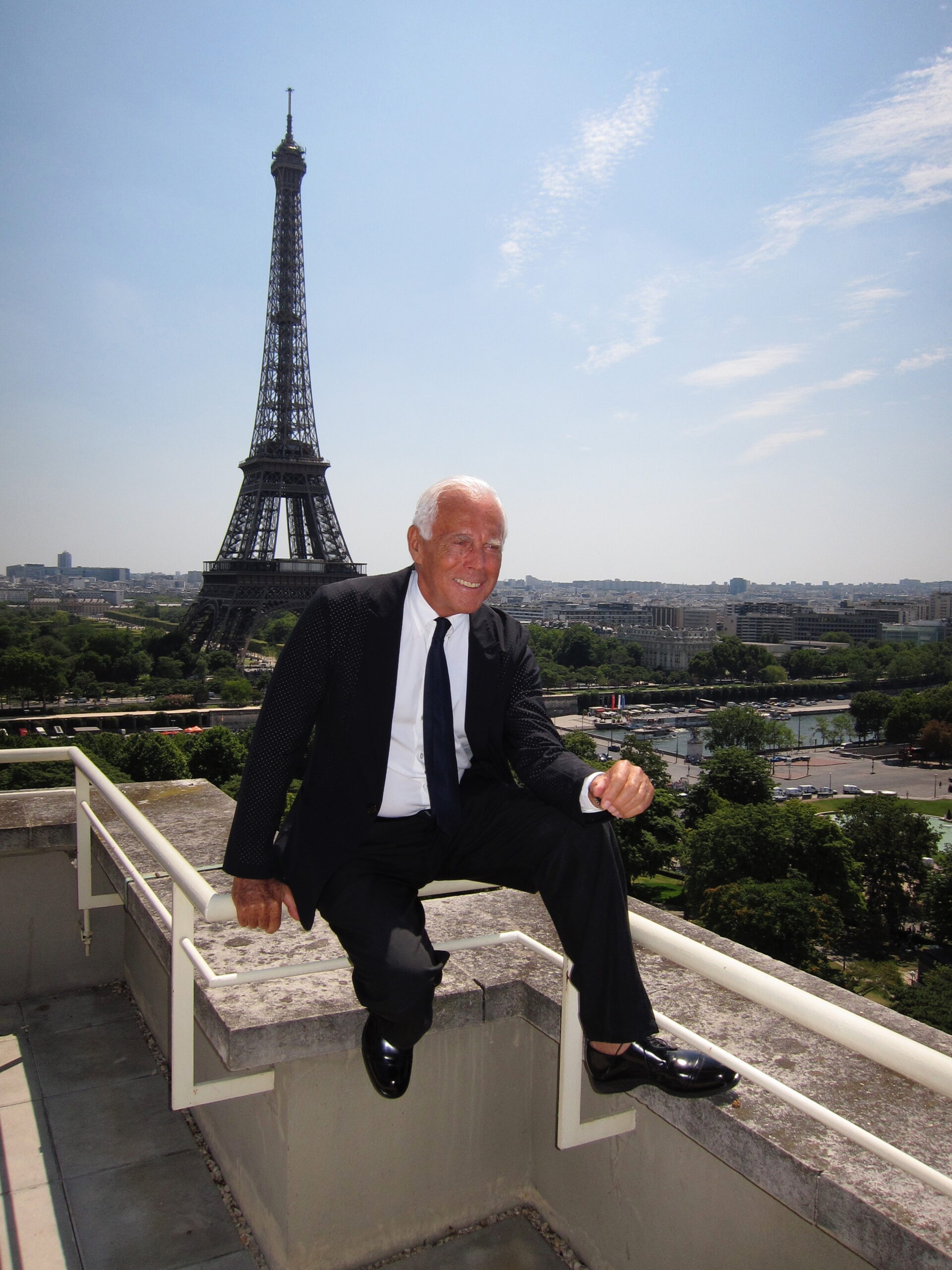
OTTENBERG: [Turns pages of book] Let’s talk about some of this stuff. Let’s talk about Andre Leon Talley and Giorgio Armani, both dead. Did you have sex with Giorgio Armani?
BLASBERG: I didn’t.
OTTENBERG: Okay.
BLASBERG: Not for lack of trying. I wasn’t his type.
OTTENBERG: [Laughs] What do you think was his type?
BLASBERG: Someone who spoke Italian.
OTTENBERG: Oh.
BLASBERG: Oh, Gossip Girl. We’re in Gossip Girl right now.
OTTENBERG: Oh, my god. I never watched Gossip Girl, but it grabbed New York like a motherfucker.
BLASBERG: I loved Gossip Girl, and all those folks were around. Remember Chase Crawford?
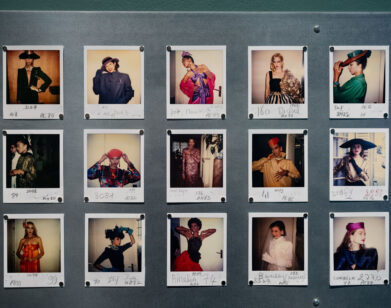
OTTENBERG: Yeah, Chase Crawford. I have so many polaroids of them because I styled them for a Steven Klein Details cover, the boys. Penn Badgley, Chase Crawford, Ed [Westwick].
Lindsay Lohan. You were always with Lindsay Lohan. Lily Donaldson, Lauren Santo Domingo. How did you and Lauren Santo Domingo meet? What was that link up about?
BLASBERG: So, when I was a junior in college, I interned at Vogue and Lauren was the associate market editor. And that’s where—
OTTENBERG: Your love began.
BLASBERG: Our love affair began. There’s Karlie [Kloss], who of course is from St. Louis. I always wanted a little sister and I got one—
OTTENBERG: Supermodel. Derek, are you from a rich family?

BLASBERG: No, I’m not from a rich family.
OTTENBERG: But how were you always so locked in on the rich people? This [photo of Selma Hayek] reminds me, there’s a moment—the most glamorous thing I’ve ever seen. One time, I left Bungalow at 2:00 in the morning.
BLASBERG: Why so early?
OTTENBERG: Oh, because I was sober.
BLASBERG: What makes you think I wasn’t sober?
OTTENBERG: You weren’t sober. None of you guys were sober, and I was probably just like—
BLASBERG: Being healthy.
OTTENBERG: So, maybe it’s around the time of this book, but when I look at this picture of Salma Hayek, I think of her outside of Bungalow in a floor length, like, dark navy gown with an hourglass shape and big fishtail train. And she’s fighting the paparazzi, waving her hands while they shot her. Like the Avedon pictures of the woman falling down the stairs and there are all those—
BLASBERG: Suzy Parker.
OTTENBERG: Suzy Parker, thank you. And then, there were all these people with cameras in her face? I was like, it’s too much.
BLASBERG: You’re like, “New York, New York.”
OTTENBERG: Exactly. I don’t know Salma Hayek, but I live for that. I live for that visual.

BLASBERG: The great thing about reliving these pictures is that I had such great range. Chris [Bollen] was really happy to run the full spectrum. This was John’s last bow for John Galliano. I could run pictures from Paris Fashion Week, but also pictures from when I would go home to the lake at the Ozarks.
OTTENBERG: Right. It was your life.
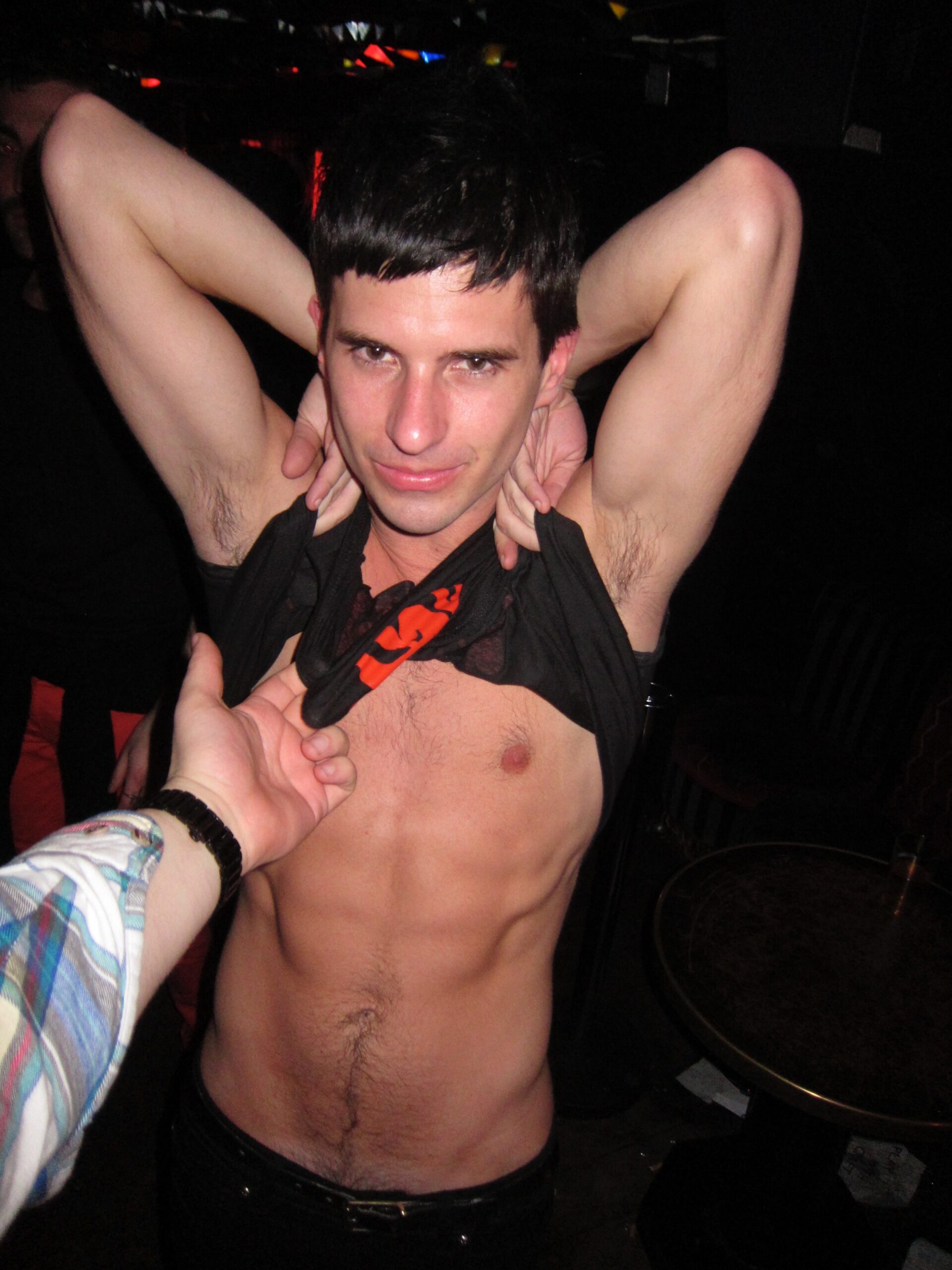
BLASBERG: Go back one page. That was Jen Brill, who also left us and moved to LA.
OTTENBERG: She seems to be into it. Geordon [Nichols]’s body.
BLASBERG: I think he was very proud of it.
OTTENBERG: I love. Poppy Delevingne looks fun. Basically, you had a lot of fun. What was your drink throughout all these times?
BLASBERG: When I was at Bungalow, I’d always have vodka and ginger ale, which is so insane.
OTTENBERG: I think it sounds delicious.
BLASBERG: It’s, like, 2000 calories.
OTTENBERG: Oh. Because you’d have, like, 12—
BLASBERG: 10 a night. It’s insane.
OTTENBERG: And how many cigarettes were you smoking in a day?
BLASBERG: How many have you got?
OTTENBERG: More than the world could ever allow.
BLASBERG: You know when you see these posts that criticize Gen Z or Gen Alpha for getting smoothies and going on mental health walks? When I was in my 20s, I was drinking vodka and ginger ale and smoking cigarettes and staying up until four in the morning. Hedonism was so different then.
OTTENBERG: Yes, because hedonism then was like eye roll, whatever, right? I mean, even though I was sober, I was still a hedonist. Oh, remember when they went out?
BLASBERG: Yeah. Look how handsome he was.
OTTENBERG: I mean, he still looks good and she looks great. All three of these people still look great. Is it ridiculous that I’m not naming them? It sort of seems better.
BLASBERG: Why? Do you know them?
OTTENBERG: Of course I know them. Okay, so, let’s talk about your evenings. How many things were you going to? What were your nights like?
BLASBERG: I think the part that’s hard to understand if you weren’t there is that, when you grow up in St. Louis, Missouri and it’s pre-digital and your face is pressed against the glass and you finally get here, you don’t say no to anything.
OTTENBERG: Right.
BLASBERG: You don’t want it to end. So, sometimes things would start at 6:00 PM. It’d be a cocktail. This was also before you had calendars on your phone. I used to print out a piece of paper with every stop and every address and have to hail a cab or take the subway. I had a bike at this time. You just hit every stop.
OTTENBERG: Right. Parties, parties, club, another party, club.
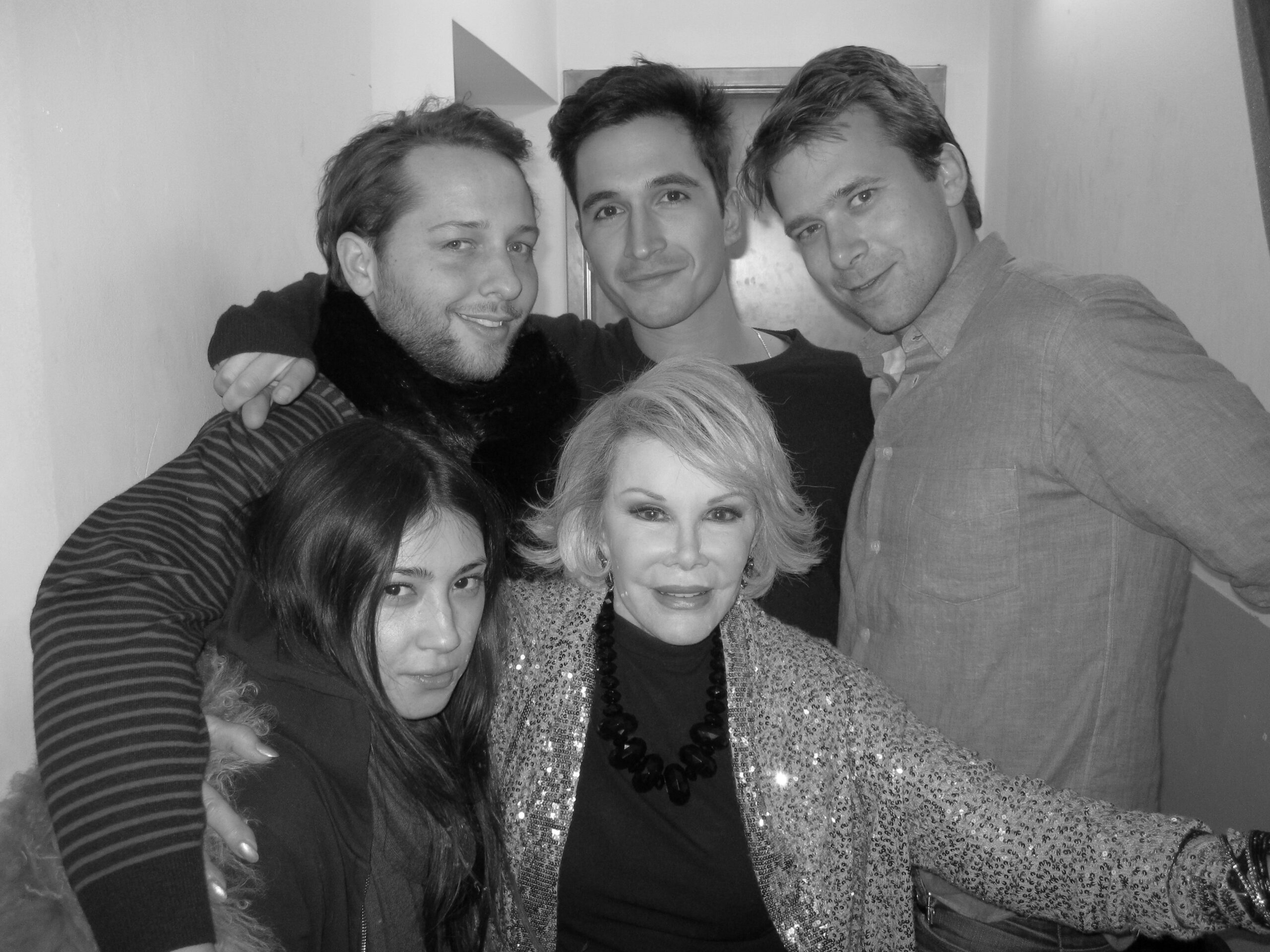
BLASBERG: Bus, another bus, club. So, my friend Marjorie Gubelmann had grown up with Joan Rivers‘s assistant.
OTTENBERG: Oh, wow.
BLASBERG: And so, she said, “Joan is performing the week before Christmas in New York City. Do you want to see her?” I never said no to anything, so we all went.
OTTENBERG: God, yeah. I realized, around this time maybe, I interviewed her for Interview. It’s wild that I forgot. Was Andy Warhol your inspiration for all the photographs taken in this book? Don’t be ashamed.
BLASBERG: What a great question. No, but, like, yeah. [Laughs]
OTTENBERG: I actually just had lunch with Pat Hackett a couple days ago, which was exciting. She was like, “Before the Instamatic camera, sometimes I was the only one there taking pictures. So most weren’t really good, but I just had access to everybody.”
BLASBERG: That’s what’s so surreal about having this book with 17-year-old pictures is that, in that moment, I never thought that they would be special. I never identified as a photographer. It’s only through the lens of nostalgia, and how different the world is now and how special and sweet that moment was then, do I feel like these pictures are quote unquote, “Important.”
OTTENBERG: Right. Let’s go back to hedonism. So, you’re at a party. Do most of these nights end at Bungalow 8?
BLASBERG: I’m trying to think. I don’t even know.
OTTENBERG: What years does this book cover?
BLASBERG: 2009 to 2012. Bungalow, I guess, was wrapping up then. But this is St. Barts, this is Avenue A, Chrissie [Miller]’s house, this is Moscow.
OTTENBERG: Club Chrissie was really an important club. Shout out to Club Chrissie.
BLASBERG: The house exploded. The place burned down.
OTTENBERG: I think the address was 212 Second Avenue, which is so sick. Is that the address?
BLASBERG: Oh, was it 123?
OTTENBERG: Maybe it was 123. Also sick.
BLASBERG: Yeah. It was easy to remember and it was just a couple blocks away from Lit. So maybe I was indie sleaze. Listen to me! Avenue A. I had range. I’m a middle-aged gay dad now.
OTTENBERG: You’re doing great, sweetie. I think it’s great.
BLASBERG: [Turns the page] Gore Vidal. Obsessed.
OTTENBERG: His cock looks pretty fat. It’s kind of hot.
BLASBERG: I would hope so. You would be disappointed if it wasn’t?
OTTENBERG: If he didn’t have big balls, yeah. So many rich people. Every girl in this book has had this thing or that thing done. By the way, I’ve never done anything.

BLASBERG: I’ve never had Botox.
OTTENBERG: I’m worried it looks sort of vaginal in men.
BLASBERG: Yeah. I think men look a little more dignified with some wrinkles. I also think vanity is so unattractive on a guy.
OTTENBERG: But the girls, the New York women know what they’re doing. Someday, I’ll have a neck job. Anyway, whatever. It’s fine. The girls are great. Oh my god, you in Vogue. Is that by Annie Leibovitz?
BLASBERG: Yeah.
OTTENBERG: Damn, bitch. Let’s see this.
BLASBERG: That was my dog, Cocoa.
OTTENBERG: RIP.
BLASBERG: There were also stories that I forgot about. I interviewed Rihanna and Kate Moss for the cover of this issue in the spring of 13 years ago and I totally forgot that I did it, which is so insane. There’s not a lot of time for reflection when you’re living in New York. As soon as you finish one story, you’re already prepping the next one. So that’s why I was sort of nostalgic for this whole time. I don’t know how you feel about this, but I don’t know if I’d go back.
OTTENBERG: Yeah. No, I don’t want to be 30 years old again. I wouldn’t go back.
BLASBERG: I also don’t know if I’d want to be 28 now.
OTTENBERG: I definitely wouldn’t want to be 28. I’m basically satisfied.
BLASBERG: Has anyone ever sent you those memes or whatever that are like, “Remember when you dreamed of everything you have right now?” I always wanted to live in New York. I always wanted to have a family.
OTTENBERG: I’ve far surpassed the things that I wanted for myself in 2000, but it doesn’t mean that that’s the end of the thing.
BLASBERG: Your goal points change. You want more, but there was a time when you wanted what you have.
OTTENBERG: Yes. Amen.
BLASBERG: I never dared to dream as big as I have now. I didn’t meet an out gay person until I was 18 years old. So, the idea of having a family was—I would never have dared to dream that big.
OTTENBERG: Yes, yes, yes.
BLASBERG: I just wanted to get to New York and have a job. That was it. And then I got here and I had 10 jobs and now I’ve got two kids. Now, I just kill for a good night’s sleep.
OTTENBERG: All right. Let’s get out of here.