


INTERGALACTIC
Only Mother Nature Is Better Than Iris Van Herpen


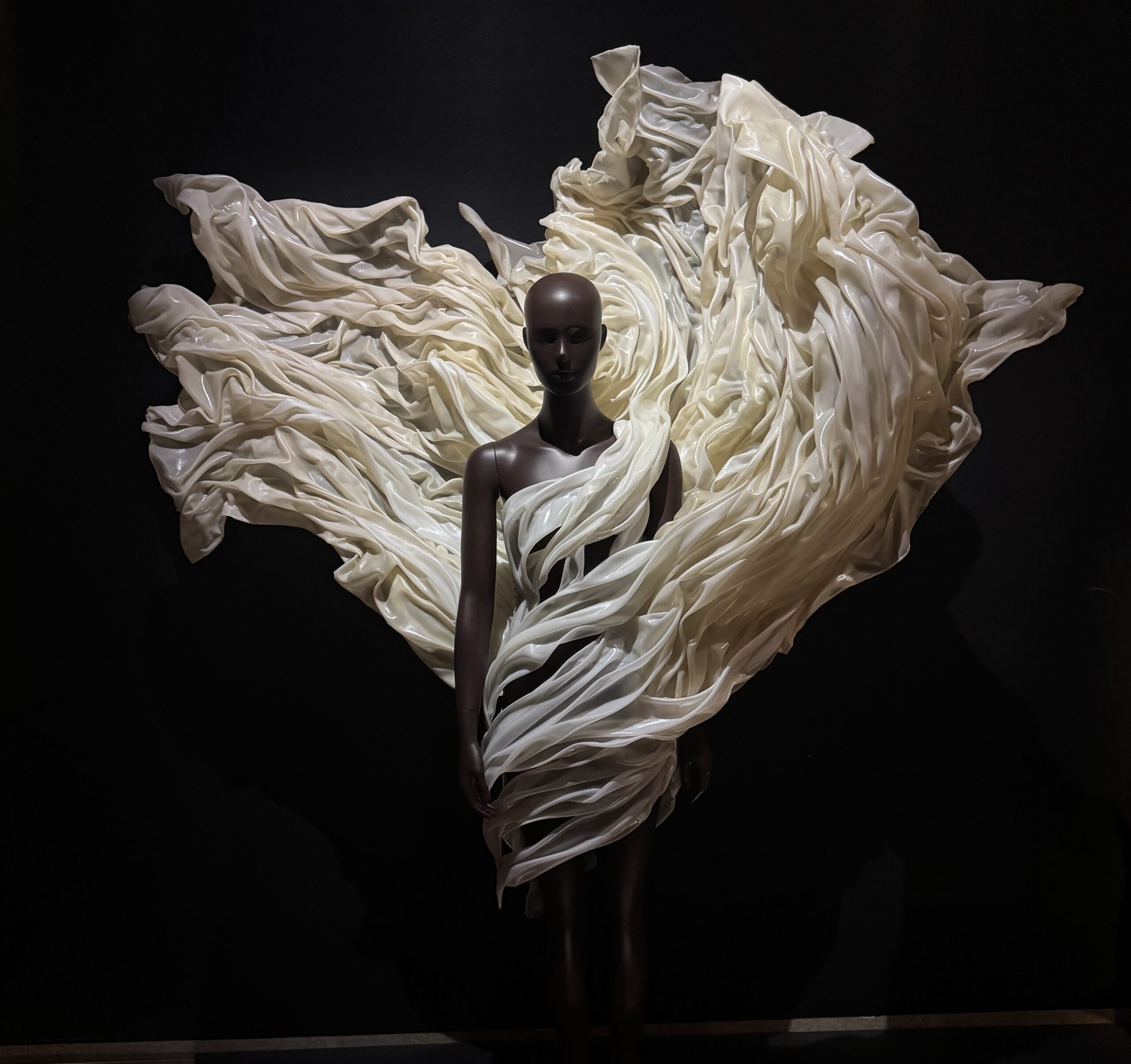
All photos courtesy of Emily Kirkpatrick.
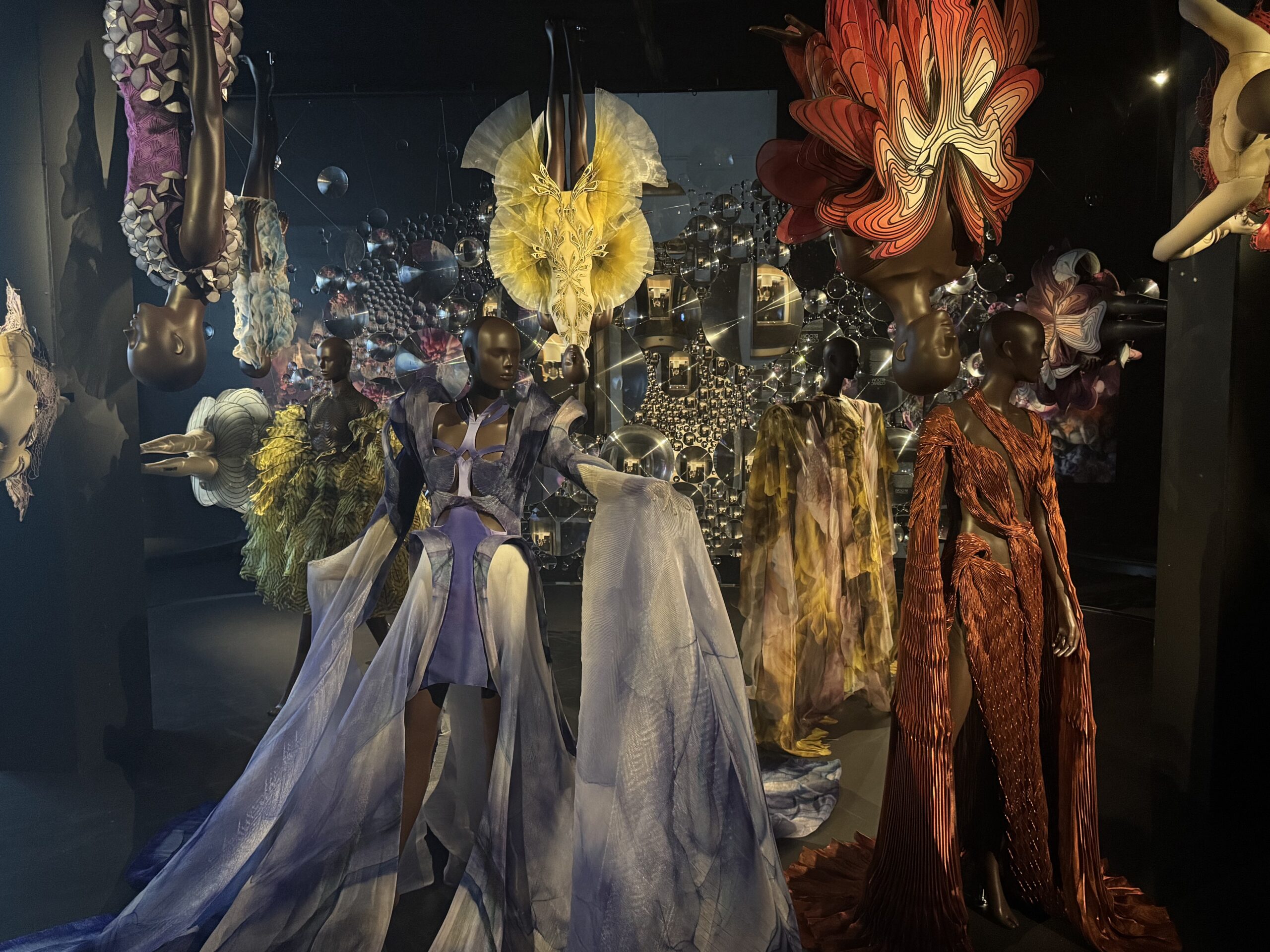
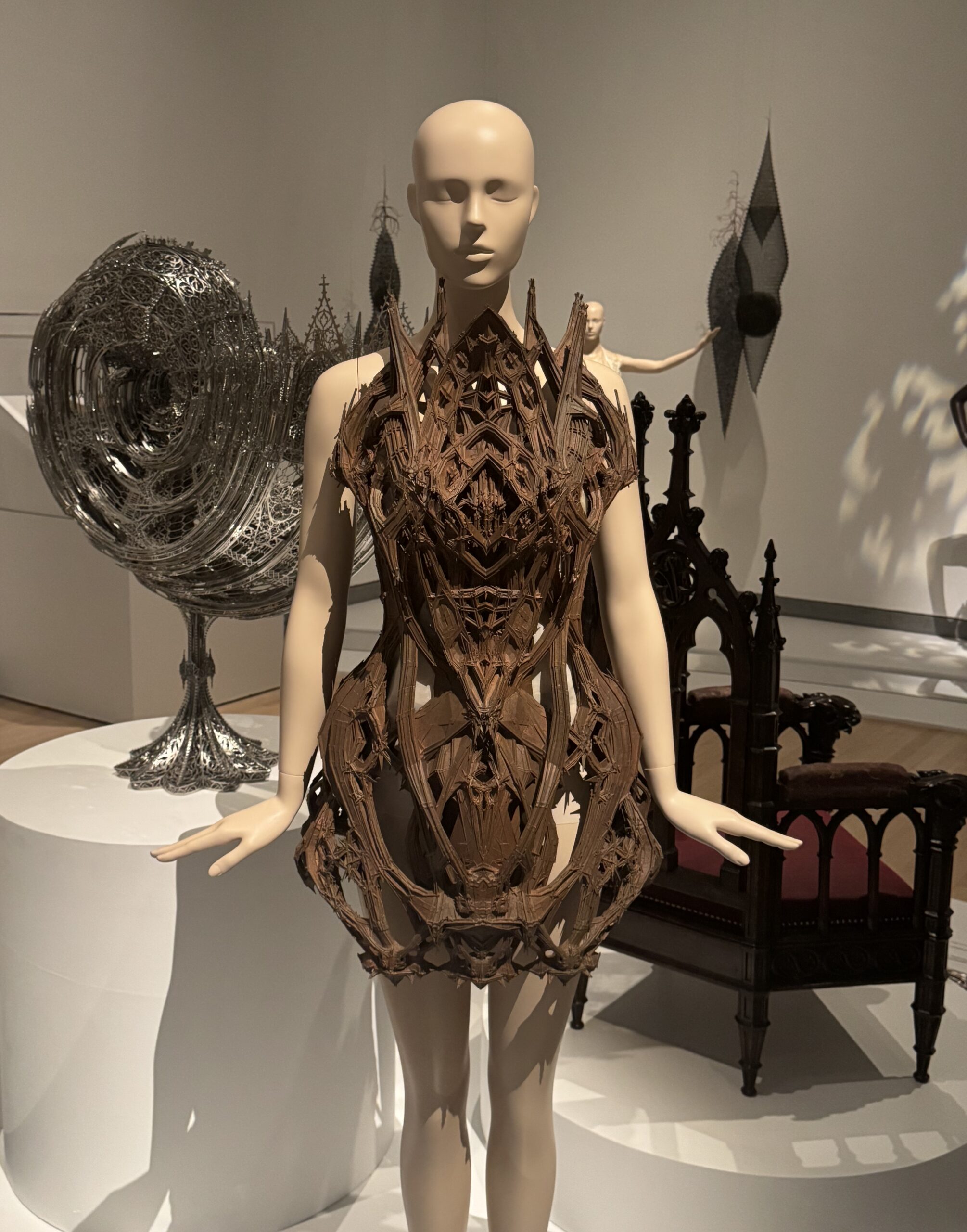
Iris Van Herpen knows no bounds. The Dutch fashion designer’s work leapfrogs across artistic disciplines merging those disparate threads into interdimensional design. In a new retrospective at the Brooklyn Museum open now through December 6, Van Herpen’s auteurship is on full display. For the last 19 years, she has consistently pushed up against the boundaries of what fashion can be and what is even materially possible. Merging the natural with the technological, the automated with the artisanal, her design perspective is undeniably her own. After walking through the show, I got on a call with Van Herpen to learn more about her process, the future, and why the coolest people in the world can’t stop wearing her clothes.
———
WEDNESDAY, 10:04 AM, MAY 20, 2026, NEW YORK
———
EMILY KIRKPATRICK: Hi, nice to see you.
IRIS VAN HERPEN: Nice to see you.
KIRKPATRICK: So the exhibit just opened. How’s it been going?
VAN HERPEN: Really well. It opened on Saturday for the audience and it was really special to see that so many people came already, and the interaction has been really special. I saw all ages, and I also noticed that people were really well-dressed.
KIRKPATRICK: Oh, really?
VAN HERPEN: They are really doing their best. I didn’t see that in the Netherlands so much. Paris, people were also really doing their best and New York is the same.
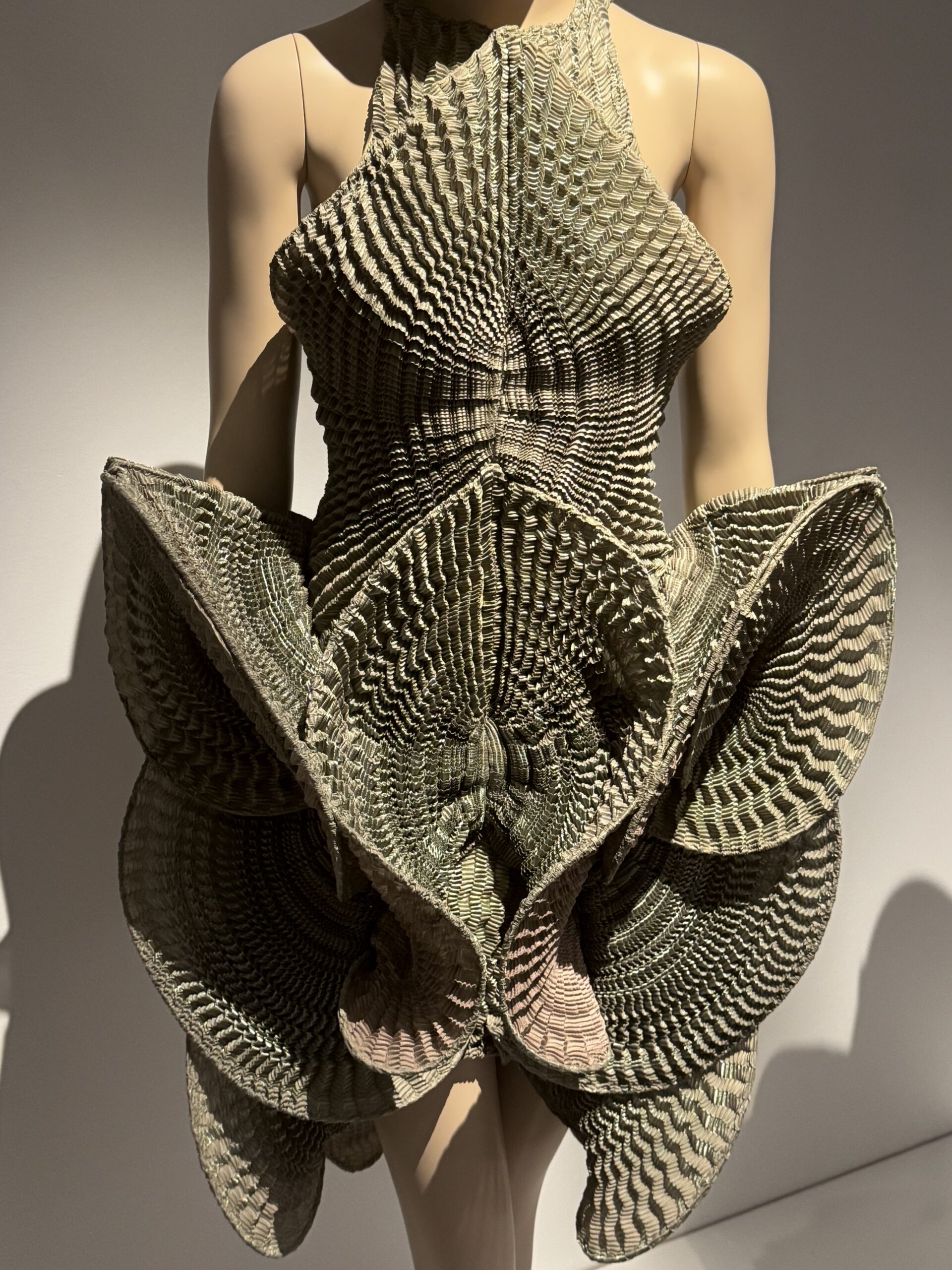
KIRKPATRICK: I love how people dress to match the show.
VAN HERPEN: Yeah, right? It was also really special for me to be working on a new creation [inside the exhibition]. That was the first time that I did that, and the interaction was so meaningful and so special. Some of the people told me that they were into fashion because of me and that’s always, of course, such a big compliment that you can inspire someone to direct their whole lives. That really touched me.
KIRKPATRICK: I was going to say that you even being in the exhibit at times, that feels like a totally new thing most fashion exhibits don’t have.
VAN HERPEN: Yeah, it’s really special because, in the atelier, it’s such a collaborative vibe from so many different people, different backgrounds, and it’s such a precious energy. I really wanted to bring in that same energy that is happening in the atelier into the atelier of New York. And to really bring people into that rare space of haute couture.
KIRKPATRICK: The all-ages nature of the audience makes sense to me too because you have that one room that’s very tactile. You get to look in the microscopes and touch the fabrics. It feels almost like a science museum.
VAN HERPEN: Absolutely, that’s correct. People from different backgrounds and ages really connect to the work. So it’s special in the sense that it became more than a fashion exhibition. That’s also what I hoped. There is so much science entwined and engineering, so I think different people can find different sources of inspiration in the work.
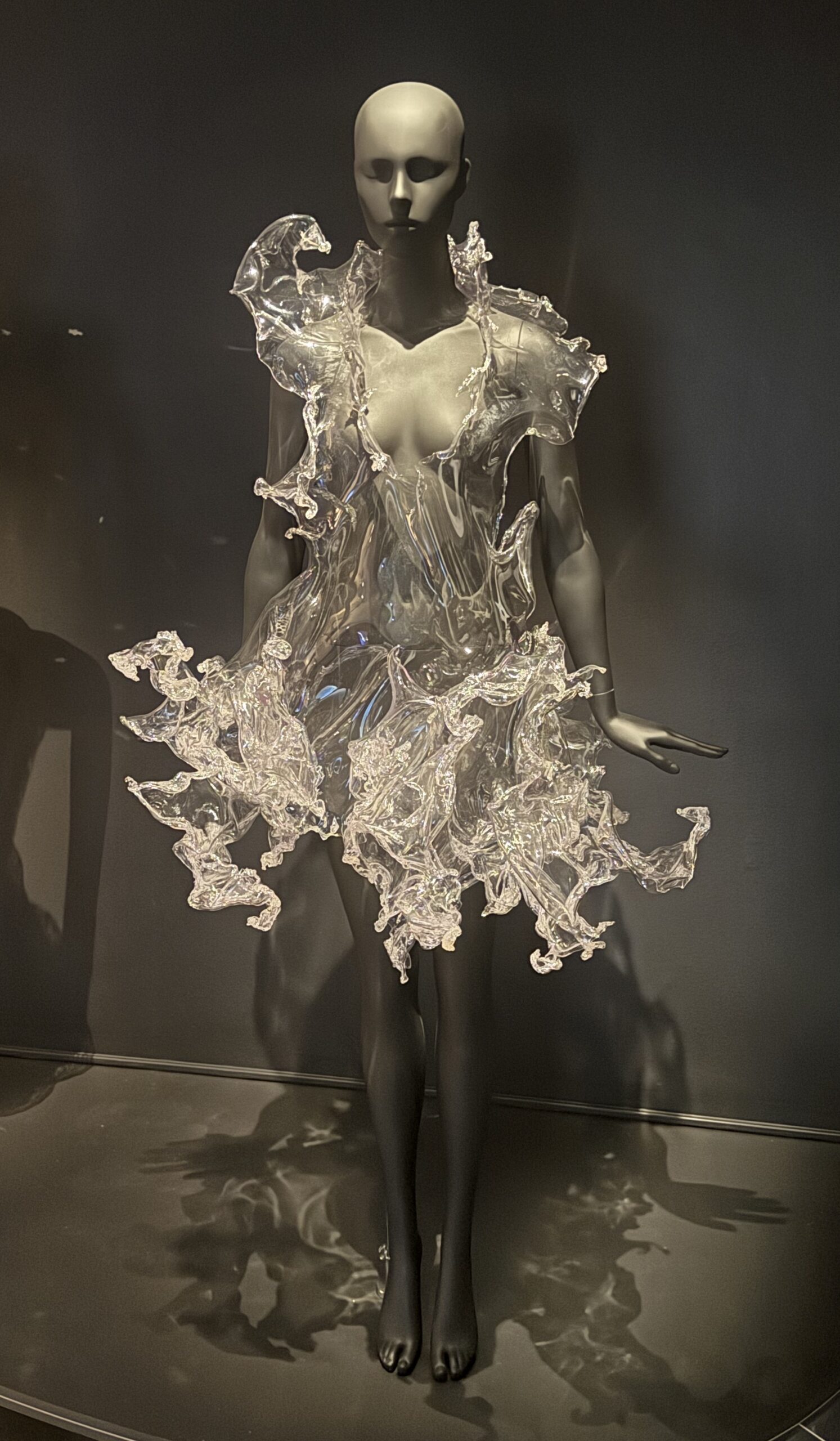
KIRKPATRICK: Seeing these pieces from throughout your career side by side, were there any surprising themes that emerged?
VAN HERPEN: Well, first of all, it’s really strange to suddenly get a bird’s perspective towards your own work. I’ve done over 40 collections and, for the exhibition, I had to bring them into larger concepts that reflect the larger things in my work. That was really interesting because I realized that the microscopic skill is really prominent in everything that I’m doing. By zooming out, I realized I’m zooming into the microscopic world on all these different themes. Often without really realizing that myself, which shows how deep the research goes. I’m very focused on innovation and new technology and I think a lot of people know that from my work. I also wanted to show the foundational layer, which is really nature and the dichotomy between craftsmanship and innovation. It’s absolutely about innovation, technology, and the future. But as much as it is about that, it’s about craftsmanship and nature biomimicry.
KIRKPATRICK: Looking at your designs, there’s obviously so much nature involved, but your processes and the materials themselves are so technologically advanced. I’m curious how you see the relationship between those two things and also how you keep a balance between them?
VAN HERPEN: Interestingly, people tend to see nature as one thing and then innovation or technology as something really advanced. But if you look at it, everything that we as humans create is by far not as advanced or innovative as what nature is doing. So I actually look at innovation and technology as a very simplified version of nature. It’s like a kid trying to make that drawing of Van Gogh, right? Nature is so much more advanced. Everything that we are doing in terms of research and technology, it’s just trying to get closer to the real innovation that is happening on this planet, and that’s ultimately nature. People tend to think of nature as something more simple than technology, but it’s honestly the opposite. And I think the deeper you go into science, the more you realize that. So I think in my work, I’m also trying to open up that perspective that the more advanced we go, the closer we will be able to get to the genius that is inside nature. It’s the highest level of engineering and we might never even get there. We can learn so much from it. It’s just a beautiful dialogue with the existing innovation that is already happening.
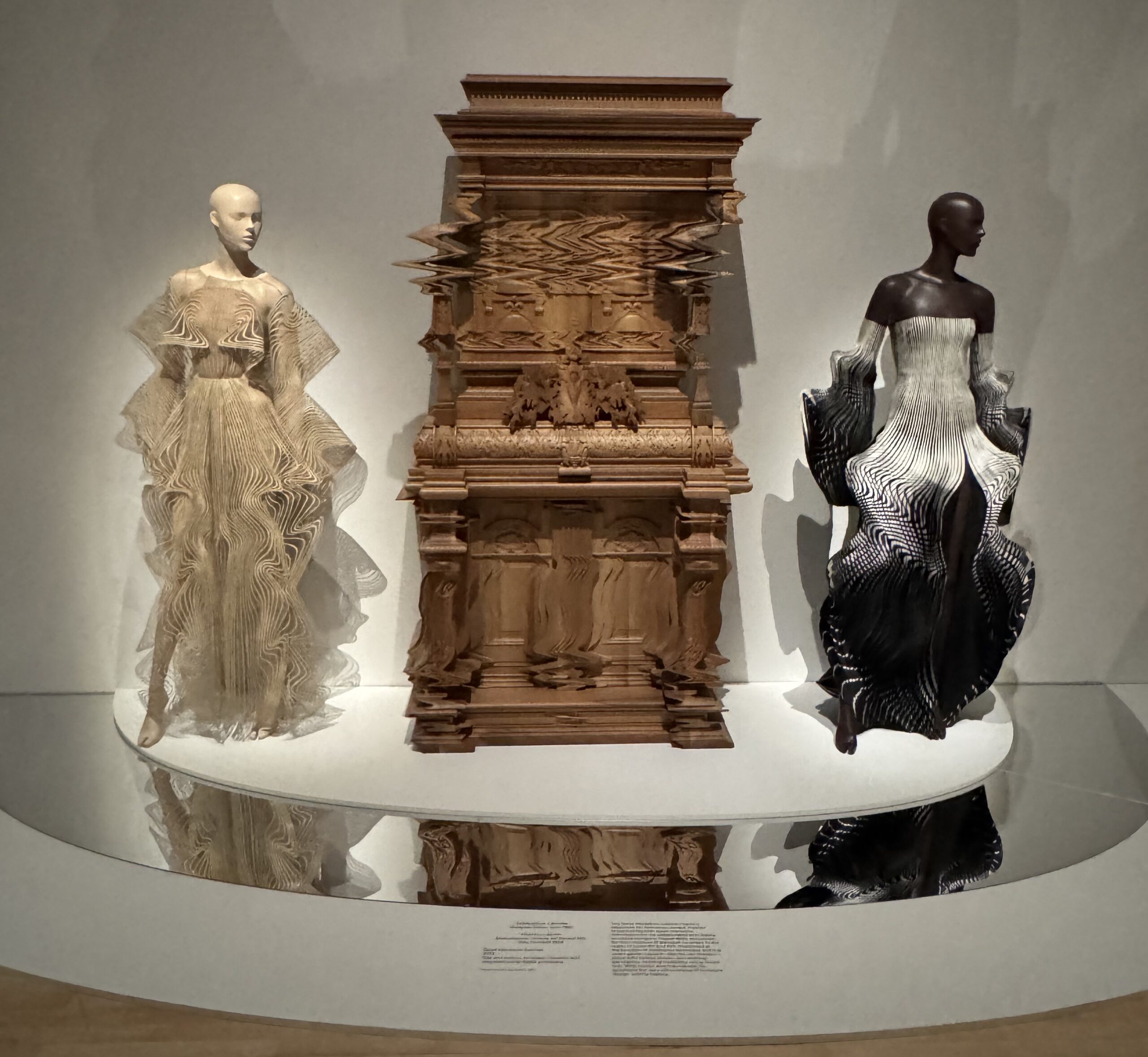
KIRKPATRICK: Definitely. I’m curious as well about the dialogue that’s happening in your work between the technology and the artisanal craft that you bring into it, like the hand pleating you’re doing at the exhibition. How do you balance those two worlds?
VAN HERPEN: It’s such an intuitive play for me between more historic techniques that were beautiful examples of innovation back then and are super valuable today because a lot of knowledge is lost. I think that’s a very interesting cycle in the human development. We tend to think it’s an up-going line, but a lot of knowledge also gets lost, and then we discover it later on. I think within couture and craftsmanship, it’s exactly the same. A lot of the beautiful innovations that have happened in the past tend to have gone lost throughout time. We love to focus on those techniques, and then of course I want to combine it with the contemporary techniques that are available today. Technology is advancing so rapidly, it’s amazing what you can do when you combine the two. For me, it’s a very natural balance.
Actually, the first years that I was doing my Maison, I was completely focused on the traditional couture techniques. It was only after a few years that I started to embed other technologies and, to me, they are part of the same toolbox. In my mind, I don’t make differences between a more contemporary technique or a more historic technique. They balance each other so well. And by combining those different techniques, there is really a sense of time to the work. That’s why I’m also always really interested in getting feedback from people, what they see in the work. One look, I can talk to someone and they can see something very futuristic in it, and that same look can remind someone else of these ancient statues. That’s because it’s so combined. In the early years of 3D printing, the technique was so new that my work was a bit more separated. So for example, I would have whole 3D-printed dresses and I would have dresses that were entirely handmade. But if you look at the work today, it’s much more mixed. It’s like combining oil paint and water paint. It’s all blended and hardly even distinguishable now because I’ve been working with the techniques more and more and more so they just seamlessly blend.
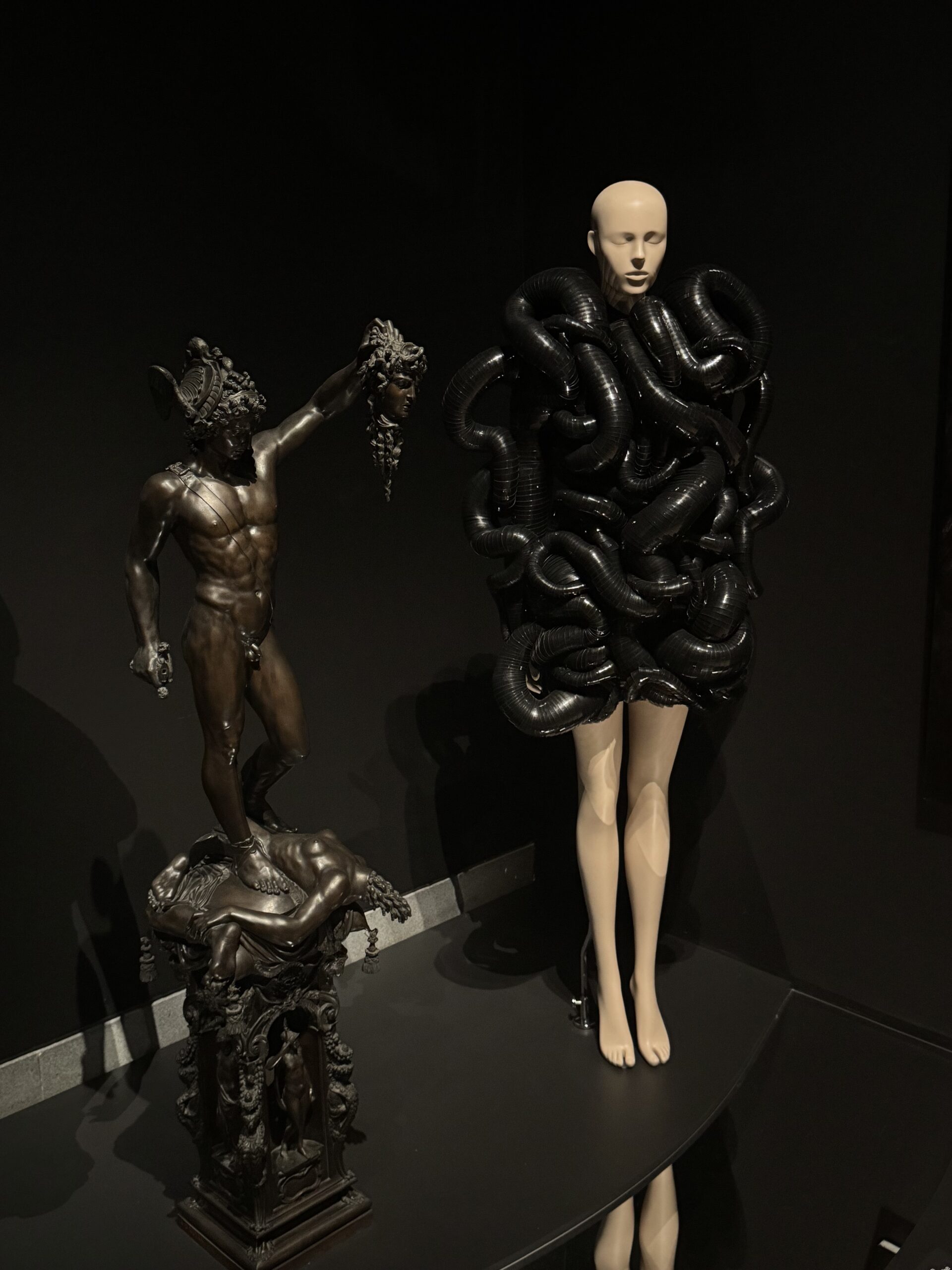
KIRKPATRICK: I hadn’t thought of it before as these artisanal crafts being the technology of their time. In that way, it’s all part of the same continuum.
VAN HERPEN: And it’s a beautiful lens to look at the past this way because when the needle was invented, it was high-tech at that moment. This was cutting-edge innovation back then. Even plissé and lace making, all these beautiful techniques, they were highly innovative at their time and that’s why it’s so meaningful to bring them into the same making as the contemporary techniques because that creates new dialogue.
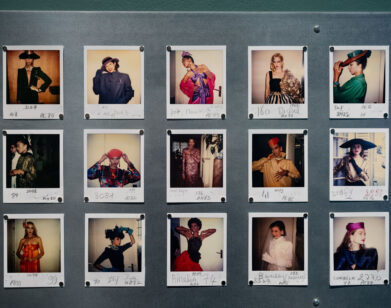
KIRKPATRICK: In one of the final rooms of the show, there’s all these photos of some of the biggest celebrities who have worn your work over the years. What do you think it is about your designs that people, especially major pop stars, really gravitate to?
VAN HERPEN: I think a lot of the VIPs are looking to transcend fashion as a product and embody a piece of art that is especially made for them, expressing their universe at that moment. So when I’m able to make something custom for someone, I really see it as a portrait, a portrait of couture. I’m not embodying the visual aspect of someone, but something deeper inside. And I think that’s something so precious and so rare nowadays. I think that’s where people feel drawn to it. I think the work is also really recognizable. You cannot mistake it for another brand. The materials are especially created. The techniques are really only done here. It’s just this really specific design DNA.
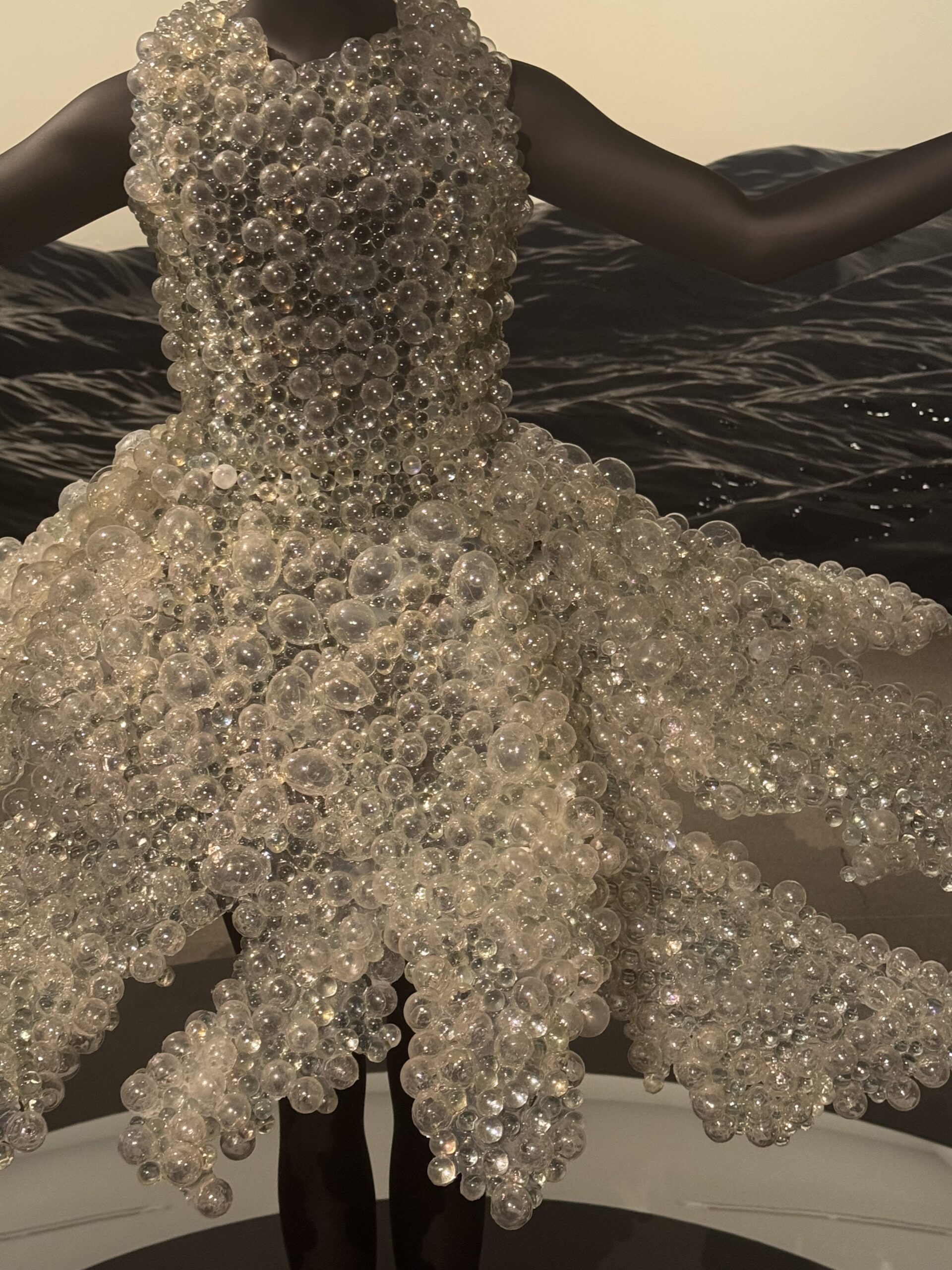
KIRKPATRICK: I feel like there’s also always an element of surprise to your work. I’m thinking specifically about the bubble machine in the bubble dress at the Met Gala, but it feels like you always take it one step further.
VAN HERPEN: Exactly. And that’s because we do so much R&D, research and development, and we do so many collaborations with people outside of fashion, with architects, artists, scientists. That makes it possible to really go that step further and to do experiments that even we have no idea whether we will make it happen or not. That’s just such an exciting process.
KIRKPATRICK: Even the risk of failure, I think, is exciting.
VAN HERPEN: Yeah. I definitely take a lot of risk, but it’s part of my work. Even the look for Eileen Gu for the Met Gala, there was only one chance that we had to make it work. It looks so easy and seamless, but it was so challenging.
KIRKPATRICK: Having done this retrospective, are you now looking towards the future of the brand? Are there ways you hope to evolve or new disciplines you hope to incorporate?
VAN HERPEN: I’m always partly thinking about the future. One of the things I’m working on now is to create a whole new space for my atelier that also includes a laboratory for innovation specifically to invite all these different disciplines. So they have a physical place to come and experiment. I think that will speed up all the R&D and hopefully also the new sustainable materials that we’re working on. This whole element has always been part of the atelier, but we’re wanting to cultivate it, to turn it into something that becomes a hub for people internationally as well because there’s such a value in that. It will also create space for me to float within the disciplines even more.
KIRKPATRICK: Amazing. And I feel like often those different disciplines can be so siloed, and so bringing them into
conversation, bouncing ideas off of people, I think breeds innovation always.
VAN HERPEN: Absolutely, and it’s so exciting to think what can come out of that.
KIRKPATRICK: Well, thank you so much for chatting with me. This was great.
VAN HERPEN: Yeah, I love to see you and thanks for the beautiful questions.
KIRKPATRICK: Thanks for the beautiful clothes!