


INCONCEIVABLE
Wallace Shawn Isn’t Ready to Die


All photos courtesy of Greta Rainbow.
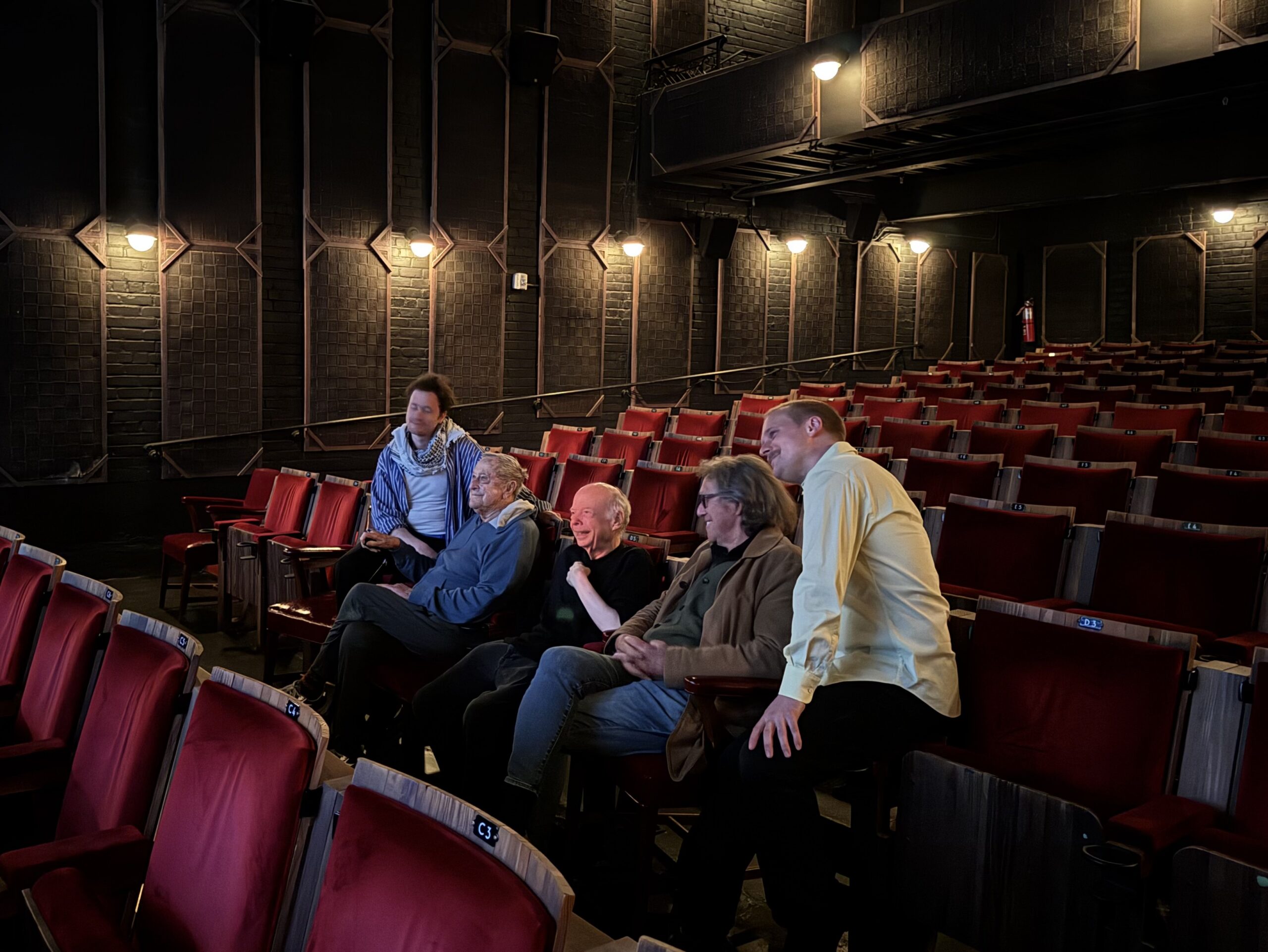
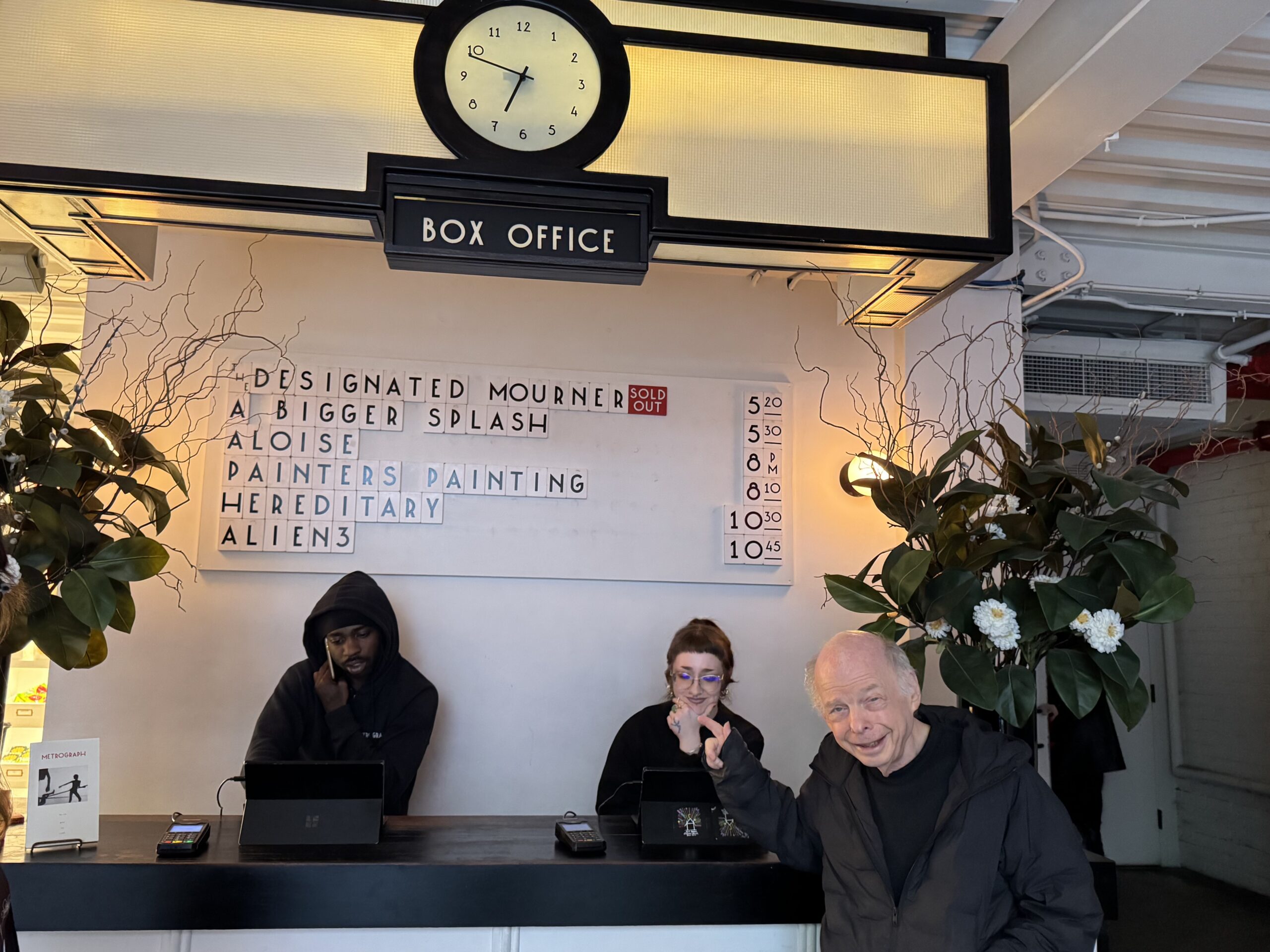
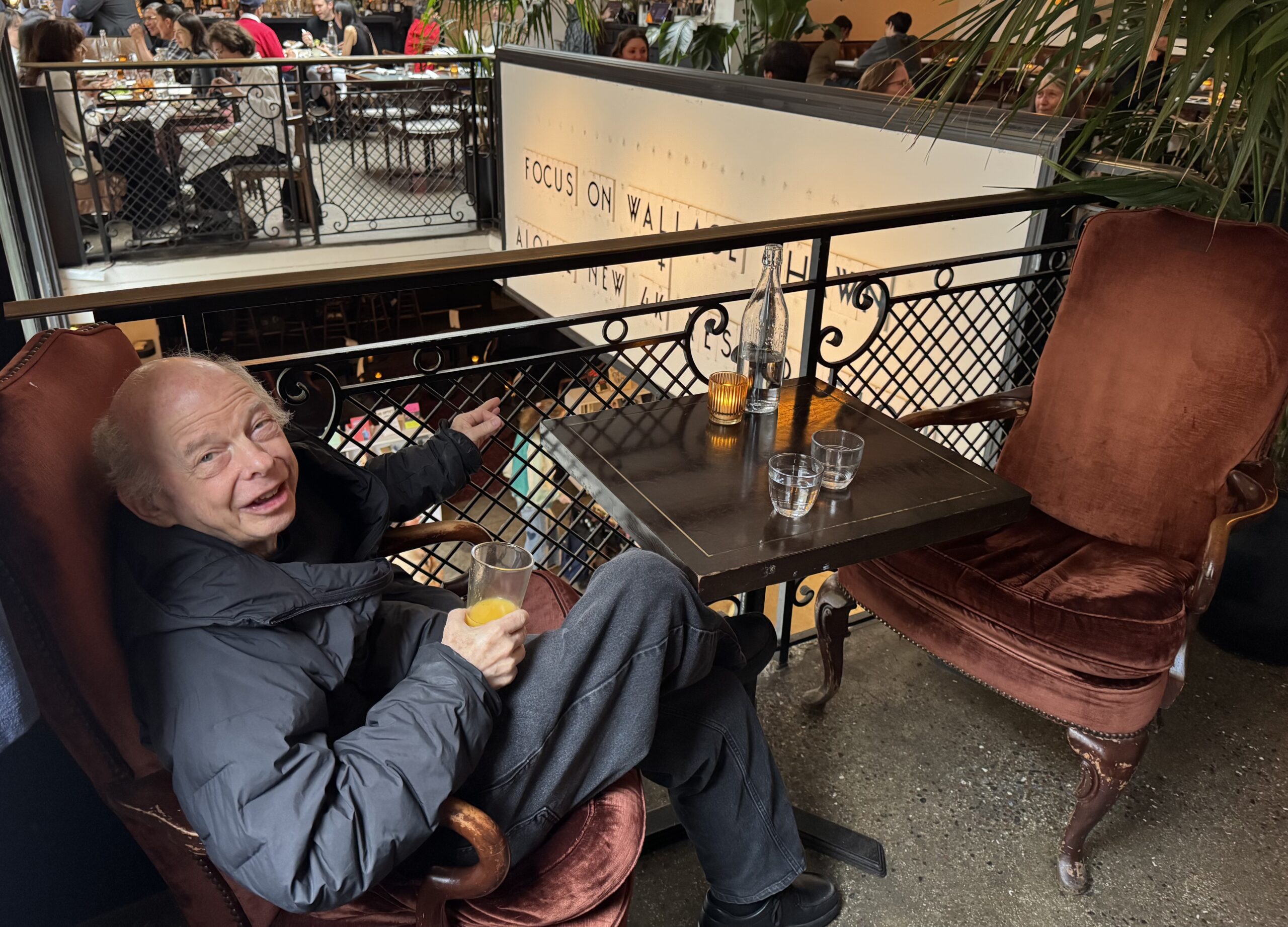
The 82-year-old actor and writer Wallace Shawn is spending a lot of time in Dimes Square. He loves it. On a recent Friday afternoon, he wanders through Metrograph in a state of seeming bewilderment and wonder. It’s the second week of the series Wallace Shawn: The Master Builder, curated by John Early and Lucas Kane who are both involved in Shawn’s acclaimed Broadway play What We Did Before Our Moth Days. The selected films range from feminist comedy classic Clueless to delightful mess Southland Tales, but at present the house is packed with 20-somethings for Vanya on 42nd Street, Louis Malle’s filmic rendition of the lengthy rehearsals for André Gregory’s production of Uncle Vanya in a dilapidated midtown theater. “It feels like a beautiful document of their famed, beloved process,” Early says.
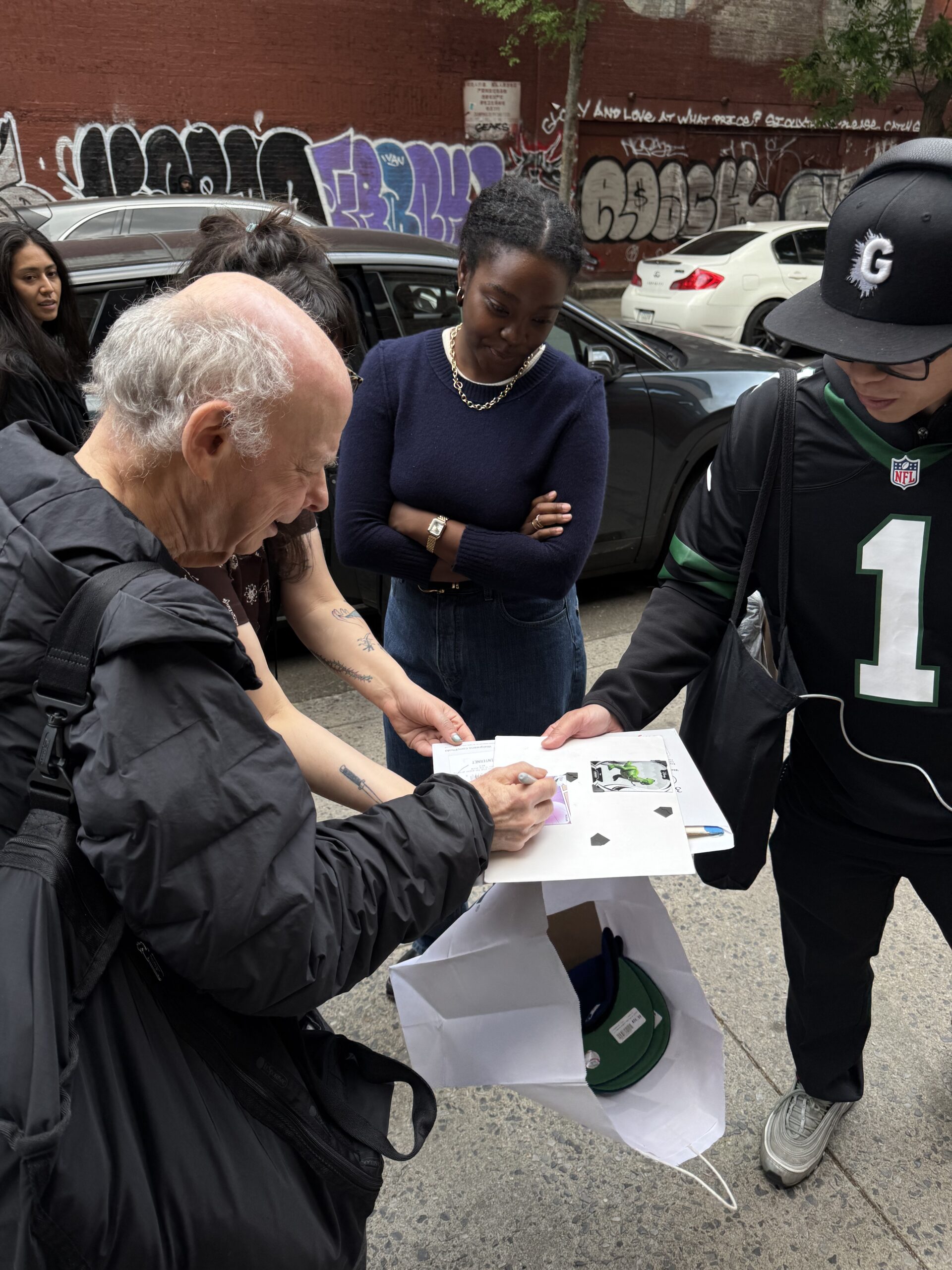
As Vanya, Shawn is hopelessly in love with Julianne Moore’s Yelena, and so is Dr. Astrov, played by Larry Pine. Shawn, Pine, and Gregory are all here. “This is your opportunity not only to watch an extraordinary film, but to look at the oldest man you’ve ever seen,” Gregory quips. After Vanya, Shawn greets a gaggle of adoring fans. One guy has him autograph what appears to be a Toy Story trading card. Eventually, we escape to the Metrograph Commissary, where Shawn orders a large glass of orange juice and we talk about the past, present, and future of his artistic life.
This interview is not that enjoyable without Shawn’s distinctive voice. You’ll just have to imagine it in your head as you read, by which I mean, recall the anxious dinosaur of Toy Story, or Vizzini the Sicilian’s iconic “Inconceivable!” from The Princess Bride, or Blair Waldorf’s sympathetic stepdad in Gossip Girl. Or maybe it’s Wallace Shawn as Wallace Shawn, a younger version, in My Dinner with Andre. He can’t really remember playing any of those parts, he tells me. But at the same time, none of it feels that far away.
———
FRIDAY, 6:00 PM, MAY 15, 2026, NEW YORK
———
GRETA RAINBOW: I’m so happy to meet you. So it seems like you enjoy watching your old stuff?
WALLACE SHAWN: A lot of actors don’t like to watch themselves. For me, it’s my new hobby or something. I don’t expect you to understand, but time telescopes backwards. The last 49 years that I’ve been acting feel like a very short part of my life, and something I took up quite recently and never expected to do. I don’t feel some of the things that people who always dreamed of being actors feel. Obviously I have little moments of being upset, where I think, “I didn’t do that moment very well.”
RAINBOW: Watching Vanya on 42nd Street, I wondered if you felt like Vanya when you said the line, “I wish I could start anew and forget the past.”
SHAWN: That wouldn’t be true of me. If I had a wish, it would be that I wouldn’t be taken off the earth by death so soon.
RAINBOW: Because there’s more art you want to make?
SHAWN: No, it’s just that I’m not ready to go. I’ve had very, very, very good luck. I mean, my wish would be that I could live longer and continue having good luck. If you believe that people ultimately get what they deserve, a lot of bad things would happen to me very soon, because I really had uncannily good luck.
RAINBOW: Your trajectory was somewhat random, you’re saying?
SHAWN: People who have good luck have tools to grab more good luck. I came from a privileged background. I didn’t know that, and my parents were not, in a strange way, very conscious of it either. But I had every opportunity. For a brief period, I thought maybe I would lead a humbler sort of life, much humbler than my parents’ life. Then, I became an actor and I returned to having a pretty comfortable bourgeois life. In a way, I’m still downwardly mobile from my parents…But I don’t think my mother ever had a cappuccino. So am I downwardly mobile or upwardly mobile? Because I can have cappuccinos all the time.
RAINBOW: There’s a line that has become popular from My Dinner with Andre. You say something like, “I used to think about art and literature, and now all I think about, at 36, is money.” Is all you think about, at 82, money?
SHAWN: No.
RAINBOW: I didn’t think so.
SHAWN: No. Well, I think I said “art and music” rather than “art and literature.”
RAINBOW: You’re right, I’m putting words in your mouth. Literature is what I would say.
SHAWN: Between the age of birth and, say, five years old, I listened to records all day or people read to me. That was my life. I suppose it actually was literature and music more than art and music. I looked at the covers of the records. But that’s all I knew. When I was 36, that was in the middle of my more austere period. I didn’t know what I was going to do. I mean, I’d been writing plays for 10 years and a couple of them had been performed, but I was realizing at that time that my writing was strange and might never make any money and I might live humbly. I knew a certain number of people who lived a more bohemian life. By the time we made My Dinner with Andre, I’d been in a few movies. I think I was more like 40, and I’d been in Woody Allen’s Manhattan and in Marshall Brickman’s Simon. But at 36, when we wrote it, I didn’t know what my future was going to be.
RAINBOW: Now that you’re able to not be preoccupied with money, have you returned fully to thinking about art and music?
SHAWN: Yes. That era where I mainly thought about money was pretty short. I think when I wrote that line, the idea that I might pay attention to the world seemed a little foreign. Between the time that I was a kid only thinking about art and music, I did begin to think more about the world. I did study history, and even a little economics, and was beginning to be aware that the world existed—although not really with any political understanding. That came after My Dinner with Andre, if you think I have any today.
RAINBOW: I think that it’s a continual understanding.
SHAWN: It wasn’t continual for me. It was abrupt. I changed quite dramatically around the age of 40. I mean, not overnight, but between the ages of, I don’t know, 39 and 43.
RAINBOW: Did that come from something internal or was it external forces?
SHAWN: I think internal, really. I don’t understand what happened to me, but I somehow became politically conscious over that rather short period of time. I went from being a liberal with basically the same views as my mother to being a leftist with quite different views.
RAINBOW: How did it change your work?
SHAWN: I was thinking about the world, and so the world came into my writing. I mean, it had a certain presence before that. I would have said that there was something disturbed about our society, or diseased, and that my early plays in some ways reflected that. But I didn’t take on the idea that I was a member of a class that had derived its privilege from criminal behavior, and that I was a product of evil actions. All of a sudden it dawned on me. I didn’t quite get it before that the government of the United States was not an entity that was independent of me. It may be that by simply paying taxes and having a little bit of personal prosperity, a little bit of success, made me more conscious of the fact that the government is not just this separate animal that I either like or dislike. I knew the Vietnam War was bad, but I didn’t get that it was being waged on my behalf or that I was supposed to derive some personal benefit from it. I didn’t get any of that.
RAINBOW: Was Southland Tales a prophecy?
SHAWN: Not that I could comprehend. It’s intended as a warning about fascism in some way, I suppose. Although the director-writer has made a not particularly attractive portrait of the neo-Marxists. There are no wildly admirable characters in that movie.
RAINBOW: When you work on acting projects, do you ever struggle to tamp down the writer part of yourself?
SHAWN: I don’t accept jobs that I think are making the world a worse place. Although, I may be kidding myself sometimes. I find it challenging and interesting to say lines that I don’t think are very well-written. Occasionally, if I think they’re so badly written that the writer wouldn’t even know, I might slightly improve them. Most of the time, I’ve done things that are very well-written. I’ve just done seven years of Young Sheldon, and I always tell people that William Shakespeare himself couldn’t write an episode of Young Sheldon as well as the writers of Young Sheldon. Their writing is perfect for what they’re trying to do.
RAINBOW: How do you feel when people only know you for Young Sheldon?
SHAWN: I love those people.
RAINBOW: I was thinking about how your voice was such a part of my childhood. But it only came later when I got into art films that I was watching things like My Dinner with Andre.
SHAWN: It’s so interesting. You knew me first as…
RAINBOW: Well, of course there’s Rex in Toy Story, but I also have this core memory of Mr. Incredible’s boss when he has to work an insurance job in The Incredibles. I absolutely love that character.
SHAWN: Wow. Amazing. That’s completely amazing.
RAINBOW: Do old characters pop up for you? Or are they placed away in a box in the mind until someone reminds you of them?
SHAWN: Most of the things I’ve done I don’t remember. Watching Vanya today, I sort of remember the experience of doing it all the time, but I didn’t remember any of the moments as they were. I remember them sort of from the inside—I remember the way I felt, but there wasn’t anything that I saw this afternoon that looked familiar.
RAINBOW: How do you conceive of these friendships with collaborators that have lasted for such a long time?
SHAWN: See, it’s that backwards telescope thing again. The facts tell us that they’ve lasted for a long time, but I don’t feel that. I feel that it was very, very recent when I acted in Manhattan and I met Woody. I have some awareness that certain people have been in my life for a long time, because it just feels as if there’s a kind of coziness or warmth that attaches to them. When I suddenly saw Larry Pine today, I felt an affection that is different from an affection for someone that I worked with last year. When I read nasty things in the newspaper about Woody, it hurts me. I feel hurt.
RAINBOW: How did you choose the Woody Allen film that’s a part of this series? I’ve never seen it.
SHAWN: You’ve never seen Radio Days?! I think it’s one of his best, and it’s a beautiful film, and it fits into this series about things having to do with me because my part in it is so delightful. It’s very, very short, but it’s quite delightful.
RAINBOW: How do you feel about being an actor who maybe has a very small part but it’s very impactful on the movie? Were you ever like, “Hey, give me something longer, more substantial”?
SHAWN: Nobody can be objective about their own writing or acting. You can’t be. But I think probably every actor thinks, “I should have had better parts,” and I’m one of those people. Every actor may feel it, but it doesn’t mean they’re right. Somebody has to play small parts. But I do get annoyed. Having just seen Vanya, I think, “Why wasn’t Brooke Smith in every film? She’s mind-blowing. She’s incredible.” So I’m not insane in thinking that the American film industry is not always making the best choices, and the American theater certainly isn’t. Why wasn’t I asked to play better parts? Maybe it’s because I’m not a good actor, and maybe it’s because the system is not that great. Maybe Brooke Smith will be fully discovered, but so far they haven’t given her the parts that she should have, which means maybe that’s true of me too.
RAINBOW: Is there a part you wish you’d been asked to play?
SHAWN: Not really, because I’m not fantasizing about things I could do as an actor. I really think of myself, in my private moments, as a writer. I mean, when I’m on the set of Young Sheldon, or in the hotel room learning my lines, I’m not thinking of anything but Young Sheldon, and I am not holding anything back. But when the week is over and I’m back sitting in the hotel room, now as a private person, I am thinking as a writer.
RAINBOW: Do you have the energy to write, in those moments?
SHAWN: I’ve done quite a bit of writing in trailers on sets of movies or TV shows.
RAINBOW: What is it like to form new creative relationships at this stage in your career? I’m thinking of people like John Early and Lucas Kane.
SHAWN: That’s the beautiful thing about theater and film: you do keep meeting new people. I’ve always liked meeting people, and I’m in the right field for it. I met John because he produced my play Marie and Bruce, and then I knew him from Search Party. And [John Early’s Moth Days co-star] Josh Hamilton—I knew Josh from when we were in a play by David Rabe, Hurlyburly, so I shared a dressing room with Josh and Ethan Hawke and Bobby Cannavale for maybe nine months.
RAINBOW: Oh, wow. That’s quite a group.
SHAWN: It was a great deal of manliness in a very small room. Unbelievable!
RAINBOW: I read that you said your wish, for a long time, was for people to take you seriously.
SHAWN: Did I say that?
RAINBOW: I think so! Do you care about that now?
SHAWN: In the last few years, and particularly in the last few months, people have treated me with so much respect. Enough people have treated me with so much respect that I can’t…well, it would be disgraceful to complain anymore about anything. I didn’t need a trillion people to take me seriously. My appetite was modest. It’s been satisfied.
RAINBOW: And it’s always that you want the right people to feel the right way about you.
SHAWN: Right! There are certain people whose opinion matters a lot to me. Although I’ve had some disapproval from some of those people, I have been able to survive that. You know, I think a lot of short people probably dream of being taken more seriously.
RAINBOW: So Wally, I have to go because I’m going to be late to my boyfriend’s birthday party. Which you’re totally invited to, by the way.
SHAWN: Really? It’s his birthday? Well, I’ll be damned.
RAINBOW: He’s turning 30.
SHAWN: Him turning 30, to me, is like being invited to an 8-year-old’s birthday party.
RAINBOW: Oh my god.
SHAWN: It’s a great thing!
RAINBOW: You’re so right. Should we go downstairs?
SHAWN: Okay. I might watch the end of The Designated Mourner if it’s still playing. And if Mike Nichols’s voice doesn’t bother me too much.
RAINBOW: Let’s do it.