


DIRECTOR
Curry Barker and Zach Cregger Swap Horror Stories



Photo by Sela Shiloni.
The path from YouTube sketch comedy to the highest-grossing genre acquisition in TIFF history is not a well-worn one, but Curry Barker has walked it in about two years. His film Obsession, a supernatural horror about a lovesick music store employee who uses a cursed toy to make his childhood crush fall for him, with catastrophic results, opened this weekend to $16 million (it cost under $1 million to make), immediately launching Barker, who has been tapped to write and direct a Texas Chainsaw Massacre reboot, into the ranks of young horror filmmakers tasked with bringing audiences back to theaters. Another one of those guys is Weapons director Zach Cregger, who’s been a sounding board for Barker, and who joined him recently to talk about about writing from the subconscious, the underrated power of sound design, and why some of the best horror directors started in comedy.
———
WEDNESDAY, MAY 6, 3:30 PM, 2026, LA
———
ZACH CREGGER: What’s up, man? Nice to meet you.
CURRY BARKER: Hey, Zach. Nice to meet you.
CREGGER: How are you? Are you in the middle of production?
BARKER: For [Anything But] Ghost, we just wrapped three weeks ago. I really just want to edit this movie, but I’m on this press tour for Obsession.
CREGGER: Wait, is this different from Texas Chainsaw?
BARKER: Yeah, I haven’t shot Texas Chainsaw yet.
CREGGER: So is this just another original that you wrote and directed?
BARKER: Yeah. Well, me and Cooper [Tomlinson] wrote this one together. It’s about two ghost hunter con artists that tell people they’re cleansing the spirits in their house, but they’re basically glorified magicians. They’re just really good at putting on a show.
CREGGER: Cool. Well, I said this to you on the phone maybe a month ago but I’ll say it again. I was so impressed with Obsession. I thought it was really, really special. I never ever really get scared watching movies. It’s such a thrill to feel actual fear when you’re watching a movie. I crave it so much.
BARKER: That means so much coming from you. And thanks for telling Bill Hader that you liked it too, because he hit me up and he was like, “Zach told me he really digged your movie and I came to watch it.” So I was like, “Oh, he’s spreading the word.”
CREGGER: Oh yeah. I’m not doing the old Hollywood on you, man.
BARKER: Dude, how’s Resident Evil? I saw the trailer and I thought it looked so good. That moment where the arms come out of the door and then the legs go up, I was like, “Oh my gosh, what is he going to do with this?!” How do you feel about it?
CREGGER: I feel great about it. I really like the movie a lot. It’s been a wild week since the teaser came out to see the divided reaction online. There’s so many people that clearly really want the video game, meaning the characters and story from the video game, and anything different than that is really not welcomed. I didn’t realize how passionate some people were about that.
BARKER: That’s so funny.
CREGGER: But if I did that I don’t think I’d be creatively fulfilled, and I don’t even think they would enjoy it. If I just did the story of the games, I think the most diehard fans would be bummed. So I don’t know what to do about it. But anyway, I bet one of the things that everyone wants us to talk about is the journey from blah to blah. Whenever I’m asked, “So you started in comedy and now you do horror. How did that happen?” And I’m just like, “It’s the same muscle group. All the time I spent in comedy, I was working out the same muscle group that you use.”
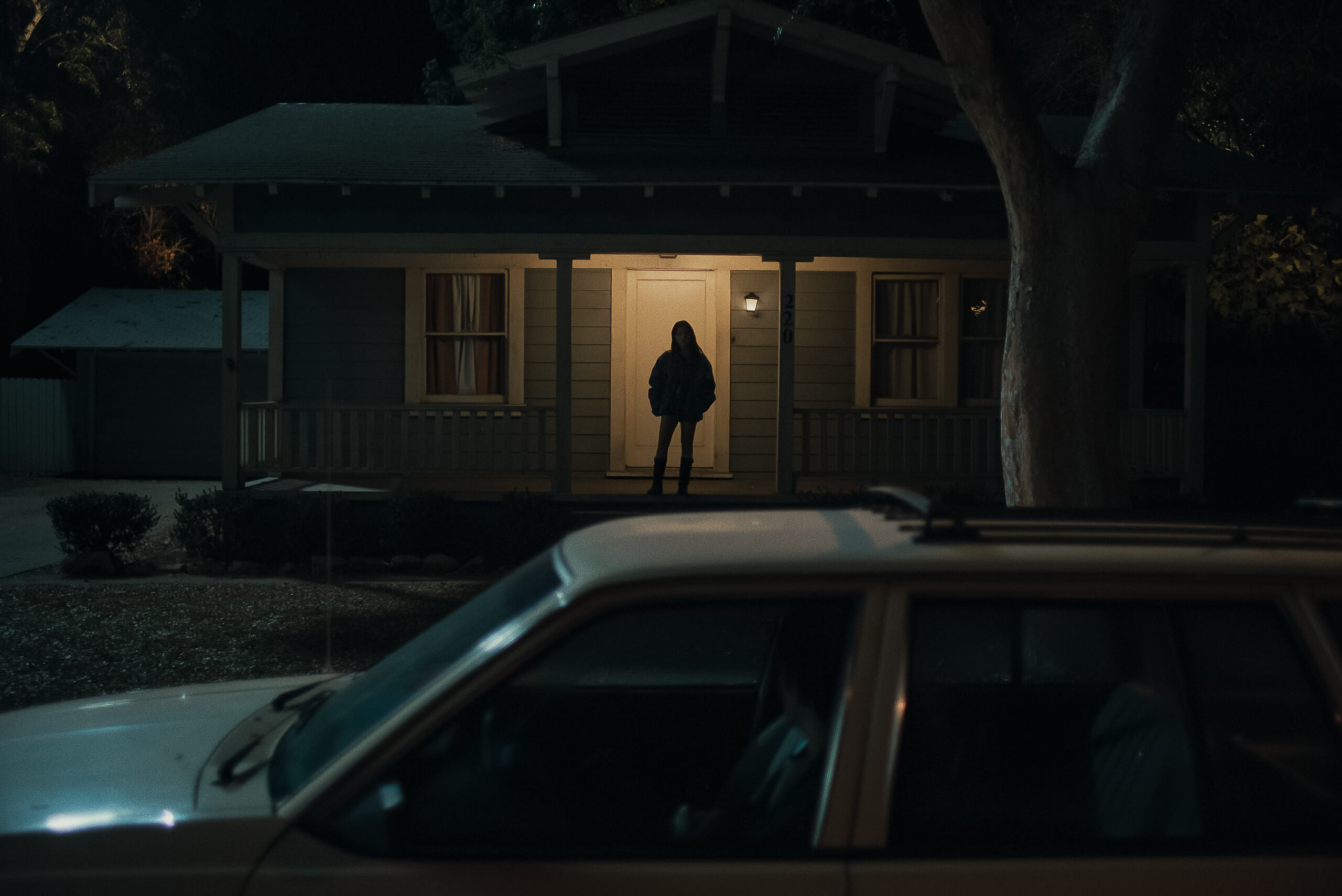
Inde Navarrette stars as Nikki in OBSESSION, a Focus Features release. Credit: Courtesy of Focus Features / © 2026 FOCUS FEATURES LLC
BARKER: Yeah. I basically say that as a comedy writer my comedy brain was always on, and it forces you to study the human condition and psychology, the way people react to things. Every social situation becomes a skit. And when you’re constantly thinking like that, you’re studying humans and the way we react and interact with each other. That’s the same kind of brain that you need to make a psychological horror movie.
CREGGER: For me, it’s like you’re learning how to use tone and timing to get an involuntary reaction, right? Whether that reaction is a laugh or a freakout.
BARKER: That’s true, even if your timing is creating tension within a scene. Like, Aunt Gladys isn’t scary because she pops out at you, except for maybe a couple of times. Aunt Gladys is scary because she says these things that make you uncomfortable and you linger on her. I guess that’s timing too, but it’s just a different type of timing, right?
CREGGER: Yeah. Do you feel like making all the videos and sketch work is just logging hours behind the camera learning, “Why doesn’t it look like I have it in my head?” That’s what Whitest Kids taught me. I have this image in my mind and I’m not getting it when I shoot it. And you just slowly figure out: “I didn’t have the lighting right, I didn’t have this lined up.” I learned every job on set because I had to do every job on set.
BARKER: It’s a masterclass for learning. I became obsessed with the difference between a student film and what we saw on the big screen. Like, “Why does my thing not look like that?” Even just getting obsessed with lighting and even sound design.
CREGGER: Oh my god.
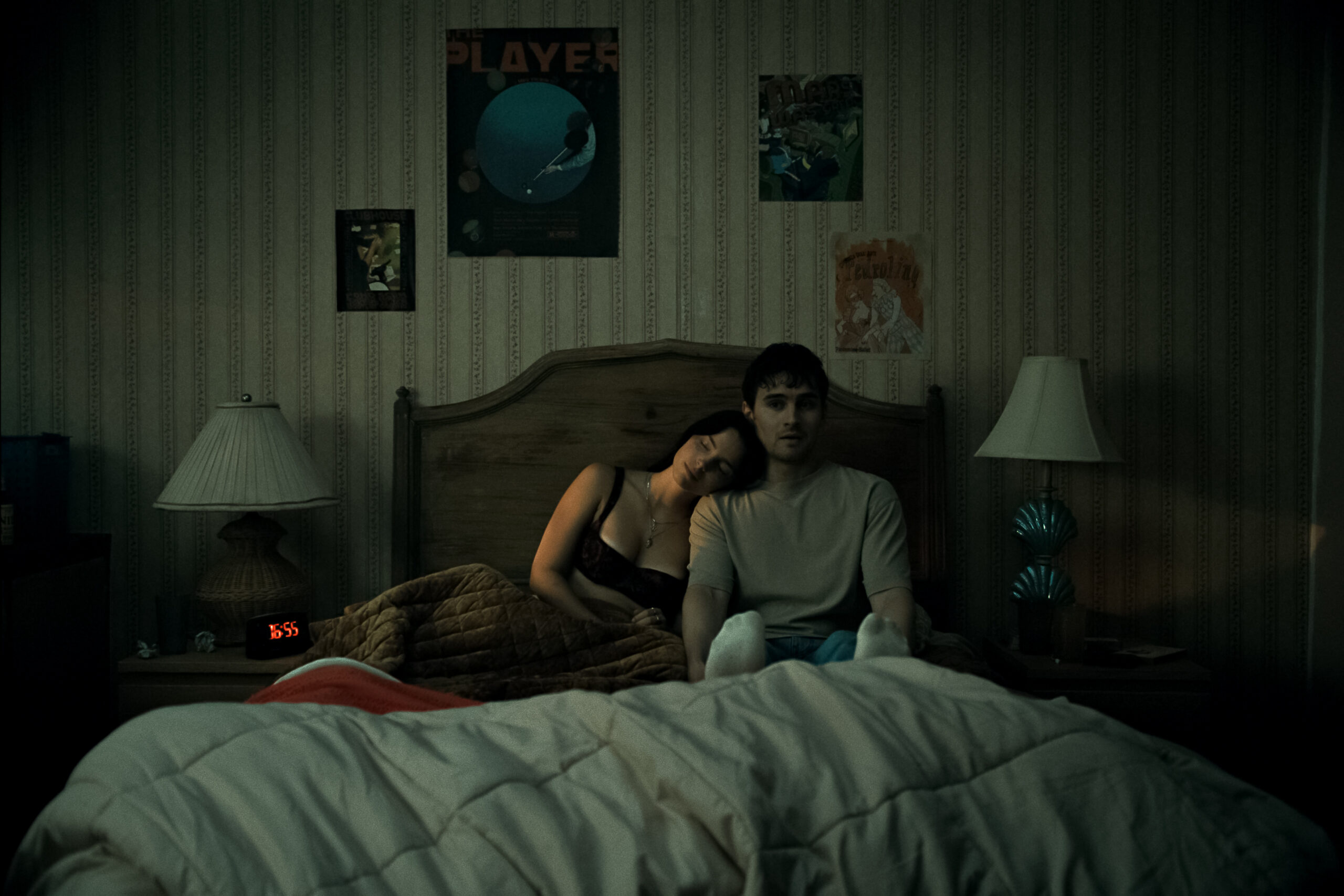
Inde Navarrette stars as Nikki and Michael Johnston as Bear in OBSESSION, a Focus Features release. Credit: Courtesy of Focus Features / © 2026 FOCUS FEATURES LLC
BARKER: I went down the rabbit hole of what microphones are the best, things that people don’t care about. Like the Schoeps have a different pickup pattern than a Sennheiser.
CREGGER: Yeah, for horror I feel like sound is more important. If you have an amazing image but shitty sound, you think you’re watching a shitty image. And if you have a decent image and amazing sound, you just buy in.
BARKER: I feel so grand when people ask me, “How did you get Obsession to feel like such a big-budget movie when you shot it for nothing?” And I say the sound. If you’re listening in a Dolby Atmos theater, it feels so big and grand.
CREGGER: Totally. When we were doing Barbarian, my dream was that it would end up on Shutter. When New Regency decided to put it in theaters, they fired my indie sound team and brought me into the big, sexy sound world. It was interesting that they already knew what I’m now fully convinced of: the money is in the sound. For Weapons and Resident Evil, I do three full sound mixes before the final. One for my internal screening, one for the director’s cut, one for the test screening. Sound just keeps getting prioritized.
BARKER: And that’s what you want, right?
CREGGER: Well it’s all the same vision, but I just do one to just lay it down because it just keeps evolving and evolving and evolving.
BARKER: Oh, dude, I saw that clip where you said that David Fincher showed you that thing with racking the crickets.
CREGGER: Isn’t that insane?
BARKER: Oh my gosh.
CREGGER: That was totally insane, and it’s so true. It’s such a smart thing. I’ve actually been trying to do that in Resident Evil. I have a shot where we do another rack focus and I’m trying to replicate it.
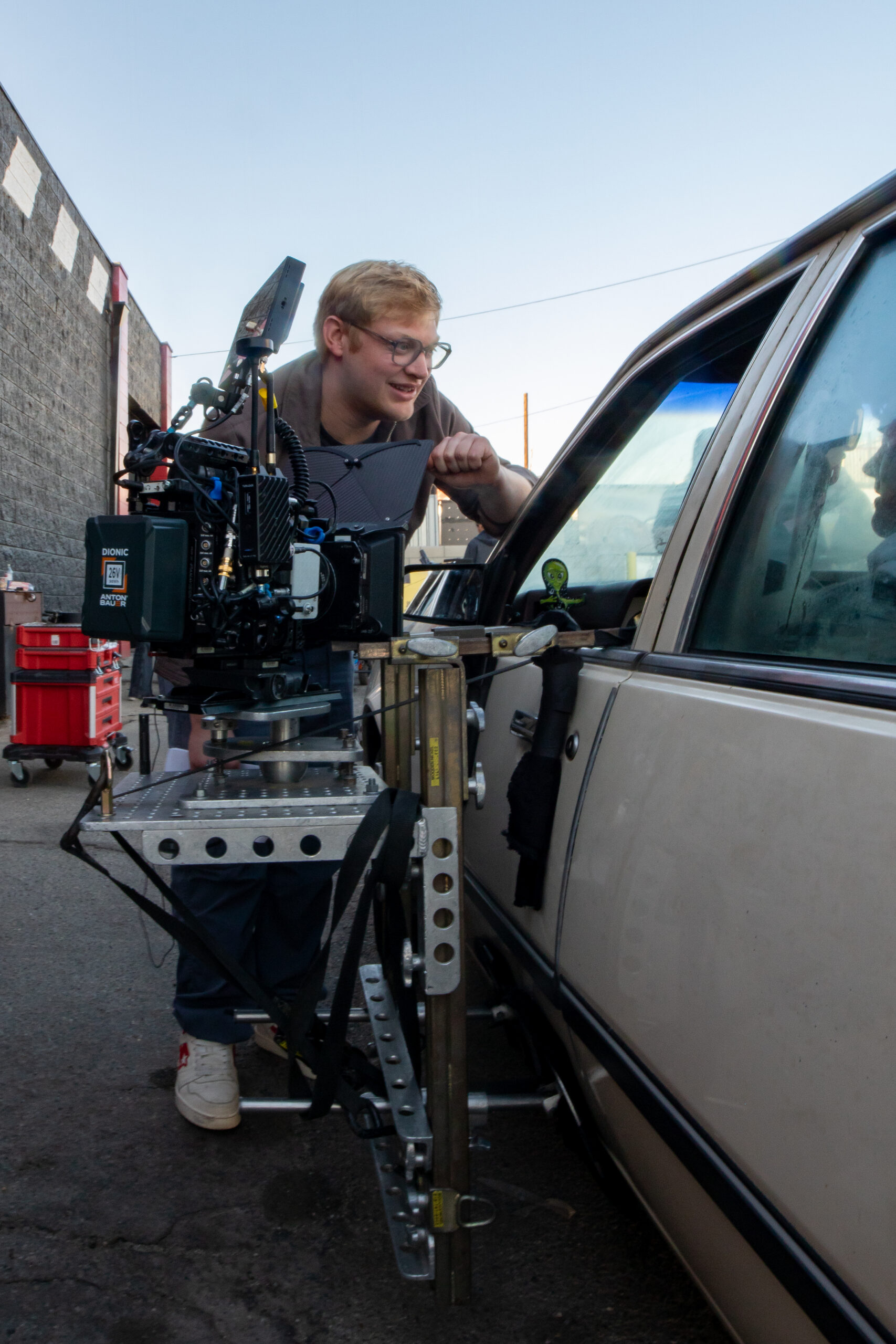
Director Curry Barker on the set of his film OBSESSION, a Focus Features release. Credit: Manny Liotta / © 2026 FOCUS FEATURES LLC
BARKER: You’re like, “How can I do this again?”
CREGGER: I’m totally shameless about it, and I can’t get it to work yet. I haven’t sat down with him and shown him this movie, but I hope I get the chance to. I learned so much from him about the post process. He came over, watched the movie, and was really generous going through the edit and got really granular with it. I learned not just about the edit but how I need to be mindful of it at all times, which I thought I was, but wasn’t really. I used to just look at the frame and think, “This is my frame.” Now I look at it and think, “The frame is in there, but I’m building a giant cushion around it to protect myself.” I’m shooting 8K so I can stabilize–
BARKER: Wow, so you shoot in 8K. Oh my gosh, good to know.
CREGGER: Not everybody needs it to be that silky smooth, but he does. I think there’s a time and a place for it and there’s a time and a place for this really sloppy, handheld bullshit, but it’s good to know when you’re trying to be silky smooth, how to be silky smooth.
BARKER: I want to know what your writing process is. Everyone’s so different. Are you an extensive outliner?
CREGGER: No. Stephen King has this analogy where he says you’re a paleontologist unearthing a dinosaur skeleton one bone at a time, and you don’t know what the dinosaur is. I really love that. With Weapons, I just started with, “This little girl’s telling a story, what is it?” In my original draft, these kids all killed themselves on the same night. And then I just asked, “Why?” I like the idea of typing so fast that my subconscious is telling the story, not my conscious mind.
BARKER: I love that.
CREGGER: I’m a big, big believer in the David Lynch “catching the big fish” technique. I don’t know how familiar you are with that, but it’s basically using transcendental meditation to write.
BARKER: Whoa, wait, tell me what that is.
CREGGER: It’s a meditation technique, 20 minutes a day, where you dive deep into your subconscious to get inspiration from outside yourself. So I go into this dark, inky place and ideas just come out. When I’m writing the best stuff, I’m not really writing it. I’m an antenna. A conduit. That’s honestly how I wrote Weapons.
BARKER: Wow.
CREGGER: And the beauty of it is you’re not outcome oriented, you’re process obsessed. You know? I don’t think about it like, “Will this even be a movie?” I just think, “I like writing this story.” And so that’s it. What about you?
BARKER: That’s profound, man. I have a little more structure to it. I have things that I know I want to put in, but also, if you try to write to land somewhere, you’re going to destroy it, right? But I got obsessed with the Aaron Sorkin masterclass, and that kind of became my bible for writing.
CREGGER: What was the lesson in there that you found the most impactful?
BARKER: First of all, don’t get bogged down in the backstory of characters, because then you’ll get stuck on like, “I forgot that my character loves Honey Nut Cheerios.” It’s a horrible example, but now I have to find a way to incorporate Honey Nut Cheerios. It’s the killer of any creativity. Something me and you share is we don’t like to take anything too seriously.
CREGGER: Right?
BARKER: I hate when characters are brooding. Like, “I’m a brooding character and this is a serious movie and I have to be serious.” It’s like, dude, we’re all humans. We all crack jokes. I just like to write characters that have unique voices, you know?
CREGGER: You know what’s great about Obsession? I didn’t know you made it. I knew your YouTube stuff, but just never put it together that it was you. So I’m watching it cold, kind of like, “Come on, let me see what you’ve got.” And I knew very quickly. I was like “Okay, this guy’s got the goods, please land the plane.” I needed it to work because if it works, we got one. And you landed the plane. The premise is so strong, and not only did you have a great setup, but you rose to the occasion.
BARKER: Thanks, man.
CREGGER: So for this new one, you wrote it with your buddy?
BARKER: Yeah. It’s so hard to not spoil it, but it was important to us that it felt grounded in the real world. Something that’s important to me is when characters react the way that they would actually react if something was happening to them in real life.
CREGGER: Yes.
BARKER: These two ghost hunter con artists have been doing this for years, so they’ve never run into anything. They’re pretty skeptical, and they don’t believe in anything. So you really are setting yourself up for if there were to be real ghosts in this world that I’ve set up, it would be pretty big news to these guys. So that just is a fun premise to play with.
CREGGER: That’s great. Will you let me come take a peek whenever you get it in a point where you feel like it’s—
BARKER: Dude, you can be my David Fincher. You can help me out.
CREGGER: I would love to.
BARKER: Are you going to act ever again?
CREGGER: Yeah, if ever something comes along that somebody wants me for, sure. I’m not opposed to it. You?
BARKER: I’m in this next one. I’m the main character.
CREGGER: Oh, really? Wait, the one that you’re about to edit right now?
BARKER: Yeah. Pretty crazy to do that.
CREGGER: How was that process?
BARKER: Oh my gosh. At some point you stop watching the playback because you’re 20 days in and you have to just trust the people around you. Another question I have for your writing is when you do your vomit draft where you just kind of stream of consciousness write, how off do you think you are on that first draft typically?
CREGGER: Oh, pretty off. I do my vomit draft and I usually title the document like, “Terrible Version of Whatever,” because I want to give myself permission to be bad, you know?
BARKER: Yeah.
CREGGER: My only goal is not to make anything good, but to just keep it moving to get to the end.
BARKER: I love that, dude.
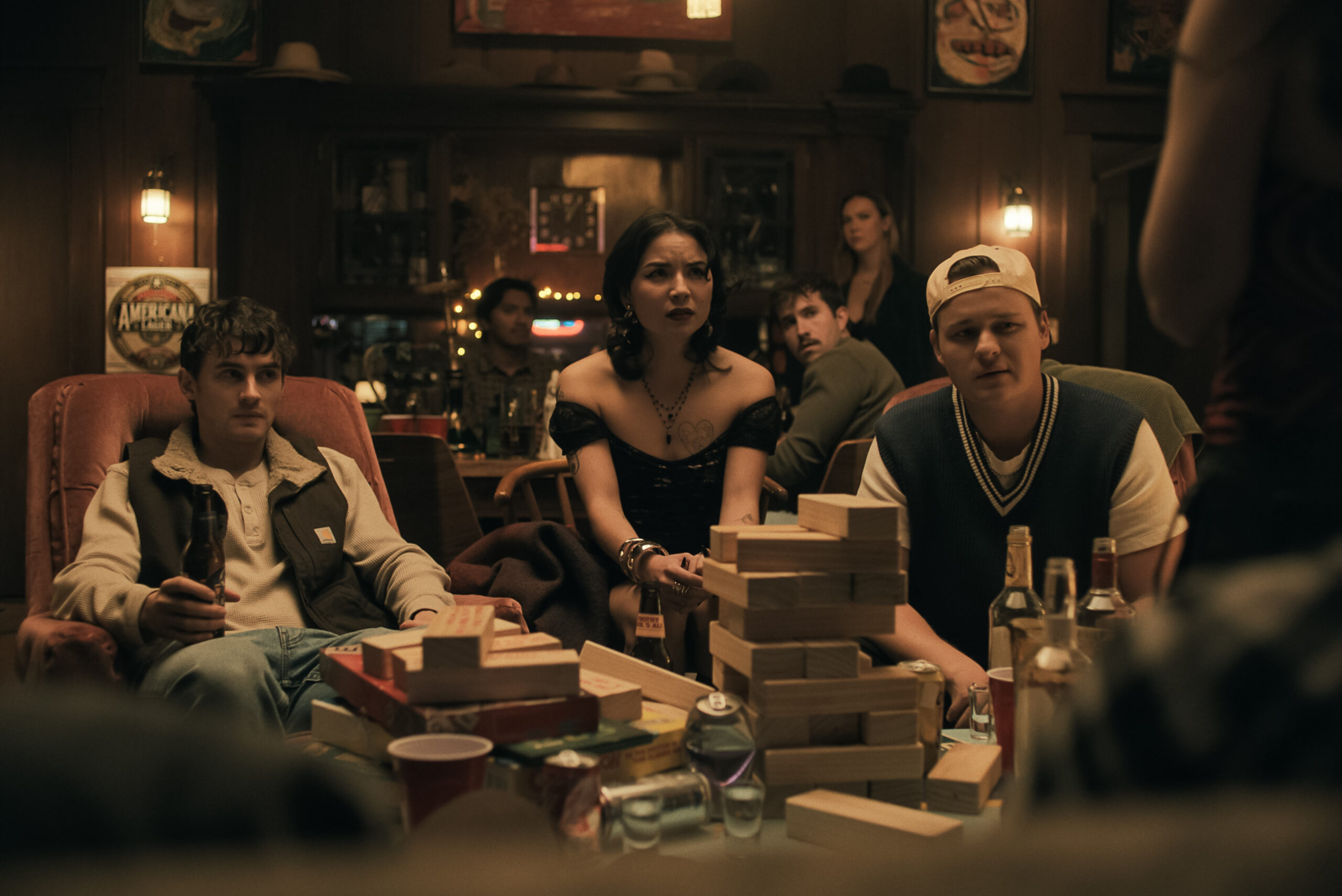
Michael Johnston stars as Bear, Megan Lawless as Sarah and Cooper Tomlinson as Ian in OBSESSION, a Focus Features release. Credit: Courtesy of Focus Features / © 2026 FOCUS FEATURES LLC
CREGGER: It’s like little kids with crayons don’t stress out about, “Is this going to be good or bad?” They’re just so in love with the colors that they’re doing and that’s what we need to be trying to get to that mindset.
BARKER: Especially when there’s so much pressure now. I’m sure after Barbarian, it was like, “Alright, Cregger, your next movie better be good.” That pressure is kind of what I’m feeling right now. I just want to forget that all of that exists, right?
CREGGER: For me, in a weird way, I was spared that because Weapons came out of a tragedy. I was in such an intense grieving thing because my partner Trevor [Moore] died, who I did Whitest Kids [U’ Know] with and all of that.
BARKER: Oh man, I’m sorry.
CREGGER: So it was really in just the weeks after he passed that I sat down and just puked this script out and it was very much a product of intense emotional pain. There was no room for ambition or anything like that whatsoever. I was so overcome with grief, and that was the motor.
BARKER: I know what I need to do for Texas.
CREGGER: Kill your partner? [Laughs] And then I don’t know why, but Flood, I wrote that after Barbarian, but that’s the one I’m going to do next.
BARKER: Oh, you wrote Flood and then you wrote Resident Evil?
CREGGER: I wrote Flood and Resident Evil at the exact same time.
BARKER: That’s crazy, man.
CREGGER: Flood was my thing that I was just obsessing over and Resident Evil was just this kind of, “Okay, I just need to go eat some junk food.”
BARKER: Yeah.
CREGGER: Whereas Flood was a much more in the fucking trenches kind of a thing. But for both of those I’ve been lucky where I’ve been spared the, “What’s the next Cregger thing?” I’ve never written that way.
BARKER: No, you can’t write that way.
CREGGER: No, you can’t. You’re fucking doomed if you do.
BARKER: Yeah, doomed. But I’m saying that if I try to forget that, people are going to be like, “What’s the next thing after?” Luckily, I’ve already shot it, so it’s too late anyway.
CREGGER: There you go.