


IN CONVERSATION
“My Life Is Filled With Guilt and Shame”: Karl Ove Knausgård, by Jeremy Strong


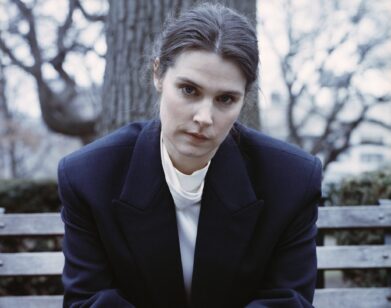
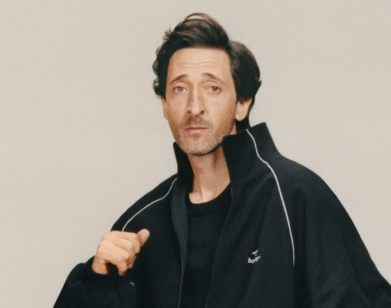
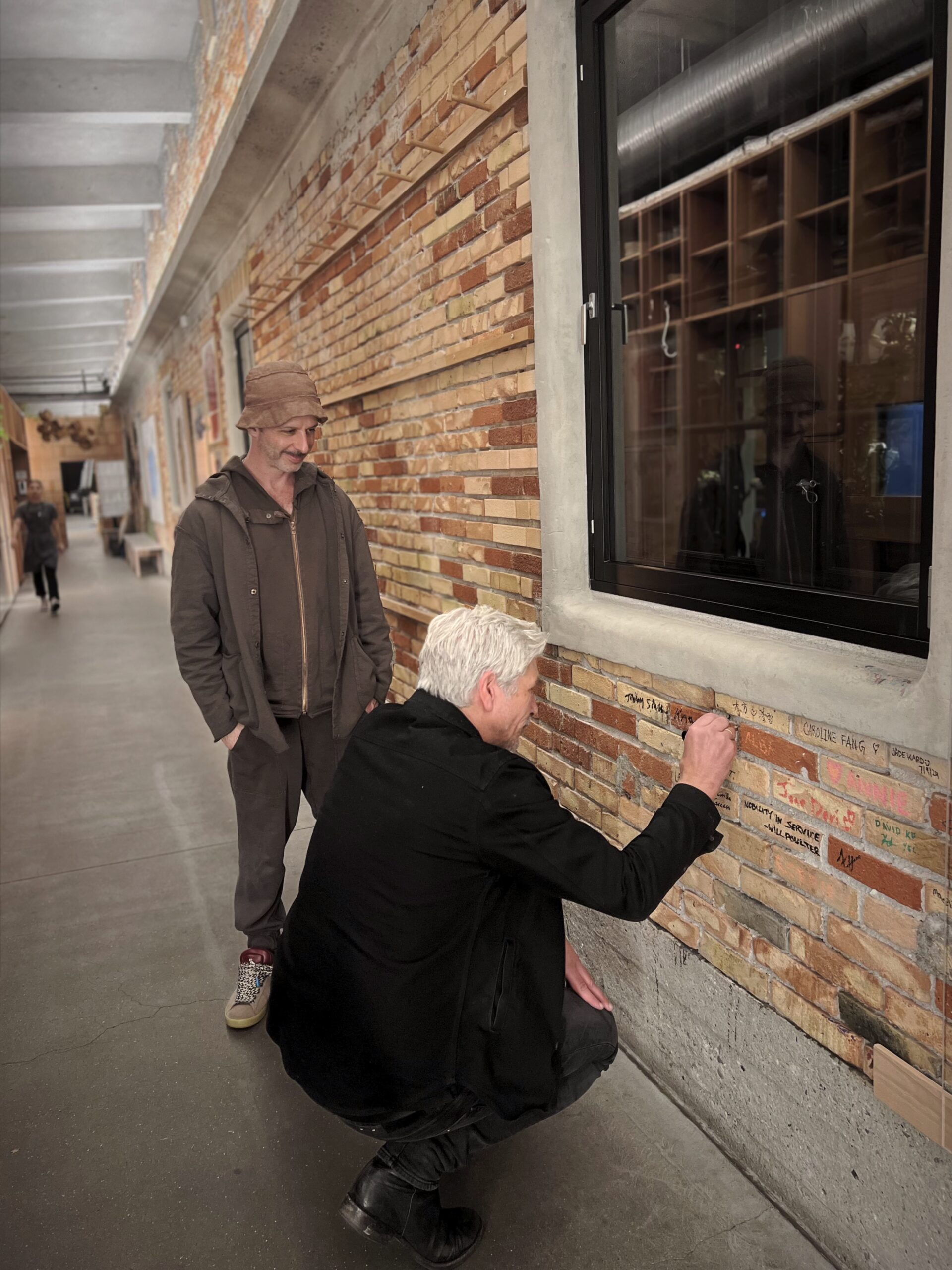
Karl Ove Knausgård and Jeremy Strong, photographed by Morten Rygaard.
The actor Jeremy Strong has a reputation for being a bit serious, but when he got on a call with the writer Karl Ove Knausgård last week, he could hardly contain his excitement. “There is almost no one on Earth that I am more honored and genuinely thrilled to be doing this with,” Strong gushed. “You can see me smiling, and I never smile.” The occasion was Knausgård’s brand-new novel The School of Night, the latest in a prolific, two-decade stretch of productivity beginning with the Norwegian author’s seismic, six-volume autobiographical series My Struggle, which entered him into rarefied air: literary sensation and cultural lightning rod, synonymous with a certain mode of unforgiving and brutally honest autofiction. In subtle ways, the 57-year-old’s experience of celebrity has informed this new book, which follows the exploits of a defiant and misanthropic young photographer, Kristian, coming morally unbound at the hands of his own ambition and hubris. “It was a breakthrough, and I was loved and read and seen,” Knausgård told Strong of his early-career success. “But then I realized there’s no end to how much you need if you go down this path.” In conversation, the two artists got to talking about not only the price of success but a host of other subjects: ego, empathy, transgression, violence, and the Faustian bargain of giving oneself over to art.
———
JEREMY STRONG: Hi, Karl Ove.
KARL OVE KNAUSGÅRD: Hi.
STRONG: Man, it’s good to see you. We are both next to skylights, so this is good, which makes me think I’m going to expose myself as a superfan. But I think in The Proust Questionnaire, you once answered that you would come back as a window.
KNAUSGÅRD: Yeah, that’s right. I can’t remember why.
STRONG: I thought it was a great answer.
KNAUSGÅRD: [Laughs] Yeah.
STRONG: So I have a little bit of a different voice right now, so you’ll have to just bear with me. I have lots of questions for you. And I have to say—I think you know this—there is almost no one on Earth that I am more honored and genuinely thrilled to be doing this with. You can see me smiling, and I never smile. You probably don’t remember this, but we met for the first time in 2015 at the Louisiana Literature Festival. You were giving a reading and I finagled somehow to say hello to you. It was the day before my wedding.
KNAUSGÅRD: Oh, really?
STRONG: And I just remember you were smoking, I think, a Chesterfield, and you dropped it on the grass. And it was this moment of, “What do I say to this man?” It was hardly an exchange. And then a few years later, we were driving to the ferry in—is it Ystad?
KNAUSGÅRD: Ystad, yeah.
STRONG: To go to Bornholm. And we drove through Glemmingebro. I remember thinking, “This is where he had ice cream.” So anyway, it’s been a long road. And then, of course, we got to do the talk at Noma, and that was when we really met.
KNAUSGÅRD: And that I remember. That was a very good session, I think.
STRONG: I think so too. And then I read this book, which is extraordinary. It’s one of the more viscerally powerful books I have ever read in my life, and it hits you like a comet. I have woken up in the middle of the night a few times—I texted you this—in a cold terror since reading it. I was thinking about what I wanted to say to you. And one of my favorite American authors, James Salter, who died a few years ago—The Washington Post said he can break your heart with a sentence. I feel that you have the power to do that, but also to open a portal into being with a sentence: to open a portal to heaven and, in this case, a portal to hell. One of the greatest stage directions of all time in [Christopher] Marlowe’s [Doctor] Faustus is “Hell is discovered.” So I wanted to ask you about the genesis of this book, The School of Night. Where did this start for you?
KNAUSGÅRD: That is one of the questions that really is impossible to give a precise answer to because there’s so many things in it. There are many starting points. But, for instance, I remember I had heard about Marlowe. I studied literature. I was aware that he wrote Doctor Faustus early on, but I never read him and I never looked into him. And then I read an essay by [Jorge Luis] Borges about Shakespeare—it must have been in the ’90s, I think, where he wrote a little—
STRONG: Everything and Nothing.
KNAUSGÅRD: Yeah. And then, in a digression, he kind of starts to write about Marlowe. And it was almost shocking to me, because what he says about him is well-known—that he was blasphemous, that he said that Jesus and John had a homosexual relationship, those kinds of things. And this was in the 1500s. And then he also mentions the School of Night, where they were alchemists or astronomers and people gathered. And then there was the killing of him in Deptford—very violent. I understand this as a very violent, very vile, very careless, reckless man. He got a knife through his eye and died under very suspicious circumstances. And that was just something in the back of my head for many years, really.
Then I moved to London and I saw Deptford. I realized Deptford is a real place. And we can have that feeling: you read about something—it kind of belongs to literature, belongs to history—and you all of a sudden see the concrete dimension. The only thing that would divide you is 400 years, but the rest would be the same. That was the first kind of thing that led up to the novel.
And then, finally, because I’ve written other novels in a series, I wanted this novel to take place in 1986, because The Wolves of Eternity takes place then. The main character there is a very sociable, likable, nice person. And I wanted this to be like his evil twin, almost. I knew it had to be London. I knew it had to be 1985, 1986. And then I started to write and I knew he had to be a photographer. I started to write and he was just some sort of normal guy. But in the writing, I realized he was lacking empathy and he didn’t care about other people. That fact changed everything. I tried to explore what that would mean and that led him into episodes, things that happened to him, and he reacted in a certain way. That kind of gave me the novel. I just followed that character, really. And I do believe that what happens to you is related to who you are, somehow. The Greeks say, “Fate is character, or character is fate.” I didn’t know anything of what was going to happen in the novel, but those were the things I had: it had to be Marlowe, it had to be London, it had to be photography, and it had to be a man who doesn’t care, who has no empathy.
STRONG: There are so many things I want to respond to. On a bedrock level, I think this book, to me, is about the price that you pay for getting what you want—the price that you pay for your actions. There is a town in New Mexico that I drove past once that is called Truth or Consequences—I’ll send you a picture of the sign. It was based on a game show, but they named the town that. I don’t really know Marlowe, but I was aware of the Faust legend. And one of the things that I thought of when I read this book—because I’m a Hollywood person—is what Denzel Washington said to Will Smith the night of the Oscars after he slapped Chris Rock on stage. He said, “At your highest moment, be careful. That’s when the devil comes for you.” It actually gives me chills in my body to say that. And this book explores this idea. One of the veins running through it that I related to—and it’s troubling to me how much I related to it—is the size of the ambition and egotism, you could say, of Kristian, what he would do for the sake of art. Now, this is very interesting to me, because in the novel, he gradually crosses some of these lines for the sake of art. But to me, it’s in crossing that line that his art becomes more compelling and even meaningful. We don’t have to get into this, but I had read on Norwegian radio back in the day, after you wrote My Struggle, you said you’d had a feeling of a Faustian bargain in terms of what you had to give to that book, what it took from you and what it costs you. Maybe we all have an event or something in our lives that gives us the feeling of what the American poet Galway Kinnell called “the secret smudge in the back of our soul.” This feeling that that smudge will be found out, that it will all unravel. There’s a passage that I just want to read, if I may. Can I read this short passage?
KNAUSGÅRD: Yeah.
STRONG: Kristian says, “But on the inside, I was tarred. My soul was unclean. I know the feeling, Han said, when I described it to him. I think most people do. We each have our own self, and then there are the demands and expectations of the social sphere, which are impossible to fulfill. Every time you fail to live up to what’s expected of you, every time you can’t meet a demand, shame and guilt are deposited in what you refer to as the soul, or, as my mother preferred to call it, the heart—otherwise known as the self. A tainted heart is the most human thing of all.” I guess this isn’t a question. I’m just unloading a lot of thoughts on you. But this feeling of a tainted soul, the unease and dread of that, pervades this novel in an absolutely incredible way—in a way that feels very personal and, yes, very alive.
KNAUSGÅRD: It’s because that’s what the novel is about. And thinking about how to respond to that because there are so many layers here. There’s one general layer about art, what art can and shall do and what it takes to do that—which has to do with transgression, with confronting, with crossing borders and doing what you’re not supposed to do. But it’s also on a personal level. And I used a lot of that energy when I wrote this book, and that’s about the feeling I had when I wrote My Struggle.
I had struggled writing a novel for five years without reaching into what I wanted to, and it was rather terrible. And then I opened up this path, which was writing about myself and everybody I know. I knew I shouldn’t, and I struggled with that along with the writing all the time. You know how the family tried to sue me; there was a lot of stuff about that. And that was the point where I got success. It was such a mismatch between what I was doing, the guilt I felt from what I was doing, and the rewards. But I also feel guilty for nothing. And I feel constantly guilty. If I see the police, I’m almost afraid that they are after me. My life is filled with guilt and shame. And I thought in this book, “What if I just get rid of all of that and go into this territory with art where there’s no guilt, there’s no remorse, it’s just ruthlessness?” So then you take away the pain for doing these things. Then there is a hubris, of course. But the thing with art is, “How far can you go, and why do it?” This person is 19, and I remember when I was 19 I was incredibly ambitious, but for what? Not for the sake of art. It was for the sake of getting a breakthrough and being loved, really.
STRONG: Yes, me too.
KNAUSGÅRD: I think that’s a driving force for very many people who do these things. But then I had that with my first novel. It was a breakthrough, and I was loved and read and seen. But then I realized there’s no end to how much you need if you go down this path. So I refocused everything very slowly into the act of writing. That’s where it is. And I know it sounds like this is something I’m just saying, but it is true.
STRONG: No, I don’t think that.
KNAUSGÅRD: I still need all of that, but those are not the reasons anymore for being in it.
STRONG: I relate to this, Karl. I was thinking about what you just said about Deptford, and the past, and the passage that you read at the 92nd Street Y, of humankind falling like snow through the ages. I’m in Berlin working, and yesterday I took a walk in a snowstorm over to the Führerbunker, which is very close to where I’m staying. As you know, the sight of the bunker is now a parking lot, a very banal, unremarkable place. But with the snow falling, it was a crazy experience to think about that passage in your book–the smothering of the snow of all of us. Anyway, it tied where I am to that beautiful passage. Well, I wanted to ask you where you think Kristian’s drive comes from, because I tried to understand this in myself as well. And maybe you answered that for me already, which is essentially a need for love, and a kind of desire to be seen and maybe to be admired. For Kristian, I think the disregard of his sister and what we learned, what we come to understand his own father feels about him, these are deep wounds that one might then spend the rest of one’s life to try to get away from or not even to heal, but to evade and to feel better. I’m going to pivot. I have some silly questions for you. Not even silly, but I wrote down some questions. Kristian says that his eye is his instrument. I wondered, what is yours?
KNAUSGÅRD: That’s a good question. I think what I need when I’m writing is the ability to have total concentration—to be totally present in what I’m doing so that everything else just disappears. I think that’s what it takes, really. So it’s not about seeing or thinking, even. All of that comes in the presence. I don’t think much when I’m not writing. So I think that’s the thing I’ve learned. I was interested in the combination you mentioned earlier, about the snow and Hitler’s bunker, because I think it’s very relevant. That thought is very realistic. If you take such a step back, and see people as just falling through time and space, you remove all kinds of value from life and you see it from the outside. But when you go into one person, it changes completely. And that has to do with the gates which you talked about earlier also–to be present, to be in your life. What Hitler and the narcissist did would’ve been impossible without taking that step back and seeing people as snowflakes. That doesn’t really matter in the big picture, the big shame of things. But that is a very interesting perspective, I think. I don’t know if I mentioned this to you, but that film [The Apprentice]—that portrait of the young Donald Trump—is very similar to the way I thought about Kristian Hadeland, really. It is ruthlessness. It’s no empathy. It is everything becoming suddenly possible. If you remove empathy, you have a certain freedom. You can lie and nothing matters anymore. And I think that was the space I wanted to explore—exactly that space, really.
STRONG: I also imagine that, as a writer, Kristian gave you impunity—the way that you borrowed, or are endowed with, a kind of ruthlessness that you can locate and magnify in yourself. I play Roy Cohn in that film, and it’s the same thing. I borrow a kind of thing. The character gives you something that is freeing. There’s a passage in the book about a thought swelling in him, expelling everything else in him that isn’t that. And to me, that’s also the state that I need to be in to create or to work: a kind of inviolable solitude and focus. In the book, there’s also a passage about freedom being the opposite of habit. So my question is: if freedom is the opposite of habit, and habit is what we need in order to create, what is our situation? Does that mean that if we were to have a reality show—Keeping up with the Knausgårds—that you’re in your room, then maybe doing a little gardening? What is that reality show like?
KNAUSGÅRD: Well, to be able to transgress, you need a safe space. That’s incredibly important. So that’s what I find in routines and in habits and in doing the same thing every day. I listen to the same music every day when I’m writing, and it’s just to create a space where I can go to other places—unfamiliar to me or threatening. What we are talking about now is going into yourself, finding something, and kind of expanding it. And the difficult thing with this book wasn’t the writing. It was the fact that I wrote it. It wasn’t far away from me at all, all those kinds of negative human emotions and ways of being. And I think that’s the case for the reader too. I think that’s why it’s actually possible to read this book, because you can relate. Freedom isn’t entirely a positive thing here, at least not in this book.
I just read a book about the Vikings. I’ve read a lot about them. And the thing with that is, it’s familiar. The landscape is familiar, the names are familiar, but it’s so incredibly violent. Violence is absolutely everywhere and it’s only 1,000 years ago. That’s not much, really. It’s in us, and it’s possible, but we don’t go there. But if it opens up, we can go there. And we know if that happens, then many will go there. It’s just incredibly interesting and a bit scary, I think. And for me, I don’t want to write about evil in general terms. What I wanted to do with this book was to take the grain of evil—the tiniest particle of evil—and just write about that. I want to explore it in one person, really, and also give him some success and reward for that, somehow. And that’s not done. As well as me—that in the art world, Kristian Hadeland isn’t an anomaly, I think.
STRONG: I’m listening to what you said about habit, and it made me think of that famous thing that Gustave Flaubert said: “Be regular and orderly in your life, so that you may be violent and original in your work.” When we create this safe container for ourselves, we can go into these dark places. But even as I say that, I feel very unbalanced in my body right now, and even at times traumatized, by going to some of these places. At the same time, I feel that we must go there. I was thinking about [Edvard] Munch and this incredible short documentary that you made with our friend Joachim Trier. And I wondered if there’s a similar force in his work. Was he present for you when you were writing this?
KNAUSGÅRD: Not in any direct way, but he is kind of present. And what I appreciated the most in what I learned about him when I did that with Joachim was exactly the recklessness Munch had in relation to his own art. He’s not interested in perfection in any way; he’s just after expression. And the fact that he loved [Fyodor] Dostoevsky says a lot. Dostoevsky is the same kind of writer. He’s not a man for the beautiful detail of the full picture. He just goes straight to the heart. But actually, I saw this [Peter] Watkins film about Munch from the ’70s. Have you seen that?
STRONG: No.
KNAUSGÅRD: Oh, you should see it. It’s an absolute masterpiece. It’s so weird. He uses amateurs as actors. And because of that, they look like real people. It’s a mishmash of all kinds of styles, but it really gets to the essence of art.
STRONG: Joachim told me that his last painting was a ladder—maybe a man on a ladder. And I thought about that as I read this book, even Kristian’s final series of photographs showing the forest as it is. In Hamlet Gertrude says, “More matter with less art.” And I feel that more and more, you are giving us the matter. You are showing us life as it is. I’m very excited for everyone to discover this book, and I can feel it coursing through my veins as I try to come up with the thought.
KNAUSGÅRD: What are you exactly working on now in Berlin? Because this must be incredibly heavy.
STRONG: There was a book in the ’70s by Ira Levin called The Boys from Brazil, which is about Simon Wiesenthal and Joseph Mengele. And Peter Morgan, who wrote The Crown, has adapted and expanded it and put some of it in the 1940s as well as in the intervening decades. It feels almost distasteful, in the context of an interview, to even talk about those things.
KNAUSGÅRD: I know what you mean.
STRONG: But I’m trying, in my own very inadequate way, to understand even the tiniest piece of the enormity of that experience. It’s an allegory, of course, about the conditions that allowed for the rise of Nazism, and how those conditions are once again in the world and how, when we do not learn from history, we are condemned to repeat it. So I believe in what we are doing. And also, as an actor, you’re like a tourist—an experiential tourist. And at the same time, even though this part of history is a negation of beauty and a negation of meaning, some of the work that came out of it—Elie Wiesel and Primo Levi and Victor Klemperer’s diaries, which I’m reading right now—are just extraordinary testaments to what it is to be a human being. So that’s what I’m here doing.
KNAUSGÅRD: I can identify with the feeling. The feeling I struggled with was: “Do I have the right to do this? Why am I doing this? Why am I taking advantage of it in any way?” And that’s the thing you commit to when you start to do this. I think that’s why I so much liked Shoah, because it was only contemporary. There’s no viewpoint that can capture it except the one he had, which was now, which I think was the only way to deal with it. And I think the moment I really understood it was when I watched Shoah and then I just cried.
STRONG: Me too.
KNAUSGÅRD: And storytelling is also creating distance from something. That’s the difference between being in it and writing about it.
STRONG: But I want to challenge that a little bit, and then I will let you go. I remember Sean Penn saying to me once that an actor doesn’t really have to fully go there because the writer has gone there for us. And there’s a part of me that believes that to be true. I heard the director Paul Greengrass talk about this in relation to a film he made called Captain Phillips. He said that actors are water finders and that their job is to go out into the desert with a little crooked stick and find the water. No matter what, you have to find the source of that water. So maybe there’s distance in storytelling, but I can’t help but feel when I read your work that it touches the marrow of things. That makes me believe that you, also, have touched the marrow in yourself in order to bring that to us. That’s my feeling, at least. And actors, for it to be worth anything, have to do the same thing. But I’m also sorry that you had to go to these places to write this book.
KNAUSGÅRD: Especially the end of the book, that was the hardest bit I think I have ever written.
STRONG: It’s a masterpiece. It really is. I have never audibly gasped the way I do in this book. I think the moral of the story is we should both do a light comedy.
KNAUSGÅRD: Yeah. I don’t know what to say to that.
STRONG: It’s the kind of joke that my father would make just to diffuse the tension of the moment. But I love talking to you. I’m grateful that I got to do this with you.
KNAUSGÅRD: Thank you very much. Take care and good luck.
STRONG: Bye-bye.