


ICON
Lisa Kudrow Tells Lily Tomlin How She Outlasted the Industry


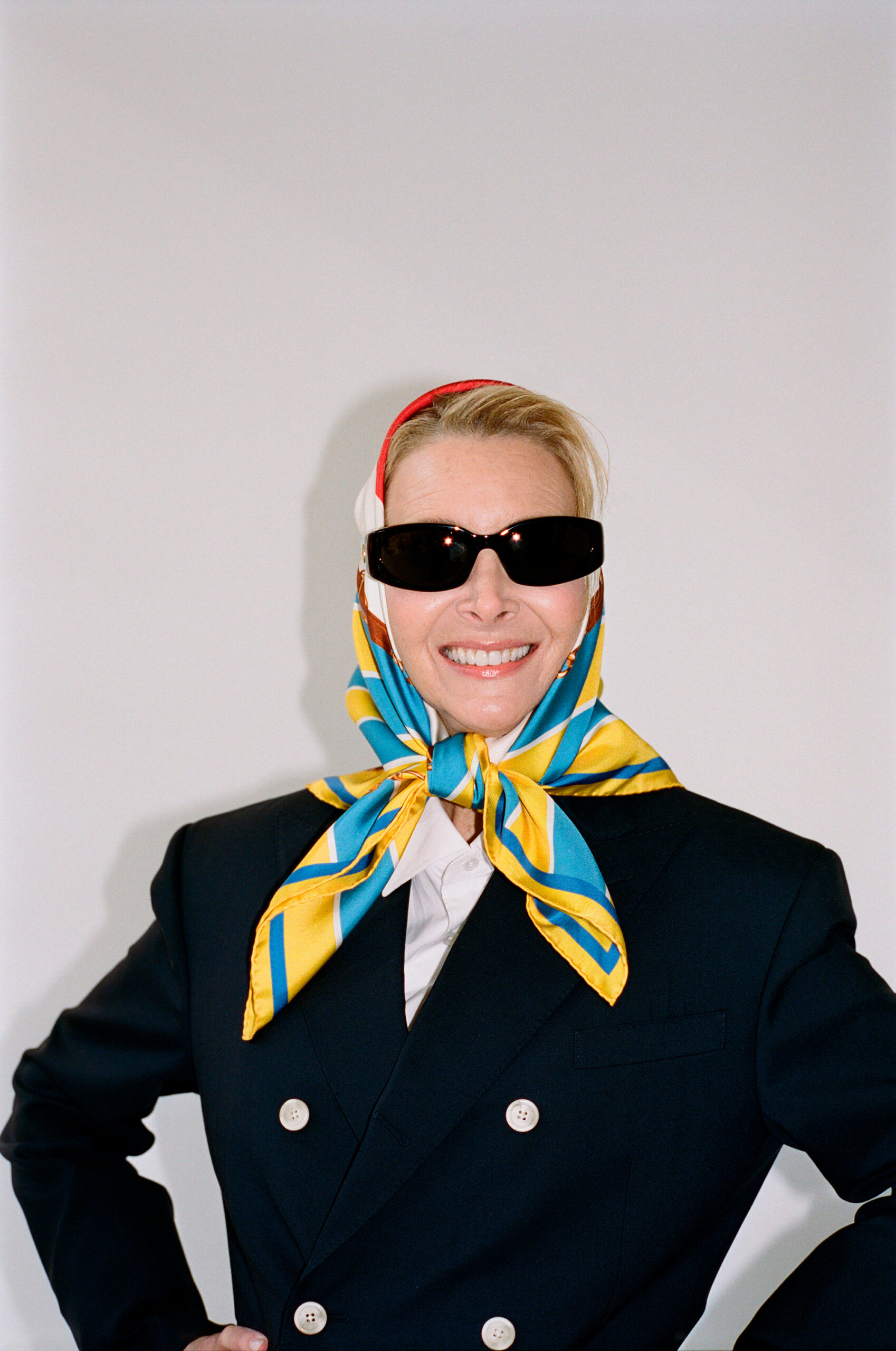
Jacket, Shirt, Scarf, and Sunglasses Celine.
Best known for conquering television on Friends, Lisa Kudrow has spent the past two decades playing one of Hollywood’s sharpest jokes: Valerie Cherish, the gloriously delusional star of The Comeback. Co-written with Michael Patrick King of Sex and the City fame, the show has become a 20-year trilogy about the indignities of TV production. In its third and final season, Valerie takes on the rise of the machines by starring in an AI-written sitcom—a cheeky twist for a multi-camera series legend. As Kudrow tells her former Web Therapy co-star Lily Tomlin, it’s the perfect ending, until her next comeback.
———
TUESDAY 2 PM FEB. 10, 2026 LA
LISA KUDROW: Hi, Lily. Look how pretty your setup is. Thanks, by the way, for doing this.
LILY TOMLIN: Oh, I owe you so much.
KUDROW: Oh yeah. [Laughs] I owe you.
TOMLIN: No, I owe you!
KUDROW: No, I owe you! What if that’s all we say?
TOMLIN: Are you trying to emphasize that I’m way older than you?
KUDROW: You’re a little older than me in that you were a young woman when I saw you on [Rowan & Martin’s] Laugh-In and then all I did was Edith Ann at school.
TOMLIN: We go way back.
KUDROW: The teachers would say, “That’s really good!” And I was like, “Yeah, if you want, I can do it for other classrooms.”
TOMLIN: Let’s not get talking about me because—
KUDROW: That’s all I want to talk about, because you’re way more interesting and influential.
TOMLIN: Sure.
KUDROW: It’s true.
TOMLIN: I was thinking about—who are you married to?
KUDROW: His name’s Michel Stern. He’s not an actor or anything in this one.
TOMLIN: No, I know that. And you have a son?
KUDROW: Yeah, Julian. He wants to direct and he’s in The Comeback. Oh, you froze. I can’t hear you.
TOMLIN: I’m back. Let’s just clear the decks. What’s the first thing you and Michael Patrick King talked about when you started season three?
KUDROW: Before we knew there would be a season three, we’d talk about what would happen to Valerie, 10 years later. Michael said, “I have an idea. What if Valerie gets offered the lead in a sitcom, but it’s written by AI?” [Laughs] And I said, “Yeah, that’s right.”
TOMLIN: He was trying to get out of writing it.
KUDROW: [Laughs]
TOMLIN: I know the story intimately. He was burned out. He said, “I can pull this AI thing off with Kudrow. She’ll never know the difference.”
KUDROW: That would’ve been clever, except we write these together. We wrote all the episodes this time, just the two of us, because we decided early on this will be the last one. So it’s like a trilogy. And also, I don’t know that I’d want to do it again in another 10 years. [Laughs]
TOMLIN: Totally.
KUDROW: So we started fleshing it out, and in doing that we realized our first season was reality TV at the very beginning of reality TV. Everyone thought that would be an extinction event for the industry and writers, and it wasn’t. And then our second season was 10 years later, when it was all about edgy half-hour dark comedies on premium cable. It was just Paulie G, the character, writing all of them. Without setting out to do that, we’ve been sort of chronicling this industry over the past 20 years, where the number of writers you need seems to be cut in half every 10 years.
TOMLIN: Now we have AI. That’s one machine needed to make a show.
KUDROW: That’s the premise we’re looking at this season. And Valerie being Valerie, is really reluctant at first. She’s like, “I don’t even know if it’s legal. Is anyone else doing it? Are the writers going to hate me? Can’t have that. They still run television.”
TOMLIN: You’ve done their jobs in.
KUDROW: Of course we didn’t actually use AI to write it. We did talk to people who worked in AI, just so we knew what we’re talking about, and they’d say, “Well, you should try it to see how it works.” And we just went, “Nah.”
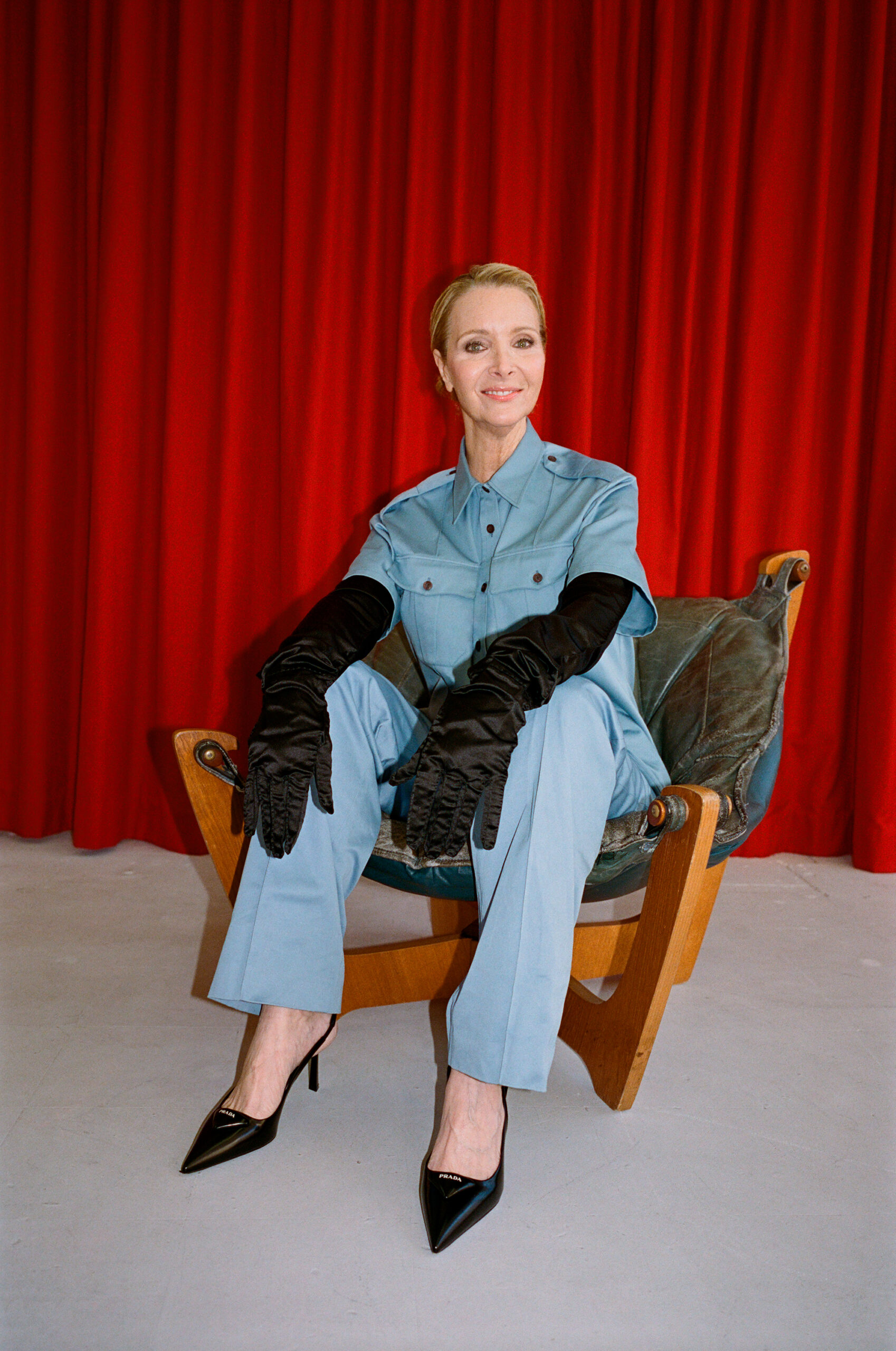
Top, Pants, Gloves, and Shoes Prada.
TOMLIN: Are you drawn to characters who are slightly delusional, or do they just keep finding you?
KUDROW: It must be a part of who I am. To me, the funniest thing is someone who has no idea that they’re operating in an alternate reality.
TOMLIN: When you’re going to play somebody, do you have a distinct hairstyle in mind?
KUDROW: It usually comes later. You’re big with that. On Web Therapy, you had your hair ready to go. Is that a place you start?
TOMLIN: Sometimes. Of course, that character was in prison, so she had—
KUDROW: Cornrows. [Laughs] For Valerie, it was pretty clear early on that she should be a redhead, because blondes are ditzy and brunettes are too serious, but redheads are fun and smart. That’s what I thought her thinking around that would be. And then we wanted her to have the same hairstyle she would’ve had in the ‘80s. Jonathan Hanousek came up with that. It was so flattering.
TOMLIN: Oh yeah.
KUDROW: Valerie looks so much better than I do. [Laughs] Good for her.
TOMLIN: Oh, now wait a second. What’s harder, making people laugh or making them cringe?
KUDROW: I don’t have much difficulty making people cringe. I think laughter is always trickier. Especially for younger people who are discovering it now, they’ve had Housewives and Love is Blind. They’ve seen people doing very intimate and embarrassing things in front of a camera. And everyone is sort of curating their own reality show on social media, so it’s not so novel that Valerie’s got cameras on her all the time.
TOMLIN: This is a revelatory education for me. I have not kept up with the times.
KUDROW: You know how everyone’s always on social media. Another issue is that what we see, we’re not sure if it’s AI generated or not. There should be some rule that they need to let you know.
TOMLIN: That’s why I’m profoundly disappointed that you and MPK didn’t have the show written by AI.
KUDROW: We thought we could do it better.
TOMLIN: That could be a great experiment, a beacon to the future.
KUDROW: Well, yeah, we didn’t do that. I’m sorry. I guess the headline is “The Comeback Disappoints Lily Tomlin.” [Laughs] We just wrote a serviceable sitcom.
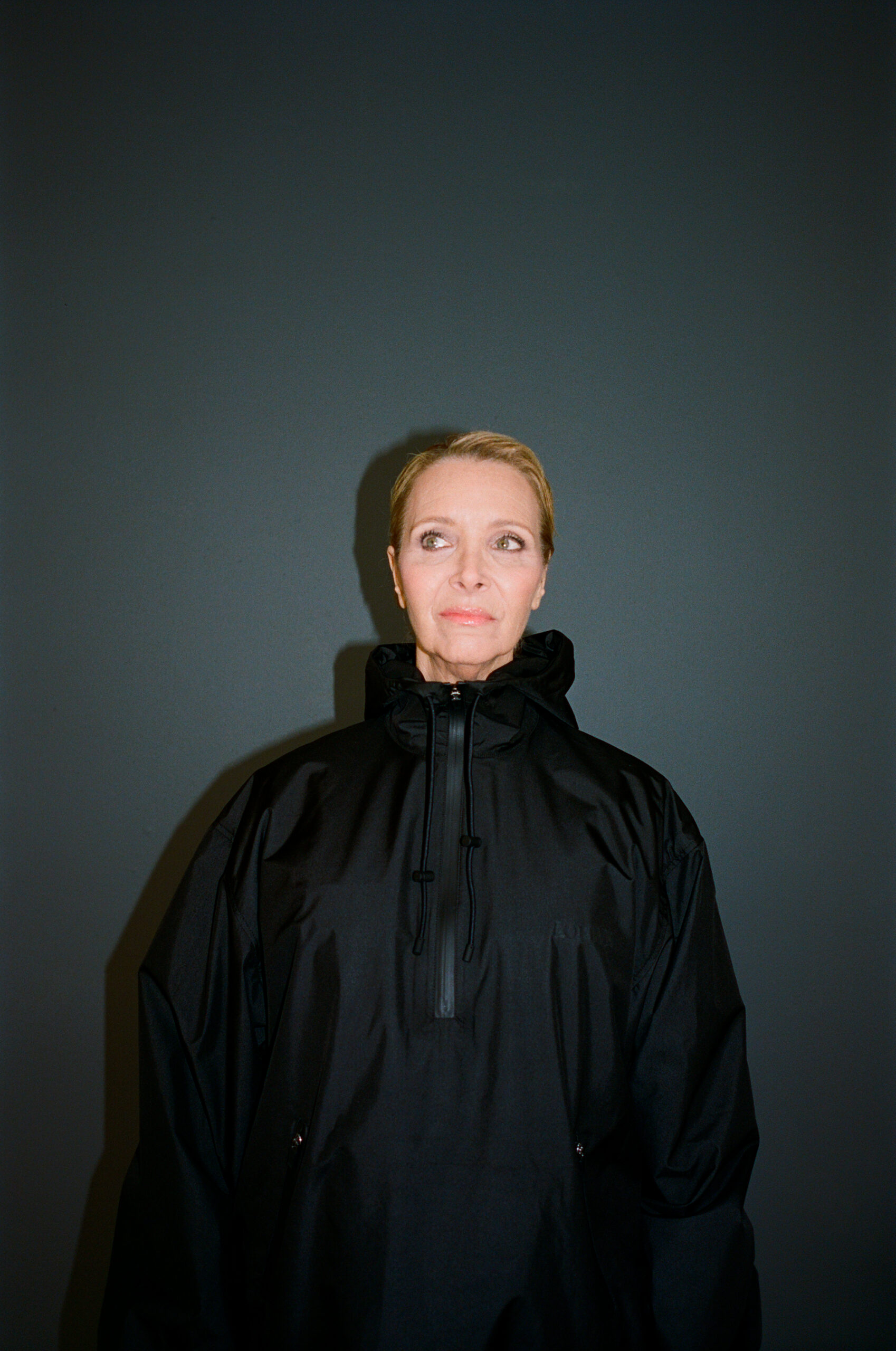
Jacket Loewe.
TOMLIN: Has anybody done a show by AI? Because gosh, get my agent on the phone.
KUDROW: I don’t think so.
TOMLIN: And I thank Lisa Kudrow for this Emmy, because it was really her idea to do a show by AI and I just happened to step in.
KUDROW: You can do the next season of The Comeback, the AI version. Lily in a reality show about her on a show, pretending to be on a reality show while shooting a fake show.
TOMLIN: That sounds promising. [Laughs] Okay. You studied biology at Vassar?
KUDROW: I did. I thought I wanted to be a doctor.
TOMLIN: Your father’s a doctor.
KUDROW: And my brother. They talked me out of it when I said, “I don’t know that I actually want to do this.” They said, “Then don’t.”
TOMLIN: They had tough love.
KUDROW: They were just supportive. It’s really a grind.
TOMLIN: My mother and father went to the doctor.
KUDROW: Oh, so that’s your connection. [Laughs]
TOMLIN: So tell me, when you studied biology, how far did you get?
KUDROW: I was studying evolutionary biology, and I intended to continue to graduate school.
TOMLIN: But you fulfilled your vision of evolutionary biology. You developed a species of characters that reveal—
KUDROW: Humanity to us.
TOMLIN: Yeah, that’s it.
KUDROW: The uncomfortableness of humanity. It’s hard to articulate, but for me, biology was a creative endeavor because it’s theoretical. The fun was coming up with theories for how things work. I was really interested in the complexity of our minds. How on earth did that arise out of random mutations?
TOMLIN: When did you realize that The Comeback had become a cult show? Did that have anything to do with random mutation?
KUDROW: The Comeback was a random mutation that some forces of nature didn’t appreciate as being valuable. They tried to make it extinct. Early on we were confused because a lot of people we respected let us know they thought it was great—writers, actors, artists, creative people. Then executives would say, “Yeah, so which was the reason it got canceled?” I don’t know the reason.
TOMLIN: Did you say anything to them like, “Well, was it me?”
KUDROW: I’m not that insecure. Honestly, we were getting great feedback while it was on. We heard David Bowie called HBO when he was going on tour, being like, “I don’t want to miss any.” Being canceled was shocking, but I wasn’t devastated because I thought, okay, this is beyond my control. What we did was good. I’m proud of it.
TOMLIN: You’re a mature, stable, incredibly gifted artist.
KUDROW: Thank you. I really try not to take things personally, because when people are saying something to you, they’re talking about themselves and their own issues. Or is that just me not taking responsibility for anything? [Laughs]
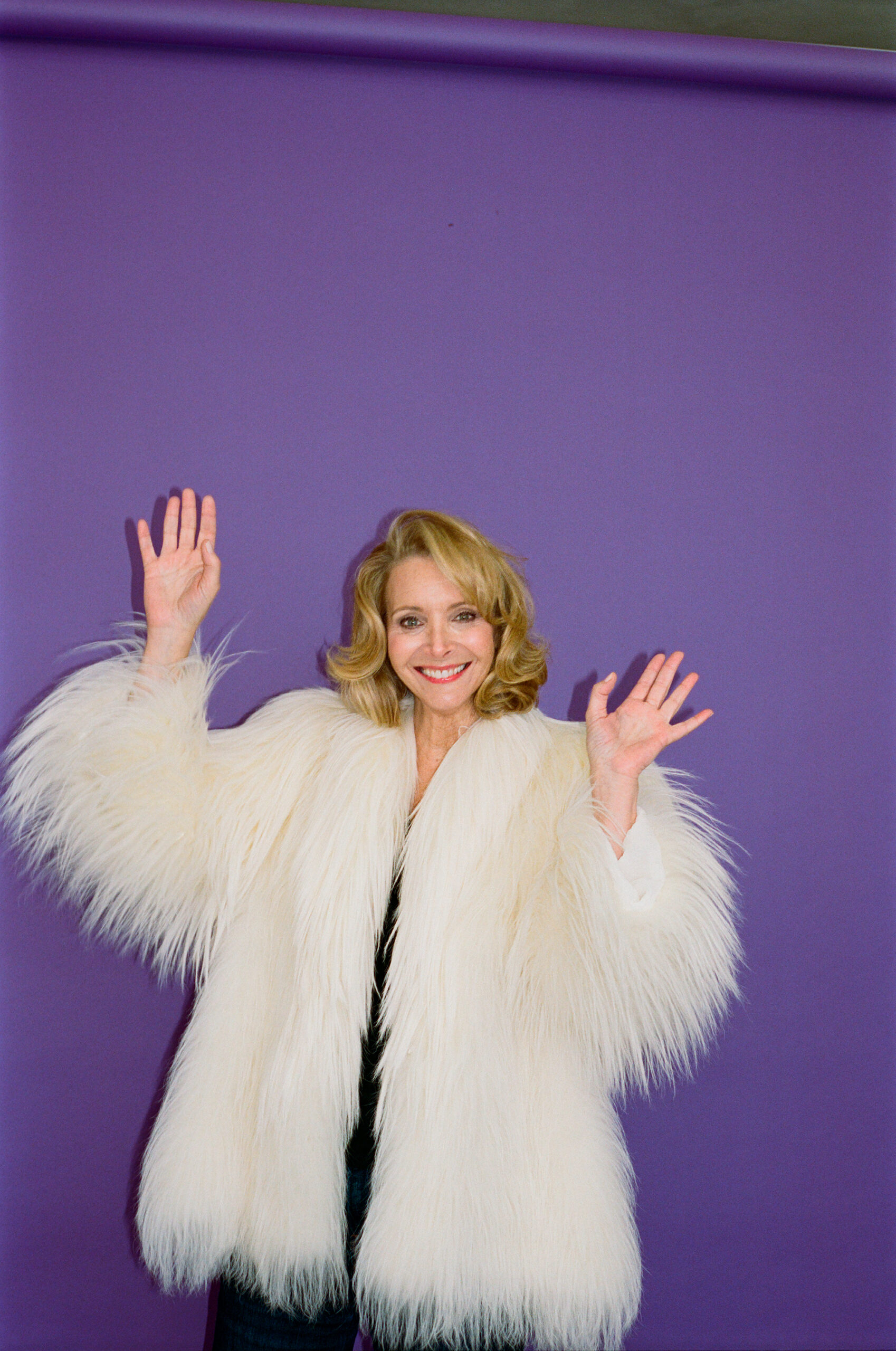
Coat Gucci, Top and Jeans Lisa’s Own.
TOMLIN: What’s the most embarrassing thing Valerie has ever done that you’d never do?
KUDROW: Almost everything. Well, when I’m talking to a showrunner and trying to make a point, even though they’ve made it clear they don’t care, I mostly know when it’s time to walk away. Do you?
TOMLIN: I usually give a little shove from behind or something.
KUDROW: [Laughs] Because you’ve done both. You’ve written, and you’ve been an actor for hire. Web Therapy was improv and you were full of fantastic ideas for the character and story. But when it’s a written script, do you pitch?
TOMLIN: Oh, no. I don’t think I’ve ever done that. You can’t make as profound a change as you feel is needed.
KUDROW: Right. But what stops you from trying to make as profound a change as you think is needed?
TOMLIN: If I feel I can impact it, I do it. But I don’t want to go into that. Let’s change the subject.
KUDROW: Okay. I’m just wondering if over the years, because now we’re going back to late ‘70s and ‘80s, has it gotten easier for you to have an opinion or make a suggestion?
TOMLIN: I’ve grown more accepting. I say, “Let’s just follow this through and see if he was right or I was right.”
KUDROW: [Laughs] Okay.
TOMLIN: I go with the flow, then I come home and angst over it day and night until it’s too late to reshoot.
KUDROW: I’m going with the flow more too, since I was on Friends.
TOMLIN: You could only make Phoebe pay off that way—she was so honest and true to who she is. I think she’s beautiful and perfect. It turns out she was kind of an admirable character.
TOMLIN: Oh, yeah.
KUDROW: At the time, it was like, “She’s such a ditz. How is it that you only play ditzes?” And I thought, Is she a ditz? To me, she wasn’t.
TOMLIN: Who said that?
KUDROW: Everybody. In 1994, it was like, “I love her. She’s such a ditz.” And it’s like, yeah, okay, that was what a ditz was to us. Someone who wasn’t towing the line.
TOMLIN: Exactly.
KUDROW: But she wasn’t stupid.
TOMLIN: How do you make that what becomes you?
KUDROW: At first, Phoebe was very, very far from me. It took a lot of work to justify the things she would say and do. Not in an irritating way—it was fun. Over the course of 10 years, a little bit of her came into me. I lightened up a little more and read some books on spirituality and things, just to try to understand her.
TOMLIN: Gosh, I love that.
KUDROW: Yeah. That’s why I don’t like playing characters that are too evil. I don’t want to inhabit that so much.
TOMLIN: I never wanted to kill someone on screen.
KUDROW: Yeah.
TOMLIN: I did kill someone in a series once. It wasn’t on-screen, but I still didn’t like to be identified with killing someone. It was my husband’s girlfriend. That was even worse. It showed a lack of growth on my character’s part.
KUDROW: Yeah. But it can also be enlightening to play unevolved people. I mean, you’ve really got to like them. I always start off thinking it’s a cautionary tale, and then it turns out they weren’t so wrong.
TOMLIN: [Laughs] Well, that is a life lesson.
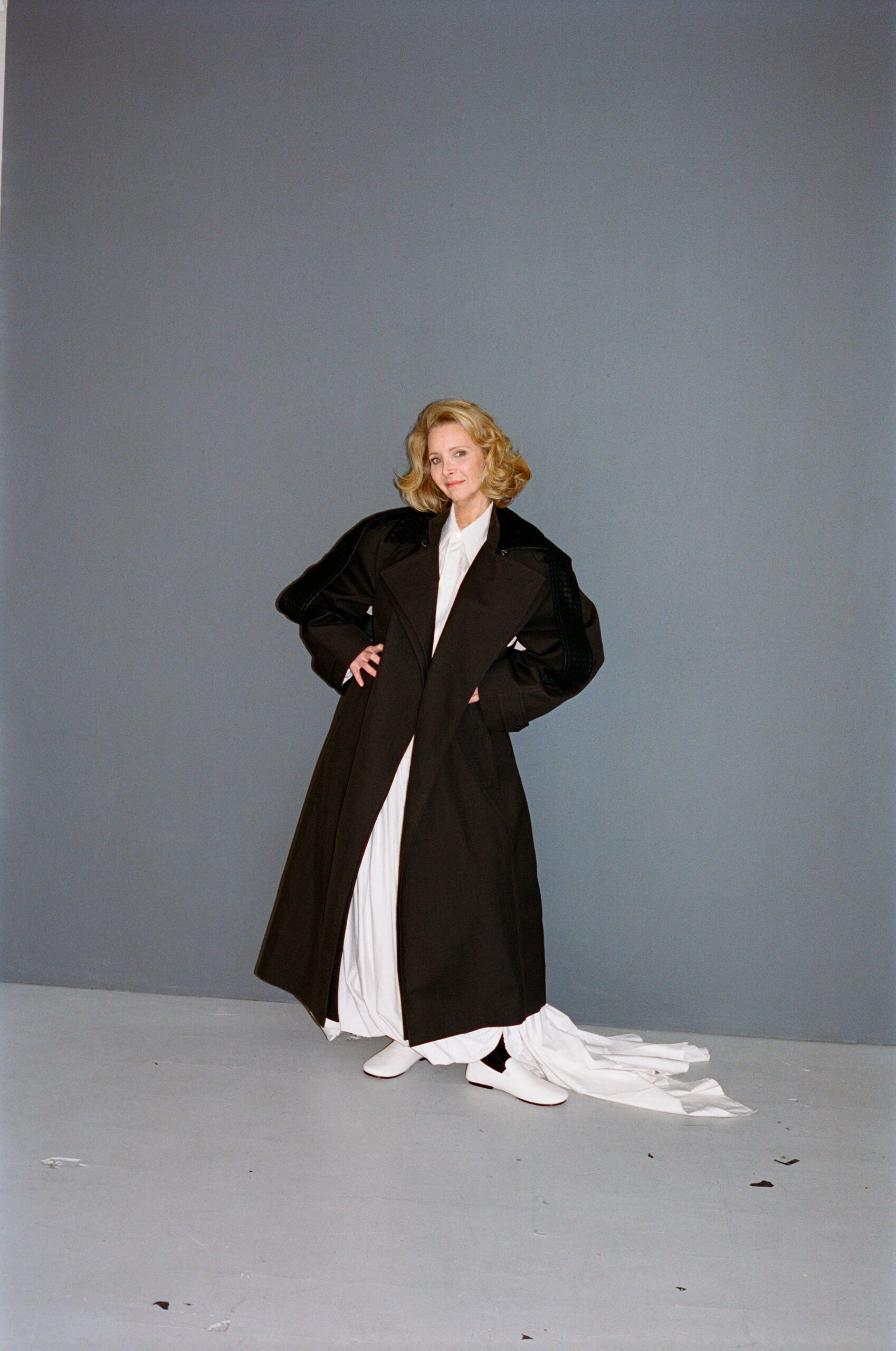
Coat, Shirt, Skirt, and Shoes Bottega Veneta.
KUDROW: With Valerie, it’s like, you know what? She never gives up, whether it’s worth it or not. Good for her. She’s kind of strong, ultimately.
TOMLIN: Without even getting embarrassed. People are rolling their eyes at her but she doesn’t acquiesce. That gets my vote as strength.
KUDROW: Yeah, yeah, yeah.
TOMLIN: Tell me, on your trip through Hollywood, what did you learn at 30 that you wish you had known at 25? Were you famous at 25?
KUDROW: I wasn’t famous until 30 or 31, and 25 was before I had therapy. But in terms of acting and auditions and stuff it was, “Don’t confuse people liking your work with them liking you. And don’t wait to get permission to like yourself, because you’ll need that. You’re all you’ve got.”
TOMLIN: We’re conditioned to think it’s arrogant if you like yourself and it’s not. It’s a requirement.
TOMLIN: Absolutely.
KUDROW: For stability.
TOMLIN: Is there any role that you passed on that you think about now?
KUDROW: I don’t regret things because I know why I said no to everything I’ve said no to. Sometimes it’s because I don’t get the point of the story, or I’m just not connecting with it.
TOMLIN: I don’t know if I’ve even been offered anything.
KUDROW: I feel like I’m offered things at the last minute, when someone else can’t do it, which I’m fine with by the way.
TOMLIN: I did that once. I got a part in And the Band Played On. Whoopi was going to play the role. Dr. Selma Dritz. I was delighted to come in for this political expression of someone’s idea.
KUDROW: Boy, was that good.
TOMLIN: Do you think sitcoms are dying or are they just evolving?
KUDROW: I wish they were evolving. 30 Rock and Seinfeld and Friends were really funny and really well written. But I’m not drawn to new sitcoms that are multi-camera in front of an audience because I’m not buying it. I don’t know if that’s just because I’ve seen too many single-camera sitcoms—I think we need to get back to being able to tell jokes. I feel like we’ve been too afraid to make jokes that might make people uncomfortable.
TOMLIN: The multi-cameras with an audience, they’re not short on jokes.
KUDROW: Right. But the really good ones, they’re not tame jokes. They’re jokes that are kind of, “I can’t believe you just said that.” Comedy is about surprise. You need things you didn’t see coming.
TOMLIN: That’s true. Do you ever watch yourself ?
KUDROW: I can watch The Comeback, no problem. Now I’m comfortable watching Friends without punishing myself. I’m trying to have that be my nighttime show, so I have a laugh or two before I go to sleep. There are still episodes I’ve never seen. Have you seen every Grace and Frankie?
TOMLIN: No.
KUDROW: You should. It’s good. Can you watch yourself or is that—
TOMLIN: I can.
KUDROW: I just get nervous. What if somebody walks in and I’m watching myself? That’s really embarrassing.
TOMLIN: It is. [Laughs] Well, I have just one last question.
KUDROW: Okay.
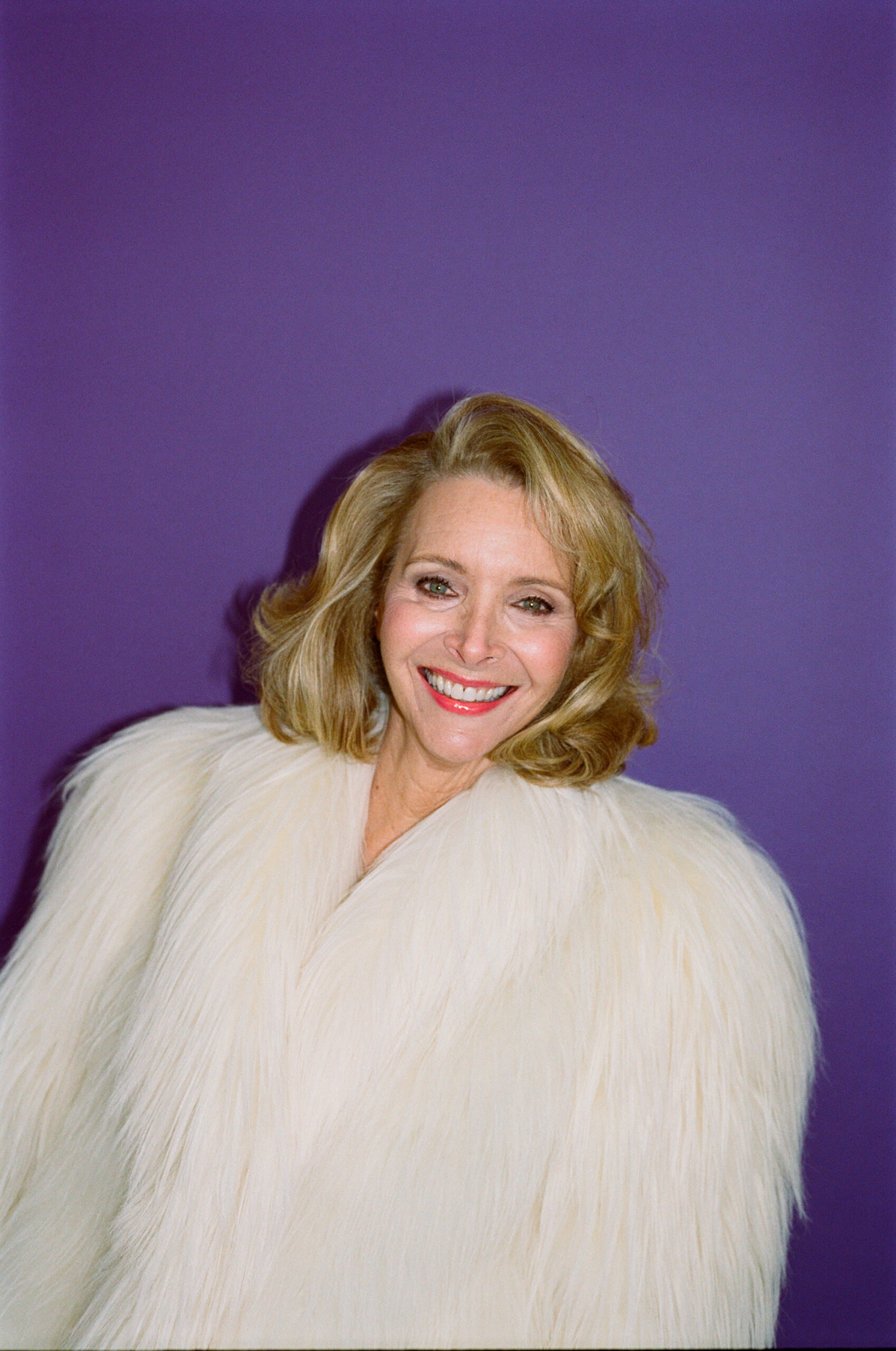
Coat Gucci, Top and Jeans Lisa’s Own.
TOMLIN: What does the word comeback mean to you now, versus when you created the show in 2004?
KUDROW: I mean, at first, to me, a comeback—that was the most embarrassing reality show to be on, because it’s saying, “I went away.” To me, it was really embarrassing that she’s so desperate to get back in the spotlight that she agrees to be on a show called The Comeback.
TOMLIN: Oh, no.
KUDROW: Now, it’s the most celebratory word. We love a comeback.
TOMLIN: [Laughs] That’s a random mutation that is really, really extraordinary.
KUDROW: We’ve mutated comeback from cringe to celebratory.
TOMLIN: And you are an individual who should be celebrated at every turn, at every replay—forget replay. I didn’t mean to say that.
KUDROW: [Laughs] This coming from someone who is unbelievably brilliant, inspired, and true to yourself.
TOMLIN: Thank you a lot.
KUDROW: You’re it, Lily. Not just for me. For everybody.
TOMLIN: I’m just a random mutation.
KUDROW: [Laughs] You are the best of the random mutations. Thanks for doing this.
———
Hair: Meghan Heaney.
Makeup: Elaine Offers using Victoria Beckham Beauty at Exclusive Artists.
Nails: Jolene Brodeur using Celisse at The Wall Group.
Set Design: Jeremy Reimnitz.
Photography Assistant: Lili Peper.
Fashion Assistant: Rio Garcia.
Production Direction: Alexandra Weiss.
Photography Production: Georgia Ford.
On-set Production: Cecilia Alvarez Blackwell.
Production Assistant: Grace Perkins.
Post-production: Kelsey Haley.
Post-production Coordinator: Leonardo Cardemil.