



NOW PLAYING
How Did Daniel Blumberg Follow Up His Oscar Win? With Another Banger Score.


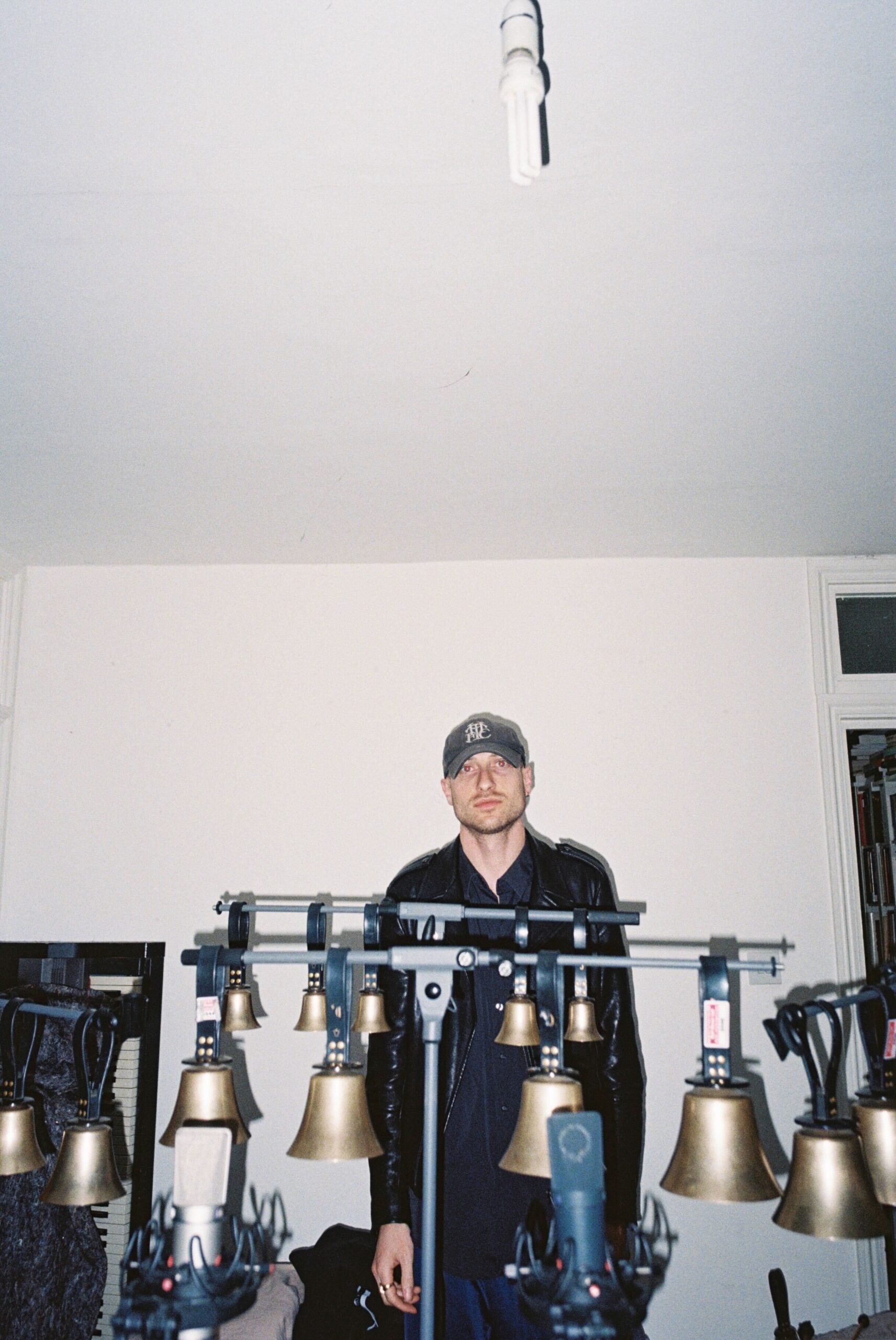
Daniel Blumberg “never thought of making film scores, ever.” At least not until he met the director Brady Corbet, with whom he’s forged a friendship and creative partnership anchored by their shared love of music and cinema. Nowadays, the English composer is best known for his Oscar-winning score for Corbet’s The Brutalist, but his musical education, as he told Corbet on a call last month, began with his high school band (he won’t reveal its name) and deepened later on with frequent visits to London’s famed Cafe Oto. It was no surprise, then, that Corbet’s wife, the director Mona Fastvold, called on Blumberg once again to dream up the pulsing score for The Testament of Ann Lee, her high-flying musical drama about the Shakers religious sect and its hypnotic founder Ann Lee, played by Amanda Seyfried. Once again, Blumberg has pulled it off, crafting a rich, strange, and historically faithful sonic landscape to match Fastvold’s story of devotion, community, ego, and gender equality. So how does Blumberg continue do it? It’s not unlike how Corbet feels about Japanese cooking: “It’s four ingredients, and yet those four ingredients are reinvented time and again in very, very nuanced ways.” Below, the collaborators let us in on a wide-ranging conversation about literature, London, and the language of cinema.—CHARLOTTE ZAGER
———
BRADY CORBET: Hey, DB. Where are you? You’re in L.A. still, right?
DANIEL BLUMBERG: Yeah.
CORBET: Oh, it’s early for you.
BLUMBERG: [Laughs] I just woke up. I’ve been sleeping so crazy. We watched 15 minutes of [Rainer Werner] Fassbinder and fell asleep—Ali: Fear Eats the Soul. It’s a good one. I haven’t watched it in ages. It’s the best.
CORBET: It is the best.
BLUMBERG: We should do this more often.
CORBET: Well, I’m going to do my best. I haven’t prepared anything, so we’re going to see how it goes. There are a few things I obviously already know, but I think it’s probably helpful for readers to quickly contextualize. I know you had your band when you were a teenager, but how long have you been playing? Since you were a kid?
BLUMBERG: Yeah, but when I was a child, I was just trying to learn the clarinet and piano and I wasn’t very good at it. I was always in the orchestra, trying to read the sheet music at school, and I couldn’t do it. So I only really started when I was 15, when I got asked to be in a band.
CORBET: Were you primarily playing piano or guitar or both?
BLUMBERG: I was just singing.
CORBET: Oh, you were just singing?
BLUMBERG: Yeah. I ended up playing guitar because we were recording at Edwyn Collins’ studio—you know, Orange Juice, “Never Met a Girl Like You Before.” It was his studio, and he had this massive collection of vintage guitars. And that made me want to play guitar.
CORBET: Who else in your family is musical?
BLUMBERG: My brother and sister are really musical, but my parents didn’t really play music. Did you play music?
CORBET: No, I played guitar poorly growing up. My grandfather played piano and tried to teach me as a kid, but I really didn’t have a knack for it. Ada [Fastvold-Corbet, Corbet’s daughter]’s starting to really hold her own because she’s been doing lessons now for the last four months.
BLUMBERG: Oh, shit. Really?
CORBET: She’s been doing it once a week with your keyboard—the one you were working on Ann Lee with in the office.
BLUMBERG: I think you and Mona are really very, very musical. I mean, in different ways, but you’re very fluent in music without playing it.
CORBET: I should play in the second half of my life. I don’t have enough stuff on my plate. [Laughs]
BLUMBERG: [Laughs] Yeah, exactly.
CORBET: If we jump past the teenage years, when did you go to Cafe OTO for the first time? Was that 12 years ago, 13 years ago?
BLUMBERG: It was when I was 21, I think. So yeah, about 13, 14 years ago.
CORBET: You took me there 11 years ago and you’d already been playing there for years, no?
BLUMBERG: Yeah, I have these three weird moments in my life that were really profound creatively. One was reading [Vladimir] Nabokov for the first time.
CORBET: Me too. That’s why my daughter’s named Ada.
BLUMBERG: I thought maybe that was why. The second one was walking into a charity shop when I was 17 and buying [Krzysztof] Kieślowski’s A Short Film About Killing. And then the third one was going into Café OTO, because my friend took me and I saw Keiji Haino play solo.
CORBET: The first show you saw at OTO was Keiji Haino?
BLUMBERG: Yeah.
CORBET: Oh, wow. That’s quite an introduction to the space.
BLUMBERG: Yeah, it was the first time I saw improvised music. And that’s why I always love London, because you can just walk 15 minutes into a different world.
CORBET: That’s what I love about London too.
BLUMBERG: And New York as well, I guess.
CORBET: I mean, they’re two of the only cities I feel like I can really function in. And then, I feel like you and I have been speaking about films and film scores for as long as we’ve known each other, but at what point did you think about actually—
BLUMBERG: Making them?
CORBET: Yeah.
BLUMBERG: I never thought of making film scores, ever. I was introduced to film scores by you, because when I met you, you were making your first film with Scott Walker. We started talking and then haven’t stopped talking. And I remember even just going to visit the set, I thought it would be this really high-pressure environment, but you were chatting about what was going on really calmly. And when you took me to the Scott Walker sessions for the brass—
CORBET: In Chicago.
BLUMBERG: And that was where I met Pete [Walsh], who I worked with for seven years after on every project really, until Ann Lee. So that was my introduction, and I remember the whole process made me think it would be interesting to score films and put the two pieces together: music and film.

CORBET: Are they entirely separate for you? Because to me, somehow, whether you’re working with Keiji Haino in Japan or working with Mona [Fastvold] or me in New York, it all seems like it comes from the same place. You seem to really enjoy collaborating in that way.
BLUMBERG: Yeah, that’s definitely it. It was really interesting working with Gianfranco [Rosi], because that was someone I hadn’t worked with, but it’s the same thing as getting together with Seymour [Wright], the saxophonist, and working on something together. It’s just the two of you sitting, talking about things, and then sometimes making things. It relates very closely to collaborating in other mediums.
CORBET: Can you just talk to me a little bit about how both projects came together? Let’s maybe start with Gianfranco, because I obviously know more about the process on Ann Lee.
BLUMBERG: I’ve known him for years. We met quite randomly, and the day after I met him, I went and saw Fire at Sea and it was one of my favorite films I’d ever seen.
CORBET: Yeah, it’s a masterpiece.
BLUMBERG: I was just so impressed by it and intrigued by the way he was working. And I love that sort of thin line between documentary and narrative. I loved it with [Werner] Herzog, where there’s a real voice bringing us through these stories. So I just followed his work, and then he called me earlier this year to say that he wanted me to help with music at the end of his film—when the camera goes underwater.
CORBET: Exactly.
BLUMBERG: I was sort of relieved that he wasn’t asking me to do anything score-wise, because I love the fact that his films don’t have a score. But then when I went to Rome to see a cut of it, and we started to talk, I just noticed there was actually sound design in there already at various points, sounds that weren’t diegetic or from his recording setup with his camera and stuff. So I thought there was a space to try some things. And as we started working, more and more opportunities for score came up until it actually spans the whole of the film. It’s very subtle, but it was really interesting doing something so sparse. And it’s really, really different to The Testament of Ann Lee, which is full-on musical numbers and everything.
CORBET: Yeah, it’s hundreds of minutes of music and dense melodies and stuff. And to get to Ann Lee and the vocalists and collaborators that you work with—do you want to just speak to that for a few minutes?
BLUMBERG: Well, I have my drawings as well, which is a big part of the way that I work and a big part of my life. I sit down at a desk and I do a drawing and sometimes it can take 30 seconds, and that is the totality of that. That’s the full work. And one of the things with the scores, I mean, you were making something epic, and I definitely extended myself into this. The score from The Brutalist, and obviously now with Ann Lee, it was these long projects and that kind of scale. And I think that’s something that I’ve really appreciated and learned from you—working on a bigger scale. And it was crazy going on to Ann Lee after The Brutalist because it was a really epic musical project for me in terms of just the amount of people, the amount of singers, just the scale of it.
CORBET: And just the fact that it’s musically driven. I think that it’s a different responsibility to make a musical for a composer than it is to do a more traditional film score. There’s a lot riding on it because you’re part of the narrative thrust of the film. I mean, I suppose you are anyhow, but in a more literal way on this one. And what drove you to bring in Maggie [Nichols] and all these extraordinary vocalists?
BLUMBERG: Well, when I read your and Mona’s script, initially I was thinking about Phil Minton and Maggie Nichols and these two improvisers that I’d always go and see when they’d come and play at OTO. They’re seminal, legendary vocalizers. And I always like looking into the Shakers and their formation. They were praying with singing and their voices, but before they’d written all their hymns. So I was excited about that transformation. And Mona spoke about it really early, how they get from their formation to this really amazing, organized—
CORBET: Songbook. Yeah, exactly. Mona and I talked about it a lot, the fact that it must have begun as something absolutely improvisational until it turned into the songbook of gift songs in the 19th century. But it was an interesting thing because even though some lyrics didn’t come around for another 100 years, some melodies feel like sea shanties and stuff. They feel even more ancient than the 1750s.
BLUMBERG: Mona was encouraging me to approach it like I approached my song records. And with my song records, I always try and distill what the song is into as simple a form as possible so that when the improvisers come, I have the most simple core of what the song is for people to bring themselves to it. Obviously with Mona, she’s so calm and just… It was this massive expanse of work in front of us, but she’s very good at focusing on—
CORBET: Brick by brick. She’s good at that with me, too.
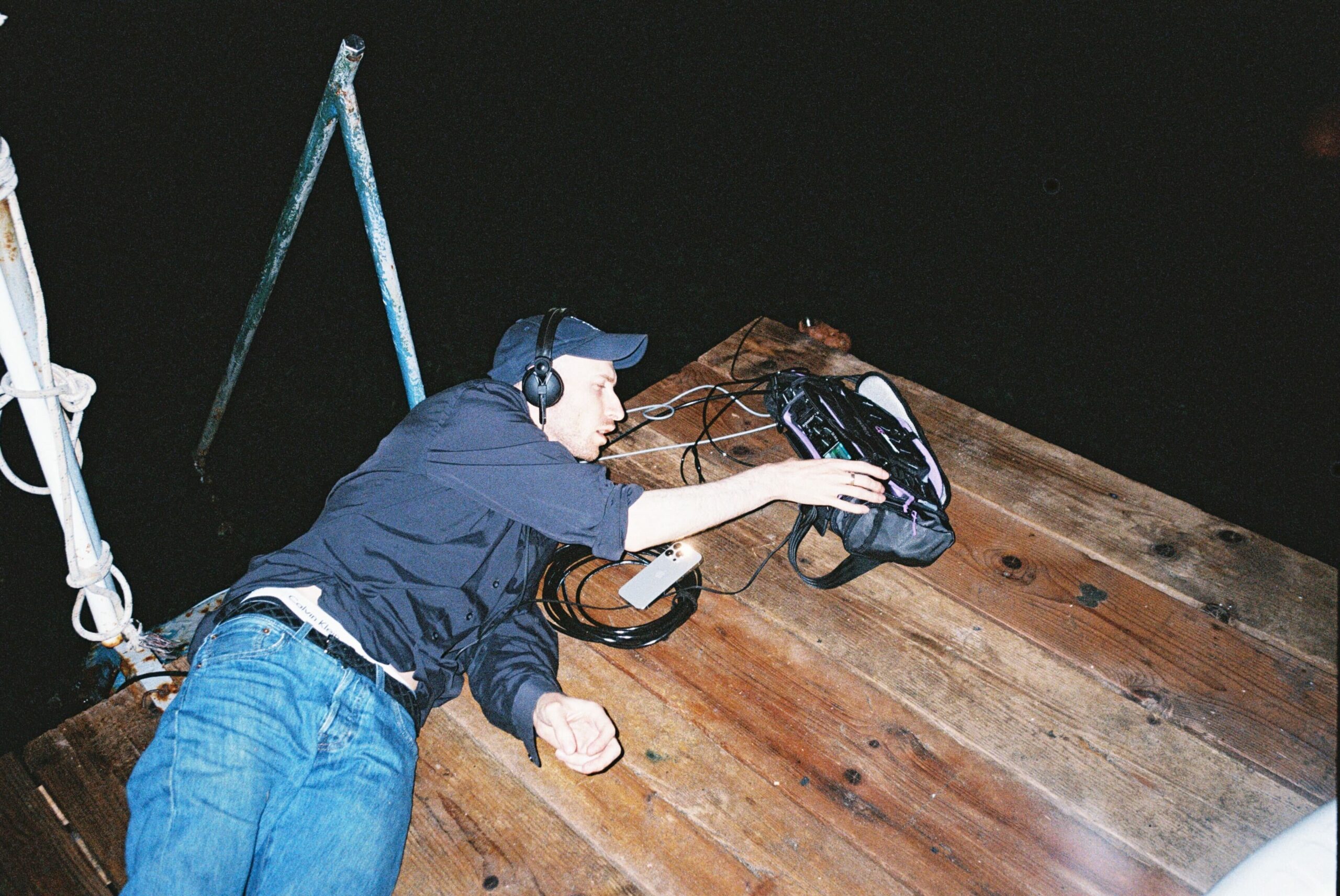
BLUMBERG: I felt like it was training for our future work as well, because just being alongside Mona on the set or in the sound mix, I was learning about the problems that you encounter as filmmakers.
CORBET: Yeah, that’s interesting. Because on both The Brutalist and on Ann Lee, you’re a lot more embedded in the process of the movie. But I also think that’s the reason that the scores are so accomplished, because they’re so intertwined. I would imagine, as much as possible, that we’ll continue to work that way in the future, because the scores don’t feel grafted onto a finished piece. They’re really inside of the films. And there’s a lot of work in the mix and a lot of work from you, just conceptually, to make sure that that happens. But I think that’s why it’s important that you’re actually on set, because most composers are not.
BLUMBERG: But it comes back to when I started, when Mona invited me to do my first score for The World to Come. And I remember speaking to you—I think it was late in Romania—we were drinking, and I said, “Should I listen to some scores?” And you were like, “No, no. The important thing is you understand the language of cinema.” And that was a big encouragement for me, because trusting the director, trusting the language of what you’re doing, is more important. You create these parameters and then trust the world that you’ve built for that piece of music.
CORBET: Because I know you’re a real cinephile, and we have many of the same favorite films and filmmakers. And just to jump back to something you were talking about a couple of minutes ago, one thing I think is so interesting about the Shakers’ hymns is that inherently they have something in common with a lot of your work and songs. What I love about your records is that, for me, it’s great minimalism. It’s how I feel about Japanese cooking: it’s four ingredients, and yet those four ingredients are reinvented time and again in very, very nuanced ways. So I thought you were sort of uniquely well-poised for this.
BLUMBERG: I remember speaking to you about Minus, because that was a big record for me. It was a bit of a turning point for me as an artist, and that was the first one I did with Pete Walsh, who I met through you. And I remember sending you the lyrics before I’d completely—
CORBET: Yeah, I remember that too.
BLUMBERG: You were saying how much you loved these mantras. And for me, it was because I left songwriting. I left it for five years and just made purely improvised music and then came back to songs. Quite naturally, I just heard a song that just reminded me how powerful songs could be. But I was really thinking of what made me allergic to songs for those years. And one of them was pressing the listener into a really small tunnel and just pushing the lid down, because you’ve got all these words telling you to think this, and then the strings come in, and it’s just pressing the listener down. But I like poetry and films where you can come away reflecting. I mean, the obvious one is [Andrei] Tarkovsky, where you’re left to think your own thoughts as well.
CORBET: They mean different things to you in different periods of your life. I think that the reason I struggle with narrative, and the reason I’ll struggle with songs is that it’s not usually the first thing I listen to. Whenever I’m alone, it’s very rare that I put on a verse-chorus-bridge-verse-chorus track, and it’s simply because I feel like when you’ve seen a narrative film once, or you’ve listened to a song a few times—once you fully metabolize it, once you understand it—it sort of dies. If I’m listening to Mark Hollis or something, the songs are pulled apart in such a way that I always discover something new about them. And that’s something I really feel about your albums since Minus as well. It’s something that you’re really tapped into.
BLUMBERG: There’s something about a chorus—that waiting, waiting, waiting, waiting, and then the chorus hits, and that undeniable thing that just switches in your body when the chorus comes in. Trying to find that in our work is something we share, I think.
CORBET: Totally. Well, I’m so sorry, but I have to go on a work call.
BLUMBERG: Can I come?
CORBET: [Laughs] I really wish you could, but I love you, pal.