


USA
Alexis Bittar Asks Vivian Wilson: “What Does the American Flag Mean to You?”


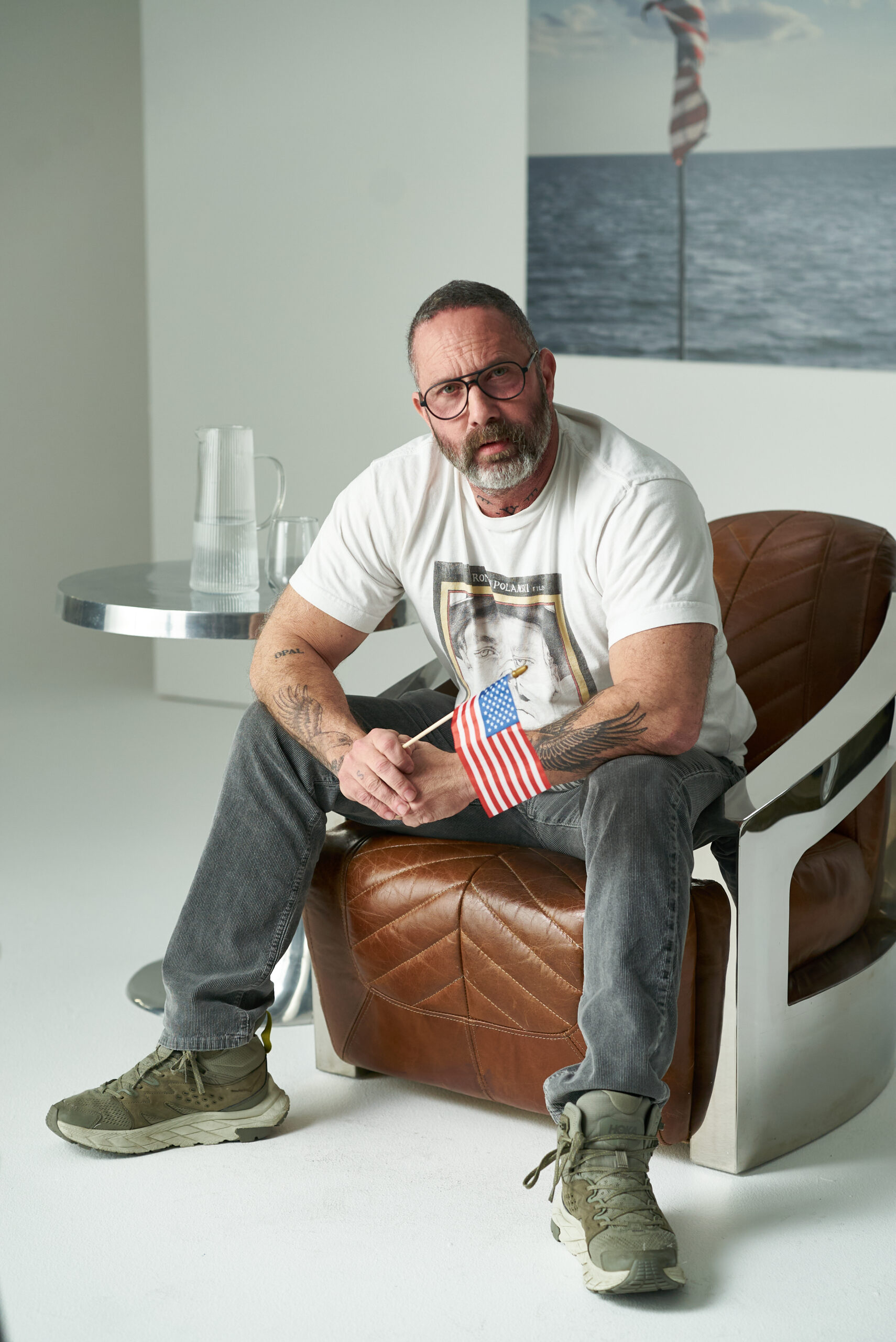
All photos courtesy of Alexis Bittar and Vivian Wilson.
Last September, model Vivian Wilson made her NYFW debut as Miss South Carolina, a sparkly beauty queen in jewelry designer Alexis Bittar’s Spring 2026 pageant fantasy. The show, titled “Miss USA 1991: A Dream Sequence,” cast transgender models as the faces of red states pursuing brutal anti-trans legislation. But Bittar’s exploration of the intersection of queer identity and American pride doesn’t begin and end on the runway. His upcoming documentary Reclaim the Flag, co-produced with Oscar-winner Bruce Cohen, explores the personal relationship 50 LGBTQ+ cultural figures have with the star-spangled banner; a patriotic symbol currently at the heart of the American political conversation as it’s been increasingly co-opted by the MAGA movement and rejected by the left. He and Wilson recently reconnected to discuss queer pride and patriotism—and why we need to be waving both those flags high.
THURSDAY 2 PM JUNE 25, 2026 NEW YORK CITY
———
VIVIAN WILSON: Hi.
ALEXIS BITTAR: Hi, beautiful. How you doing?
WILSON: I’m doing well. I have my notes here.
BITTAR: Oh, good. I have some notes too. Should I go first or you want to go first?
WILSON: You can go first and then I can bounce off of you.
BITTAR: Okay, cool. I guess the first thing I wanted to ask you is, what does the American flag symbolize to you today?
WILSON: I knew you were going to ask me this question. The American flag has sort of been co-opted by the conservative party in an attempt to push policies that are inherently discriminatory and justify it by saying it’s patriotic. So, if I see an American flag outside somewhere, I do have to second guess myself. I have to establish the context of why they could have put it up there. But there are situations in which [seeing an American flag] does get me to steer clear of whatever that might be.
BITTAR: For me, it’s interesting because my parents were both American history professors and I’m half Arabic and half Irish. Because of my Arab roots, there was a messaging that I was kind of inherently evil. That’s just the messaging in this country around being Arabic. So I never felt really embraced by the American flag. And then realizing a little bit later that I’m gay, it was even more so because I grew up in the age of AIDS. I had two lovers who had AIDS, and the way the country dealt with it was horrendous.
WILSON: Yeah, fuck Ronald Reagan.
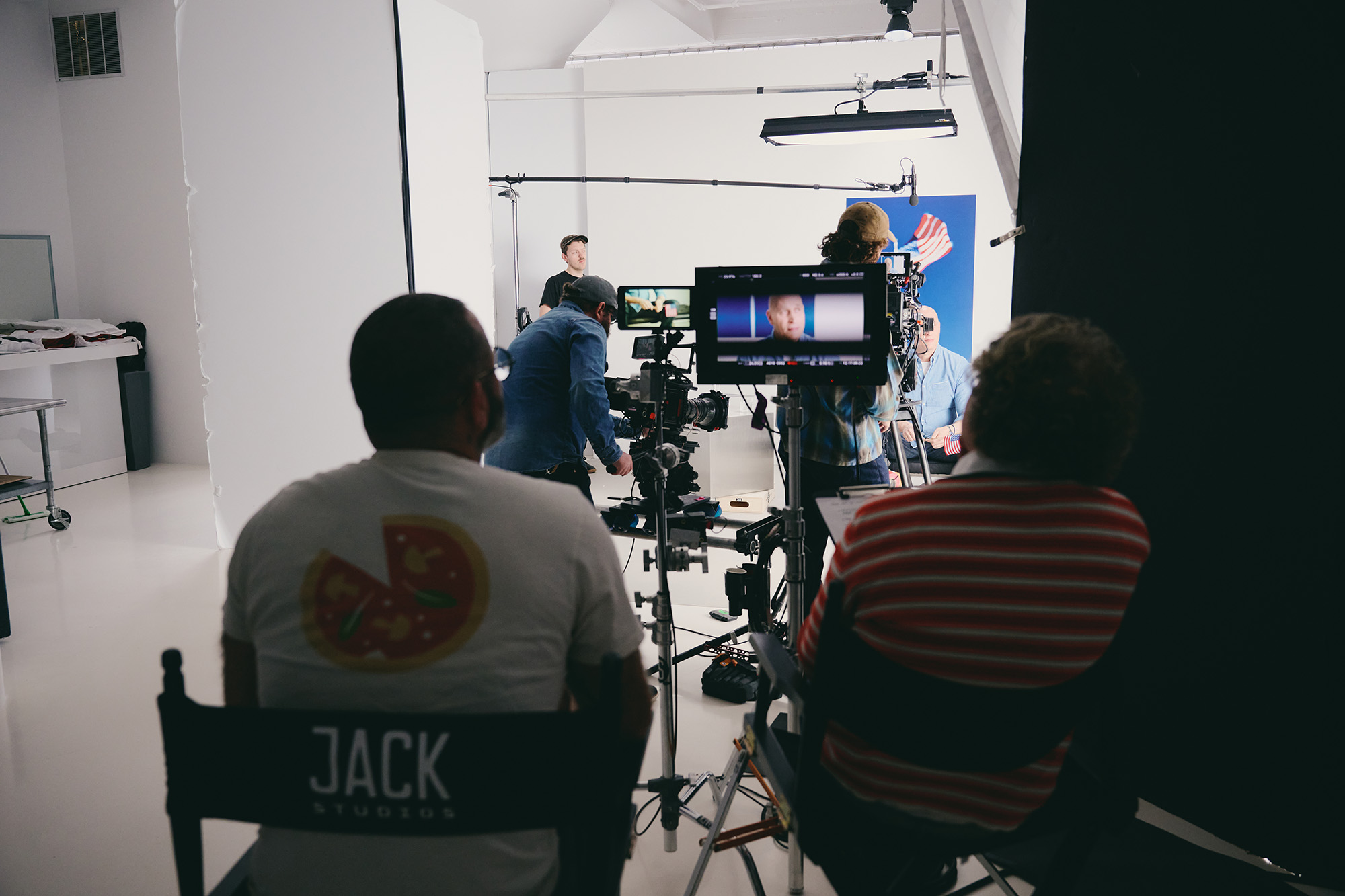
BITTAR: Exactly. So it’s funny, I never felt this deep affinity towards the American flag. I know the reason why the left let go of the flag and I understand it, from the Vietnam War on. But when you think of the flag as a symbol of what it was intended to be, and then you admit that it was never realized, I think that’s the important thing. The flag has not been used to bring people together. It’s not used that way now, particularly with this administration. I remember when the election for Trump was coming up and you would see the pickup trucks with the flag. It was like, “We’re coming for you.” That was definitely the message.
WILSON: People say the American flag has a lot of potential in terms of the ideals that it claims to uphold. I saw this quote on TikTok, but I found it very profound, which is, “You have infinite potential if you don’t do anything.” So, this potential has never been realized for 400 years. It’s a country that is built off the backs of indentured servitude and slavery—something that we still haven’t made reparations for as a country. So it’s difficult, I think, in terms of what the flag claims to symbolize versus what the actuality of the matter is. Is actuality a word? Yes, it is. [Laughs]
BITTAR: Sure. I make up words all the time, so don’t worry about it. I’m the least eloquent person.
WILSON: Sorry, I always get like this in interviews.
BITTAR: I’m the same way. I’m a hundred percent with you on every level.
WILSON: One thing that really stuck out to me in the video is the newscaster in one of the clips said that they were carrying out a “routine police raid” on a gay bar. The way she said that with such a casual disposition was just…I mean, it’s not shocking because we know what the reality of the situation was, but I did have to take a minute and take in what she just said and the tone with which she said it. I think it’s a perfect example of what we’re talking about.
BITTAR: Well, when I thought of this film, I thought that so many people have given up on America. We inherently have so much power if we actually take action, but so many of us come from a marginalized community. One of the things that I wanted to focus on in depth was the LGBTQ+ community. My parents cut me out when they found out I was gay. They died and there was never really a resolution. But they’re a product of what they were told in this country, and it was a crime to be gay. It was a crime to be trans. You would get electric shock—that was the treatment. It’s not a surprise that I don’t feel an affinity to the American flag. That being said, what hit me is, if I don’t claim this flag as mine, I basically have given up on the country and my power to fight for this country. For me, it’s like, acknowledge what this country has done wrong, talk about it, but then ask what am I doing to create the country that I’m proud of? And so many people were like, “Well, maybe we should make a new flag.” But I’m like, “No, this is the history of this country.” By making a new flag, it’s like erasing the history. This is our flag.
WILSON: I understand the argument for making a new flag just because the current one does have the history that it does.
BITTAR: There is an argument for it. I’m not going to deny it. But my rebuttal would be that we’re stronger by acknowledging what we’ve done and being like, “Yeah, this is fucked up, but you know what? There were these ideals in the Constitution that were never realized. Can we make those real?” Some of them are beautiful.
WILSON: I don’t think those words mean much to me, just because they were a bunch of…Oh, I’m going to get flamed for this.
BITTAR: You’ll get flamed for the whole thing.
WILSON: I know. They were a bunch of 200-year-old, dead, white men who owned human beings as property. So, yeah, they have those ideals and they’re written, but we never lived up to them.
BITTAR: But that’s the point. What I was trying to get at is that we each independently have a lot of power. You have a lot of power. We have voices. What are we doing today to create the country that we want to be a part of and proud of? Part of that is looking at the flag. And right now, this is our flag. So, what are we doing? The whole flag is a metaphor. It’s a metaphor for this bigger topic of what are we doing to create the country we want to live in and be proud of for our kids? I mean, I have three kids and they’re little and they’re growing up in this shithole. So if we don’t do something now, we’re fucked. And part of my frustration is that I think so many people, particularly on the left, have given up. They’re checked out in their phones and they feel like, “Well, what can I do to make a change?” And my feeling is that one person can make a massive change and that’s what we all collectively need to understand. Fortunately, even just two days ago in New York, we’re seeing that. We’re seeing a real…What is that word?
WILSON: Ideological.
BITTAR: Thank you. [Laughs] A real revolution within the political structure of New York City. Zohran, he’s making such a massive change. No one knew about Zohran two years ago.
WILSON: That’s true. I do think what Zohran has been able to do has been absolutely incredible. And I do think it speaks to the point that maybe we do have more power than we individually realize. Maybe we should all be trying to make the country a better place. And I think we are trying.
BITTAR: It’s why I wanted you to do my show, because of your family history and then who you are independently, it shows such strength and direction for so many people. You have a lot of power. You do. Before I made this documentary, I was feeling pretty hopeless about the country. It was just bad news after bad news after bad news. I think just the act of making this documentary made me engage with activism and community more than I ever had.
WILSON: I do think that is really important, community and organization and getting people’s voices out there. So I think that’s why I am so fond of the project. I think one of the most interesting perspectives in the video was that of George Takei, who was in a Japanese internment camp which is a very dark chapter of America, obviously. I wanted to know, what are your thoughts on that?
BITTAR: George Takei is a really amazing story because he became an activist much later in life. His health is not doing amazingly well right now. And in his final years, he’s made it his mission to talk about his story because most people don’t know that story, particularly young people. George has made it his mission right now to make sure that story is out in the zeitgeist. And at the same time, he’s very proud to be American, which is really incredible. You could build a case that he lives in resentment of how his family was treated in this country. It’s painful to see. I remember understanding and reading about it as a kid, but there was probably, I don’t know, one page about Japanese internment camps in history books. It wasn’t really discussed.
WILSON: Like a footnote in the American education system.
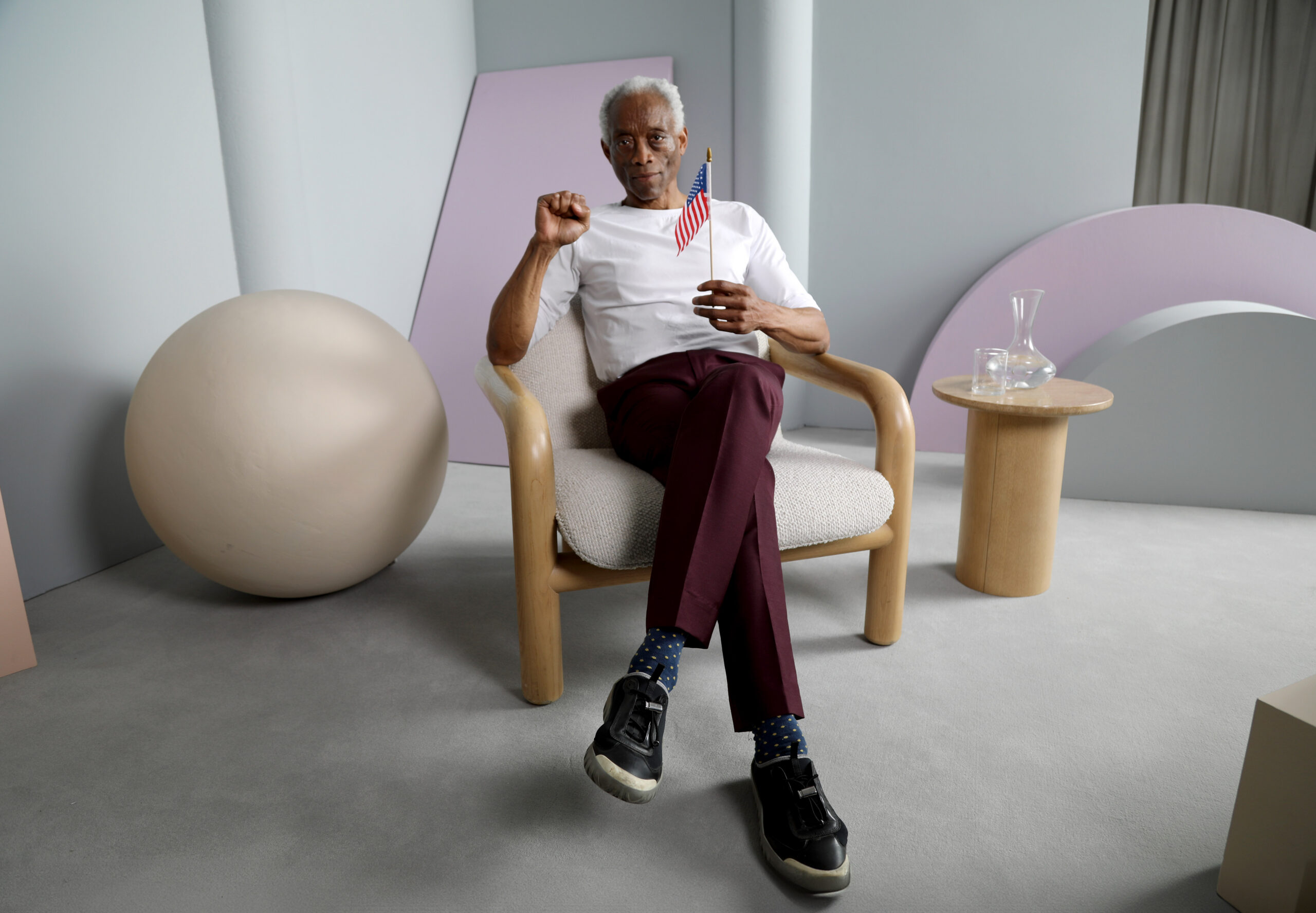
BITTAR: Yeah, exactly.
WILSON: If it’s discussed at all.
BITTAR: Exactly. So I think it speaks to what we’re talking about—that most people feel marginalized in this country and, on some level, have been made to feel less than by the color of their skin or by their religion or by their sexuality, and that’s perpetuated for the length of this country. It’s interesting for me because I feel like the Arabic-American conversation has just started to really take place in this country, because it’s been something that you could not talk about. People would want to just shut it down. And just recently, it is becoming something that people are starting to look at like, “Wait, how are Arab-Americans treated?” I’m working with Abdul El-Sayed in Michigan who’s running for senator, and it’s great to see that happen.
WILSON: Yeah, no, it is.
BITTAR: So I think George Takei is an amazing example of someone who worked through the gross imperfections of the country and how he was treated and then still says, “This is my country and this is my flag.” I mean, he’s incredible. He was the oldest one in the doc.…Let me ask you something. What would you want the flag to symbolize?
WILSON: Oh, that’s a good question. I think I would want the flag to symbolize an honest America. So I don’t know if it should symbolize anything. I feel like we should live up to specific ideals first…
BITTAR: Actually, can I just say that what you’re saying right now, when we were in the discussion at the Brooklyn Museum with Zohran Mamdani, that was the conversation. There were three people who said exactly what I think you’re about to say, and correct me if I’m wrong.
WILSON: Yeah, I don’t think it should symbolize anything. I think it should be an honest reflection of the country that we have and that if it is going to symbolize ideals, that we should live up to them first before proclaiming that we are these things.
BITTAR: Exactly. And that’s what council member Chi Ossé really said well. The way he said it was, “I don’t know if I’m comfortable claiming this flag back until we acknowledge all of these things and live up to it.” But my feeling is like, when is that going to be? What does that mean? Because I think the whole point that I wanted to make was we all need to be acting and taking actions now. We can’t wait for this to happen. We actually are the ones who have to create the change. If we’re relying on that change to actually happen, then we’re going to be around waiting for another 50, 100 fucking years.
WILSON: I do think we have to be the change that we want to see in the world. Someone in the video pointed out the difference between how they feel about the American flag and the gay flag. When they see the gay flag out, they feel pride, they feel security, they feel all of these things, and they don’t get that with the American flag. This is something that I personally also relate to with basically any queer flag. Honestly, take your pick, they’re all gorge. [Laughs] I wanted to know your opinion on the American flag and the gay flag, and how you view them both.
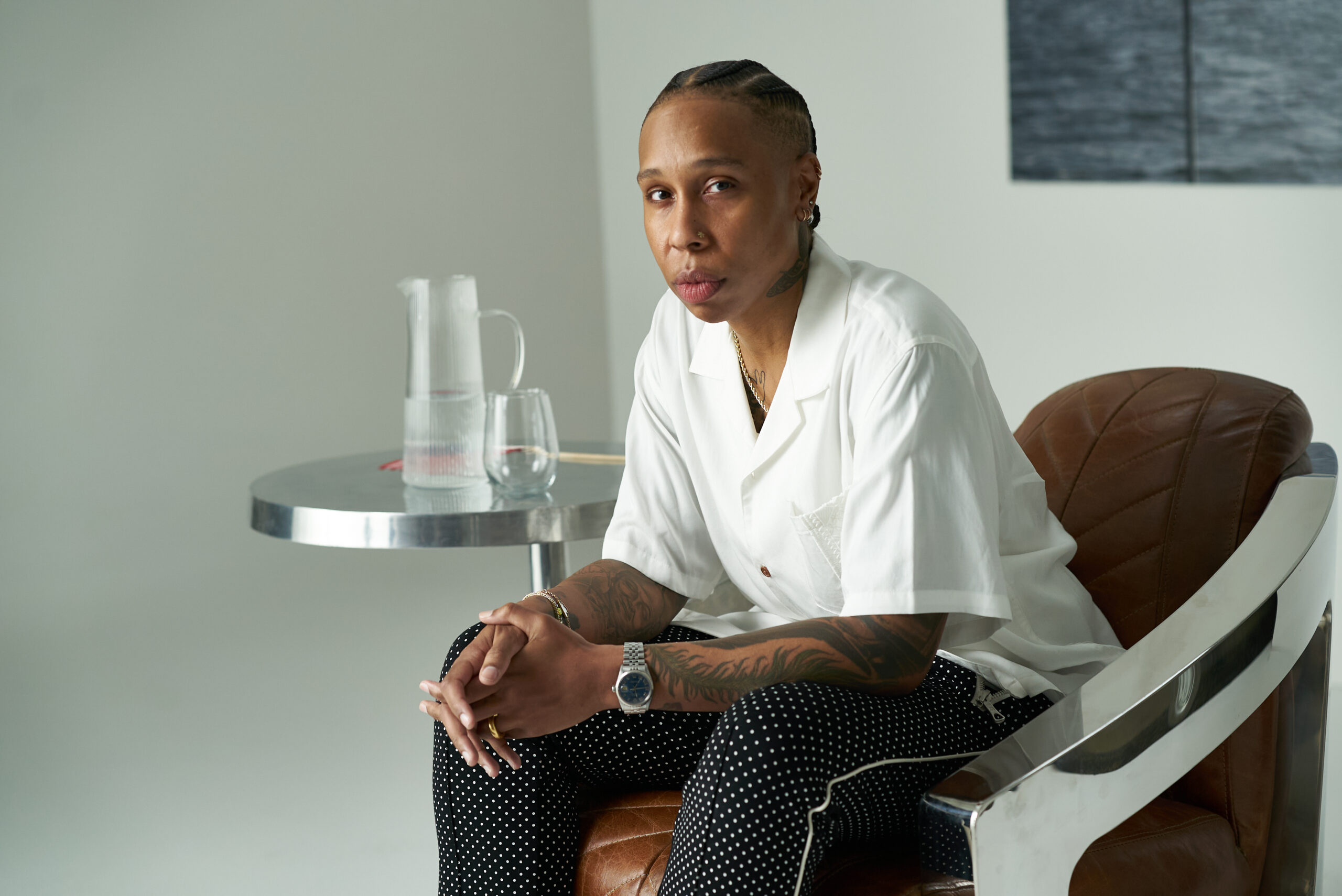
BITTAR: Yeah. That was Ali Bird, who I love. You can tell she’s a mom. You know what I mean? She just has such mom energy. I honestly never liked the gay flag, just aesthetically. There’s something about those primary colors stacked that—
WILSON: I love it.
BITTAR: Well, I’ve grown to love it. When it first came out, I was like, “Really?”
WILSON: I like the new one more, I will say.
BITTAR: Yeah. It keeps changing, so it’s like now there’s a gazillion colors. Anyway, I do love it. For me, it does represent this feeling of being welcome, like she said. I’m like, “Oh, I feel safe here. These are my people.”
WILSON: I have two more questions as well.
BITTAR: Okay, cool. The American flag has totally morphed in my head now that I made this documentary. There’s just so much more depth on how I see it. I feel like I’m fighting for what it was intended to mean and the ideals. I have one outside my house, and I feel like it is an act of resistance now for me to put it out. It is saying, “I’m fucking here. I’m American. I’m gay. I’m married. I’ve got three kids. And this is my flag too.” So now I see it as a sign of resistance. I also see it, or I want to see it, as a sign of unity. And my hope is that by people putting their flags out who do feel marginalized, you won’t know whose motives are whose.
WILSON: Is that a good thing?
BITTAR: Ultimately, yes, because I also believe that there’s a bunch of people on the right that are good people. I don’t think the people on the left are good and the people on the right are bad. I don’t believe that. I think you’ve got some fanatical people on both ends, but there’s a lot of people who are, honestly, doing okay on the right. And I think we want to move towards a unified country, otherwise we’re going to have a civil war. So, yes, I do think ultimately showing the sign of unity is good. What was your question?
WILSON: I was going to ask if you had an American flag and if you had a gay flag, but you kind of answered that.
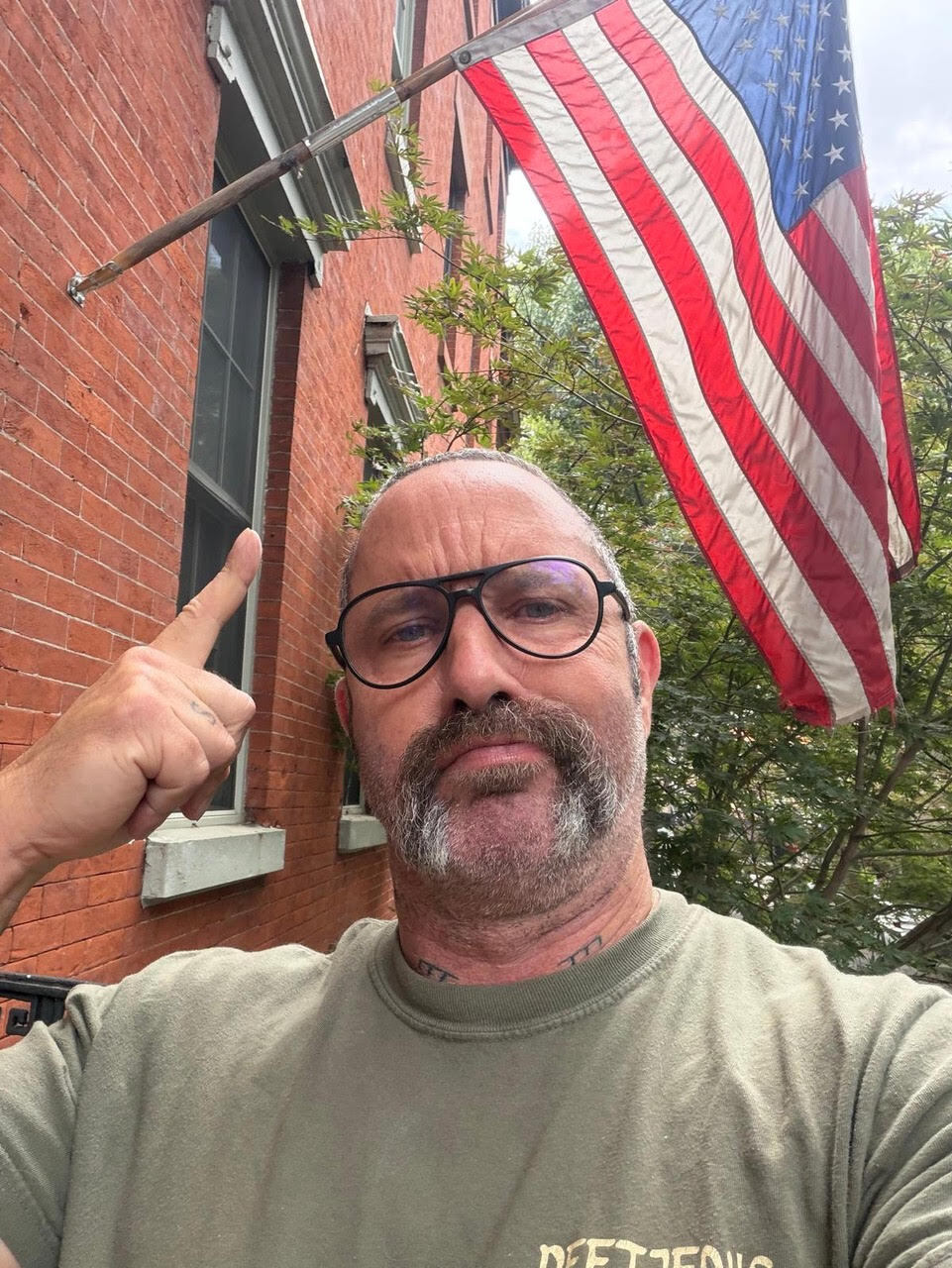
BITTAR: I have both. At first, I didn’t put the gay flag because I was like, I don’t want people to know. But then I was like, no, actually, I want people to know. I mean, they can see me grab my husband’s ass, so they kind of get the picture. Everyone on the street knows. But, yeah, I have both out.
WILSON: I think I have one big gay one, but I know I have a big trans one and a little trans one and that’s it.
BITTAR: Well, would you reclaim the flag?
WILSON: No. I would not personally.
BITTAR: You wouldn’t?
WILSON: No. Personally, I do think it has too many connotations. So I probably wouldn’t. There are exceptions. I mean, I think the World Cup, if America somehow made it to the finals, I would do the whole patriotic regalia thing. Sports I think is its own thing, but outside of that, I’m not really sure. I think there’s a lot of nuance and a lot of different perspectives, and I don’t think any of that is inherently correct or incorrect.
BITTAR: Yeah, definitely. Well, I mean, it’s the conversation, right?
WILSON: Yeah. I think it’s a really important conversation to have.
BITTAR: I think it’s in conversation that so much stuff gets sorted out. So thank you.