


SATC
Philippa Snow Deconstructs Carrie Bradshaw: “Frankenstein’s Monster in Manolos”



Courtesy of Philippa Snow.
I first encountered Philippa Snow at a reading in the basement of a bar in London where she was dressed in maybe the best outfit I’ve ever seen a writer wear and read the best cultural criticism that I’d heard in a long time. I found out that Snow was writing a book about Sex and the City. After having recently finished the series myself for the first time and I couldn’t help but wonder (ba-dum-tss) what the preeminent critic of our time would have to say about Carrie Bradshaw’s antics.
In addition to introducing such cringe Carrie-isms to our lexicons, Sex and the City has carved out a foundational spot in the television habits of 20 and 30-something metropolitan women for the last 20 years. Now, it takes its place among the cultural behemoths chosen by Snow for close analysis, such as Keeping Up With the Kardashians, Barbie, Marilyn Monroe, and Paris Hilton. And just like that… I found myself on the phone to Snow ahead of the publication of her new book Perfect Little Woman.
———
SERAFINA KENNY: So, what’s the book about? How did publishing it with Episodes Books come to be?
PHILIPPA SNOW: Ella [Gold, the publisher and designer of Episodes Books] cold DM’d me and gave me free rein to write an essay of about five to seven thousand words about any television series, and Sex and the City was the one that immediately popped into my head. I’ve seen the whole thing an embarrassing number of times. Also, I think it’s a genuinely rich text. In terms of the focus of the book, a lot of it’s about Carrie’s performativity as a character, tied in with a bit of writing about Candace Bushnell herself, and the idea of having a creation that maybe gets away from you a little.
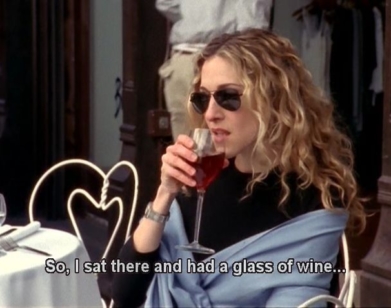
Carrie is interesting to me because television is very comfortable now with messy, unlovable female characters, but they tend to be darker and more abrasive. Maybe they have some kind of formative trauma and they’re outsiders by virtue of flying in the face of the status quo. Carrie, on the other hand, is a character who is running desperately towards the status quo and who really wants this big, traditional, heterosexual love story. She seems to see herself as this charming, Carole Lombard, Barbra Streisand, screwball-heroine-esque figure, while the people around her often see her as kind of a loveable asshole. That dissonance is really interesting to me.
I’m very aware that I am deeply psychoanalyzing a fictional character from an old television show, but this is the nature of the whole book. Essentially, she’s this profoundly weird person who is desperately trying to hide how strange she is from the rest of the world instead of trying to present—per the title and as she calls Natasha—as this “perfect little woman.”
KENNY: How does deeply psychoanalyzing a fictional character differ from writing about real people? Does the level of remove that comes from fictionality change the way you approach the subject?
SNOW: Well, as a critic who covers cinema quite extensively, I write about fictional characters a lot. To some degree, I just approach them as if they are real. It’s the only way for me to engage with the task and not be completely self-conscious about what I’m doing. I’ve said before that criticism is like taking a watch apart to see how it works and then putting it back together again. And it’s just doing that with a person, whether that person is fictional or otherwise.
I will say that with Sex in the City, there are a lot of ways in which it obviously doesn’t hold up. There’s been a lot of conversation about that. It’s terrible on race and on trans issues, and it pretends that bisexual people are a myth, for some reason. But in terms of its emotional veracity, although Carrie is famously a bit of a prude considering she’s a dating columnist, there’s a lot of truth in there. I think that it actively invites people to analyze her character.
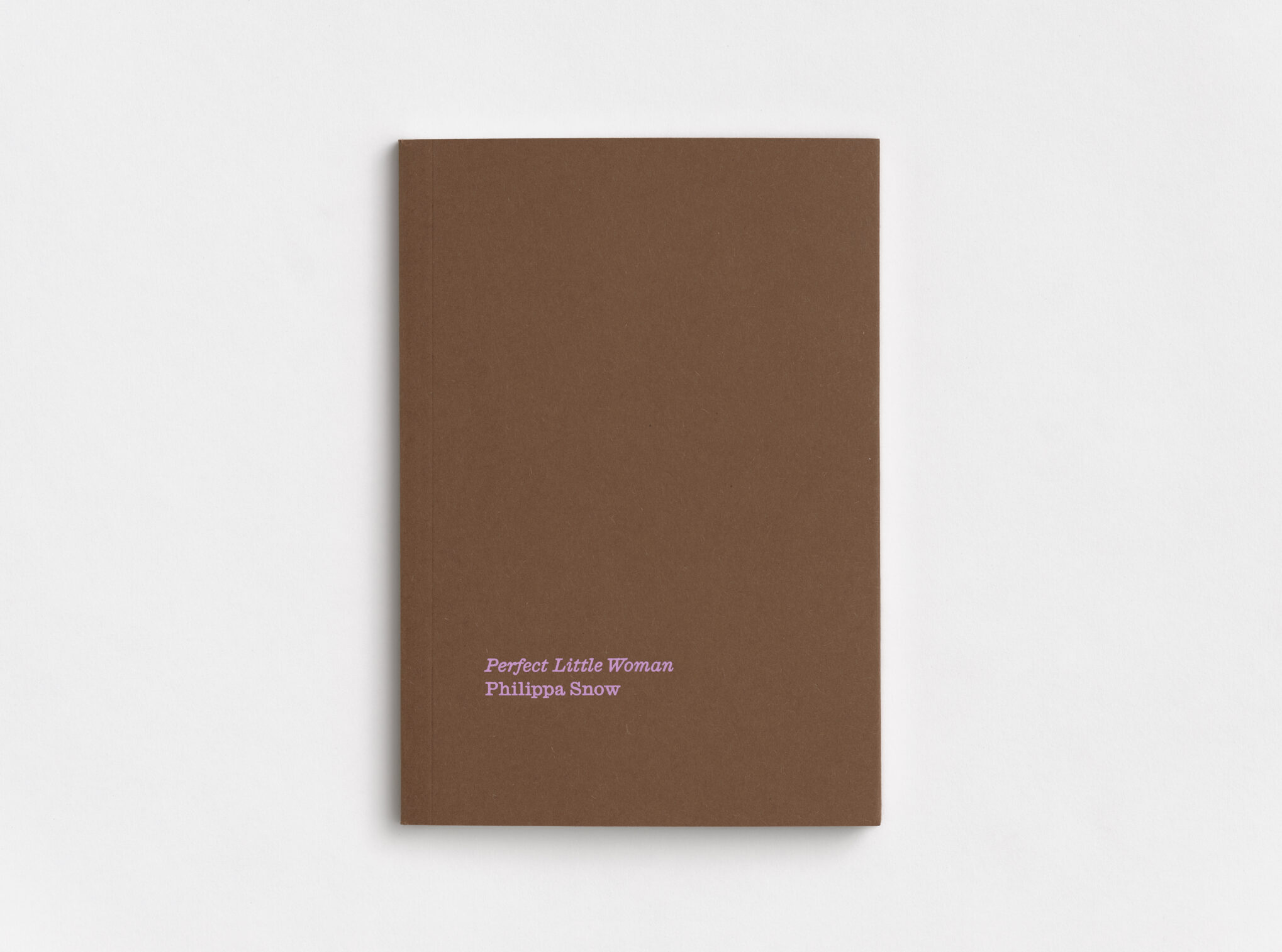
Photo courtesy of Episodes Books.
KENNY: And Carrie isn’t just one person. She’s an intertextual amalgamation of the character in the original book written by Candace Bushnell, Bushnell herself, the showrunners, and Sarah Jessica Parker. In a way, that could make analyzing her even more universal because there’s multiple people that make up ‘Carrie.’
SNOW: Exactly. There are a lot of layers to it. I’ve written a lot about doubling and performance in femininity, in celebrity, in lots of aspects of female life, so that was just naturally where I went with it. I always acknowledge in interviews that David Lynch is the biggest influence on my work, and his use of the second or split self as a way of examining the different facets of the feminine psyche is something that really played into this essay as well.
KENNY: In the book you write about this gap between who Carrie is aspiring to be and who she actually ends up being, as well as the gap between her characterization and Bushnell. I wonder if part of the reason so many people dislike Carrie is because there’s a simultaneous discomfort and fascination in watching someone failing to become what they’re trying so hard to be.
SNOW: I mean, do I like Carrie? She fascinates me and I love her and I am irritated by her all at once. I think a lot of people’s disgust perhaps comes from recognizing the worst parts of themselves in Carrie. Because it’s a universal experience to have embarrassed yourself because you were in love with somebody, and to have done something undignified for somebody who was not worth doing something undignified for. She is kind of a nightmare, but she is also this screamingly obvious projection of the parts of ourselves that we try to hide. If I had to do the whole Sex and the City bus tour thing, I definitely wouldn’t want to say I was a Carrie.
KENNY: Do you identify with any of the other characters?

Photo by Laura Cooper.
SNOW: I’m so glad you asked! I would say that I am a 50/50 Miranda-Samantha split. I find Charlotte so unrelatable that she might as well be an alien. She’s well written and she’s well performed, but I don’t see any of myself in that character at all. I do admit that I see a little of my fear and neurosis in Carrie though, for sure.
KENNY: I don’t know much about horoscopes, but I feel like people have different characters as their sun/rising/moon signs if that’s what they’re called. I don’t think you can be 100% one of them without being totally insufferable.
SNOW: When you asked me the question, I was genuinely thinking that I wished I knew how horoscopes and astrology worked because I would have said exactly that rising thing, or whatever it is, about my Miranda and Samantha split. Samantha and Miranda share a lot of qualities, actually. They are both united in being quite pragmatic and quite cynical and quite self-sufficient. And I would say that I am all three of those things. So maybe Miranda’s the dominant one, but there’s lots of Samantha in there as well.
KENNY: Carrie is also so complex as a character. In the book, you call her an anti-heroine because she doesn’t fit into the trope of a rom-com heroine. Do you think that the show itself strays away from the genre of rom-com because of that, or does it still manage to stay a rom-com despite Carrie destabilizing things?
SNOW: A lot of people agree that it was a shame that everybody ended up with a partner at the end of the original series. The fact is that it does end in a traditional rom-com way: Carrie ends up married to a rich, handsome, older man. But throughout the series, it does move away from the rom-com genre intermittently by allowing her to be an embarrassing mess—not in a kooky, loveable, Meg Ryan sort of way, but in this strange, uptight, nervy, awkward way that you sometimes have to watch through your fingers.
The rom-com woman is usually written to completely focus her lifestyle and behaviour and moods around the pursuit of the man, right? And there are times when the show does fall victim to that, and Carrie does become solely somebody who is desperately chasing after Mr. Big. But there are times where she’s single and fucking about, or where she’s having career problems and money problems, and that’s where she diverges from your classic rom-com heroine. The fact that she’s happy being childless is quite unusual as well, which I enjoy as someone who is also in their 30s, doesn’t have children, and has never wanted them.
KENNY: Are there any other parts of Carrie or of Sex and the City that made you think about your own relationship to womanhood?
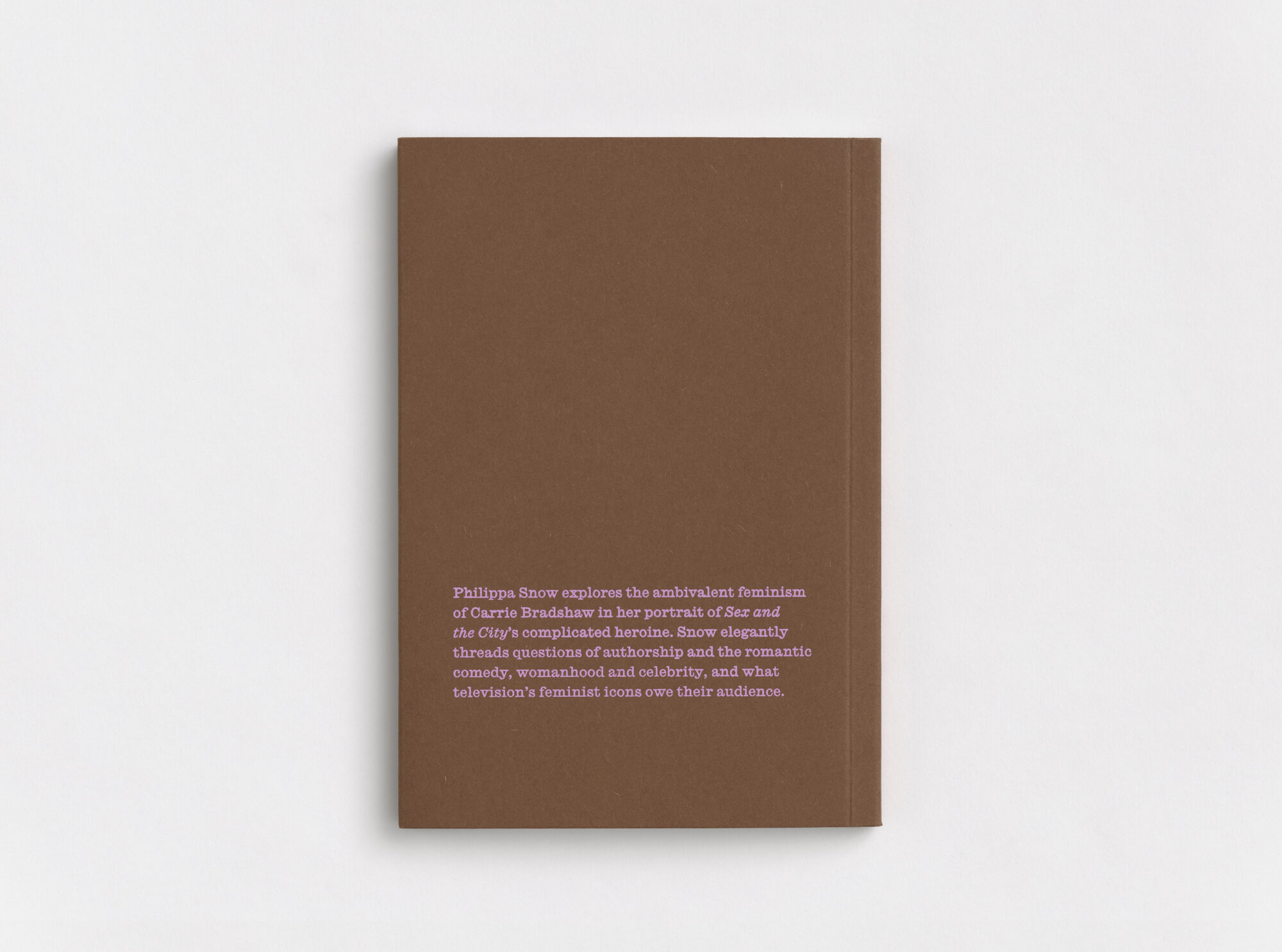
Photo courtesy of Episodes Books.
SNOW: I’ve been in a relationship for 13 years, so I have not had to deal with the idea of dating for a long time. But there’s a funny bit in Shon Faye’s most recent book, Love in Exile, where she says that she’s had to accept that as a millennial woman, whenever she has any new sort of traditionally feminine experience or hits a new life milestone, she knows that she will automatically relate it to something that happened on Sex and the City in her mind. And I totally understand that. It’s ridiculous and sort of embarrassing how many conversations I have with friends where we say, “This is like what happened in whichever episode.” There is something about it which does force you to examine your own position on things. I think my initial love of it was a lot more intimately bound up with this idea of being critical of the show. I probably liked it in the way that we liked a lot of things in the late 2000s, which is to say, in an ironic way. And then my appreciation of it deepened as I watched it again as I got older. I think as I’ve mellowed in terms of my relationship with myself and my identity, and I’ve increased my understanding of myself, I’ve come to feel more kindly towards Carrie and a little more understanding of her fuck ups. I suppose where I’m at in terms of my life experience has probably informed my takes on the show here, to some degree.
KENNY: So, do you think you will watch it again, or are you sort of Sex-and-the-City-ied out for a bit now that you’ve done such deep writing on it?
SNOW: I will probably watch the series again at some point. It is a show that I love! When I write about it, I’m critical of it, but I’m critical of it from that place of love. It’s the respect I have for it that drives me to be hard on it in the first place.
But right now, I won’t be watching Sex in the City again because I’ll be watching The Real Housewives instead. This will surprise people who read my writing, because I’ve written about reality television quite a lot, but I had never watched a Real Housewives show until this year. I’m writing another quite heavy book at the moment, and the Real Housewives has been my escape. If anyone out there wants to commission me to write about the Real Housewives at length, incidentally, I would love to do that. So, consider this an advertisement for my services.
KENNY: I’ve seen some people say that Sex and the City is really about the friendships between the four main characters rather than their heterosexual relationships.
SNOW: I think that’s accurate to some degree. A lot of my favourite episodes happen when all or most of them are single. But also, the dynamic of that group is very realistic in that they don’t have an equally balanced friendship. Carrie is the locus that everybody else revolves around, and the others bounce off each other. I think that’s quite a realistic depiction of female friend groups, where they all have these slightly different levels of attachment to each other.
KENNY: My final question is who is your favourite guy that Carrie dates? Is there anyone that she dates that you wish she’d ended up with?
SNOW: I wish Justin Theroux’s short story writer character was willing to go to therapy for his premature ejaculation. I also think that the guy whose apartment Carrie turns upside down because she’s looking for something bad about him in the episode “The Freak Show” seems pleasant and sane and normal. He’s probably quite a good choice.
But for me, it’s slim pickings from the men that Carrie goes for, to be honest. Generally, the men of Sex and the City aren’t really my type. I find that they all look a bit like ‘90s catalogue models made out of cubes.
I realize I am supposed to be drawn to Berger because he’s a sardonic writer. But for that very reason, he activates my fight or flight response and I absolutely cannot stand him. But he’s certainly an accurate representation of a type of guy who exists. There are many, many Bergers out there in the world, and we all should be on high alert when one tries to enter our lives.