


MOGUL
Ian Schrager Still Has It


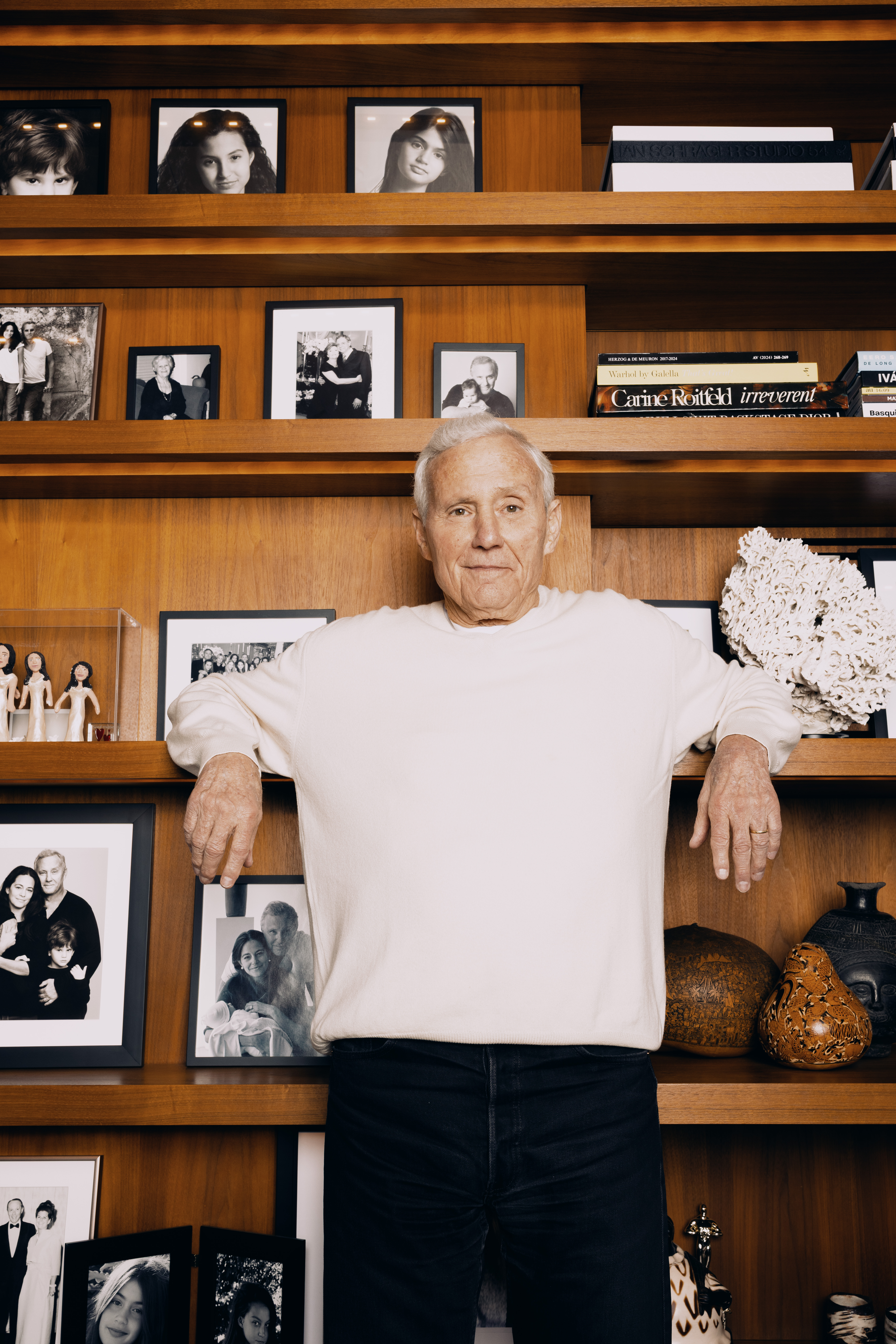
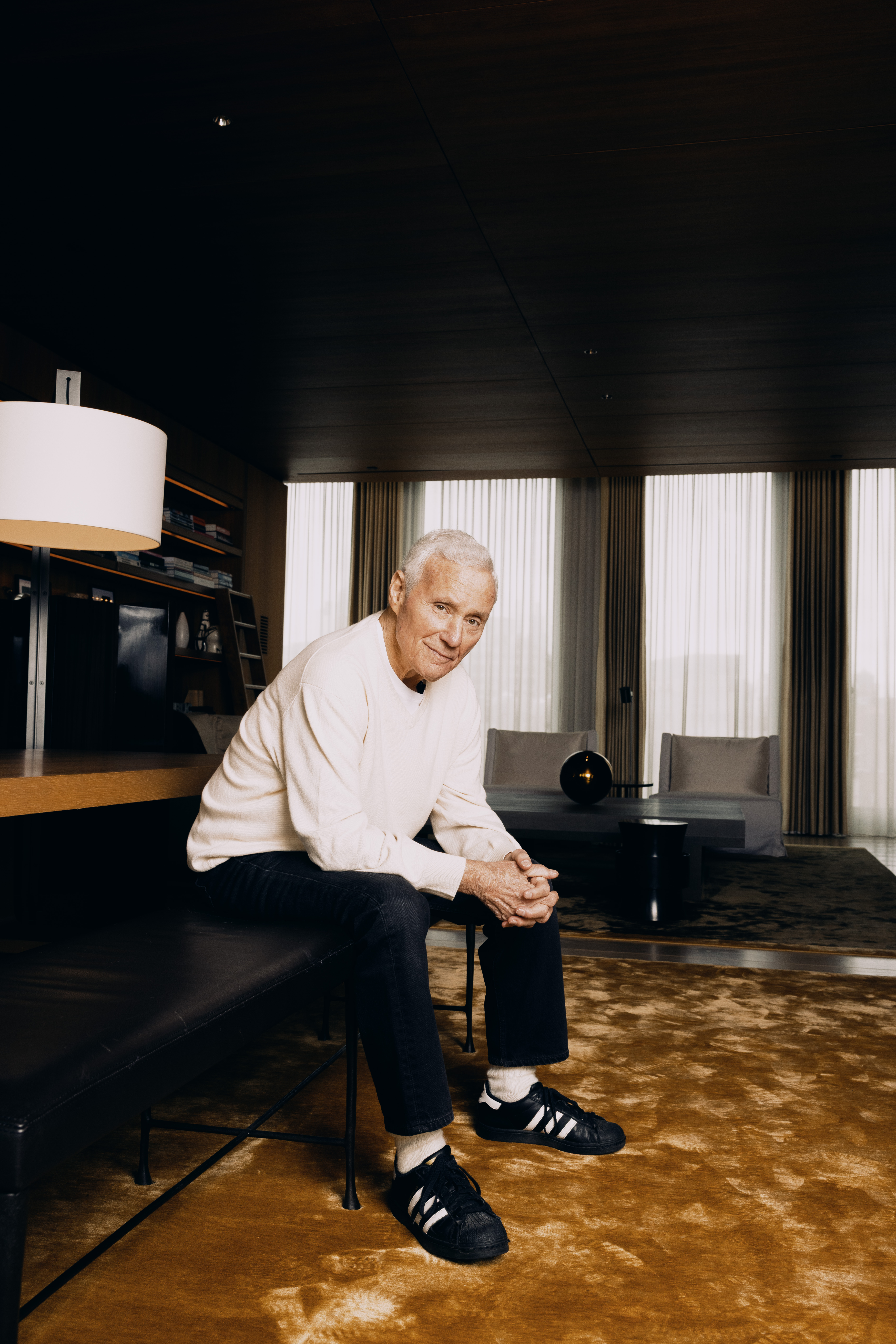
When Ian Schrager entered the hotel business in the early ’80s, creativity wasn’t the point. Predictability was paramount; hotel bars and restaurants were boring; and hotel owners pointedly ignored the latest in art, fashion, and design. Schrager changed all that with the 1984 opening of Morgans, a stylish rule-breaker that has come to be known as the first boutique hotel. His next property, the Royalton, also in midtown, was an even bigger hit, and cemented the status of Schrager and his business partner, Steve Rubell, as enduring tastemakers. It wasn’t their first act, either: the two had already risen to fame and notoriety as the proprietors of Studio 54, the defining social institution of late-seventies New York. Since then, Schrager has opened dozens of distinctive hotels and other properties around the world, including the 15 he created for the Marriott-owned EDITION brand between 2008 and 2022. (Rubell died of AIDS-related illness in 1989.) He’s now focusing on his own brand, PUBLIC, which debuted on the Lower East Side in 2017. Its second property will open in West Hollywood this July, the same month Schrager turns 80. The new PUBLIC is in a landmarked building on the Sunset Strip that was previously occupied by the Standard, one of several hotel brands launched in the 1990s and 2000s in the wake of the cultural shift sparked by Rubell and Schrager. The 137-room hotel was co-created by British architect John Pawson, a longtime Schrager collaborator, and features a 16,000-square-foot rooftop terrace. We caught up with Schrager at home in NoHo, a three-level penthouse with a stunning wraparound rooftop terrace of its own, where he has lived with his family for the past twenty years. The discussion covered a remarkable career in hotels that has, for all its innovation and influence, received far less attention than his nightclub.
———
DARRELL HARTMAN: So, here we are for Interview, Andy Warhol’s magazine.
IAN SCHRAGER: I was just watching a TV program of The Andy Warhol Diaries.
HARTMAN: Didn’t he make the drink tickets for Palladium, the club that you and Steve Rubell opened after Studio 54?
SCHRAGER: No, for Studio. He did, but I didn’t accept them. That’s how smart I am! I was never sure of what to make of Andy’s work. I used to see him all the time at Studio, maybe that ruined it for me. I think that he knew, because he presented it to me in a very tentative way, not knowing how I’d react. We’d asked him to do the drink tickets because we thought it was right up his alley. He did them on clear acetate. We wound up never using them. I should have saved them.
HARTMAN: I’m amazed that you’ve never been in Interview.
SCHRAGER: Steve was, on the cover. I wasn’t really interested in having a public presence. He was.
HARTMAN: And he stayed out late at Studio and you went home early, right? You two were very complementary.
SCHRAGER: I think we completed each other. On the first night, I went up to the DJ booth to play with the lights, and he hung out with all the celebrities. There was no division of responsibility, no discussion about how to effectively use our time. We did what suited our personalities. It happened naturally.
HARTMAN: And what was Steve’s role once you started doing hotels?
SCHRAGER: He was handling the public relations, doing all the interviews. But don’t mistake what he did for a shallow, simple thing. He was smart as a whip.
HARTMAN: Tell me about the property that would become Morgans, the first boutique hotel.
SCHRAGER: It was a dump. It was on Madison Avenue and 36th Street, one of those thoroughfares that hookers used to work. Not a fashionable area. It was a real leap of faith to open a chic hotel there.
HARTMAN: You and Steve were known as the kings of nightlife, but hotels are not the same—
SCHRAGER: In a way, they are. There’s a different vocabulary, but we were trying to create the same kind of magic. You couldn’t really define it, and you certainly couldn’t write a book about how to do it.
HARTMAN: So did it actually help that you didn’t have a background in hotels?
SCHRAGER: A lot. We wanted a hotel that didn’t look like a hotel, and the intrinsic goals of nightclubs and hotels are the same: looking after people and making sure they have a good time. So we went in, reviewed every rule, and broke the ones that didn’t make sense.
HARTMAN: Like what?
SCHRAGER: Usually you’d use wall coverings in a hotel room, because the maintenance was more efficient. Patterned carpets, to camouflage the stains. That’s the American industry—dominated by the pursuit of efficiency. But some of these rules were so stupid. We used a plain carpet that showed stains, and just replaced it more [often]. And this resilient paint called Zolatone that was used in tenement buildings. It wasn’t efficient, but it was distinctive. And when you look closely you see that Zolatone is made up of a lot of dots. We agonized over the color of every single dot!
HARTMAN: And you brought in the French designer Andree Putman.
SCHRAGER: This incredibly elegant woman who’d worked on jobs for Yves St. Laurent and Karl Lagerfeld. But she’d never done a hotel before, so she came in with no preconceived ideas.
HARTMAN: And your backers weren’t questioning any of these radical decisions?
SCHRAGER: We were a little lucky, because we were coming off of the Studio 54 hit so people were willing to let us try new stuff. And if they would’ve tried [to intervene], I would’ve slit their throats! [Laughs]
HARTMAN: Another innovation taken from fashion was that you basically turned the hiring process into a casting call.
SCHRAGER: Very, very, important—and very politically incorrect now. People like to look at good-looking people. When you cast a movie, you get a good-looking movie star. At one point I had someone that used to cast Gap commercials to come in and help. We’d also throw a couple of questions to them to see if they had personality, because you’re looking for that person that genuinely feels gratified when they make somebody happy. Everything communicates what the brand is about.
HARTMAN: You’ve got a reputation for being very detail-oriented.
SCHRAGER: I’m proud of it. I’m obsessed with every single detail because I didn’t know what would make these things successful. It could be that little pinch of salt that makes the stew good. You just don’t know.
HARTMAN: Your second hotel, the Royalton, was the beginning of your collaboration with Philippe Starck, which is probably the most famous creative partnership in hotels. How did you end up with him?
SCHRAGER: Andrée Putman was a stylist. To evolve, I wanted to go to someone that actually designed furniture. It was risky, because Philippe had never done a hotel before, but he’d also never done a café before he did Café Costes [in Paris]. He was incredibly amusing and funny to work with. We became fast and furious friends. We kind of grew together.
HARTMAN: He once described you as “an animal, a predator of the highest level.”
SCHRAGER: [Laughs] Well, he didn’t like to get his plans back with all my red markings. But my job is to make these talented people do their best work. I try to do it in as nice a way as possible.
HARTMAN: Steve Rubell died in 1989, a year after the Royalton opened. You’ve talked a lot about how hard it was to lose him. Did you try to find someone to fill that role?
SCHRAGER: I always wanted to but never did. He was an unusual person. On the surface he was a gadfly, but he was a really bright guy, and really driven. I never had anybody like Steve.
HARTMAN: He brought so many celebrities and fashion people into the world you two built. You never took him up on it, but Calvin Klein basically wrote you a blank check for your next project once you got out of prison. After Steve died, did it feel important to keep those connections for the hotels to work?
SCHRAGER: It wasn’t so much for the hotels to work. I was just trying to keep everything that I had. I didn’t want to lose everything I’d worked so hard for—I’d already done that once.
HARTMAN: Would you say that was the most exposed you’ve felt?
SCHRAGER: The most vulnerable. Because I not only had to prove it to myself, I had to prove it to everybody else. I was an unknown quantity.
HARTMAN: The Century Paramount, in Times Square, had more rooms than the Royalton and Morgans combined. The idea was “cheap chic,” but how cheap are we talking?
SCHRAGER: I think the opening ADR [average daily rate] was $90. That didn’t last very long. But it was that idea of bringing it to the masses.
HARTMAN: Times Square was pretty sketchy then. And you had Rande Gerber run the Whiskey Bar, which became a hot spot. How did that come about?
SCHRAGER: He was a model and a real estate broker. He wanted to rent me a place and I said, “Rande, I got an idea for you. Don’t worry about it, I’ll help you with it.” It was very, very successful. So many great-looking models. You’d see them tracking down 46th Street. In Times Square back then, it was like they were from Mars.
HARTMAN: Andre Balazs bought the Chateau Marmont in L.A. around this time, and then the building in Soho that would become the Hotel Mercer. He started making it pretty clear that he wanted to compete with you. What’d you think of him?
SCHRAGER: He did a good job with the Mercer—it’s a good-looking hotel. He’s the only other guy out there that did an incredible job. Well, the person I respect the most in the industry is a Frenchman called Jean-Louis Costes, who had the Hotel Costes in Paris. Very decorative, very ornate, but he made it his. I respected him for that. I think André did a good job, but it was more derivative of what we did, so I don’t put him there with Jean-Louis. But you’ve got to give the guy credit.
HARTMAN: This was a time when more money was coming into the city, into neighborhoods like Soho and Times Square. But compared to today, when the city is just so unaffordable for artists, the tension between capital and creativity seemed more balanced.
SCHRAGER: I think creative people around the world were obliged to come to New York City. If you wanted to make art or great fashion, you had to come to New York. If New York City gets dominated by wealthy people, it’ll be a sad day for us all.
HARTMAN: I think it already has, which is one reason there’s nostalgia for the New York—or at least the Manhattan—of the ‘80s and ‘90s.
SCHRAGER: I remember my parents saying, “New York’s not like it was.” We always say that. But we have to be careful that it doesn’t get dominated by rich people.
HARTMAN: Was it a more uninhibited time?
SCHRAGER: Much more. People always say the sexual revolution happened in the ‘60s. It really didn’t. It happened in the ‘80s, and that’s what changed everything. There was nothing you could do at night that you couldn’t get up the next morning and walk away from. Now there are repercussions, regulations, costs to be paid. It’s getting a bit suburbanized.
HARTMAN: Do you think tastemakers want the same thing now that they’ve always wanted?
SCHRAGER: It evolves. [After Studio 54] we did the Palladium, because it would give us cash flow if we went over budget doing the [Morgans] hotel. That’s the only reason I did it, because I’d had it with nightclubs. But I remember when we did the Palladium, Steve would say to me, “You think people still wanna dance?” I mean, what? Of course they wanna dance! You’ve just got to find a new idiom. And now in the age of cell phones, taking pictures—you gotta deal with those things, they have a negative effect, but yes, they still wanna dance. It’s a human condition.
HARTMAN: You tapped Brian McNally to run 44, the famous power-lunch spot at the Royalton. How did you link up with him?
SCHRAGER: The power had shifted from the nightlife to the restaurants. That’s where the social scene was, and Brian and Keith [McNally] were the only ones at that time that were doing incredible restaurants that were also incredibly cool. Brian is just as smart and clever as Keith, but he doesn’t have the discipline as an operator that Keith has. Anyway, all the best people came there for lunch. Of course, it didn’t hurt that it was a block away from Condé Nast, and it didn’t hurt that Brian McNally was a roommate of Anna Wintour’s when they both moved to New York.
HARTMAN: How’d you get along with Brian?
SCHRAGER: Good. There were difficult things we went through with the business, but I never stopped holding him in respect. He wasn’t a business guy. I think Brian and Keith would’ve both been more successful if they would’ve stayed together, because I think Keith is not a people person and Brian is. But they couldn’t get along.
HARTMAN: Your last project with Starck was the Delano, in Miami, which opened in 1995.
SCHRAGER: It was a real risk, because Miami at that time looked like Beirut. That was maybe the best project I did with Philippe.
HARTMAN: Why would you put it above the Royalton and the Paramount?
SCHRAGER: The one in Florida didn’t have a bunch of one-liners. It was refined but whimsical. We did a dark lobby, which was pretty ballsy. I wanted Philippe to make a presentation to me, and he got offended! I said, “Look, there’s a lot of money [at stake] here, I just want to make sure we’re seeing eye to eye.” I apologized the next day. Starck may be the only genius I ever worked with. I moved on from him only because I didn’t think the world would get excited about another Ian Schrager/Philippe Starck collaboration.
HARTMAN: By the late ‘90s and early aughts, this idea of the lifestyle hotel, design hotel—whatever you want to call it—had taken off. Some big investments were happening, notably with the W chain. How’d you feel about that?
SCHRAGER: When anybody does something based upon what I did, I don’t take it as flattery, I think they took my idea. Steve and I created lifestyle hotels, and now there are thousands upon thousands. I think if he were alive, we may have had the biggest hotel company in the world. But it didn’t interest me to have the biggest, it only interested me to have the best. Steve might have influenced me to have a little bit more concern about being the biggest.
HARTMAN: You kept building hotels, sold the Morgans group in 2006, started a new hotel company, and partnered with Marriott between 2008 and 2022 to create 15 EDITION hotels. At one point, you had more hotels in New York City than anyone, and at another point you had zero. Now you’ve got the PUBLIC hotel, on the Lower East Side, with a second one opening this summer in West Hollywood. When you look around at the other hotels trying to succeed in these markets, what do you see?
SCHRAGER: I see nothing going on. It reminds me of elephants grabbing the tail of the elephant in front of them and parading around the ring in a circle. Maybe because it’s such a capital-intensive industry, which makes it even less desirable to take a risk. Every day I read about the luxury market. What about everybody else? The market is currently being served by Courtyard by Marriott and Hilton Garden Inn, these robotic properties with no inspiration. Are they not entitled to something really great? The system has got to be renewed.
HARTMAN: What do you want your legacy to be?
SCHRAGER: I want my kids to be happy. One of the girls is in the hotel [company] with me, and she’s very good. I have one 15-year-old son. I can’t tell whether he’s interested in hotels or not, but I don’t want them to do it if they’re not going to be happy.
HARTMAN: You’ve been in the public eye for a long time. What do you think people misunderstand about your story?
SCHRAGER: I don’t think they really understand the drive, the obsessiveness. I don’t think they realize it’s not about the money. There has to be something that drives you. You can’t do it for money. Usually it’s some kind of feeling of inadequacy, something you’re trying to prove to yourself—that was what was really driving me. How do you know you have any talent? You don’t, so you just have to outwork everyone. That’s one secret. The other is to create things that you like. No focus groups. I think successful creative people just do things they like and are surprised when a lot of other people also like it.
HARTMAN: What else would you tell people about how to succeed in your business?
SCHRAGER: Don’t be afraid of asking a question. It doesn’t mean you’re stupid, it means you’re smart enough to realize you don’t know something. I was never afraid of appearing stupid, because I knew I wasn’t. But this is the single biggest obstacle I have with the people that work for me.
HARTMAN: Your run at Studio 54 lasted less than three years, and your career in hotels has lasted more than 40. That was another thing you and Steve pioneered—in New York, at least, it feels like a whole generation of great hotels were created by people who started out in nightlife. But it seems like you were readier than Steven was to get out of nightlife.
SCHRAGER: It’s very hard to be in a nightclub where everybody is being indulgent, doing things that are a little bit on the edge, drinking and whatever else, and for you to maintain your center of gravity. As a personal participant, I never felt comfortable with it. I never liked that whole scene. I liked to go to nightclubs, but to meet a girl or be voyeuristic. It wasn’t something I truly loved. I’m watching The Andy Warhol Diaries on TV now, and there’s something unsettling to me about that time. You begin to think everybody in the world was like that, but they’re not.
HARTMAN: And your world now, what’s it like?
SCHRAGER: I’m happy. I love my wife, my family, my work. I wish my parents could see it. Both my parents had difficult deaths. My father died at 51, my mother died at 56. I lost them young. I wish they could see I’ve had a life well lived. That’s all parents want for their kids. And, by the way, my parents never would have wanted me to go into the nightclub business.