


AUTHOR
How Andrew Durbin Reignited Peter Hujar and Paul Thek’s Troubled Romance


All photos courtesy of Andrew Durbin.
In their practices, artists Peter Hujar and Paul Thek could be considered total opposites. Hujar gravitated to photography, imperishable and indelible, capturing among other intimacies the bohemians of the downtown New York gay art scene. Thek’s queer-surrealist sculptures and installations were often made in a moment of near-at-hand inspiration, or fashioned out of fragile or degrading materials, like meat or wax, that were never intended to last. And yet these two handsome, talented young artists found each other in early adulthood in the repressive 1950s and forged a magical relationship that spanned so many roles—lovers, brothers, supporters, confidantes, rivals, and maybe even enemies, before they both died far too soon in the mid 1980s. Andrew Durbin’s mesmerizing new book, The Wonderful World that Almost Was charts this complicated tango, as they make lives and names for themselves through the currents of the East Village, the Warhol Factory, friendship with Susan Sontag and David Wojnarowicz, success and failure, disillusion and doubt, and occasional glimpses of the divine. Durbin’s skill at both narrative lyricism and lucid art critique makes him the perfect storyteller for this love affair between two unorthodox geniuses. Back in February, we spoke via Zoom right after the New York blizzard about wild minor characters, keeping a diary, and the plusses of getting out of New York.
———
ANDREW DURBIN: I was supposed to be on a plane to New York tomorrow, but it has been canceled annoyingly.
CHRISTOPHER BOLLEN: How long have you been living in London now? When did you leave New York?
DURBIN: I landed in London January 1st, 2020.
BOLLEN: In so many ways the story of Peter and Paul is such a New York story. Did living away from New York during the time you wrote the book change your approach to writing their story?
DURBIN: Completely. Having the distance from New York allowed me to see it differently and in some ways more clearly. I’m so glad I lived in New York and experienced some version of the lives they lived. I know what it’s like to wake up in the East Village and to go to a bodega. I knew those things intimately. But stepping out of that environment—and particularly since so much of their lives, especially for Paul, was rooted in Europe—gave me a really important vantage on what it meant to be an American artist living abroad.
BOLLEN: But wasn’t it harder to do the research that was required from London?
DURBIN: I came to New York a lot. It was very easy in the sense that a lot of Peter’s and Paul’s archives in. New York is in two places. Whereas in Europe, it’s much more spread out. So it was much easier to get to those places. A lot of Paul’s work is in Germany, the Netherlands, and Italy. He was so peripatetic. He walked around with a backpack, basically. Things just ended up where they ended up.
BOLLEN: I knew about Peter Hujar’s work since my early twenties. But I didn’t really know much about Paul Thek’s work until the big Whitney show in 2013. And then until I read your book I realized I didn’t know all that much about his life. When did you fall under the spell of these two artists?
DURBIN: Peter is really easy to point to because Anohni’s “I Am a Bird Now” came out when I was in high school, and that photograph of Candy Darling on the cover was just so arresting. It was early enough in the internet where when you googled Peter Hujar a little bit came up, but not a lot. So he remained this enigmatic figure lodged in my mind. Paul was probably not that much later because I have a memory of encountering his “Warrior’s Leg“ at the Smithsonian. It really struck me. But then it wasn’t until I dated the artist Stewart Uoo. Stewart was a big fan of Thek and is very influenced by him. Getting to know him and seeing how much Thek means to artists, whether it’s Mike Kelley or Stewart or anyone in between, that’s when I really dug in, and hit me that he was this really key figure that I didn’t know anything about.
BOLLEN: It’s impressive that you didn’t just tackle one or the artist. You chose to write a biography of a relationship, which existed for a certain bracket of time. Why did you choose this duet?
DURBIN: It was actually Peter who I was going to write the book about. I knew it would be a biography, but I’d never written something like that before. Then as I was working on the proposal, I realized there was no way to tell his story without thinking about Paul. In many ways Peter seemed like the easier artist to write about. Paul struck me as such a challenge. I didn’t even think I’d be able to do it. But this relationship lasted for about twenty years and it meant so much to both of them. It was a challenge and yet I knew that was what I wanted to write.
BOLLEN: It seems like a lot of extra work to tackle two protagonists.
DURBIN: Yes and no. It became a game of tennis in some way. I could sort of play back and forth between them, and I could construct the story based on some of the most interesting things that were happening to them. Their whole lives are fascinating, but there were moments that I wanted to write about more than others, and so this book allowed me to do that.
BOLLEN: I love that you didn’t start with their childhoods like most biographies. Often, when I’m reading a biography, I’ll skip the childhood years and go right to when the subject turns 18, leaves home, and moves to the city. The whole set up with the family can be so tedious. Did you read any biographies that inspired you in terms of your approach?
DURBIN: First of all, I’m with you. I find the beginning with the childhoods often pretty boring. But I was definitely learning as I was going. My education was Janet Malcolm, so it was an anti-biography. so my education was like an anti-biography. In my head were all the risks of biography. But I read a lot of them throughout. I read a lot of biographies of artists who were related to Peter and Paul like Warhol and Sontag. The book that really stuck with me was Reiner Stach’s three-part biography of Franz Kafka. It’s just the most comprehensive, cinematic, beautifully done, thoroughly researched book. And he wrote it out of order. Volume two, thevmiddle life of Kafka, is where he began and then went to the final life and then went back and wrote the childhood. Probably reading that lodged in my head in terms of how I would do this book.
BOLLEN: Was writing about their personal and sex life the most difficult part of the process? You had their journals, but how were you able to get the information?
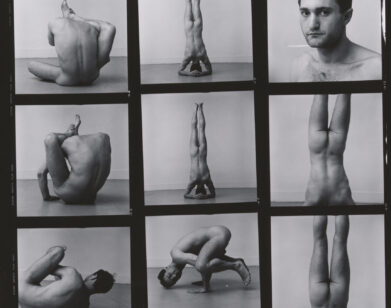
DURBIN: It was impossibly difficult because of course, fundamentally,we can’t know what it was like for two people in a room together when they kissed. But they made such a strong impression on so many people who knew them that there were a lot of memories to draw on. There were also their own writings, particularly Paul’s diaries and letters, and there was often the work they made. Peter made some intimate photographs of Paul. The problem that I faced was a lot of the writing I had about the early stages of their relationship came from Paul later, when he was no longer enthralled to Peter. So it was sort of coded. There’s a chapter in the book where it’s 1960 to ’62. I talk about how this being the heavy part of their relationship. And because they’re both two guys living in the East Village, they have no reasons to write to each other. There aren’t many photographs. That whole period was so difficult.It was one of the last chapters I wrote because I just didn’t know what to do. I called Deborah Levy, who’s a close friend of mine, and she said, “You just have to sit down and think about everything you don’t know, and start from there and just write about what you don’t know.” Then it all worked for me after that.
BOLLEN: Do you keep a journal or a diary?
DURBIN: Yeah, I’ve been an obsessive diary keeper since I was a teenager.
BOLLEN: How do you do it? Do you write every day or—
DURBIN: It depends. It’s almost every day. I often find I’m not writing too much when I’m depressed. But generally, it’s at least three or four times a week.
BOLLEN: I have a zillion really beautiful handmade Venetian books with two pages of diaries at the beginning and then they’re abandoned, the rest completely blank. I’ve never been able to keep up the practice. I always feel like it’s too late. It’s like everything’s already happened.
DURBIN: No. It’s never too late.
BOLLEN: But these are my boring years.
DURBIN: No, no, no, no, no. It’s never boring. It’s never boring. Everything in life is always interesting, and that’s why you got to keep a diary.
BOLLEN: Are yours extremely personal or are you vague about some of your cagier behaviors?
DURBIN: I would say that when I was a drug addled 20 something in New York City, it wasn’t that I was keeping it from the diary, but that what I was writing was so unrelated to that. I would say I write down everything that interests me. I mean, I don’t force myself to write down things that I don’t care about.
BOLLEN: I’m not under the delusion that a biography will ever be written about me, thank god. But I do have a few friends who I think will be the subject of a biography one day. I have one friend, who will definitely have one written about her, and sometimes when she tells me something extremely private, she’ll preface it by saying, “you can never repeat this, I don’t care if someone comes to you twenty years after I’m dead.” It’s fascinating that there are people already editing what they share, knowing that their life will be recorded. Certainly Warhol knew he would be fodder. Do you think Peter or Paul had an inkling. You quote that devastating verdict from Sontag about how their life—
DURBIN: That Paul is going to be a footnote.
BOLLEN: Did they both think that they’d be such minor figures?
DURBIN: Peter knew that posthumously, he would be very famous. He was totally aware of the breadth and range and quality of the body of work he had produced in his lifetime. And he knew the world would catch up to that. At the end of his life, he behaved accordingly. He organized his negatives. He organized the prints. He handed it over to [the head of the Hujar estate] Stephen Koch and said, “This is going somewhere. Don’t worry.” Paul was more complicated. I think Paul didn’t care fundamentally. He was more interested in the moment.
BOLLEN: That’s true for his work too, which often wasn’t built to last, sometimes more than the life of a show.
DURBIN: I’m an obsessive sort of archivist of things. But writing about Paul made me aware of how much art, and life, is such a transient thing that can never be really known. It’s sort of meant to go away, and I think that’s totally beautiful. And this whole idea he had of the here and the now. Pink was his favorite color because it represents the present. To me, that’s really wonderful.
BOLLEN: Like a monk’s mandalas in the sand. It’s so beautiful. One thing I love about reading biographies is all the minor characters who pop up that you otherwise never would have heard about. There’s one figure you mention named Felicity Mason who is such a wild personality. I ended up on her Wikipedia, and even the last part of her life was described as her hosting the first nude talk show in the UK before succumbing to AIDS. She’s amazing.
DURBIN: That was one of the characters who sadly ended up on the cutting room floor for the most part in my book. There’s so much material there. She’s one of those characters who would swallow up the book if you wrote about her. Especially living here in England, I often meet people of a certain age, and I almost always ask them, “Did you ever know Felicity Mason?” And people will always remember her or by her pen name, Anne Cumming. She made such an impression on people. She was so weird and made people so uncomfortable and was so entrancing at the same time. Peter’s photographs of her having sex with men at her parties are nuts.
BOLLEN: Did you worry that David Wojnarowicz would take over the book? You handled him in a very measured way. He could have been like Tabasco sauce, taking over the narrative. Especially because he was so important to Peter’s life.
DURBIN: The whole time I kept David in the back of my mind,. I was thinking about him as the culmination of these two men. Artistically, everything he’s going to do in some way would bring together their great strengths. I kept thinking, maybe I don’t even really need to mention him. As long as he’s in my head, writing about Peter and Paul, people are going to feel that presence. So, I strategically drop him in here or there. Then of course David will reappear as this sort of reconciling figure. And frankly, that’s enough. People know so much about David. He’s an incredible writer and artist. He’s written so much about Peter himself, and there’s Cynthia Carr’s amazing biography of him. I don’t really need to do much more than that.
BOLLEN: When I posted the cover of your book on Instagram, a friend wrote me saying, “is it sad?” I think because both artists’ life was cut short because of AIDS. Did you think of it as a sad story? Or how did you try to shake off that shadow of sadness?
DURBIN: I didn’t think about it in terms of whether it would be a sad story or not. I wasn’t trying to resist writing a sad story. I’m a big reader of Adam Phillips, and I mention in the introduction his idea that we live in this culture that’s entirely oriented toward death. What if we imagine a culture that is oriented toward birth, and we were as amazed by the fact of conception as we were by death? I thought that was such a beautiful image and such a Thek idea. And so, that very much guided me. They were alive. They were not thinking about dying in these moments. They were making work. It allowed me to write the story in a way that didn’t feel fatigued by the end. In some ways, their work was already thinking about death so they did that pointing for me. But I certainly didn’t want to write a book about two artists who died of AIDS and that’s all you know about them.
BOLLEN: Now that you’ve mastered one biography. Are there any other subjects you’d be interested in writing one about?
DURBIN: I’m not pitching myself with this idea, but why is there not a Joe Brainard biography? His life is so wonderful. He’s such an interesting person.
BOLLEN: I would absolutely read that. Is there a living artist you think merits a biography?
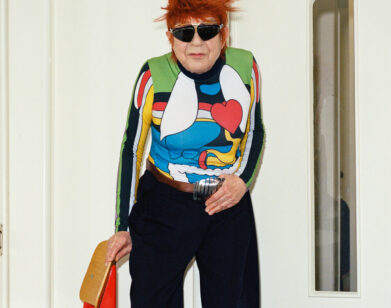
DURBIN: The greatest biography of a contemporary artist would be the Isa Genzken biography. An incredible life. It reminds me a lot of Paul Thek in terms of temperament and approach, and living according to her art in a very zany, bizarre, full way, which I think would make fora really exciting book.
BOLLEN: Well, Andrew, this is perfect. Thank you so much.
DURBIN: Thank you so much for this.