


FLASH
Walter Pfeiffer and Duran Lantink on Art, Obsession, and Preparing for Eternity


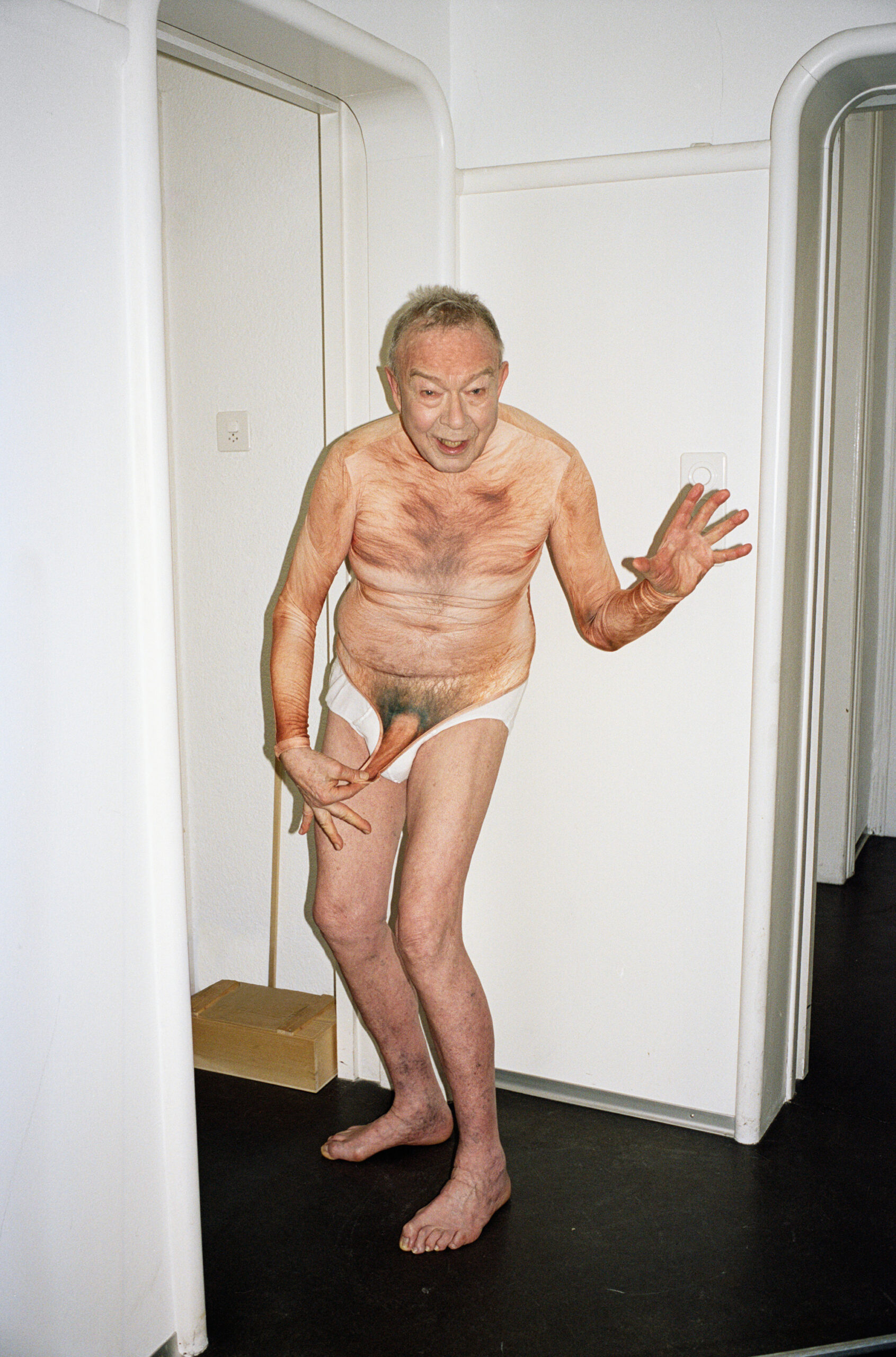
Walter Pfeiffer wears Bodysuit Jean Paul Gaultier.
You might think of Walter Pfeiffer as the last of the great Pop Art eccentrics. Or one of the pioneers of the libidinous free-form gay photo aesthetic that has become a staple. In either case, you’re absolutely right. At 80, the Zurich-based artist is one of the firsts and the lasts, working in his signature style of sexy, playful, color-fueled images, often starring extremely comely young men, mixing a randy innocence and humor with a bold graphic punch. Pfeiffer started out as a window dresser before going to art school and falling under the spell of Andy Warhol. In the early 1970s, he began shooting, first with a Polaroid, and quickly became something of a cult phenomenon—though it wasn’t until the turn of the century that the whole world fell in love with his images. This spring, the Pinacoteca Agnelli in Turin will stage the first European retrospective of his work, including never-before-seen photographs ranging from nudes to still lifes. To mark the occasion, he spoke to Duran Lantink, the creative director of Jean Paul Gaultier, about Warhol-mania, losing great images, and preparing for eternity.
———
WEDNESDAY 3 PM FEB. 11, 2026 ZURICH
WALTER PFEIFFER: You look so different.
DURAN LANTINK: I know. I lost weight. And the beard is gone.
PFEIFFER: But you looked good. Are you in the office or are you home?
LANTINK: I’m in the office.
PFEIFFER: I’m at my office. Actually, it’s an office-home. In the old days I had a studio, but when I was into the work, I couldn’t stop. Later, I thought it’s better I have everything around me at home. I started working in 1971, when I was 25.
LANTINK: You grew up in the countryside, right?
PFEIFFER: I come from the deepest country where the cats say good-night. I didn’t know anything when I got to Zurich. It was the early ‘60s. I did an apprenticeship at the Globus department store as a window decorator. All I did at home in terms of art was crop stars out of a magazine and put them on the wall. It was a German magazine called Bravo.
LANTINK: I know Bravo.
PFEIFFER: This was before the Beatles came. Every week you could crop Elvis or whoever else, all those big stars, and glue them together and put it on the wall. That’s my pre-life. We lived near the German border in the north of Switzerland. There was one movie house, and we went to see all the German post-war movies. They had stars like Hollywood in Germany, like Romy Schneider. It’s all gone.
LANTINK: When did you first come across Interview magazine?
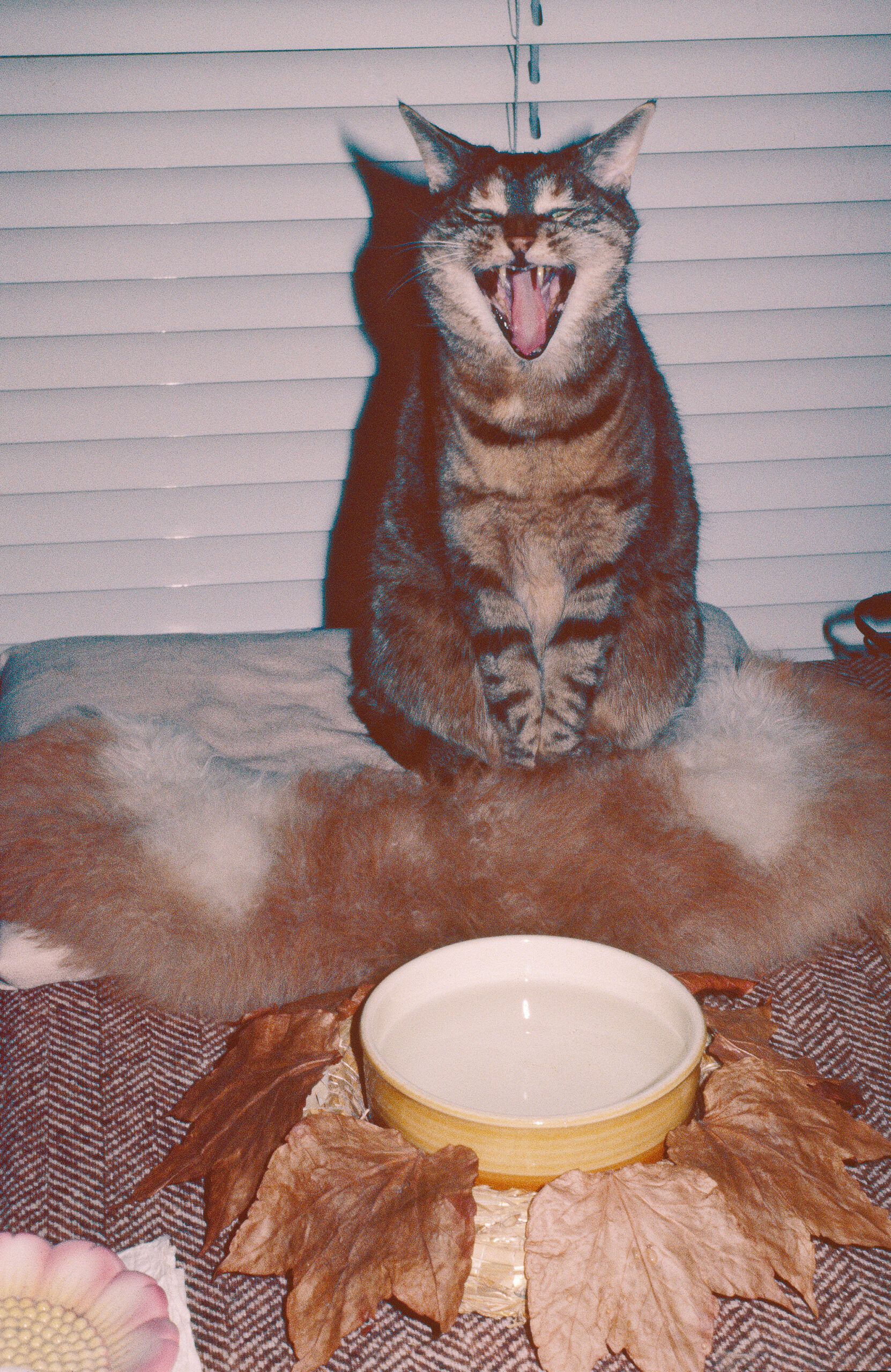
Untitled, 1983. Pigment print, museum grade frame. 120 x 80 cm. © Walter Pfeiffer. Courtesy of the artist and Galerie Gregor Staiger, Zurich/Milan.
PFEIFFER: I didn’t know anything when I went to art school in 1966, after my apprenticeship as a window decorator. I only had my drawings from back home, and I went to class nervous and red in the face. The teacher taught me about Duchamp and all those great experimental, avant-garde artists. He said, “Andy Warhol, I think he’s homosexual.” And I thought, “Oh, I’m not the only one.” I became a fan immediately. I was not yet 20. Later on, there was a bookshop in Zurich that only had movie books, very specialized. Me and [film curator] Matthias Brunner, who was a friend of [Swiss art dealer] Thomas Ammann, we went and ordered copies and I collected all the issues.
LANTINK: You went to New York and met Andy, didn’t you?
PFEIFFER: I became an artist and I got a scholarship to go to New York in 1980. The Factory was on Union Square, and I brought the first book I made, the one with the Ken Doll on the cover. It wasn’t even published yet, I only had the prototype. I didn’t know anything about photography. I started with Polaroids.
LANTINK: It’s so interesting that you first started as a window decorator. It’s a bit like a photograph, looking through the window.
PFEIFFER: Yes, exactly. Then at art school, I started my career as an illustrator. I was already Andy-crazy by then. I had all his books, everything.
LANTINK: Andy was an illustrator as well.
PFEIFFER: The career is so different now. Now everyone goes to art school to be super famous. I was so insecure about my looks back then, but I met girls who lifted me up. I had really great muses.
LANTINK: Were you and your friends dressing up like girls in those days?
PFEIFFER: Yes. I would buy clothes in the thrift store because I had no money. We even went to Milan to buy shoes. They were very round clown shoes. I wore them to an art opening in London, and someone came up to me and said, “Wow, where did you get those shoes?” It was Manolo Blahnik.
LANTINK: Oh, no way.
PFEIFFER: Yes. This was 1972. I moved in with him for a week. Donna Jordan and Jed Johnson were in London to promote the release of Andy’s new film, L’Amour, so Manolo threw a party for them, inviting all his friends and movie stars. I took Polaroids, and I took the most beautiful picture of Jed Johnson, who had big curly hair. I left the Polaroids at Manolo’s, and years later, when I was doing my book, I asked Manolo, “Where is this beautiful picture of Jed in a hat that I took?” Manolo said, “Oh, we had a flood. Everything is gone.”
LANTINK: No.
PFEIFFER: Whatever. I see it always before me in my mind. It was a classic.
LANTINK: Was Andy Warhol at that party?
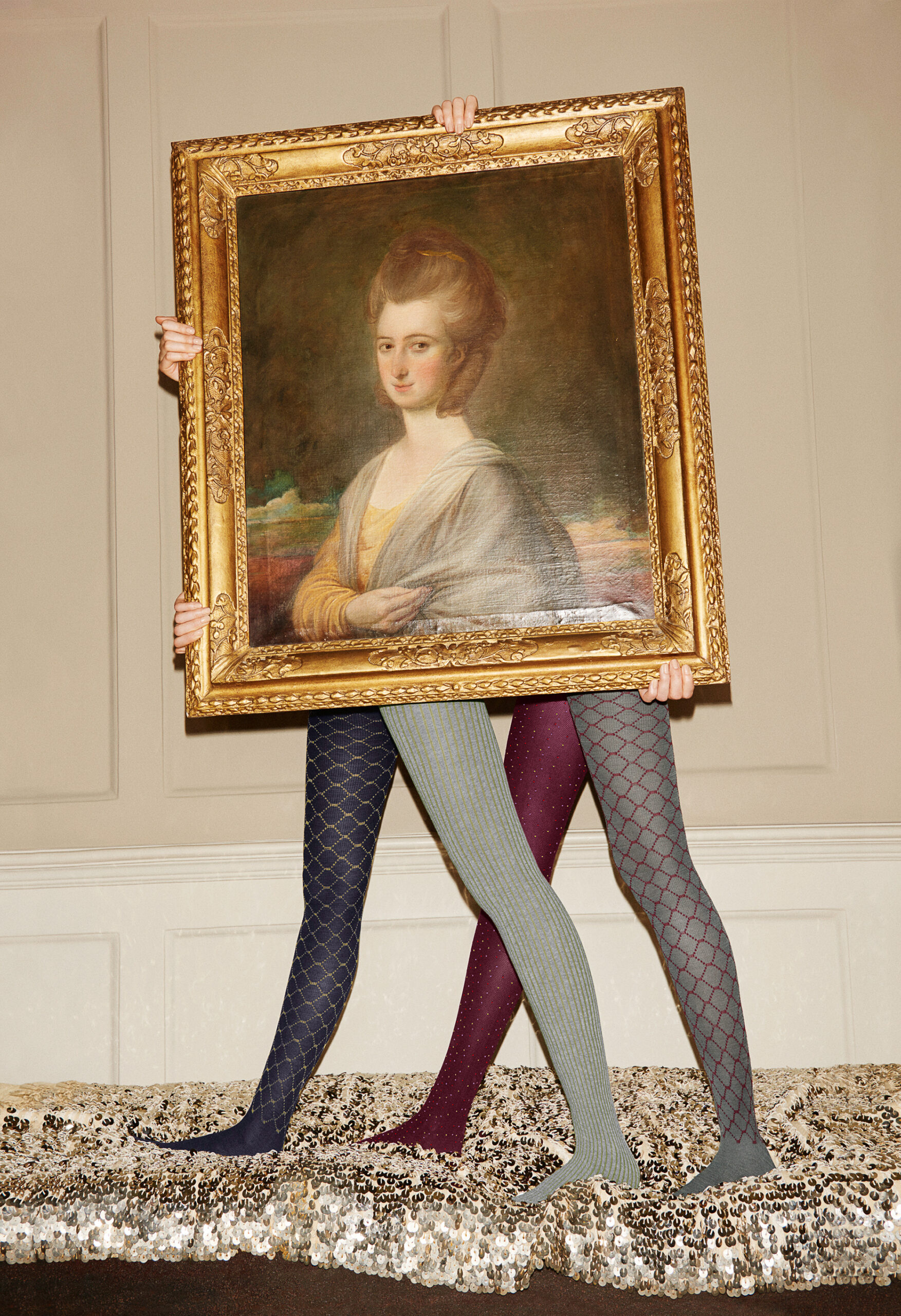
Untitled, 2015. Pigment print. 45 x 30 cm. © Walter Pfeiffer/New Art Corp.
PFEIFFER: No. But he was often in Zurich, because his gallerist Bruno Bischofberger was situated here. Bischofberger had all the first Pop artists in the late ‘60s, like [James] Rosenquist.
LANTINK: The legends. So it was in Zurich that you first met Andy?
PFEIFFER: No. Listen to this. It’s horrible. I lived just in the middle of the city then, in a small apartment. I drew all the time for magazines to make a living. It was very cheap living. We have one famous restaurant in Zurich called Kronenhalle. It’s the best restaurant we ever had.
LANTINK: I know that restaurant.
PFEIFFER: I lived just one street away. I had a friend who was the best friend of Kronenhalle’s owner, Gustav Zumsteg. One day I got a call from my friend, “Oh, you have to come to Kronenhalle right now. Andy is here with Bischofberger.” That was right after he’d recovered from being shot.
LANTINK: So you went to meet him?
PFEIFFER: I wouldn’t dare. I brought all my Andy Warhol books down with me and sat at an empty table far from the crowded Andy table. I had my friend bring him all the books to sign. He made a drawing in this wonderful catalog from Stockholm. I was a real fan.
LANTINK: You were too shy to go to him.
PFEIFFER: Yes. The next time was when I went to New York with my Ken book. It’s so strange. I had no money. We were in a studio on West Broadway and Prince, and there was nothing there, not like when I came back 20 years later for an exhibition. SoHo was so different back then. There was a shop that sold trousers for one dollar, not Prada. It was dangerous. I was 34. I knew the Interview offices were on Union Square, and I always went passing by, “aahhhh!” Later, I finished another book, the one with the boy seated on the cover. A book like this was not possible in those days. Inside, there were full frontal nudes of men. It was too early. You can be too early. You should know.
LANTINK: I know. Being too early is sometimes not that great.
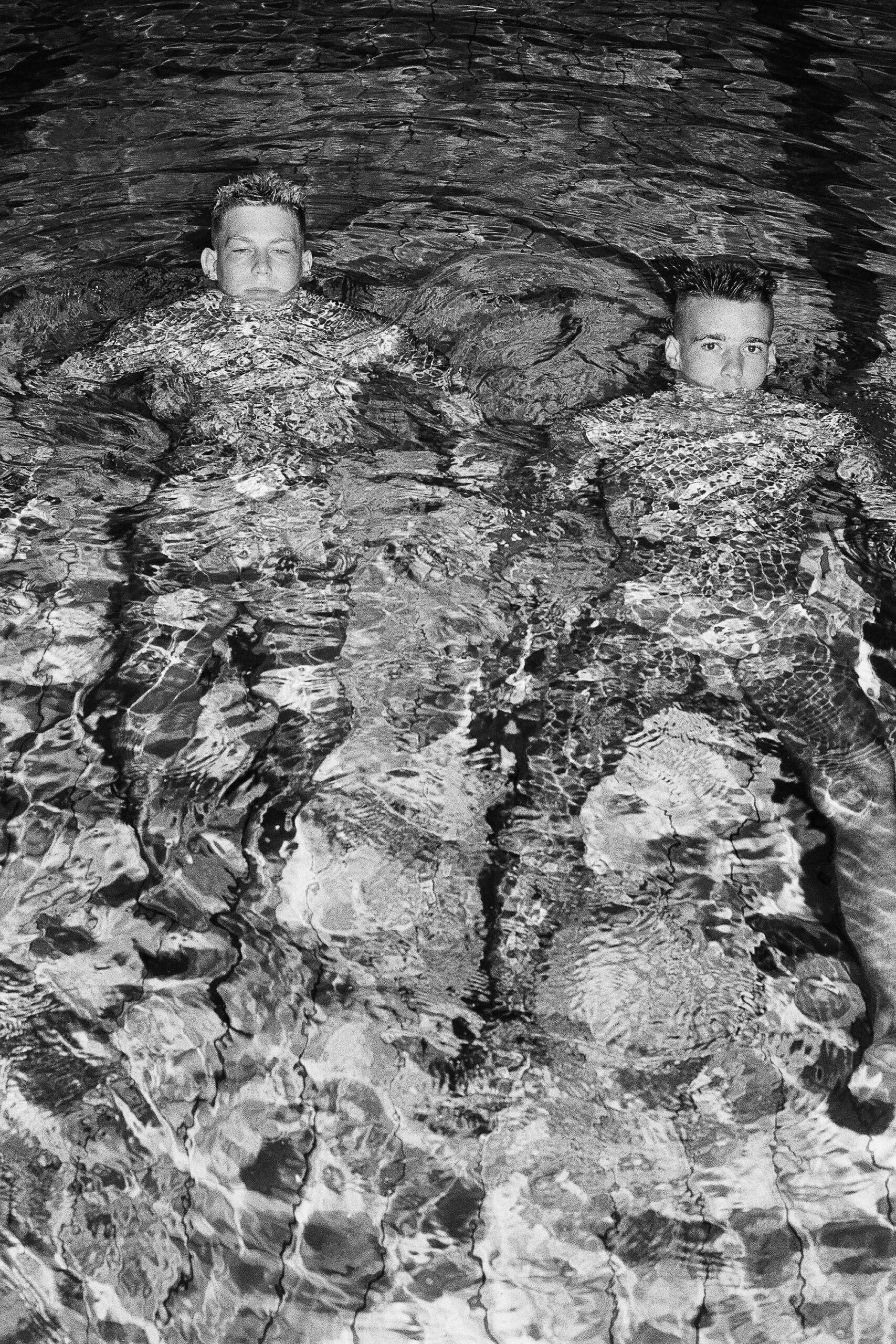
Untitled, 1984. Pigment print. 120 x 80 cm. © Walter Pfeiffer. Courtesy of the artist and Galerie Gregor Staiger, Zurich/Milan.
PFEIFFER: I took those nude photos and made slides and at the place I rented, I made a wonderful evening with the pictures huge on the wall. The boys looked much better than in life! I love to make them up. I’m not cinéma vérité.
LANTINK: What was the reason behind photographing them nude?
PFEIFFER: Because it impressed me to do so. It always looked so good. Later when I came into the fashion world, which for an artist wasn’t done because an artist couldn’t do fashion pictures, I didn’t mind shooting clothes because I wanted to learn.
LANTINK: Your work has inspired loads of fashion people. It’s all about the eye. It’s all about being playful.
PFEIFFER: Yes. It’s the eye and also how you treat people. I never come on the high horse. It doesn’t impress me. You should know what I mean.
LANTINK: Yeah.
PFEIFFER: When I have the right model, I fall to pieces when everything comes together, the beauty and the freedom. I always start at zero.
LANTINK: I think the best work comes from being completely free. There’s no rules.
PFEIFFER: Back in the old days, a “real photographer” would tell me, “Oh, Walter, these are terrible. There’s too much flash.” But I had to take them with flash because I couldn’t do an art picture and anyway people look so good in life.
LANTINK: It’s always interesting how people who learn via a traditional method think they know what the work should be, but then it becomes so boring.
PFEIFFER: They don’t see it. And I see it in a second. I was put down all the time. But it’s good to have the right people around you. I love to have good mentors.
LANTINK: It’s so important because you get to have a real conversation about the work.
PFEIFFER: Yes, and mentors don’t have to be professors. They can be a hairdresser.
LANTINK: It can be anyone. Sometimes you need an outside opinion. But just a second, did you visit Andy at the Factory on Union Square?
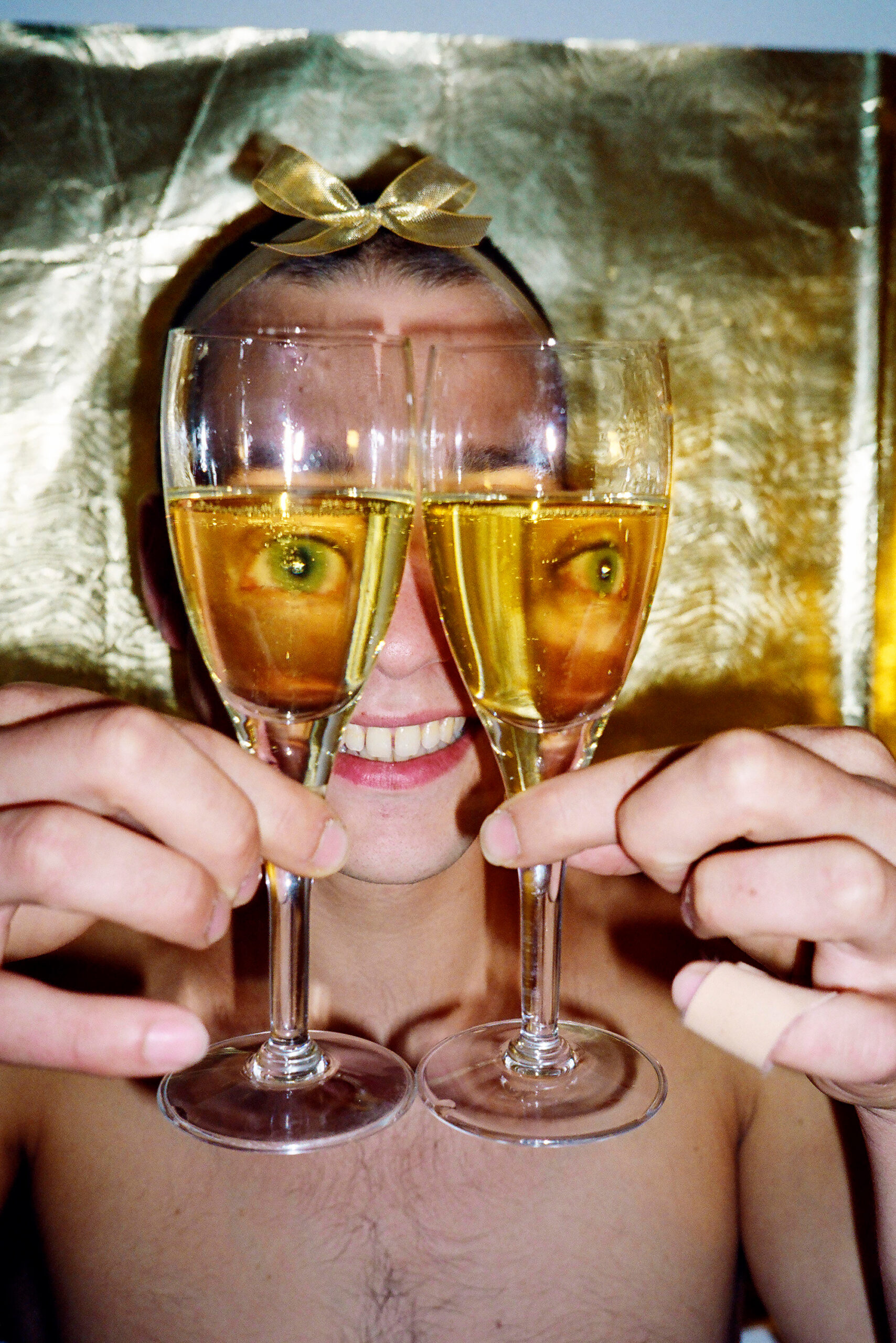
Untitled, 2004 (2013). Lambda print on Kodak paper. 50 x 34.5 cm. © Walter Pfeiffer. Courtesy of the artist and Sultana, Paris.
PFEIFFER: No! Even then I couldn’t go through with it. I was dying to be there but I couldn’t! Later I did send one book with a friend who was traveling to New York to show it to Andy. But I never met him. The closest I got was the book signing for Popism at Bloomingdale’s in the early ‘80s, where I had to wait one hour before he appeared. I know he got the book I sent though, because of the feedback he told my friend. He said, “Your friend should shoot more!”
LANTINK: Do you have a favorite model?
PFEIFFER: No. They come always at the right time. And you have to press—
LANTINK: The right buttons.
PFEIFFER: Yes. I love long relationships, but when it’s over, it’s over.
LANTINK: Did you ever have a relationship with somebody, a love relationship with—
PFEIFFER: No.
LANTINK: Do you know how many pictures you’re going to show in Torino?
PFEIFFER: I love when I don’t have to think too much. I’m leaving it to the great curators. I can say, “Oh, take this out. It’s too much.” And then they do it. Duran, you have such nice eyes. Is that eyeshadow?
LANTINK: No, it isn’t. I’m just tired. I should wear eyeshadow.
PFEIFFER: Me, I look horrible from being overworked.
LANTINK: Do you still have your first Polaroid camera?
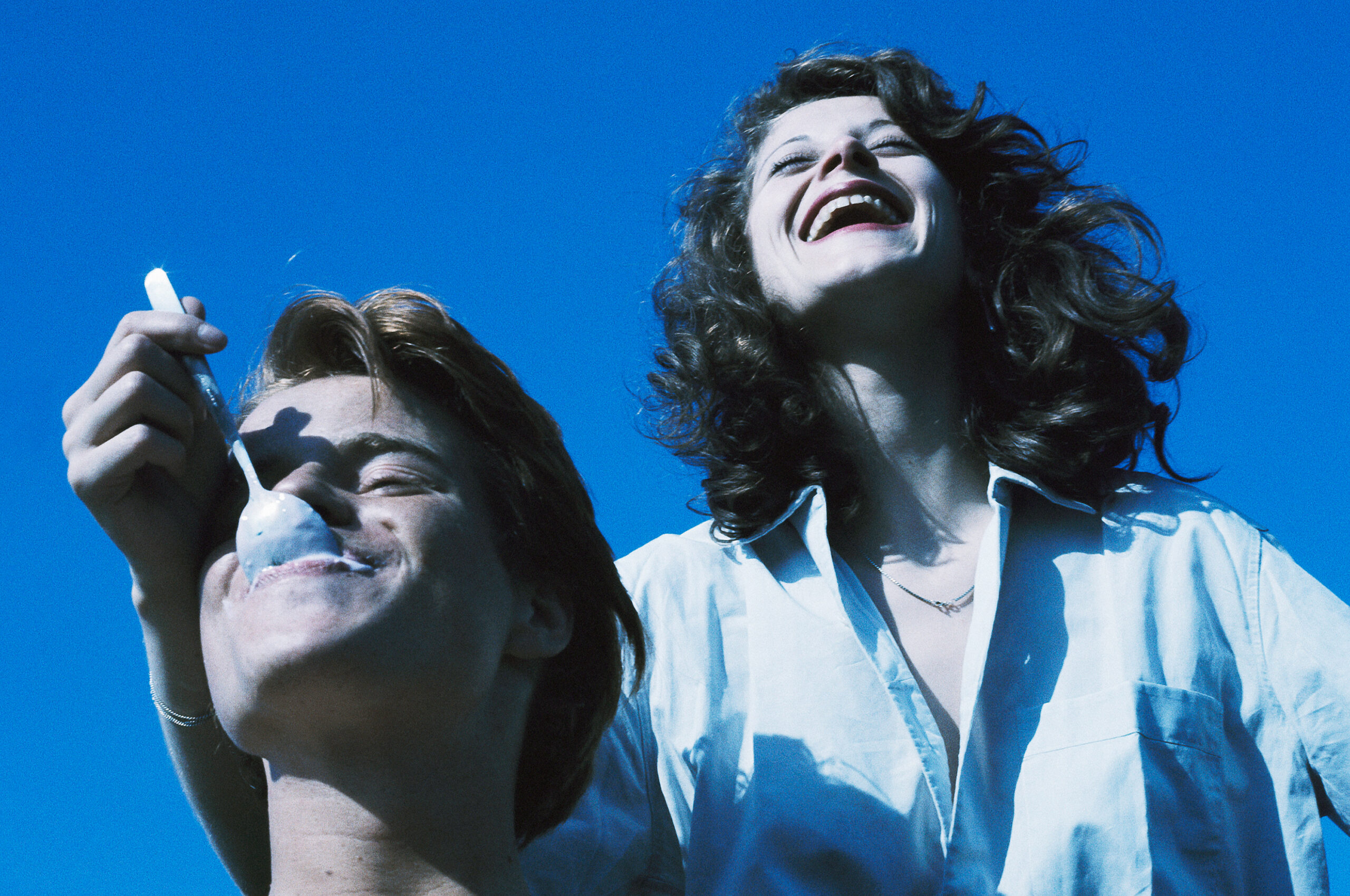
Untitled, 1975. Pigment print. 40 x 60 cm. © Walter Pfeiffer. Courtesy of the artist and Galerie Gregor Staiger, Zurich/Milan.
PFEIFFER: You know, I had my inventory done last year with three boys who helped me. In case I say goodbye forever, I hate to leave with all those things I have done in different fields unorganized. I draw. I filmed wonderful movies. I even did a play. That was the biggest success.
LANTINK: A play?
PFEIFFER: Yes! It was a sensation. But the more you do, the more they hate you. Well, hate is the wrong word. I love boys, I love women, I love beauty, and I had the right people around me. I have a lot, but if I go, goodbye. When I had my first comeback show in Zurich, [photographer] Karlheinz Weinberger came to my opening.
LANTINK: I love Karlheinz. I have a couple of his books.
PFEIFFER: He called me and we talked and he said, “What should I do with my pictures?” I don’t want that. I want to be prepared. Maybe I’ll die in two months. Hopefully I can go to Torino first.
LANTINK: You will.
PFEIFFER: Here’s a question I have, what shall I do with my old Interviews? I have a whole stack of them in the cellar.
LANTINK: You keep them. Or give them to me.
PFEIFFER: I’ve got the very first ones. They’re really brown now.
LANTINK: Thanks for the conversation, Waltie. I hope to see you soon.
PFEIFFER: Goodbye, everybody. Thank you.
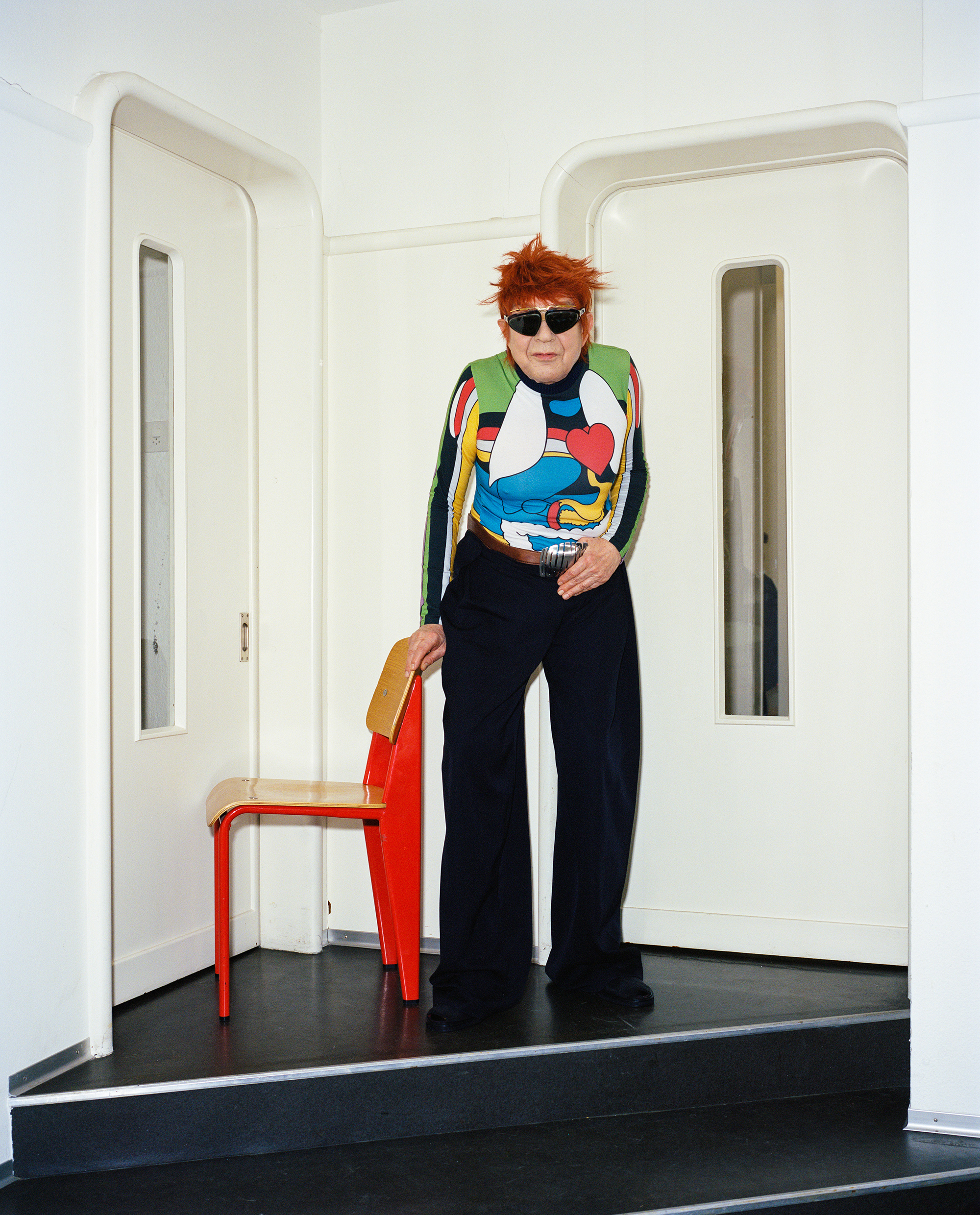
Top, Pants, Sunglasses, Belt, and Shoes Jean Paul Gaultier.
———
Hair and Makeup: Rachel Bredy.
Production Direction: Alexandra Weiss.
Photography Production: Georgia Ford.
Special Thanks: Martin Grossenbacher Blumen and Studio Sito Architekten GmbH.