


DANCER
Benjamin Millepied’s Next Act? An Utterly Modern, Explicitly Queer Romeo & Juliet


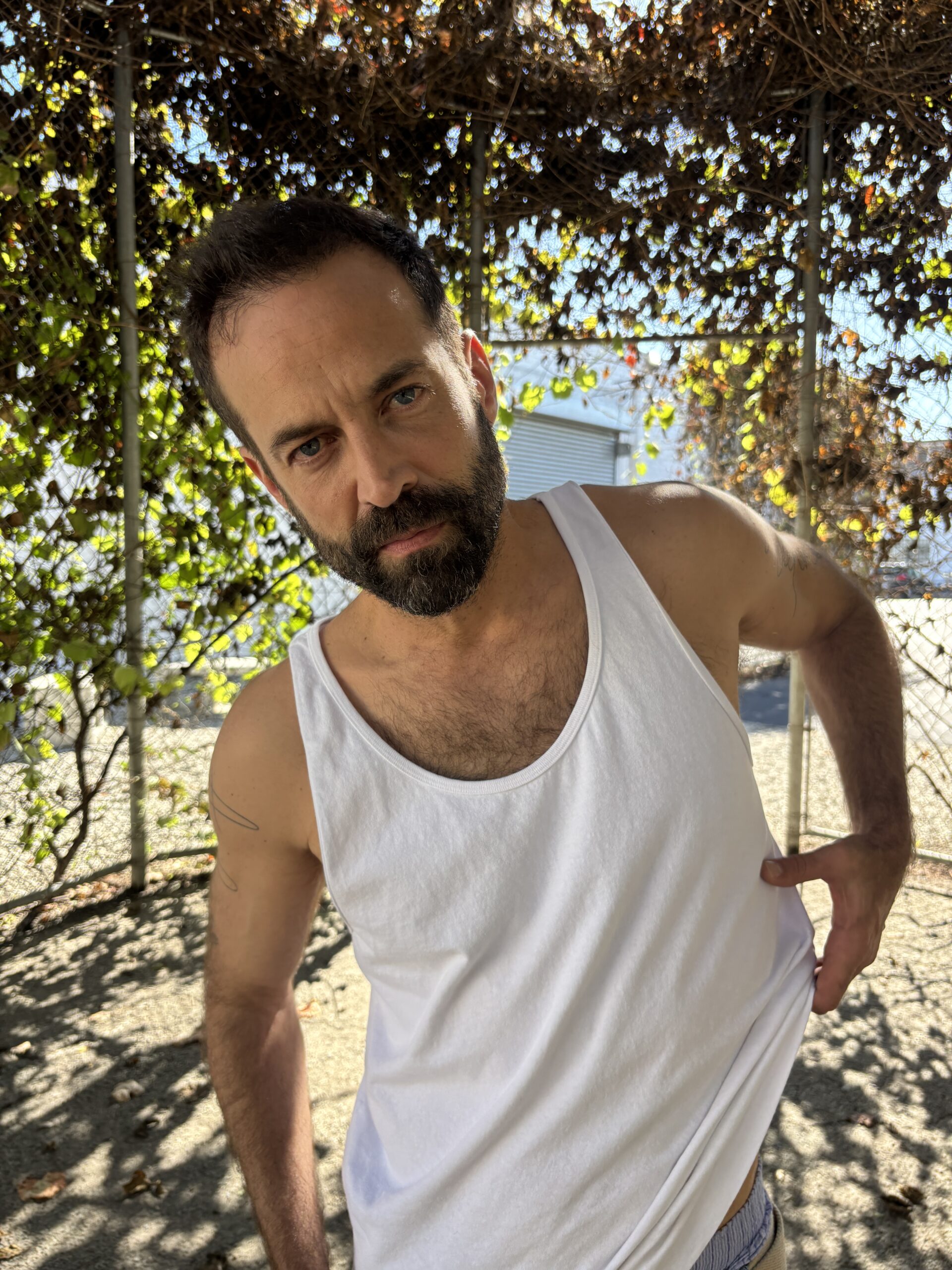
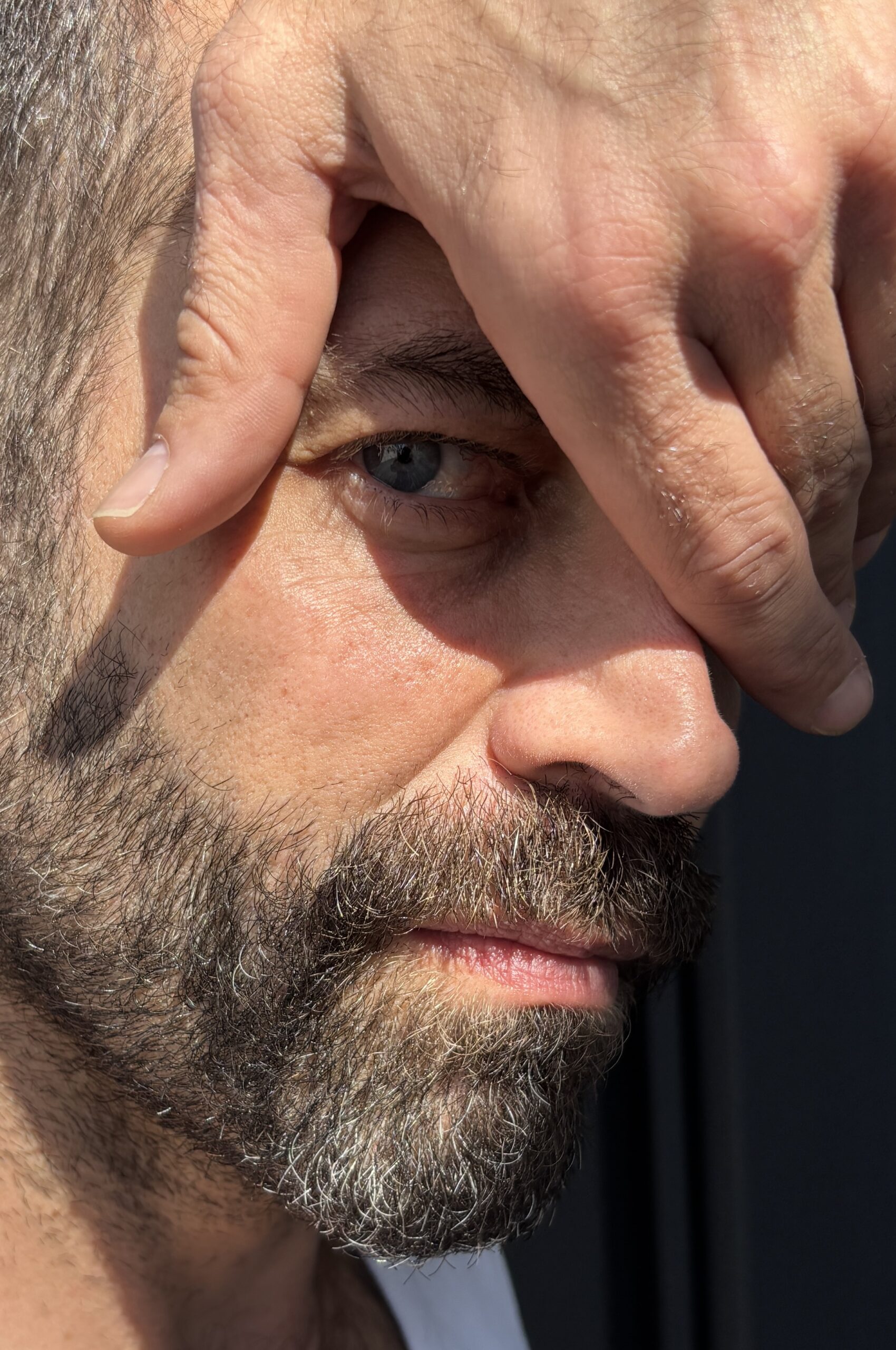
Benjamin Millepied, photographed by Myles Pettengill.
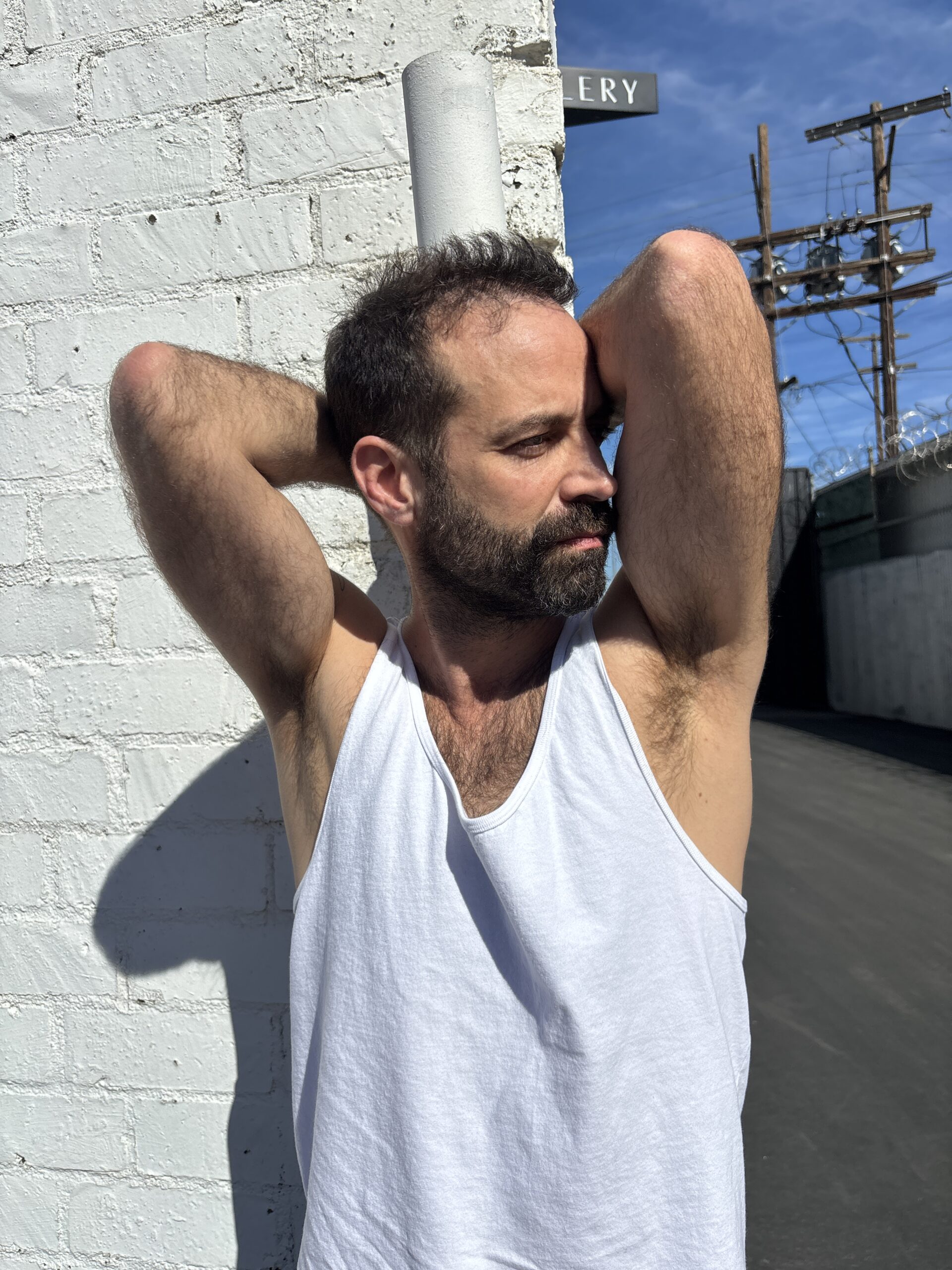
When Benjamin Millepied logged onto Zoom with Anne Imhof earlier this month, he wasn’t in a rehearsal room or a theater but, instead, the parking lot of his studio at the LA Dance Project. “There’s no privacy in there,” he laughed, a fitting prelude to a conversation about exposure, intimacy, and the body. The 48-year-old French choreographer, whose career was forged in New York before he deliberately stepped away from the city, is now returning with a radical version of Romeo and Juliet at the Park Avenue Armory, one that reframes ballet as live cinema and love as something plural, unstable, and unbound from convention. Imhof, the German artist whose own Armory epic, DOOM: House of Hope dismantled Shakespeare through durational performance, met Millepied as both peer and provocateur. As they exchanged notes on cabaret, Baroque gesture, and the politics of live performance, the conversation became a reckoning—with romance, authorship, and what it means to make work that stays alive in real time.—OLAMIDE OYENUSI
———
ANNE IMHOF: Hey, Benjamin.
BENJAMIN MILLEPIED: Salut. Pleasure to meet you.
IMHOF: Glad to meet you too. Where are you right now?
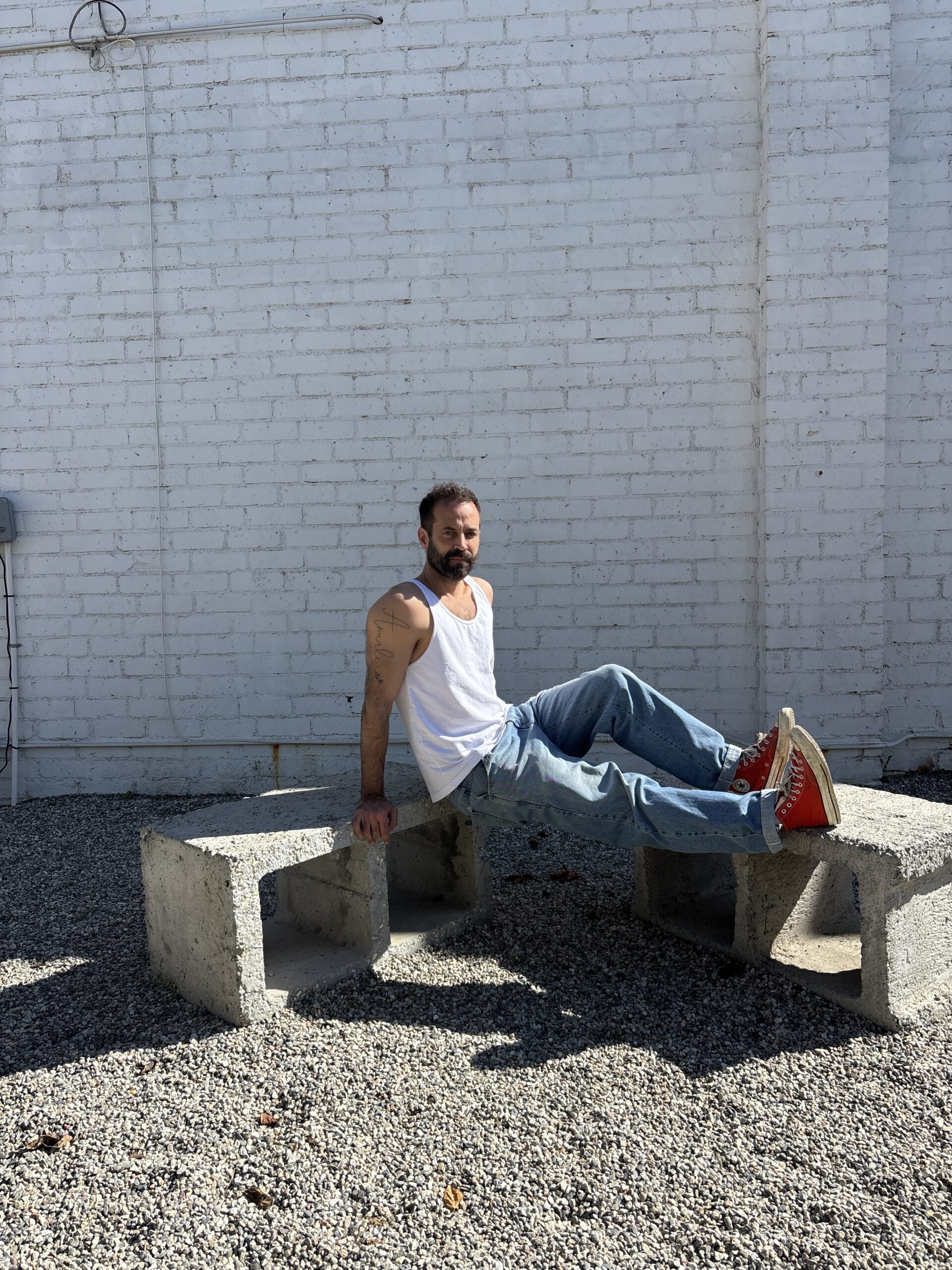
MILLEPIED: I’m in Los Angeles, in the parking lot of my studio, because there’s no privacy in there. So yeah, that’s where I’m doing this interview from.
IMHOF: I do this so many times.
MILLEPIED: How about you?
IMHOF: I’m in my studio in New York. I just moved in, so everything’s quite chaotic still.
MILLEPIED: Have you been living in New York always, or…?
IMHOF: No. But since I have a partner now in New York, I shifted from Berlin a little bit.
MILLEPIED: Right.
IMHOF: I’m so happy we are talking. I mean, you’re in everybody’s words when it comes to ballet. I heard your name so often and yeah, one can’t get around you.
MILLEPIED: I mean, I’ve been seeing you from afar—your stunning work—and I wish I could have seen the piece you did at the Armory.
IMHOF: When did you show last time in New York? I mean, the Armory is huge. It’s a big deal. I was terrified.
MILLEPIED: It’s been a few years. I actually avoided New York for a while. It’s really where I had my whole career as a dancer and where I started as a choreographer, but I’ve been sort of taking a break away from it. And I’m glad we’re doing Romeo and Juliet now—
IMHOF: Well, I was wondering also, we are both drawn to Romeo and Juliet, the ultimate love story. How do you relate to Romeo and Juliet? And when did you have it the first time very close to your heart?
MILLEPIED: I resisted it in a way, partly because of the score, actually. Because of this [Sergei] Prokofiev score, I think I overheard it and it became elevator music to me. It really was something that I thought was second-rate. And it’s also inspired so many great Hollywood movies from long ago. There are moments that resemble Bernard Hermann and so many film composers at the time. I think they stole from some of these composers—or got inspired by these composers. But I first had ideas to combine it with imagery, and I made a short film. And it’s really funny, because the short film’s going to come out—it’s really a coincidence—the same day that we open at The Armory.
IMHOF: Oh wow.
MILLEPIED: I made the film in 2019 with Margaret Qualley and Shameik Moore. I did the balcony scene and I set it in L.A. today with a kind of modern take on it. So I was already playing with the idea of, how do you retell this universal love story in a new way? And once I made the short, then I started to have ideas for the stage. But when I came to the stage production, I felt that I had no right to say that it was supposed to be a man and a woman, knowing that in my company I have women who love women, men who love men. So I thought, “Okay, let’s do this production, but we’ll do it with multiple casts.” And I actually don’t have to really tell the story in full, because people sort of know it. I can just take some elements and pare it down and create this experience of a stage performance that does become a kind of live cinema. And the audience, because they’re not watching something prerecorded, they stay with what’s happening emotionally throughout. What really surprised me was seeing them fall in love with characters in the flesh—to see their intimacy through cinema, it was a very powerful experience.
IMHOF: And also, you’ve worked so much in the theaters and in ballet. Usually, ballets are seen by people fixed on a chair with one vantage point. But the Armory potentially allows for so much freedom if you use this vast space freely.
MILLEPIED: Yeah. I moved the stage the other way so that when they walk into the theater, they’ll walk through backstage. And obviously I’m going to be using all those back rooms and the upper floors, probably, and the stairs and all these other areas. I would’ve loved to go on the roof too—
IMHOF: So beautiful.
MILLEPIED: But I don’t know. Maybe it’s too cold?
IMHOF: Yeah. Will the audience follow the performers?
MILLEPIED: They really don’t in this production. They’re seated, and they’re seated totally conventionally. The way that I always tell the dancers is that the audience just comes upon this play that happens in this space. We’re not performing for them. This is happening, and they happen to be there, so there’s not the kind of conventional projection to the audience. They’re dancing for each other.
IMHOF: Absolutely. It’s a really beautiful way, I think, to work with dance. And also, with DOOM, I felt the New York audiences were overwhelmed at first, so I think you’re doing yourself a favor with a seated audience.
MILLEPIED: Well, I wish I’d seen your piece, first of all, but also to see how the audience navigated through all these moments. It’s always so interesting how people respond, and what you expect, and what happens that’s a surprise, and—
IMHOF: The dress rehearsal was madness.
MILLEPIED: Oh, I’m sure.
IMHOF: Everybody was still figuring it out. I don’t know how much it’s scripted with your piece in terms of the steps. We had frameworks, and everybody was still figuring it out, so the creation process didn’t really stop with a premiere, necessarily.

MILLEPIED: I mean, that’s something that I’ve never done—a full evening work where you’re completely one with the audience in that way. But as far as what I’m working on now and what I’m interested in now, I really just have both the luxury of doing exactly what I’m interested in. I think it’s really a luxury, versus taking commissions and making them in circumstances that aren’t ideal.
IMHOF: It is, I’m sure.
MILLEPIED: And now I’m starting to work on a theater piece, because I fell in love with the world of cabaret. It’s funny, because before you got on the call we were just talking about They Shoot Horses, Don’t They? It’s set in the world of the dance marathons with Jane Fonda. And movies like The Killing of a Chinese Bookie, the [John] Cassavetes, there was always sort of a fascination with that world and the small stages. So a couple of years ago, I got to go into a cabaret and created a number for someone. And I just fell in love with, first of all, working in this empty cabaret during the day. The atmosphere was so thick, and I fell in love with the format of the stage and the intensity. It’s just a fascinating world because it’s existed for so long. It’s such a political place. It’s a world where everything’s possible.
IMHOF: Oh, absolutely. I share this.
MILLEPIED: Yeah. We’re sort of imagining that this piece takes place in the future, where it’s a worse version of where we are today—where we’ve lost all our freedoms. And there’s this idea of this cabaret that takes place maybe in hiding. The cabaret is there to tell us everything that we’ve lost, about humanity and joy and desire and love and sex, kind of represented through the story and the musical numbers. It’s kind of a crazy, wild piece I’m trying to make.
IMHOF: I totally share your admiration for the cabaret life, the small stages that are in the limelight. I’ve had this affinity for the circus forever. So when I was doing my first bigger piece, Angst at the Hamburger Bahnhof Museum in Berlin in 2016, it looked like a circus, basically. And when you’re the rebel newcomer doing these big pieces in museums, I was getting away with a lot. There was a dancer dancing on a rope dissecting the big hall. I was asking the dancers to put their middle finger out doing the port des bras. Now, I think storytelling has become important to me in some way. Romeo and Juliet was the first narrative, non-plotless thing I did. I’m definitely interested in telling stories, and telling stories about my experiences and fascinations with the world. Everybody’s longing for something that doesn’t need apologies, something that is shared amongst everybody.
MILLEPIED: Yes, totally. And ultimately, as an artist, that’s where I find myself now. What I’m finding is that I have more of an ability to tell the human stories I tell in my pieces with more complexity because I understand myself better now than I did two, three, four years ago. The way that I expressed relationships in my work in the past had a lot to do with the way I idolized relationships. I created representations of relationships that were romanticized in my mind because of my own personal trauma. And I think now, I have a much more realistic approach—a lot more distance and a lot more understanding. So I can tell stories in a more complex way that is more interesting. But I also think the stories that draw me always have to do with something highly, highly personal. Because first of all, what we do is so difficult. It takes money and effort and motivating everyone around you. I’m only good and able to get these things done if I’m really passionate about them.
IMHOF: Yeah, getting everybody in your vision is basically magic. Sometimes it needs everybody to get there, right? And you need their commitment and their agency, somehow.
MILLEPIED: Yeah, so that’s the thing that’s fun right now, that I’m starting to explore this cabaret evening, and I know that I’m going to find my way and understand why I’m making it fairly soon. And next year I’m making Liebeslieder Walzer, a Balanchine masterpiece. And then one piece I want to make later on, that I will make at some point when the time is right, is Winterreise.
IMHOF: That’s a good one.
MILLEPIED: Yeah. It’s deep. And I think when the time is right, it’ll be the time. There was a whole time in my life where I was also making [work] from a fear of emptiness, and now I’m more organized psychologically.
IMHOF: The fear of emptiness or nothingness is always there, though. It can be a great motivator. But I have a feeling you’re romantic, too. I utterly believe in romance so much that I’m falling in love in my own Romeo and Juliet piece. But I also have the feeling that people don’t even believe the sincerity that I put in it. But I’m an utter romantic. And there is something deeply human and deeply universal about humanity in each of those pieces you just told me about. But I was wondering—more of a practical thing—how do you work with your cast? For example, I was writing the script for DOOM, and I was dreaming about developing the role with the characters, with my cast all together, so basically directing in this different way of writing.
MILLEPIED: I think, more than ever, the artist’s sensibility and way of being is a major inspiration and really impacts the work. I don’t make anything the same for every dancer. I choose people very carefully. And with Romeo and Juliet, the version changes and the notes change for every dancer. I leave as much freedom for them to make sense of it, and then I come in and help them find truth in the acting. You don’t have to fill [the space] with movement and emotion. You can just be still in space.
IMHOF: That is very important.
MILLEPIED: But yeah, I love my dancers more than ever. I choose them now with so much specificity. They’re all completely different animals and human beings, and that’s the really special part.
IMHOF: Yeah, I had this luck to work with an amazing cast here in New York City as well. And what you say about the role of the women in your new piece, it was so important for me. Because in Romeo and Juliet, Juliet still holds the power. And I think as much as I deconstructed the whole thing—I worked with a classical score, a [Gustav] Mahler score—I slowed it down. And then I dropped almost like, pop voices of the different musicians that were performing the piece on top of the Mahler. It was almost magical.
MILLEPIED: I love that. It sounds amazing. I just saw Hamlet in Paris—directed by Ivo van Hove, whose work I honestly hadn’t really seen. And in his Hamlet, he puts in three songs and they really worked. It was totally unexpected. There’s a Queen song, and then the last one is just almost Shakespeare repeated, it almost becomes rap. It’s so beautiful. I love when an artist is able to bring this element that is completely unexpected. It’s really cool that you did that.
IMHOF: I think New York will wait for your piece. It’s really a mood right now in the country—we need more love stories like this.
MILLEPIED: And we need people to spend time with other people. That’s what the theater does.
IMHOF: It’s such a luxury. I mean, this is maybe the most power people have—to be together in one space.
MILLEPIED: Because we’re disconnected from empathy with the way we’re experiencing news. But a piece of good news: I checked the numbers of attendance, at least in France, and theater attendance is up from last year. People are actually going to the movies, too. And even though they’re cutting budgets for culture in France too, I find it really reassuring that this is happening.
IMHOF: I mean, that’s what you and I have in common. For me, the fascination is that I compose in 360 degrees. The movement of bodies together is powerful. Nobody can take that from them. Nobody can take that from us. And I think to reinterpret a piece—or to refuse to reinterpret the piece and completely take it apart—is giving the classical meaning and breaking it up, leaving it open. I think it’s good if things defy the definition that they’ve had before, because we can fill them with something that comes from a true place, from the inner urgency to do it.
MILLEPIED: Yes. Well, this was a pleasure. And I’m in New York now, so I’ll get your contact so I can WhatsApp you.
IMHOF: Yes. I would love that so much. Come by the studio.