


SMOKE BREAK
Artist Isabelle Albuquerque Takes Us Inside Her Floral Fantasy


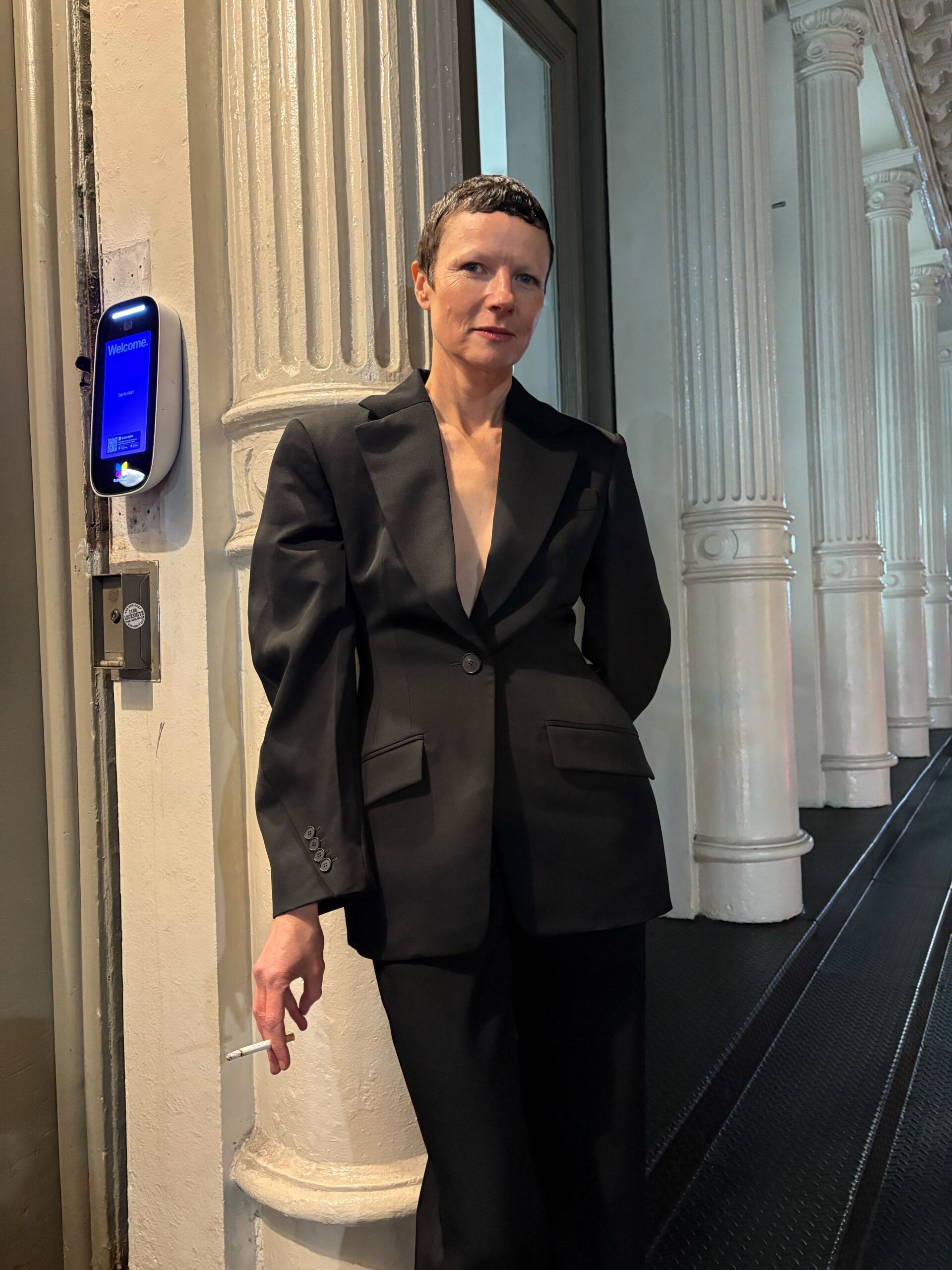
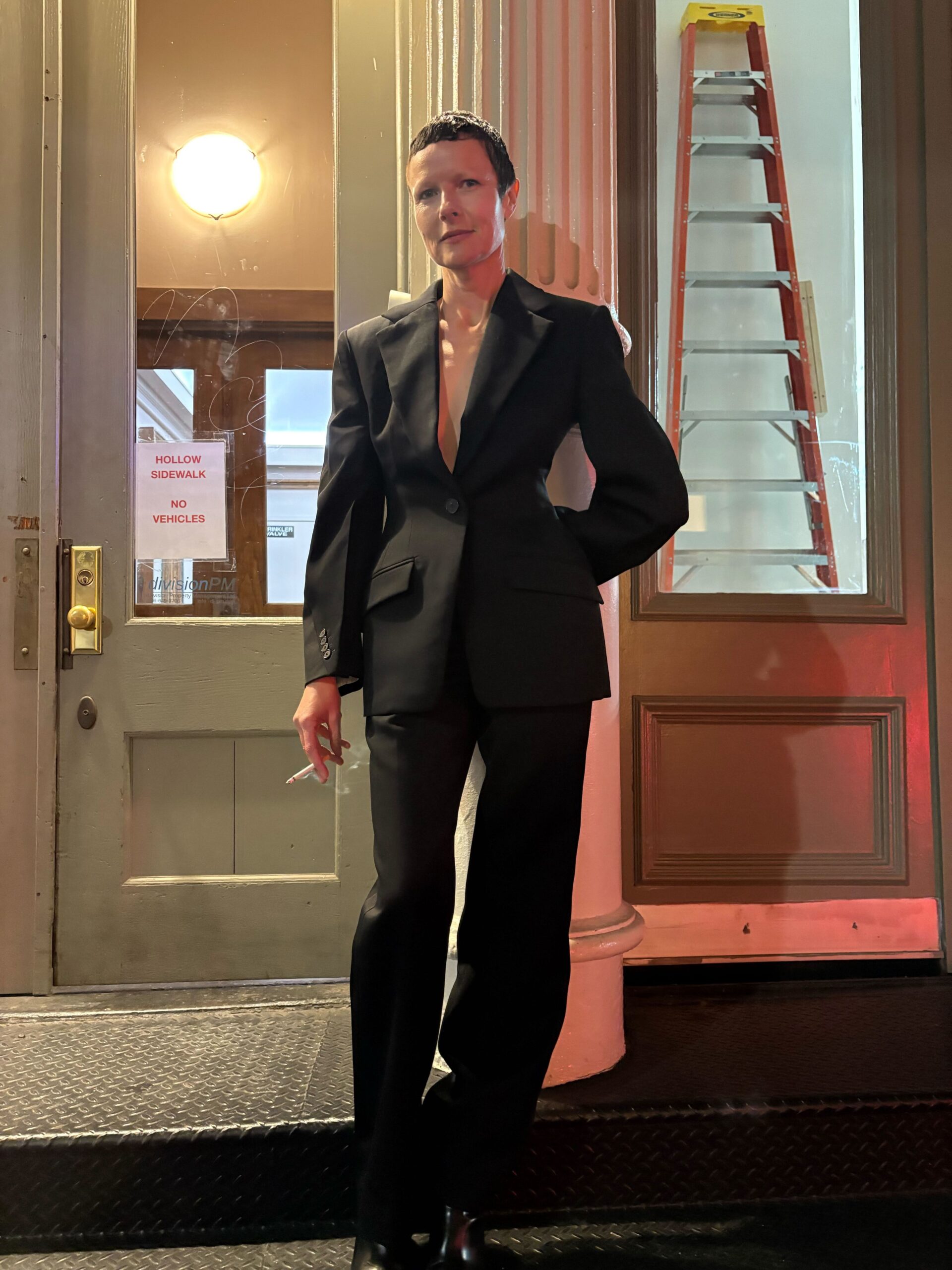
Isabelle Albuquerque, photographed by Juliette Jeffers.
Isabelle Albuquerque is comfortable with all the clichés. But the Los Angeles-based sculptor’s work has a subtly powerful way of upending them in surprising, uncanny forms. One of her most pictured—a hybrid of woman and spotted fawn from her 2024 show Orgy for Ten People in One Body—is obvious, perhaps, but no less intelligent and seductive. In her current show, Alien Spring, now on view at Nicodim downtown, Albuquerque has devised the beginnings of a meadow. Her flowers are especially alive, lit by an otherworldly iridescent glow—the result, she explained, of fire applied to bronze. They slither on snake-like stems or else are cupped in blossoming palms (Milton was a source of inspiration). Their petals are delicately folded labias, their stigmas reach to pollinate, à la Georgia O’Keeffe or Robert Mapplethorpe. The show, whose title was inspired by Rachel Carson’s seminal environmentalist text Silent Spring, also evokes desire within catastrophe, life within death. “I was kind of dating this mountain, and she burned,” recounted Albuquerque when we shared a cigarette on the steps of Nicodim on the evening of her opening. “But she was like, No, babe. I got it. And she just grew all these beautiful flowers and, I don’t know, they just started having sex in my mind.”
———
JULIETTE JEFFERS: I want to start with the writing on the wall. So, one piece is a poem by Ariana [Reines]. And the rest—
ISABELLE ALBUQUERQUE: The piece on the wall right when you walk in is a piece that she wrote. I’m doing a show right now in conversation with Louise Bourgeois in Portland.
JEFFERS: Cool.
ALBUQUERQUE: She wrote that poem for that show.
JEFFERS: Wow, okay.
ALBUQUERQUE: But I see this as like, a sister show. So after install yesterday, I was like, “I’m going to write some poems on the wall in pink.” Just like you would on a bathroom wall, but here.
JEFFERS: The others are yours.
ALBUQUERQUE: They’re like notes. They’re notes from making the flowers. Some of them are poems too, yeah. And then I was like, “Ariana, will you come and write your poem here?” She came and I read it to her while she wrote it, while sharpening her pencil.
JEFFERS: That’s so ritualistic.
ALBUQUERQUE: It was so beautiful because she really can channel. So the whole poem is the work, but she hadn’t seen it yet. We studied Milton together. All these flowers came out of the snake. So she knew that because we had studied together, but then she just channeled it. So then I read it back to her, and she said it was like she was hearing it the first time. It was, I have to say, a very special moment.
JEFFERS: You both have very memorable voices too. I mean, all of the sculptures are both phallic and yonic, almost all of them. Except for the branches with the handcuffs. Those are just phallic.
ALBUQUERQUE: The flowers constantly shift between genders.
JEFFERS: Yeah. They’re like intersex, basically.
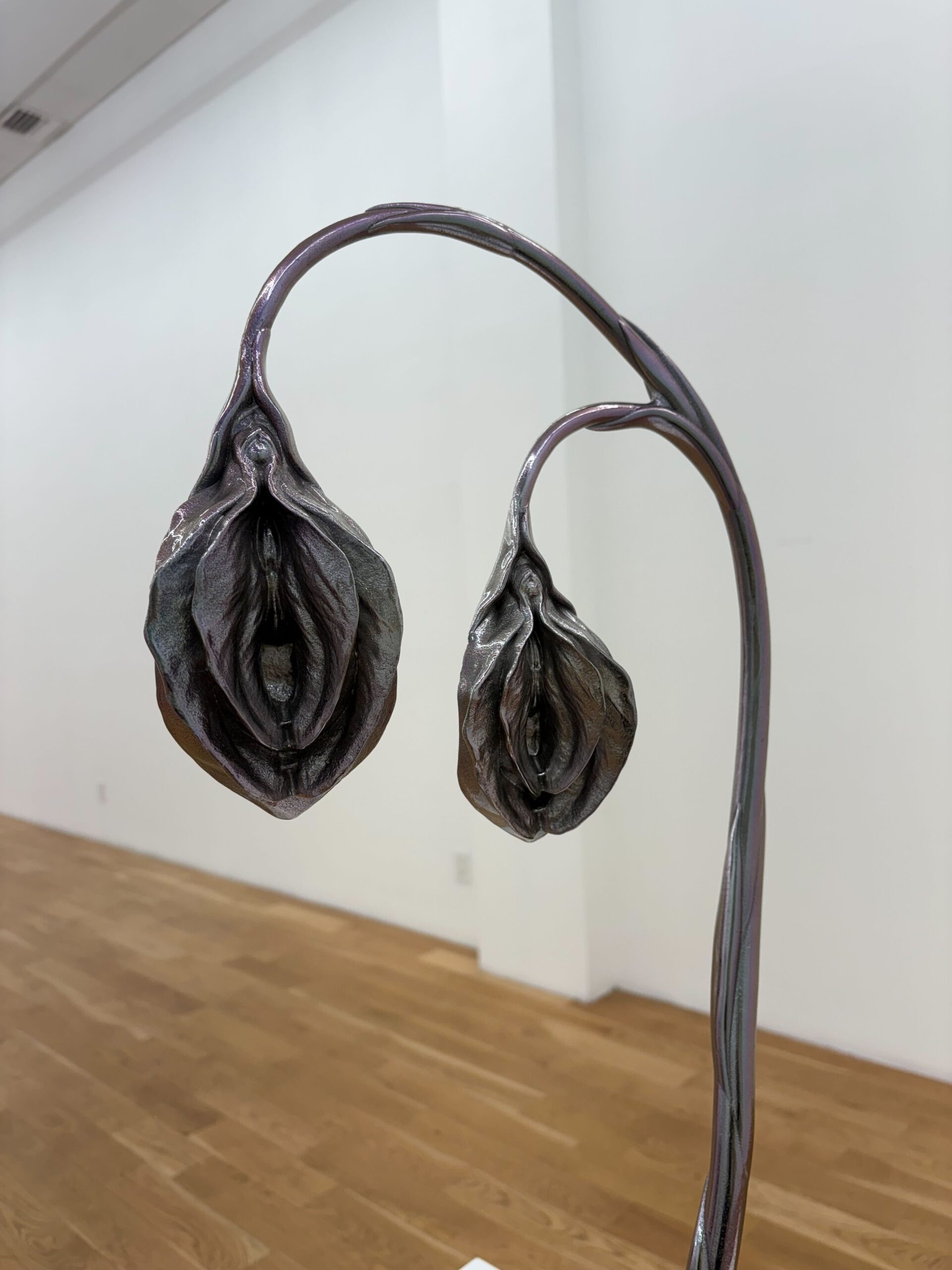
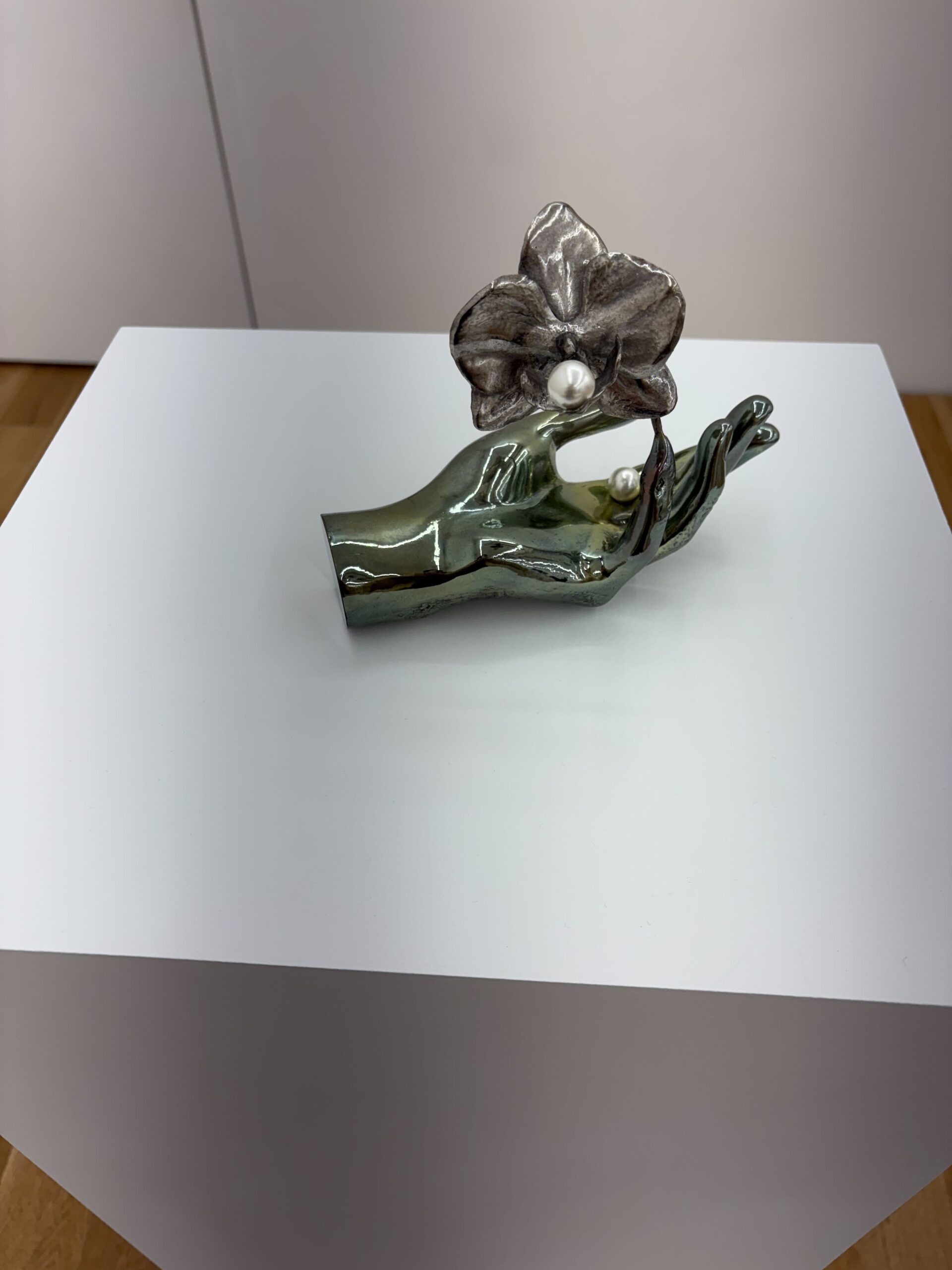
ALBUQUERQUE: They’re intersex, which is so beautiful. And they also have interspecies sex because with—
JEFFERS: With bees, I guess.
ALBUQUERQUE: Yeah. And the face of an orchid is the fantasy of a bee. I was just so moved by that. A lot of it is about that, so I’m glad you’re seeing that in there. And I had been working on these snake sculptures that I didn’t show for like, a year in the studio. So the stems came out of this kind of ouroboros snake thing that was straight out of the Milton.
JEFFERS: Yeah, that makes a lot of sense. The snake and flower feel very connected to what your sculptures always feel connected to, which is desire. And then, the texture. So, they’re bronze.
ALBUQUERQUE: So three of the sculptures are stainless steel, so they look really fragile. It looks like they could break, but they’re strong as fuck. They have a glaze. And then the others are bronze, and they’re painted with fire. I use a technique where I torch them to get the color. So it starts like, brown bronze, and then you torch it and you see that the bronze actually turn on through color.
JEFFERS: Wow.
ALBUQUERQUE: It goes red, yellow, green, blue, purple. It’s an incredible process.
JEFFERS: I feel texture is so important in your work. And I feel like in your last big show, there were a lot of different textures happening, but for this show it’s mostly iridescent and metallic.
ALBUQUERQUE: This is the beginning of a meadow, which would be tons of flowers. For years to come, it’ll grow. This is the moonlit part of the meadow. So I wanted it to feel like it was bathed in moonlight, like in that intelligent light.
JEFFERS: Did you ever see that movie Annihilation with Natalie Portman?
ALBUQUERQUE: I did, yeah. Exactly.
JEFFERS: Right? There’s something of that world in this show.
ALBUQUERQUE: I guess we’re all kind of like, “What do we do right now?” And it’s not really a time to look to humans. When you think about desire, flowers—I mean, they wear their pussy on their face. You cut it off, and you give it to your lover. They’re so coded. I love cliche. I was like, “Why am I doing flowers?” I think Mapplethorpe covered this…


JEFFERS: There’s something darkly optimistic about it. Does the title come from Silent Spring?
ALBUQUERQUE: It was my favorite book when I was little.
JEFFERS: Yeah. It was a very iconic book.
ALBUQUERQUE: It’s amazing.
JEFFERS: Written by a woman [Rachel Carson]. She was an early environmentalist.
ALBUQUERQUE: Yeah, she was pretty radical.
JEFFERS: Yeah, there’s definitely something very prophetic about the book. With this show there’s something of the apocalypse, maybe, but also life and desire through that.
ALBUQUERQUE: I was supposed to do the show last February, and my whole mountain burned down. I was evacuated from my studio for a few months, and I came back and it was just ash everywhere.
JEFFERS: Wow.
ALBUQUERQUE: I was kind of dating this mountain, and she burned. And I was like, “Oh fuck.” But she was like, “No, babe. I got it.” And she just grew all these beautiful flowers and, they just started having sex in my mind. So it is very connected to something burned down, and what can grow out of that.
JEFFERS: Totally. You do a lot of anthropomorphizing in your other work, but with these sculptures I guess you’re transferring that human quality to a plant. We recognize our features in them. And we always have, I guess.
ALBUQUERQUE: Yeah. There’s a lot of mirroring with flowers, especially for women.
JEFFERS: There’s so much cultural shit around “the pussy,” but the flower is just everywhere as a symbol.
ALBUQUERQUE: It’s one of the things I wrote on the wall: “Pussy a source.” For me, it’s really where the work comes from. It’s such a power. I love pussy. And everyone has their different relationships with it but, for me, it’s a really powerful relationship. So there’s a breeding happening between the human and the plants, which I like too. This idea that we could also breed with them.
JEFFERS: Totally.
ALBUQUERQUE: The Darwin Orchid, do you know about it?
JEFFERS: No, tell me.
ALBUQUERQUE: People think of him as all about animals and natural selection. But really, most of his life was dedicated to orchids. He was obsessed. And he was specifically obsessed with what he called the Darwin Orchid, because there’s this moth that has a nose that’s very long and curved. And he’s like, “There’s going to be an orchid that is a response to this moth.” And before he died, he found it. And it’s an orchid that has this huge, long funnel for the nose to go in.
JEFFERS: Yeah, that’s so romantic.
ALBUQUERQUE: It’s so romantic.
JEFFERS: Nature can respond very purely to the other. It’s only humans who have mitigated that perfect biological response.
ALBUQUERQUE: We copy it because they do it with smell, which we do too. They do it with color, which we do too. They do it with texture. And they respond to song. I sang to them yesterday. I was like, “We got this, guys.”
JEFFERS: What’d you sing to them?
ALBUQUERQUE: There’s a French song that my godmother taught me. [Sings in French].
JEFFERS: I know you come from a very intense mother line so it kind of makes sense that you’re in a yonic power era. Georgia O’Keeffe energy.
ALBUQUERQUE: When we evacuated from the fires, I went to the desert for two months. I was going to do a different show, but that’s when I started making the flowers. When you’re there, Georgia’s right there with you. She’s like, “Just do it.” And I’ve thought about her a lot while making this work. She got it.