


Liam Gillick


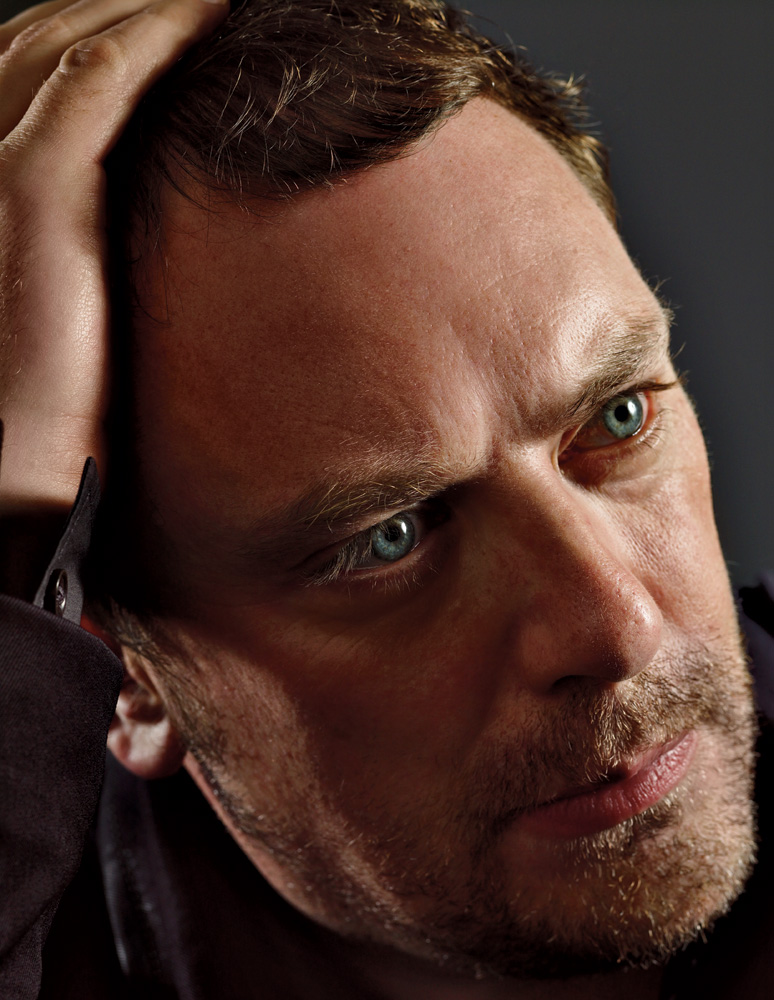
Liam Gillick: Needlessly difficult? Embarrassingly simple? A curator’s artist? An artist’s curator? A post-conceptual-intellectual crowd-pleaser? It’s hard to sum up an artist whose work feels simultaneously so familiar, casual, and playful, and at the same time so considered, political, and obtuse. Gillick, who was born in 1964, is probably most recognized for his handsome color-coded Plexiglas and aluminum sculptures often found in public spaces (such as his façade of London’s Home Office headquarters). But what you see is not always what you get. And these seemingly elementary freestanding grids and lattices are but the tip of the iceberg in the 45-year-old artist’s hefty output. His work also takes the form of wall drawings, wall texts, furniture, façades, books, plays, films, and more—all of which more often suggest possibilities rather than illustrations. I was a fan before I met him in 1998, shortly after I moved to New York. Now, he’s a friend. So how could Liam Gillick, an artist who never seems to catch his breath, be having a three-part mid-career survey already? And what is he doing representing Germany at the 53rd Venice Biennale? The answer (to borrow a signal Gillick trope) is why not? and what if?

MATTHEW BRANNON: Interviews are complicated because they have so much to do with setups.
LIAM GILLICK: You should do this one like
Charlie Rose, by asking the question and then having the answer within the question. [laughs]
BRANNON: Well, one way I thought we could start is by talking about how we met. I was a student at university, and you were a visiting artist, so that would have been in 1998 . . .
GILLICK: You were then in your second year at Columbia.
BRANNON: I believe it was my first year. I remember I had already given up painting and wasn’t sure what to do next. I was making those “installations” of office spaces. And you were the first person who I didn’t need to defend what I was making to. Most of the faculty and students didn’t even consider that kind of work art.
GILLICK: It was really obvious to me that the questions or problems that you were having with art were interesting. They seemed to be positive problems.
BRANNON: Good problems to have . . .
GILLICK: Yeah. But it was very hard for me because I’d always resisted teaching as a job. I liked the idea of being there and being connected, but I was very irresponsible, in the sense that I would look for certain people who were interesting . . . At that time, you were the most interesting person there—maybe because you were having the same productive problems that I was having.
BRANNON: So now you’re on the verge of your first major U.S. retrospective in Chicago and, of course, you’re representing Germany in the -Venice Biennale. I think this is something we should talk about because it teases the idea of what it means to be mid-career. What will looking backward mean for you? There are definitely expectations, both personal and public. And then it’s also inevitable that certain backlashes await you . . .
GILLICK: How about just tolerance and warm acceptance? I’m a really tolerant person who accepts lots of things. [laughs] Philippe Parreno and I used to say this to one another: “It’s not a competition.” It’s true that my generation has tried to get into situations in orderto avoid critique. One of the phrases that used toget knocked around a lot was the notion of the “non-critiqueable,” which was the idea that you could temporarily avoid that moment of judgment. I mean, the fact is that the show in
Chicago and the one in Venice are both a continuation of what I’ve been doing, except that they’ll be viewed more by people who haven’t thought about the work very much, or who feel quite correctly that someone is telling them that they ought to take the work seriously, or that it’s -supposed to be good. What’s funny is doing interviews in Germany. They’ve mostly been very nice and earnest and serious, but two of the questions I’ve been asked have really stood out. One is, “What makes you the best?” That was a question I got from the evening newspaper in Munich. Another question from a newspaper was, “When you win the Golden Lion for Germany, how will you feel?” And I thought these two questions perfectly sum up the situation I’m in—because, of course, my work has been an elaborate attempt to avoid questions like, “What makes you so good?” or “What is the idea behind the work?” They’re the wrong questions, in a way. The question of how you might feel in terms of winning the Golden Lion and those kinds of things is completely irrelevant. Which is not to say that when Bruce Nauman wins the Golden Lion for the u.s. he’ll feel any different—he’ll also feel like he just does his work and looks after his horses and has been trying to quietly do the right thing for the last 40 years . . .
BRANNON: I guess it’s very revealing of who I am that, as an artist, I generally focus on my critics—of which I’m probably the harshest.
GILLICK: I know—me too. I never believe people who say that they don’t read the stuff. I read everything. I read a snide five-line exhibition summation in Time Out. I read all of it . . . I’m going to get us some more wine.
BRANNON: Is there a pause button on this recorder?
GILLICK: No, we don’t need to pause it. I’ll be right back . . . We’ve just got to make sure the red light is still on.
BRANNON: Can I record you from there? No.
GILLICK: [from a distance] Probably not. You okay for a drink?
BRANNON: Yeah, I’m good . . . So I was thinking about your voracious output, and it reminded me of Woody Allen, who supposedly has three films going at any one time: one which is in the theaters; one which is being shot; and then one which he’s currently writing. Supposedly, Woody has done this for 30 years, and he swears that he’s never looked back. He swears that he hasn’t seen Annie Hall [1977] since he first showed the film.
GILLICK: Well, I think sometimes Woody ought to look back a bit more . . . But, you know, I identify with that completely. I did an exhibition in 2000 in Kitakyushu in Japan and, because I knew that the exhibition would never get out of Japan and no one would ever hear about it, I called it “Woody.”
BRANNON: I remember that one.
GILLICK: Maybe I told you about it. It’s very odd because I think that most people who make reference to Woody Allen concentrate on what he has actually done, but I was quite interested in his methodology, the way he keeps moving on to the next film relentlessly. I identify with that way of working, and I also recognize it as a weakness maybe. So in the little catalogue, I actually put at the very back an appendix of all of the films that Woody Allen had done up to that point.
BRANNON: Having this three-part retrospective is not the most comfortable position for you, because you’re someone who is very self-conscious about what it means to have a retrospective.
GILLICK: Yes. I mean, I don’t see why I can’t have one, although it doesn’t necessarily make sense . . . It’s related to what I think I identified in your work at Columbia, which was a feeling that you didn’t accept what other people were doing but that you didn’t have any other ideas either. [Brannon laughs] I had that feeling, definitely. When I left art school, I didn’t know what to do, and I didn’t have any ideas. I didn’t have a vision. But I didn’t accept that I should just leave the art world to other people. I think when people struggle with the problem of trying to understand the art world as an idea, they misunderstand it. They think it’s a world of visionaries or opportunists. But it also includes people who want to take part in this cultural exercise but don’t have the required stuff—they don’t have the ideas or the production. It’s the same thing with this idea of retrospective. There are a couple of classic models of the retrospective. One is the Lawrence Weiner model. He’s an artist who is really interesting, and there’s a moment in his body of work where there’s a breakthrough. So you can always do a retrospective of Lawrence’s work because you can say, “This was the day he had an idea, and he did something.” And the alternative model would be the Gordon Matta-Clark model, where you can say, “Well, there’s no original idea, but here’s a photo of something happening somewhere else at another time, here’s a fragment of evidence of something that happened, and here’s a sculptural object.” And all of that is problematic for me. A lot of our understanding about the retrospective, or the origins of the artist, are based on Christian myths. They’re based on transubstantiation—the idea that water turns into wine or that something happens. And, of course, I’ve worked all my life to try to avoid those things. So, of course, you’re going to have a problem doing a retrospective of my work. Everyone will look around and say, “Well, where’s the moment where something happened?” And my intention has always been that people will ask that about themselves or actually look at the work and try to understand what it might be about. Then you can see real differences. But we’ve been in a period where critics have either been near-philosophical, which is quite good, or they’ve been hacks.
BRANNON: Maybe we should start with hacks . . .
GILLICK: I mean, I like hacks. I find them interesting. What they do creates this daily comparative Mad Money idea of how the art world is going.
BRANNON: Something I learned early on at UCLA is that there’s a difference between the first read of an artwork and the second read. You want the first to be very accessible—and perhaps even generous—and then you want the second to be more frustrating, more productive. And this is actually the reverse of what I see in a lot of art today. It tends to be that the first read is very confusing, as in wacky or dirty . . .
GILLICK: I think that’s a perfect way of looking at it. In the mid-’90s, in France, I had a show at Air de Paris, and they said, “Some man wants to talk to you.” So I said, “Okay, I’ll go meet him.” I went to the bar on the corner, and there was a nice-looking old man sitting there drinking a drink, having a cigarette. He didn’t speak very good English, and we tried to muddle through in the mixture of languages, and then he looked around and said, “I have a question: Is it okay to like your work?” And I said, “Well, of course it’s okay to like my work.” He went [gasps and puts glass down on table] and shook my hand and then just left. He’d been suffering from this feeling that there was something that he couldn’t get from the work—he was visually attracted to it, and he knew it had something to do with modernism, that it had something to do
with these ideas about finishing and projection. But he didn’t want to know anything about that. He wanted to know, from my perspective, if I was making a dogmatic work that was very didactic, or if it was okay to just like the work. I think that was a kind of great breakthrough for me because I realized that that question was urgent in a way . . .
BRANNON: Okay, I have some cheap questions for you. Just answer yes or no: Do you have a Porsche cell phone?
GILLICK: Right.
BRANNON: Yes?
GILLICK: Yes.
BRANNON: Can you change a spare tire?
GILLICK: Yes, of course.
BRANNON: Did you name your son after Orson Welles?
GILLICK: No.
BRANNON: Do you make entire shows on your laptop?
GILLICK: Yes.
BRANNON: Have you ever been to Los Angeles?
GILLICK: No.
BRANNON: Did you once open for Gang of Four?
GILLICK: Yes.
BRANNON: I’ve often been given the career advice to not wear too many hats—which, of course, has just encouraged me to wear other hats, such as being a writer, being a curator, or just doing anything outside of the definition of an artist . . . What’s the question here?
GILLICK: Well, what do I think?
BRANNON: [laughs] Are we really so constrained?
GILLICK: No, but that has made me anxious, too. Of course, I remember when I first met you, being much younger than you are now, and people worrying about me at that time. They’d actually say, “I worry about you . . .” [laughs] But I always knew exactly what I was doing. I have to say, though, there have been times when I’ve thought, not that I’m worried about what you’re doing as an artist, but that you could be so good in so many contexts that you could easily slip away from the problem of making art—which, in the end, is a problem, whether you like it or not. It’s like a philosophical problem.
BRANNON: My definition of art is whatever an artist calls art. Us speaking could be an artwork—us sitting in the near-dark in your kitchen beside the dirty dishes and smoking, me thinking of what to say next . . .
GILLICK: Sure.
BRANNON: Making your bed could be a piece of art, and writing a book could be a piece of art. You could also write a book that’s not a piece of art, but that is a book, and it could be a book that was written by an artist . . .
GILLICK: Absolutely. Your definition of art—which is, if I say it’s art, then it’s art—is kind of the basic definition of modern art, right? But something that I thought fairly early on was, Okay, what if I say this is a book, but I still want it judged and valued within the terms of art? In fact, when I did a book, I wanted it to be understood as a book—not as an artwork as a book, or as a book as an artwork, but as a book. I had this problem in a group show at the -Lisson -Gallery in London in ’95. I’d just published Erasmus Is Late, and I didn’t want it to be stolen, so I designed an enormous table and put the book in the middle so that people couldn’t reach it. For me, this was just a perfect example of my mentality. The table exists because it’s a way of stopping people from stealing the book, so it’s a pragmatic thing because it’s a well-designed table. I haven’t turned a table into a work of art, but if you want to buy the book and signify it as an artwork, then it goes very well with this enormous table, which stops your bourgeois friends from getting their grubby fingers on it. I remember Adrian Searle [the British art critic from The Guardian]walked into the opening and said, “Oh, I understand . . . So I have to read the book to understand the table.” And I said to him, “Well, I don’t know about you, but I don’t need to read a book to understand a table.”
BRANNON: Do you ever have any anxiety about art?
GILLICK: I remain interested in the potential of art, except I’ve always been more struck by applied modernism than high modernism. It’s partly because of feminist theory and being brought up in the ’70s, with questioning who is speaking, and why, and what authority they’re carrying. And I think these are good things, and that I learned to look elsewhere for my sources. But I’m also operating in the gap—and I think you are, too—between the trajectory of modernity and the trajectory of modernism. So what people think is design is not design—it’s my attempt to engage with the trajectory of modernity.
BRANNON: It’s funny, then, that your work would be criticized for its familiarity.
GILLICK: As critiques go, that would be a success. There’s a French-Caribbean writer, Édouard Glissant, who talks about this concept of the archipelago of the idea. He talked about this idea of the “tremblement”—this trembling that you get in good ideas. And I think there’s something to this idea, that you can reach a point where you’re not looking for profundity -necessarily . . .
BRANNON: I call it a productive frustration.
GILLICK: Now, the problem with all this is that people could say, “Well, so what? That’s very nice. Once more, we’re at the end of ideas, or the end of history, or the end of productiveness, and it leads to a kind of self-conscious collapse . . .” But I don’t think that’s true. I think the work then becomes political or philosophical—it becomes about what you think of the profound questions of daily life.
BRANNON: Americans are obsessed with this idea right now. We are at war. We have a young president. This has created an impulsive and anxious state. It’s either the end of times or we need to have the answer immediately.
GILLICK: But the U.S. has always been a contradiction. It’s always been a deeply protectionist, institutional place, where you’re not allowed to smoke, and you’re not allowed to do this, and you’re not allowed to do that . . . And then, on the other hand, it’s completely libertarian in a way. So it’s got this weird mixture of being incredibly authoritarian and incredibly open at the same time. I go back to something that Philippe and I also used to say to each other: I’m a passenger, not a customer. In Europe, there’s been such a semiotic game with the language and the relationship between individuals and the states. In the early ’90s, following the high years of deregulation in Britain, they started to refer to people on the train as customers. So the train would stop at the station and they’d say, “We’d like to apologize to the customers for the delay.” Now, everyone thinks that America is this kind of evil, consumer, capitalist culture, but if they announced on the subway tomorrow, “We’re sorry to our customers,” then there would be a kind of uproar. But in Europe, this has already happened. So when it comes to my work, what people in the U.S. have to understand is that there is sometimes a deep political content that’s rooted in this postwar reconfiguration in Europe. I’m still a foreigner in America. I’m someone who’s bringing nuanced stories from somewhere else that will always be harder to take. But I’m at least given the space here to articulate some of these things.
BRANNON: Everyone’s favorite topic right now is how the economy will affect the art world. So how will it affect it, for better or for worse?
GILLICK: Contemporary art might have a difficult time. I’ve noticed that I don’t use that term anymore. When I talk about contemporary art, I mean other things. “Contemporary art” for me is now a kind of historical term that describes the 40 years between the Berlin Wall going up and then coming down. I’m not sure who will come up with a better term to describe art right now, but I think contemporary art is actually done for.
BRANNON: [laughs] Did I say contemporary art?
GILLICK: No, I did. But you were asking me about the art market. People think that the art market is about opportunists and hedge-fund managers getting broken art, but what really happened is that there was a new configuration of bourgeois values in the U.S. and an acceptance among the bourgeoisie of contemporary art as an idea. Now, that doesn’t mean that I’m rejecting “contemporary art” as a term because I think that bourgeois people are horrible. As Lawrence Weiner once pointed out, the bourgeoisie are the only people who want to help me. The enlightened bourgeoisie are the only ones who ever buy anything, look after it, and don’t ask for a discount. They want to look after you. But at some point the bourgeoisie reconfigured how it identified itself in relation to art, and what’s ironic is that this has -happened right at the time when there’s a crisis in credit. So, to a certain extent, it’s a bourgeois -crisis . . . Now everyone thinks this is going to result in a battle between -artists and -galleries, but the demands on the bourgeoisie have really come from the development of -nonprofit spaces and the New Museum and Artists Space and White Columns. They’ve helped build this -bourgeoisie and made them feel included, but they’ve also drained them. People make simpleminded comments about the hedge-fund people and the dealers, but you
also have to look at the behavior of the institutions. They have been complicit in that process because, as an artist, it’s been clear that the price of art has nothing to do with you—it has to do with an idea of what the market will tolerate. These institutions have earnestly and honestly thought, “We’ll push it for the future because these are good times right now, and we can charge this much . . . It all goes toward the functioning of the school, and if we’ve got any extra, toward the endowment, and—in the future—that will be good for somebody.” And this is an argument that no one has actually transcended . . . I’m going to go pee. [Brannon laughs] I’ve never done an interview after four glasses of white wine.
BRANNON: Okay, before you go, I want you to tell me whether or not the following people or things are overrated. You can answer yes or no. Firstly, Martin Kippenberger?
GILLICK: No.
BRANNON: Marcel Broodthaers?
GILLICK: No.
BRANNON: Jenny Holzer?
GILLICK: No, funnily enough.
BRANNON: Peter Saville?
GILLICK: Yes. [laughs] Definitely.
BRANNON: Daniel Birnbaum?
GILLICK: Yes. Definitely.
BRANNON: Francesco Bonami.
GILLICK: No, because I’ve always wanted to be his friend.
BRANNON: Pornography?
GILLICK: No.
BRANNON: Young artists?
GILLICK: No.
BRANNON: Yourselfâ?? ?
GILLICK: Am I overrated? Is that the question?
BRANNON: Yeah. Yes or no?
GILLICK: Uh, no.
BRANNON: What about me?
GILLICK: Yes.
BRANNON: Certainly. [laughs]
GILLICK: The trouble with a lot of these things, of course, is that it depends who’s making the judgment. The biggest problem for my generation is that people who were born years before us have no concept of us at all. There’s a massive gap. I don’t know why, but we were really like orphans. Those people competed against us—they hated us and fought for things—and yet they had no interest in our work. No one born in the 1950s took much interest in my generation, and all we’ve done is try to fix it by talking to the people who came after us . . . I don’t hang out with anyone who is 10 years older than I am, but I hang out with a lot of people who are 10 years younger. It doesn’t make me good—like a good person hangs out with younger people—but it must have to do with something they encountered. I was eager and interested.
BRANNON: There are interesting 25-year-olds. Not many, but a few . . . I think that both of us make very polite work . . .
GILLICK: [laughs] Now I’m going to be tough. You know who makes polite work? People like Thomas Hirschhorn. People who clearly represent the fancy idea of the Swiss designer of what looks like arty work because they’re polite enough to play the role. They’re invited to play it. With you or with me, you’re not sure, because there is deep content in the work that is extremely nasty and difficult to deal with . . .
BRANNON: Well, when I said polite, I meant that its form could potentially be very pleasant. I often think of it in terms of tact—the art of revealing potentially stressful information. Not that all of my content is dark . . .
GILLICK: It’s impolite as an artist at someone’s house to go to bed at nine o’clock in the evening. Or say, “I’m leaving now!” That would be impolite. [laughs]
BRANNON: Yeah, of course people are disappointed if you’re not entertaining—and to be entertaining often means to be drunk.
GILLICK: And don’t forget to leave your fully curated discussion panel at home.
Matthew Brannon is an artist living in New York. His work is currently on view at David Kordansky Gallery in Los Angeles, Baibakov Art Projects in Moscow, and at the ICA in London. His solo exhibition, “Iguana,” opens this fall at The Approach gallery in London.