


MAYOR-ELECT
Zohran Mamdani and Mel Ottenberg on Suitsupply, Scaffolding, and Sugar-Free Red Bull


SUNDAY 5:13 PM DECEMBER 21, 2025 DOWNTOWN
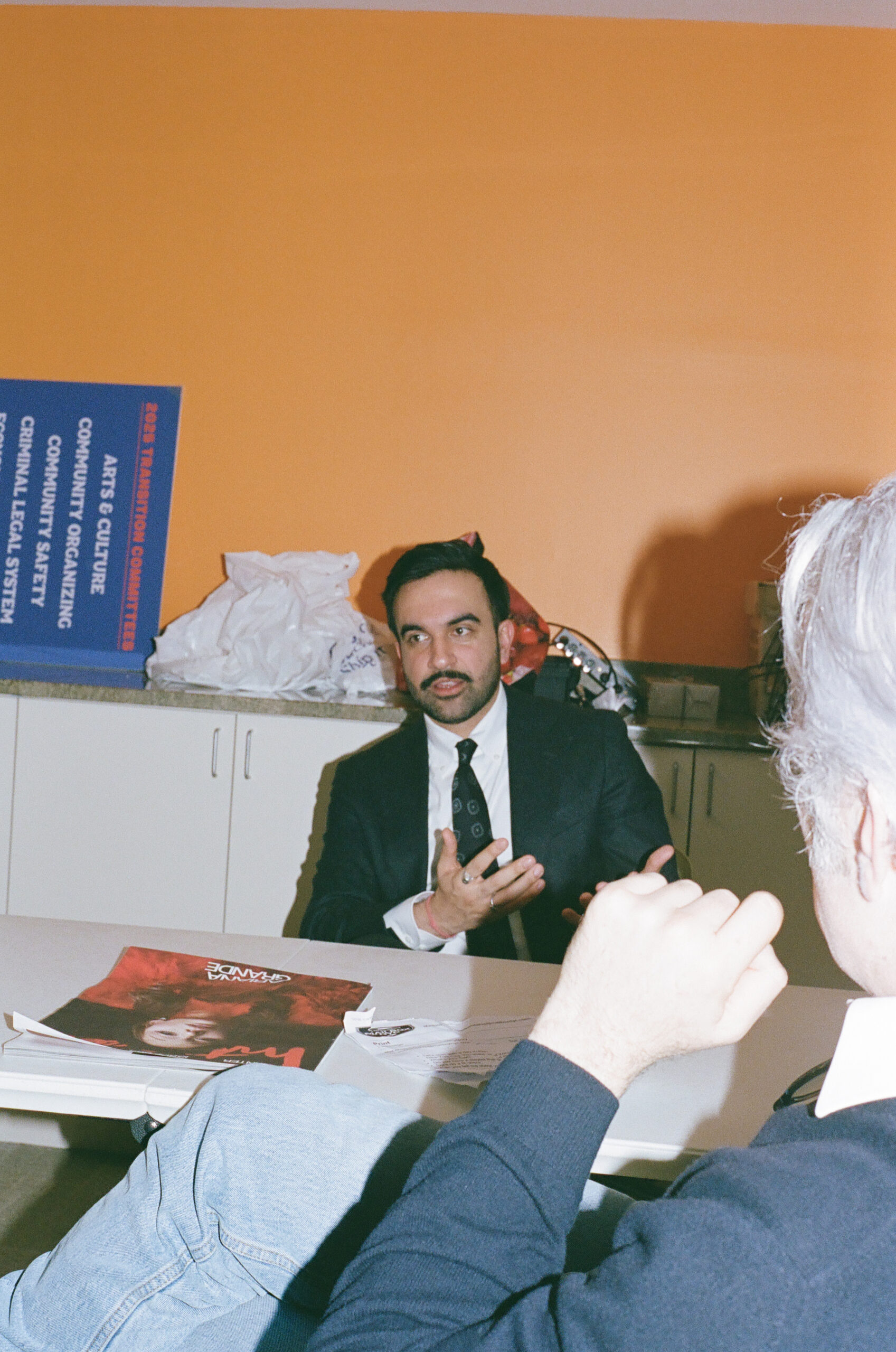
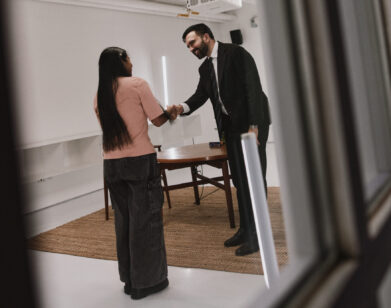
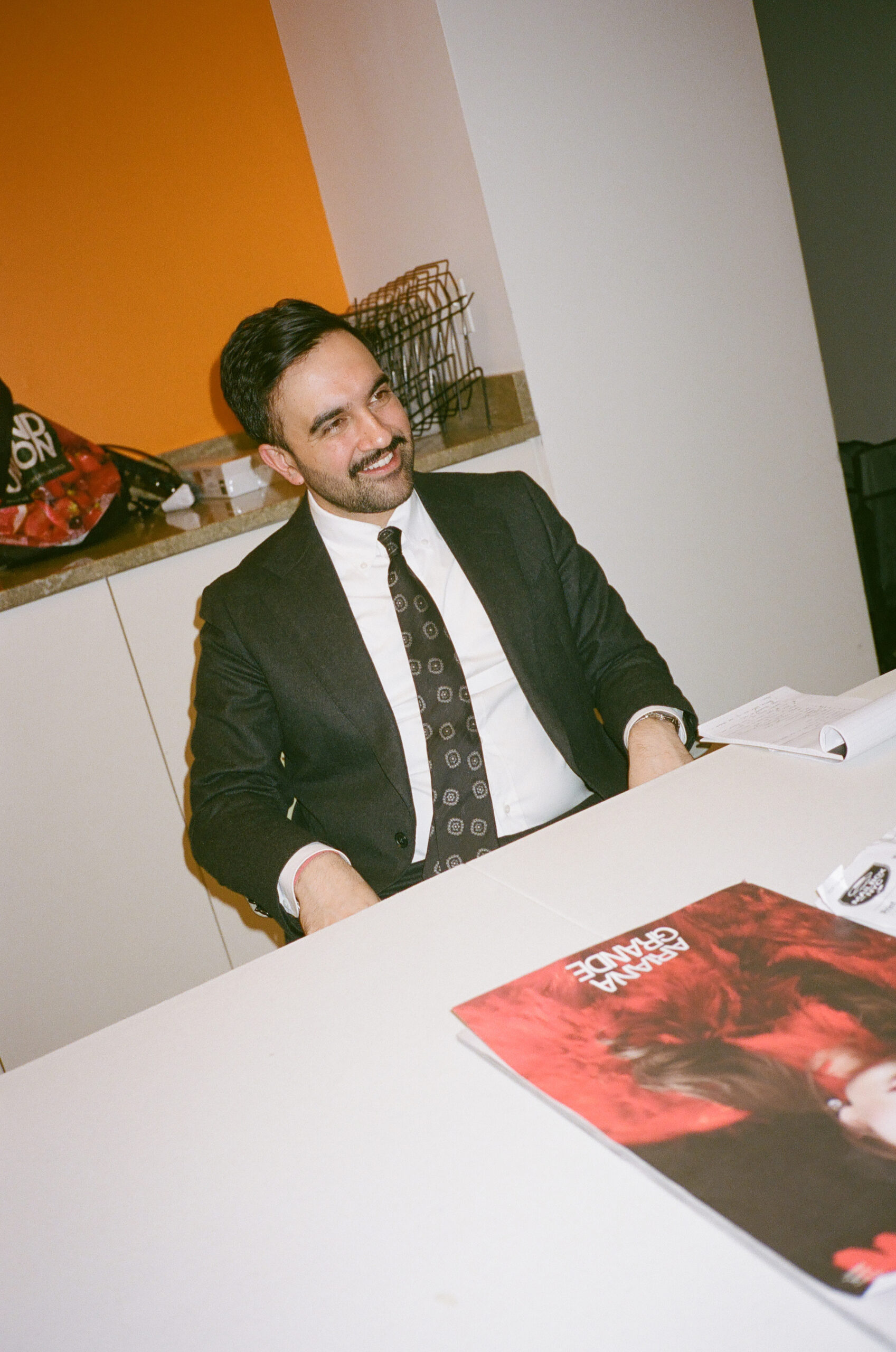
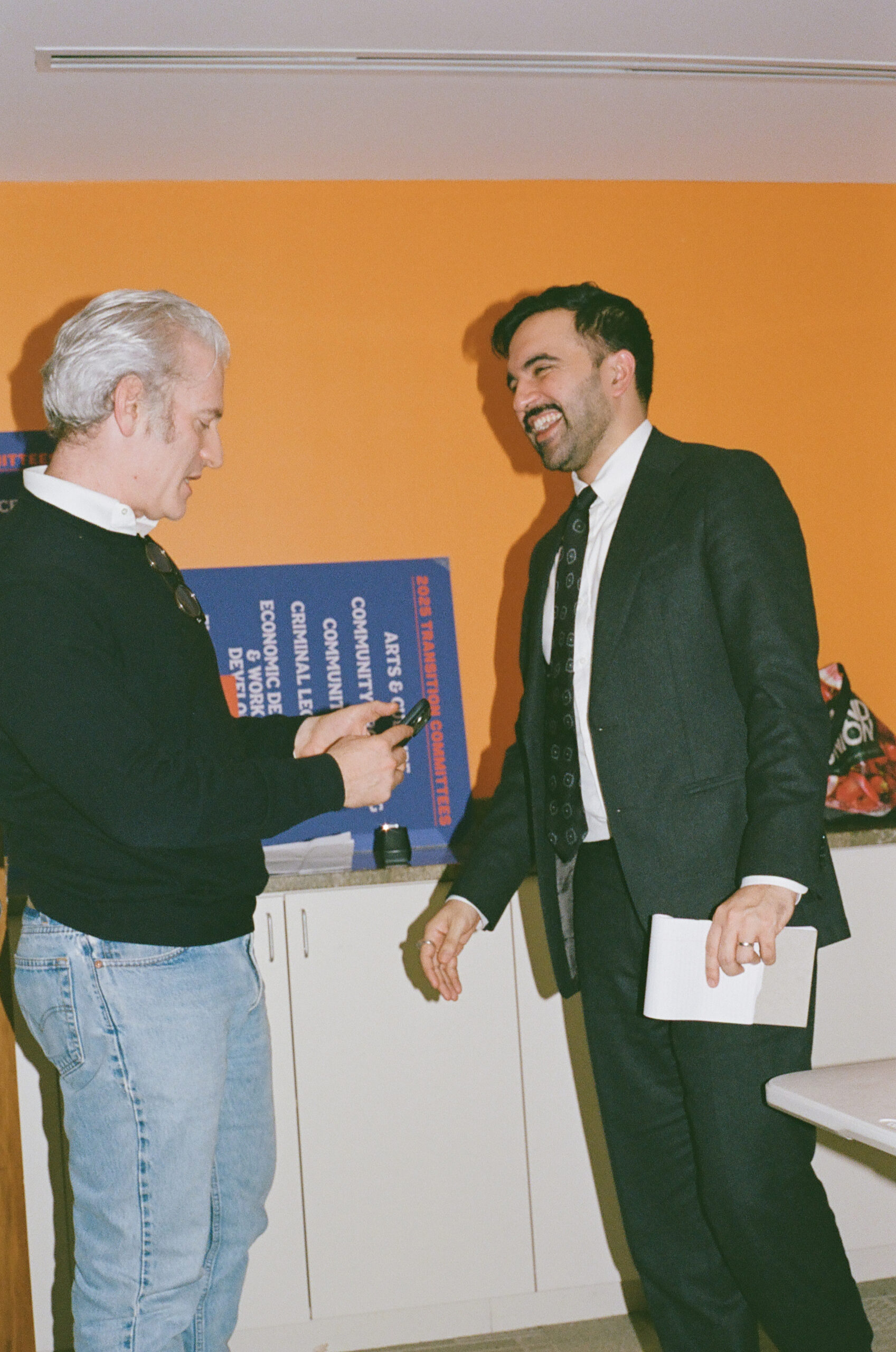
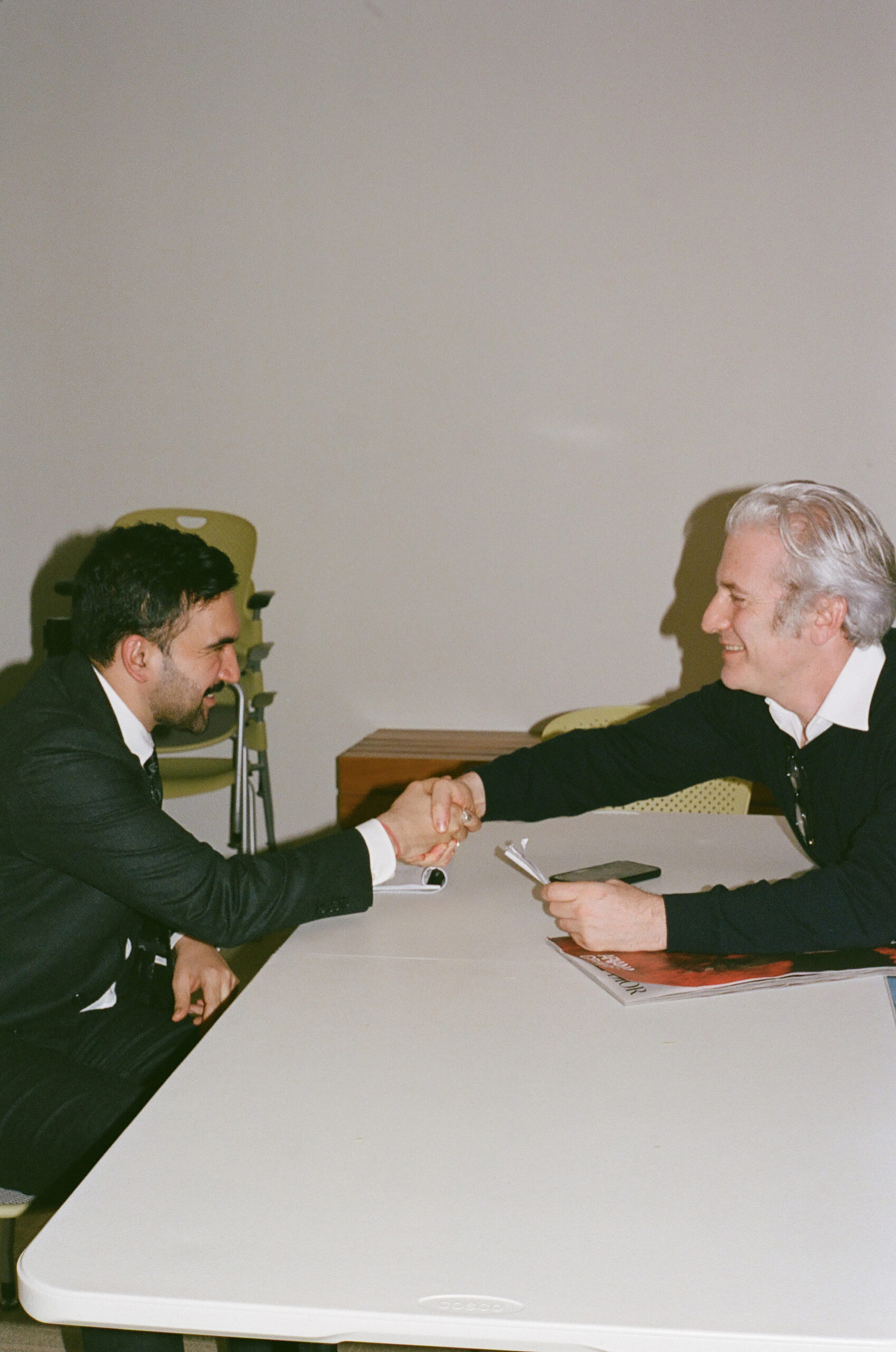
Zohran Mamdani will be sworn in as the new mayor of New York City on January 1. I’ve been angling for some one-on-one time with the Mayor-elect ever since the election, and right before Christmas they gave me 10 minutes with him. We met at the transition office, which looks like a cross between Being John Malkovich and Severance but REAL (we loved the location vibe). I brought Interview photographer Lee Manning along. 10 minutes isn’t much but we hit it off. I fell for him, and can’t wait to see what he does, what the Post cover-lines are, and if he can change our broken city for the better!
———
MEL OTTENBERG: Very nice to meet you.
ZOHRAN MAMDANI: Nice to meet you. Thank you so much.
SPEAKER 3: We’re going to have a little bit less than 10 minutes, so I think the best way is to take photos as we go.
OTTENBERG: Absolutely. I’ll take whatever time I can. Thank you, Emilia, for making it happen. Alright. Let’s go.
MAMDANI: Let’s hit it.
OTTENBERG: So let’s start with the day in the life of Zohran Mamdani, mayor elect of New York City. You wake up, and then what?
MAMDANI: Okay. I wake up, I read my morning book, which is an amalgamation of the day’s news, the status of our press and comms, each of the events I’ll be doing that day, and briefs for each of those events. Then, I’ll get ready. I’ll head towards the office or wherever the first meeting is. During that time of transit, I’ll get on a call with the team to go through the book, to go through the news, to go through the status of everything. Then, it’s a whirlwind of events and meetings throughout the day.
OTTENBERG: Okay.
MAMDANNI: The transition is unique in that there are a lot of internal meetings towards building out the team—a lot of interviews, a lot of vetting, a lot of hiring questions that then has led us to the point where each week we’re announcing two, three, four new appointments.
OTTENBERG: What’s your fuel? What keeps you going?
MAMDANI: On especially tough days?
OTTENBERG: Yes, sure.
MAMDANI: Red Bull.
OTTENBERG: [Laughs] Nice.
MAMDANI: I only allow myself one sugar-free Red Bull a week. On most days though, I would say that New Yorkers have put their trust in us, and they have an immense hope about what politics can mean and what it can represent in their lives. That hope is both a responsibility and an opportunity for us, and those fleeting moments between meetings, when I see New Yorkers and what this means to them, that’s the fuel carrying me.
OTTENBERG: That’s beautiful. Also, sugar-free Red Bull is my signature drink.
MAMDANI: [Laughs]
OTTENBERG: Do you have a playlist that helps you get hyped?
MAMDANI: Oh, man. I have a few songs. My wife prefers calmer music in the morning. I, for some reason, want to listen to Kim Petras or Lil Wayne or Madonna.
OTTENBERG: Beautiful.
MAMDANI: [Laughs] At eight in the morning, it doesn’t make much sense.
OTTENBERG: I love that. Kim Petras was in our last issue.
MAMDANI: “Like Your Look” is a great song.
OTTENBERG: [Laughs] Yes. Okay, let’s talk about your style. Tell me about it. What are you wearing right now? Suitsupply?
MAMDANI: The shirt and the thermal are from Uniqlo. Everything else, the tie and the suit, is from Suitsupply.
OTTENBERG: How do you describe your style?
MAMDANI: What are the options? I’m kind of just thinking in casual, business casual, and formal. Formal? I don’t know. [Laughs]
OTTENBERG: Professional?
MAMDANI: Professional.
OTTENBERG: It’s a Sunday. You’re wearing a suit. Let’s go with professional. Alright. So I went to the mayor’s listening event last week, where you talked to a ton of New Yorkers about their—
MAMDANI: I loved that piece, by the way. The photos were beautiful.
OTTENBERG: Oh, I’m so glad. It was really moving. What stuck with you from it?
MAMDANI: The stories that people told me about their lives. People shared moments that you often miss in the whirlwind of politics. They came there with their children, they came there with their parents. Undocumented New Yorkers came there to tell me about the fear that they live with, the exhaustion, the anxiety. A mother came in with her seven-year-old who told me how sad he was every time he saw a homeless person on the train, and how could we actually not provide housing to them? It was so New York, in that some people spoke to me about issues that we’ve been fighting for decades, and others came to talk to me about, “Why is the construction on the Van Wyck during the day when it used to be during the night?” I think that’s what politics has to be. No issue is too big and no concern is too small. We can care about all of it, because that’s what people’s lives are like, and I loved it. I really loved it.
OTTENBERG: Everyone I talked to afterwards told me that you really knew your shit, which was exciting. If I was in that room with you, I would have asked you about two New York problems that drive me crazy.
MAMDANI: Hit me.
OTTENBERG: Empty storefronts and scaffolding. Can we talk about these?
MAMDANI: We absolutely can.
OTTENBERG: The empty storefronts, Zohran, feels like a scam against the people. They’d rather push everyone out and take a tax break. Now, we don’t have neighborhoods. Then, you go to somewhere like Paris, and it’s like everything is a small business—
MAMDANI: The size of the businesses are also, quite literally, physically smaller. We have a lot less variety than other cities.
OTTENBERG: Yes.
MAMDANI: I think that storefront vacancies are a problem, not just in terms of the economy, but also in terms of the vibrancy of the public square and even public safety. We always think about above ground businesses, but even in terms of underground MTA commercial vacancies, one of the more recent estimates had it close to 70 percent, which creates a larger sense of isolation.
OTTENBERG: Yes.
MAMDANI: I’m very interested in providing affirmative services to small businesses to keep them in the spaces that they’ve leased, because what we’re also seeing, especially in Astoria, is the transition where a small business owner had a handshake agreement with the landlord, the landlord passes on the business to the next generation, and now that handshake agreement is gone.
OTTENBERG: Right.
MAMDANI: And now there’s a lease put in front of them with a 100 percent rent increase and they cannot afford it. What we’re often losing is not just a small business, but a community institution, and so it’s ensuring that we’re providing more than $10 million in additional assistance for one-to-one case work for small businesses. We’re cutting fines and fees for small businesses by 50 percent, and then we’re looking at approaches that can ensure that we’re incentivizing keeping a storefront active as opposed to having it be vacant.
OTTENBERG: Awesome. I’m going to skip the scaffolding question, because that was good.
MAMDANI: Oh. Scaffolding is incredibly important.
OTTENBERG: Okay. Let’s go. Scaffolding drives me fucking crazy. In How To with John Wilson they say it’s a $6 billion economy. Zohran, is that true?
MAMDANI: I don’t know the fiscals. But what I can tell you is that scaffolding is not just an issue in the private market. There are city buildings that have had scaffolding up for years, and that means we have an opportunity to fix something early to prove that this can actually work. That’s going to be one of our first things that we do.
OTTENBERG: That’s very exciting. Okay.
Crew: We have until 5:30.
OTTENBERG: Okay, thank you. The kids in the office tell me that millennial optimism is huge right now. Did you know that?
MAMDANI: [Laughs] What does that mean?
OTTENBERG: It means they’re like, “Oh my god. Hope 2008.” We have nostalgia for that. I feel like you’re really giving millennial optimism. How do you stay optimistic?
MAMDANI: I think I find it in other people. The excitement that others have about this moment—it’s contagious in the best way.
OTTENBERG: Yes.
MAMDANI: And what made the campaign something that I could weather, whether in easy moments or the difficult ones, was that it all came back to New York City. We all love this city so much.
OTTENBERG: We do.
MAMDANI: And we can reckon with its failures while always remembering what makes us love it.
OTTENBERG: I love it. You can get into any restaurant in New York City now. Anywhere new you want to go?
MAMDANI: I went to a Moroccan restaurant today for lunch, Dar Lbahja. You’ve got to go. They have this, it’s a pastry with chicken in it, so it’s savory and sweet. I’ve never had that before.
OTTENBERG: I’m going. You ran on affordability. What can you, the mayor of New York, do to make the city more affordable on a day-to-day basis?
MAMDANI: Freezing the rent for rent stabilized sense, making buses, not just fast, but free, and delivering universal childcare. Let’s talk about it.
OTTENBERG: Go for it.
MAMDANI: After housing, childcare is the leading cause of New Yorkers leaving the city. We are talking about an average cost of $22,500 a year to take care of a single toddler. If you provide universal childcare, you are putting that money back into New Yorker’s pockets, which means that they can actually afford not just to live here, but to build a family here.
OTTENBERG: What do you miss most about being an anonymous guy? It wasn’t so long ago.
MAMDANI: That I could just go anywhere at any time without having to schedule it, prep for it. I can still do those things. I just have to take a little extra time.
OTTENBERG: Okay. Has anyone made you really starstruck this year?
MAMDANI: I was doing the Adam Friedland show and he played a video of a few arsenal players for me. I’m a big Arsenal fan. I did not expect that. It’s just absurd to hear them say my name, that they know I exist.
OTTENBERG: Is woke back?
MAMDANI: [Laughs] We’re here.
OTTENBERG: Okay. I love it. Thank you so much.
MAMDANI: Thank you, Mel.
OTTENBERG: Have a good one.