


COWGIRL
Michelle Randolph and Demi Moore on Escaping the Beauty Trap


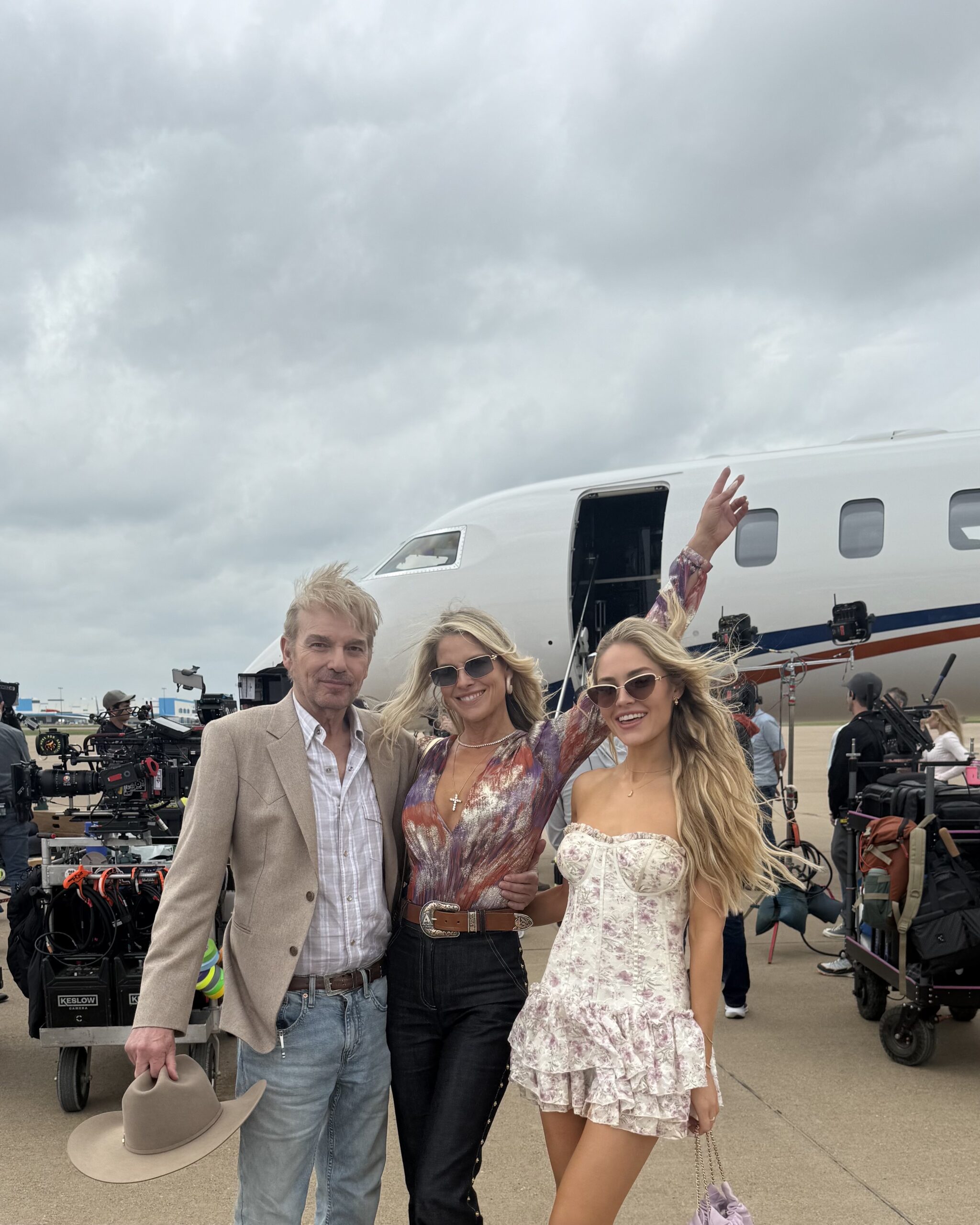
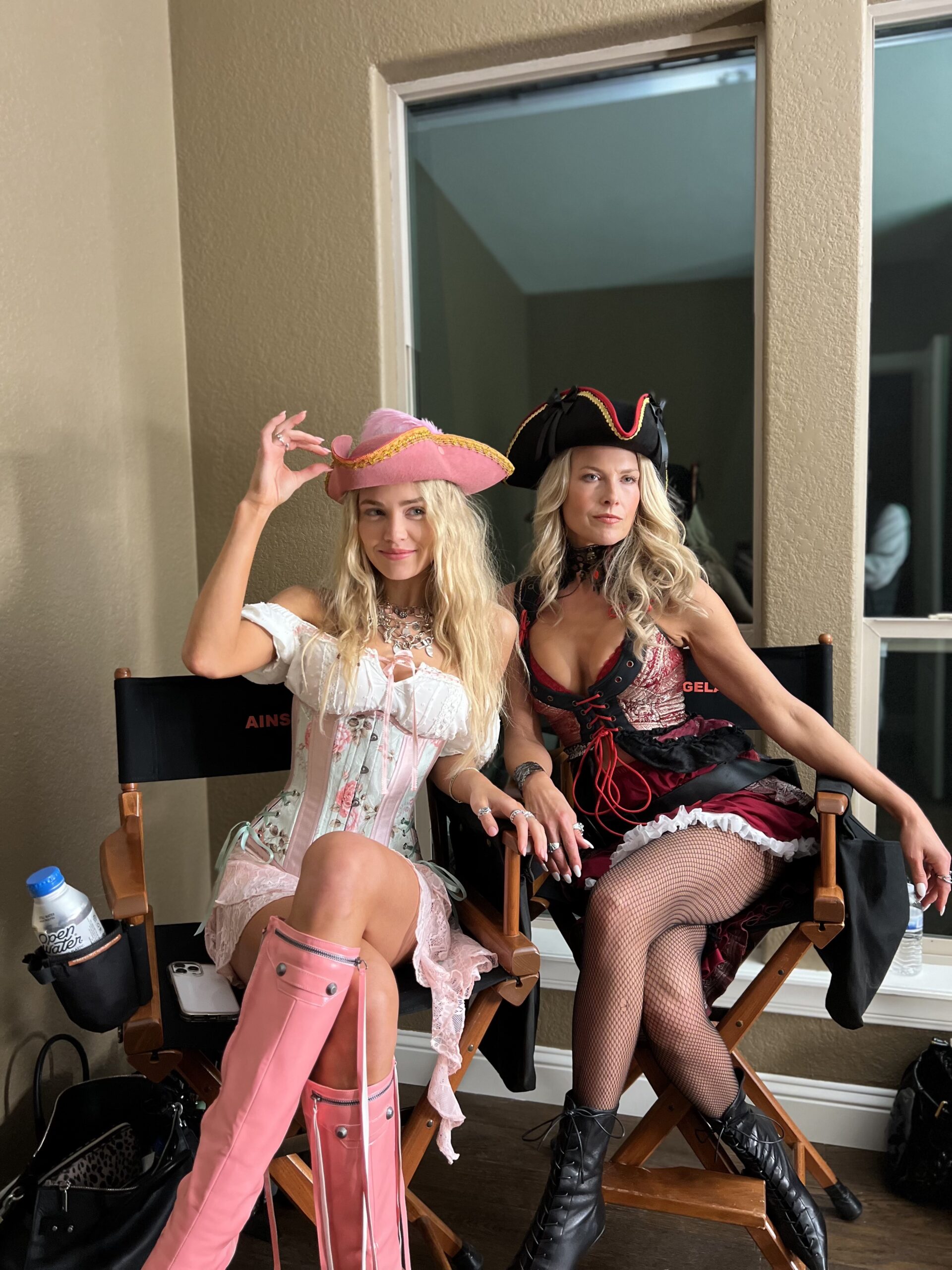
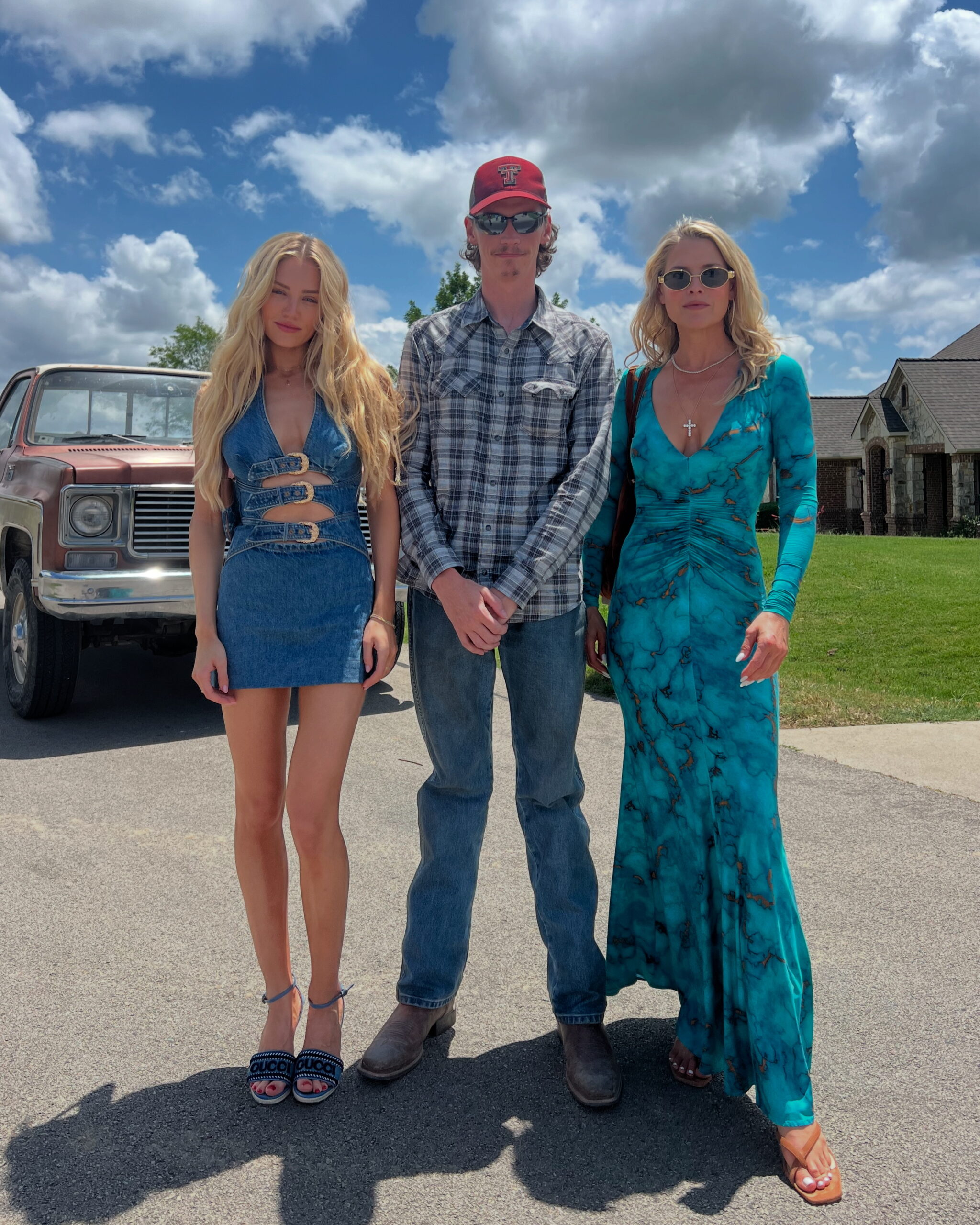
In Taylor Sheridan’s testosterone-heavy universe, softness is usually a liability. But Michelle Randolph is becoming an expert at wielding it to her advantage. After breaking out as the resilient Elizabeth Strafford in the Yellowstone prequel 1923, the 28-year-old actor picked up another Sheridan credit with Landman, the smash-hit series on Paramount+. As Ainsley, the sheltered, vivacious daughter of Tommy Norris (the crisis-managing oilman played by Billy Bob Thornton), Randolph walks a razor’s edge. On the surface, her character is naive, bubbly, and seemingly oblivious to the serious stakes unfolding all around her. But beneath all that gloss, Randolph’s doing the heavy lifting required to humanize a character the audience is practically dared to underestimate. It’s a specific kind of tightrope walk that her co-star Demi Moore knows intimately. Moore, who plays the show’s steely, grieving oil tycoon Cami Miller, has spent decades dismantling the very boxes Randolph is currently fighting to escape. Although the two rarely share the frame, they do share a mutual understanding of what it takes to survive in Hollywood. Ahead of the show’s second season, the co-stars connected to discuss social media toxicity, age versus casting, and why, as Moore puts it, you have to be “really smart to play dumb.”
———
MICHELLE RANDOLPH: I feel like I should be interviewing you.
DEMI MOORE: We’ll just think of it as a mutual conversation. It’s such a treat for me to be able to do this with you because so far we haven’t really had any scenes together. So this is really fun for me.
RANDOLPH: I feel the same way. It’s so bizarre because when you’re on the same show as someone, you think you’re going to interact with them all the time. We had maybe one scene together this year?
MOORE: Did we have any?
RANDOLPH: We had that one scene at the White Elephant.
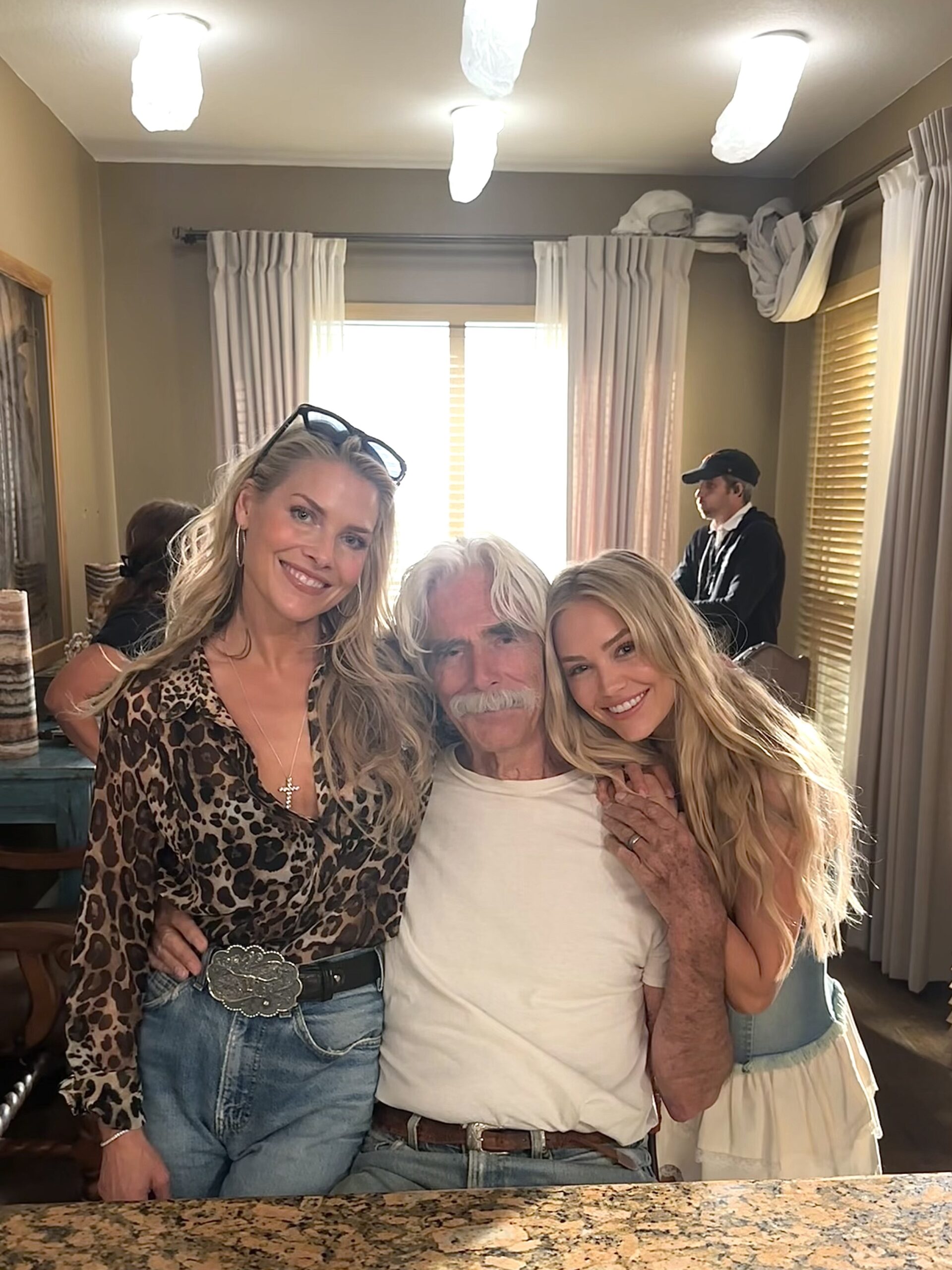
MOORE: You’re right. Where we got to dance with Sam Elliott.
RANDOLPH: Yes. Apparently that was written in the stars, the luckiest day of the year. I remember calling my agent after, and I was like, “I think it really is the luckiest day of the year,” because I was on set with you and Sam, Billy [Bob Thornton], Andy [Garcia], and Ali [Larter]. I was just like, “Yep, it’s a pretty good day.”
MOORE: Same for me because, obviously, so much of mine was isolated.
RANDOLPH: Right. It’s fun to do the big group scenes.
MOORE: So let’s see. What was the moment that you wanted to become an actor?
RANDOLPH: To be honest, growing up I did not know that it was even an option. No one in my life was in the industry. When I moved to Huntington Beach when I was 16, I was all of a sudden around all these creatives. Everyone was a musician or a surfer, all these unconventional jobs. I got scouted to model, and it was never something I wanted to do long-term. I was in college, and one of my modeling agents was like, “You know what? You should just try acting.” I wouldn’t regard myself as shy, but I definitely think I’m easily embarrassed. And sometimes I think acting can be one of the most embarrassing things if you really think about it. Sometimes on set I’m sitting there like, we’re just adults playing make-believe in this room right now.
MOORE: That’s very true. But it’s also a very vulnerable experience, because our instrument is ourself.
RANDOLPH: Totally. When I was younger, I was still figuring out who I was, so to play another person was so foreign to me. But I got on set for the first time and I was like, “Wait, this is so fun. I’m curious about this.” But I knew how little I knew. So after that, I switched my major to film.
MOORE: And this was at Arizona [State University]?
RANDOLPH: Yeah. They have a great online program, and I couldn’t go in because I was working to pay for college, so I had the best of both worlds. But I did miss out on a traditional college experience.
MOORE: You and I both, because I didn’t finish high school.
RANDOLPH: Well, it’s worked out for you. [Laughs]
MOORE: I think we’re doing okay.
RANDOLPH: We are.
MOORE: But I do appreciate that you stuck it out because there’s an incredible aspect to what we can bring to our roles through expanded education in other areas.
RANDOLPH: Totally. I feel like I’m a good student, and I’m constantly a student when I’m on set and getting a new character. The tools that I learned in school, I do continuously use, but I wish I retained more because I was also just wanting to finish. I think if I went back, I would appreciate school even more.
MOORE: That’s true of life in many respects. When we have a little distance, we’re not in such a rush to get where we’re going. We’re actually more comfortable being where we are.
RANDOLPH: Do you feel that way with characters—that you get really comfortable in a certain character, and then you have to start over when you get onto a new set?
MOORE: Definitely. Just as an example, for everybody, it was the second season, but in a weird way, for me, it was my first. So I really felt like I was still trying to find my sea legs, who I was, where I fit in. We didn’t have all the scripts, we didn’t know where we were going. But I want to talk to you about something, because I think it’s such an important thing for people to truly understand: It takes incredible intelligence to play someone who’s extremely naive, who lacks sophistication. People can sometimes confuse who they think someone is with who they’re playing, and my experience of you is that you’re extremely intelligent, an extremely hard worker, and extremely dedicated. So I want to talk about what that experience is for you. I’m sure you’ve gotten a mix of some feminist negativity to some who have praised you. I have friends from Texas who have said, “Oh, I know that girl.” Is it joyous, is it challenging?
RANDOLPH: Yeah, it’s all of the above. I’ve had to stop letting myself get defensive over my character because when you spend so much time in someone else’s head space, you start to understand their logic. For Ainsley, I couldn’t be more different than her, but I also adore her. I like to say she’s not dumb, she just has limited life experience, and we’re seeing her in her most formative years. How lucky to play a character who is continually evolving. It’s challenged me in a lot of ways—what is on the page is so different than what you see on screen. I’ve tried to add in how genuine and sincere she is so there are more redeeming qualities.
MOORE: I agree with you. This is really to your credit—it isn’t about somebody who’s stupid; it’s just somebody who’s had a more limited life experience.
RANDOLPH: I think her mom kept her in a bubble for a reason, and that’s not necessarily her fault. If that continues into her early 20s, then that starts to become her fault. But right now, she hasn’t had any independence. I didn’t realize this about myself, but two of the characters that I’ve played in Taylor [Sheridan]’s shows—1923 and Landman—have, on the page, been super unlikable. Maybe that’s just my perception. I thought, “Oh my gosh, people are going to despise these characters. What can I do to make them likable and for people to be able to see them from my perspective?” And so I worked really hard at it. That’s why I think with Ainsley, her being sweet is so important, or else she’s just this bratty teenage girl who has no redeeming qualities.
MOORE: Do you feel like people are ultimately getting that?
RANDOLPH: It’s really mixed. People either love or hate the female characters on Taylor’s shows. [Laughs]
MOORE: But that’s what’s juicy about the fact that they’re so nuanced. They aren’t only one thing.
RANDOLPH: Yeah. Do you feel that way about your character as well?
MOORE: Like you, I also feel like she’s evolving. We just started to get to know her, and we only know her as this grieving widow who’s been thrust into having to rescue a potentially dying company. But we don’t really know everything yet of who she is. And that’s one of the brilliant things about Taylor’s writing— it always takes these unexpected turns. It’s like he’s building a house.
RANDOLPH: It’s challenging to have a character and have no idea what’s going to happen.
MOORE: And it was different from the first season to the second because in the first we had everything. I look at things and go, “Well, if I don’t have it, then I’m just going to make that work for me.” So much for me was dealing with uncertainty, and so I just brought that into what I was playing.
RANDOLPH: You used it.
MOORE: Yeah. I just made it part of what Cami’s experience was, because I didn’t know where it was going.
RANDOLPH: Oh, how cool. You see it when you watch it.
MOORE: I hope so. You did 1923, how different was that for you over what we’re doing?
RANDOLPH: They couldn’t be more different. The only similarity is that Taylor wrote them. It was bizarre. I filmed 1923 into Landman, then 1923, and then Landman. I was hopping from one character to the next. And after filming Landman, when I went to film season 2 of 1923, I tried to use some of the techniques that I used for Ainsley, and I realized, “This doesn’t work.” They’re just different, so I got to use different tools as an actor, which is rare. It’s so easy to get typecast nowadays. That’s actually something I’ve been dying to ask you—I watched your movie About Last Night.
MOORE: Oh my god.
RANDOLPH: The iconic line: “I love you. It’ll pass.”
MOORE: Gosh, I have not seen it in so long, but keep going.
RANDOLPH: It’s a huge iconic line from Fleabag, and it’s crazy because it’s in your movie first.
MOORE: Oh, wow. I remember that.
RANDOLPH: I love that line.
MOORE: Interesting.
RANDOLPH: But how do you go from that to then being taken seriously in completely different roles, when people really just want to see you as one thing?
MOORE: You could say it’s about being underestimated based on your beauty, but it’s really about being limited by being seen as beautiful and thereby somehow it negating that you actually have depth and dimension. You’re at the very beginning of this journey, and so I’m just wondering: do you feel like there have been any trappings with that so far, or do you feel like what comes your way is much more based on your body and your beauty?
RANDOLPH: Yes. I have to actively work against the box that people naturally want to put me in, but everyone gets put in a box, so I don’t think that’s a unique experience for me. Also, what I do have is the fact that I got to do 1923 and Ainsley in the same year. I think it made people realize I’m capable of more than just playing the young, vivacious teenage girl. The box that I actually find myself in more is that I’m 28, and I want to play roles that reflect the experiences I’m going through in my life, instead of playing these characters who don’t know a lot. I’ve always played characters that are asking questions and learning things for the first time. I haven’t gotten to be the teacher. I know that will come—I hope I have a long career.
MOORE: What I hear you saying is you’d like to play someone that’s your age and having your experiences, as opposed to a teenager—by the way, I’m 63 and still trying to figure it out. But to your point, I don’t know if people realize that you are not a teenager.
RANDOLPH: Right. This is the last time I’ll probably ever play a teenager, so I better enjoy it. [Laughs]
MOORE: Well, there’s no rush. But I just really want to praise you because I feel like you so completely embody the essence of a teenager, which is not easy to do when you already have a certain level of life experience. I keep hammering this—it takes a lot of intelligence to be able to play somebody who’s naive or less sophisticated. The cruder way of saying it is that you have to be really smart to play dumb.
RANDOLPH: That means more than you know, truly.
MOORE: But by the way, it’s the truth.
RANDOLPH: It’s hard to play dumb. [Laughs]
MOORE: Billy Bob Thornton called you fearless. Do you feel fearless or are you just good at pretending to be?
RANDOLPH: I definitely don’t feel fearless. That’s so nice. I’d love to know the context in which she said that.
MOORE: I have no idea, but what a lovely thing to say.
RANDOLPH: That’s so kind. As Michelle, absolutely not. But when I’m on set with people who I trust, I feel more fearless. A lot of my scenes are with Billy and Ali on the show, and they really emboldened me. But naturally, absolutely not. I’m an anxious person.
MOORE: We all have fear so it’s an illusion to say that we’re fearless. But what I think he’s saying is that courage is basically having the willingness to step in and face your fear.
RANDOLPH: You know what? I’m fearless in that way, but I am naturally more of a shy person. I don’t like to embarrass myself in my life. Like public speaking terrifies me, answering questions about myself terrifies me. But I love it. I’m addicted to that.
MOORE: Because that’s a great quality, which has always been one of my driving motivators—pushing myself out of my comfort zone, because I know that’s the only place where I will ultimately grow, not just professionally but as a person. The more I can face whatever enormous fear or something that I may make bigger than it is—when I get to the other side, I’m always better for it.
RANDOLPH: Totally. In this job, you’re permanently out of your comfort zone.
MOORE: What do you wish people didn’t assume about you?
RANDOLPH: Ew. I don’t know what people assume about me.
MOORE: Good answer.
RANDOLPH: And I don’t know if I want to.
MOORE: What would you like them to know about who you are that hasn’t had a chance yet to reveal itself?
RANDOLPH: We live in a world where we’re all chronically online, and it’s so easy to sit from afar on your phone and judge people. I care a lot about my career and my characters. Everything I do is very intentional.
MOORE: Do you give a lot of weight to what your experience is online, or is it something that you can roll with?
RANDOLPH: No. I’m the first generation that truly grew up with social media, and you post embarrassing things when you’re younger. You’re still figuring out who you are, and people think they know you. At a young age I became very aware that I was perceived and I was becoming the person that I thought people wanted me to be, instead of who I naturally am. Before I started acting full-time, I did a lot of social media stuff.
MOORE: Right.
RANDOLPH: I don’t think it was productive in me developing as a person.
MOORE: That makes a lot of sense. My kids also were right at the early stages, and I can really see the impact that it’s had in relating to themselves, their self-esteem, that measure of value, and the extra effort it takes to go back to your own center.
RANDOLPH: And doing things just to fit in. I guess that’s something that everyone experiences, but online it’s always in your face. I had to really unlearn caring so much about what people thought of me.
MOORE: I think that’s an ongoing process.
RANDOLPH: Yeah. I chose this career path.
DEMI MOORE: Letting go of what other people think, not giving it power, not seeking external validation, when the very nature of our work is for other people. It’s a weird double-edged sword—we’re not doing it in a bubble, we’re doing it on a mass scale. What do you do to help yourself stay in a more grounded, centered place?
RANDOLPH: Honestly, I have to just shut a certain part of my brain off, and I’ve gotten better at doing it. I’ve gotten a lot better at not being on my phone as much, trying to be really present in just my life in general. And my family keeps me really, really grounded.
MOORE: I was just going to ask if that’s a big part of what really helps you.
RANDOLPH: Most people in my life are not in the industry at all. They don’t really understand, and it brings me back to reality because you go on these crazy press tours and you’re doing all these fabulous things, and then it’s like I go home and my parents are like, “Unload the dishwasher, please.”
MOORE: [Laughs] I love that. That’s keeping it real. I couldn’t agree with you more. I mean, my family is my center point. It’s what really matters.
RANDOLPH: Mm-hmm. And you have two daughters?
MOORE: Three. And a granddaughter.
RANDOLPH: Special. I haven’t met them yet.
MOORE: Well, because we were off in Fort Worth.
RANDOLPH: True.
MOORE: Is there going to be more 1923? Give us the scoop.
RANDOLPH: I keep getting asked about 1944.
MOORE: Oh, my god. A period piece? Write me in.
RANDOLPH: You should be in it.
MOORE: I love the hairdos and clothes. Come on.
RANDOLPH: Tim Muir does the 1923 hairstyles too, and he’s so good. I got to wear a wig for the first time. But yeah, we should both be in 1944.
MOORE: Oh, I know.
RANDOLPH: I guess a good rounding out is that we’re so lucky. Working with Taylor has been the peak of my career thus far. Not only is he just a very prolific showrunner or writer, but I can’t believe the tools we’re given on these shows to help our performance.
MOORE: To also add in—-because obviously we all do the press and we’re all like, “Yeah, we all get along great.” It is rare to be with a group where we actually all genuinely enjoy hanging out in our off time. Going to dinner, just sitting around. That’s a really special part of the alchemy that exists. It really translates in the show with all of us, even if we’re not in that many scenes together.
RANDOLPH: I agree. Thank you so much for doing this.
MOORE: Oh, honey. You’re so welcome.
RANDOLPH: I can’t wait to see you in-person again and actually have another conversation that’s not recorded.
MOORE: When I get back to LA.
RANDOLPH: Okay. Yes, let me know.