


PSYCHADELLIC
Nick Kivlen on DIY, Nostalgia, and Starting Over


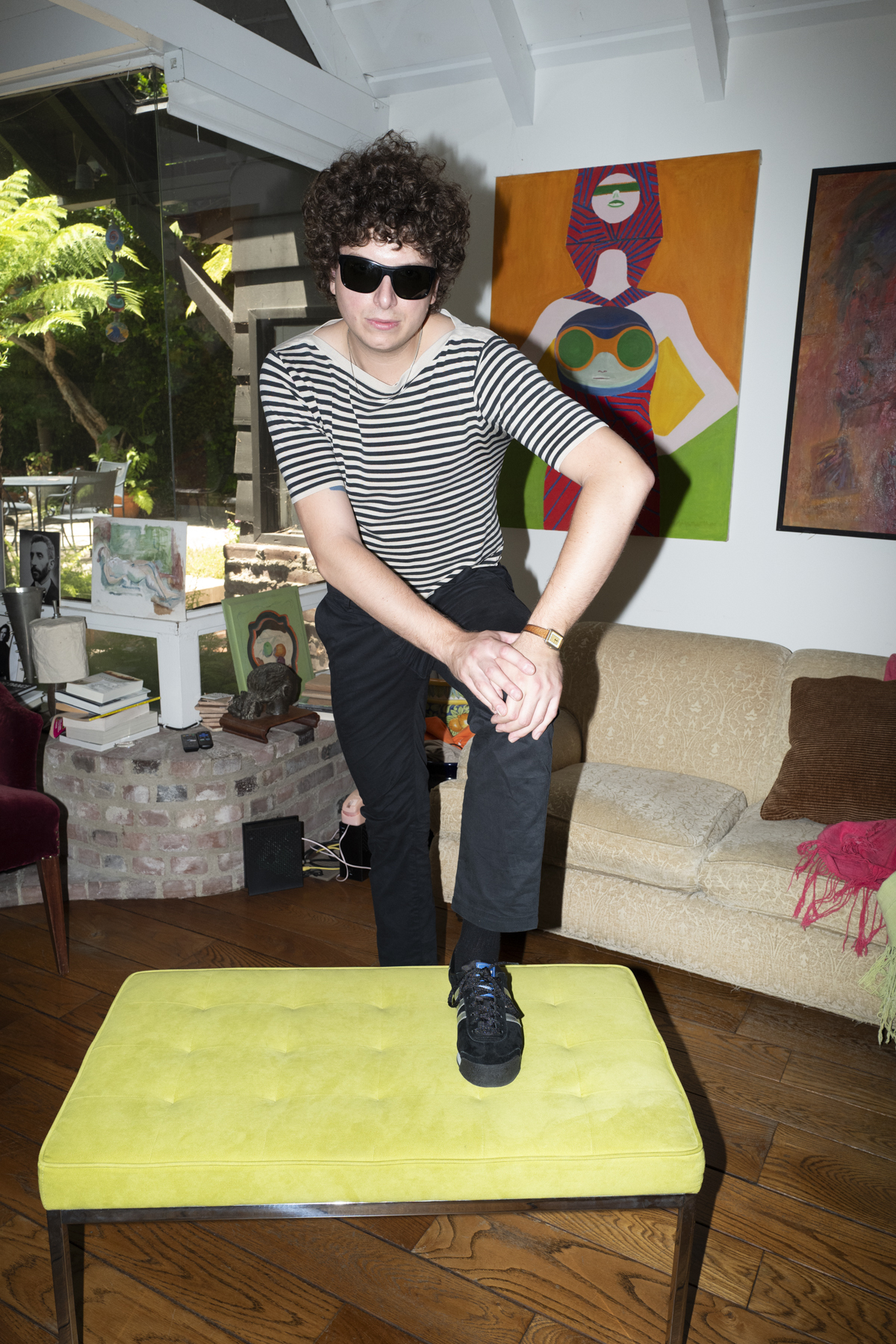
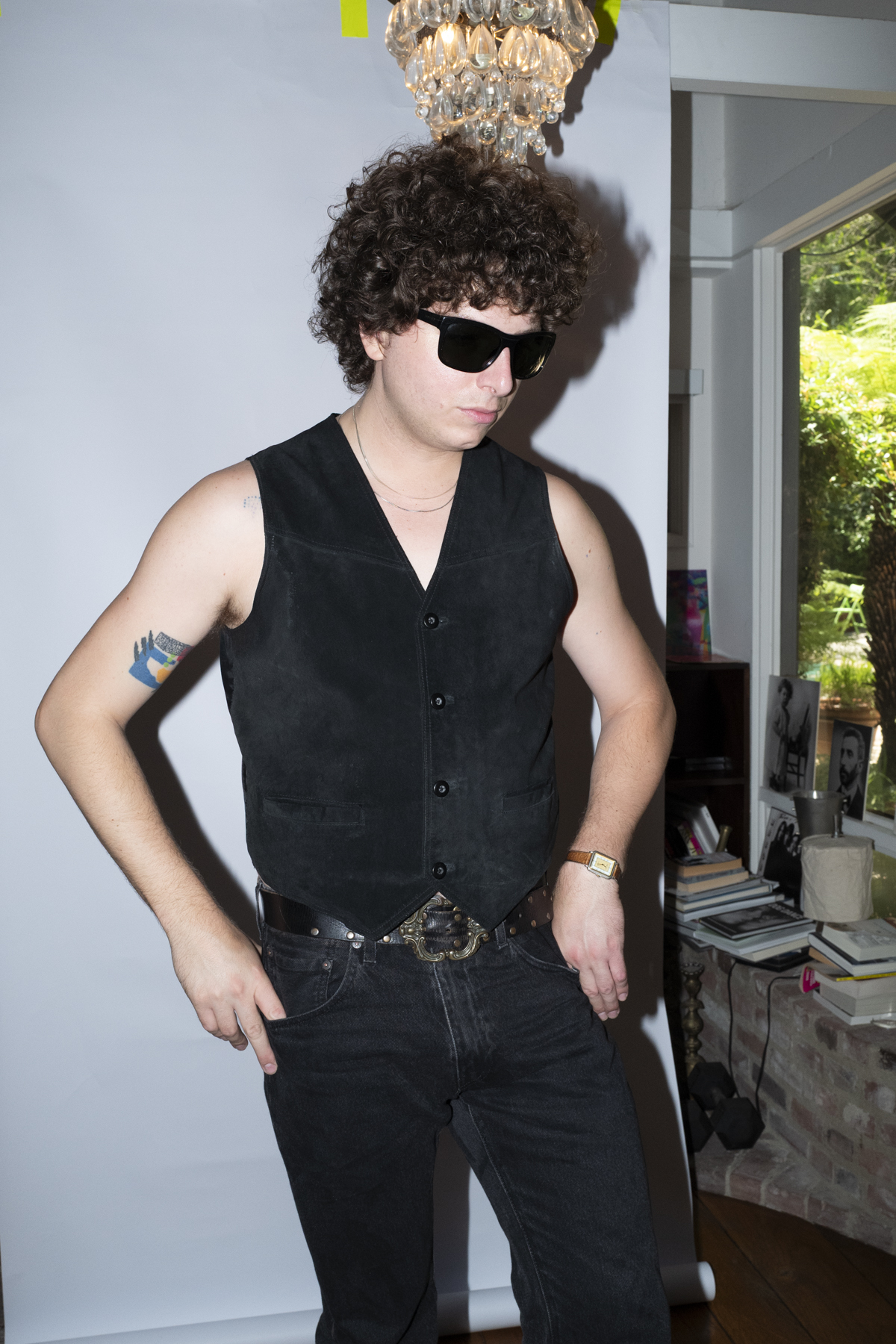
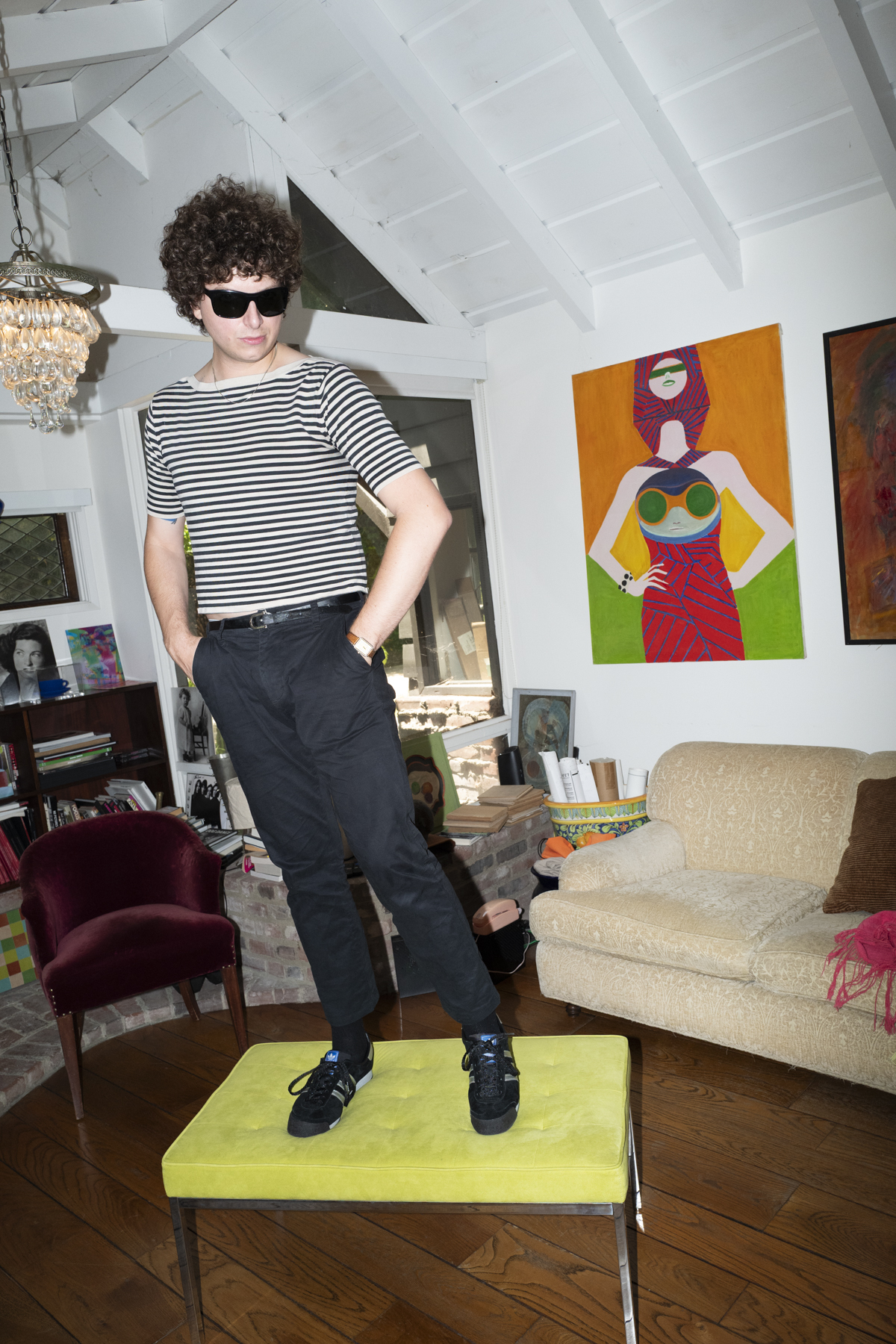
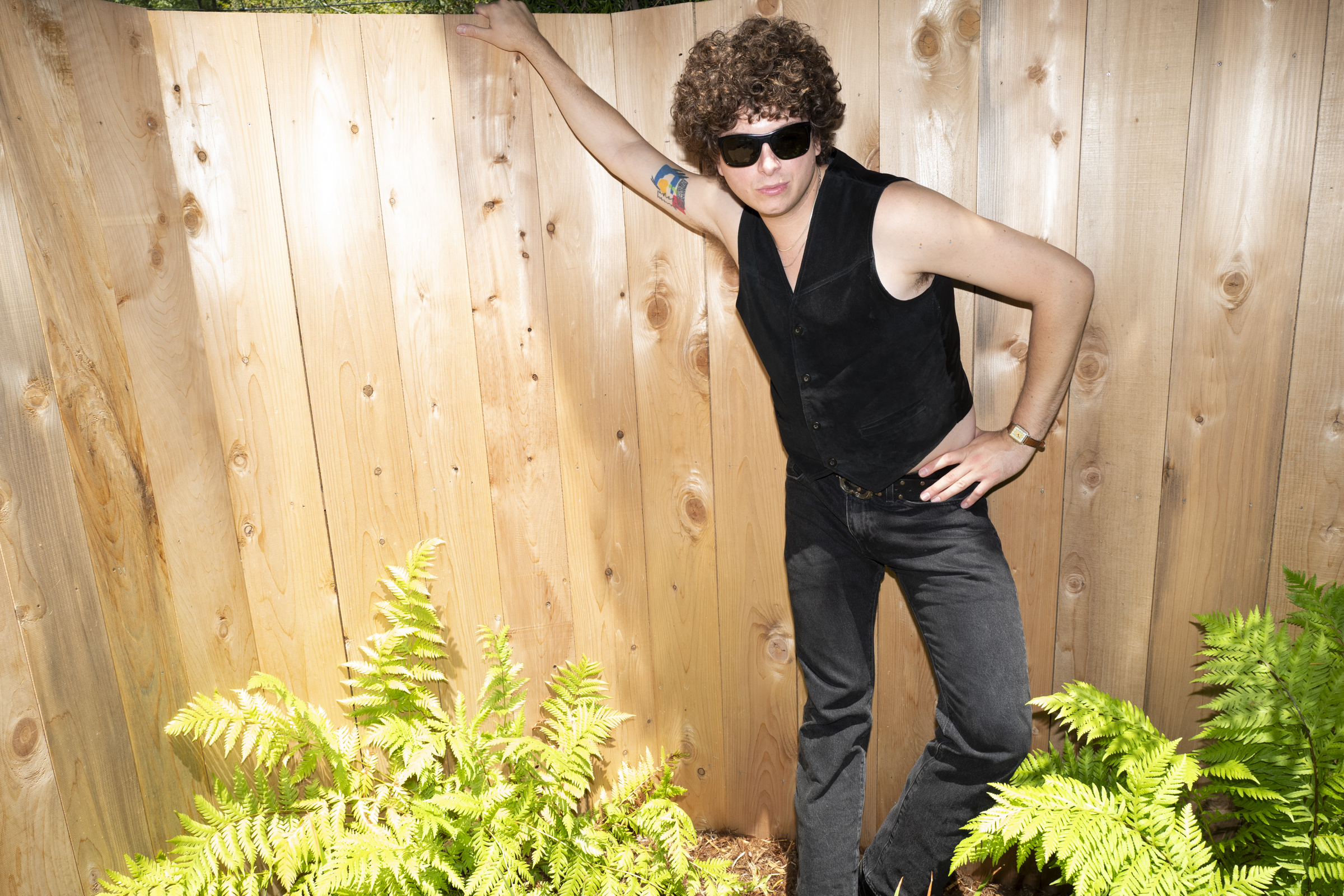
All photos courtesy of Brad Elterman.
Nick Kivlen came of age in the NYC underground before the Williamsburg waterfront became a glass-walled shopping district. (Check him out as a high schooler at 285 Kent crowd-surfing at an early DIIV concert.) Soon enough, Kivlen was in a band of his own, the rock trio Sunflower Bean, who were once dubbed New York’s hardest working band for playing (at least) 50 shows in the city in one calendar year. Ahead of the group’s fourth record, 2025’s Mortal Primetime, Kivlen relocated to Los Angeles. “I was starting to feel a little bit like a townie,” says the 31-year-old Long Island native. “By the time I was living in Bushwick, I was at Baby’s All Right for what felt like 15 years. I’m so grateful, but at a certain point, you want to feel like the world is bigger than Brooklyn.”
Kivlen’s debut solo album, Addicted to the Sunset, is thoroughly Californian. Full of psychedelic guitars and hazy harmonies, it’s a breezy, home-produced, folk-rock record that touches on the promises and pitfalls of nostalgia. On the cover, Kivlen is photographed in front of a warm desert horizon, his hands semi-transparently covering his eyes. The image hints at the album’s metaphysical bent, with songs that meditate on time, space, and the power of the universe. Ahead of the release, Kivlen spoke to me about what it all really means.
MONDAY 9:00 AM JUNE 22, 2006 LOS ANGELES
———
QUINN MORELAND: You’re about to release your debut solo album. How are you feeling about it?
NICK KIVLEN: I’m feeling really great. It’s my first time releasing music independently after 10+ years of doing it through a label. It feels freeing to be able to do it on my own terms and not have the pressure of a budget or a team. I’ve been having a lot of fun with it.
MORELAND: You and I met back in 2013. You were playing in a band called Turnip King, and then I think I booked one of the first Sunflower Bean shows.
KIVLEN: Yes, The Cellar.
MORELAND: Yes, The Root Cellar at Bard College. There’s a photo on the Sunflower Bean Wikipedia page from that show. You had just graduated high school. I remember seeing you play at 285 Kent, Maxwell’s, the McKibben Lofts, these places that are very much a part of Brooklyn indie rock lore. I was curious if you’re ever nostalgic for that era?
KIVLEN: Seeing all that stuff raised me. I went to high school in the suburbs. You’re being told that there are all these parameters, that you have to go to college. Then, just 45 minutes away, there was this whole art scene and community of people living in lofts and not really conforming to all that. By 2013, everyone was acting like the party was over. I was 17, and people were like, “It was so awesome five years ago.” The eternal “you just missed it” thing. One thing that’s indisputable is that the rent was a lot cheaper, and there were a lot more places to do DIY stuff.
MORELAND: Do you have any favorite memories of shows from that time?
KIVLEN: There were three venues on one corner of Kent Avenue: Glasslands, DBA, 285. It had this really eclectic feeling where there were so many different scenes and artist communities all happening right on that corner. That mix was really awesome.
MORELAND: You appear in the DIIV “Doused” video. What was that shoot like? Did they just play the song on repeat or was it a full concert?
KIVLEN: It was an early show around 6 p.m. They only shot the song once, which is hilarious. The only special preparation was that they turned on a couple of set lights. Seeing DIIV was a weekly thing for me, so I didn’t think anything of it but I’m glad to be captured in it for posterity. Music videos from back then feel much more permanent—video content wasn’t completely disposable yet.
MORELAND: At least from the outside, it seemed like things with Sunflower Bean happened quickly.
KIVLEN: It felt like forever in the moment. The beginning of 2014 is really when we started playing all the time. It was a year of playing a ton to empty rooms, or occasionally you’d be on a cool show where everyone would come out. We didn’t think that anyone was paying attention. We didn’t have any concept of the music industry. Actually, Brad Elterman, who’s shooting the photos for this piece, was the first person outside of New York to ever contact us.
MORELAND: Really!
KIVLEN: He was really tapped in on Tumblr, and he found us. Before Hedi Slimane, before any record labels, it was him.
MORELAND: I love a full-circle moment. So you were grinding it out in Brooklyn, but then in early 2015 Sunflower Bean was playing the YSL afterparty at Paris Fashion Week thanks to your bandmate Julia Cumming’s connection with the brand. That seems like a whirlwind leap.
KIVLEN: There are always moments to humble you. I’ll never forget when our first album came out in 2016. We sold out Bowery Ballroom and had the most amazing show; it really felt like a dream come true, and it was. The next night, we were booked to play at a college upstate. It was freezing, snow everywhere, and we played in the living room of this frat house. No one cared. A fight happened right when we were starting and everyone left to go watch.
MORELAND: The music industry has changed so much since then. How do you feel about the TikTok of it all? There seems to be so much pressure on musicians to engage with the app. Are you doing any of that for this album?
KIVLEN: Not too much. During the pandemic, we as a band embraced TikTok, and it was really positive for us on a personal level. At the time, it kind of felt like Reddit or something, where it was this community and other musicians would come up on your For You page. I made a lot of friends through TikTok, a lot of people with whom I ended up working or writing, so that was really positive. But in terms of having virality or anything like that, we never did and you can’t really control that yourself, for the most part.
MORELAND: I’m still wrapping my head around how much video content an artist might do during an album cycle, everyone wants a video these days!
KIVLEN: Yeah, it’s like making the music is 10% of the job now.
MORELAND: When did the idea for a solo album start percolating?
KIVLEN: 99% of the music that you write, record, and work on doesn’t come out; it’s only for you. I’ve always done home recording. Honestly, a lot of it was inspired by the artists that I’ve been writing and producing with out here in LA. I want to show them that you can make something at home. I have the experience of going through the label process, and I guess I wanted to be like, “Look, we can do this too. I want to go down this road with you. Let’s just make the album at home and create our own magic.” So much is already asked of the artist that it just feels like budget—in a good and a bad way—isn’t as important if you have creative people around who want to help you. I also wanted to get back into playing shows and being part of a local music community. There are so many people in LA that I enjoy going to see, and they’re playing at art galleries, backyards, poetry readings, or street fairs—more community-driven music spaces. I really wanted to get away from having to compete on New Music Friday on Spotify and put out something for the 400 people that live in this neighborhood.
MORELAND: Is this album composed of material that you had been sitting on for a long time?
KIVLEN: I did a Sunflower Bean US tour in June 2025 and when I got home, I had a lot of free time. I have a really basic home recording setup, but with a Focusrite interface and Logic, I have so much equipment. Even 20 years ago, you would have needed a whole studio to have that much capability. I treated the summer like every morning I was waking up in a recording studio. Usually, I would start writing in the first half of the day and then record in the second half. I recorded about 29 songs over the course of two months, and then I picked my 10 favorite ones and completed them. It was like, if I’m telling people that we can make an album at home, I guess I should be the guinea pig and do it myself. So I had to learn how to track the drums and do the editing, which is something that I hadn’t done before. I dove more into mixing and trying to do a master at home. It was a learning process as much as it was a creative process.
MORELAND: Are you a perfectionist?
KIVLEN: Not at all, and I think that’s pretty beneficial to me most of the time because I don’t get too caught up in small details or self-doubt. Making music is really fun for me. It’s the only time that I really feel like I’m high in a way, like away from the world, away from everything that I have to think and worry about. Recording really is my escape.
MORELAND: Beyond the technical stuff, how did you want to challenge yourself on this album?
KIVLEN: Being the lead vocalist is a challenge for me because I could not sing at all when I first started Sunflower. I struggled with it a lot, and Julia [Cumming] was this amazing, naturally gifted vocalist. I had to adapt and find where my voice could be comfortable and where I enjoyed hearing it recorded, and that’s something that I gradually worked on. It was important to me to have a point of view and perspective, and have the music be about something outside of myself. I really strive to write songs that could look at the outside world and contribute something that isn’t just auto-fiction.
MORELAND: So tell me about the title, Addicted to the Sunset.
KIVLEN: Nostalgia is this tricky thing for me. When I ruminate or reminisce, I get this warm, fuzzy feeling, and it’s easy to see the past with rose-colored glasses. Culturally, we live in a time of nostalgia; people want to go back to the way things were or to an imagined past. The title is grappling with the give and pull of having a positive relationship with nostalgia, and also a negative one that might be regressive to your life. The thing that kept coming up was almost, like, wanting to go back to a time when I was younger and more optimistic, when everything didn’t feel so set. When you’re 20, you still don’t really understand what adulthood is going to be like, and what your future will look like. I was reflecting on all those feelings of a time when maybe the horizon felt wider.
MORELAND: There are a fair amount of existential thoughts about time and space on this album, or at least that’s how I interpreted many of the lyrics. The bio mentioned Stephen Hawking’s A Brief History of Time. Was that an informative text for this album?
KIVLEN: I think learning about science and the universe is really great for perspective. For people who don’t have religion, it can be a way to have that sense of peace where you can think about all the stereotypical stuff about how you’re just a speck of dust floating. But I think it really is a good practice to learn and think about that stuff. It’s also a part of mindfulness, which is something that I’ve benefited from as I’ve gotten older, taking the time to slow down and focus on how light reflects off the walls, the way toothpaste tastes, stuff like that.
MORELAND: What’s your go-to toothpaste flavor?
KIVLEN: I like Trader Joe’s toothpaste because it’s kind of mellow.
MORELAND: What other media shaped this album? What’s on the mood board, so to speak?
KIVLEN: Tapping out was on the mood board, a little bit. When I was working on this album, I listened to the audiobook for a book called The Indifferent Stars Above, which is about the Donner Party and westward expansion.
MORELAND: I’m intrigued, tell me more.
KIVLEN: It’s a really beautiful book, very poetic. I love any adventure-related, narrative nonfiction books; those are my favorite long-form things to do. Honestly, I wanted to make something that my girlfriend would like because she has amazing music taste. Her favorite artist is Arthur Russell, and I had never listened to him until we met. He had some success in his life, but never really enough to become famous or financially secure. He has such a trove of amazing music, and so much of it he made at home and never released. He was a major inspiration in terms of songwriting too.
MORELAND: There’s never a bad time to listen to Arthur Russell.
KIVLEN: Other big inspirations were Judee Sill and Elliott Smith, always. Their songs are major for the most part, but then they oscillate between major and minor and that creates a really deep, gray area of emotion where it’s this complex back and forth. I’m really drawn to that right now.
MORELAND: Maybe this is a crazy question but: Is Elliott Smith underrated?
KIVLEN: I think he is in a lot of ways. I’m curious about why you say that.
MORELAND: I know so many people, especially musicians, who consider him their all-time favorite and his influence is so extensive. But it’s not like he’s a household name.
KIVLEN: I think in a weird way, he might be underrated in the culture at large. He has one of my favorite singing voices ever, but I think that’s what keeps him from being widely adopted. Maybe if he had a more conventional singing voice, he might be more embraced. I don’t know.
MORELAND: Speaking of people with unconventional singing voices. Your physical appearance and style have evoked comparisons to Bob Dylan, specifically his 1960s era with the curly hair. Did you audition for A Complete Unknown?
KIVLEN: No. [Laughs]
MORELAND: I had to ask!
KIVLEN: It’s always been funny to me because I primarily am known as a rock guitarist, so I was in such a different lane than Bob Dylan, and now I’m making more singer-songwriter music. I feel like our culture is so debased. Ten years ago, the least cool thing you ever could have done was allude to the fact that you look like a famous musician. Now, it’s almost like you would have to be on TikTok doing covers. Like, if I wanted to actually be successful, I would just completely lean into it and be a Bob Dylan cover act.
MORELAND: That’s so dark.
KIVLEN: It’s a race to the bottom in the attention economy.