


SHRINK
Adam Phillips Is No One’s Guru


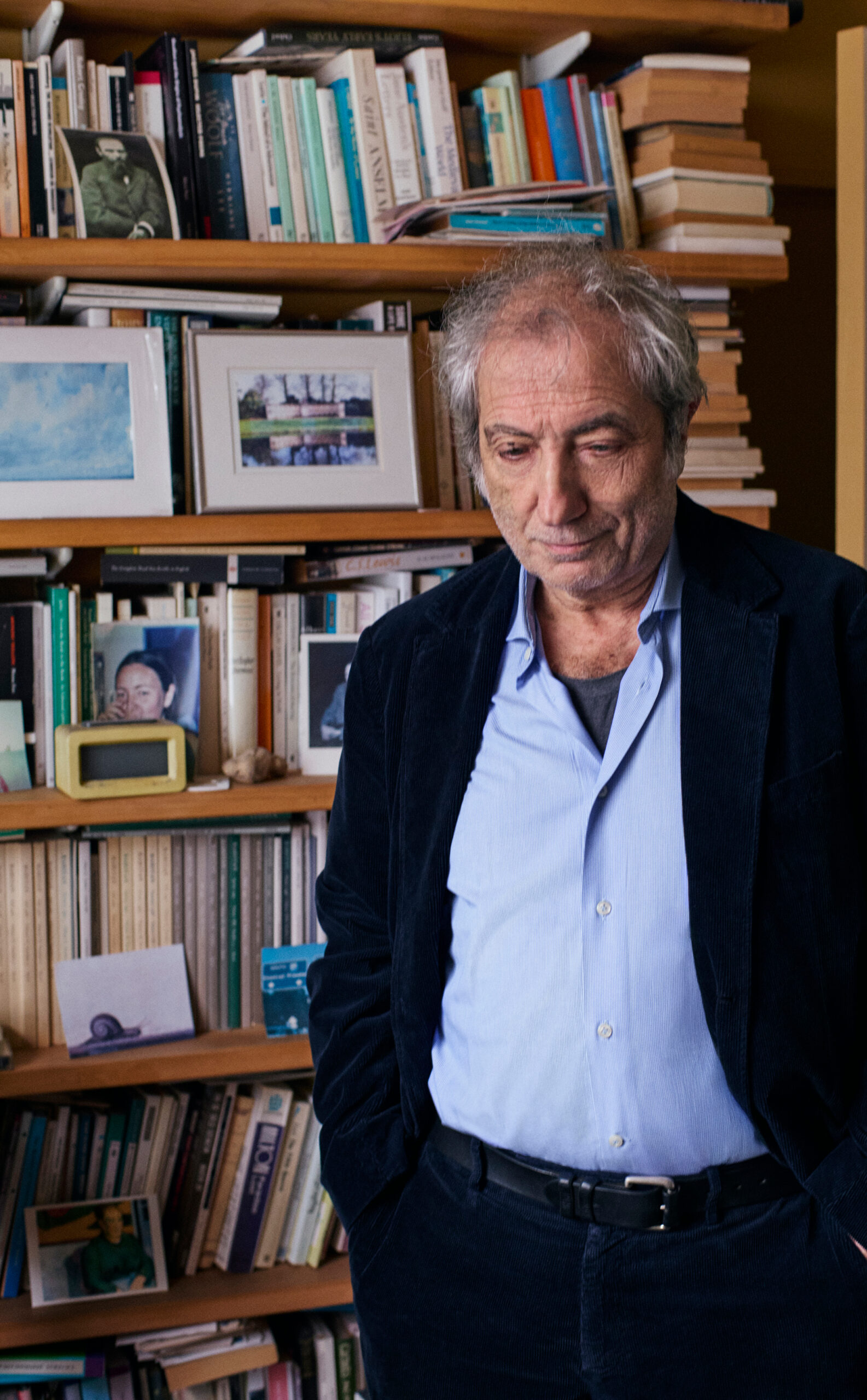
If psychoanalysis has a rock star, it’s Adam Phillips. The London-based shrink is the quiet confessor to the city’s artists and writers—and a cultural figure in his own right—best known for books with titles that sound suspiciously enjoyable for someone paid to dissect the psyche: Going Sane, On Giving Up, On Kissing, Tickling, and Being Bored. His latest, The Life You Want, offers no five-step plan to happiness. Instead, it asks the irritatingly good question: Why are you so desperate for a better life in the first place? A believer in the power of serious conversation, Phillips was drawn to psychoanalysis while working as a child psychologist in the 1990s. Now in private practice and fully booked, he made time to talk with his friend, the writer and biographer Hermione Lee, about regret, the dangers of blaming childhood, and whether aging might actually improve your options.
———
MONDAY 6:45 PM JAN. 5, 2026 LONDON
HERMIONE LEE: Adam, nice to see you.
ADAM PHILLIPS: And you.
LEE: I’m going to struggle to describe the argument in your new book and then you’re going to put me right! It starts by proposing two contrasting models for working out what we want for ourselves in life. One, which is Freudian, is much more past-based, while the other is pragmatic and much more future oriented. For psychoanalysis, I’m quoting you: “The past is always our problem.”
PHILLIPS: Psychoanalysis says you’re determined by your past and your instincts. Sigmund Freud says we’re stuck. We’re stuck in our histories, our traumas, our development, and in the fact that we barely even know who we are. Pragmatism, on the other hand, says the only question is, what do you want and how do you get there?
LEE: It’s perfectly clear you prefer the latter. So would it be right to say you’re an analyst with added-on pragmatism?
PHILLIPS: Exactly. I love psychoanalysis, which, for me, is a kind of romance. But there are obvious ways in which it’s extremely limiting. Pragmatism adds an element of freedom and uncertainty for us as choice-making creatures. Freud is saying we don’t make choices. It looks like we do, but we mostly don’t. Whereas pragmatism says we are our choices.
LEE: Freud is also mixed up with this idea of the death wish, which I don’t really understand.
PHILLIPS: No one understands the death instinct, not even Freud. I think what Freud was trying to address was the scale of destructiveness of two world wars. He’s also addressing self-destructiveness, meaning sometimes people enjoy their suffering.
LEE: Thinking of Freud’s theories coming between these two catastrophic world tragedies is fascinating. It’s like a parable of the European past locked in its history, and the American concept that everybody can be free, everybody can have an opportunity.
PHILLIPS: Clearly psychoanalysis is a period piece. It was invented in a certain time. I practice psychoanalysis because I value it. Psychoanalysis is not better than aromatherapy or worse than neurology, it’s simply something for people who find it intriguing, fascinating, amusing, consoling, comforting, healthful, useful. That’s it. But it’s not everybody’s cup of tea, nor should it be.
LEE: You called this book The Life You Want. Are you thinking about “the life you want” in terms of community or in terms of individuals?
PHILLIPS: I think all life is group life, and therefore all life is political life. We can only be as free as the most tyrannized person.
LEE: You actively see a roster of patients. Can you incorporate this search for “the life we want” into your work with your patients?
PHILLIPS: Knowing what we want may be the most offensive thing we can do. What I’m interested in is the ways in which people are prone to deaden themselves, attack their own development, or attack their own capacity for enjoyment. What I want to know when somebody comes to see me is what they want and what their idea of a cure is, because they don’t come to me so I can force my cure on them. It is ideally a conversation in which we find out what somebody might want and explore why they might want that.
LEE: What happens if a patient is not very conversational?
PHILLIPS: Lots of people aren’t. It depends on the kind of family you’ve grown up with and all that sort of stuff. That’s what struck me most when I started doing child psychotherapy in South London. We were trained to believe that everybody was sort of middle-class, Viennese, and white. And as it happens, they’re not.
LEE: Mostly not.
PHILLIPS: So the question is, is psychoanalysis of any use to people of different classes, races, etc.? Well, it is, because what I discovered is that most people do have an appetite to talk, even if they’re not used to doing it. I suppose I saw my job as coaxing them into the pleasure of talking, and that would mean seeing the value of it. It wouldn’t be simply, you’ve come here to have a terrible conversation so you can get better, but instead what might be the pleasure or use of actually talking to somebody. That’s the bit that I’m interested in.
LEE: You used the phrase “to get better.” Is there ever a moment when the patient says, “That’s it, I feel better now, I don’t need you any more?”
PHILLIPS: The phrase “getting better” is ambiguous because the question is, “better at what?” But in the ordinary sense of getting better, certainly people get to a point where however much they like me, there are other ways in which they want to spend their time and money. People certainly do finish. And then there’s a whole range of people who don’t want to finish because they find this a useful part of their lives. Why would one want to give up a conversation one values and enjoys? Some people come with a very specific task. I am agoraphobic and I want to be cured of that phobia. And either that’s simply the way into a more elaborate conversation, or when and if they are no longer agoraphobic, they leave.
LEE: Do people like that come back?

PHILLIPS: Sometimes. I certainly tell them, when and if you want to, you can always call me.
LEE: You mentioned your time as a child psychotherapist. Do you think what you do now is very different from what you did with kids?
PHILLIPS: It’s very different class-wise, because private practice is mostly middle class. Going into private practice was very dismaying for me. I only did it because the National Health Service was falling apart. The great thing about child psychotherapy was that anybody could join because it was free. It was a very idealistic project. The other thing, of course, is that as you get older, the way you work changes. I was much more obedient in my first 10 to 15 years. By that I mean obedient to my training. Not mindlessly obedient, because obviously I valued the rules I abided by, but obedient because I wanted to do it properly. But the more people you see, the more you change, and the more you’re able to adapt to any given individual. One becomes not exactly more reckless, but more willing to try things out.
LEE: Have your patients changed you?
PHILLIPS: Definitely.
LEE: I’m guessing you’ve got a horror of self-importance. I know some people think of you as a kind of guru. When you give talks, people in the audience come up to the microphone to ask you a complicated question about psychoanalysis, somehow expecting you to have the answer in real time. How do you feel in those situations?
PHILLIPS: The great thing about psychoanalysis is the distance from the guru, ideally. There are no oracles. There are no experts on life. But I understand, because we’ve all been young and we’ve all been wanting similar kinds of authority. Without mockery or cynicism, I want to suggest to people that they can’t be experts. It isn’t about finding somebody who can tell you the truth. The thing I’m most wary of is one’s wish to be controlled. I’m interested in how ingenious people are at finding ways of being controlled, either by people or ideas, or whatever. So, wanting a guru is wanting to be controlled. What’s interesting is people being able to think and speak for themselves without the quest for authority, or to use an unfortunate phrase, a final solution. We don’t want any final solutions. I don’t want any conclusions.
LEE: I had a very remarkable experience once on a panel with Doris Lessing. When it was time for questions, an American woman in the audience said, “Doris, what is the meaning of life?” And Doris, who could be quite grumpy, said, “What a ridiculous question. I’m just a writer.” And the woman in the audience said, “Don’t hold out on me, Doris.” She would not give up the idea that Doris Lessing was going to be her guru.
PHILLIPS: One example of a truly upsetting experience I’ve had is after a lecture, a couple came up and they said, “Our son has been schizophrenic for 20 years, and we really believe you can help him.” That is devastating. You can feel the desperation in these people’s eyes. Obviously, we all know what it is to feel desperate, but we also know it’s not that simple.
LEE: In your own life—reading, going to movies, listening to music—do you have inspiring figures, people that matter to you as much as life itself? What is your relationship with—I won’t say gurus—these inspirers?
PHILLIPS: When I was in school, I had a fantastically inspiring English teacher. We read D. H. Lawrence, Joseph Conrad, George Eliot, W. B. Yeats, etc. I was astonished by the power of these voices, and that stayed with me. Certain voices on the page just strike you. We meet millions of people and we read loads of books, but some people stay with us, just like some books stay with us. Clearly there’s very powerful unconscious selective attention going on. We don’t love everybody, and we don’t love all writers. But when we do love a writer, it’s an extraordinary thing, because at that moment something has become very relevant to us. It’s a version of the guru thing, but it isn’t quite that. In a sense we’re finding the guru in ourselves.
LEE: You wrote a book on the subject of giving up. I remember we had a conversation about Macbeth and Hamlet, and the tragic heroes of William Shakespeare whose fatal flaw is that they can’t give up on what they’re doing. You’ve written a book with a friend about second chances, about characters in Shakespeare who get a second chance, including Leontes in The Winter’s Tale. Is this kind of writing more interesting to you than straight-up psychoanalytic theory?
PHILLIPS: I started studying literature because I loved reading. I knew I didn’t want to be an academic because I didn’t want to have to read anything. Then I happened to come across psychoanalysis, and it seemed to me that this was a job I could do. But for me, the fundamental thing is reading. I wanted to be a reader.
LEE: You read people, too. I think this is your 28th book. They’re mainly collections of essays. Do you think of them as one long evolving conversation, as pieces in a jigsaw, or as skins you keep shedding?
PHILLIPS: This sounds very disingenuous, but I’m amazed that I’ve written these books. Literally amazed. I had no conscious ambition to be a writer. I don’t research books; I just write them. I don’t plan them and I don’t consciously think about it very much. But then when I start writing, it’s all there, which is thrilling to me.
LEE: It also allows you to be witty, to be playful, to be funny, and not to have to take yourself seriously all the time.
PHILLIPS: Exactly. It doesn’t have to be earnest. The thing I least like is people having inner superiority. That’s the death of sociability, really. In psychoanalysis, I want to free people to lose interest in themselves—not entirely, but enough to be able to be absorbed in other people and things in the world.
LEE: At the beginning of the book you say, “We are haunted by the versions of ourselves we have been unable to be.” Are you ever haunted by your own unborn selves? Like, gosh, I wish I’d been a conductor. I wish I’d been a mountaineer. Or I wish I hadn’t spent my life with books. Do you ever have those regretful feelings of the road not taken?
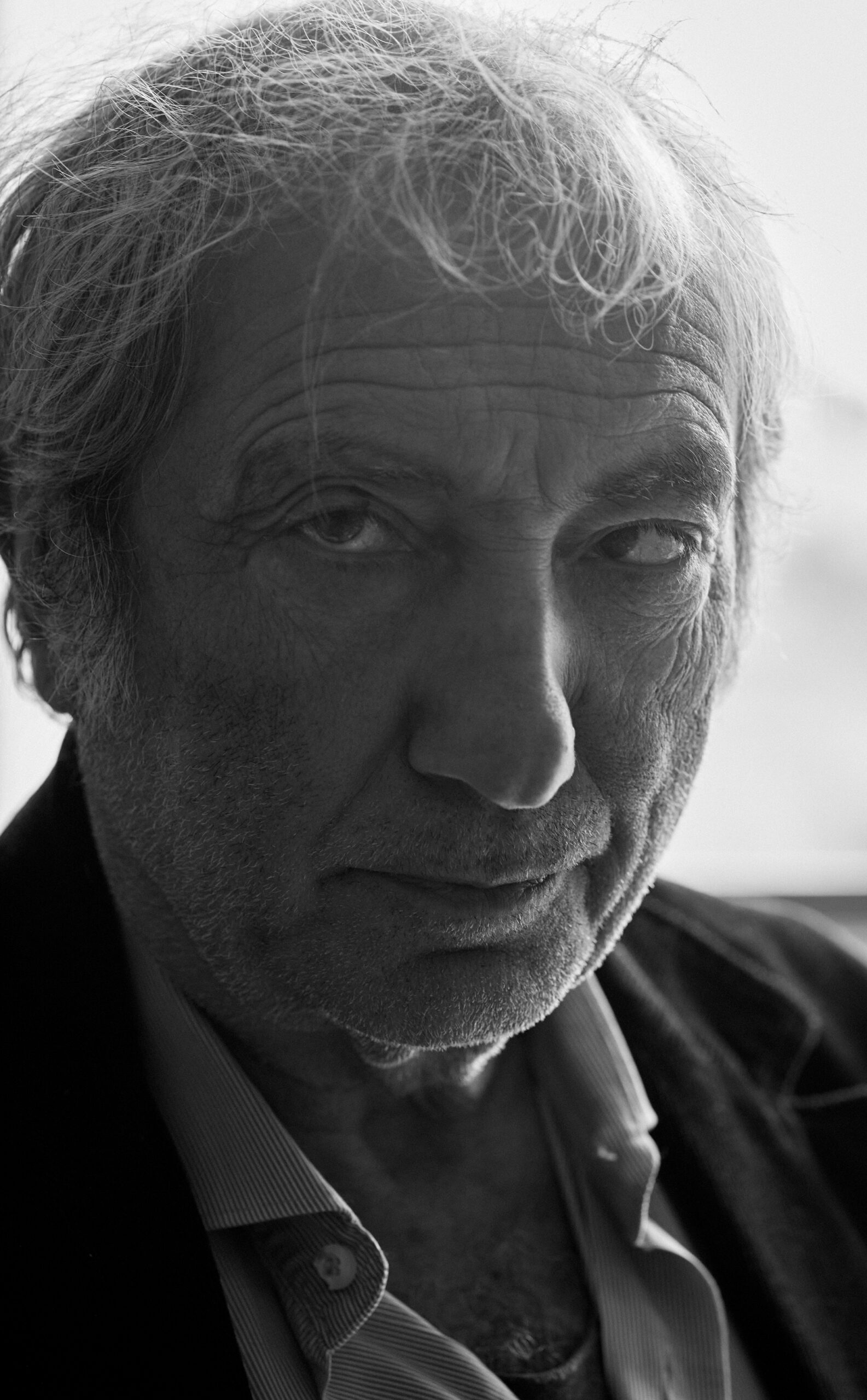
PHILLIPS: I’m very suspicious about regret. I think regret is bad faith. When I was younger I did a lot of sport, and I certainly wanted to be a sports person, but it was obvious to me that I wasn’t good enough. That was the closest I got, but I’ve actually, insofar as I can remember, never wanted to be anybody else.
LEE: Can you say more about regret being bad faith?
PHILLIPS: Regret can only be a fantasy of what might’ve happened, but the point is what actually did happen. I could have very elaborate regrets about all the people I might’ve been and things I might’ve done, but I’d be suspicious of that. The beauty of the past is that it’s irredeemable. It can always be recruited for self-punishment. There’s plenty of things we all might have done, plenty of things our less inhibited selves might’ve done, but we actually did what we did. So, the question isn’t what I might have done in the past, the question is, what am I going to do tomorrow afternoon?
LEE: Regret could be useful if it leads to doing things better now.
PHILLIPS: Sure, if it’s instructive in relation to the future, it would be useful. Otherwise it’s a black hole.
LEE: Do you think spending your life thinking about human beings makes you able to understand yourself better?
PHILLIPS: I’m really uninterested in self-knowledge. This is not the sort of thing I should be saying as a psychoanalyst, but I’ve never found self-knowledge very interesting or engaging. It doesn’t mean I don’t have thoughts about myself, but I don’t find it fascinating. I don’t find it very useful. Self-knowledge is very useful if you want to vote, but it’s not really useful if you want to fall in love or write a poem. So it’s really a question of what you want to do. Self-knowledge is a decoy. The thing is to have experiences, and the risk is that knowing oneself becomes a way of preempting experience. I think it’s the wrong project.
LEE: So do you live by instinct?
PHILLIPS: I live by inclination and by affection and by love and by liking.
LEE: I keep thinking lately of Matthew Arnold’s poem “Dover Beach.” “We are here as on a darkling plane… Where ignorant armies clash by night.” What are your thoughts about carrying on as we do, writing, thinking, teaching, creating, being part of the cultural activities around us in the world as it is now? It is sometimes hard to think that what we do has any value at all, given what’s going on?
PHILLIPS: I agree. But I’m wary of the way it’s as though the present reality persuades us of the absolute insignificance of what we’re doing. It might take a certain amount of resistance to hold on to the idea these things are worth doing and protecting if we value them. Otherwise, it’s a capitulation. Pessimism is a luxury in a way.
LEE: Now that we’re both getting on, will you be writing essays about aging and fear of death? Or is it still too soon, Adam?
PHILLIPS: There is a book called Aging for Beginners [by Ezra Bayda and Elizabeth Hamilton]. Great title. Aging is an interesting process, especially once we drop the idea that aging is merely the loss of youth. There’s nothing else we’re going to do but get older and die. Every second we’re getting older, and we always have been. Now, we’re not sitting here thinking, “Gosh, I’m getting older every second,” but we are. I’d love to write about it. The trouble is, I can’t write about things I want to write about. They turn up.
LEE: Maybe aging is about adventuring. T. S. Eliot said, “old men ought to be explorers.” Is it about finding new risks and new ways of thinking, or is it about coming to terms with the bit we’ve got left?
PHILLIPS: We shouldn’t be tempted to be too upbeat about it. As if to say, this is a wonderful adventure we’re on, because it isn’t for most people. I think we need to find out what about it we might value and want to promote. We live in a youth culture, and getting older is the last thing everybody wants. This is really weird and rather inhumane, given everybody is going to get older. The analyst Nina Coltart said, “I love analyzing old people. They’re the only people who speak honestly because they’ve got nothing to lose.”
LEE: Here’s my last question. You’re talking in this book about the life we want. Is it ever too late for the life we want to become a possibility?
PHILLIPS: Yes, it must be. But it would also be equally interesting to think, what is the life we can want now, at whatever life stage we’re at? Because obviously our sense of time is different. I think the life you want at any given age or stage in your life is potentially equally interesting. What do we want to do now?
LEE: That’s perfect, Adam.
PHILLIPS: Thank you very much.
———
Photography Assistant: Morgann Eve Russell.
Production Director: Alexandra Weiss.
Photography Producer: Georgia Ford.
Retouching: James Midwinter.