


SCUM
Lili Taylor Reflects on Playing Valerie Solanas in I Shot Andy Warhol 30 Years Later


Photo courtesy of Sparrow Murray.
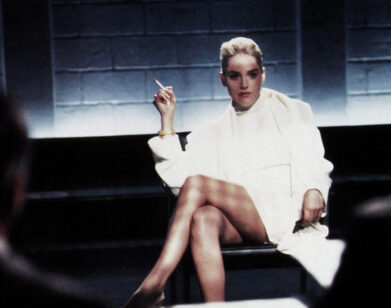
Lili Taylor’s thirty-year-old I Shot Andy Warhol is still just as transgressive today as it was upon first release. The 1996 film isn’t an easy watch, but it is an important one. The viewer is made witness to feminist intellectual Valeria Solanas’s descent into mental illness, culminating in a profound act of violence that is now the thing of pop culture legend. This summer, the film has been restored and re-released in theaters. To mark the occasion, I sat down with Taylor, who played Solanas, to discuss the “crippled psyche” of this complicated person, how the ancient Greeks realized the need to protect the performer from their character, and how she found Valerie a day before shooting in a small practice room on MacDougal Street.
WEDNESDAY 11 AM JULY 15, 2026 NEW YORK CITY
—
CHRISTOPHER AARON BLACKMON: Looking at your body of work, this film sits within the first decade of your career. What was your life like in the mid-’90s when you came upon this role?
LILI TAYLOR: I was doing independents. I felt like this was the peak of the independents, sort of its heyday, the pinnacle. It was, for me, probably one of my favorite experiences. I’d been working in theater and film prior to that and having a great time, but it felt like it all came together with this one, in terms of the collaboration with [the director] Mary Harron. I had come across the SCUM Manifesto in the early ’90s. I had found it in the City Lights Bookstore when I was doing Dogfight of all things. It was very obscure. So it kind of felt like kismet when Mary was like, “Do you know about this thing called the SCUM Manifesto?” And I was like, “Yes.”
BLACKMON: Even today, SCUM is still quite niche. How did you come into contact with that material?
TAYLOR: Oh, yes. What happened is that we were in San Francisco shooting some exteriors for Dogfight and I was in City Lights Bookstore on a break from shooting and I was in the aisle and I saw this picture of this woman. It stopped me in my tracks. [I thought] “The manifesto? Wait, what is this? The Society for Cutting Up Men. Who the hell is this?” So, I bought it and read it and I was like, “This woman is so out there. I love this.” Four or five years later, Mary is like, “Do you know about this?” She was shocked I knew about it. And you’re right, even today, [SCUM] feels not mainstream at all. What’s really wild is Mary, when she saw Dogfight, thought of me for I Shot Andy Warhol, which is also wild that she saw Valerie in that Rose character. I didn’t see it.
BLACKMON: Did you know much about Valerie Solanas herself? Or was your connection just through the manifesto and then, for the movie, you had to backtrack and research the person?
TAYLOR: Well, here’s the thing—yes, I only knew about the SCUM Manifesto, there wasn’t [much] on Valerie. She’s only on two pages in Daring to be Bad, a feminist book on the history of feminism, and maybe one interview where there’s some audio. A little clip of her in the Warhol movie, and that’s it. So Mary Harron did about seven years of research, before the internet. She had to talk to people, go to libraries—it was fantastic. She had boxes and boxes of research, and she put a few things in a box for me and brought it over to my place because we lived on the same block on MacDougal Street. Then, we had about a year to work on it together while the financing was coming together. So she would bring over things to me and that’s how I learned about Valerie, through Mary. We kind of created it together.
BLACKMON: In preparation for our interview, I spoke to Professor Breanne Fahs of Arizona State University. She wrote the 2014 biography on Solanas. In her research, she mentioned that sources cited how you were able to catch her cadence. For one romantic partner, they couldn’t finish the film because your performance was so good and so right. How were you able to capture her with so little information?
TAYLOR: Oh, shit. I don’t get out enough. I don’t hear anything like this. This is so nice to hear. It’s like the biggest compliment. Here’s the thing, it was a hard process getting to know her. She’s very, very complicated. I couldn’t imagine her eating breakfast[, for example]. And that’s one of those everyday tasks where, if I can’t picture a character doing it, it concerns me because it feels like they’re not there in a way. They’re not human to me yet. She came together the night before filming, but that was also after a year of working with Mary and on my own.
BLACKMON: The actual night before!
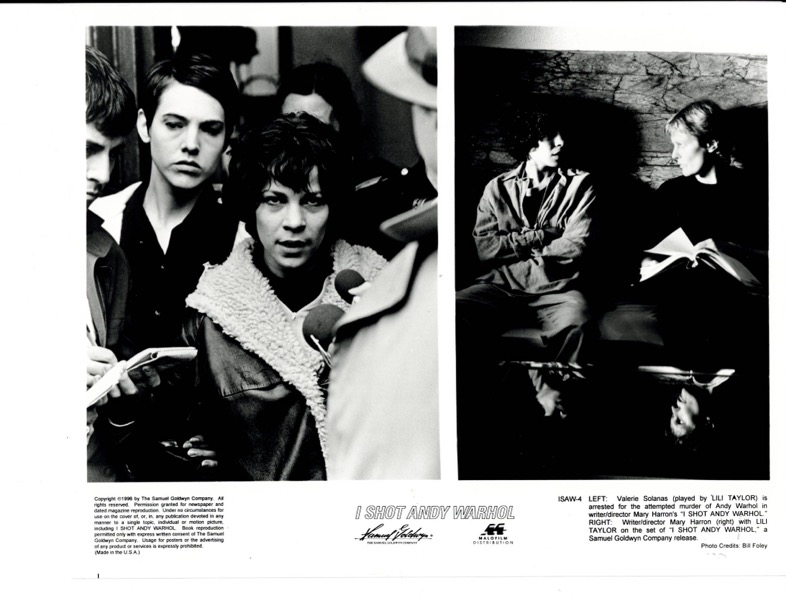
Photo courtesy of Killer Films.
TAYLOR: Yes. Her sense of humor—that she has a sense of humor—I didn’t quite understand that until the night before shooting. Then, the second thing was this saying that came to me: “clear vision in a crippled psyche.” What that held for me was the paradox with her. Her IQ, her x-ray vision, her kind of prescience, and her paranoid schizophrenia, her damage, her sexual abuse, all that. That helped hold all of her. I had this piece of audio tape that was an interview with her and I listened to it over and over. It really helped a lot, but it also didn’t help. I rented out this little rehearsal space. It’s still there. It’s also on MacDougal Street. It’s at the Players Theater and it’s so old-school New York. I love it. $30 for an hour. I would rent out that place, and I would get in there, and I would just kind of do nothing. Just walk around and talk out loud and sort of feel it, feel Valerie a little bit. I would tell Mary to come over and see what I was doing, make sure it was okay, and it wasn’t. This happens to actors, especially with living characters. It was like a mask. It was becoming a mask. The accent was starting to stifle me. And thank god Mary hurried in and she said, “No, no, it’s too much.”
BLACKMON: As an actor doing all that work, are you saying, “Okay, I just have to go back to the drawing board”? I would imagine that’s so disappointing because here you are, trying to flesh her out, using your own physicality to bring her into the world, and then someone just says, “This isn’t it.”
TAYLOR: Oh my god, you’re hitting on something so raw for me. It feels personal. It feels like I did something wrong. It feels like a rejection of me, but not. And that’s the thing that’s so important as an actor, to understand that a director has notes. That’s what the director’s there for, to tell the actor that, “No, you didn’t do anything wrong. It’s just that this isn’t serving the character.” That was what I think was happening to me with Valerie. I imposed this thing that was me, and I imposed it onto the creation that I’ve come up with with Valerie. It’s like I had to create my own Valerie. Thank god Mary pointed it out because I can’t stand when there’s a portrayal of a living person that’s kind of fake. It doesn’t hit my heart.
BLACKMON: How long did it take you to get Valerie right the second time?
TAYLOR: A couple of days.
BLACKMON: I thought you were going to say six months or so.
TAYLOR: No, a couple of days. Because first of all, I knew I had to fucking be fast and really get there. I knew there was an artificiality on some deep level. I knew that I had put on a suit that didn’t quite fit. I put on an accent that wasn’t true. It might’ve been a perfect rendition of her, but here we have all these people saying that what I really got was a cadence for her because what I did was I found an authenticity between me and Valerie. And Valerie ended up truly taking over instead of a representation of [her].
BLACKMON: Recently, I saw an interview with Isabelle Huppert where she was asked, does the spirit of the person you’re portraying stay with you past when the director says cut? She replied no. How do you keep Valerie? Can Lili come back in between shots and pal around with craft services, or call a boyfriend, or whatever, and then go back into her? How does that work?
TAYLOR: I’m fascinated with that question. I’m not a method actor, so I believe in being able to go to craft service, and talk with the crew, and joke around, and stuff like that. I can do that. I did this film Arizona Dream, and the character attempted suicide and we did the scene, we filmed it all day. And even though it was a bit of a comedy, for me, it was also real because I had to really play it that this character was trying to kill herself. At the end of the day, I was home. I was talking to somebody and they said, “How are you doing?” I said, “I don’t know. I’m just not feeling great.” And they said, “Why? What’s going on?” “I’m just blue. I don’t know.” “Well, what did you do today?” I said, “I worked on this scene all day. This character was committing suicide. But yeah, no, I don’t know.” And they were like, “Okay. Yeah, you were attempting suicide all day.” It’s like, “Oh.” I didn’t know that there was that bleed over. I didn’t even think about it. But here’s the thing, the Greeks [have] the word “prosopon,” [where the word persona comes from], and one of the roots of that word has to do with mask. The Greeks came up with the mask not just for the actor to be heard, but also as a way to protect the actor from the character.
BLACKMON: That just sent a chill down my spine.
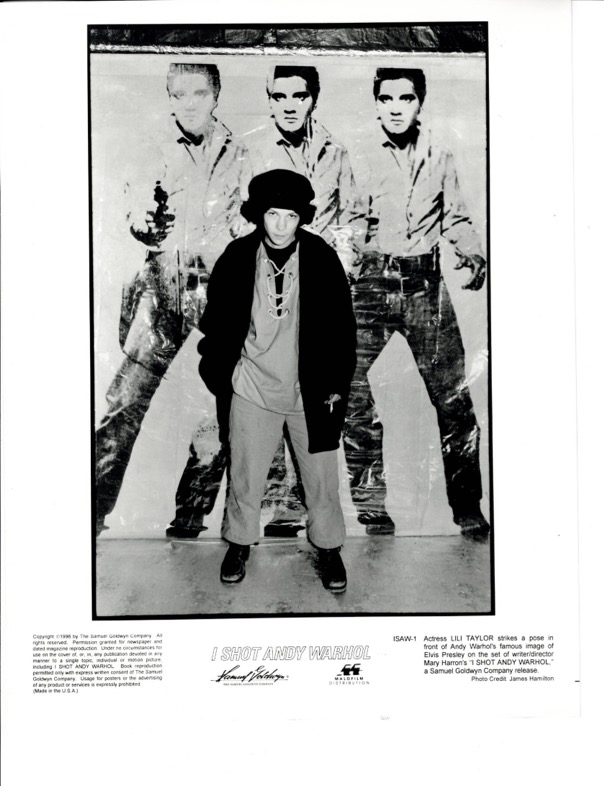
Photo courtesy of Killer Films.
TAYLOR: Right? So that’s a real thing. They knew how big a deal it was, what the actor is doing. And so [in film], we don’t have rituals like that to take off the mask. The theater has a few rituals, like wipe your feet at the door. I have had to come up with certain little rituals for myself when I do go home and still feel a character.
BLACKMON: And Valerie, was she heavy on you or was she easy to get in and out of?
TAYLOR: She was heavy. Yeah, no, that was a tough one. That one took me a couple of months when I wrapped to really get her out of my system.
BLACKMON: Did you feel you had to protect yourself from her as the actor?
TAYLOR: Oh, hell yeah because she would take you over. I love actors. I love what actors do. I think society loves actors. We call them “stars.” We go to these places in the dark with these big screens, look at the whole thing. We tell stories. We transmit that feeling to another human being, and then they feel something. It’s huge and deep.
BLACKMON: When working on her book, Professor Fahs reached out to a feminist scholar who, basically, scolded her over the phone and asked her why she was bringing up Valerie. Another person from Andy’s world—a Warhol actor—yelled at her as well and was very upset that any sort of academic research was being done on Valerie. That explosive anger about her is still out there to this day.
TAYLOR: Lou Reed was furious with the press, and we had to shoot right in front of his building. I was so uncomfortable because I loved Lou Reed and I was like, “He fucking hates me, man. This sucks. [Its] just not going to happen with Lou in this lifetime.” It hurt because I love him. But yeah, Valerie is polarizing. That’s what she does.
BLACKMON: I want to ask about Mary Harron because she’s done two pieces of seminal work–I Shot Andy Warhol and American Psycho–yet there’s still such an air of mystery about her. So, I’m curious from your angle as the lead actor, what is her process? What is the relationship between the actor and the director?
TAYLOR: So, when people say, “What was one of your favorite things?” Truly, it was I Shot Andy Warhol and it was Mary. I mean, she’s a collaborator and she respects her departments. She knows where her skills are and where they aren’t and she lets the people do their thing, which I think is always the mark of a great director.
BLACKMON: When you did this role, you were 28, 29. Now, in your 50s, how would you approach or play Valerie having lived a little bit more of life, had more experiences? Or would you not change anything?
TAYLOR: I’ve struggled because I got a little bit more in my head in my thirties and my forties. I was like, “Wait, what happened?” I had a fearlessness in my 20s. And I think some of it’s because I was probably not conscious. As I get more conscious, of course, you are aware of fears and stuff. I think I actually might even have more doubt about [playing Valerie] if I were to do that now. Maybe I wouldn’t have gone as far with some of the physicality. I feel like I’ve very much shied away from taking risks by doing things that are maybe a little different than me because some of them have backfired. Or I started to not trust my choices because I remember I did an audition and the feedback was like, “What is she doing?”
BLACKMON: [Laughs] I’m not laughing at you. It’s just the way you said it.
TAYLOR: [It’s] what Sanford Meisner, the great acting teacher says. He says it takes at least twenty years to learn how to act. So I feel like that’s what my 40s were about, was learning how to act. And maybe, in a way, I’ve gotten…I don’t know what. I’m scared of being fired, honestly.
BLACKMON: How has the film aged for you?
TAYLOR: I haven’t seen it again since I saw it at IFC a month ago, and that was the first time I’d seen it in probably 30 years. I was like, “Wow, this really holds up.” It’s fantastic. I wasn’t surprised, but you never know. And I’m really happy for Mary. Also, I’m happy for me too that it’s out because I loved that project. Restoration is really cool. A bunch of my films have been restored; these odd films that I took for granted and just, “Oh, they’re whatever.” And now, there’s this archivist from the Walker Center in Minnesota. Years and years ago, he was like, “A lot of your films, they’re falling apart and there’s only one or two copies.” I’m like, “You’re kidding?” And so there are these people out there who care [enough] about these objects to do this. It’s just really cool to take a moment and reflect on what that is. And so, that’s how I feel about Warhol. It’s like, “This is fucking cool.”
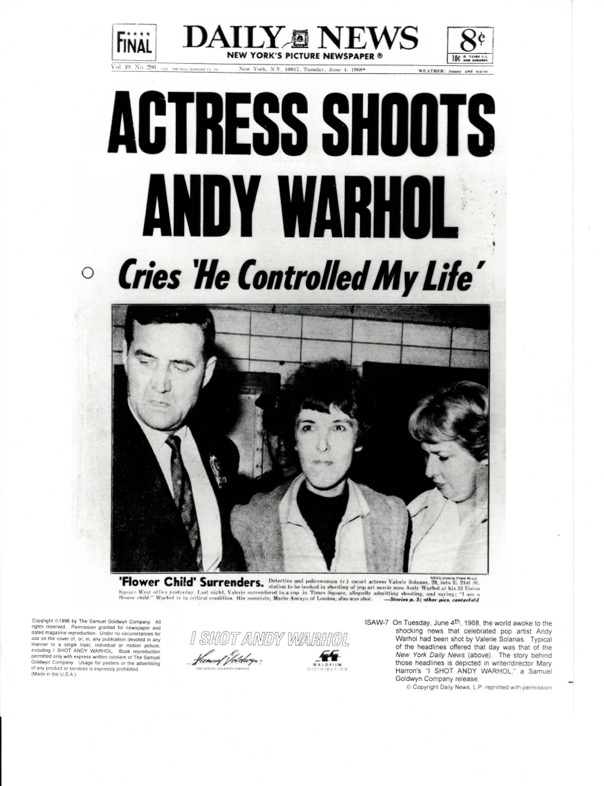
Photo courtesy of Killer Films.