


SEND-OFF
Ken Leung Takes Harry Lawtey’s Industry Exit Survey


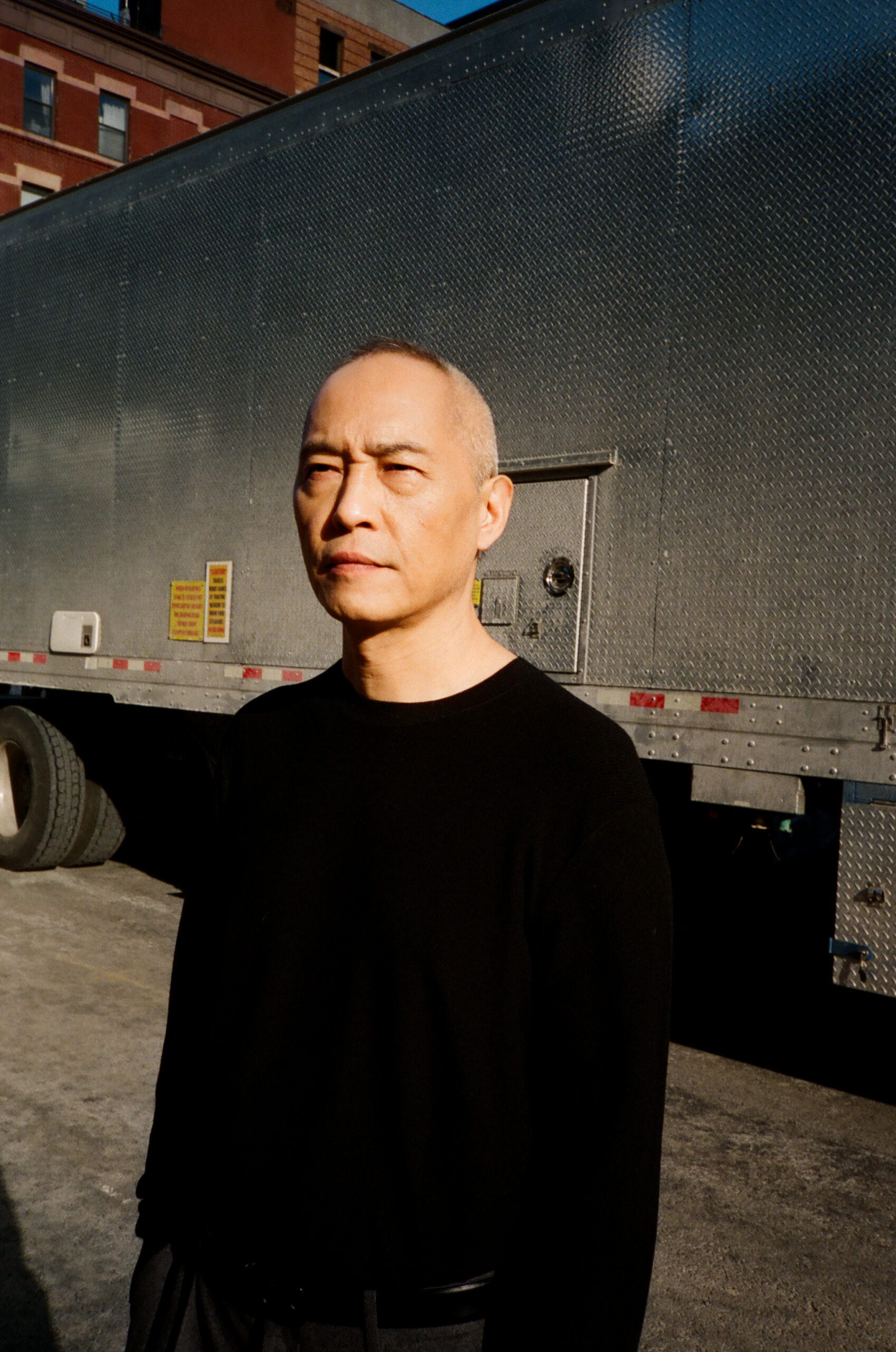
Ken Leung spent four seasons on Industry turning a deeply flawed finance guy into one of the most compulsively watchable characters on TV. Eric Tao was a role that asked everything of the veteran actor who, until Industry, had been doing essential but undervalued work in projects like Lost, The Sopranos, and Person of Interest. It ended as it had to: not with a triumph but with a quiet devastation, Eric walking alone down the middle of a road, blackmailed out of the only world he cared about. With his time on the show now seemingly behind him (an Eric appearance in season five is not out of the question), Leung reconnected with fellow Industry alum Harry Lawtey for a conversation about ego, fatherhood, getting recognized in public, and the usefulness of having no expectations.
———
KEN LEUNG: Thanks so much for doing this, Harry.
HARRY LAWTEY: It’s my pleasure, mate. I don’t really know what I’m doing, so I’ll try my best.
LEUNG: Same. We can both not know what we’re doing together.
LAWTEY: That sounds nice. How are you?
LEUNG: It’s a busy time. The holiday was a resting time for me, and then everything exploded, so there’s a lot going on, but it’s all good.
LAWTEY: I thought a nice place to start would be the first question that Myha’la asked me when we did a feature for Interview a couple years ago. I suppose it’s a bit of a cheat to copy her, but in some ways, it’s also a bit of a cheat question because she started by asking me, “What question or questions do you wish that people who interview you would ask you?”
LEUNG: That tickles a part of my brain that I never use because it implies that you have something that you want to say, and I don’t think of myself that way. I like thinking of myself more as a middle person who recognizes what needs to be said or put out there, and then I’m in the privileged place of being the conveyor of that message.
LAWTEY: I definitely align with that sort of ideology. There are other artists and other mediums that are far more well-placed to make their own individual statements where we often, by choice, find ourselves as the conduit, like you say, rather than the spokesperson.
LEUNG: Also our field has this danger of giving voice to our ego so much that I try to minimize that as much as possible.
LAWTEY: Some of the questions I thought of asking you were around that theme, because I’ve always thought of you as a quite egoless person—not devoid of ego because none of us are. But since we started making the show, we’ve had the privilege of watching your boy grow up. I’ve always wondered when working with colleagues, having a child, how did that alter your ego or perspective as an actor, and in what ways did it influence you creatively in your career?
LEUNG: Well, he is our first and only child, so I had no reason to assume I knew how to do it, how to be a parent. And to this day, he’s 10 now, and Nancy and I are always talking about, “Well, should we do this? Should we do that?” I’m personally always interrogating myself, “Should I not have said this?” Or, “How do I address this in a way that centers him and not myself?” And I think I’ve learned to do that with, maybe, people. I’ve tried to look at everything with the lens of it being a child. I think that came from having Dash. That could be a person, that could be a scene that we’ve not played yet that is about to be birthed. And I find that it’s very useful to think of it that way.
LAWTEY: I think Eric has always been a behemoth within the show. He was this apex predator in season one, but along the journey of the show, he’s been humbled. And for years I’ve told as many people as I can that you are the most underrated actor in America. Have you ever thought of yourself as an underdog in such a competitive oversubscribed profession? Do you think it’s a useful notion for an actor, or is that a negative idea?
LEUNG: An underdog meaning people are betting on you losing?
LAWTEY: Yeah, or as in you have something to prove or you have the odds stacked more elsewhere and you have something to overcome.
LEUNG: I feel that speaks to Eric a lot. He’s basically a coward who dreams of being a hero. We see that in season four from the get go. When we first meet him, he’s hiding out. He finally has time for his kids. He couldn’t be further away from his kids. He’s on a golf course. He’s living what looks like a dream. You work all your life to do nothing, to relax, and he’s not relaxed until he gets a call to action, and then that activates something. To your question, I wouldn’t say underdog in that people are betting on you to lose, but to have no expectations. It helps to have no expectations because if you have expectations, you’re kind of limiting yourself to those expectations. Whereas if you have none, it can be anything. It’s funny that you’re referencing when we started out, because I came into the show differently than I go into most shows. I took ownership of the role, as my perceived standing as the kind of veteran actor in a cast of mostly young actors. That wasn’t the case for most of my career.
LAWTEY: I can see that. For us at the beginning, we sensed that from you. You were always very much a mentor for us and you had a very quiet, noble brand of leadership. And I know that was something that you and Lena [Dunham] discussed at the beginning, and it was something that you took seriously. Moving on into season four, you’ve had this working relationship with Marisa and Myha’la for so long now, and they’ve become incredibly accomplished actors in their own right. I think for me, they are generationally gifted. I’m interested to know in what ways they have inspired you. As someone senior, what have you taken from them?
LEUNG: They inspire me by how they carry themselves. They are genuinely confident, self-possessed artists, and you included. When I was y’all’s age, I was not that. Being an actor today is very different because there’s all this social media and how you market yourself and being comfortable in the public eye in a way that was never asked of an actor to be. One could very easily shrink from that, and they go the other way. They embrace it so comfortably. Because I guess my fear is, if you’re too much in that world, what happens when you go back and you have to play a role and do your work? Is it distracting? And they never seem distracted at all.
LAWTEY: I completely agree. They’re kind of unfazed, and by comparison, I think I’m quite phasable, but I’ve looked on in wonder at the way they carry themselves with such assurance.
LEUNG: But you have this great thing of you’ve been able to remain yourself in all your doubts. It’s very easy to lose yourself in this business, and all of you have remained yourself. You’ve kept your voice, and when you act, it comes from you. That’s really beautiful to witness.
LAWTEY: Oh, thank you, mate. One of my favorite memories with you is from a couple years ago where I found myself in New York on my own for a weekend, and we met up and went for a walk around Central Park. It reaffirmed to me that you are a New York person with a very distinct connection to the city. We walked around for quite a few hours and you got recognized plenty of times. What does it feel like to have your presence in your own city shift into something new, to lose some anonymity through your success?
LEUNG: It used to be really jarring. It used to be, “Hey, I’m doing this thing and suddenly I get interrupted by a person who thinks I’m somebody else.” There’s a case of mistaken identity. It’s nice to be recognized because people are seeing your stuff, but then they’re not seeing you. So it used to be weird. Now it’s evolved. Generally speaking, it’s really sweet and there’s this feeling that you’re not by yourself, even if you think you’re going through life alone, you’re kind of not alone. You have invisible support everywhere. That’s a very special thing. Sometimes you’re distracted by it, but maybe it’s pulling you into something you’re forgetting. How is it for you?
LAWTEY: Obviously, it largely comes down to the approach and the way someone chooses to do that. But it’s almost always incredibly kind. I remember saying to myself early on that I don’t ever want to become a person for whom when someone makes the effort to tell you that they appreciated something that you’re a part of, you don’t meet that with gratitude. It feels like people are rooting for you in some way, or at the very least noticing your effort, and that’s nice.
LEUNG: Sometimes it’s just a smile from a distance. [Laughs]
LAWTEY: Exactly! Maybe we’re reading into it and people are just smiling at us, and that would also be really nice.
LEUNG: Right. Maybe they’re smiling at somebody behind us.
LAWTEY: Maybe we’re just kind of completely self-involved.
LEUNG: And we’re like, “Ah, Industry.”
LAWTEY: Back to Eric, he’s an incredible character within the show, so cleverly constructed by Mickey and Konrad. And for me, the convergence of that writing and you, that’s the secret sauce of the show. One of the many privileges for us as actors who get to be part of long-running television is an arc. You get to go through an evolution, or a revolution even. There’s no better example of that than Eric. How have you digested that change and has it surprised you?
LEUNG: I didn’t think we were ever going to meet my daughters. And actually, we don’t really. However, for this season, we shot a lot with Serrana Bliss, who plays one of my twin girls, and the season for me was about her. It was about Eric’s attempt to find a path to his daughter who, despite him being an absentee dad, starts to resemble him in all the worst ways. I think that alarms him and he has no relationship with her. He’s given a kind of opportunity with Harper, and it looks like a business opportunity. But I think for him, it’s not so much a business opportunity. The deeper purpose is, well, here’s a young woman who understands me, who I can talk to. We have a common language. She gets all my flaws. We’ve loved each other and hated each other. Maybe through her, I can learn the path to my kid. I think that informs the whole season for Eric. Even Dolly, the girl that he hooks up with, in this new mindset that Eric is trying to learn, he sees her as a potential true love, totally oblivious to who she is and what her hidden agendas are. All of that can be traced to him not knowing how to reach his daughter. I didn’t expect that at all. We shot a lot that we actually don’t see. It’s almost like a shadow season that informs the actual season, which is really interesting.
LAWTEY: It’s always funny to think about scenes that you shot that don’t make the cut, or scenes that we all have to collectively imagine in between seasons where you have to go, “Well, that all still happened.”
LEUNG: Well, it actually did happen, so it’s in you. It’s almost like I wish every show was like this where you can shoot, live through stuff that maybe you’ll never use, but that informs what you use. It’s cool.
LAWTEY: And what’s something about Eric that nobody knows apart from you?
LEUNG: I love the baseball bat as a metaphor because it reveals this insecurity in him. That despite the bluster and the bravado and the rooster walk, he’s kind of a scared person. And the baseball bat is his amulet, which is ironic because we no longer had the baseball bat for season four, but there was a baseball. And I thought it was a really great metaphor because he’s gone from the thing that hits to the thing that becomes hit.
LAWTEY: I always love those brief glimpses where you see Eric truly afraid, or broken or shattered. It shines brighter in the context of all his other behavior. And how much, if anything, of you is in Eric?
LEUNG: I think all of me. I don’t go somewhere else to play him. My parents are in there, my brother is in there. My parents’ story and struggles as immigrants, where they came from, what China was like when they left, the hard time I have communicating with them, what kind of person that’s caused me to become, the kind of communicator I longed to be as a result of that wouldn’t be the case if we were closer. All of that is in there.
LAWTEY: That’s a beautiful answer, man. What’s a piece of advice from another actor that has really stayed with you?
LEUNG: Jeff Fahey, who acted with me on Lost. He once said, “In order to tell the truth or find the truth, you need to leave the mother.” And that’s how he said it. He said it in a way that did not invite questioning. And I took it to mean all our fears, our anxieties, our hangups, all of that are learned, the mother being the teacher of all that stuff. In order to find our true voice, we need to leave. You need to leave the thing you know the most in order to find something new.
LAWTEY: Right. And then along similar lines, who’s the first person that comes to mind if I ask you who’s the best actor you’ve ever worked with?
LEUNG: Oh, Jim Caviezel.
LAWTEY: When did you work with him?
LEUNG: On Person of Interest. Jim Caviezel for two reasons. One is I knew very early on, almost in his introduction to me, he told me he was dyslexic. Just a very vulnerable way of saying, “This is who I am, here’s how I’m imperfect.” And so I loved him immediately. And secondly, because he’s dyslexic, he couldn’t remember two lines ahead of where we are. So his script is always printed out in these little placards that his assistant hands to him when he needs it. And what that does is he is always right here right now because he can’t not be. And to act with that is incredible because it forces you to equally be right here right now, not because of any plan or any acting philosophy, but because that’s all he can manage. It makes him just eternally in the moment.
LAWTEY: That’s certainly my experience of acting with you. There’s such an immediacy to it and it feels like you’re leading and listening at the same time. The moment I really realized it was when you were screaming at me outside the elevator. For me as an actor, I was like, “Oh, there’s no letting up. I have to be here right now because this actor is so immediate and instantaneous in this moment.”
LEUNG: With that scene, I started off wrong and it was Isabella who put me on the right path. It looks a certain way on the page, “Oh, this is when I’m slapping Robert around and yelling at him.” And so I thought it was right from the get go, “What’s the matter with you?” And it was just all out right from the start. And Isabella was like, “Take it from the beginning, find it, don’t start there.” And then it was great.
LAWTEY: I remember you saying at different times over the last couple years that this is a role that you had been waiting for, or to be seen in a different light. And with that under your belt now, is there another way you’d like to be seen? Is there a dream role for you, or a real life person that you’d love to play?
LEUNG: I recently played a real person that did not want to be part of the project, and so we didn’t have any actual information, and so I had to intuit a lot of it and almost speak to him telepathically. And I wrote him a letter, he never wrote back. He just didn’t want anything to do with the movie. I really liked that, to know that you are playing somebody who’s walking the earth right now.
LAWTEY: I guess my last thing I wanted to ask is, how does it feel to be an artist in America right now?
LEUNG: It feels like a great opportunity. I’m often a little confused, or I should say curious about how people have taken to Eric. They know he’s this toxic character, and what attracts them are not his higher angels. It’s when he’s yelling the hell out of Robert that they like. They like the violence of Eric. I’m always curious about that. It makes me wonder, why do we prize violence so much? If we suddenly saw Eric soft, I know almost for certain that people would be like there’s a weakness to it, that suddenly this is no longer the Eric they love. And inevitably it’s not about Eric at all, obviously. It’s about us. What is it in us that prizes a certain show of strength? The writer Ocean Vuong says this: “When you do something good, why do I tell you that you’ve crushed it? Why do I tell you that you’ve killed it? Why is it the language of violence that I use?” It’s a question that the show offers a great opportunity for us to ask of ourselves. We obviously see one person after another, their downfall and what that leads to. And yet the people who it resonates with, they resonate with it despite it leading to a downfall. I think that the show’s greatest contribution is to cause us to ask those questions of ourselves.
LAWTEY: Great answer.
LEUNG: You know what’s funny about this is if it was really you and me talking and it wasn’t for something, we wouldn’t talk so much so fast.
LAWTEY: Yeah, I think it would’ve taken four hours probably. Alright, that’s it.
LEUNG: Thanks so much, Harry.
LAWTEY: My pleasure. See you soon, mate.
LEUNG: Alright, brother. Bye.