


HISTORY
The Inside Story of the Three Directors Who Changed Hollywood Forever


All photos courtesy of Celadon Books.
How does one begin to tell the story of Hollywood in the 1970s, when a then-fledgling movie industry was rescued from irrelevance by the arrival of filmmakers who saw themselves not merely as vessels for movie studios but as bona fide artists in their own right? You might start with Francis Ford Coppola, George Lucas, and Steven Spielberg, the subjects of the author Paul Fischer’s vibrant, tantalizing, and comprehensive biographical triptych, The Last Kings of Hollywood, out this week. Tracking their careers in parallel—from the creation, by Coppola and Lucas, of an insurgent film studio called American Zoetrope to Spielberg’s beginnings as a contract director for Universal Studios—Fischer tells a story of collaboration and competition, each director inspiring and then eclipsing their counterparts in a sort of ecstatic rebellion against the old guard.
But Last Kings is no bland reappraisal of their career highs and lows. Fischer, instead, takes the reader on an absorbing adventure onto the sets of films like Jaws, Star Wars, and Apocalypse Now, each nearly derailed by budgetary roadblocks or logistical headaches, and inside the interpersonal relationships that flourished and frayed as Coppola, Lucas, and Spielberg became bankable titans of the industry (and, by book’s end, stubborn, impatient, occasionally blinkered middle-aged men). “I didn’t want to write a completist’s New Hollywood book,” the author told me last week. “I wanted to write a book that, if my dad was going to pick it up on a red eye, would be accessible and interesting.” Below, he explains how he did it, without his principals ever going on the record.
———
PAUL FISCHER: Jake, how are you doing?
JAKE NEVINS: I’m good. How are you?
FISCHER: I’m good. Hopefully you can hear me okay. I’ve misplaced my AirPods.
NEVINS: I can hear your perfectly. So, I gobbled up this book in 72 hours over the holidays and then revisited over the last few days preparing for this interview. It’s brilliantly done, and I have a lot of questions. Tell me, to start, where this idea began.
FISCHER: Sure. I went to film school 15, almost 20 years ago now. And I remember that was the time period where everybody was into Easy Rider and Raging Bull—stark, bleak 70s films. “We want to be geniuses.” And then I was also fascinated by this thing of, you go to film school and art school and everybody’s like, “Let’s get a barn somewhere and do our own thing. We’ll all live upstairs and we’ll edit downstairs and make meals on Monday.” And I was thinking, “Oh, these guys [Coppola, Lucas, and Spielberg] actually kind of did that. They went to San Francisco, they got the warehouse, they did the thing.” And it felt to me like tracking that was interesting, all the way to this almost perfect ending where Lucas finishes that first Star Wars trilogy and Coppola’s bankrupt. Lucas is the kind of artsy, underground, fuck-the-man guy, but he ends up being the man. And Coppola starts with kids and an espresso machine and a Rolex on his wrist and he ends up being the bankrupt, kind of boho, fuck-the-system guy. And I thought, “That’s a nice way to frame it a bit differently.”
NEVINS: The structure feels seamless, but only because the book is so exhaustively researched.
FISCHER: It took years, and I’m obsessed with that period, like a lot of film dorks, so I already had some kind of stuff built up. But it kind of came into its own when I was researching it and going, “Okay, it’s not just Return of the Jedi and Coppola going bankrupt, you also have [Steven] Spielberg setting up Amblin’ [Entertainment] around the same time, you have Raging Bull, you have this whole generation that matches these timelines.” And then this idea that came through with it, of an ecosystem of these guys looking for an amniotic fluid they can grow in.
NEVINS: You talked to a wealth of personalities that were either directly in this orbit or living with them, but I’m curious how readily people were willing to talk to you, the three principles included.
FISCHER: A bunch of them were, the three principles not so much. I think Coppola might have done it, but then Megalopolis happened and Eleanor passed away all within a few months. We were quite close to setting it up. But I kind of approached the three of them with the sense of, “It’d be great to have them, but they’re also very media-trained and they’ve been answering these questions for 50 years.” So you also have to be conscious of how much mileage you’re going to get out of it, even if you do get it. I pushed really hard for all three of them, but always with the knowledge that if I were them, I wouldn’t do it, since there’s no upside. Even if the book’s great, even if someone gets you, even if I’m the new Peter Bogdanovich, there’s kind of no upside to just digging up stuff. To their credit, anything short of talking to me, they were very helpful. I spoke to people who were like, “I’ll do this only if Francis says it’s okay.” Within hours they’d go, “Francis says it’s okay.” No one put any roadblocks anywhere. But I kind of thought, “You know, the experience of making films is often the crew and the day-to-day and your assistants and the people in the office.”So I spoke to a bunch of names people would know, but I also really enjoyed speaking to 400 crew members, assistants, typists, all sorts of people, because I wanted to be experiential. I didn’t want to write a completist’s New Hollywood book. I wanted to write a book that, if my dad was going to pick it up on a red eye, it would be accessible and interesting.
NEVINS: You have. And it’s that testimony of the ancillary figures that really gets you inside the mania of those film sets, particularly when Spielberg’s filming Jaws in Martha’s Vineyard.
FISCHER: Yeah, there’s a texture to it. Somebody else can write a book about how great Jaws is and how great this or that shot is, but I want it to feel like a little shorthand to living through those 10 years with these guys.

Steven Spielberg, photographed by Matthew Rolston in the May 1977 Issue of Interview.
NEVINS: I thought one of the book’s great triumphs was not only its very compelling portrait of this triumvirate, but also how distinct they felt from one another. You have Coppola, this sort of domineering kingpin, while Lucas is idealistic and stubborn. Then Spielberg’s the striver, slightly younger. I’m curious at what point in the process their individuality started to emerge for you in a literary sense.
FISCHER: Well, thank you. I think it helps that, at least as young men, they were all really adamant about a certain self-image. Lucas is very like, “I’m the cool guy. I ride cars. I make cool films, fuck the man.” And Coppola’s got his own self-image, so there’s a way in which they pitched themselves already. There is also this idea with filmmakers where you can go, each filmmaker has a master image, one image that represents their filmmaking. People know who Spielberg is: the kid in Close Encounters [Of The Third Kind] with the orange light around him. That represents what he does. So I realized, “Okay, the opening pages of the book can be a master image of these guys in this context.” The great thing about Coppola and Lucas is, especially as young men, they had no self-awareness whatsoever. That’s really common in young men and really great in fiction, where characters will say one thing and then do the exact opposite.
NEVINS: And it’s gold for a reporter.
FISCHER: It’s great. One of the things you learn when you write biographies is that you can’t know that much about someone and it’s easy to make assumptions. In any situation where someone’s very vivid in how they present themselves, you can do a lot of the work by just telling people what they said and did and how they acted without overanalyzing it. I find Coppola and Scorsese most interesting because on page 12 you’re like, “I love this guy.” On page 14, “I fucking hate this guy.” On page 16, “Okay, I understand this guy.” It kind of goes back and forth, so they give you a lot to work with.
NEVINS: You devote a lot of space to the making of certain films and a bit less to others. We spend the most time with Apocalypse Now, right, or Jaws? And we kind of skirt by The Conversation and American Graffiti. I’m sure there was so much you had to leave out, but I’m curious how you determined what to leave in.
FISCHER: So much.
NEVINS: Kill your darlings.
FISCHER: Exactly. There’s an 800-page version of the book that has everything. I had a really long stretch about Close Encounters. I must have spent three months just talking to the kids in Mobile, Alabama that they put in the alien suits. I spoke to a guy who had his whole story about Spielberg coming to his house because he wanted to see his dad’s gun collection. But then eventually your editor will go, “No one’s reading this if it’s 800 pages. You have to make some decisions.” And I think where we landed was, if this is about them as people almost, what would be most revealing of them as people if I were writing a novel and these were made up films and no one could go see them. So we tried to focus on everything that was relevant and helpful to them as human beings within that timeframe.

Photo of George and Marcia Lucas, courtesy of Celadon Books.
NEVINS: I wanted to follow that up with a fun question. If you had to pick, which film or filmmaking experience was most emblematic of each of your three main characters?
FISCHER: Coppola is the easiest one to answer, I think, because it is Apocalypse [Now] and I think that’s why people spend time on it—that thing of him wanting to be a novelistic artist and wanting to blend life and the artistic process. Lucas is an interesting one because there’s almost two of him: the guy who says he wants to run around with a small camera running making mood poems, and then the kind of Irving Thalberg computer nerd film executive guy. That’s the Lucas we’re all most familiar with, I think. But I guess Empire [Strikes Back] in terms of how he is as a filmmaker. His two crises on Empire Strikes Back are almost going bankrupt and having to find a way to keep it going and stay independent. And then, on the other hand, having to be okay with a filmmaker taking his time or an actor rewriting a line. I find that film really interesting for him. And then Spielberg, he’s an interesting one. I love Jaws because it’s almost like, here’s this guy who speaks camera better than anybody’s ever spoken the language camera, who has a very rare, impressive ability to put together a mental visual puzzle and stick with it. And make entertainment that’s more than just entertainment. But there is a mature Spielberg that doesn’t exist pre-1983.
NEVINS: And that’s where we leave him. But I’m curious whose work in the ensuing 40-some years has surprised you most.
FISCHER: I’m a Spielberg guy. I still think he doesn’t get enough credit. There’s films like Minority Report, his late stuff, where he’s suspicious of authority and this kind of dark streak that he doesn’t really get credit for. Coppola gets a lot of credit for trying different things. Spielberg doesn’t get that much credit for trying different things, but he has this virtuosity. There’s so many Spielberg films, whether it’s Bridge of Spies or something where you go, “I’m not going to like this, it’s not my kind of film, but because it’s him and because he speaks that camera language the way he does, there’s always something interesting to it.”
NEVINS: I mean, I’m of the belief that his one-two punch of West Side Story and The Fabelmans is just yet another peak in a career with several of them. career peak. I really think both of those are just fantastic, almost unimpeachably good films.
FISCHER: He’s one of those guys who makes a great film every couple now you take it for granted.
NEVINS: I’ve got a couple more questions for you. Something that I think will draw a lot of people to this book is the wealth of gossip-y, palace intrigue kind of stuff. What’s the juiciest thing you cam across in your reporting?
FISCHER: Maybe gossip is underselling it, but I was really, really fascinated by all the Melissa Matheson stuff. It’s always been this sort of open secret I never quite understood like, “Yeah, everybody knows Francis and Melissa had this whole thing, but no one talks about it.”
NEVINS: Do you think it’s ‘cause she went on to marry Harrison [Ford]?
FISCHER: I think so. And I think it’s also because she didn’t talk very much about stuff. She was quite a private person. Everybody I spoke to loved Melissa Matheson, so I think there was also this idea of, “She’s a very lovely person who doesn’t like the spotlight, so we’re not going to be messy with or about this person who doesn’t want to be messy.” But I got to speak to family members and friends and people who felt, the same way I felt, that this woman was a very, very important filmmaker to this period. If it was a dude who’d written E.T. and Black Stallion and had gone out and then married a hugely famous actor and also had this long, mutually supportive relationship with another massively influential filmmaker, there’d be piles and piles of scholarship and wondering and myth-making about them. And I also think it reached a point, too, where she’s passed away a long time ago now and giving someone their privacy becomes almost tacitly erasing them from that time period.
NEVINS: And she’s one of many ambitious women in the book who were proximal to these men, wanted to work in film, and were able to leverage those relationships to their own advantage.
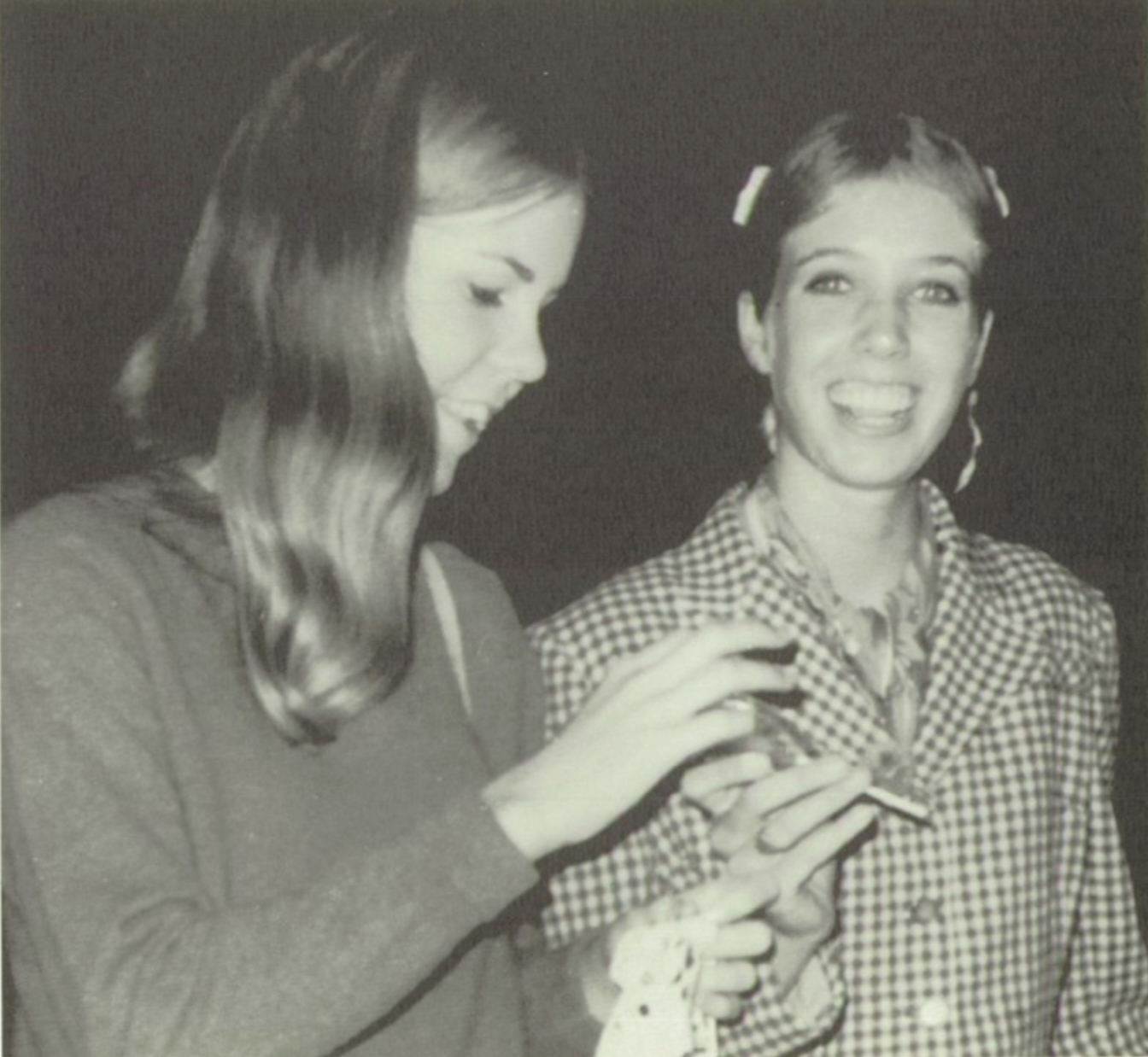
Photo of Melissa Matheson, courtesy of Celadon Books.
FISCHER: Well, Coppola’s got a wife who’s a very courageous, very good, trained artist, and he’s got a mistress who’s also a very intelligent, excellent writer, and, by his own admission, he needs both of their support and claims, if anything, that he needs the extramarital relationship for when he doesn’t get enough support from the other human being in his house. You’ve got Lucas, whose wife Marcia was his editor, a great editor, and there’s a push and pull there. And then you have Spielberg, who can’t really have a relationship. He’s that dorky guy in his 30s still going to his mom’s diner for lunch. He can’t quite connect to anything other than the toys. And then you’ve also got [Martin] Scorsese who, the way that people do, gets successful and one second later, even though he’s married and he’s got a kid, he’s like, “Honey, I’m reinventing myself. I’m out.” And there’s people like Kathleen Kennedy, who succeed in part because they know how to manage the boys club almost. In any golden age you consider, “Well, who’s allowed into the golden age and who isn’t? Who’s stopped at the gate by the bouncers? Whose shoulders are you standing on?”
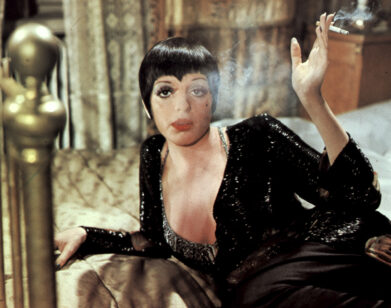
NEVINS: Scorsese, of course, is the fourth figure in the book, though he was mostly over in New York. And not to go back to the gossip, but I was really taken aback by that section about the making of New York, New York, during which he has carrying on a pretty bald-faced affair with Liza Minnelli just after his wife had given birth.
FISCHER: He’s so interesting, man, because of all of them you’re like, this feels like the human being who has the most emotional awareness and sensitivity and is concerned with what it means to be good and what it means to be bad. Then he just consistently does the shittiest stuff possible to people and kind of hates himself for it. Half the time you’re like, “Is the self-hatred a kind of performance? Are you giving yourself a pass by talking about how difficult it is to be a human being?” There’s something almost mythic about a guy so torn between wanting to be transcendent and also being so base.
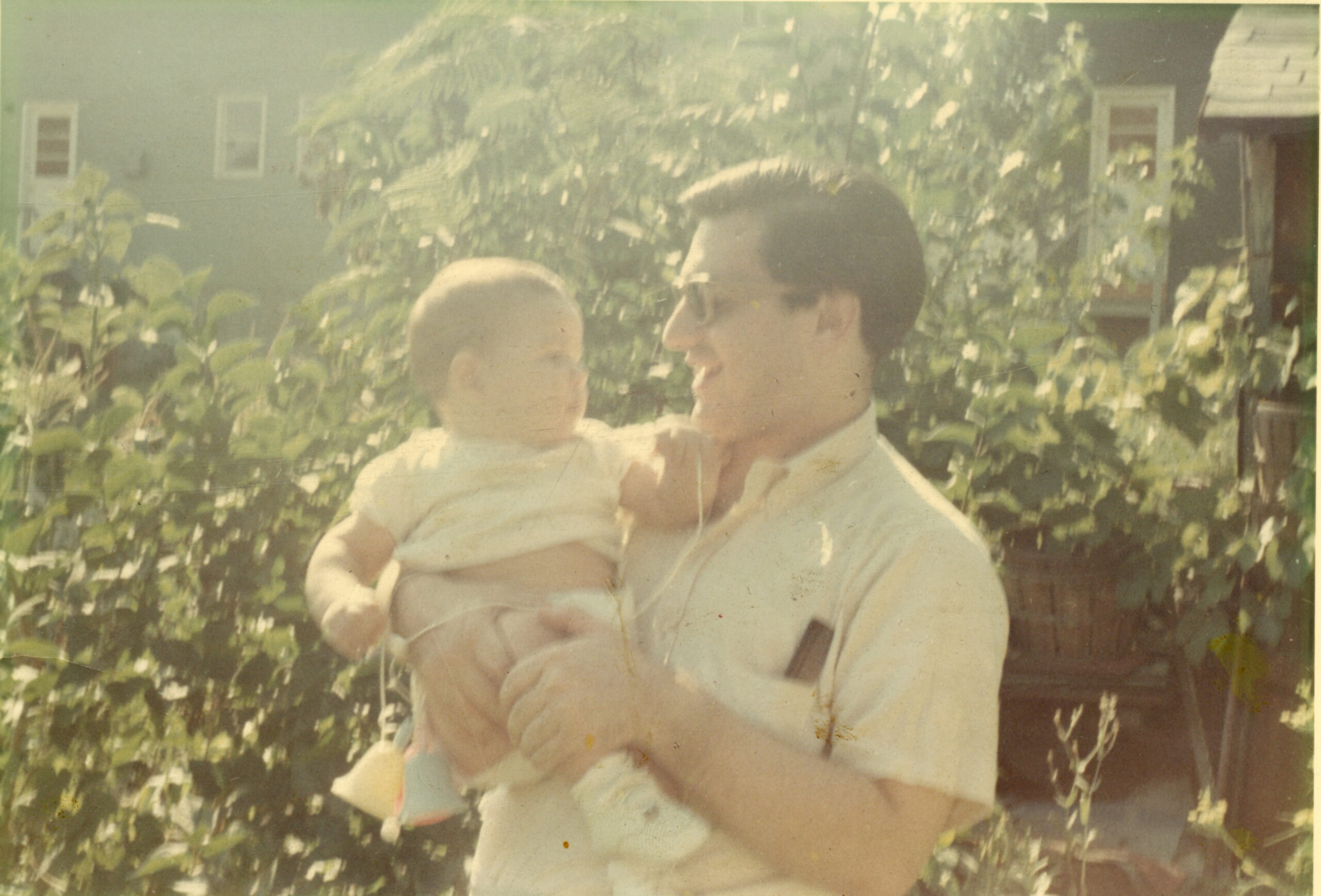
Photo of Martin Scorsese and his daughter, Cathy, courtesy of Celadon Books.
NEVINS: Well, I’ll leave you with a bit of a hypothetical. Of course, this is ultimately the story of these three men and their sort of ecstatic rebellion against the system. They keep eclipsing one another and eventually become three of the greatest and most profitable directors who ever lived. Maybe it’s too early to say, and maybe we’ve strayed too far from a viable model that no such movement can exist today, but I’m curious if there are any directors working now who you think represent that spirit of insurgent creativity the three of them seemed to have harnessed.
FISCHER: It’s a weird one because I’ve thought about this a fair bit and I don’t want to be a nostalgist who’s like, “Well, fuck, everything used to be better.” But there are parallels. At the beginning of the book, these guys are living in a world where they don’t trust the asshole in the White House and there’s wars abroad that make them feel very depressed and no one can get a job and there’s protests in the street and protesters getting shot. So this all feels very familiar. There’s a way we can say that Ryan Coogler, and him wanting to gain ownership of Sinners after 25 years, that’s very Coppola-y. But the way he goes about things feels very Spielberg-y in the sense that he’s got these kind of big, for-the-house blockbusters, and then he’s also got the personal films that are also massively entertaining and also within a genre, but they’re kind of his own.
And there’s James Cameron off wherever he is making his computer-generated films, and fuck anybody who says otherwise, that’s very George Lucas-y. And in the same way that Lucas was kind of like, “Well, I’m also interested in sound and computer games and this and that,” Cameron’s got his submarines and going down to the bottom of the ocean and doing whatever he wants to do.
This is the most random one, but we could play a game of bringing up Kristen Stewart quotes about the system and wanting to steal her own films and do her own thing and ask, “Kristen Stewart or Francis Coppola in the 60s?” And you wouldn’t be able to separate the two. It’s a very similar vibe of “This shithole is so fucking depressing, I’ve got to build community somewhere else and I don’t care if I have to steal my films,” which is something Coppola said when he met Lucas.
NEVINS: And didn’t it come out yesterday that she’s buying the Highland Theatre in L.A.?
FISCHER: Yeah, buying the theater and going, “I’m going to build community here.” And I can sense people being like, “Come on, she’s made one film. She’s an actor.” But in 1969, Coppola was just a staff writer no one knew, and the idea that he was going to change the world by going to get a warehouse somewhere was also bullshit.
NEVINS: Right. Well, this has been really fun. Congratulations on your book and thanks for talking to me.
FISCHER: Thank you, Jake. I appreciate it. Cheers.