


MAYOR
Mel Ottenberg Gets the Scoop on Zohran Mamdani’s 100 First Days


SUNDAY 4:34 PM April 12, 2026, QUEENS
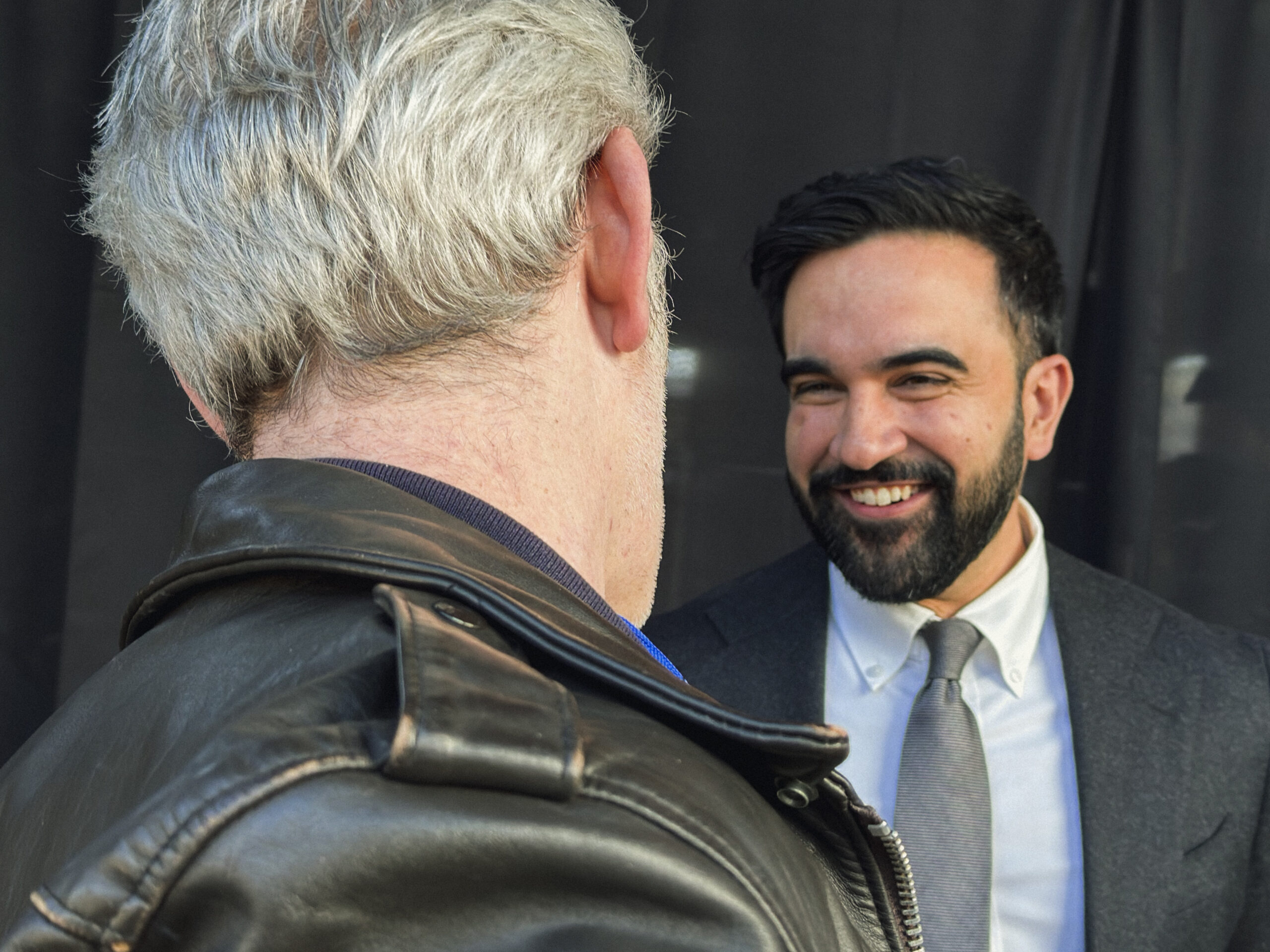
Shortly before Mayor Zohran Mamdani’s inauguration, our Editor-in-Chief Mel Ottenberg sat down with him to chat about his transition into office, how he planned to fix this big, beautiful, broken city of ours, and the crucial role sugar-free Red Bull plays in all of the above. One hundred days later, Mel checked in with the mayor again at his rally in Queens to find out how it’s going, what he has planned next, and get a status update on that damn scaffolding.
MEL OTTENBERG: Okay, I’m walking in to interview the mayor of New York City. I got to be quiet.
Speaker 1: Good morning, guys.
OTTENBERG: Thank you.
DANIEL ARNOLD: Thank you.
OTTENBERG: Hey.
ZOHRAN MAMDANI: Hey. How’s it going? Good to see you.
OTTENBERG: Good to see you again. How are you doing?
MAMDANI: Doing well. Little more lighting this time around.
OTTENBERG: Yes. This is Daniel.
MAMDANI: How’s it going?
ARNOLD: Hey, I’m Daniel. Nice to meet you.
OTTENBERG: This is my friend and photographer. You look good.
MAMDANI: Thank you very much. You look great as well.
OTTENBERG: Alright, on a scale from one to 10, how’d your first 100 days as mayor of New York City go?
MAMDANI: I usually leave it to New Yorkers to judge how it went. I’ll say that, for me, it’s been a joy working with the team that we have to deliver for the people who call the city home.
OTTENBERG: The streets are into it. You feel that, right?
MAMDANI: Shout-outs to the streets. We love them.
OTTENBERG: What are the next 100 days about?
MAMDANI: It is delivering real material benefits to working-class people across the city. When we talk about politics, a lot of times it feels abstract, intangible. These last 100 days have been $1.2 million for universal childcare, $9.3 million settlements for workers and small businesses, 6,000 apartments being fixed because we secured more than $30 million from bad landlords. We want to see more of that over the next 100 days.

OTTENBERG: Mm-hmm. And then what people in particular have really stuck in your mind since becoming mayor?
MAMDANI: There was a woman I met at a rental rip-off hearing in the Bronx. Her name was Myra, and she was telling me about how her heat had been shut off for so many months that she had to use a space heater. She pulled her phone out and showed me a video of her neighbor, who has a young disabled child, who was forced to carry her child up the stairs every day because the elevator was down for five months.
OTTENBERG: Oh, wow.
MAMDANI: Sometimes, these kinds of stories, they get distilled into a statistic that we grow numb to. When you see it right there and then, it’s hard to turn away from something like that.
OTTENBERG: And that helps you, I’m sure, figure out what you need to do to fix the city.
MAMDANI: It reminds us of the urgency of holding bad landlords accountable. The housing laws that we have, they’re worthless if we don’t enforce them. And when we don’t enforce them, we see a mother having to pick her child up every single day. We would celebrate that as an act of superhuman strength, but so often behind those stories of superhuman strength is institutional neglect.
OTTENBERG: Last time we spoke, we talked about scaffolding and how much it sucks.
MAMDANI: Yes. Come on.
OTTENBERG: And I saw your John Wilson thing, which I talked to you about.
MAMDANI: You should take that credit.
OTTENBERG: Oh shit, you hear that? You fucking hear that?!

MAMDANI: Take it. [Laughs]
OTTENBERG: Yes, thank you. I talked to my super, Robert, about it today and he tells me that you’re really making things better.
MAMDANI: Oh, shout-out to Robert.
OTTENBERG: Yeah, shout-out to Robert.
MAMDANI: We didn’t even plant him.
OTTENBERG: You didn’t plant him. He said that you’re making it easier for it to come down because the scaffolding was up on our building for forever, and it took the city forever to get it down. But he said that you’re doing a better job with making it come down. And the fines that you’ve talked about, can you speak to that for a second?
MAMDANI: Yeah. On day 65 of our administration, we changed the rule where we made inspections that used to happen every five or six years. For buildings that were constructed less than 40 years ago, we’re changing into a visual inspection every three years, hands-on physical only every 12. The importance of this is that so much of this has been justified by the language of safety. It hasn’t had a direct relationship to safety, but it’s kept these scaffolds up. There are some scaffolds that are almost old enough to vote. That’s how long these scaffolds have been a part of life in New York City. And then we’ve had rules where you would have scaffolds having to be double the length of the height of the building, which would just mean you’re blanketing an entire NYCHA campus. We’ve now limited that to 40 feet. And we’ve increased the fines, as you said, after two years of noncompliance.
OTTENBERG: Thank you for telling me all that.
MAMDANI: Very welcome.
OTTENBERG: And I’m glad for the shout-out.
MAMDANI: Come on.
OTTENBERG: That means a lot. The mayor is always going to get blamed for everything that goes wrong in the city. Maniacs with machetes on the subway, dirty snow pyramids, junkies, rats, trash—care to comment?
MAMDANI: Look, I think it’s part of New York City where people want to yell at me. That’s the city we love and we live in. Keep it coming.

OTTENBERG: You ran and won on affordability but now, with this war in Iran, all signs point towards New York becoming even more expensive. How do you fight that?
MAMDANI: I think there are a few things. One is to be very clear about our deep opposition to this war, not just on an economic level or a political level, but also on a moral level. We’re talking about a federal administration spending tens of billions of dollars to kill thousands of people at the same time that millions of working-class Americans are struggling to earn a day-to-day existence. And that speaks to priorities in our politics that are completely warped. Then, when it comes to our city, we have to do everything in our power to make it more affordable to live here. So, when we’re talking about scaffolding, it’s not just about quality of life and public safety. It’s also about the cost of maintaining a building, which comes into the cost of rent. We have to be tackling all of that, and we’re using this time as an opportunity to do it.
OTTENBERG: Are you still optimistic that you can make big change in New York?
MAMDANI: Absolutely. I wouldn’t be doing this if I wasn’t.
OTTENBERG: What are you doing tomorrow?
MAMDANI: What am I doing tomorrow? I don’t even know what I’m doing in 15 minutes from now.
OTTENBERG: Okay, okay.
MAMDANI: Tomorrow, we’re back at work. I think I’m going to housing court to get an up close and personal visit to see what it looks like for everyone who’s a part of it.
OTTENBERG: What time does your day usually start?
MAMDANI: Varies. I would say it starts as soon as I get up. So sometimes it could be 6:00, 7:00. It usually ends around 9:00, 10:00. But this last week, we went and visited city workers who were working midnight shifts to just get a glimpse of what it is that people are doing at the times that most New Yorkers are sleeping so that, when they wake up, there’s a city that’s waiting for them.
OTTENBERG: My last question is, last time we spoke you were only having one Red Bull a week. Has this job broken you or are you still on that?
MAMDANI: No. I’m around one every two weeks.
OTTENBERG: Okay.
MAMDANI: Because, after Ramadan, coffee just feels like it’s lifted me off the ground. So, it’s pretty good.
OTTENBERG: Okay, beautiful.
MAMDANI: I did have a Red Bull two days ago at around 8:00 AM. It was a tough morning.
OTTENBERG: Well, thank you for taking the time to talk to us.
MAMDANI: Very welcome. Thank you, my friend.
OTTENBERG: Really appreciate it.
MAMDANI: Always.