


BAD BOY
Mommy Domme Kim Pham Is Horny for Life


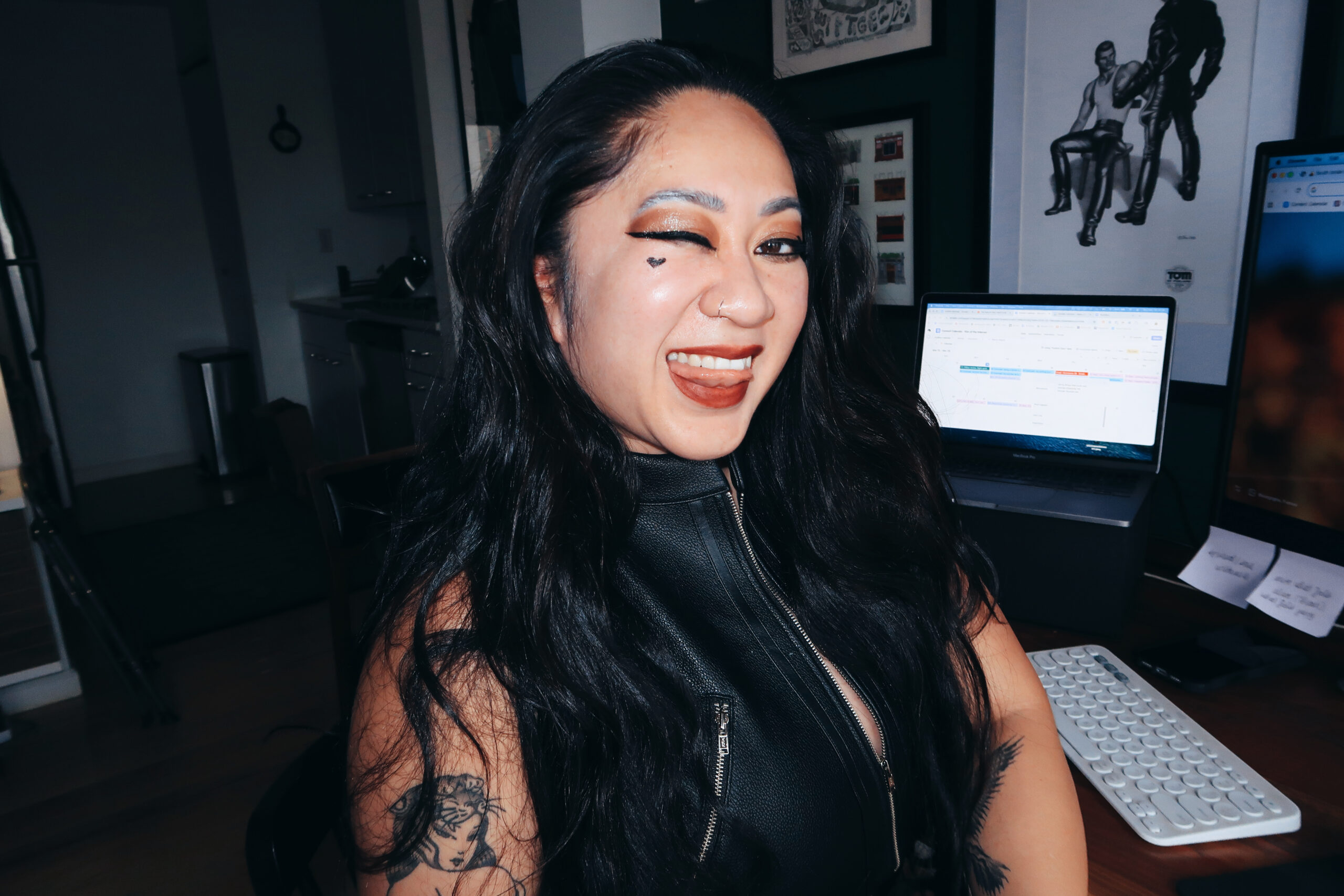
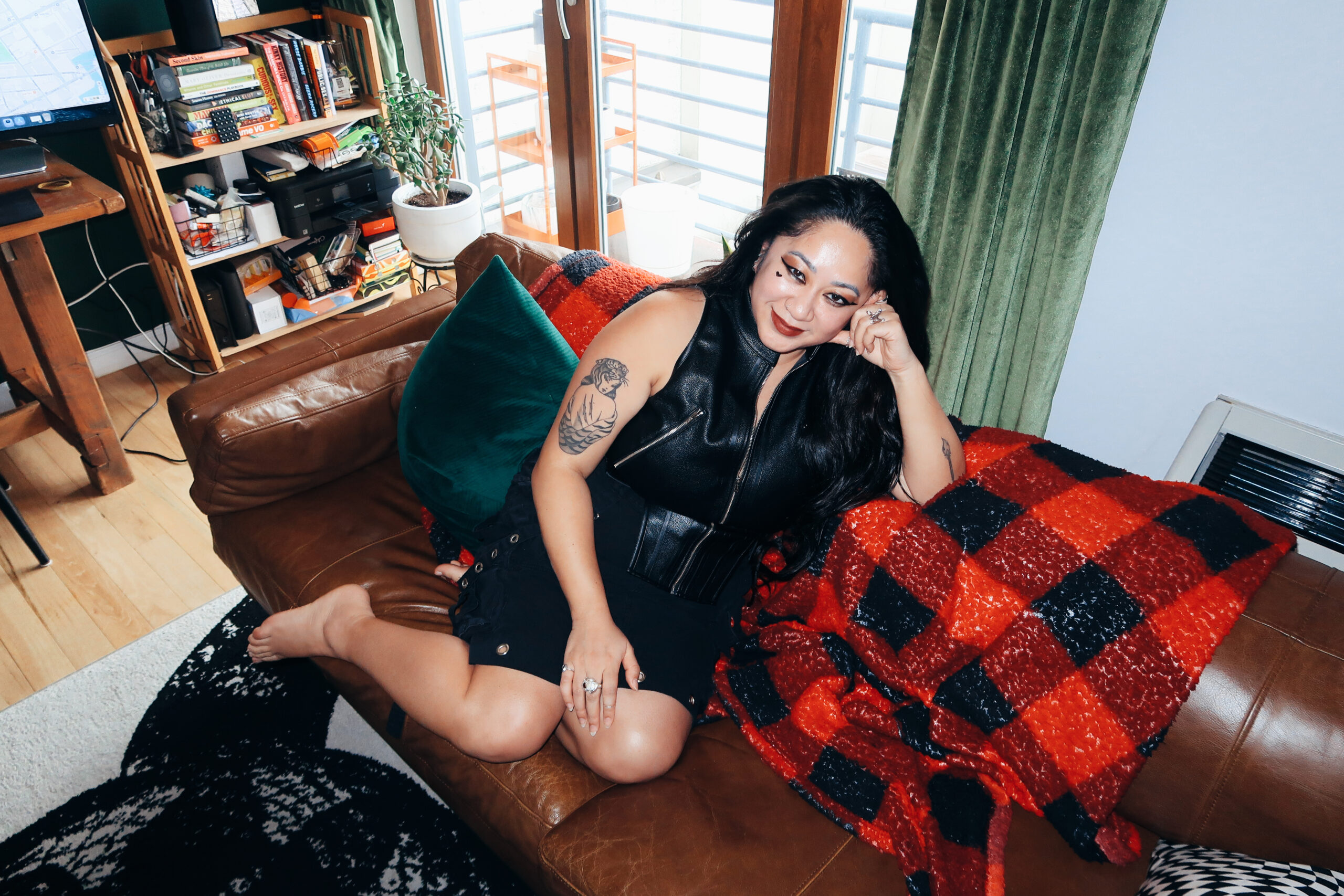
All photos courtesy of Molly O’Connor
Of all the labels pinned to Gen Z, “sexless” just might be the most confounding. Beyond its confronting resonance, the cultural marker prods at the contradiction of sex rising as an aesthetic while the act itself is supposedly in decline. Butt blush on the runway, frequent whale tail sightings on the red carpet, all the puerile performance of kink and sex in an increasingly conservative world. This idea chafed at me like the return of low-rise jeans against my millennial hips. So, I asked BDSM educator and lifestyle Mommy domme Kim Pham, who goes by Kim of the Internet, to tell me more about what this hyper-perceived generation gets up to behind closed doors.
———
THURSDAY, 2:37 PM, APRIL 30, 2026 LONDON
———
MOLLY O’CONNOR: You’re a mommy domme. Or do you describe yourself another way?
KIM PHAM: There’s no dictionary for any of these terms. But to me, a mommy domme is someone whose dominance is rooted in a more tender, caring, soft domination, as opposed to the kind of domination we more typically see in popular culture, movies, and porn, which tends to be—though not always—more harsh, degrading, and humiliation-based. I’m also a lifestyle domme versus doing this professionally.
O’CONNOR: The aesthetics of sex and kink seem to be everywhere right now. I reached out to you after hearing this podcast about the rise of booty blush on the red carpet—which I still can’t believe is a thing—and one of the hosts described it as the mainstreaming of kink through its absence. Gen Z is supposedly the sexless generation, and we’re all on our phones. Does it feel like BDSM has entered the mainstream?
PHAM: It has entered the mainstream in the sense that capitalism has found a way to commodify and profit off the aesthetic of it, so now we’re seeing kink everywhere in fashion and pop culture. But fashion and kink have long overlapped, like Gianni Versace’s iconic Miss S&M collection from the early ’90s. What feels different now is how reduced it is, plucked free from its context. We see shorthand references to power exchange dynamics everywhere, phrases like “if he yearns, he earns” or “Mommy milkers” growing in popularity online. Little nods to BDSM that have been cleaned up, packaged, and made marketable. At the same time, there’s this stark bifurcation happening. Culturally, we’re perhaps more familiar with kink than ever, but actual underground BDSM, leather, and queer communities are still being actively policed. Kink spaces and events are closing left and right. This country’s rising conservatism and administration is vilifying those with “non-normative” lifestyles. So it feels very capitalist to me. You can profit off the image of kink, but the communities actually living this subculture are still deeply marginalized.
O’CONNOR: Remind me, Kim, how long have you been in the BDSM world? Because it sounds like you’ve seen a noticeable shift in the time you’ve been in it.
PHAM: Yeah. I mean, I’ve been a kinky weirdo forever. But I started more thoughtfully and intentionally learning about BDSM —going to classes, going to munches, becoming a part of the community— in 2018. Eight years ago!
O’CONNOR: So you’ve watched this shift happen in real time. Gen Z is often painted as cool, detached, even sexless—does that align with what you’re actually seeing in kink spaces? Are people, especially younger people, more willing to voice what they want there than in everyday life?
PHAM: It’s really easy, especially as a millennial, to write Gen Z off and bemoan how they’re sexless or increasingly conservative. I don’t actually think it’s that simple. There are a multitude of factors leading to what we’re seeing with Gen Z. If you’re born into such a hopeless world, I understand how tired or skeptical you may be. Especially as it relates to human connection and vulnerability. I don’t blame their snark or detachment, I see it as a survival mechanism.
They also are a generation that is relentlessly perceived—digitally, in person, offline, everywhere. Post-COVID era, we have a level of unprecedented online-ness, so I understand why being cringe is so feared. Unfortunately, sex and BDSM and kink are deeply fucking cringe when you do it right. It’s cringe in the sense that it requires tons of earnestness. It requires vulnerability. It requires over-communication. It requires being explicit in naming desires and openly sharing, “Hey this is what I would like to do. What about you?” So I can understand why Gen Z might look at BDSM and kink and say, “I don’t want to engage with that because that whole process is cringe or corny.”
I also think Gen Z has an obsession with “purity.” Not just in the conservative politics sense, but also in the desire to view the world in binaries, to immediately determine things as clearly right or wrong. BDSM is the absolute opposite of this. It requires us to critically engage beyond just surface level. When I first started out in kink, I would often look at subversive acts and think, “Oh my god, some of this is fucked up. Are we just replicating harm?” It took me a long time to understand that what BDSM actually does is quite radical. We create a container to subvert, reclaim, play around with, and fuck up existing power dynamics that we are non-consensually subjected to. This time though, we ultimately center consent, and there’s a lot of power in reclaiming that and doing what we want with agency and on our own terms. Maybe that level of work and intentionality is cringe but, c’mon, you guys kind of need to be a little cringe to fuck. That’s part of the process.
O’CONNOR: That’s so true. Sex is inherently cringey, whether it’s branded kink or not. I’m curious, in your experience with partners, have you noticed any patterning or shifts in what people are seeking from you?
PHAM: What I have seen is folks desperately desiring vulnerability and softness. The mainstream tends to paint BDSM as this sort of violent act. But that is actually just focusing on the execution of kink—the whack-y, poke-y, prod-y things. I am way more interested in the heart of it, which is: What feeling do you desire? What non-normative, transgressive emotion are you seeking? Then, I build a scene around that. In the last three or four years, people have been craving a container to feel soft, to feel vulnerable. And this is across all genders. Whether it’s the brutality of this administration, the 24-hour news cycle, rising costs of living—we’re all getting fucking fisted by the world in so many ways, non-consensually that I do think people are asking, “Can I just have a space where I can feel soft and vulnerable?” The execution of that vulnerability might look like impact play. It might look like choking. It might look like degradation. But inherently, the core desire these submissives seek is to feel cared for, vulnerable to someone that they trust, and soft in a way that maybe the world doesn’t really allow us to show or share.

O’CONNOR: That’s almost encouraging. People are recognizing this need to be vulnerable because, clearly, what we’re doing ain’t working.
PHAM: Yeah. I mean, I think a lot of dommes—lifestyle or pro—will tell you they often feel on the front lines of identity, gender, and sexuality culture. As a domme, I am grateful that I can create this container for you, that we can play around with subversive parts of you, but do not stop here. Kink is not a replacement for therapy. I think it can be part of shadow work, but there are all sorts of other tools in your self-introspection toolkit: therapy, talking to your friends, being in community, having hobbies, journaling, et cetera. There are so many other things you can do to build a better relationship with your whole self.
O’CONNOR: What are some of your kinkiest requests? With or without contextualizing them, are there things that are maybe surprising in light of this increasingly conservative environment?
PHAM: What’s kinky to one person might not be kinky to another, so it’s hard for me to answer that question! But to be honest, I’ve done a lot of fucked up shit according to societal norms. The thing I kept coming back to was this idea that everyone wants to look horny, but no one wants to fuck. This idea that we optimize around aesthetics in ways that actually distance us from the very thing we’re seeking—human connection and intimacy. Kink has unlocked so much for me, and I truly believe the closer I got to my erotic drive and my horniness, the closer I got to enjoying everything else in my life. I am horny in the sense that I believe it to be one of the greatest and truest states of wisdom. I’m not just talking about penetrative sex, because that’s such a narrow way of thinking about horniness. I’m talking about I’m horny for the way the birds sound when I walk down the street. I’m horny for the way this food tastes on my plate. I’m horny for my beautiful, soft linen sheets. That kind of aliveness. And everyone wants to look “horny,” but in the process of looking horny we actually distance ourselves further from our body and our erotic life force. And by the way, even that definition of horny often coincides with very Western-centric perceptions of beauty. That’s what I love about BDSM when it’s done right. We can argue about what that means, but when it’s done right, BDSM is deep embodiment. It gets you into your body. When I restrain someone, they are never so aware of their limbs. Because they can’t move them, they become hyperaware of what their body is capable of. Even impact, a lot of people enjoy impact because every slap, every flog, every whip, every paddle shoots them back into their body. They can only think about that sensation. In chasing this horny aesthetic, we actually disenfranchise ourselves from our body. This booty blush gives you the aesthetic of being spanked, but zero of the embodiment actually required to engage in that act. I think we’re just moving in a way where, yeah, we’re getting further from our bodies and only co-opting the look of sex.
O’CONNOR: The way you’re using horniness as this beautifully charged catchall for being alive and present and in your body, it reminds me of Audre Lorde’s “Uses of the Erotic.”
PHAM: Yes. That changed my fucking life.

O’CONNOR: Yes, girl. I’m with you on that. And something you’re bringing up that came to mind when I was putting these questions together is the whole glass skin trend. This cosplaying of kink is coinciding with an almost delicate, breakable, untouchable aesthetic. I think of glass, porcelain, these precious objects you’re not supposed to go near. It’s this veneer of, “I will break.” And yet, cut to another red carpet, or cut to this Diesel campaign, and you’re pretending you’ve been spanked. It’s this incredible contradiction of don’t touch me, but let me look touched. And you’re so right, I think what we really want is to be in our bodies, feel good, and experience our surroundings fully present.
PHAM: Can I share with you one story?
O’CONNOR: Of course!
PHAM: Earlier today, I was sitting here at my desk and I actually had a submissive over. He was sitting on the floor with his head in my lap and I was petting his hair while I read over your questions. I got to the one that asked, what do people seek in this space the most: sex, attention, structure, permission, or touch? My answer was permission, aka vulnerability. And this is a 35-year-old, 6’4”, very handsome, powerful, and tall British banker. He sat there with his head in my lap and immediately said, “Oh, I think it’s touch.” He said people crave even just platonic touch. We don’t touch each other at all. We have lost that core, platonic, non-sexual, non-romantic touch that, when we lived in much closer proximity or much closer community, was way more natural.
Coming back to the booty blush, it is so crazy to me because I’m like, it’s the falsehood of impact. It’s the falsehood of touch.
O’CONNOR: It’s so interesting that a man would say touch, because my brain goes to how women are kind of encouraged to hold hands and lounge on the couch together and touch each other’s hair—at least in American culture, that’s coded as friendship. Men don’t do that. They’re encouraged not to.
PHAM: Yes, because god forbid they look gay.
O’CONNOR: Right. Which is inherently the rejection of the feminine.