


SPACE
Inside Lauren Halsey’s Black-Fantastical Sculpture Park


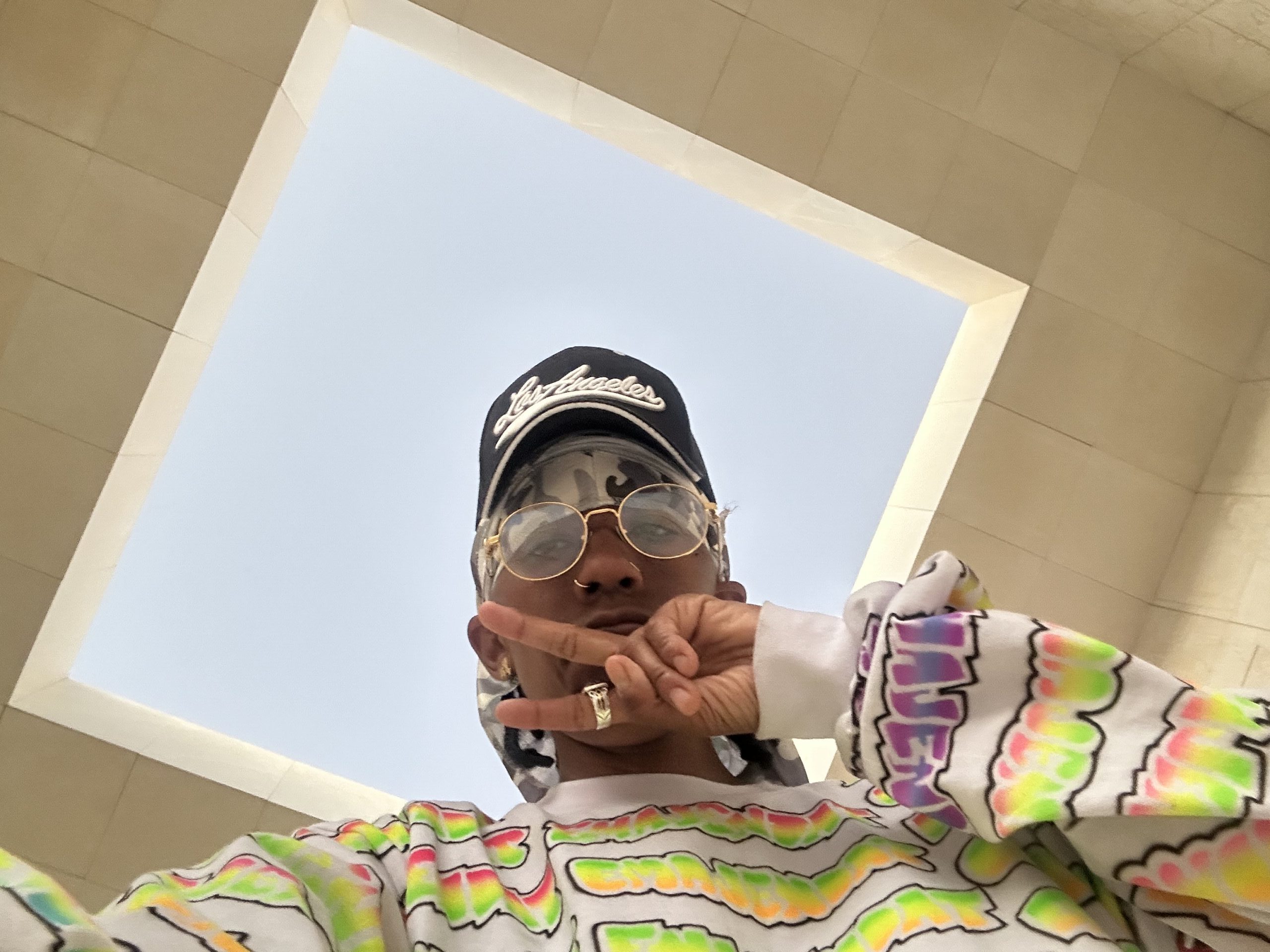
All photos courtesy of Lauren Halsey.
Lauren Halsey’s new sculpture park, tucked between 76th Street and Western Avenue in South L.A., is more than a monument. Two decades in the making, sister dreamer, lauren halsey’s architectural ode to the surge n splurge of south central is closer to a living venue: a temple, a dance floor, a classroom, a garden, and a much-needed gathering place in the neighborhood where the artist was born and raised. It’s a tribute to the generative Black space Halsey sees as sacred, and increasingly scarce. “While I have the keys, I want to do the most,” she told jazz composer Kamasi Washington over Zoom last week. The two have been close friends for over a decade, bound by a shared frequency, both fluent in what Halsey calls the Black fantastical. Just before the park opened, they got to talking about temples, collabs, and cosmic spirits.
———
LAUREN HALSEY: Hi, Washington.
KAMASI WASHINGTON: How are you doing?
HALSEY: This is the first time I’ve ever been burnt out. I’m exhausted, but it’s for our neighborhood and nobody else, so it’s a blessing. I’ve been praying for the endurance from god to just get over the hump, because what’s on the other side feels liberating.
WASHINGTON: Yeah.
HALSEY: You told me you’ve been driving by my sculpture park, and I can’t wait for you to come in. I had an event for the studio the other night and it was very natural, free-spirited. Then we turned on the music, and the lights came on and it felt so fantastical. I use that word a lot, but it’s more how I contextualize funkadelic. Then I came up with a list of all the people who have to perform, and of course you’re on it. I think it will speak to you so deeply.
WASHINGTON: I’m so excited to see it. When I take my mom home, we drive around it. She’s like, “So your friend made that, Kamasi?” I’m like, “Yeah, my friend made that.”
HALSEY: I remember the night I first met you at Thomas Houseago’s studio. I was living at my grandma’s house on the East Side sleeping on the floor, and I got this text from Thomas like, “Come over.” I took buses, trains, and automobiles to get there. Then I met you and we just hit it off. When was that? Like 10 years ago.
WASHINGTON: Wow.
HALSEY: And here we are now.
WASHINGTON: Yeah. Your work really transforms the world you’re in. I’ve only seen pictures, but I can imagine being in this space. If we made some music there it would be crazy.
HALSEY: That’s what your dad was saying the other day when he came by. What are you working on right now?
WASHINGTON: I got a few things on the docket. Terrace Martin and I are working on a record together. And I have this ballet I’ve been working on for forever.
HALSEY: You’ve always talked about that. Tell me more.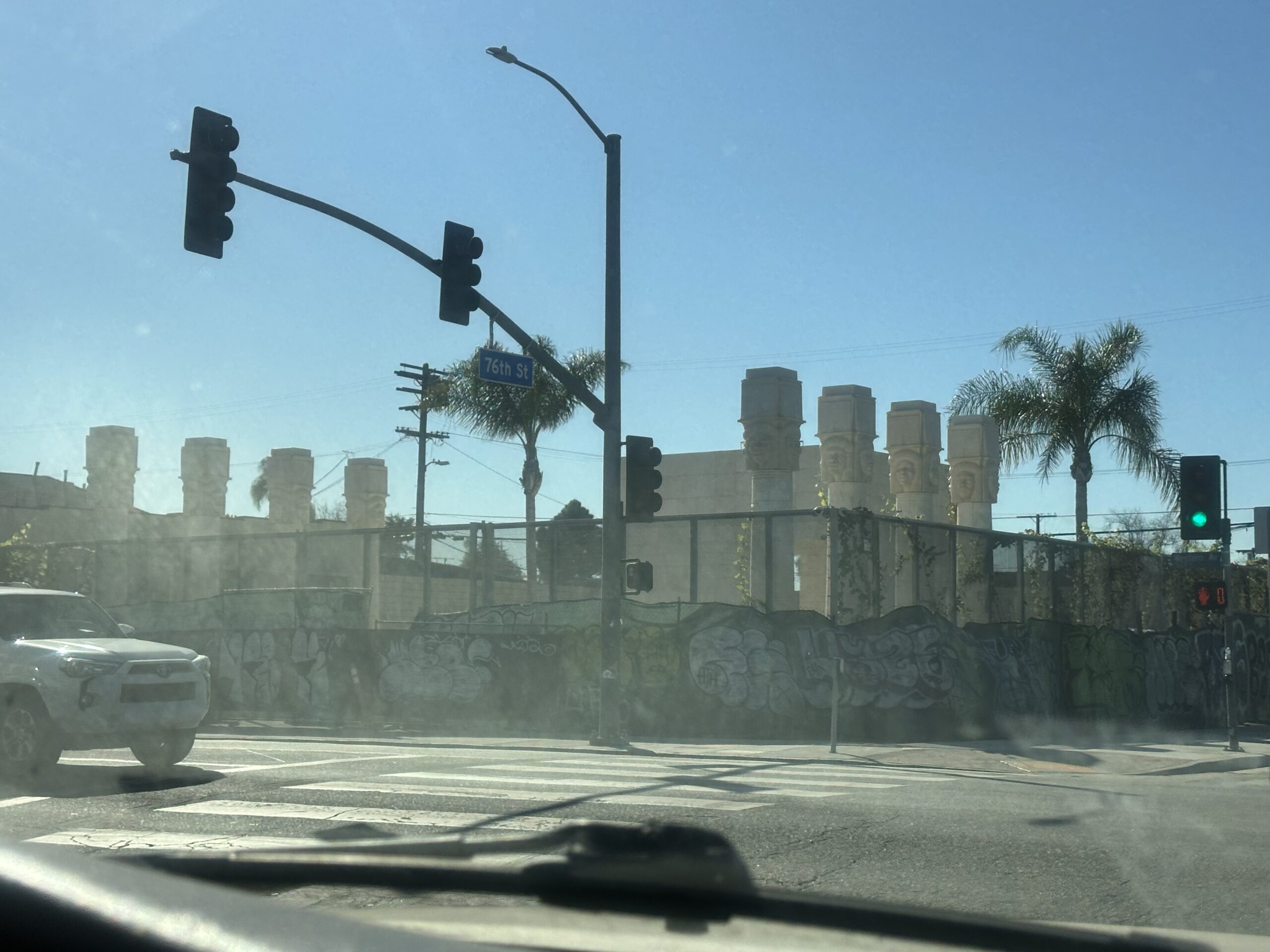
WASHINGTON: It’s like you said, very Black-fantastical. It’s a very real, deep fantasy story. I started writing this piece of music and I had one little piece of an image. It actually premiered at Disney Hall, but it was only two movements of the piece. When I heard it, like really heard it with real people playing it, the rest of the story started to germinate. So I started to write the whole thing. Now it’s like 27 movements.
HALSEY: Wow.
WASHINGTON: My cousin Tamika, who’s Lula Washington’s daughter, helped me with the choreography. I’m just trying to find the right person to help me figure out how to tell this story visually, and then we can figure out how to bring it to life.
HALSEY: How do you usually approach collaboration, especially when it’s multidisciplinary? Do you just riff and hang out?
WASHINGTON: I try not to have too set of a thing. If it’s something that I’m doing, I find someone that I think would see the vision. I try to find a way that works for the project itself and for that person. So I leave it open-ended.
HALSEY: Totally.
WASHINGTON: With your compound, how is that working now? It’s almost like you got your own little city.
HALSEY: I will say, it’s a blessing to be able to come to a studio with the most talented artists and minds. From the registrar, to the admin, to the art-handlers who put forward ideas and now we have their knowledge systems. There are moments and phases of production where it literally feels like I’m walking onto a set of HGTV in the hood, because it’s so Extra’d out.
WASHINGTON: [Laughs] Yeah.
HALSEY: But I’m trying to embody having a multidisciplinary practice. We’ve talked off the record about my desires to enter into music, and I feel so close. But it’s because the studio is so strong that I’m able to now figure out how to extract some of that language into another context that’s not fine art. I also want to have time in my studio where I can play, and experience myself differently through art so it doesn’t feel like a job. I used to have that in school, and I’m trying to take some of that freedom back.
WASHINGTON: Me and Terrace are talking about that. It felt like when I was younger, I had so much time to share. Similar to what you’re saying, I feel like every time I play music with other people, it’s at a gig or a show. But it wasn’t always like that. It used to be, “Let’s just get together and play.”
HALSEY: Yeah.
WASHINGTON: It gets harder and harder as you get older.
HALSEY: Because there are all these conditions around it where it has to be produced. And that context makes so much sense because it supports everything I want to do, but I also need a context wherein none of it matters and that there are no stakes.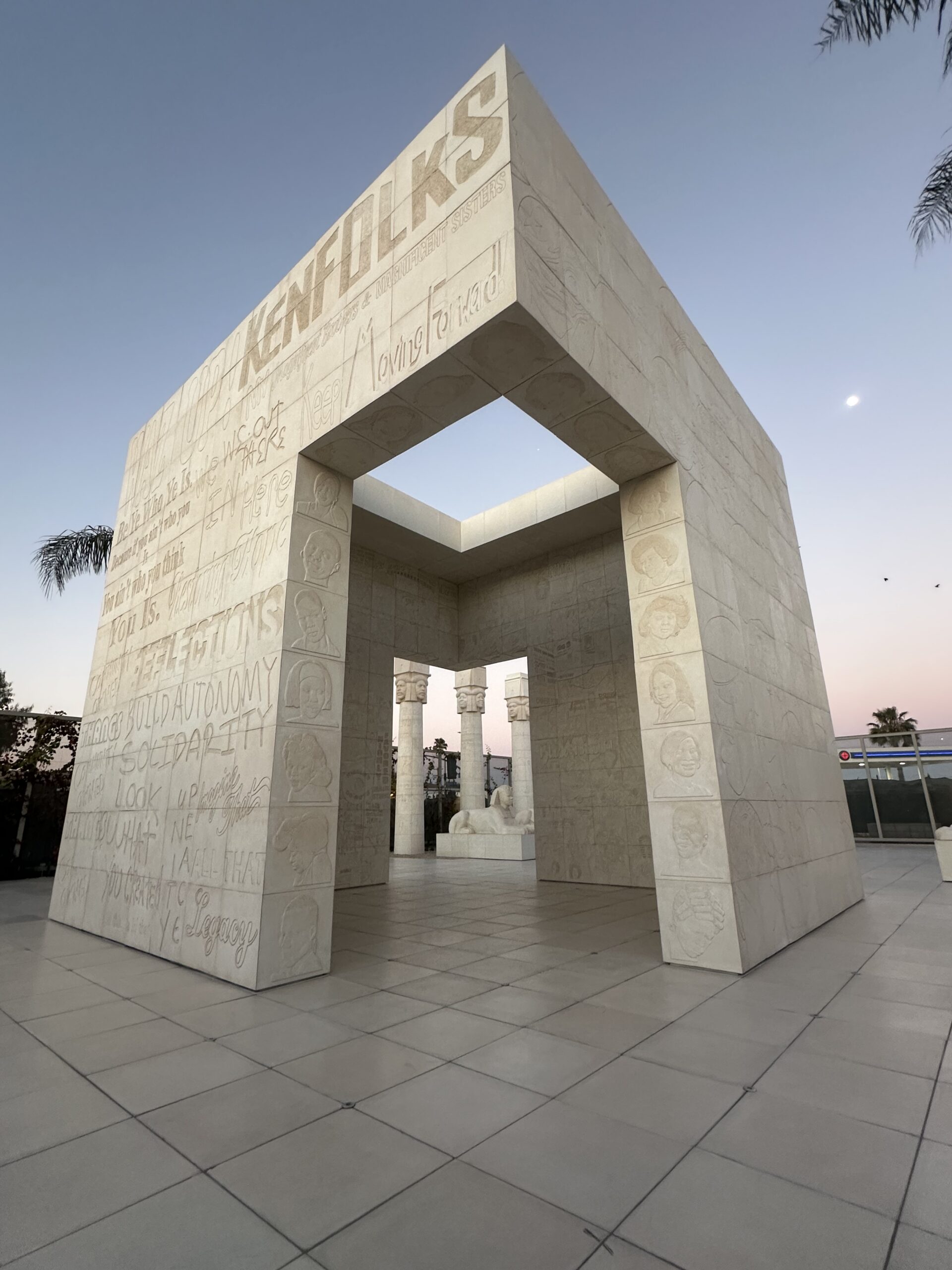
WASHINGTON: Man, I feel you so much. Everything’s such a big deal.
HALSEY: I saw you play the World Stage on New Year’s Eve, right?
WASHINGTON: Yeah.
HALSEY: I really love that you can be as macro as the Bowl with 17,500 seats, and you can be as micro and as accessible as in the middle of Degnan. And you’re still as ambitious in your performance and accessible to everyone. It’s very poetic. Did you always think that you would want to balance your career in that way?
WASHINGTON: Well, it was my reality. When I was still in college I started touring with Snoop.
HALSEY: Whoa. Tell that story.
WASHINGTON: We used to come off playing these huge stadiums and then get off the plane and immediately go play at 5th Street Dick’s in Leimert. So, we’d be playing for 50,000 people and then go play for 20 people and have the same energy.
HALSEY: Love that.
WASHINGTON: I always said I always had that parallel universe thing with my music. And when I was younger, I was trying to figure out a way to do what we’re doing over here on a smaller scale. But I felt like it fit on the bigger scale too.
HALSEY: Same.
WASHINGTON: Then once we got it to the bigger scale, I had the revelation like, “Oh, I’m going to miss over here.” They were both happening.
HALSEY: You were just doing it. It was a muscle.
WASHINGTON: Yeah, and that was just our reality. We had one foot in both worlds. I think that’s just my musical composition, and it’s always going to be that. I don’t necessarily think that the size of something dictates the importance of something. You know what I mean?
HALSEY: Yeah.
WASHINGTON: It’s not like I only want to play little small places or I only want to play really big places. They exist for different reasons.
HALSEY: Totally. I want to see you and [DJ] Battlecat again. That was one of the best nights of my life, musically.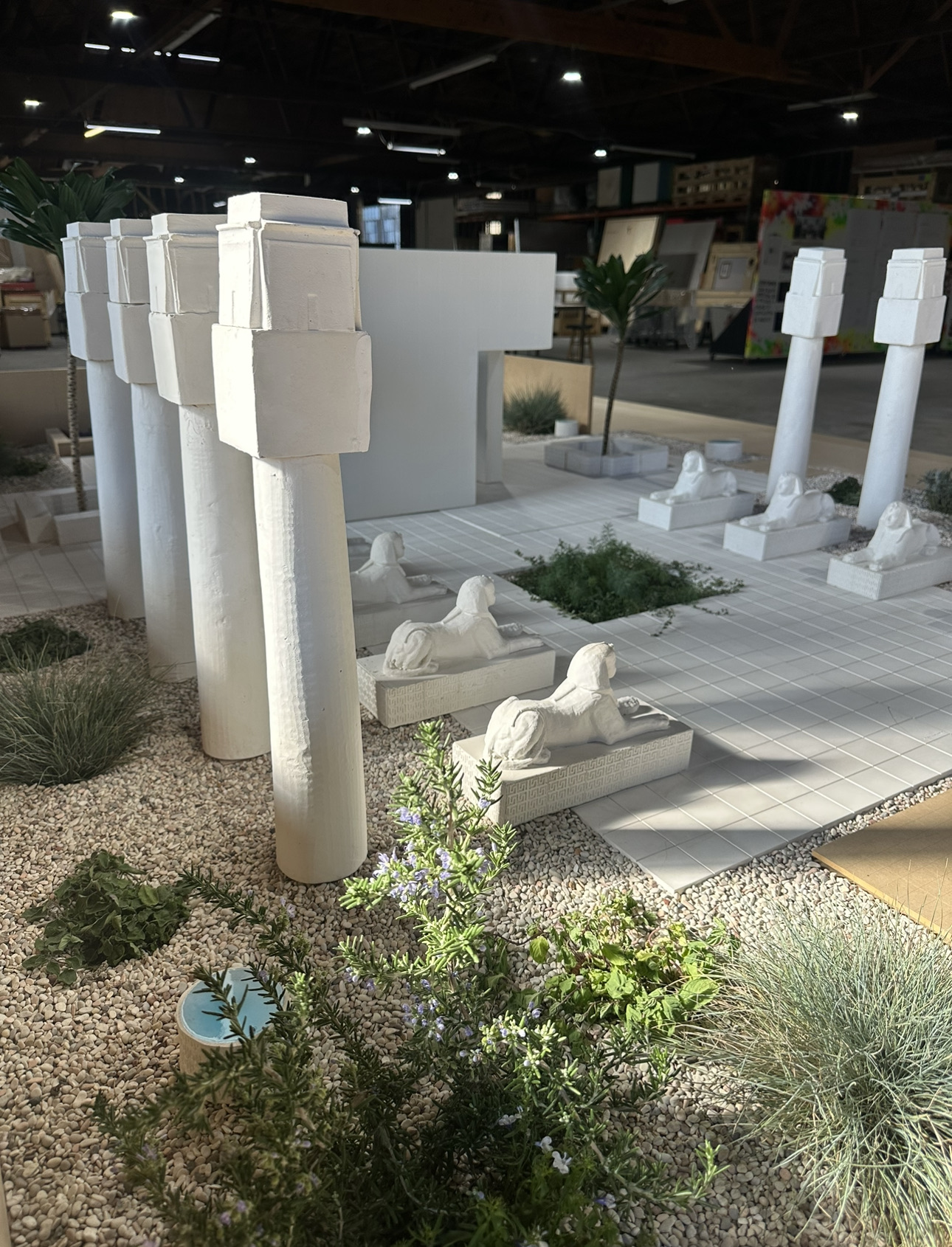
WASHINGTON: Oh yeah?
HALSEY: I just was like, “What?” It was another level of him unlocked that I didn’t even know existed. A genius, for sure. Such a pillar.
WASHINGTON: And the crazy part is, we know nothing about Cat since the early 2000s because he came and got us. The first thing I ever did with Battlecat was a Roger Troutman tribute.
HALSEY: Wow. Where was it?
WASHINGTON: It was at the Hollywood Athletic Club. It was magic. I knew his music. I grew up a super fan. But sometimes you work with people and you gotta come down to them a little bit.
HALSEY: What does that mean in the music world?
WASHINGTON: It means you got to dilute it. I understand it, because it’s like cooking. You know what I mean? Everybody don’t want the hot, hot, hot, hot, hot.
HALSEY: Yeah, totally.
WASHINGTON: But then Cat, his house was hotter than us. He wanted water that we had.
HALSEY: I love that. Wow. When’s the next show?
WASHINGTON: We’re doing the Santa Monica Jazz Festival.
HALSEY: I will be there. I want to invite you to play at my park. Can you do it with Battlecat? What’s so cool for me is that the whole thing pays homage to us and our hyper-local heroes, people who are the pantheon of Black genius across all these eras of South Central. It’s been really special as people see the work, they’re like, “Oh my god, that’s so-and-so from around the corner.” Or, “That’s uh-uh-uh from up the street.” But I also want it to be animated and I want it to be used. I don’t want people to just look at it. I want it to shapeshift, where it’s a classroom for kids, because we’re going to have educational initiatives and stuff like that, and we’ll have art and workshops and wellness. Then it’s also the dance floor.
WASHINGTON: Yeah.
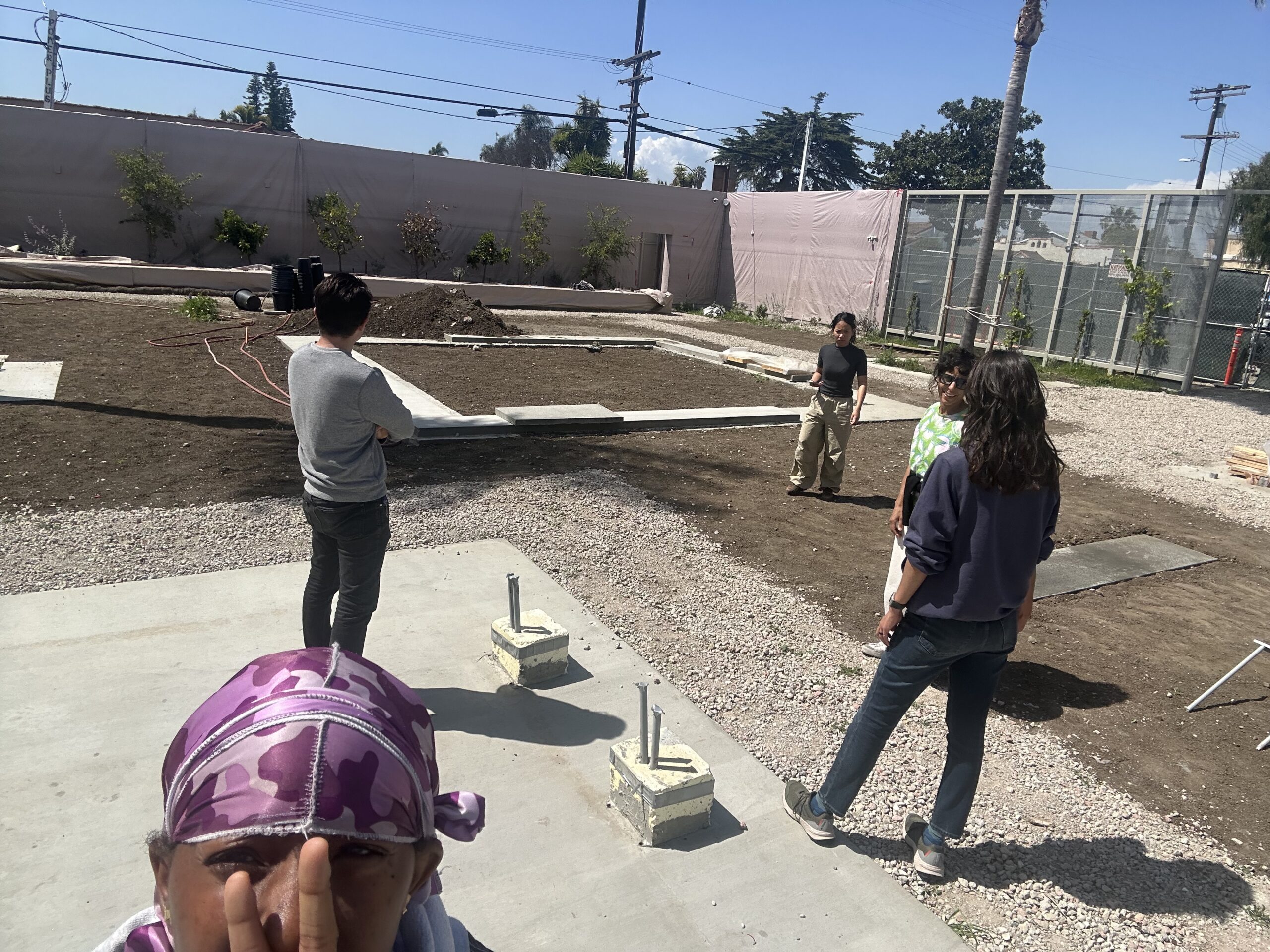
HALSEY: I’ve been secretly throwing parties there, and they’ve been incredible. We have two layers of concrete walls, so it’s a great soundproof situation. Then I want it to be theater, stage, living room. The sculpture park also functions as this Black and brown venue for the neighborhood, to come and experience ourselves in another context without so much pressure. I’m already trying to plan a Juneteenth thing, secretly.
WASHINGTON: That sounds amazing.
HALSEY: So I’ll figure it out, because someone’s going to be like, “What do you want to do?” And I have four things. And so this is number two. Al Green’s number one. He’ll be at the Bowl August 15th.
WASHINGTON: Oh, snap. Okay.
HALSEY: Yeah, I missed my high reunion to see him. He was at the YouTube Theater.
 WASHINGTON: Oh wow.
HALSEY: So good. His voice is still syrupy and dreamy and silky, and he still croons. When he did “Simply Beautiful,” everyone almost passed out.
WASHINGTON: Oh yeah.
HALSEY: He’s throwing roses out in the crowd. And I’m a lesbian. You know what I’m saying?
WASHINGTON: [Laughs]
HALSEY: Is there a venue you haven’t played yet that you really want to?
WASHINGTON: I’ve had ideas. It sounds crazy, but I visited Karnak Temple in Egypt and it was like, “I can feel the energy in here.”
HALSEY: That’s not crazy. Didn’t Travis Scott do something like that?
WASHINGTON: I think people have played in front of the pyramids.
HALSEY: But you mean inside?
WASHINGTON: I don’t know if anyone’s ever played inside Karnak Temple, but hey, let’s put that out there.
HALSEY: It’s happening. It was already written. Boom. All right, come to 76th and Western [the location of Halsey’s sculpture park] first and then we’ll go to the temple.
WASHINGTON: That’s the new temple. I’ve only seen what you can see above it.
HALSEY: Oh, the Hathoric columns?
WASHINGTON: Yeah. I’m like, “Oh man, I can’t wait to get in there and make some music. “
HALSEY: Come towards the evening because we have such beautiful sunsets here. The sky turns this royal orange. It’s so dramatic. Then there’s the DJ across the street at the ARCO station who’s just there all day slinging CDs. Or he was doing CDs, now he’s doing flash drives where it’ll be the Best of Gospel or R&B. By the time the sun starts to set, he gets into the Anita Baker world or S.O.S. Band.
WASHINGTON: I think that there’s an Egyptian temple or something like that up the street. I always wondered what that was.
HALSEY: The KRST. I grew up going there. I did the Rites of Passage program. My grandmother’s name actually is painted in one of the cartouches on the mural on the side that says “Know Thyself.”
WASHINGTON: Wow. I’m so glad that you’re thinking of things in this way too, of making something interactive.
HALSEY: Yeah, I’m literally treating it as a venue, because everyone knows that I love wearing multiple hats. I’ve just been out here taking meetings with people, being like, “Hey, you want to have dinner here? And you cook from the garden.” Chef Alisa was there yesterday and we’re like, “Let’s do a dinner. We’ll get the musician.” Then I went to the Slauson and talked to my friend who makes incense, and I was like, “We’ll do the scent.” But it’s cool because I’m the key holder, and it’s a Black space, which we don’t have a lot of anymore. So while I have the keys, I want to do the most.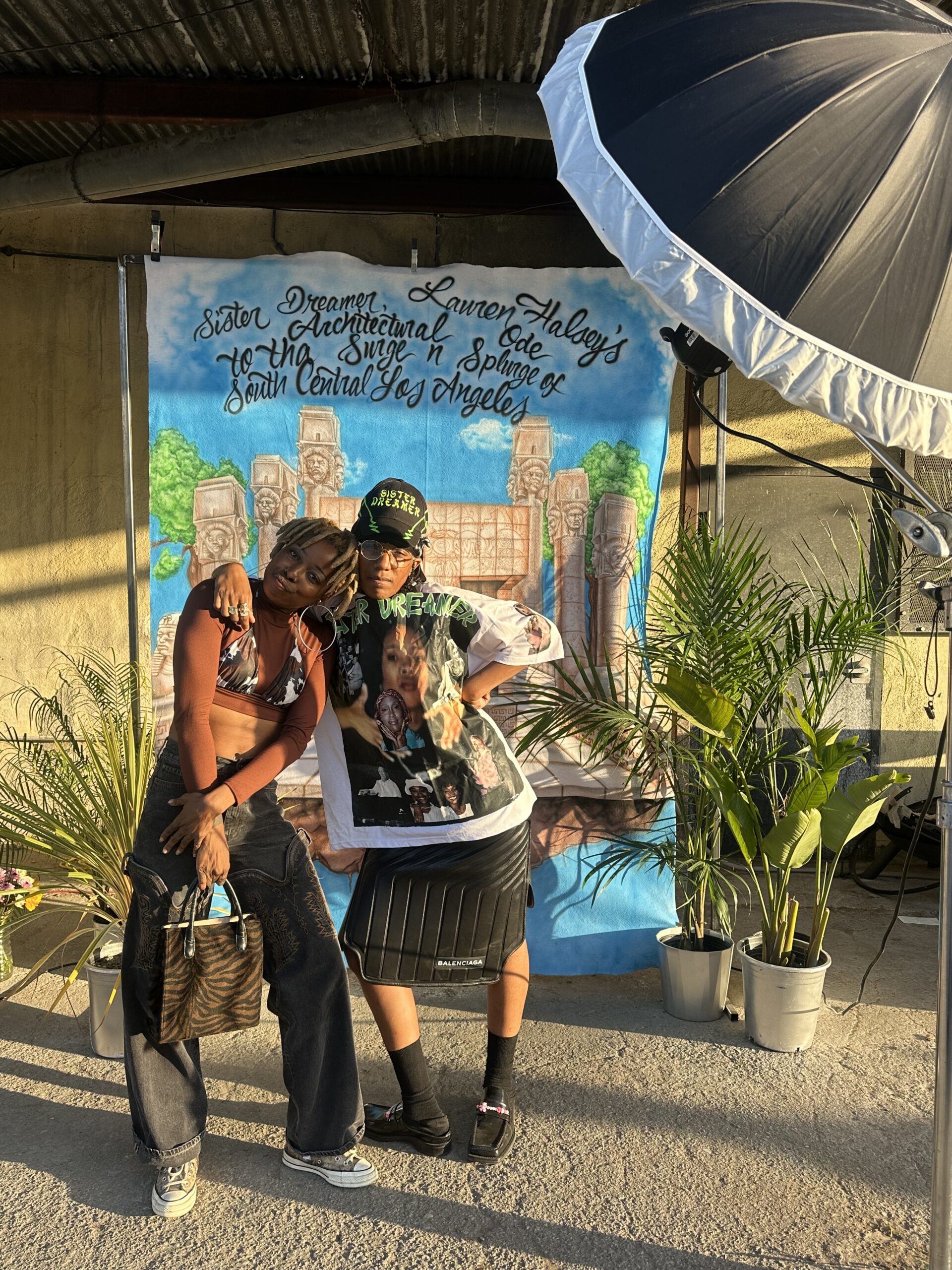
WASHINGTON: That’s how it starts. I was just saying that I grew up under Reggie Andrews and his philosophy was, why aspire to get to some other place? Why not aspire to make people want to get to your space?
HALSEY: Yeah.
WASHINGTON: That’s what you’re doing to me. Hearing how you view the world and move through it is always very inspirational for me. I’m thankful for it.
HALSEY: I appreciate that. Ditto.
WASHINGTON: What you do is big and permanent, and it exists in the physical world in a very tangible way. Music sometimes is the reverse. It just appears. It only exists in the physical world for a split second, and then it’s only existing within the people that saw it. I’ve been to spaces where beautiful music has been made, and it lingers. When other musicians come to play, they’ll be like, “Ooh, I feel something when I come here.”
HALSEY: I love that.
WASHINGTON: My Aunt Lula Washington’s a dancer, so she was the first person to give me the opportunity to work with one of my biggest heroes, McCoy Tyner. I was really freaking out over that. I had a weird experience. He caught me in a moment of disbelief.
HALSEY: It happens to me all the time.
WASHINGTON: But that was one of the first times I got to really play music that had dancing to it. Especially intense, heavily improvisational jazz. That separation’s never happened, people moving to this music. To me, artists creating spaces that musicians make music in is something that should happen more often.
HALSEY: I’m trying to bring it back, and you are too.
WASHINGTON: You already did it.
HALSEY: Now I got to bring the musicians in.