

ON VIEW
How the Julia Stoschek Foundation Resurrected Los Angeles’ Forgotten Theater



Installation view at “What a Wonderful World: An Audiovisual Poem”, 2026. All photos by Joshua White, Courtesy Julia Stoschek Foundation.
The Julia Stoschek Foundation’s immersive video installation What a Wonderful World: An Audiovisual Poem just made its U.S. debut in an unexpected location: the Variety Arts Theater, a five-story Venetian-style landmark in downtown L.A. that has languished in darkness since the early 1990s. Once a symbol of the city’s architectural ambitions, the building slowly faded from public memory. Now, burrowed between decaying columns and hovering over vacant stages is a chronological voyage through 120 years of film and video art that transforms the dormant space into a rich, cinematic dreamworld. Curated by Udo Kittelmann, the exhibition features work by Paul Chan, Jon Rafman, Bunny Rogers, P. Staff, Jacolby Satterwhite, Precious Okoyomon, Paul McCarthy, and Arthur Jafa, among others. Driven by the show’s impulse toward transformation and disruption, we asked several participating artists to reflect on a core question: “What’s missing in the art world?”
———
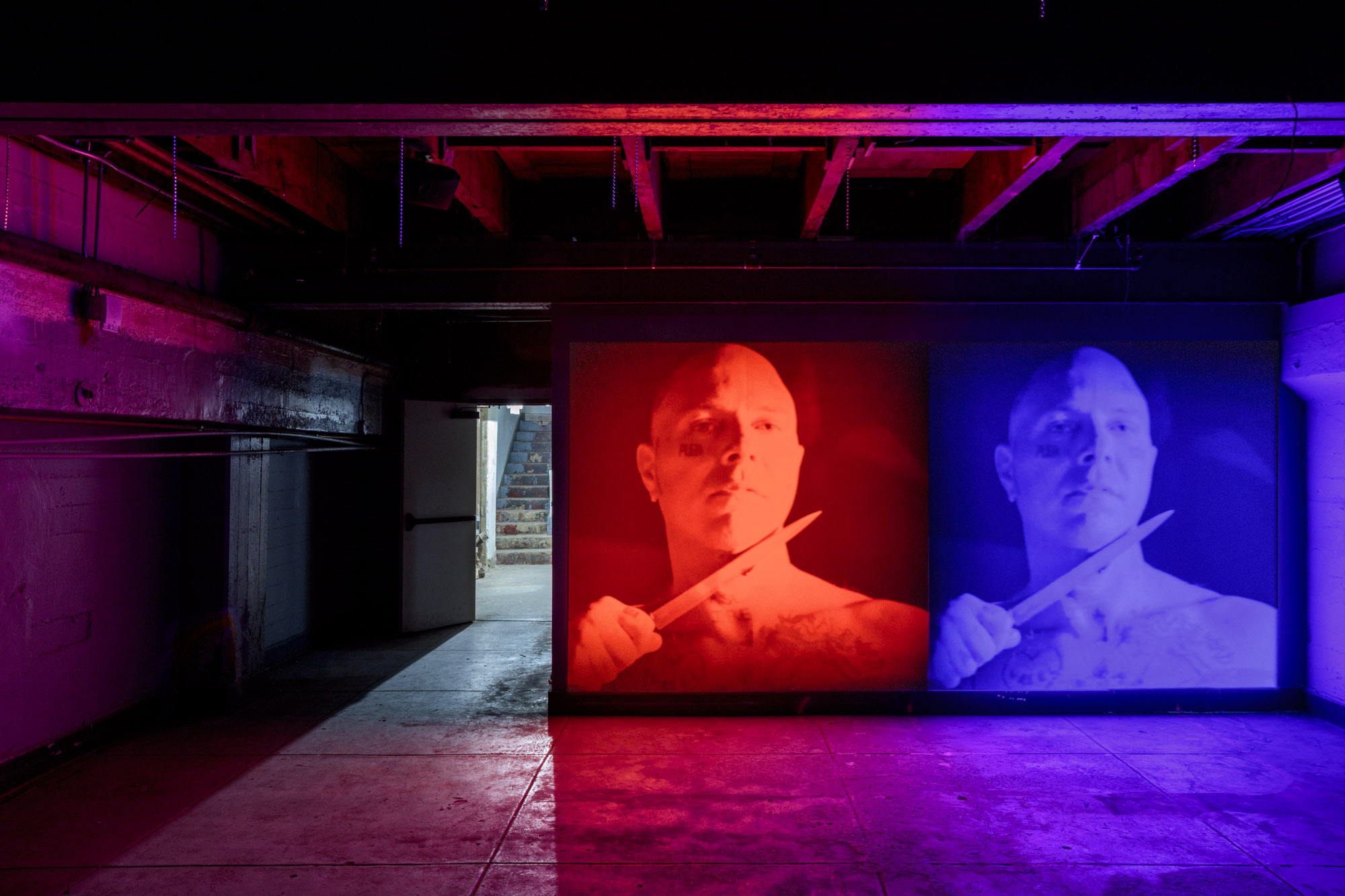
P. Staff, Pure Means, 2021, (installation view).
P. STAFF
“Revolution, compersion, apocalypse, end-of-capital, free-everything, kisses, soaking, fireworks, trans-everything, pleasure, nothing.”
———
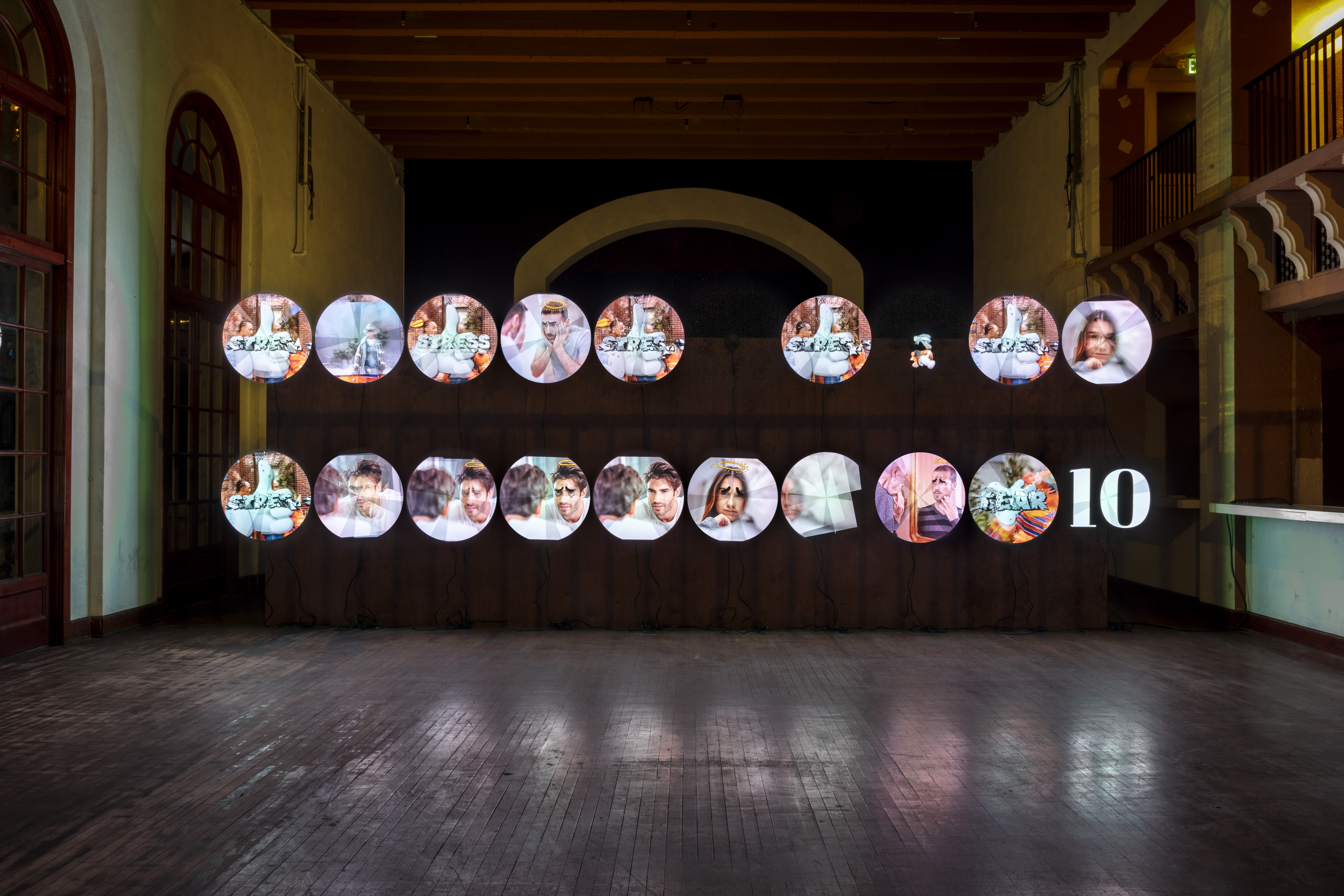
Jordan Wolfson, ARTISTS FRIENDS RACISTS, 2020, (installation view).
JORDAN WOLFSON
“There’s nothing missing. Art is always a representation of the times in which we are living. And if you sense, or feel, that there is a lack or an excess in the art-making, then that is, in fact, part of the reflection the art makes, with or without the intention of the maker.”
———
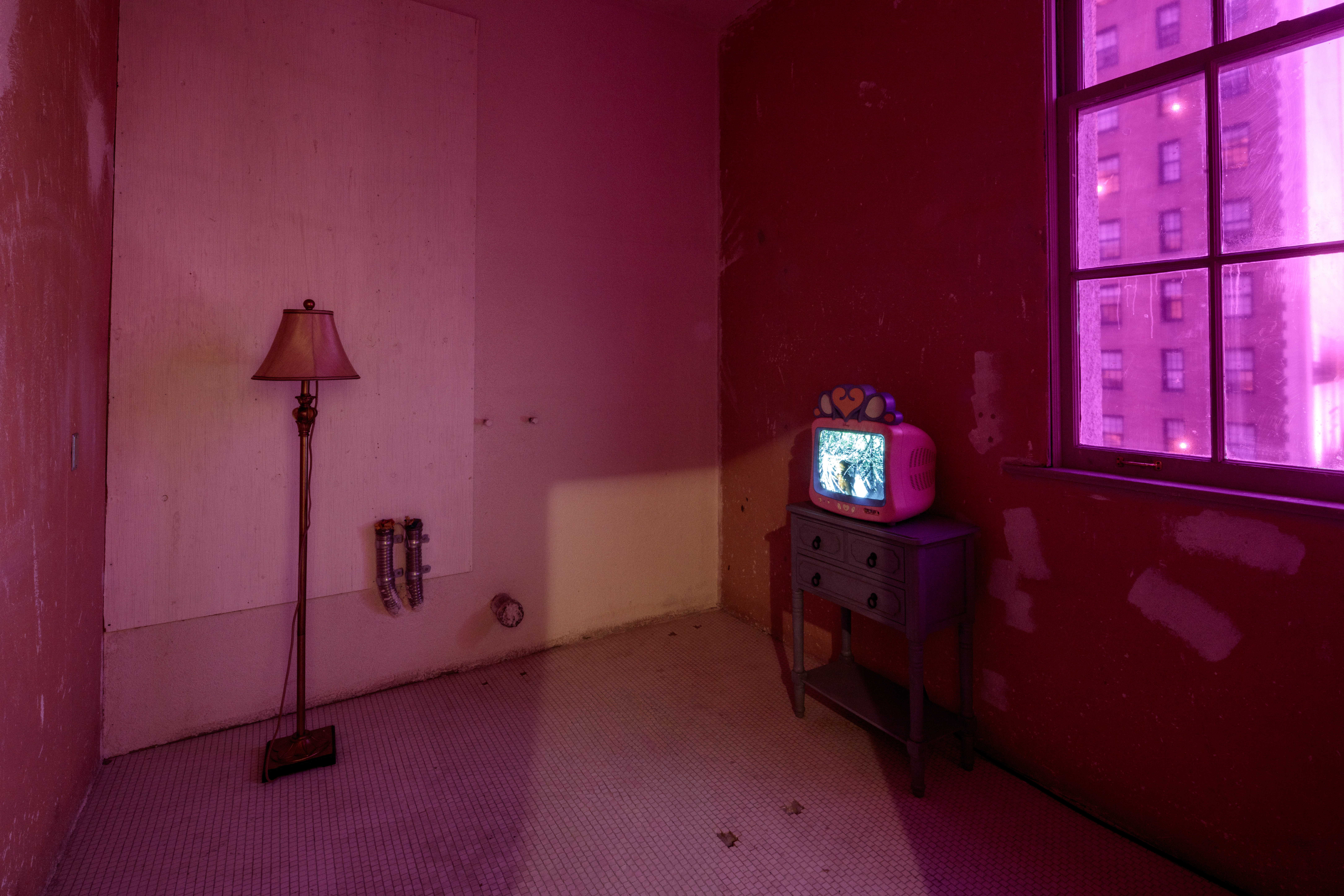
Precious Okoyomon, It‘s dissociating season, 2019 (installation view).
PRECIOUS OKOYOMON
“For me right now what’s missing in the art world is miracles, and the space for the possibility to create miracles in new and terrifying ways, more wonder more time outside of time.”
———
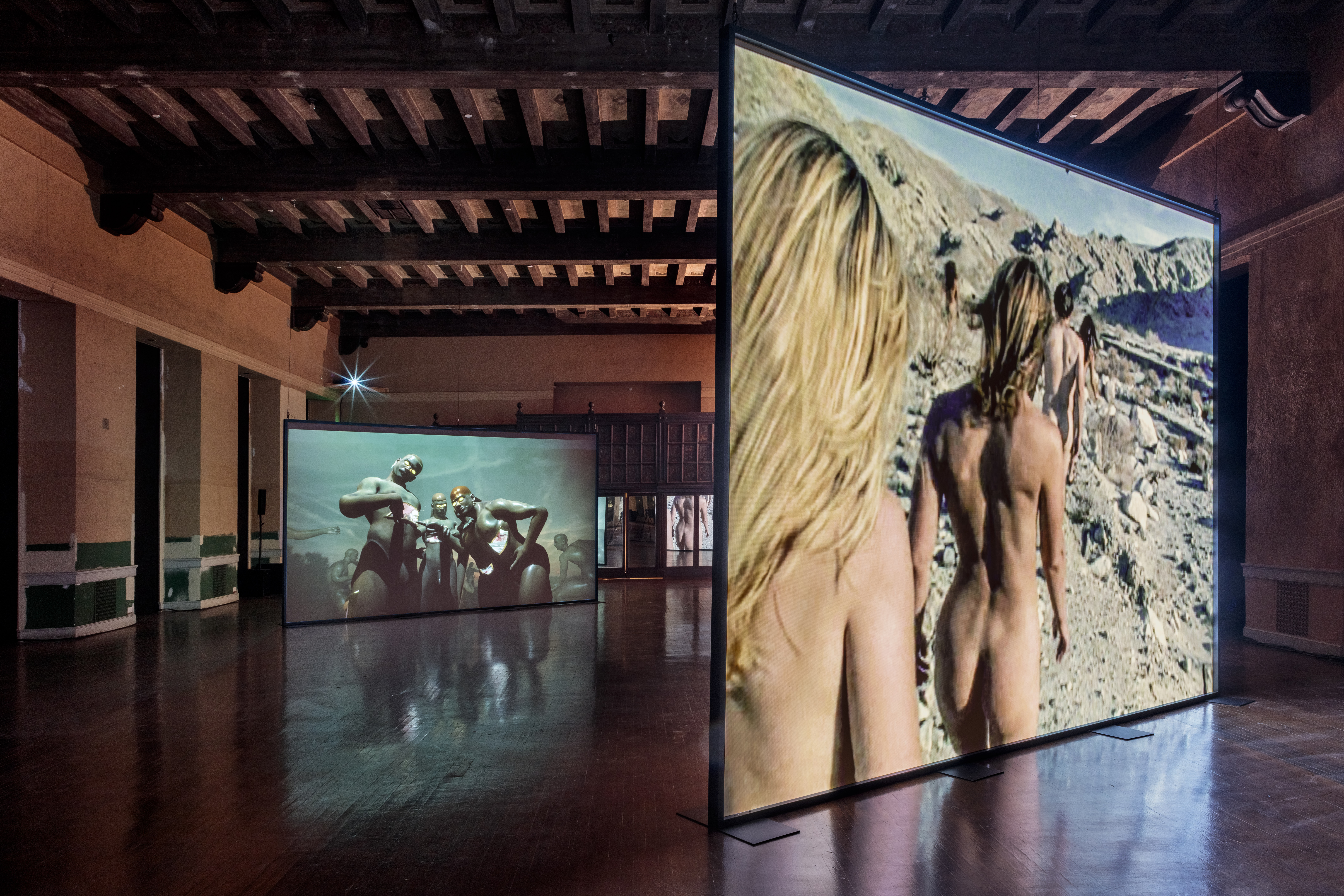
Left, Jacolby Satterwhite, 2 Shrines, 2020: right Doug Aitken, 2 Blow Debris, 2000, (installation view).
JACOLBY SATTERWHITE
“When you do clownery, the clown comes back to bite!
Clownery is missing. Failure too. Everything works. That’s the problem. Empowerment works best. Humanity doesn’t.
I like clownery. It means something failed. Failure is more interesting than empowerment. Empowerment is very successful.
The art world looks good. It doesn’t feel like anything. Clownery would help. Failure would help more.
Clownery is unpopular. Failure even more. That’s why they’re good. Empowerment is very popular.
Nothing is embarrassing anymore. That’s new. Clownery fixes that. Failure makes it human.
Clownery is a kind of honesty. Failure is a kind of beauty. Empowerment is a kind of product.
When you do clownery, the clown comes back to bite.”
———
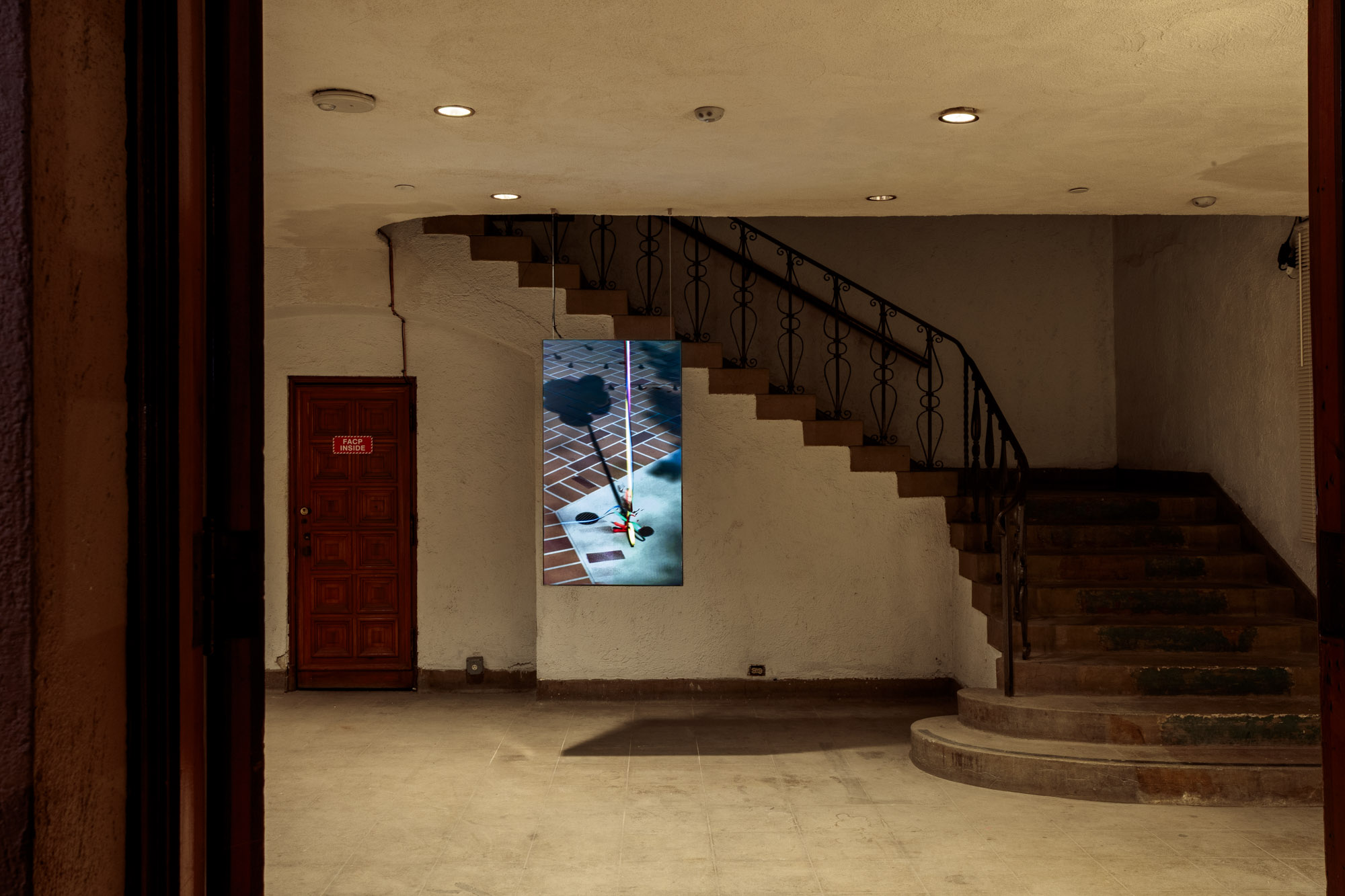
Thomas Demand, Balloons, 2018, (installation view).
JULIA STOSCHEK
“The courage to not yet know what it’s looking at.“
———
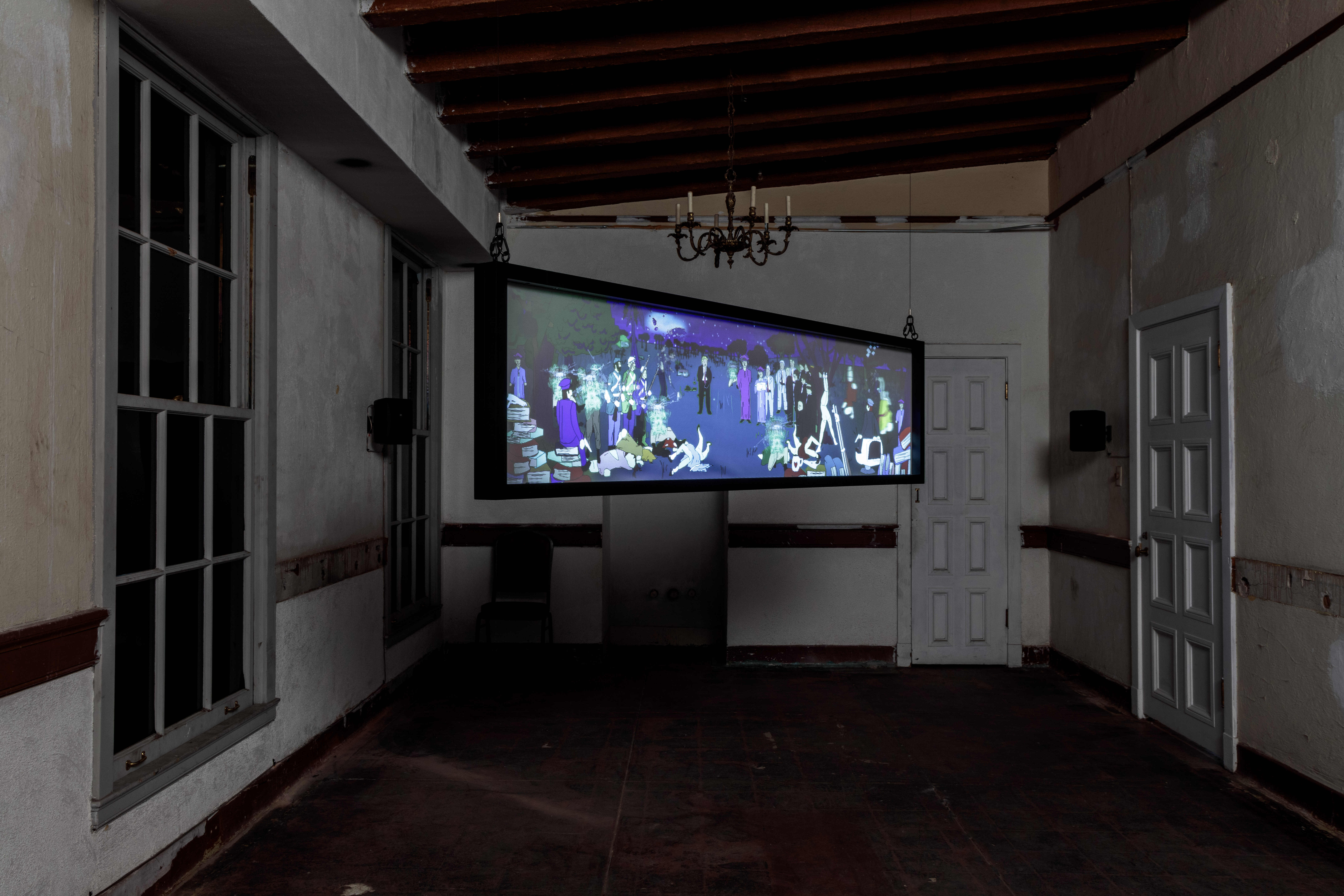
Paul Chan, Happiness (Finally) After 35.000 Years of Civilization (after Henry Darger and Charles Fourier), 2000–03, (installation view).

Travers Vale & George Cowl, Betsy Ross, 1917, (installation view).
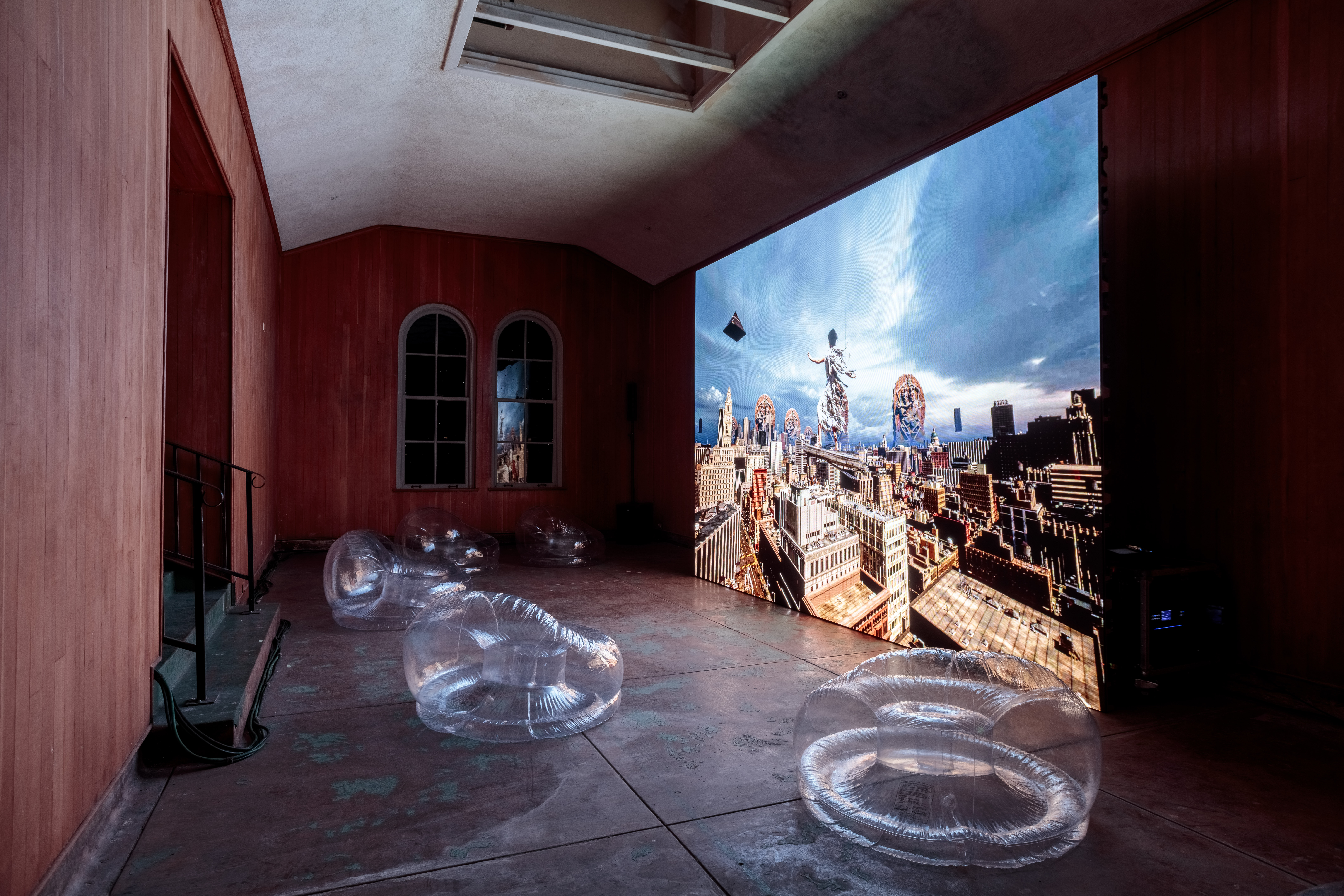
Lu Yang, DOKU The Flow, 2024, (installation view).

Arthur Jafa, Apex, 2013, (installation view).
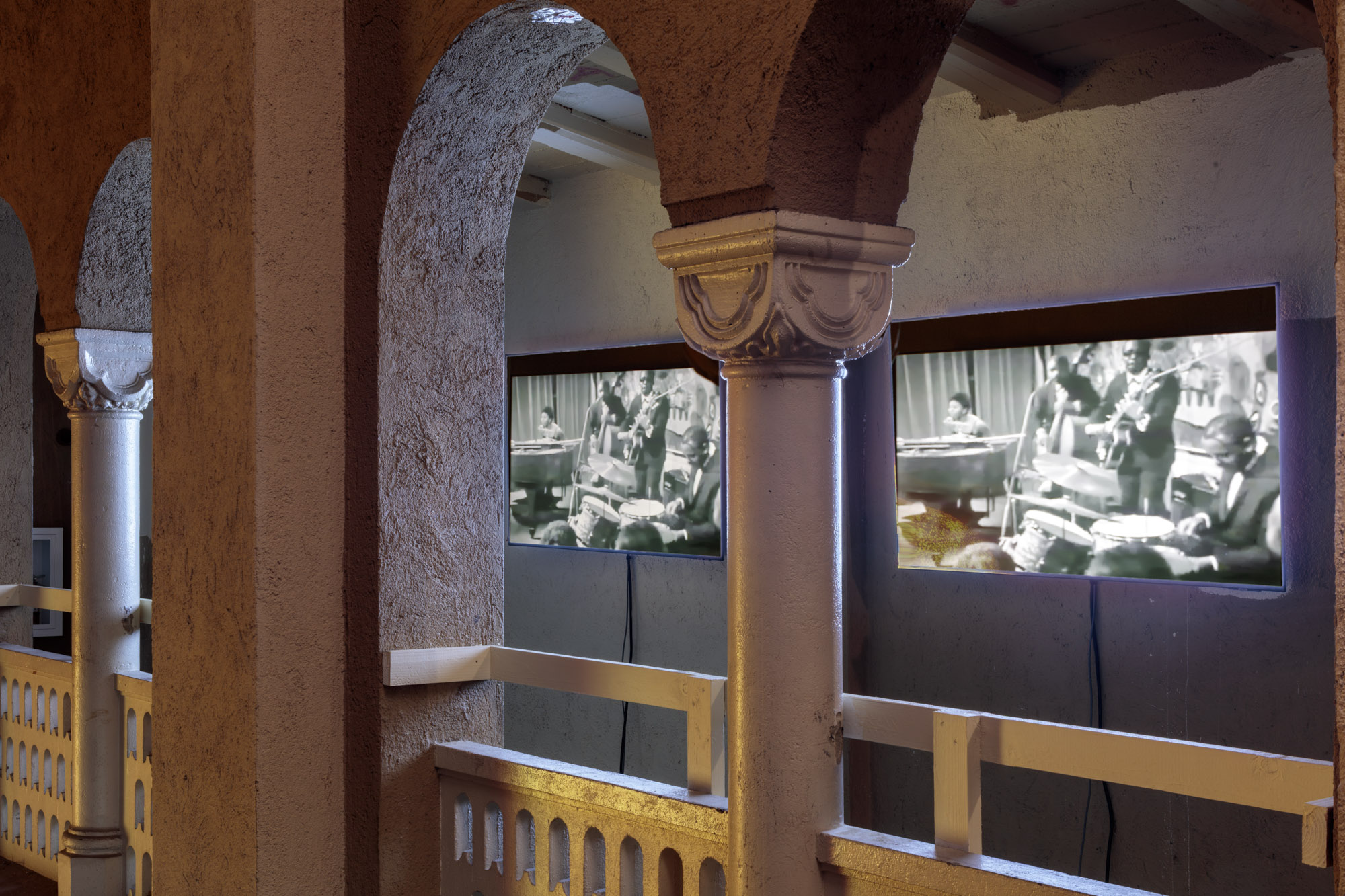
Nina Simone, Sinnerman, 1965, (installation view).
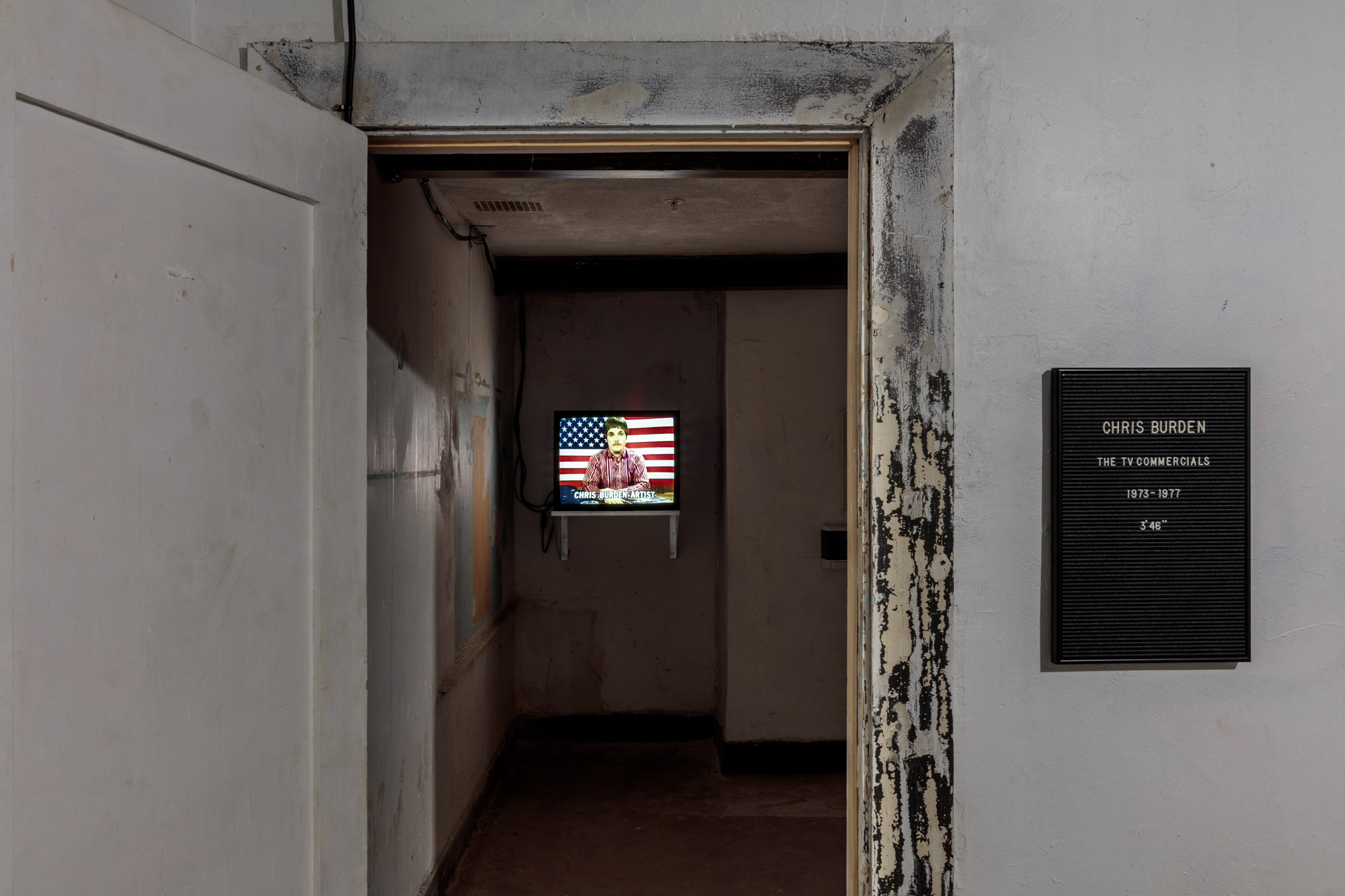
Chris Burden, The TV Commercials, 1973-77, (installation view).
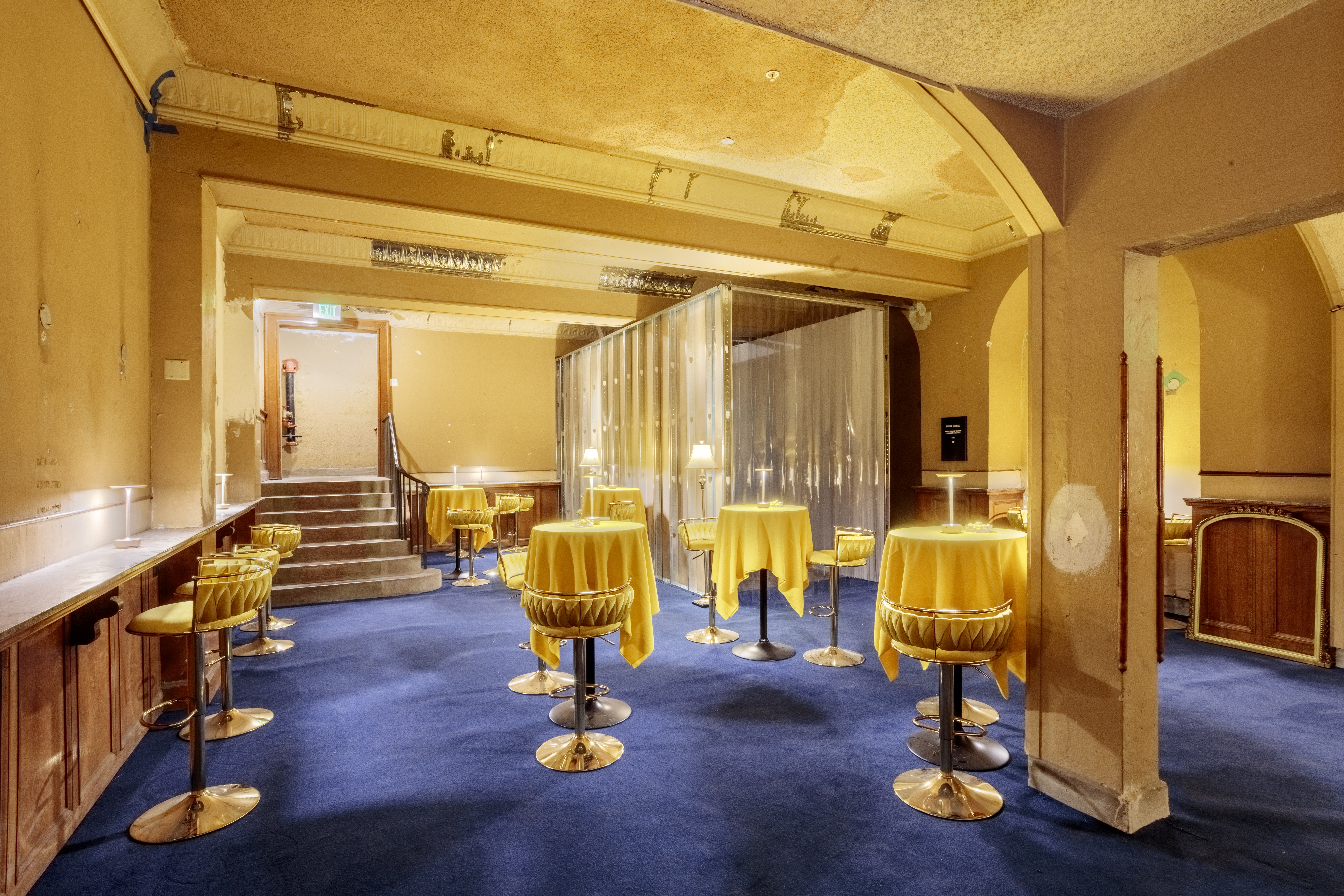
Installation view at “What a Wonderful World: An Audiovisual Poem”, 2026.

Douglas Gordon, The Making of Monster, 1996, (installation view).