


STUDIO VISIT
Emma Kohlmann Tells Maggie Rogers Why She’ll Never Take Her Art Too Seriously


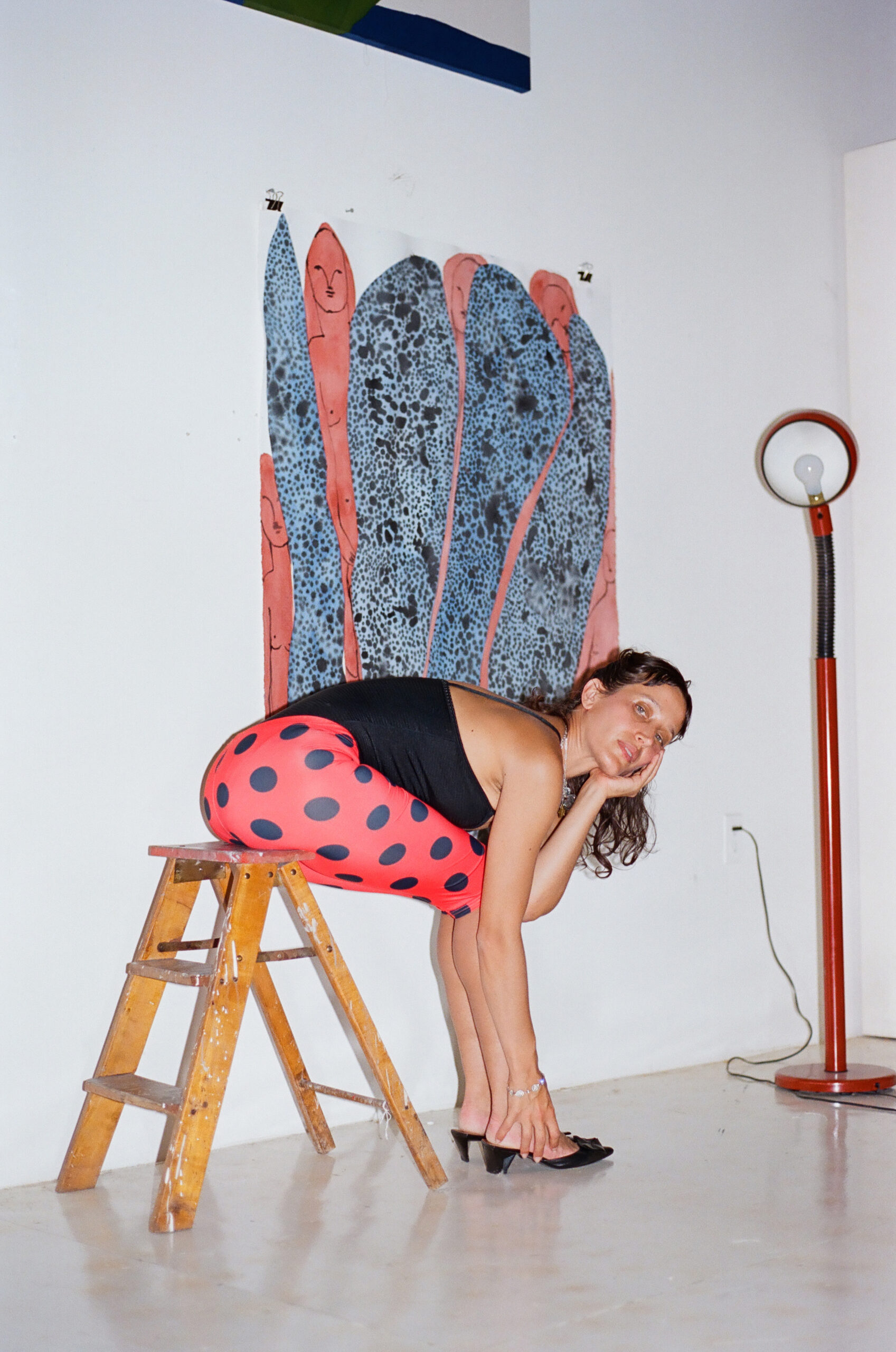
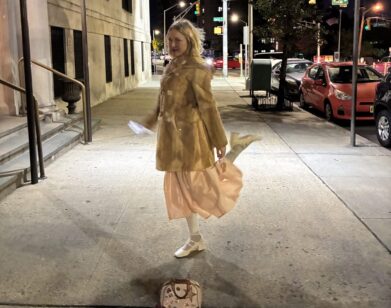
Emma Kohlmann, photographed by Annabell P. Lee.
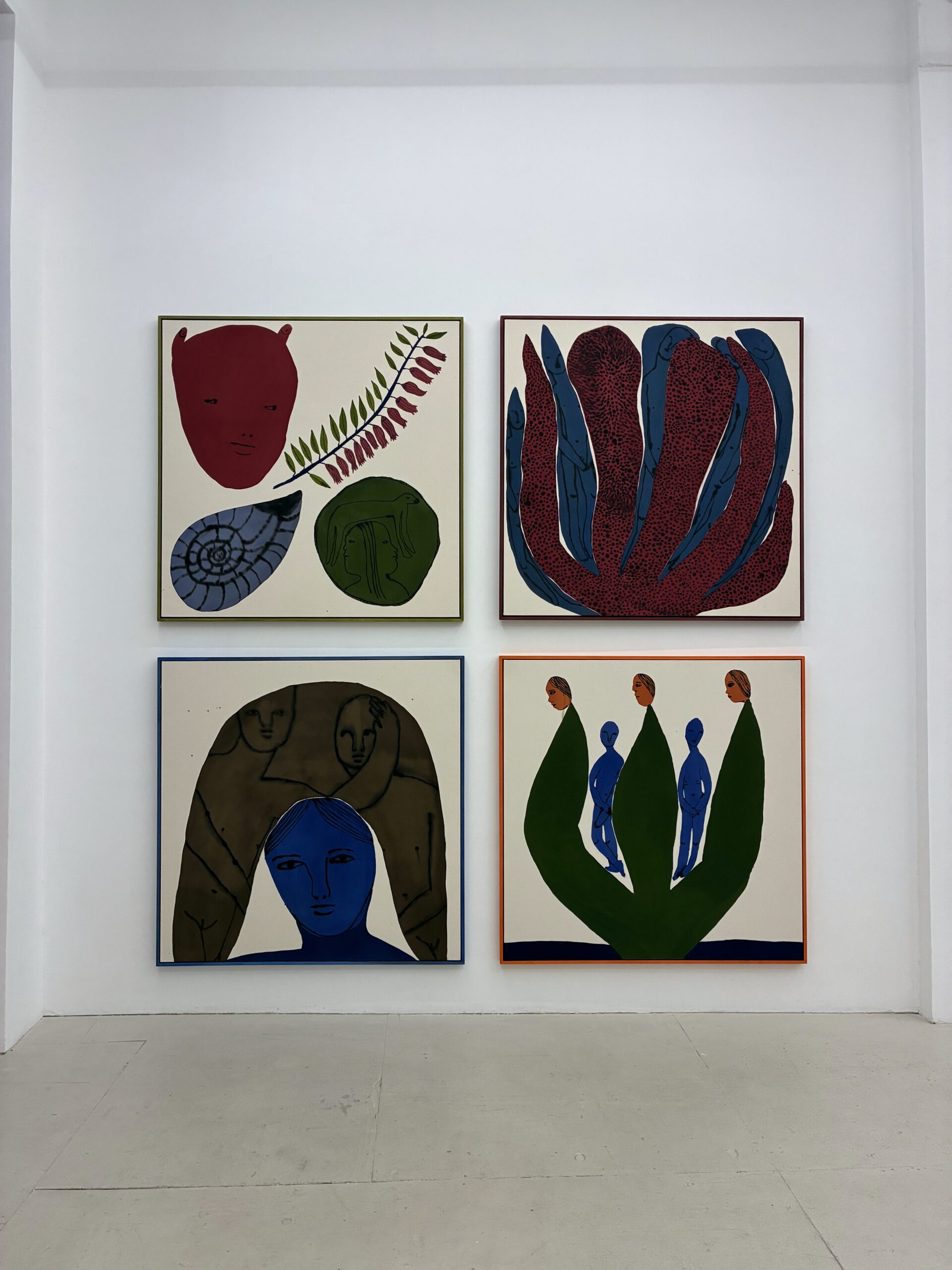
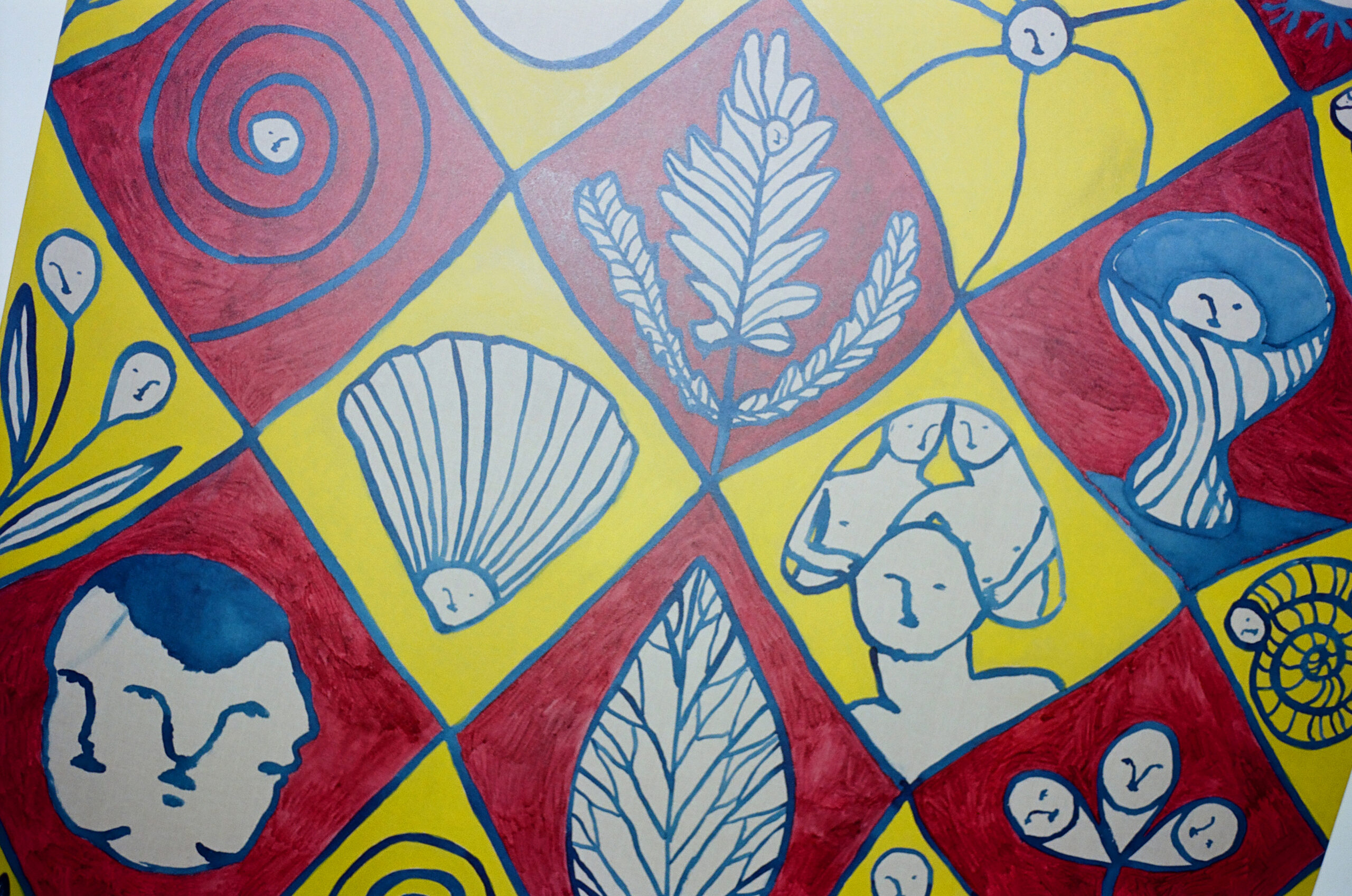
Emma Kohlmann’s paintings have always registered as transmissions from another realm. Moon-faced figures stare back at the viewer with a transcendental calm while half-human creatures clash with symbols that appear plucked from prehistoric caves. In her new exhibition Moon Minds, opening this Friday at Silke Lindner, the Massachusetts-based artist wades even further into new dimensions. Inspired partly by Monica Sjöö’s 1987 feminist manifesto The Great Cosmic Mother, Kohlmann constructs a visual language where flora, fauna, and spirit exist harmoniously. It’s equal parts earthy and ethereal, playful and contemplative. The result, as the singer-songwriter Maggie Rogers told Kohlmann last week, is a cosmology all her own. Rogers, Kohlmann’s longtime internet friend and devout fan, occupies a similar space between the sensual and the spiritual, so she was more than happy to grill the 36-year-old painter about her new body of work. Below, the two dive head first into a number of subjects, from creative blocks to the importance of collecting.
———
MAGGIE ROGERS: Emma, hi.
EMMA KOHLMANN: Hi!
ROGERS: I’m so happy to Zoom meet you.
KOHLMANN: Nice to meet you on the internet.
ROGERS: I feel like it’s perpetually on the internet for us. But one of these days, baby.
KOHLMANN: I feel like I meet most people on the internet.
ROGERS: Yes. You’re in Western Mass still?
KOHLMANN: Yeah, I’m in my house.
ROGERS: Western Mass, every time I’m there I feel so happy and grounded. It’s a special place.
KOHLMANN: That’s how I feel. I think that’s why I’ve stayed here for so long.
ROGERS: I have a million questions for you because I’m such a fan of yours, but I’m just so, so in love with this show.
KOHLMANN: Oh, thank you.
ROGERS: I can’t wait to see it in person. I just went through it. I was late because I was watching a bunch of YouTube clips on Monica’s Sjöö’s The Great Cosmic Mother.
KOHLMANN: She’s incredible.
ROGERS: I can’t wait to read this book.
KOHLMANN: Yeah, it was kind of a crazy experience to go somewhere, see her work, and be like, “Oh, this is someone that I totally relate to or have a dialogue with,” even though our work is so different. But she was an activist, an eco-feminist and anthropologist, and she just made work kind of out of utility. But yeah, I was in Stockholm and I went to her retrospective, and Greta Thunberg was there, which makes sense.

ROGERS: [Laughs] That’s exactly who I want you to run into there.
KOHLMANN: She was just there looking at the show, but I really love the work that she made for the protest signs, and her zines.
ROGERS: In the brief time that I’ve spent with her work and yours, I just love this idea of the spiritual and the personal, and the political not having a boundary within the space. I love the idea of the two of you in some sort of artistic lineage.
KOHLMANN: I can’t even think like that, because she’s just on this other level making work, and she’s not getting recognized in that way. She was such an academic, and went on all these pilgrimages to these Neolithic sacred spots. There’s something that I really appreciate about her bringing that into her medium, into her artistry. It’s also not so serious, too.
ROGERS: Which is also one of my favorite things about your work. At my spot in L.A. I have all of these zines of yours pinned to my wall that I got framed in college, and they’ve now been on my wall for over 10 years. They’re so special and so important to me. There’s this classic Kohlmann moon face that I love which has so much wisdom, but also there’s tiny sprightly figures who are riding dicks in the corners of every piece. And I think that having a sense of humor is so important to being able to say anything with gravity. It’s the only way to have any kind of access point.
KOHLMANN: Yeah. I don’t like taking myself super seriously. And I don’t feel any sense of entitlement over the stuff that I make because I just kind of want to disseminate it. And that’s why I like zines, because I think people should be able to afford art. That’s how I became an artist. I made these zines as a way to cope with coming out of college, when it felt like I didn’t have any prospects.
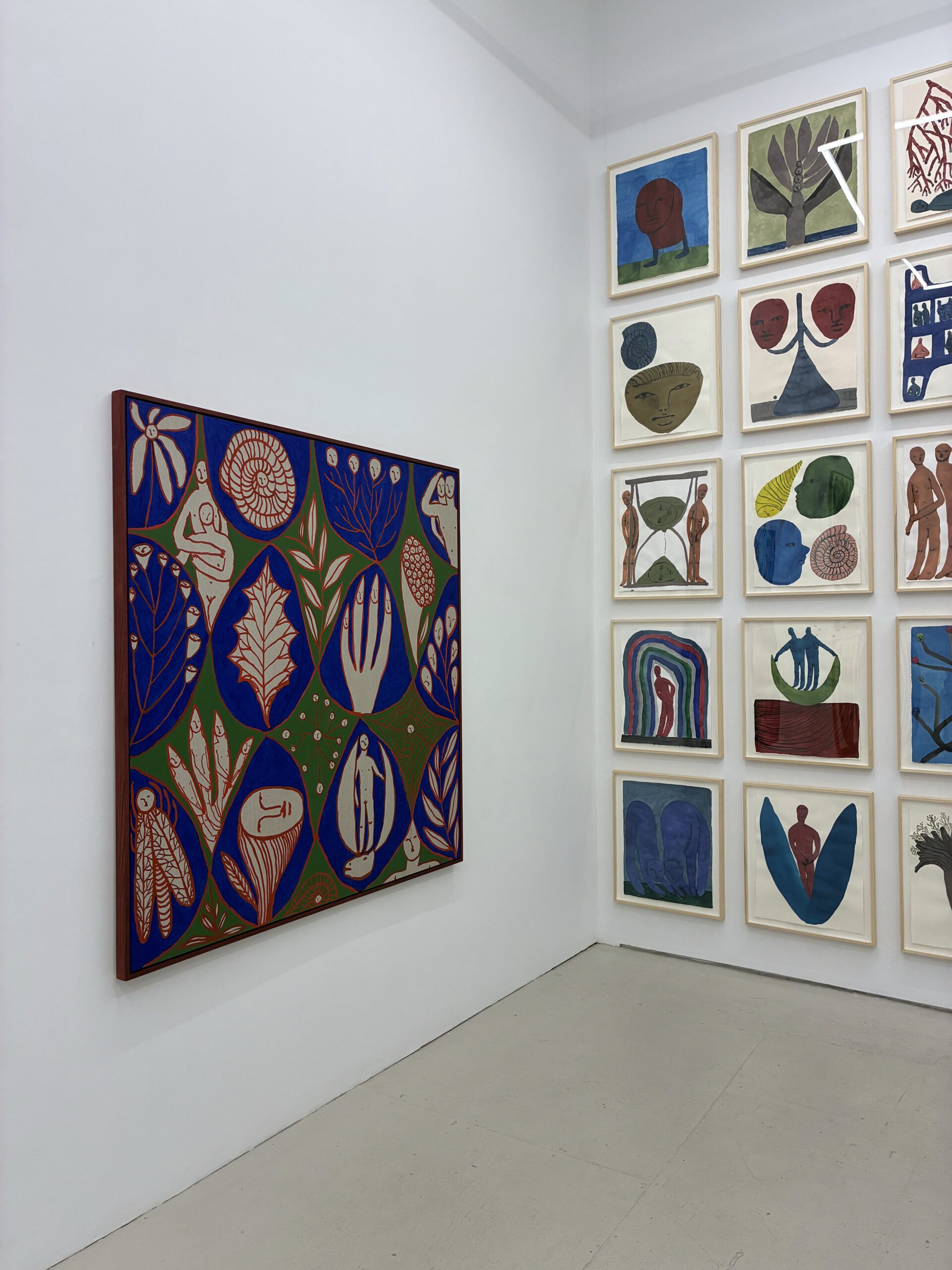
 ROGERS: I agree with you about not taking yourself too seriously, but I also think that there’s some amount of seriousness that comes with devoting your life to a practice of the things that come of you. I’m someone who takes your art so seriously, and I’m so happy that you’re creating spaces to have these kinds of conversations. I love the titles of these pieces, and the way that they’re in conversation with the world. You’re creating your own cosmology or spirituality within this massive system of chaos.
KOHLMANN: It’s the only thing that keeps me grounded. It’s really hard to figure out a practice, I think.
ROGERS: I hate it.
KOHLMANN: Yeah, I hate the word.
ROGERS: It’s so fucking annoying.
KOHLMANN: Also, there’s something really pretentious about it.
ROGERS: I agree. I’m so happy you’re saying this.
KOHLMANN: It is just a practice, because you do it everyday. But I feel like my practice is something where everyday I’m learning something new. And once I’m engaging that way I have more ideas, and that’s great. But sometimes I have no ideas, and I have to force myself to do it.

ROGERS: What is your system for making yourself do it?
KOHLMANN: Well, if I’m really bad, I’ll go to the library and look at books. Books have always helped me remember things like, “Oh, this is why I like art.” Or I just make ugly drawings just to fuck up, because sometimes things don’t go to plan. I also will throw things away or put things on a time out because I can’t work on them anymore.
ROGERS: The titles changed the way I saw the show in such a massive way. Your voice really enters these images in text.
KOHLMANN: Oh, thank you. I title them at the end, but I like thinking about them when I’m making them, or when I’m seeing a color for the first time. I was thinking about when babies develop color vision. I mean, that must be really crazy.
ROGERS: It’s psychedelic.
KOHLMANN: Yes, or just kind of shocking. But I don’t know, the beginning of the world was born in a cup. That was something I was thinking about when making this work, because I was reading The Great Cosmic Mother, and was thinking about the introduction to the book. It talks about the first period of the world being this prehistoric water and how it just became cellular, and then it became humans. I just loved the idea of something holding the world, and that made me think about a cup or a vessel.
ROGERS: It also reminds me of a uterus.
KOHLMANN: Yeah, like a womb.
ROGERS: Yeah. Looking at these titles, I wanted to know if you were superstitious, or if you have talismans in your life.
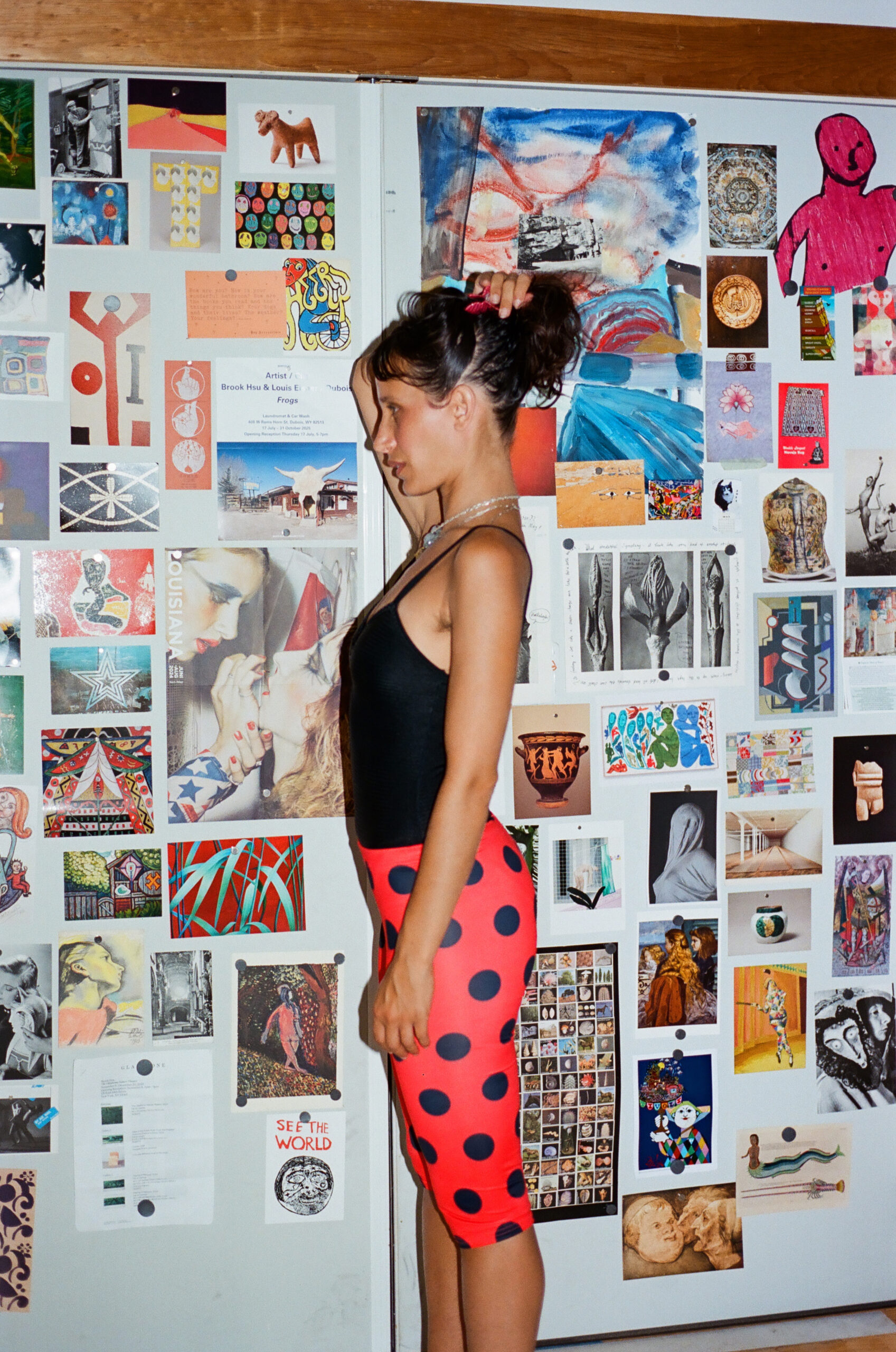
KOHLMANN: No. I don’t know what my belief system is. I’m not a very materialistic person, but I become precious over objects that people have given to me. I have a lock of my great aunt’s hair that she passed away. I do have these little weird collections of things that become part of my–
ROGERS: What else do you collect?
KOHLMANN: Hmm. Crushed pennies. And I used to love collecting metro cards. I love collecting weird, handmade things. Clothes, or people’s paintings, and weird folk art. That’s the kind of stuff I have in my house. Do you have collections?
ROGERS: Well, I’m really sentimental, and I really archive things. I have every piece of clothing I’ve ever worn on a stage. But it’ll be like a dress from urban outfitters in high school. But there’s just something about it that is so transformative. It’s the magic of when it steps on a stage, and every time I clear out my closet, I can’t get rid of it. It’s not for me to wear, and it’s not for me to look at. It’s something else.
KOHLMANN: It’s a memory.
ROGERS: It’s totally about memory. Also, all of my lyrics and stuff are handwritten. I do a lot of notes on yellow legal pads, and I have just stacks and stacks of yellow legal pads. To me they’re such a diary of what’s happening in my life at the moment.
KOHLMANN: I love it. I love to-do lists, and I love keeping books.

ROGERS: Well, I was thinking about Talismanic, which is one of your titles. Recently, I’ve been having trouble connecting to music. I mean, it’s not the first time that’s happened, and I know it will come back. But anything that then sparks me really hits me. And a couple weeks ago, I was covering “Carolina in My Mind” by James Taylor. It’s so beautiful, weird, and intricate. I was just on the floor having the song resonate with me for the first time in a long time. And looking at your paintings is one of those sparkly things that make me connect. I think part of why I collect things is that–I’ll be playing a song on stage, and catch a lyric and be like, “Oh, shit. I wrote this thing three or four years ago, but it was a sign that might be an omen, and it’s actually coming true in my life right now.
KOHLMANN: Yeah, like there’s some kind of fortune telling in it. It’s so funny that you said you were covering a James Taylor song, because if I were to give you advice if you were struggling with ideas, I would say covers are kind of the best thing to do. When I’m stuck and I’m like, “I’ll never be able to paint like Forrest Bass or Philip Guston,” I’ll just look at them and then try to do something in my weird janky way.
KOHLMANN: Yeah. Also, when I think of music, I think about how it’s more of a language than painting or drawing is. There’s something you’re activating from all these other parts of your brain at the same time. Like you’re singing, you’re moving, you’re writing, and you’re evoking emotion that you wouldn’t get from a painting.
ROGERS: Well, I kind of disagree, but I know what you’re saying. They’re different in so many ways, but the way in which they overlap I think is in vibration. I mean, with color there is such a heavy vibration, but that to me is about seeing a piece in person and really feeling the depth of it, which is something that can’t happen on a screen.
ROGERS: One of the questions I wanted to ask you is if you’d ever read Pure Colour by Sheila Heti?
KOHLMANN: I haven’t.
ROGERS: I loved this book. Actually, three people gifted it to me on separate occasions, which is when I was like, “Okay, fuck, now I have to read this.” But there’s this amazing scene where the spirit of her and her father merge, and become a leaf. I think about it once a week, and you just reminded me of it. I think you’d like it.
KOHLMANN: Oh, I should really read it.
ROGERS: I also wanted to know, what keeps you being a painter? Or artist, if you don’t just self-describe as a painter.
KOHLMANN: I guess I’m both. I’m interchangeable. For a long time I was like, “I’m a drawer. I draw with paint.” Because I’ve never been a formal painter. I never took a painting class–
ROGERS: You’re a painter. I mean you’re also a drawer, and an artist, and a person, and a thinker, but you definitely are a painter.
KOHLMANN: Yeah. It’s been a big existential question for me, because there are certain painters who make me think like, “Can I be anointed with that name?!”
ROGERS: I feel that way about being an instrumentalist. I play so many instruments, but not really. I play so I can write, but you wouldn’t really hire me to play bass in your band. But I can play bass.
KOHLMANN: But you can. If you wanted to be in a punk band, you could just pick up a bass, and do it.
ROGERS: Yeah, yeah, yeah…
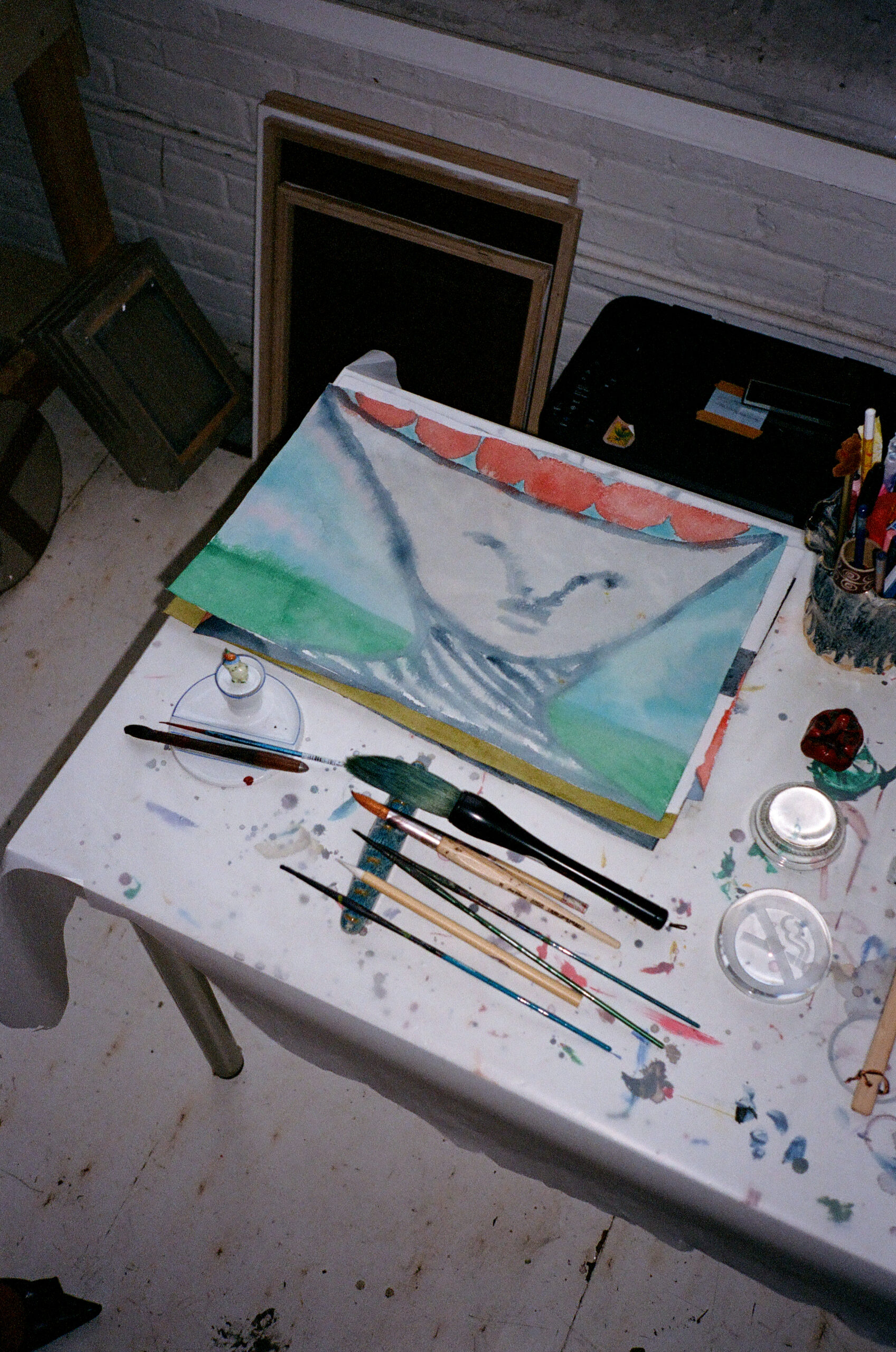
KOHLMANN: And thus what keeps me painting. Making art is very freeing, and it has always grounded me. I’ve always been that kid on the floor of my bedroom making stuff. It was always something that I felt like I could be my most authentic self doing. It didn’t always mean I needed to show people. Making art, there’s always this spotlight, or voyeur thing happening where there’s so much concern about what it’s going to mean when I put this out there, or if someone else sees it. But I think that I’ve kind of silenced that person in my head, because as extroverted as I may seem, I’m a huge introvert, and I’ve always tried to compartmentalize my thoughts through it in that way. It feels very almost like a weird nun thing. I think of spiritual people, monks, or nuns, and how they talk to God, and that’s their whole driving force in life. I’m not a very religious person, but I do feel like the spiritual side of myself comes through in that way. That sounds kind of corny, because I’m not a spiritual leader, but I like the way I feel when I’m making work. I’m my happiest when I’m doing it, even when I’m having a bad day and in the studio, and nothing works, and everything looks like shit. I’ll read the news or see terrible things that are happening in the world, and it’s kind of like, “What’s the point? Everything’s futile.” And I can just coast on being able to make something, even just something silly. Be it for my house, or for a friend post card for a friend, a zine.
ROGERS: I feel the exact same way. And in the context of this title, Am I the Future? I was thinking about the way art lives on after you, and how waking up and deciding to create something is such a practice of revolution or reclamation. Or being able to have the news on and be like, “I can’t even process that, but here’s something I can actively do that can be the best of myself in the world.” To me, that’s a big part of it.
KOHLMANN: Yeah. I feel really self-indulgent sometimes, but I also know it’s important. “Am I the future?” is a question I ask myself. Like, “This is going to exist, and the world’s going to exist, and we’re going to somehow be okay.”

ROGERS: But to me, hope is an act of imagining a future that’s different than the one we live in. It is such an act of creativity, and specifically in abstract art forms. Yours are figurative and abstract, and it’s this combination to live inside. I can’t wait to go to the opening of the show, because the world you’ve created is one where the principles of these people, and these artists, and these thinkers that have come before exist in vibrant color on the walls. Knowing that there’s a space somewhere that I can go and step inside, and all of those things are alive makes me feel better, and makes me feel hopeful.
KOHLMANN: A lot of people like to categorize my art as hopeful. It’s funny, back in college, a lot of my work was very heavy, creepy, or almost like scary stories to tell in the dark.It was a choice I made when I started branching out and using color, and trying to make the interiors of the space that these figures exist in. It was a big departure from that darker part of me. But I think it’s maybe wrapped up in everything I make, too, because you almost have to have both to me. I think about how there’s something emotive on the edge of having both at the same time.
ROGERS: Dancing while crying. It’s my favorite kind of music.
KOHLMANN: Yeah, totally. Despairing. Like the Smiths.
ROGERS: Absolutely.
KOHLMANN: It’s like being in a hospital bed eating cotton candy, or something. Tragic happiness.
ROGERS: Long live the Smiths. Maybe that’s the only way to end it.
ROGERS: That was so fun. Thank you so much.
KOHLMANN: Thank you so much, Maggie.
ROGERS: I’m such a fan. I can’t wait to see this show.