



IN CONVERSATION
“I Always Felt Ripe for a Cult”: Meet Madeline Cash, Author of the Year’s Buzziest Debut


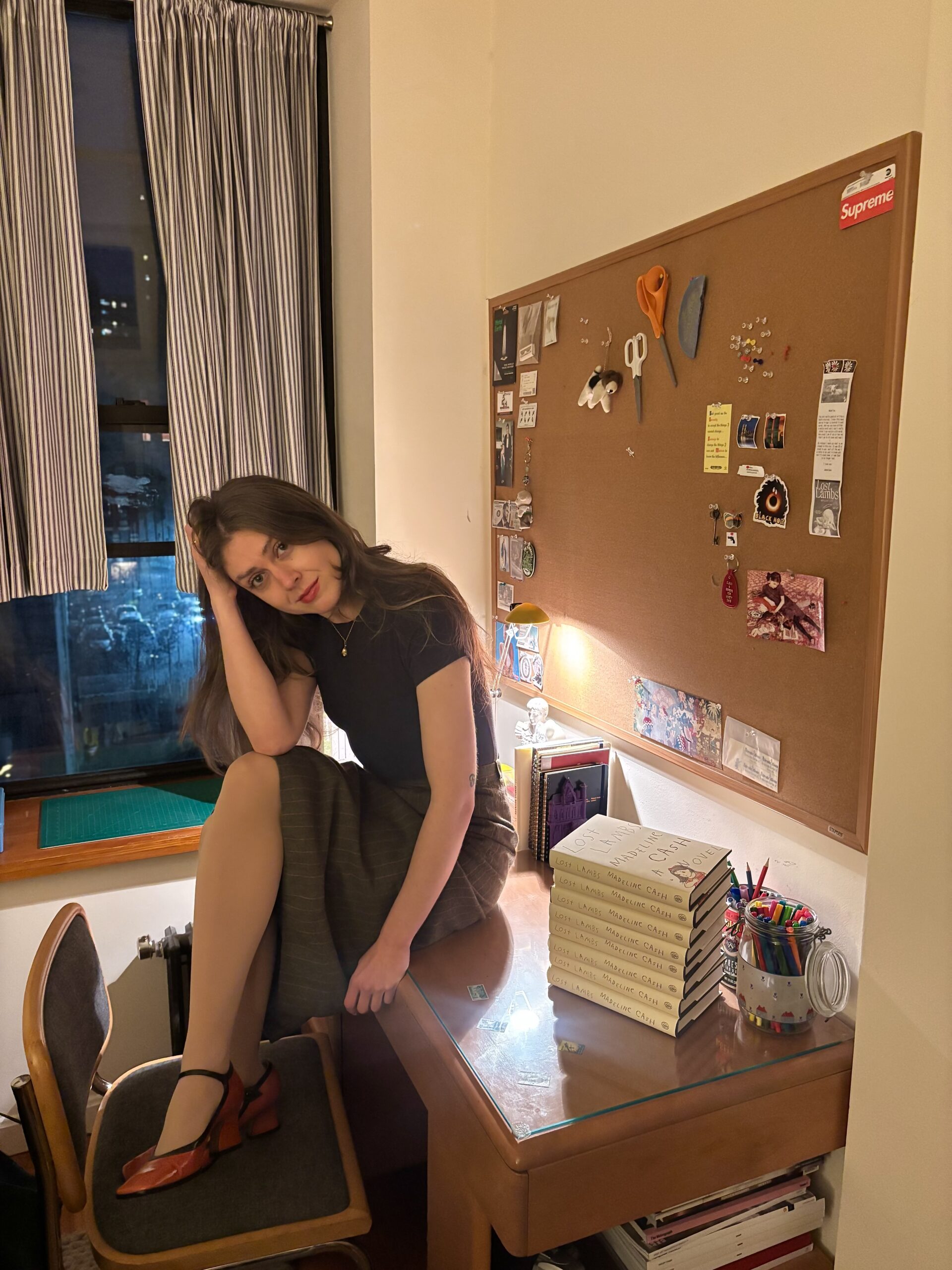
When I was sent a copy of Madeline Cash’s Lost Lambs last summer, I didn’t know much about Cash or the book. I was somewhat aware of the corner of the constellation of New York City she occupied, and I’d read a short story she wrote for The Baffler in 2021. But it’s important to acknowledge that her name is Madeline Cash, and that is a name that people would file paperwork and update their social security forms to obtain. When Lost Lambs arrived via FedEx, it was about 90 degrees outside in Brooklyn. I finished it in three days, setting myself up in front of different windows of my apartment. I devoured the mischievous characters that Cash wrote about, which I would best describe as C. Montgomery Burns, Walter White, and a more awake version of the Lisbon sisters living in the same neighborhood. The book is about the Flynn family—three sisters (Harper, Louise, and Abigail) and their parents, Catherine and Bud. Catherine and Bud are experimenting with an open marriage, and Abigail is dating a veteran with IBS named War Crimes Wes. Their stories layer and weave into each other, which requires you, as a reader, to stay sort of glued to each page. I’ve been seeing the labels “downtown” and “internet-era” thrown around in conversations about Lost Lambs, but I didn’t clock that while reading it last summer. Sure, there are some online conspiracy wormholes and Bryan Johnson-like blood experiments, but I couldn’t imagine a modern American classic without those.
———
EMILY SUNDBERG: How are you feeling? You’ve had a crazy few weeks.
MADELINE CASH: I’m so stressed out and tired.
SUNDBERG: Really?
CASH: Yeah. There is a projection that everything is fun and wonderful–and it is and I’m really grateful–but I’m also on the verge of a panic attack all the time. It’s very scary to be this perceived suddenly, going from doing something really private to having everyone see it and then also write about it.
SUNDBERG: The response seems really good, though. From what I’ve been seeing on Substack and in the New York Times, everyone seems to like the book. And the parties look fun, too.
CASH: The parties are fun. I feel like I have all these handlers. My agent and publisher are telling me how to feel about various pieces of publications or criticism. It’s really new to me. The day of publication I was at the airport, and I went into the breastfeeding booth and was just trying to not freak out. I didn’t even buy WiFi on the flight.
SUNDBERG: It’s interesting, there’s this magic that happens when a book hits the zeitgeist and does well and people really want to review it. I remember when you sent me a copy early, I posted it on my Instagram story and people were asking to borrow it, which doesn’t always happen. My friends immediately were trying to get their hands on it.
CASH: Oh, interesting.
SUNDBERG: I guess that’s the typical way that a book permeates, through word of mouth. I’m kind of curious how you decided to do the wheatpasting. That seemed new.
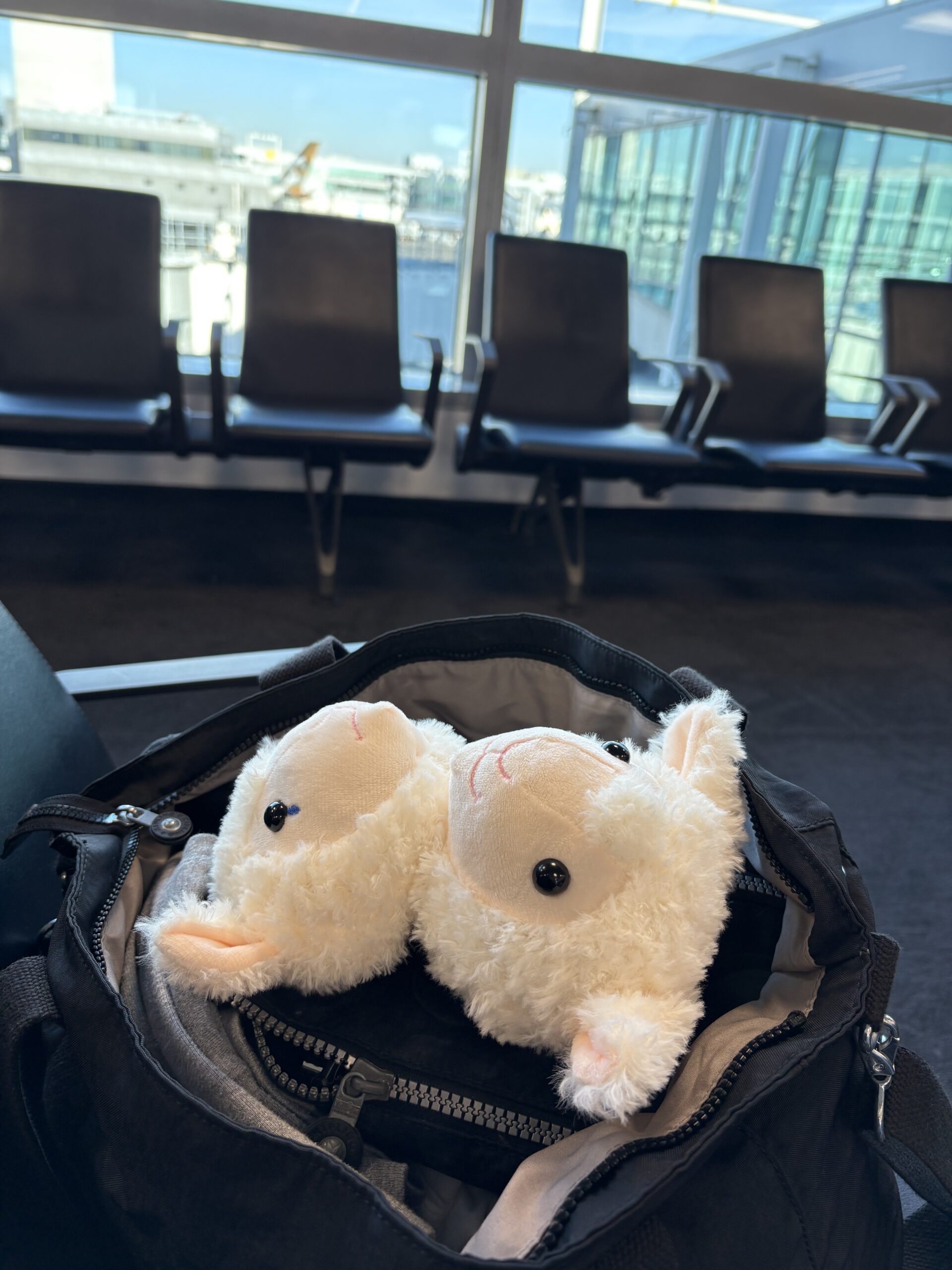
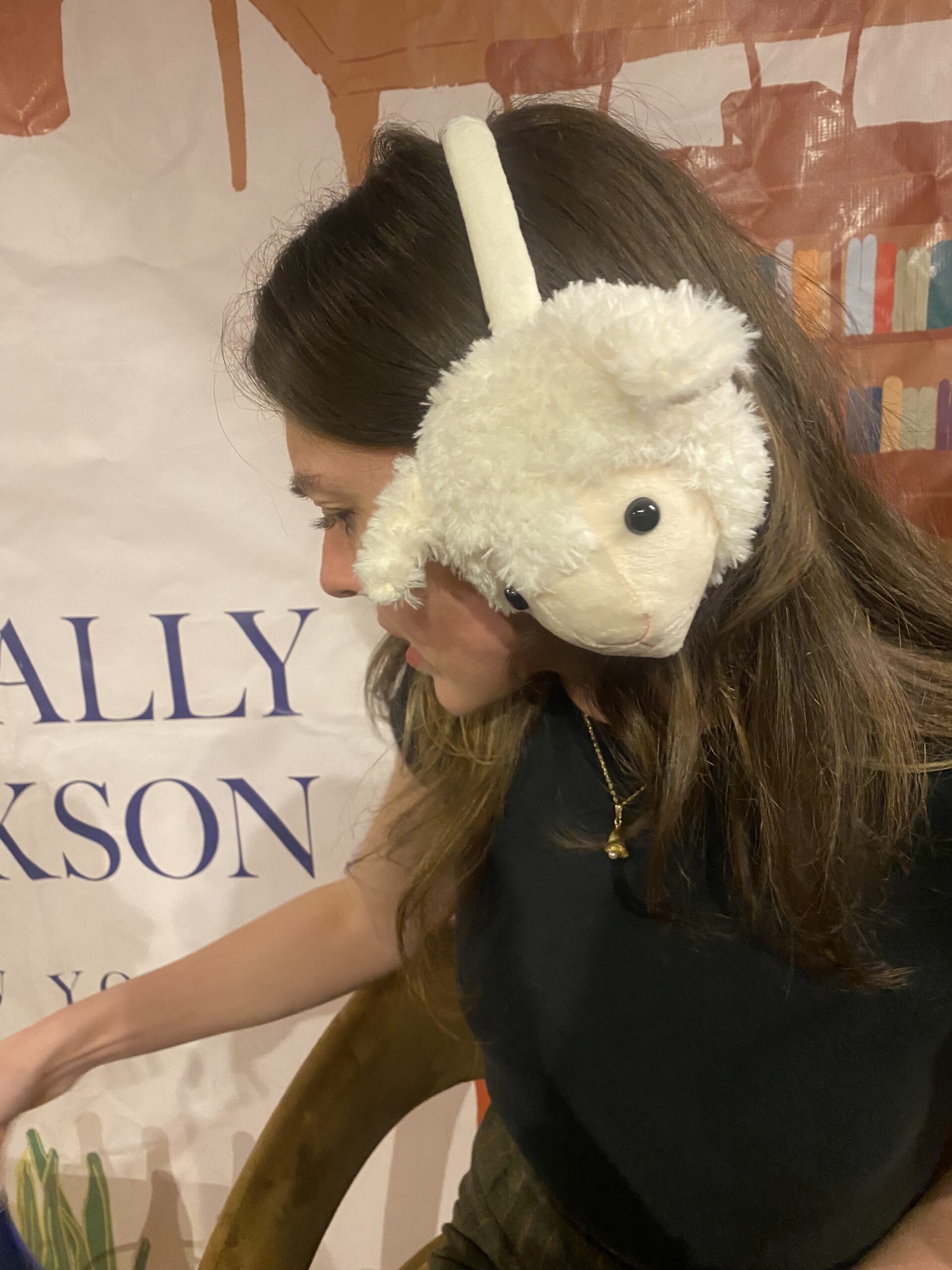
CASH: I didn’t. I woke up to them. I guess they just did them in the night. It is gonzo publicity. They also made earmuffs of lambs. I’m curious because I feel like you similarly went from being a private person to a pretty public figure somewhat quickly. How have you coped with that, and with criticism?
SUNDBERG: It’s so relative. Because to us it’s public, but it’s not like we’re Bravo stars or movie stars. It’s not that public.
CASH: Yeah, you’re right.
SUNDBERG: The thing with me is that people have to pay to get access to me. To get to most of my content or even my comment section, you need to be a paid reader. So there is a bit of management there.
CASH: Okay, for sure.
SUNDBERG: You’re a pretty private person?
CASH: Yeah. I went through extensive media training because they were really preparing for me to have to be giving a lot of interviews and wanted to make sure that I didn’t start going on conspiratorial rants. Have you ever done anything like that?
SUNDBERG: No. What does that look like?
CASH: It was a four-hour Zoom session where they’re like, “What is the worst thing you’ve ever thought, or something that you would never want anyone to find?” Then they have to dissect it and make you justify it. Or they’ll be like, “What if someone asks you what you think of the conflict in Ukraine?” You have to be like, “Well, in the Ukraine there is conflict, much like in my book where there’s also conflict.”
SUNDBERG: Did you find it helpful?
CASH: No one’s ever asked me about Ukraine.
SUNDBERG: [Laughs] Where did you spend most of your time when you were writing the book?
CASH: In my apartment, which is here in Chinatown.
SUNDBERG: Hell yeah.
CASH: I wish I had a better answer, like a specific coffee shop or oak tree or something bespoke and cute, but just on my computer in my apartment, honestly. Where do you write?
SUNDBERG: Right here, in front of my framed New York Times profile.
CASH: Oh my God. Also, we have to talk about Nine Orchard.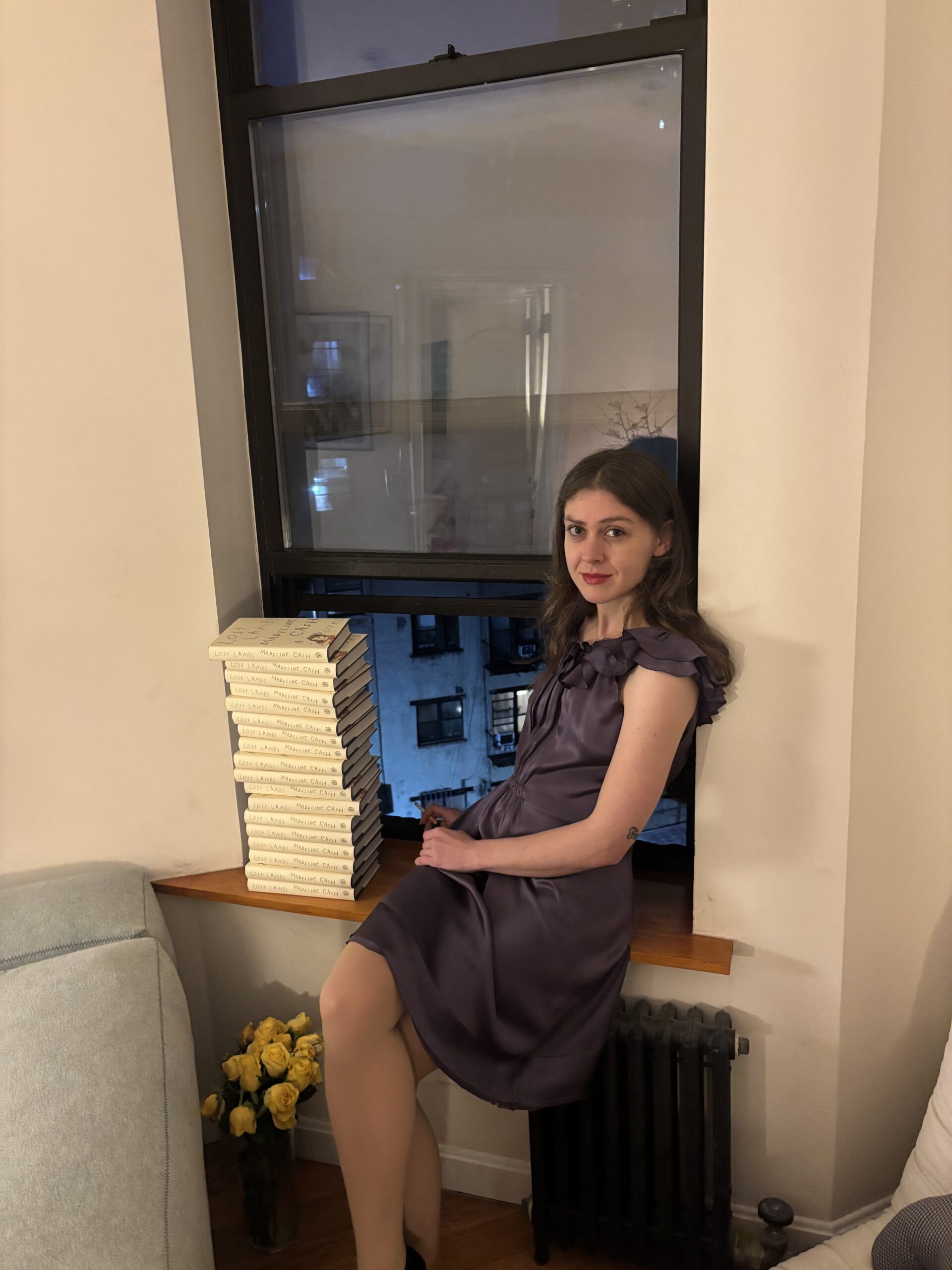
SUNDBERG: Yes, we’re connected by this beautiful space.
CASH: Right, because you had your wedding there. I like that it used to be a bank and all the rooms were vaults.
SUNDBERG: It really changed the neighborhood. I can’t believe that it wasn’t there at one point.
CASH: I know. Because I live around the corner, I would always see the trellis on the top. I snuck up there once through a service entrance and walked up 14 flights of stairs because I just wanted to see it. I was like, “One day I’m going to have something up here.”
SUNDBERG: Well, this actually brings me to one of my questions for you. Between Paul Alabaster’s secret gatherings and the group meetings in the church, you seem to be attracted to doors that you can’t go behind. I mean, you just told a story about this. What was drawing you to the unknown in mundane places like a house or a church, or going into a building that you didn’t have access to?
CASH: That’s such a good question. I grew up middle class in the Valley. There weren’t many doors I had access to, and so barreling through as many as possible became a goal. It seemed like there were so many that were impenetrable. I don’t know, scenes and diasporas and even moving to New York that I became fascinated with. The Paul Alabaster character is very similar to these insidious tech people that seem so kind of clandestine, and I wanted to explore that. Then in terms of the self-help groups, I’m in the program, and I’m very familiar with such rhetoric.
SUNDBERG: Absolutely.
CASH: I always felt pretty ripe for a cult. I cherish community so much, being an only child. I was in a youth government program in high school that was very cult-like and really bonded. I wanted to be in every club that would have me as a member.
SUNDBERG: It’s so funny–I don’t know how much time you spend on Substack, but it feels like every door is just open in the world now. I wrote earlier this year about party reporting and how that’s happening.
CASH: I read it.
SUNDBERG: I feel like people can’t even go into spaces anymore without spilling it all over to the universe.
CASH: I agree. The over-documentation and over-saturation of everything is making it less special. If everyone can have access, then no one does. There are very few spaces now that are precious and under wraps.
SUNDBERG: I agree.
CASH: Well, what was your ultimate takeaway from party reporting, good or bad?
SUNDBERG: I really try not to make those hard distinctions. I have so many thoughts about Substack, I’m curious what you think about it. I wrote an essay two years ago on Substack called The Machine in the Garden, and it went really viral. It was about how Substack is a great platform for young women to monetize their diary entries.
CASH: Yeah, I loved that.
SUNDBERG: It was super polarizing, and people were really upset about it. But I think that the party reporting is basically just a more specific version of that, which is, “I’m going to write about my life and people.” I don’t think it’s good or bad. I’m curious if any of these people will eventually formalize it into a cohesive book or something that’s a little bit more thoughtful and developed than “I went to this restaurant, I saw these people, I overheard this.”
CASH: Yeah. But I mean, we’re not the first to do it. There were the Eve Babitzs and Cookie Muellers.
SUNDBERG: Of course.
CASH: They were documenting their respective milieus and scenes. Even the Algonquin Round Table, and Dorothy Parker. But because now with the internet, inundation becomes this form of erasure where nothing matters or is precious. I went on Bret Easton Ellis’s podcast, and–
SUNDBERG: Oh, I saw you posted a photo of him. That must have been fun.
CASH: It was terrifying. I’m such a fan, and I was very, very scared, but he was really casual. He was smoking and in basketball shorts, which really put me at ease.
SUNDBERG: Awesome.
CASH: I was like, “What’s the difference between publishing a book in the ’80s and now?” He was like, “Well, back then you would take one headshot and that’s the one photo of you for the next 20 years. You do one or two interviews maybe in Rolling Stone and The Times. And that is the only narrative anyone has of you. Otherwise, you’re pretty private.” Even if you’re the Bret Easton Ellises or the Truman Capotes who have had a platform and a following, they had pretty private lives. I’m a writer. I’m not a model or an actress, but there are a bunch of photos of me online.
SUNDBERG: Your blowouts are getting better and better.
CASH: [Laughs] Thank you so much. My roots situation I’ve worked out, thank God. I don’t know if I’m just mythologizing the past, and I don’t know if it was better then or if it’s better now, but you kind of can’t hide. 
SUNDBERG: Did you have to decide how you wanted to introduce yourself to the world when you started promoting this book? Was that ever something in your mind, like, “I’m going to decide how I am going to show up at these parties and in these interviews and build a brand around myself?”
CASH: I wish that a bit more curation had gone into it. Being that I’m not drinking now implies that there was a time when I was. There was a long period of time when I was just a baby deer stumbling around New York, saying anything to anyone and getting photographed in compromising situations, and this is a part of my narrative that is well documented. I do sometimes wish I could pay someone to erase everything that’s on the internet and start from scratch.
SUNDBERG: You could.
CASH: Can you?
SUNDBERG: Yeah. There’s definitely a 21-year-old kid somewhere that does that.
CASH: That honestly sometimes sounds great. I would love to start over when I turn 30 with a blank digital slate. I guess ultimately I also kind of feel fondly for where I came from and it all led to getting me here. So I’m kind of accepting that things I cannot change.
SUNDBERG: When you were thinking about character development for the sisters in this book, did you feel like you were picking up from people you knew, or was it not that direct?
CASH: I guess there are composite traits from people I knew, but they are mostly works of fiction. Like I said, I have a single mom, and my family doesn’t resemble this family whatsoever. It’s not autobiographical in the slightest. I think that this was a strong and negative reaction to autofiction, and being pigeonholed into a diaristic-downtown-writer box for the rest of my life. So I was like, “I’m actually going to write a complete work of fiction.” There are no proper nouns in the book. I thought, “I don’t know any of these people, and I’m going to make them all up.” I made character charts and made lists.
SUNDBERG: I remember you posted on your Instagram story once this crazy map of the storylines. It must have been while I was reading it you posted that, so maybe November or something.
CASH: Yeah, yeah.
SUNDBERG: While I was reading the book, I kept looking up and trying to predict where certain things were going and what was real and what wasn’t because there were these conspiratorial elements. I’m curious how you actually put all of these different storylines together. Were you using Post-its on the wall?
CASH: Yeah, literally. I had a wall, and then I also made a Figma board because I couldn’t figure out… This is a lack of technology that I really would like to see developed where you could make the serial killer wall map but on your computer. I needed to make a timeline, because there were conflicting and changing narratives to make sure that everyone aligned. I didn’t want to lose the reader’s trust in any way. I made these character charts with what they would be doing or thinking and how old everyone would be and what movies they would watch or what they would eat for breakfast. It was very detailed and mapped out, literally.
SUNDBERG: Can you tell me a little bit more about War Crimes Wes? I loved him.
CASH: I’m so glad. Well, I thought it would be kind of fun to write a one-dimensional male character as the boyfriend. I thought a trait for him would be that he just doesn’t really speak, but then I had to justify it, so I gave him horrible IBS. So he’s just in pain and grinning through it. I like the idea that silence breeds rumors, so everyone thinks he did all this terrible stuff, but in reality he just has a stomach ache. He’s ultimately a redeeming but a one-note character, which not to get on my feminist soapbox, but tends to be reserved for female characters. I thought it could be kind of fun to switch.
SUNDBERG: I did like all of the little health storylines, whether it had to do with blood or IBS or going on deep dives on the internet.
CASH: Yeah, totally. They’re just like us.
SUNDBERG: I heard that you sold the rights to the book.
CASH: I did. I’m not allowed to talk about it. But I’m allowed to say that it is sold to a major studio with a director attached. More will be revealed.
SUNDBERG: Okay, that’s crazy. Are you working on another book already?
CASH: Yeah, I just sold my second book, which I also can’t really talk about. It’s very different from this one.
SUNDBERG: When you were using the playful uses of the Gs, I thought that there were typos in the book. Have you heard that from other people?
CASH: Yeah, definitely.
SUNDBERG: But it became this playful element throughout the book that resolved itself. What made you decide to add that in, and did your editors ever push back on it?
CASH: I wanted the book to be infested like the gnats were infesting the text and the town, like there’s this pervasive, unsettling feeling, as there should be until things are resolved. Then when they get exterminated from the text, they’re exterminated from the church. My editor definitely pushed back and thought it was unconventional and could be misconstrued as typos. I thought it was fun and experimental for a first book, but I probably won’t get away with this again.
SUNDBERG: [Laughs] I feel like I do have to ask you, what do you think is the current state of New York’s literary scene and media? I feel like you’ve been up close to a lot of the book parties. I obviously followed Forever Magazine. I read it, and I even wrote about it a few times in Feed Me.
CASH: I need to get to the bottom of this, because I’ve been asked this as though I’m the arbiter. I can’t tell if it’s having a Renaissance, or if this is a death rattle and it’s at the end. I know that after the pandemic, people were reading more, thus people published more. I think that it’s probably more exciting now to be on Substack.
SUNDBERG: What do you think of Substack?
CASH: I like it. I subscribe to a lot of them and I read them at the gym. They get me through walking uphill for 40 minutes.
SUNDBERG: Oh, we do the same workout.
CASH: Yeah, you know the one. I think Substack is great. I hope to one day make one myself.