


RESURRECTED
Nicolas Winding Refn on Artistic Exorcism and the Afterlife


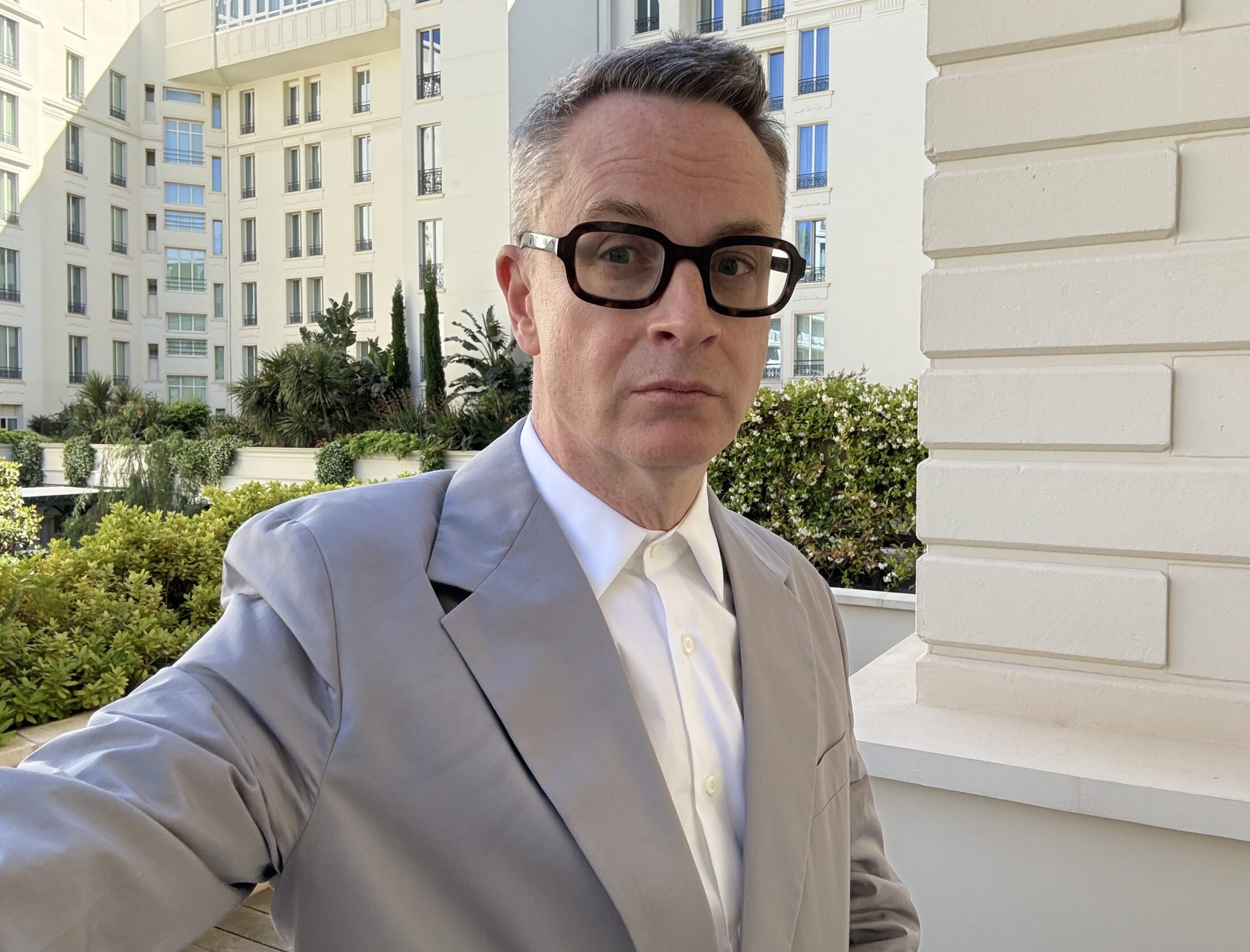
Photos courtesy of Nicolas Winding Refn.
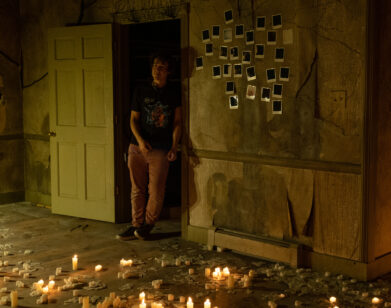
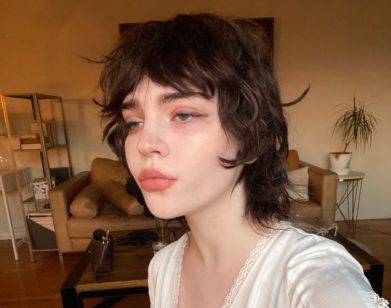
Watching Nicolas Winding Refn’s Her Private Hell feels like you’re watching a sci-fi slasher film thaw from the frost in real time. Its ambling pace, neon-drenched landscapes, and stilted characters—all punctuated by bouts of violence and giallo master Pino Donaggio’s operatic score—remain fixtures of the Drive and Only God Forgives director. However, here, they take on heightened forms. It’s a story of seemingly competing identities that otherwise wouldn’t congeal if not simmering under Refn’s sky. Sophie Thatcher plays Elle, a starlet with a tortured relationship with her father, Johnny Thunders (Dougray Scott), which is made more complicated when he marries her best friend and co-star, Dominique (Havana Rose Liu). Charles Melton stars as Private K, an American GI trying to find and kill a serial killer known as the Leather Man, while also on the lookout for his missing daughter. Refn shared that he temporarily died for twenty-five minutes in 2023 before being brought back to life, and you can tell that he directs Her Private Hell with the dynamism and invigorated spirit that only a brush of death could provide. Indeed, the film feels fueled by an otherworldly conviction, as if the lights in this project were lit by the flame of his odyssey to Hades and back. Before the film’s premiere, I sat with Refn to discuss his pastiche of glitter, sex, and death, diving into his views on the afterlife, and filmmaking as an act of exorcism.
WEDNESDAY 4 PM MAY 17, 2026 CANNES
———
LEE: Great to be chatting with you, Nicolas. How are you feeling ahead of tomorrow’s premiere?
REFN: It’s always exciting.
LEE: At yesterday’s private press screening, you spoke about how you had been dead for twenty-five minutes, and that was the catalyst for your creative and spiritual resurrection. What were your relationships or thoughts on the afterlife before this?
REFN: The afterlife is a tricky space. It’s not collective when you get to the core of it; it is very individual. In my situation, I had been given two weeks’ notice before I was to go through this operation that I may or may not come back from. Those two weeks are the strangest two weeks of my life because you go through a lot of stages of agony, fear, depression, and anger. But I decided that I never wanted to be a victim and that this was actually an opportunity. I was going to come back as the Bionic Man and that god was giving me a second chance. How could I be so lucky?
When I was brought back with electricity like Frankenstein, I was very zen about everything. First, I had to rebuild my body. My mind was fine, but my body was obviously in need of massive training. But once everything began to work again, I was like, “I know exactly what I’m going to do. I’m going to do a movie, and it’s going to be like this.”
LEE: So you had clarity.
REFN: I had a calling.
LEE: What you’re saying reminds me of the story of King Hezekiah in the Bible who asked god for more life.
REFN: I mean, look, everyone becomes religious at a certain time in their life. I don’t care who you are. At certain times, you pray to whatever, and it usually has to do with death or wanting to get something. But for me, it was more like, if I were to come back, how can I use my time in a meaningful way? Not [to say] it wasn’t meaningful before, but how can I make it even more essential to my being? What is my purpose on earth? Why am I here? All those existential things that everyone goes through. It’s not just me. It’s just a difference going through it in a midlife crisis compared to being given another twenty-five years to live. I became very profound in the sense that I had to stay on my course and create exactly what I wanted to do.
LEE: A fixture of so much of your work is silence. Sometimes I feel like the characters don’t know what they’re going to say until they actually say it. I’m curious about the role of silence in your life? It seems like you have a very comfortable relationship with it artistically.
REFN: The way you bring it up is very interesting because, nowadays, the idea of what censorship means is kind of irrelevant. We used to be shielded from this or from that or couldn’t get access. I’m older than you, but still you remember the time when there were restrictions that don’t exist anymore. Everything is accessible. The speed of light makes things move faster because of technology. The evolution moves faster. Information is moving faster. Access is moving faster. Violence is all around us. Accessibility to Instagram wars is a click, swipe, and scroll away. What are the two things that you can now provoke the mind with because these are no longer provocative?
It’s silence—because we’re so bombarded with noise—and stillness. So now, the most primal, healthy mind, non-medical inventions are now the enemy? It’s amazing because I can take these tools and I can now do something that I think is essential: make art silent and make it still. Then, you piss people off.
LEE: It’s like what you’ve said prior: if you’re not provoking a reaction, what’s the point? 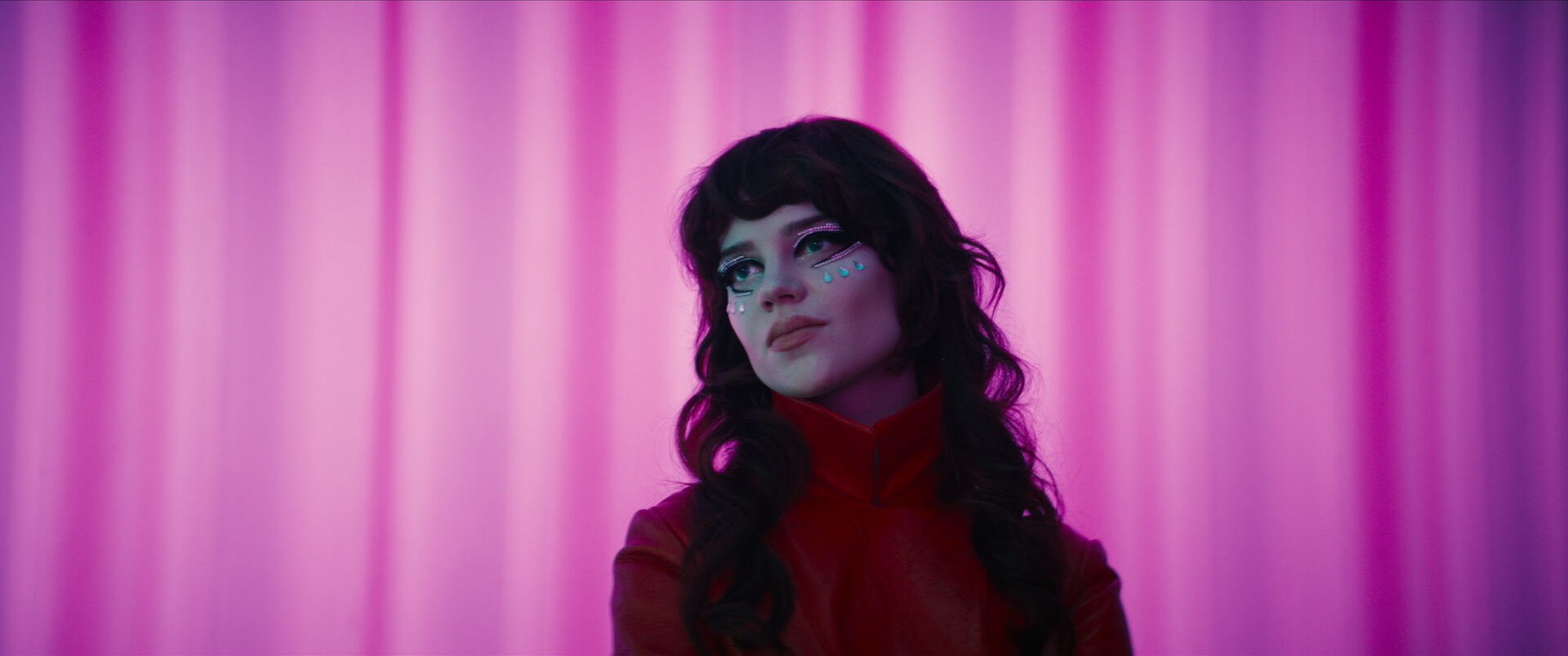
REFN: When you’re engaging with art, what is the exchange of time? To penetrate the mind, you have to force people to feel something, and then you get polarization. So, polarization means success. Because that is what it comes down to. Now, I’m not talking about ecosystem defense. If your movie cost $20 million, obviously, you have a different headache because you need to make four or five times profit. I don’t have that headache, so I can afford this very pure sense of creativity by giving you an experience whether you like it or not; that’s not part of my existence. But for the time that I took from you, I feel I gave you something authentic in return. Then you can like it or not, but you’re certainly not going to forget it. That means that my service to you has been fulfilled. I’ve respected you as a human; I’ve not treated you as a commodity. I’ve not fed you food with zero calories just because it fed the dopamines of your mind. In short, I gave you really good cocaine.
LEE: I know that Charles owes his casting, in part, due to your daughter watching Riverdale, and she was in Copenhagen Cowboy. I know you recruited your nephew to score the club music for The Neon Demon. What has it been like to continually bring your family into your work, to see them become friends with your collaborators?
REFN: Well, I mean, I use my kids a lot. So you’re right about that, and I think it’s more so when it comes to the terms of my own death: you have to make certain peace with things before you die. I’d made my peace with my wife after 30 years, and my eldest daughter, Lola, was old enough to live without me. She was going away in her own life, but my youngest Lizzielou wasn’t ready. I had to come back for her to live for a few more years. That was where Private K came from: that he would go to hell to bring back his daughter if he could, and he’s searching for that road. The Elle story is more about my daughter going away. But then, I added a kind of dilemma between Elle and her stepmom, which is more melodramatic. So now you have an interesting dilemma of a triangle and that her stepmother is taking her farther away. It almost mirrors Only God Forgives and the dynamic between Ryan Gosling and Kristen Scott Thomas, who plays his mother.
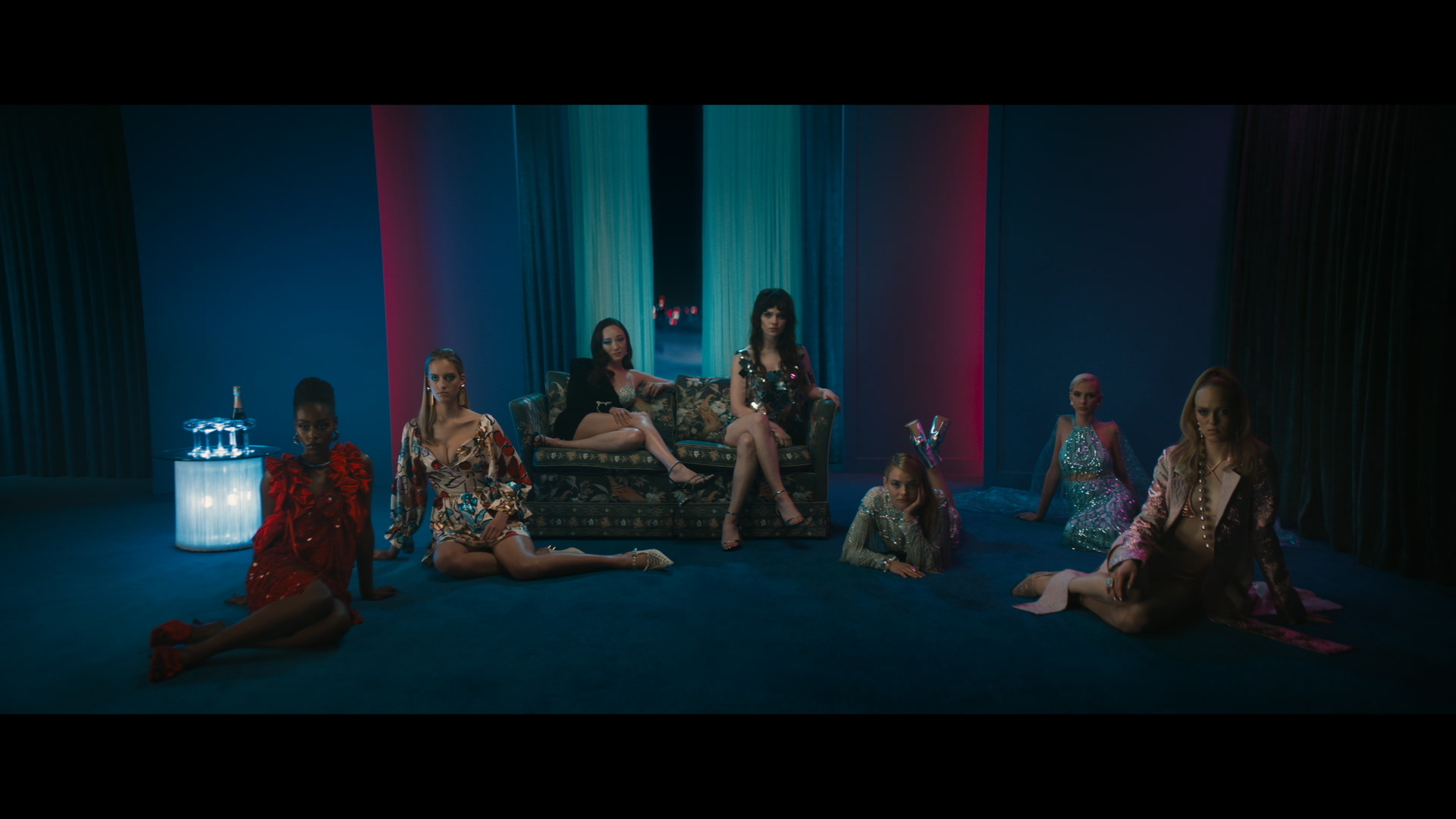
LEE: Lighting in your films has always been a striking feature and, with Her Private Hell, I kept thinking: does the light come first or the face? Do you have lighting choices and you work with the face cast, or are you casting with faces in mind?
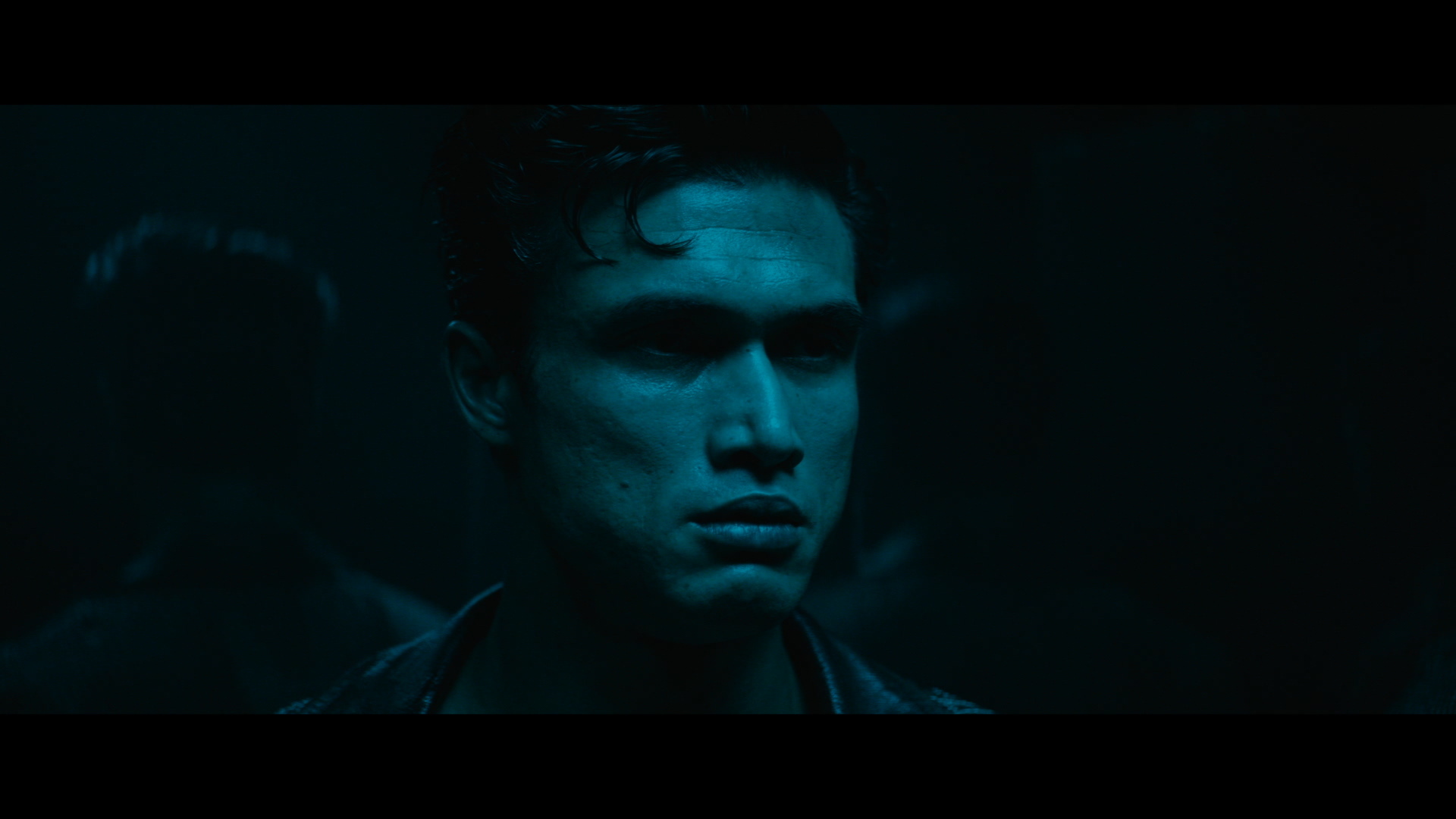
REFN: You choose the face first, because the face is the window to the soul of the actor. Once you have the eyes, you have the foundation. Your face as a performer is your craft, your skill, your device, your strength. Sophie Thatcher’s eyes and Charles Melton’s abs are the foundation of this movie.
LEE: I did find it funny that in one of the fight scenes Charles does, each attack strips away a part of his clothing. You knew exactly what you were doing, giving the people what they want. Usually when I’m in fights, my shirt isn’t the first thing that comes off.
REFN: It’s like those countless ’80s horror movies where young women had to take off their tops for no real reason. I felt, well, maybe let’s re-engineer it here. So, Charles gets to be topless and still gets a beating.
LEE: How do you think your approach to directing action has shifted in your career?
REFN: When I did the Pusher trilogy, the action was more documentarian and more chaotic, and as I progressed, especially from Bronson onward, the violence and the action became more designed like dance or movement. Then, obviously, with Her Private Hell, it kind of exceeded into an operatic staging. I think all those things are great fun. It’s a fun way to visualize and fetishize physicality and what the body means to us as an object. It’s a very male fantasy to protect innocence through violence.
I call it male pornography. It’s so pleasurable for us to view, because we have so much pleasure in that exorcism that comes out of an enormous amount of violence that’s justifiable, especially when it comes to protecting your daughters. After all, it purifies all the other complexities that will always happen when your children begin to mature and become sexual creatures.
These are very human, but complex themes that we try to sanitize in most of our entertainment. But unfortunately, or fortunately, it still exists in our human instincts, just like we’re all capable of inhumane acts if we need to. No one is sacred from anything.
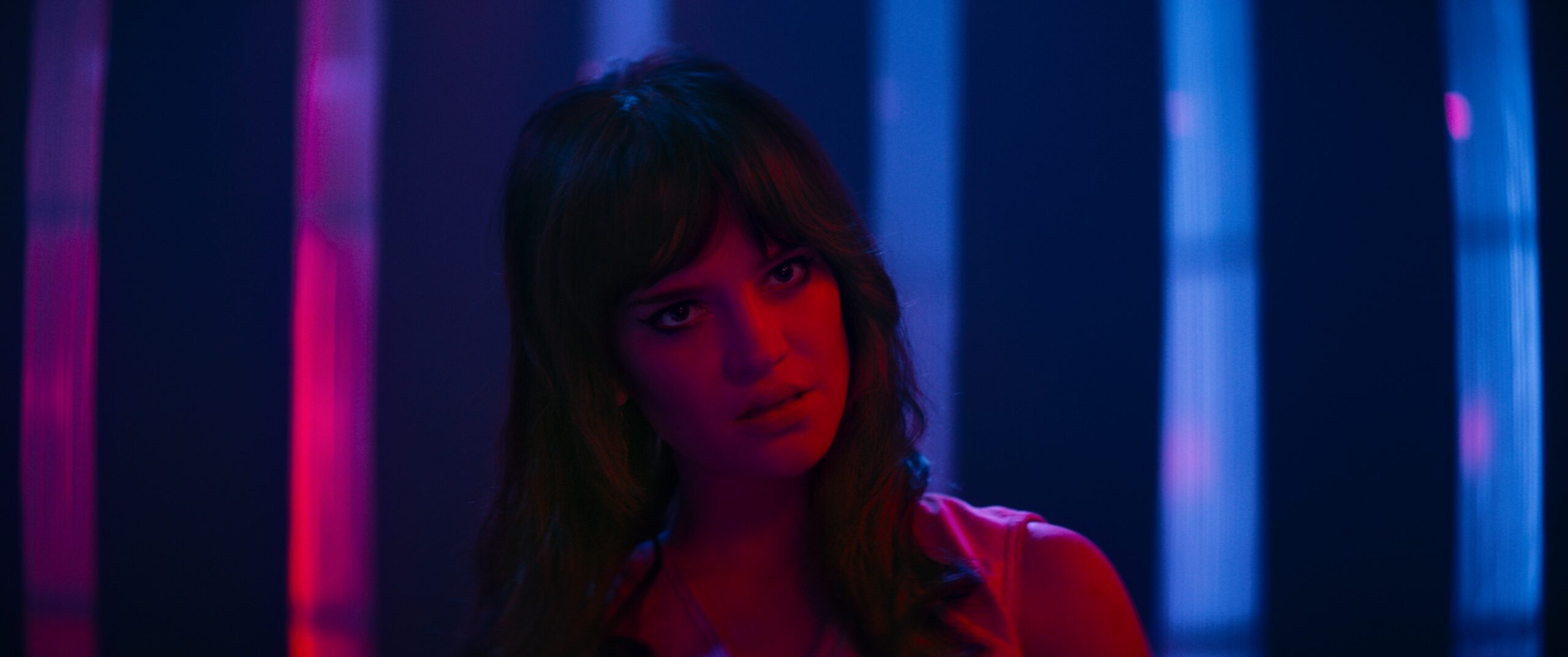
LEE: Is that also the way you like to blend in animal sounds in the films you make? I think of the role of pigs in Copenhagen Cowboy and how you have your actresses woof in this film.
REFN: My youngest daughter, when she was very young, always claimed she was from a wolf pack. It was very cute, but I always liked this idea of primal behavior because we live in a society more and more where we become players in a certain acceptance pattern. We’re all taught to navigate through what is acceptable and unacceptable, and those rules will always adapt to whatever generation, or millennia, or what year you’re born, and what year you die, and what generation you live in because absolute truth never has a finale. We’ll be judged in 30 years by what we will do now. So, art allows you to be uninhibited. It allows you in a safe space because it’s your imagination to fantasize.
Fantasy is a form of exorcism; we all have desires and patterns that we may not be proud of. We may hide them, but through art we can live them through and exorcise them from our hearts because we know that they’re unacceptable in everyday understanding. So we’re aware because the world is becoming more and more red lines, and so creativity becomes, in a way, like oxygen for us. That escapism that we need to coexist and be humane to each other is very important.
LEE: It’s making me think about what the character Johnny Thunders says: “Making a movie is like going to war.” I didn’t understand that at first, but what you’re saying is helping crystallize it. What are you willing to unearth, fight for, and confront within yourself? Thanks for taking time and for inspiring us to practice exorcism in the theater.
REFN: Great to talk, see you at the next one.